0.3 C
New York
Home Blog Page 1155

ABS Launches Liquefied Gas Tank Barge Guide

0

ABS Launches New Guide for Liquefied Gas Tank Barges with Remote Control and Monitoring of Essential Systems; outlines requirements for design and construction of unmanned barges equipped with various degrees of automation.
   
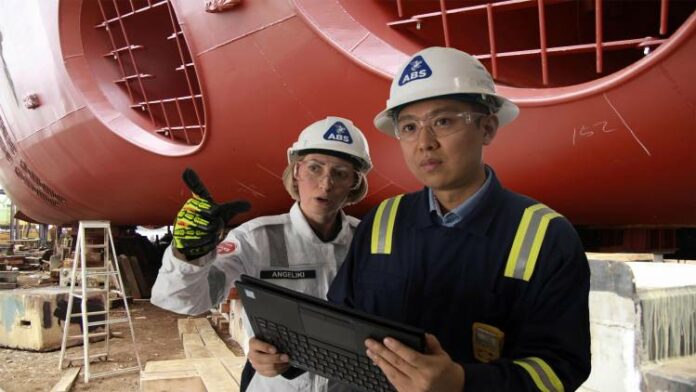
ABS released guidance to assist shipyards and barge operators:  The Guide for Building and Classing Liquefied Gas Tank Barges with Remote Control and Monitoring of Essential Systems.

The Guide provides requirements for the design and construction of barges equipped with various degrees of automation, remote control and monitoring of essential systems supporting cargo management. The barges may be unattended and controlled primarily from the towing vessel’s navigation bridge.

Gas as fuel has become an increasingly popular option for many shipowners looking to comply with environmental regulations and gain new operational efficiencies. Liquefied gas tank barges are key to help expand the LNG supply chain and advance adoption of LNG as fuel.

We are focused on developing practical guidance and solutions that respond to the challenges faced by owners and operators while ushering in new concepts and advancing the latest technologies,” said Patrick Janssens, Vice President, ABS Global Gas Solutions.

ABS provides industry leadership and offers regulatory and statutory guidance on projects related to LNG floating structures and systems, gas fuel systems and equipment, gas carriers and barges.

The Guide is intended to be used in conjunction with the ABS Rules for Building and Classing Steel Barges, ABS Rules for Building and Classing Marine Vessels and the ABS Rules for Building and Classing Steel Vessels for Service on Rivers and Intracoastal Waterways.

Source:marinelink
Turkey Ratifies Ship Recycling Convention

0

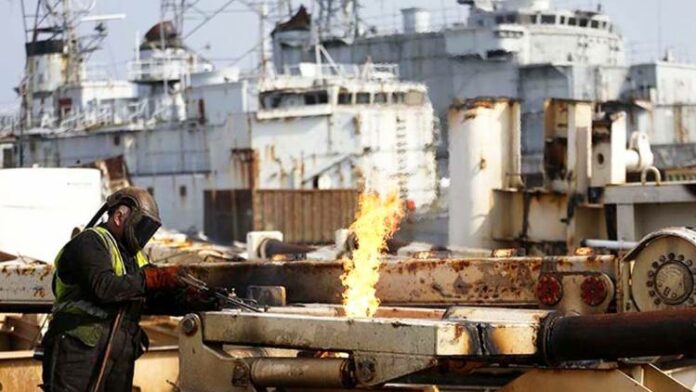
Turkey, one of the five major ship recycling countries in the world, has ratified the IMO Hong Kong Convention, the treaty for safe and environmentally sound ship recycling. 

The Hong Kong International Convention for the Safe and Environmentally Sound Recycling of Ships, 2009, covers the design, construction, operation and maintenance of ships, and preparation for ship recycling in order to facilitate safe and environmentally sound recycling, without compromising the safety and operational efficiency of ships.

Under the Hong Kong Convention, ships to be sent for recycling are required to carry an inventory of hazardous materials, specific to each ship. Ship recycling yards are required to provide a "Ship Recycling Plan" specifying the manner in which each ship will be recycled, depending on its particulars and its inventory.

In its ratification instrument, Turkey declares that it requires explicit approval of the Ship Recycling Plan before a ship may be recycled in its authorized Ship Recycling Facilities.

Turkey becomes the seventh state to become a Party to the Hong Kong Convention. The treaty will enter into force 24 months after ratification by 15 states, representing 40 percent of world merchant shipping by gross tonnage, and a combined maximum annual ship recycling volume not less than three percent of their combined tonnage.

The seven contracting states, Belgium, Congo, Denmark, France, Norway, Panama and Turkey, represent more than 20 percent of world merchant shipping tonnage, and the combined annual ship recycling volume of the contracting states during the preceding 10 years is 1,652,961 GT, i.e. 0.62 percent of the merchant shipping tonnage of the same states.  

The top five ship recycling countries in the world, accounting between them for more than 90 percent of all ship recycling by tonnage, are Bangladesh, China, India, Pakistan and Turkey.

IMO is implementing a project in Bangladesh to enhance safe and environmentally sound ship recycling develop a roadmap towards accession to the Hong Kong convention. The 19-month project is funded under a $1.1 million agreement with the Government of Norway. It focuses on building capacity within Bangladesh to develop a legal, policy and institutional reform roadmap towards accession to Convention and will train a variety of stakeholders.

Source:maritime-executive

Equinor taps UK suppliers for next-gen offshore tech

0

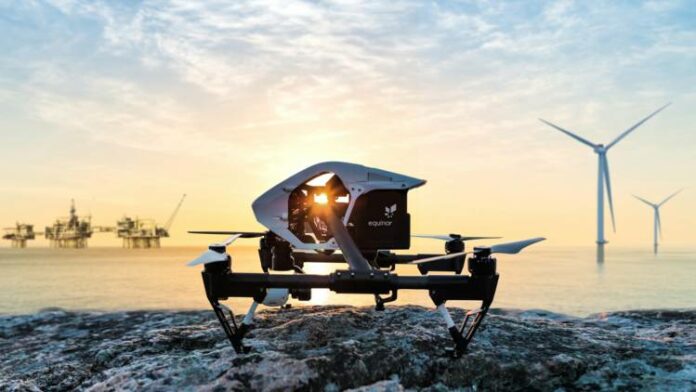
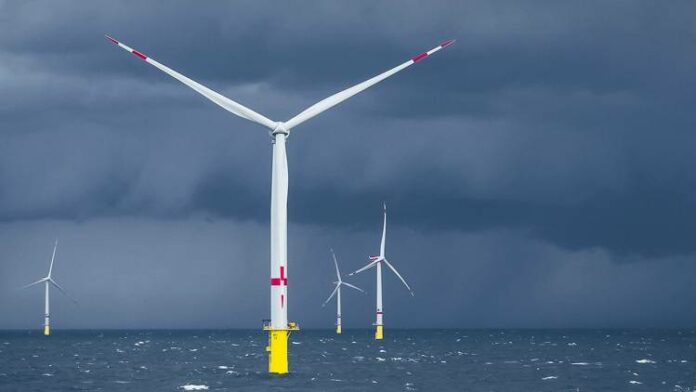
Norwegian energy giant Equinor is engaging with the UK offshore wind supply chain in order to commercialise new technologies for deployment by the industry post-2025.

Equinor is spurring companies into coming up with solutions for enhancing operations and maintenance (O&M) by giving potential supplier access to its requirements, specifically around projects that include Scira, Dudgeon and Dogger Bank.

The approach aims to encourage early collaboration between developer and suppliers, to help devise new technologies, products and services able to meet the changing, future requirements of the sector.

To assist it, Equinor partnered with UK business development organisation NOF Energy, the Offshore Renewable Energy (ORE) Catapult and the North East of England’s offshore wind cluster, Energi Coast, to host the company’s first ‘innovation day’ to support the development of future O&M concepts.

More than 70 companies from the UK supply chain, including a large cluster from north-east England, as well as universities, attended the event, held at the Port of Blyth, Northumberland.

NOF Energy deputy chief executive Joanne Leng said: “As the UK industry gets close to achieving a Sector Deal for offshore wind, approaches such as this from Equinor, one of our strategic partners through the Dogger Bank offshore wind farm project, could form an exemplar of how developers can achieve early engagement and collaboration with innovative, technology-led companies.”

Equinor new energy solutions senior vice president for operations Beate Myking said: “With several upcoming wind projects in the portfolio, with Dogger Bank as the most important one, we are committed to engage with the whole renewables supply chain, research institutes and universities in an effort to identify new solutions.”

Leng, who is also deputy chair of Energi Coast, added: “Working with Equinor we have seen how keen the developer is to maximise on the depth of UK supply chain innovation. "

It made the event at Port of Blyth very successful and I hope will be a catalyst for the creation of new technologies and solutions.

Source:renews

AWEA: 2018 was a record year for US wind power

0

America’s growing demand for renewable energy combined with policy stability and low, stable prices helped wind power capacity installations in US rise to the third strongest quarter in the industry’s history, according to a new report released today by the American Wind Energy Association (AWEA).

"A rapidly growing number of big brands and utilities clearly understand that for American consumers, it’s no longer enough for energy to be affordable and reliable, it must also be clean. Businesses are responding to their customers by seeking out the lowest-cost clean energy they can find to power their products and operations reliably. Wind power’s record-setting 2018 proves you really can have it all,"…said Tom Kiernan, CEO of AWEA.

Key findings

  • Contracted wind capacity from non-utility customers in 2018 surged 66% higher than the previous high-water mark in 2015. Non-utility customers like AT&T, Walmart, ExxonMobil, and Shell Energy purchased a record 4,203 MW of wind power capacity in 2018 through long-term contracts, or Power Purchase Agreements (PPA).
  • Wind power also continues to be a popular choice for major utilities who must balance ratepayer expectations for affordable, reliable and clean energy. Utilities signed contracts for 4,304 MW of wind power in 2018 that, when combined with non-utility purchases, reached the highest level on record for overall PPA activity with 8,507 MW in 2018.
  • Strong consumer demand and stable policy also helped the industry surge to its third strongest quarter on record for new wind power capacity additions. New wind farms totaling 5,944 MW were installed in US in the fourth quarter of 2018, enough to power all the homes in Colorado or Massachusetts.
  • In total, the industry commissioned 7,588 MW of wind power capacity in 2018. There are now 96,488 MW of cumulative installed wind capacity in the United States, with more than 56,800 wind turbines operating across 41 states.
  • Low, stable prices are a large piece of wind power’s value to buyers. The cost of wind has fallen by 69% since 2009,falling 7% in 2018 alone, according to investment firm Lazard.
  • Because wind power uses no fuel to produce electricity, customers can lock in long-term contracts, often for 10-20 years, at a low price that hedges against fossil fuel price volatility.
  • As for this year, projects totaling 2,125 MW started construction and a further 3,661 MW entered the advanced development phase in the quarter. There are now 35,095 MW of wind power capacity either under construction, 16,521 MW, or in advanced development, 18,574 MW, a 22 percent year-over-year increase in the development pipeline.

"Wind power is on strong footing with trend lines–rising consumer demand, falling costs, improving technology–all pointing in the right direction. Our industry is driven to deliver the most competitive product possible and we’re confidently moving forward to further cut costs and advocate for improvements that bring markets and power grid infrastructure into the 21st century,"…added Mr. Kiernan

Source:safety4sea

Wärtsilä To Enhance Competitiveness By Aligning Operations Globally

0

Wärtsilä Corporation will initiate a formal process to realign its operations and resources to secure future profitability and competitiveness. The Group-wide program emphasises sustainable savings and actions that increase customer value in an effective way. The planned actions include an increased focus on targeted sales activities, developing the agreements-based and “as-a-service” business, reviewing the cost structure, as well as optimising the business portfolio and organisation.

The program is expected to lead to a reduction of approximately 1.200 employees globally. The reductions will impact all businesses and support functions.

With these actions Wärtsilä seeks annual savings of EUR 100 million. Savings are expected to materialise gradually during the second half of 2019, with full effect by the end of 2020. Furthermore, this programme enables increased sales and stability for business operations. The costs related to the restructuring measures are expected to be EUR 75 million.

The business environment around us is changing with increasing speed. Trade tensions, geopolitical uncertainty, and market volatility are sources of concern. We have performed reasonably well in the prevailing market environment, thanks to our Smart Marine and Smart Energy strategies. Nevertheless, we must constantly strengthen ourselves to cope with current and future developments. To maintain our leading position in the market, and to stay strong, agile, and competitive, it is fundamentally important to continuously streamline our operations and align them to market requirements. This is a painful decision, but redundancies cannot unfortunately be avoided,” says Jaakko Eskola, President & CEO.

The planned reductions are subject to consultation processes, which will be initiated in the affected countries according to local practices and legislation. The company will provide support and consultation, as well as assistance in re-employment in the impacted countries.

ExxonMobil-led partnership initiates FEED for Ca Voi Xanh gas project offshore Vietnam

0

ExxonMobil and its partners plan a multi-billion-dollar development of the Ca Voi Xanh (Blue Whale) gas/condensate field in block 118 offshore Vietnam.

Pending approvals, executed gas sales agreements, and a final investment decision in 2020, the company and partners PetroVietnam and PetroVietnam Exploration Production Corp. aim to install a single offshore platform, a subsea pipeline transporting the gas to shore, an onshore gas treatment plant, and overland pipelines feeding the gas to two dual-train power plants for electricity generation.

The partners have awarded Saipem’s XSIGHT division the offshore-onshore front-end engineering design contract, the offshore scope including the platforms, gas/condensate sealines, and offshore fiber optic cabling.

Saipem says Ca Voi Xanh is the country’s largest offshore gas and condensate reservoir.

According to Liam Mallon, president of ExxonMobil Development Co., the project could generate $20 billion in revenue to the Vietnamese government, thousands of local jobs and improved energy security from domestic gas development.

Vietnam Electricity, PetroVietnam and Sembcorp are in talks to construct and operate the power plants. The proposed base development is expected to generate three gigawatts of power, equivalent to about 10% of Vietnam’s current total power demand.

Source:offshore-mag

Russia’s Arctic seaport increase by 25% in 2018

0

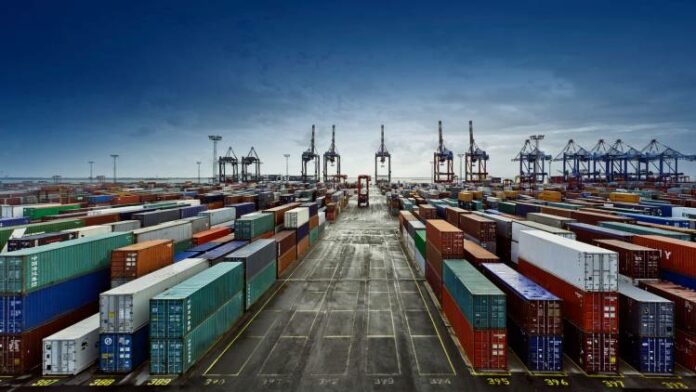
The volumes that were shipped from Russian ports were increased by 25% in 2018, according to data from the Russian Ministry of Transport. Specifically, 97.2 million tonnes were handled by regional seaports, from which almost 70% was oil products and LNG. In 2018, the volumes of goods shipped on the Northern Sea Route amounted to more than 18 million tons.

Specifically, the most major increase was experienced in Sabetta, as the port handled LNG produced by Novatek in the grand Yamal LNG project.

Yamal LNG is currently the largest LNG project in Russia with an aggregate share of about 5% of the global LNG market.

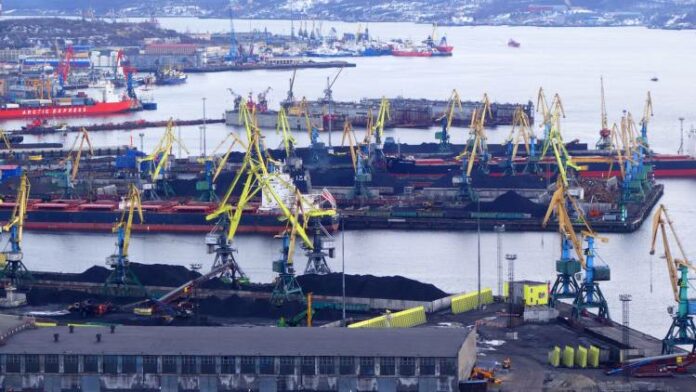
Additionally, port installations in Murmansk in 2018 handled an overall of 60.7 million tonnes, reaching 18.1% more than 2017.

It's the first time in the post-Soviet period that Murmansk had such high shipping volumes. The previous high was set in 2010 when 56.6 million tons was handled.

Also, In 2018 the Murmansk Commercial Seaport handled 16.25 million tons, which is a 3.5% rise from 2017, port General Director Aleksandr Masko reported.

Coal leads the way in transporting goods, followed by iron, nickel and apatite concentrates, as well as construction materials and several other kinds of goods.

However, the biggest growth in domestic shipping is oil and gas, which is reloaded in ship-to-ship operations.

Among the ports, the port of Arkhangelsk  also faced an increased in 2018. Goods volumes amounted to 2.8 million tons, an increase of 15.5% compared with 2017.

Yet, not all regional ports were benefited from 2018's growth. For instance, Lukoil’s Varandey terminal had a decline in volumes by as much as 15.3%. The terminal in 2018 handled a total of 7 million tons of oil.

The decrease in Varandey's deliveries was due to the conflict between operator Lukoil and Rosneft. As a result, Rosneft in 2018 introduced a 50% production cut in the fields delivering to Varandey.

Source:safety4sea

7 arrested for illegal transaction of MGO off Singapore

0

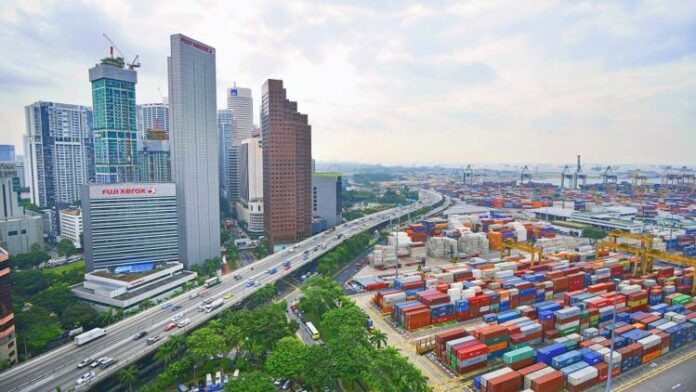
Seven men got arrested on January 29 for an alleged illegal transaction of 2.7 tonnes of marine gas oil at the sea off Pulau Sudong, Singapore. According to the police, the men were arrested during a joint operation the Maritime and Port Authority of Singapore (MPA).

Three of the seven men were crew of a craft that belongs to a marine service provider, and the other four were members of a foreign-registered tugboat.

According to local media, initial investigations showed that the three crew members had allegedly misappropriated 2.7 tonnes of marine gas oil without their company knowing. After that, they sold it to the four crew members of the tugboat.

As a result, the tugboat as well has been seized for investigations.

Commenting on the arrest, the police and MPA said that they take cases of illegal transaction of marine fuel in Singapore waters very seriously.

Now, the police coast guard will carry out security checks to prevent such illicit activities in Singapore.

Soruce:safety4sea

Portugal launches Bluetech Accelerator for maritime start ups

0

Portugal’s Minister of Sea Ana Paula Vitorino presented, on January 30, the first edition of the newly-formed 'Bluetech Accelerator'. 'Bluetech Accelerator – Ports & Shipping 4.0' aims to accelerate maritime-related start-ups.

The program focuses mostly on Ports, Maritime Transport and Maritime Logistics Scanning, identifying and supporting the most promising start-ups in the industry in search of innovative solutions for an industry which today faces enormous challenges such as overcapacity, energy security, developments in artificial intelligence and automation, or the need for change in the energy sector.

Mainly, the program embodies six business partners, including the nation’s top two lines and top two ports, to help select and finance the first batch of winning start-ups, who will be chosen in the last quarter of 2019.

This first edition of the program has as aim the digitization of the port sector, shipping and maritime logistics.

Moreover, the Bluetech Accelerator follows the signing of a MoU that gave rise to the Ocean Portugal Program, which aspires to develop a set of actions to promote the growth of the Blue Economy.

Concluding, Mrs Ana Paula Vitorino stated that…"With this initiative we hope that we better prepare our blue economy to do a new globalisation of knowledge and know-how.."

Source:safety4sea

PGE sifts bids for 2.5GW Polish offshore partner

0

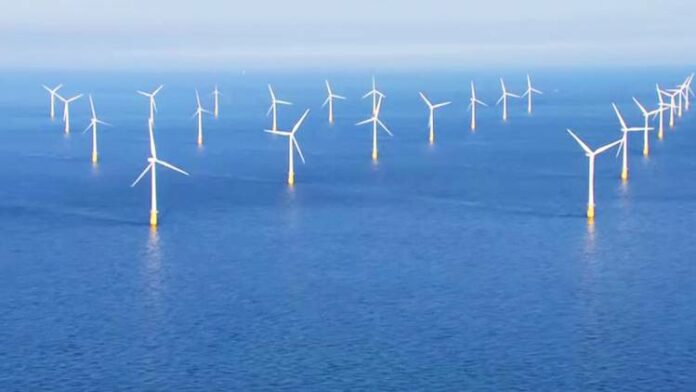
Thirteen companies have responded to an invitation by Polish utility Polska Grupa Energetyczna (PGE) Group to take part in developing over 2.5GW of offshore wind capacity in the Baltic Sea.

The site comprises a 1.5GW concession held by Elektrownia Wiatrowa Baltica-2 and 1045MW controlled by Elektrownia Wiatrowa Baltica-3.

The sites are located 25-30km from the coastal city of Leba.

First electricity will be delivered in 2025, with full commercial operations starting in 2026.

PGE Group invited potential partners for talks on the projects on 5 December last year.

According to PGE, potential partners must have appropriate experience in offshore wind in Europe.

They must be able to support technical aspects of the projects and have experience of how to manage contractors and be prepared to share knowledge with PGE.

PGE intends to eventually sell a 50% stake in two special purpose vehicles responsible for the offshore project to a strategic partner of its choosing and develop the wind farms as a joint venture.

The project’s current stage involves securing essential environmental permits, conducting wind strength surveys and performing works related to connection to the power grid as well as other technical activities.

Preparations for preliminary geological surveys are also in progress.

PGE chief executive Henryk Baranowski said: “We have finished the first stage of selection and we are happy with the large interest in cooperating with PGE Group on this project."

“Numerous stable partners have applied, including the largest players on the market, having thousands of megawatts completed in this technology so far.”

Source:renews