0.3 C
New York
Home Blog Page 1154

UK ‘should auction over 2GW a year offshore

0

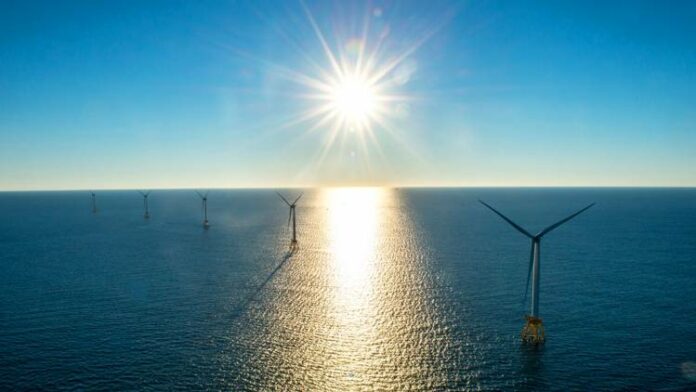
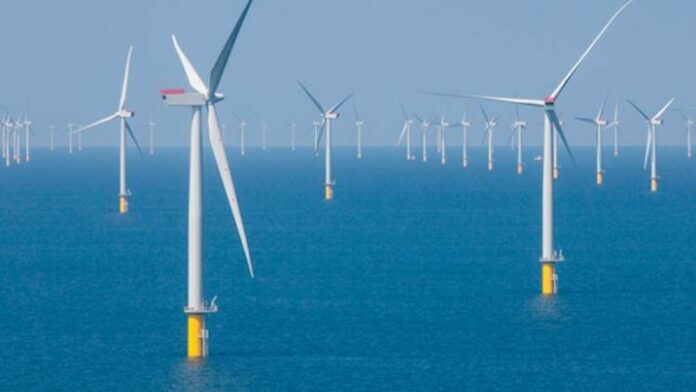
The UK government should announce clear targets for offshore wind and commit to an extended pipeline of bi-annual Contract for Difference auctions of over 2GW a year to help boost the local supply chain, according to a new report.

The call is one of several recommendations made in 'The UK Offshore Wind Industry: Supply Chain Review' report produced by former McLaren Group chief executive and Formula One Team Principal Martin Whitmarsh for the Offshore Wind Industry Council.

The review also suggests that offshore wind developers should publish clear life-cycle plans to show supply chain companies what they need, and when they will need it.

“We should now encourage businesses to embrace the opportunities in offshore wind, establish know-how and global competitiveness to create enduring employment and export revenues as the worldwide market opportunity accelerates,” the report said.

“In view of the very ambitious scale and cost targets now being set for the offshore wind sector, UK business needs to step up and provide a competitive offering and complement the existing supply chain,” it added.

“Furthermore, UK companies need to be encouraged to offer innovative and cost-effective services and technology to the sector. If this can be achieved, UK businesses and the overall economy can greatly benefit from the substantial offshore wind export opportunities that are now opening throughout the world,” the review said.

Whitmarsh has worked over a year on the review with Clark MacFarlane, managing director of Siemens Gamesa Renewable Energy UK, with assistance from industry experts from Innogy, MHI Vestas Offshore Wind, the Offshore Renewable Energy Catapult and ScottishPower Renewables.

The report also urges the government to set more ambitious targets to accelerate the transition from fossil fuels to renewables, while encouraging more consumers to buy electricity generated from low carbon sources.

It also suggests that households should be encouraged to store, use or sell electricity they generate from electric vehicles and domestic batteries as part of a modern, flexible energy system.

OWIC co-chair Benj Sykes said: “The review highlights the extraordinary scale of the many multi-million pound opportunities for UK companies to become part of our fast-growing supply chain."

Industry and government are finalising a Sector Deal which will set out how offshore wind can become the backbone of our energy system.

This review makes clear that an ambitious, long-term strategy is vital to bring forward new investment in our supply chains and secure export growth. 

We fully expect to have the Sector Deal agreed with government in the coming weeks, and look forward to responding to Martin’s recommendations later in the year as implementation of the deal gets underway.

The Sector Deal aims to deliver at least a third of the country’s electricity from offshore wind by 2030, OWIC said.
“K” Line trials binary cycle power generation system on new ship

0

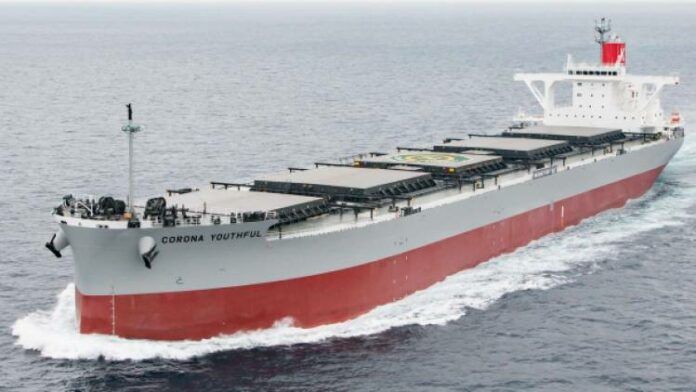
Japanese shipping company “K” Line announced that one of its new 91,000-DWT-type coal carriers, 'Corona Youthful', was delivered with a binary cycle power generation system developed by Kobe Steel, Ltd. at Oshima Shipbuilding, on 1 February 2019.

Binary cycle power generation system is a waste heat recovery electric power generation system utilizing compression heat by scavenging air from the main engine, which, in turn, contributes to reduction in fuel oil consumption of diesel generator engine.

The company said it has now commenced operational trial in order to confirm performance and durability at sea, as joint research between Kobe Steel and “K” Line.

This forms part of the company's attempt to obtain greater efficiency in its operations as well as further reduction of CO2 emissions and environmental pollutants, in line with its long-term Environmental Vision 2050.

"This innovative binary cycle power generation system is considered as one of the efficient systems to help us achieve our goals by 2050. Environmental concern with the greenhouse gas emission effect is growing and “K” Line will, based on “K” Line Environmental Vision 2050, encourage less environmental load from marine transport by operating ships that are highly energy efficient and which contribute to conservation of the global environment,"…the company explained.

Source:safety4sea

U.S. Navy Orders Two More Ford-Class Aircraft Carriers

0

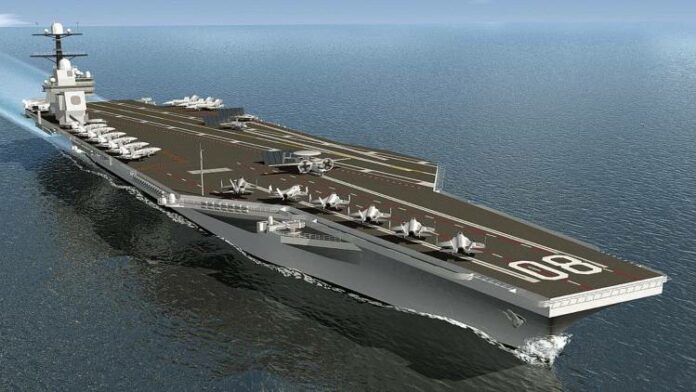
The U.S. Navy has awarded a contract for the construction of two Ford-class aircraft carriers, CVN 80 and CVN 81, to Huntington Ingalls Industries-Newport News Shipbuilding. The contract is valued at $15.2 billion and is expected to deliver savings of over $4 billion compared to the Navy’s original cost estimates for procuring the vessels separately. 

CVN 80 will be named Enterprise, CVN 81 is yet to be named. The ships are scheduled to be delivered in 2028 and 2032, respectively.

Today’s announcement is a triumphant step toward returning to a 12-ship aircraft carrier fleet and building the 355-ship Navy our nation needs,” said Jennifer Boykin, president of Newport Shipbuilding. “Most importantly for us, it provides stability into the year 2032 for our workforce and for our supplier businesses across the United States.

Buying two aircraft carriers will stimulate Newport News’ aircraft carrier supplier base of more than 2,000 suppliers in 46 states, and the company anticipates being able to complete an aircraft carrier every three to four years. 

In addition to these savings, the contract includes ship integration costs of several modifications required to meet emerging threats including the F-35C Lightning II, MK 38 gun system and MQ-25 Stingray Unmanned Aircraft System. These modifications increase the lethality of the Ford Class, and represent an additional $100 million in savings that is in addition to the $4 billion, since these new capabilities were not included in the original single-CVN Navy estimate. Plus, these new savings associated with new capabilities increases to $200 million if installed in the ship before delivery, in comparison to installing after ship delivery.

This Fixed Price Incentive (Firm Target) (FPIF) contract limits the Navy’s liability and incentivizes the shipyard’s best performance. The contract guarantees a single technical baseline for both ships, which allows the shipyard to re-use engineering rollover products, minimize changes between the two ships and leverage economic order quantities for equipment and material procurement. 

The new carriers are expected to replace Nimitz-class carriers, which have served the U.S. Navy for more than 40 years. Enterprise (CVN 80) is the third ship of the FORD-class and the numerical replacement for USS Eisenhower (CVN 69). CVN 81 will be the numerical replacement for USS Carl Vinson (CVN 70). 

Ford-class carriers are equipped with electromagnetic-powered aircraft launch system (EMALS). Unlike legacy steam catapults, EMALS was designed to vary the stroke of the launch depending on the size and weight of the aircraft, facilitating better launching of relatively light aircraft such as drones. However, the system on the first carrier in the series, the $13 billion Gerald R. Ford (CVN 78), has suffered failures of its aircraft launch-and-landing system. Bloomberg reports that the Gerald R. Ford experienced 20 failures at sea, according to the U.S. testing office.

Source:maritime-executive

ExxonMobil to restructure upstream organization

0

Exxon Mobil Corp. says it will streamline its upstream organization and centralize project delivery across the company to support its plans to double operating cash flow and earnings by 2025.

Effective April 1, the reorganization will involve creation of three new upstream companies – ExxonMobil Upstream Oil & Gas Co., ExxonMobil Upstream Business Development Co., and ExxonMobil Upstream Integrated Solutions Co.

ExxonMobil Upstream Oil & Gas Co. will focus on end-to-end value chain management in five distinct global businesses – unconventional, liquefied natural gas, deepwater, heavy oil, and conventional.

ExxonMobil Upstream Business Development Co. will oversee strategy development, exploration, acquisitions and divestments and actively manage the upstream portfolio.

ExxonMobil Upstream Integrated Solutions Co. will provide technical and specialized commercial skills, such as drilling, research and technology, gas and power market optimization, and the global deployment of resources.

The following executives will lead the new companies:

Liam Mallon, currently president of ExxonMobil Development Co., will become president of ExxonMobil Upstream Oil & Gas Co.

Steve Greenlee, currently president of ExxonMobil Exploration Co., will become president of ExxonMobil Upstream Business Development Co.

Linda DuCharme, currently president of ExxonMobil Global Services Co., will become president of ExxonMobil Upstream Integrated Solutions Co.

ExxonMobil Global Projects Co. will centralize major capital project planning and execution into a single organization that will support all three business segments – upstream, downstream, and chemical.

Neil Duffin, currently president of ExxonMobil Production Co, will become president of ExxonMobil Global Projects Co.

Source:offshore-mag

Maersk makes its own Brexit

0

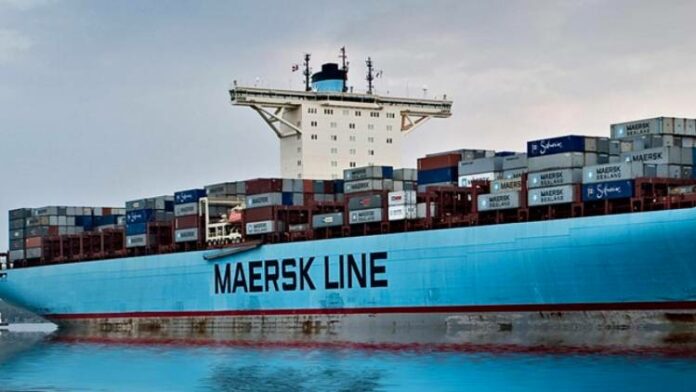
With the UK’s exit from the EU due in less than two months, Maersk, Europe’s largest shipping line, is making its own Brexit.

The giant Danish shipping line has made plans to take its remaining ships off the UK Ship Register as well as stop taking in UK cadets, according to trade union Nautilus International. Maersk has also announced it will cease taking in cadets from South Africa. In other cadet changes for Maersk, it will reduce its intake from the Philippines, the world’s largest crewing nation, while upping the volume of cadets it takes from India and from home soil in Denmark.

The UK Ship Register has come under pressure as uncertainty surrounding Britain’s exit from the EU – due on March 29 – has seen a number of shipping lines review their flagging options. P&O Ferries recently chose to reflag six cross-Channel ferries from the UK to Cyprus.

Source:splash247

EMAS Energy Services to be wound up

0

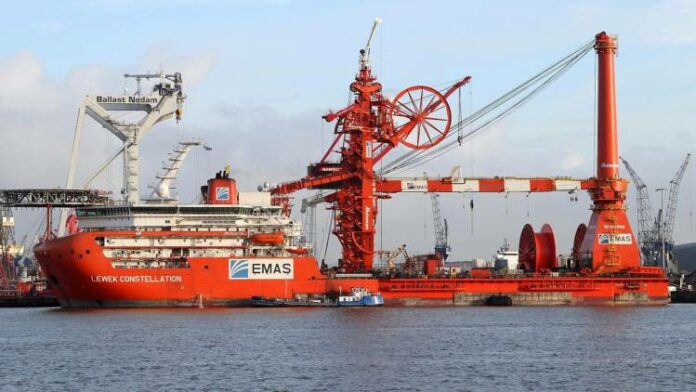
Singapore’s Ezra Holdings, currently under chapter 11 protection in the US, has announced that subsidiary Emas Energy Services was placed under creditors’ voluntary liquidation yesterday.

The move comes after a resolution was passed at an extraordinary general meeting and confirmed by creditors.

KPMG Services have been appointed to act as liquidators for the purpose of winding up the subsidiary, which specialised in well intervention as well as plug and abandonment.

Ezra Holdings has been in a state of limbo since it filed for chapter 11 protection in the Southern District of New York in March 2017. Shipbuilding subsidiary Triyards is also under court protection in Singapore while it looks to restructure, while Emas Offshore is negotiating a restructuring with a potential investor from the Philippines.

Source:splash247

GE To Combine Renewable, Grid Assets Into Single Unit

0

General Electric Co. said on Jan. 30 it would fold its battery storage and electrical grid units into its wind turbine and hydropower business to cut costs, speed decision-making and cater to surging demand for renewable power.

The announcement, a day before GE was due to report fourth-quarter results, will eliminate a layer of management mostly based in Chicago, with minimal reduction in staff. The combined unit will have about 40,000 employees and annual revenue of about $16 billion, GE spokesman Jim Healy said in an interview, compared with $10.2 billion for renewable energy last year.

GE’s renewables business currently comprises on- and offshore wind turbines, plus hydropower. GE’s units handling electrical transmission and distribution grids, battery storage and solar inverters and controls had been in GE’s Power business, which is focused on fossil fuel generation. Regional leaders for renewables will now deal directly with the company's renewables headquarters in Paris. GE does not make solar panels.

The move is GE’s first big structural shift since October, when it said the U.S. Securities and Exchange Commission and the Department of Justice had expanded accounting probes to include a $22 billion writedown of goodwill at GE Power in the third quarter.

To help its ailing power business, GE said in October it would separate natural gas power from coal, nuclear and grid, and named new leaders for the units. Some analysts interpreted the moves as GE preparing its non-gas businesses for sale.

GE’s newest gas turbines are under scrutiny after a broken blade severely damaged a unit in Texas last year, causing a two-month plant outage. The break has forced some utilities to curtail use of their new GE turbines while they await blade replacements, and GE has since said it knew about the problem after a similar blade broke in 2015.

GE’s power division took on added importance to GE's future earnings after the company announced last year it would focus on jet engines, power plants and renewable energy and dispose of its healthcare unit and majority stake in Baker Hughes, along with other restructuring.

Source:epmag

Port of Rotterdam launches IoT platform

0

Port of Rotterdam Authority launched an Internet of Things (IoT) platform. It's the first application for hydro/meteo that has been put into operation. The system uses an extensive network of sensors to provide accurate and up-to-date water (hydro) and weather (meteo) data particularly for the planning and management of shipping. The port aims to make its operations safer and more efficient.

Specifically, the project was announced on 2018, under the collaboration with IBM, Cisco, Esri and Axians, aiming to transform the port’s operational environment using Internet of Things (IoT) technologies in the cloud.

Ronald Paul, the Port Authority’s Chief Operating Officer stated "It’s a fantastic step in the development of Rotterdam as ‘smartest port’. Just as important, however, is that the cloud platform and the generated real-time information, which includes infrastructure, water and weather condition data, enable us to further improve mission-critical processes in the service to our clients."

As the port is always developing, the Authority stated that the IoT project offers a safe and reliable basis for innovation using the latest technologies, including edge computing, real-time analytics, artificial intelligence, hyper-precise data and blockchain.

Moreover, sensors are incorporated on and in quay walls, dolphins, waterways, roads and traffic signs aiming to provide measured data to communicate with autonomous systems, also connecting with the port's future automation plans.

Additionally, the IoT platform was completed through the hydro/meteo application. It is the first time that the IoT platform was used for mission critical application.

The hydro/meteo system is embodied by height of tide, tidal stream, salinity, wind speed, wind direction and visibility data via a combination of 44 sensors in the port, many prediction models, data from Rijkswaterstaat and astronomical calculations.

To this result, via the application, the waiting time is decreased, as well as the berthing, loading ans unloading and departure times are now optimised.

The technology enables the authority to precisely predict the ideal time for berthing and departure, depending on weather conditions.

The hydro/meteo system has many users, such as  the Pilotage Service, Rijkswaterstaat, DCMR and various departments within the Port Authority. It is expected that the number of users will increase further.

That shows that is an easy-to-use platform.

Concluding, the Authority reported that each day, the platform is already processing some 1.2 million data points for models, systems and users.

Source:safety4sea


MOL tugboat carries out first LNG bunkering

0

Mitsui OSK Lines (MOL) has carried out a test operation of the first bunkering of LNG fuel with LNG-powered tugboat Ishin in Japan’s Sakai Senboku port in the Kansai region.

The tugboat Ishin was ordered by MOL from Kanagawa Dockyard and the LNG fuel was supplied by Osaka Gas using truck-to-ship LNG bunkering procedure.

After this test operation, Ishin is slated for delivery in late-February and will start commercial operation in April as the first LNG-fuelled tugboat serving Osaka Bay. Ishin will be operated by Nihon Tug-Boat Co.

MOL said it has been working closely with Osaka Prefecture Port and Habor Bureau and Osaka Gas to develop a LNG fuel supply system for ships in Sakai Senboku Port, through the development of Ishin.

Ishin has been tested for environmental performance, reaping an estimated 25% reduction of CO2 emissions compared to tugs that run on heavy fuel oil.

Source:seatrade-maritime

New York lines up offshore lidar campaign

0

Ocean Tech Services and DNV GL have secured contracts to carry out meteorological and metocean survey work off the coast of New York as part of the US state's offshore wind plans.

The New York State Energy and Research Development Authority said Ocean Tech Services will deliver a floating lidar system, while DNV GL will provide data management and analysis.

Ocean Tech Services will focus on permitting, hardware, deployment, maintenance and decommissioning of the lidar.

Two floating lidar buoys will be deployed from May this year 30km from the shore in an area known as the New York Bight for two years.

They will measure turbine hub-height wind speed and direction, wave and current measurements, as well as other environmental data, potentially from multiple locations, NYSERDA said.

Data will also inform avian ecologists and marine biologists of the presence, frequency and distribution of birds, bats and marine mammals for future environmental impact assessment studies for offshore wind.

NYSERDA president and chief executive Alicia Barton said: “As New York works to become a national hub for offshore wind, access to better metocean and environmental data will further advance offshore wind projects in the most informed and responsible manner possible."

Deploying this data collection technology will help protect the state’s coastal resources and marine environment and is a significant step towards meeting Governor Cuomo’s offshore wind and clean energy goals.

Ocean Tech Services president Stephen O’Malley said: “We are honoured to be awarded this contract with NYSERDA, and look forward to providing and operating the advanced technology systems required by this campaign."

By coupling lidar wind measurements and biological detection systems onto single buoy platforms, NYSERDA will be provided with a full suite of environmental assessment tools in an efficient and cost-effective package.

This project award reflects a decade of effort by the Ocean Tech team towards advancing offshore wind along the US east coast.

DNV GL Energy executive vice president Richard Barnes said: “DNV GL is pleased to work with NYSERDA to de-risk offshore wind power development, and contribute to lowering the cost of offshore wind power for the state of New York."

By hosting the offshore wind data for industry stakeholders and the public on our Veracity platform we hope to advance the offshore wind industry by providing clarity and transparency into the industry.

Source:renews