-3.3 C
New York
Home Blog Page 1150

Equinor assessing pipeline analysis techniques

0

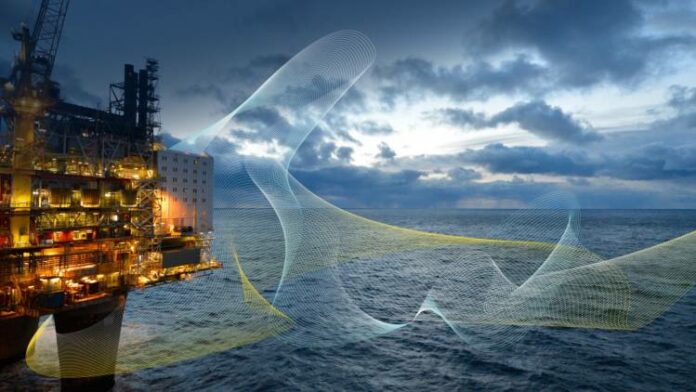
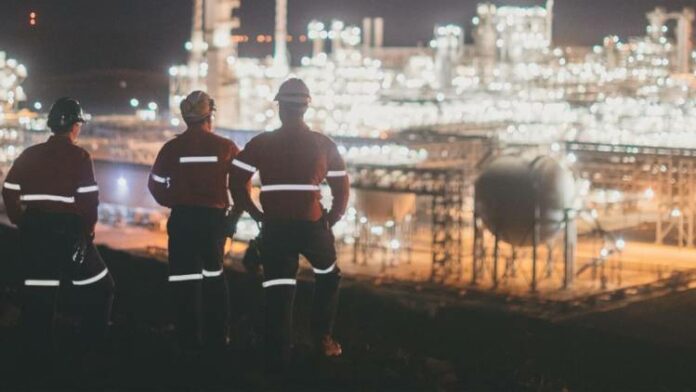
Equinor Technology Ventures is supporting Rocsole’s pipeline deposition scanning technology for offshore operations.

The Finnish company is a specialist in electrical tomographic industrial process monitoring systems. Products include a PIPE sensor, providing real-time information on the flow and deposition buildup in a pipe through a PROBE sensor technology, which can be used in separators when extracting oil and water.

Rocsole has also developed a moving inspection device that scans the entire pipeline’s deposit type and thickness.

Using this information on pipe deposits, pipeline operators can prevent their production systems clogging and lessen the requirement for chemicals to clean the blocked pipe.

Efficient deposition monitoring can also reduce the number of pigging runs, the company points out, reducing the cost of remediation. The tomographic imaging allows measurements to be conducted from inside the pipe without damaging or disturbing it.

“If proven successful, Rocsole’s Deposition In Line Inspection will change the way we operate pipe cleaning and operation,” said Ole Christian Willumsen of Equinor Technology Ventures.

Repsol and Shell Technology Ventures are already supporting the development.

Source:offshore-mag

Spain’s SASEMAR uses EMSA drones for maritime surveillance

0

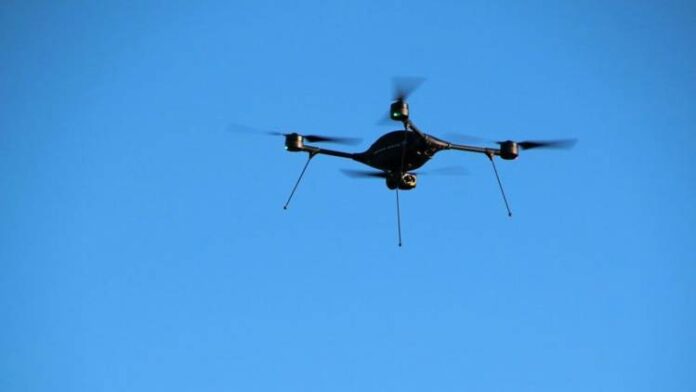
EMSA informed that the Spanish maritime safety agency SASEMAR is using its Remotely Piloted Aircraft Systems (RPAS) in the southern province of Huelva, for identifying and monitoring oil spills, as well as for additional assistance during search and rescue missions.

The RPAS being used is a fixed wing, twin engine AR 5 – Evo, under contract with EMSA from the REACT consortium (Tekever/Collecte Localisation Service). Its capabilities include day and night flights, and it is equipped with electro-optical and infra-red cameras, radar and a still camera for detailed views of objects of interest.

This form of surveillance offers the possibility of detecting ship movements through the Automatic Identification System receiver onboard. It also supports emergency situations as it is fitted with a distress signal receiver. The use of satellite communications can enable the RPAS to fly far from the coastline, giving it a greater geographical reach than radio line of sight operations.

The RPAS drone operations, running until early March, will be coordinated at a distance and the data monitored by officers at the SASEMAR Maritime Rescue Coordination Centre in Huelva. The remote pilot and payload operator will be directing the RPAS flights from a ground control station at the Instituto Nactional de Tecnica Aeroespacial (INTA).

From Madrid, the national search and rescue coordination and operations centre will participate in the operations monitoring the flights using EMSA’s RPAS data centre. This data centre offers an online user interface displaying the flight data in detail (images, video, flight path, etc.)

"The RPAS service is a new way in which EMSA is helping national authorities carry out their essential day-to-day tasks. It is an additional tool which can intervene in many different scenarios where traditional methods have limits,"…explained EMSA’s Executive Director, Maja Markovčić Kostelac.

EMSA’s RPAS services have been developed to assist in maritime surveillance operations to support national authorities involved in coast guard functions. This includes: maritime pollution and emissions monitoring; detection of illegal fishing, anti-drug trafficking, and illegal immigration; border surveillance; and, search and rescue operations.

The operations may be triggered in a number of different ways, including by detections on satellite images provided through the EMSA CleanSeaNet and the Copernicus Maritime Surveillance services.

Source:safety4sea

IMO Sub-Committee to finalize rule for safe mooring

0

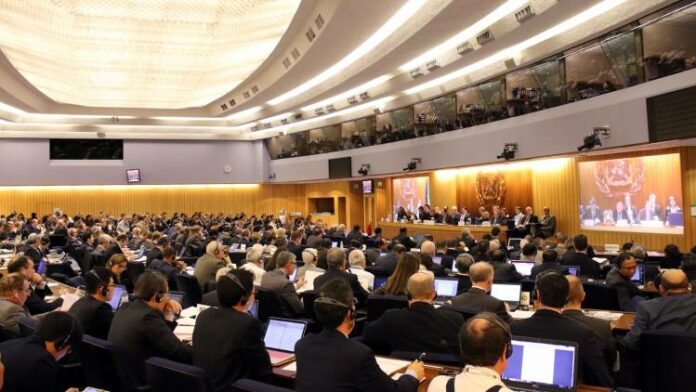
IMO is working to prevent accidents that occur when ships are being moored at their berth in a port. A SOLAS regulation that focuses on better protecting seafarers and shore-based mooring staff from injuries during mooring operations, is set to be finalized by the Sub-Committee on Ship Design and Construction.

Specifically, the meeting that took place between 4 to 8 February, aspires to establish draft guidelines concerning:

  • The design of mooring arrangements;
  • Their inspection and maintenance;
  • Revising guidelines on shipboard towing and mooring arrangements.

Moreover, IMO is also focusing on the safety measures for non-SOLAS vessels that operate in Polar waters and are not covered by the Polar Code, up to now.

The Committee will discuss the first draft of recommendations for safety measures for fishing ships from 24 m length and more and also for yachts, used for pleasure, that are above 300 gross tonnage and aren't involved in trade, that operate in polar waters as well.

An additional crucial chapter is the continuous development of a draft new SOLAS chapter XV based on Safety measures for industrial-personnel-carrying vessels and the associated draft Code.

The latter aspires to provide minimum safety standards for vessels that carry industrial personnel, as well as for the personnel, in order to reassure of their safe transportation prior or after their deployment in relation to the construction, maintenance, decommissioning, operation or servicing of offshore facilities.

Furthermore, the Sub-Committee will also continue its work on developing second generation intact stability criteria, such as

  • Preparing guidelines on the specification of direct stability assessment;
  • The preparation and approval of operational limitations and operational guidance;
  • Vulnerability criteria.

Concluding, the SDC Sub-Committee was opened by IMO Secretary-General Kitack Lim, and is being chaired by Kevin Hunter (United Kingdom).

Source:safety4sea

Equinor Gets Extension for Norne FPSO

0

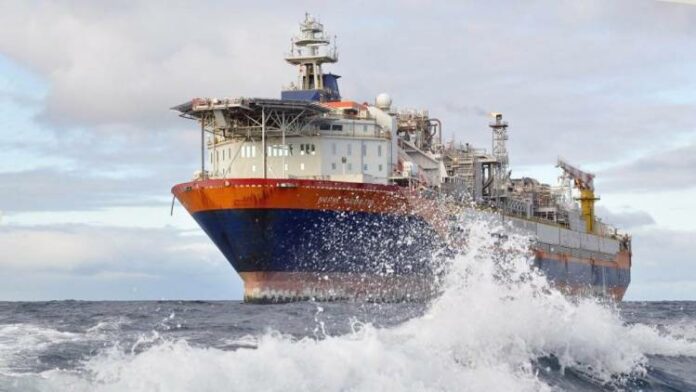
The Norwegian Petroleum Directorate (NPD) has granted consent to Equinor for the extension of production on Norne FPSO with associated facilities for the Norne, Urd and Skuld fields in the Norwegian Sea.

Lifetime extension granted for FPSO is for four years to March 2026, as the operator eyes additional 132m barrels from Norwegian Sea field.

In its application for extension, operator Equinor has described an improved drainage strategy for the Norne field and the nearby Urd and Skuld fields.

The Norne, Urd, Skuld, Alve and Marulk fields are tied in to the Norne ship. The authorities approved an amended Plan for Development and Operation (PDO) which includes several nearby deposits around Norne and Urd in 2008.

Analyses from the operator show that the resource base in the Norne area may contain enough to produce until the end of 2035.

The original recoverable Norne reserves were about 72 million standard cubic metres (Sm3) of recoverable oil (approx. 453 million barrels). Optimisation and measures to improve recovery have increased the recoverable oil reserves to about 93 million Sm3 (about 585 million barrels). 96 per cent of the proven oil reserves have been produced.

There are also five unclarified discoveries within the production licence, as well as six unclarified discoveries in nearby production licences.

The NPD expects that continued work on these will ensure satisfactory recovery of the remaining oil and gas resources.

The Norne field is developed with seven well templates connected to a production and storage vessel (FPSO).

The oil is produced with water injection as drive mechanism. Gas injection stopped in 2005, and all gas is exported.

The oil is exported with tankers. Since 2001, the gas has been exported in a dedicated pipeline to the Åsgard field in the Norwegian Sea, and onward via the Åsgard transport system to the Kårstø terminal in Rogaland.

Source:marinelink

McDermott to manage FEED for Scarborough gas field floater

0

 Woodside Energy has contracted McDermott International to perform front-end engineering and design for a semisubmersible floating production unit (FPU) for the Scarborough gas field development offshore Western Australia.

McDermott’s offices in The Hague, Netherlands, will lead the study and early engineering. There is an option on completion of the program to progress to an engineering, procurement, construction, and installation contract, if Woodside and its partners approve the project.

The FPU, which will be operated remotely and with minimal manning, will process natural gas, with facilities for gas separation, dehydration and compression and monoethylene glycol regeneration and water handling.

The topsides will have a production capacity of 7-9 metric tons/yr (7.7-9.9 tons) and will be placed on a semisubmersible hull in 2,952 ft (900 m) water depth.

Scarborough, which contains 7.3 tcf of gas, is 236 mi (380 km) offshore the Burrup Peninsula in Australia’s North West Shelf.

Development will include 12 daisy-chained subsea wells tied back to the FPU on the field, with production sent for processing on the Burrup Peninsula.

Source:offshore-mag

U.N. Security Council Focuses its Attention on Maritime Crime

0

Transnational maritime crime is becoming more sophisticated as criminal groups exploit the open spaces of the high seas, warned Yury Fedotov, Executive Director of the United Nations Office on Drugs and Crime (UNODC), in a United Nations Security Council hearing on Tuesday. The discussion was the first in the council's seven decades of history to focus on this global security challenge. 

"Two-thirds of the world's surface is ocean. Nearly all of that is beyond any state's territorial waters and largely not subject to a single state criminal jurisdiction," said Fedotov. "In recent years the freedom of navigation is being exploited by criminal groups. Transnational maritime crime is increasingly sophisticated, and it is expanding, both in terms of size and types of criminal activities."

Preventing and responding to maritime crime can often be difficult, Fedotov said, since it often involves vessels, cargoes, crews and financing from different regions. These crimes include:

– piracy and armed robbery at sea in the Gulf of Guinea;
– kidnap for ransom in the Sulu and Celebes Seas;
– smuggling of migrants and terrorist material as well as attacks on shipping in the Gulf of Aden;
– cocaine trafficking in the Atlantic and Eastern Pacific;
– heroin trafficking in the Indian Ocean;
– illegal fishing in the Atlantic, Indian and Pacific oceans; 
– and migrant smuggling in the Mediterranean.

"These crimes pose an immediate danger to people's lives and safety, they undermine human rights, hinder sustainable development and, as this Council has recognized, they threaten international peace and security," he said.

Fedotov emphasized the importance of all countries ratifying and implementing international commitments, including the UN Convention against Transnational Organized Crime and its protocols, and providing technical assistance. He welcomed the Security Council's continued engagement to help strengthen cooperative action against transnational maritime crime.

The Convention against Transnational Organized Crime entered into force in 2004, and it has 147 signatory countries. Three subsequent protocols on human trafficking, migrant smuggling and gun-running are also in force, but have fewer signatories.

UNODC's Global Maritime Crime Programme (GMCP) conducts a wide range of anti-piracy and anti-crime assistance initiatives, from institution-building work with courts, prosecutors and prison systems to training programs for national coast guards. It has its origins in the UN-backed anti-piracy initiative in the Horn of Africa, and following the broad success of that effort, it has expanded its work worldwide. 
 

Source:maritime-executive

Royal Navy Boosts Autonomous Vessel Capabilities

0

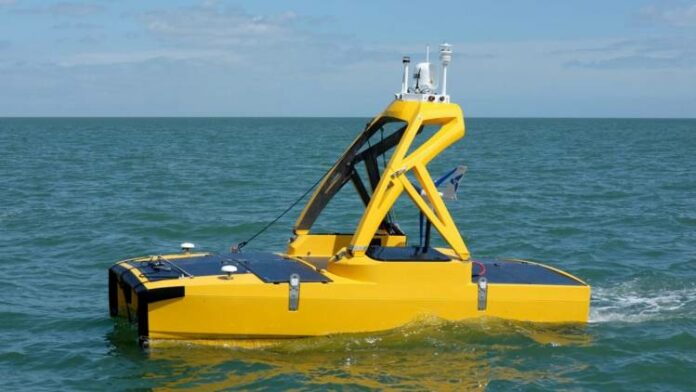
L3 ASV has delivered a long-endurance autonomous vessel known as the C-Enduro to the Royal Navy. The C-Enduro will be used for military data gathering trials by the Mine countermeasures and Hydrographic Capability program, as the Navy seeks to exploit autonomous technology.

The 4.8-meter (16-foot) vessel is equipped with 10 sensors combining scientific and hydrographic survey equipment. The vessel operates using L3 ASV’s proprietary control system and is fitted with the company's advanced autonomy package which has a range of autonomous control modes, including line following, station-keeping and geofencing.

Last year, the Royal Navy tested its first autonomous system to deal with 21st-century mines. Motor boat Hussar can be sent off on missions, using a series of small, hi-tech boats trailed behind it to detonate the latest underwater explosive devices – potentially clearing minefields en masse.

The Royal Navy last conducted real-world sweeps off Iraq in 2003 using remote-controlled boats, while HMS Ledbury conducted the final run out of traditional sweeping gear off the Isle of Wight in 2005.

Modern mines can be sophisticated enough to take out a specific ship or class of ship if they know its signature. Hussar is an 11-meter mother ship which is followed by a series of small boats designed to replicate ship signatures to trigger the mines and use lessons learned from IED blasts on vehicles in Iraq and Afghanistan to deflect and dissipate any resultant blast so that damage is minimal.

C-Enduro Details

Length: 4.75m
Beam: 2.22m
Height: 3.43m
Draft: 0.52m keel up
Weight: 910kg lightship
Propulsion: 2 x DC brushless motors
Speed: Up to 6.5 knots
Endurance: 30+ days depending on power configuration
Control: ASView for direct, semi-autonomous or autonomous control
Communications: Radio/satellite
Solar panel system: 10 high efficiency panels generating a peak electrical power of 1100W
Diesel generator system: Electric start diesel generator providing a peak charging power of 4.0kW. Can be run continuously for higher speed and payload missions
Wind turbine system: Lightweight three blade system generating a peak output power of 500W
Sensor options: ASV 360 VIR camera, Keel mounted sensors, CTD lowered by winch, meteorological sensors, ADCP, MBES, side-scan sonar, PAM, acoustic modem, ASW (towed array or dipping), electronic warfare.

Source:maritime-executive
Huge Increase in Arctic shipping

0

Data from Russia’s ports and Northern Sea Route show that the volume of goods being shipped out into the Arctic waterway are up by 25 percent 2018.

According to information from the Russian Transport Ministry, a total of 92.7 million tons was handled by regional seaports, of which almost 70 percent was oil products and liquified natural gas.

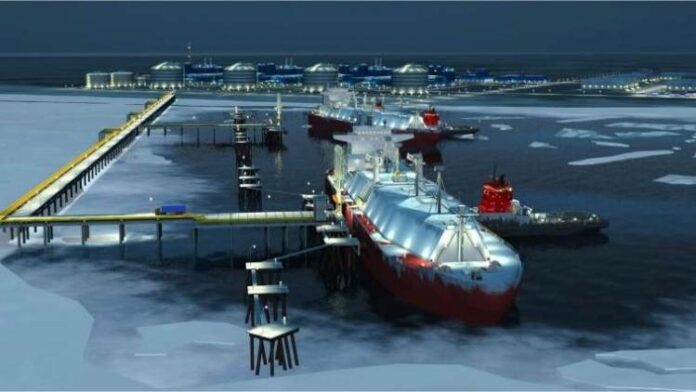
The biggest increases came in Sabetta, which sits on the icy Yamal Peninsula in the Kara Sea, according to Bellona. With Novatek’s $27 billion Yamal LNG project now in commercial production, Sabetta has seen a 130 percent increase in the volume of cargo it handles – up to 17.4 tons for 2018.

Ports in Murmansk alone handled some 60 million tons of cargo in 2018 – an 18.1 percent boost over volumes from the year before. Archangelsk ports saw their volumes grow by 15 percent.

Other key seaports in the Russian north are also experiencing significant growth.

The goods turnover in regional port is reflected in the growing Russian shipping through Arctic waters, said a report in Arctic Today.  In 2018, the volumes of goods shipped on the Northern Sea Route amounted to more than 18 million tons.

Source:marinelink

The world’s first LNG icebreaker, Polaris, fills its tanks with liquefied natural gas in Tornio

0

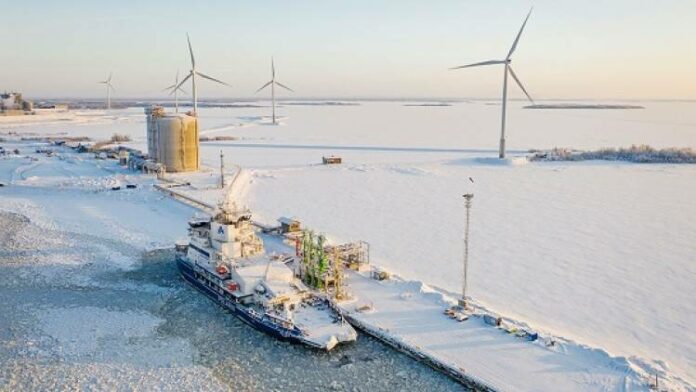
This winter, the icebreaker Polaris’ environmentally friendly properties can be measured more comprehensively as it will be refueled with liquefied natural gas (LNG) at the Tornio LNG terminal. Polaris is the world’s first icebreaker to use an LNG engine.

On Saturday 2 February, Polaris refueled for the first time at the Nordic countries’ largest liquefied natural gas terminal in Tornio in the icy Röyttä Harbour, Finnish Transport Agency says in a press release. As of yet, LNG is the world’s most environmentally friendly ship fuel. It does not contain sulphur, and its combustion generates approximately 87% less nitrogen oxides in comparison to regularly used Marine Diesel Oil (MDO). Furthermore, LNG’s particulate matter emissions are nearly non-existent.

From the outset, Polaris was designed as an icebreaker that combines efficiency with environmental friendliness. “This is the third winter in the demanding, icy conditions of the northern Baltic Sea for the world’s first LNG-powered icebreaker. Polaris has met our expectations with flying colours proving that it is truly a next generation icebreaker,” says Markus Karjalainen, Head of the Winter Navigation Unit of the Finnish Transport Infrastructure Agency (FTIA). FTIA is responsible for Finland’s icebreaking services and for making sure that Finland’s harbours can be accessed throughout the year.

All sectors of transport endeavour to reduce emissions. “Tornio’s new LNG terminal enables increased use of LNG when operating in the Bay of Bothnia,” Karjalainen states. “Until now, the northernmost suitable terminal was located in Pori, which is way too far from Polaris’ operating area in the far end of the Bay of Bothnia. Some LNG has been delivered by truck, but Polaris has had to rely mainly on diesel.”

The world’s most environmentally friendly diesel–electric icebreaker, Polaris, joined the fleet of the state’s icebreaker shipping company, Arctia Icebreaking Ltd, in September 2016. By being one of the world’s first shipping companies to start using LNG, Arctia promotes the transition towards cleaner fuels in navigation. This development is not only significant for the Finnish maritime cluster but also for national and international climate objectives.

“In addition to using LNG, all of Polaris’ operations aim at environmental friendliness. For example, the lubricant used in the ship’s propulsion system is biodegradable. The ship’s grey water, which basically consists of showering water, is collected to a container which is emptied during port calls. In other words, nothing is released to the sea, even if it the water has been purified,” says Pasi Järvelin, Master of Polaris.

Source:portnews

NYK Vessel Conducts Trial Use of Biofuel for Decarbonization

0

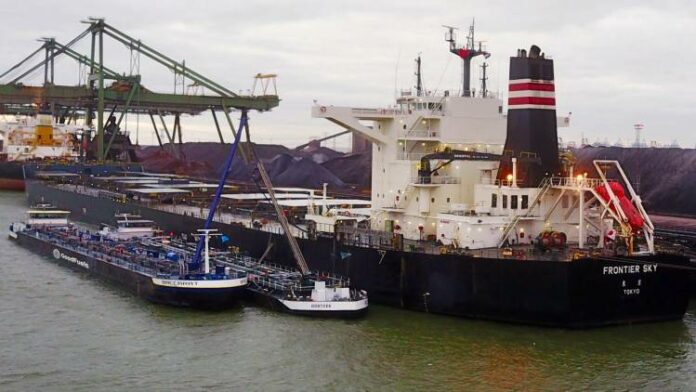
On January 30, NYK dry bulk carrier Frontier Sky conducted a trial use of biofuel in Europe after the biofuel was bunkered at the port of Rotterdam, Netherlands. This trial was performed in collaboration with global mining company BHP and leading sustainable biofuel company GoodFuels.

Biofuel is a fuel that is derived from renewable sources – in this case the biofuel is made from waste oils such as used cooking oil. Biofuels are considered to be carbon-neutral because the carbon dioxide that is absorbed by the source of the biomass is equal to the carbon dioxide that is released when the fuel is burned, thus helping the fuel to gain more attention around the world. In addition, because the emission of sulphur oxides (SOx) from biofuel is significantly lower compared to conventional fossil fuel, using biofuels helps meet regulations entering into force in 2020 capping sulphur content in marine fuels.

For the arrangement of the bunkering of the biofuel at Rotterdam, blockchain technology was used as a trial. This technology enhances the traceability of marine fuel and provides a clear chain of custody for better quality assurance in the bunker fuel supply chain.

NYK’s medium-term management plan includes the group’s intent to integrate environmental, social, and governance (ESG) initiatives into management strategy by establishing new medium- to long-term environmental targets.* To achieve these goals, NYK continues to team up with partners and promote the use of environment-friendly marine fuels such as biofuel and LNG fuel.

* Medium- to long-term environmental targets
NYK’s reduction targets for GHG emissions are 30% per ton-kilometer by 2030 compared with a 2015 base year, and 50% per ton-kilometer by 2050 compared with the same base year. These targets have been recognized as science-based by the international Science Based Targets (SBT) initiative. Regarding its environmental initiatives and disclosure, NYK has been highlighted as a global leader on corporate climate action by environmental impact non-profit organization CDP, achieving a place on the Climate Change A List.

About Frontier Sky
Length Overall: 291.973 meters
Breadth: 45.00 meters
Designed Draft: 18.2235 meters
Gross Tonnage: 93,182 tons
Deadweight Tonnage: 179,288 tons
Builder: Hyundai Heavy Industries Co., Ltd.