-3.3 C
New York
Home Blog Page 1151

WoodMac: Oil and gas exploration to advance in 2019

0

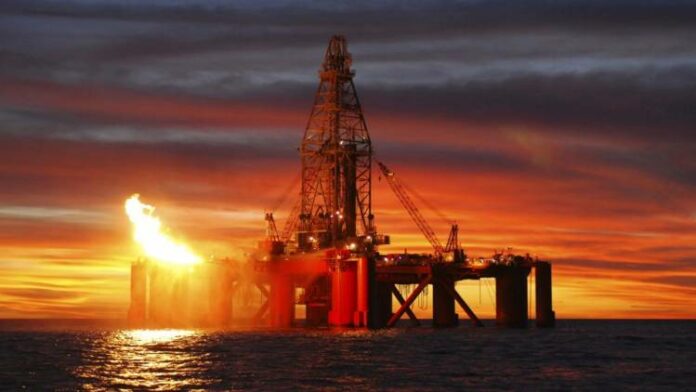
After a rough few years, the exploration sector is back in the black, Wood Mackenzie says. Namely, explorers' success in 2018 shows a disciplined approach that will continue throughout 2019. As Dr. Andrew Latham, vice president, Global exploration, mentions, the sector will experience a long-overdue recovery.

Dr. Andrew Latham, explained that conventional exploration returns hit 13%, which is the highest calculated in more than 10 years. Now, as 2018’s discoveries are appraised and projects move through the development cycle, these economics are expected to improve.

Last year, exploration added at least 10.5 billion barrels of oil equivalent (boe) in conventional new field volumes. This was split 40:60 oil to gas. Dr Latham said: These volumes will increase, due to further disclosure and appraisal. A similar resource creep from the initial year-end estimates has averaged around 40% over the decade.

Regarding 2019, Dr. Latham noted that the Americas will receive a lot of attention. Specifically, Latin American accounts for one third of global large and giant prospects scheduled for drilling in 2019. This region will also experience one-third of the potential play-opening wells, with reservoirs in Brazil, Guyana and Mexico attracting the most investment. In addition, southern and western Africa will also see a resurgence in offshore exploration.

Nevertheless, the exploration sector will continue to be an exclusive club in 2019. The recent increase in exploration economics over the last two years indicates how the sector has thinned. Less companies are drilling fewer wells, and many companies have reduced their exploration spend.

The companies that are sticking with exploration have renewed confidence:"A stronger oil price, lower cost base, refocused portfolios and greater drilling success in 2017-2018, and a healthy inventory of new quality acreage have cheered up the industry. It is using more efficient rigs at lower rates, and avoiding technical complexity. These changes will help the industry stay on track and continue to be profitable."

Companies will now focus on their best prospects, with global exploration and appraisal spending for 2019 staying close to its 2018 level of just under US$40 billion per year, Dr. Latham added.

Nonetheless, while some governments have made adjustments to fiscal and regulatory regimes to promote exploration, others decided to shift to a non-carbon future by banning exploration.

Source:safety4sea

‘Whaling’ attacks are on the rise

0

Several hackers are pretending to be high-level executives in the shipping industry to launch 'whaling attacks'. These attacks aim to steal credentials or even compromise the system. These hackers are targeting various types of employees with social-engineering.

Whaling attacks are not new, but they grow, with the FBI noting that these attacks resulted in losses of more than $12.5 billion during 2018.

Namely, scammers are using social engineering to pretend to be high level executives, in order to trick victims into conducting various activities, including opening malware attachments or transferring payments to suspicious accounts.

In order to do that, they first collect many publicly available information about the targets, such as data from social-media pages and personal facts. After that, in a common scenario, they send e-mails to the victims saying that the supplier’s bank details have changed. To make the e-mail more credible they use the correct logo and name so the victim would recognize it, saying that bank details are changed for the next payment run to the supplier. However, this is a scam and the money is gone.

What is more, the hacker pretends to be the CEO or a high-ranked executive using information they gathered for the victim online. Then the scammers wait until the person they pretend to be posts that they are going on a vacation or will be on a long flight, and sends an email to someone in the finance team, asking them to make an urgent payment. Many times attempts to validate the request fail because that person is on a long flight, so the payment is made.

However, there are ways to prevent these attacks. According to Gard Club and DNV GL, these are the things you can do to improve cyber-security:

Do not let anyone uninvited into the system

This will be achieved by:

  • Securing the computers, by using antivirus and updating the systems;
  • Update ship operation systems;
  • Use only company-approved software.

Personal awareness

  • Be very careful about the e-mails you are receiving;
  • Search the facts, such as the name of the person/company that sent the e-mail.

Infiltration by malware

In order to prevent a cyber criminal by infiltrating through a malware:

  • Never insert anything on the computer before making sure it is clean;
  • Check the device that you want to insert offline for viruses;
  • Do not let third parties enter data alone.

Physical protection

Just like a door, computers must be protected physically as well. This can be done by:

  • Using ID card authentication;
  • Using long passwords of at least 8 characters that contain upper and lower letters, numbers and symbols;
  • Protect your passwords.

Segregated networks

  • No personal items must be connected to sensitive networks;
  • Secure the stations for file sharing;
  • Be careful what you share online and put tape over the camera and laptop on your computer.

In case of an attack

In case an attack does happen after all, Gard Club and DNV GL, recommend three steps that must be done immediately after the attack is noticed:

  • Follow the company's procedures;
  • Report immediately to the supervisors;
  • Never pay the ransom and follow the company's procedures.

Source:safety4sea

Modern ships more vulnerable at cyber attacks

0

A little after BIMCO published the new guidelines to improve cyber security, secureworld provides further insight on how ships can be hacked. Namely, modern ships are floating computer networks and have more and more systems that can be compromised.

According to Bruce Sussman, SecureWorld’s MMJ (multi-media journalist), ships are increasingly connected to the internet and are becoming more technologically advanced. This situation increases the risk of cyber attacks.

For example, a new-build dry bulk ship was delayed from sailing for several days because its ECDIS was infected by a virus. The virus was quarantined and the ECDIS computers were restored, but the delay costed hundreds of thousands of dollars.

The fact is that ships are essentially becoming floating computer networks. The most characteristic example are cruise ships. On these ships Wi-Fi works most of the time, enabling the passengers to stay connected in the middle of the ocean. This too increases the chance of hackers connecting to the ship.

The new report by BIMCO aims to raise awareness on which systems are the most vulnerable and must be protected with onboard cyber-security. These are:

  • Communications systems, from satellite connections to Wi-Fi networks to public address and alarm systems;
  • Bridge systems, like GPS and other positioning and charting systems, and the Global Maritime Distress and Safety System;
  • Propulsion and machinery power control systems, like the engine governor and integrated ship controls;
  • Access control systems, like the closed circuit cameras, shipboard security alarms, and bridge navigation alarms;
  • Passenger information systems, like financial and billing systems and electronic health records for those who visit the doctor;
  • Passenger-facing networks, like public Wi-Fi and guest entertainment systems;
  • Core infrastructure systems, like routers, switches, firewalls, intrusion prevention systems, and security event logging;
  • Administrative systems, like crew tracking and personnel systems and crew-facing Wi-Fi or networks.

Moreover, the report notes that ships arrive at ports and receive customs forms and cargo documents from some places that have high cyber-security and others that may have no clue about it. This creates problems, Mr. Sussman says, explaining that: "A shipowner reported that the company’s business networks were infected with ransomware, apparently from an email attachment. The source of the ransomware was from two unwitting ship agents, in separate ports, and on separate occasions. Ships were also affected but the damage was limited to the business networks."

Source:safety4sea

Teledyne Gavia Introduces SeaRaptor 6000m AUV at Ocean Business

0

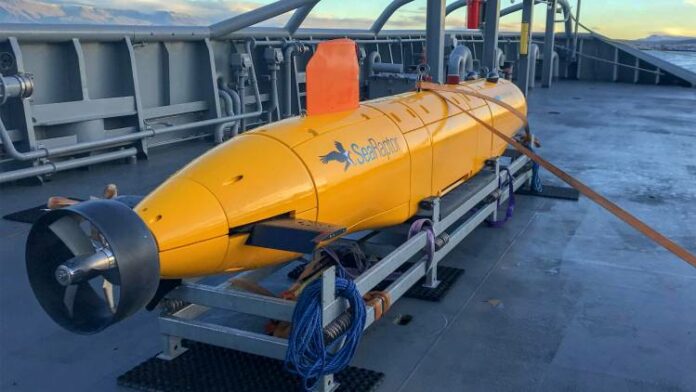
A global leader in the provision of Autonomous Underwater Vehicles (AUVs), Teledyne Gavia announced today that the company will formally introduce their new 6000 meter rated AUV, SeaRaptorTM, at Ocean Business in April.

The newly designed SeaRaptor AUV incorporates a broad range of Teledyne content including acoustic modems, ascent and descent weight releases, a black box pinger locator, sub-bottom profiler (Teledyne Benthos, Falmouth, MA), multi-beam echosounders, obstacle avoidance multi-beam sonar (Teledyne RESON, Denmark), Doppler Velocity Log (DVL), Current, Temperature, and Depth sensor (CTD) (Teledyne RD Instruments, San Diego, CA), and onboard processing software (Teledyne Caris, New Brunswick, Canada). In addition, the first vehicle delivered also carried an Edgetech Side Scan Sonar with Dynamic Focus capability, an iXblue Phins 6K INS system, and a CathX Camera and strobe system. The integration of Teledyne Marine’s industry leading vehicle design, instrumentation, imaging, and interconnect solutions from a single supplier, as well as the incorporation of third party sensors into a turnkey package for customers, makes the company unique in the unmanned underwater vehicle market.

“Teledyne is excited to formally introduce the market to SeaRaptor, our new deep rated AUV”, said Thomas Altshuler, Vice President and Group General Manager for the Teledyne Marine Vehicle group. “In SeaRaptor, the Teledyne Marine team has introduced a high performance AUV capable of carrying the most advance marine sensors available in the market. We have already delivered our first vehicle and see significant opportunities for SeaRaptor.”

Cash raised to help fund innovative CNG carriers

0

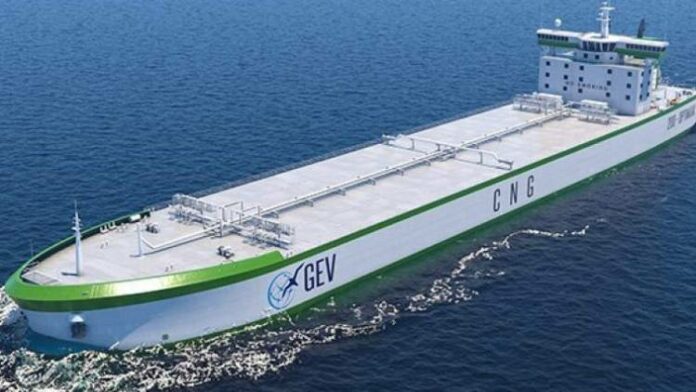
Cash has been raised for an impending series of innovative new gas ships. Australia-based Global Energy Ventures (GEV) has raised A$4.7m in an equity placement, helping it on its way to order four compressed natural gas (CNG) carriers later this year. The 185 m long ship designs from GEV can carry 200 MMscf of gas.

GEV’s executive chairman, Maurice Brand, said: “This successful capital raising positions GEV to accelerate its plans for 2019, with the absolute key focus to deliver a CNG final investment decision and order four CNG optimum 200 ships.”

Following extensive discussions with almost 20 shipyards during 2018, four shipyards have now been shortlisted to build the vessels, which feature 140 km of pipes. A decision on which yard to place the order will be made in the next couple of months.

GEV states on its website its goal is to become a world leader in the shipping of CNG.

Among well known names associated with the venture, Jens Martin Jensen, formerly John Fredriksen’s right hand man, is listed as a boardmember.

Source:splash247

Minesto makes product development progress; sets DG100 wing specs

0

Minesto has launched a tender to source a manufacturer of the wing for the company’s new DG100 model. The wing will be built on a new design that is the result both of learnings from Minesto’s ocean trials in Northern Ireland and Wales and the extensive CFD simulation expertise Minesto has built over the last few years.

“The team is making great progress in the DG100 project. The new wing design introduces several enhancements to further increase the performance of our Deep Green technology. It is also representative of what next generation utility scale power plants will look like”, said Minesto’s CTO Bernt Erik Westre.

The most visual changes to the wing design of Minesto’s DG100 model are the winglets and the anhedral angle.

The two most noticeable items of the new design are winglets and the anhedral (downward angle, common on military fighter aircraft) wing shape. The combination of these generate a considerable higher lift force, without increasing the wing span, while at the same time improving the efficiency and manoeuvrability of the power plant. Other enhancements include integrated sensors and front strut attachments as well as a new section profile.

DG100 – Minesto’s first Microgrid unit

The DG100 is the first model being developed in Minesto’s product line Microgrid of the company’s unique and patented marine energy technology. In contrast to the larger Utility Scale design, which targets industrial-scale electricity generation to centralised power grids, the Deep Green Microgrid systems targets off-grid environments, such as remote islands or communities, aquaculture and other off-grid users.

The first two DG100 installations is planned to be made in the Faroe Islands, where Minesto in November signed a collaboration agreement with the local utility SEV for the first phase of adding substantial tidal energy capacity by Minesto’s Deep Green technology to the Faroe Island’s energy mix.  
 

Shell Offshore to pay $2.2m fine for 2016 Green Canyon spill

0

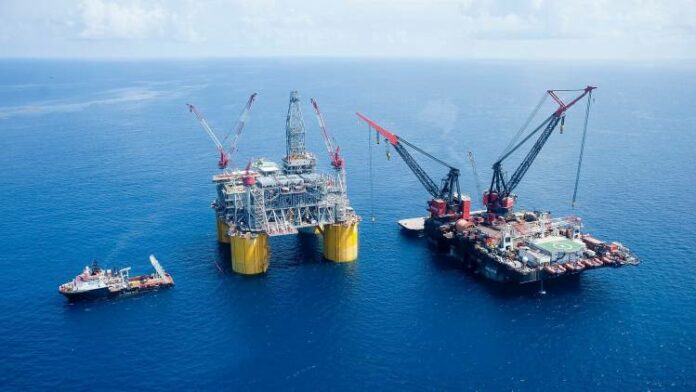
Shell Offshore, a subsidiary of Royal Dutch Shell, has agreed to pay a $2.2 million civil fine to settle charges it violated the Clean Water Act after a subsea pipeline crack at the Green Canyon field saw 1,900 barrels of oil spill into the Gulf of Mexico in May 2016.

According to The Times-Picayune, the fine will be paid after the expiration of a 30-day comment period and deposited in the Oil Spill Liability Trust Fund.

The fine is in addition to $3.9m Shell Offshore agreed to pay last year to US state and federal agencies.

Shell has also agreed to improve its leak-detection training program, and will develop training that incorporates the set of circumstances that led to the 2016 spill.

Source:splash247

UK Plans to Temporarily Waive Customs Checks on EU Goods

0

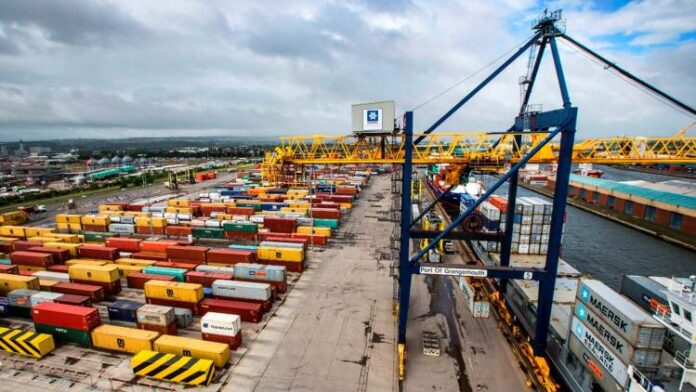
The government of UK Prime Minister Theresa May is making bold unilateral moves to avoid the potential impact of a "no-deal" Brexit on Britain's seaports. Her administration has already contracted with three freight ferry operators for extra cross-Channel capacity, and on Monday, it announced that most truck-borne EU goods will not be subjected to time-consuming inspections upon arrival. 

In the event of a "no-deal" Brexit, British customs officials "will allow most goods moving from [20] listed roll on roll off locations to leave the UK port or train station before you’ve told us that the goods have arrived,” HM Revenue and Customs told importers in guidance released Monday. Importers will have until the end of the next working day to provide notice to customs. These "transitional simplified procedures" are temporary, and HMRC will review them after three to six months.

The measure will take some of the pressure off of the UK's busy cross-Channel seaports – especially Dover – which have warned of significant delays in the event of a "no-deal" Brexit. Dover has long warned that even brief customs checks on arriving trucks could lead to serious congestion problems at the port. 

Last October, Brittany Ferries CEO Christophe Mathieu predicted that the UK might drop customs inspections on its own if it could not negotiate a post-Brexit trade agreement with the EU. “The British may take a pragmatic approach and wave lorries through upon arrival into the UK,” he said. “But cross-Channel trade works both ways. In a worst case scenario, British hauliers carrying refrigerated goods could face the prospect of far longer journeys – perhaps hundreds of additional miles – to find a French port equipped to process their consignment. When they finally get there they could encounter further delays waiting for checks to take place."

May has yet to negotiate a transition agreement that satisfies both the EU and Britain's parliament, and the odds of an abrupt exit from the European Union are rising as the March 29 deadline approaches. A previously announced plan to charter in additional ferries is said to have fallen short of the target for 20 percent of additional ro-ro freight capacity, raising the prospect that other measures may be required.

Source:maritime-executive

Tankers with Venezuelan Oil Collect off US

0

A flotilla loaded with about 7 million barrels of Venezuelan oil has formed in the Gulf of Mexico, some holding cargoes bought ahead of the latest U.S. sanctions on Venezuela and others whose buyers are weighing who to pay, according to traders, shippers and Refinitiv Eikon data.

The Trump administration's move to impose sanctions last week was meant to undercut support for Venezuelan President Nicolas Maduro by targeting the Latin American nation's oil exports to the United States, the source of most of its foreign revenue.

The sanctions aim to block U.S. refiners from paying into PDVSA accounts controlled by Maduro – one reason numerous tankers are waiting in limbo off Venezuela with payments unclear. The United States buys 500,000 barrels of Venezuelan crude per day.

U.S. customers of Venezuela's state-run PDVSA are required by sanctions to deposit payments into escrow accounts that have not yet been set up. The funds will be controlled by Venezuelan congress head Juan Guaido, whom the United States, the European Union and much of Latin America recognize as the country's leader.

Neither the U.S. Treasury Department nor White House responded to requests for comment.

There were over a dozen tankers this week anchored in Gulf of Mexico or outside of Venezuelan waters, according to the Refinitiv Eikon data, as shippers await payment and delivery directions from buyers.

Traders said some of the cargoes were used as floating storage by buyers who took advantage of PDVSA's open market sales ahead of sanctions. Others were held by trading firms struggling to find refiners willing to take the oil due to payment difficulties related to sanctions.

"There were many cargoes of Venezuelan crude already in the Gulf when sanctions were announced," said a trader who deals with PDVSA. Others are stuck because holders "cannot find who to sell them to due to sanctions," the trader said.

The tankers had been chartered by regular U.S. buyers of Venezuelan oil, including Chevron Corp, PDVSA's refining unit Citgo Petroleum and Valero Energy, and trading houses that sell to refiners.

"Everybody is still working through the mechanics of things, still trying to figure out how freights are going to get paid and is sitting on the sidelines waiting for this to roll out," said one ship broker on Monday who was not authorized to speak publicly.

Chevron and Valero declined to comment. Citgo did not respond to requests for comment.

Separately, a few tankers that had waited for weeks to lift oil bound for U.S. customers left the Venezuelan port of Jose over the weekend without loading, according to Refinitiv data.

The oil fleet in Gulf waters grew as a bottleneck earlier formed around Venezuelan ports by tankers awaiting authorization to load. PDVSA has said it will only sell to certain customers that prepay for cargoes.

Outside of U.S. waters, there were also tankers loaded with Venezuelan crude and idling in the Caribbean and Europe, the Refinitiv data shows.

Source:marinelink

ABS and Industry Collaboration Identifies Key Challenges with Ballast Water Management Systems

0

ABS recently issued questionnaires and hosted Ballast Water Management (BWM) Workshops, receiving feedback from across the globe from shipowners and operators with BWM systems installed onboard their vessels.

As ships come into compliance with ballast water management requirements, it is important to consider some of the common system challenges and best practices for operating these systems,” said ABS Senior Vice President for Engineering and Technology, Derek Novak. “The responses we received from the owners and operators who attended our workshops helped us gain a broad industry perspective from around the globe, which we will use to develop and enhance our guidance to industry.”

Global workshops were held in New Orleans, Shanghai, Hong Kong, Singapore and Athens. Workshop attendees spent a large portion of the day reviewing the best practices that support successful BWM system integration, exploring both common and unique challenges resulting from different applied technologies, various ship types and sizes, operational and environmental conditions, operating frequency, crew competencies, BWM system maintenance requirements and feasible contingency measures.

To help focus discussion and drive the agenda, workshop participants completed a comprehensive questionnaire covering the critical aspects to consider in selecting, installing and operating a BWM system. Aggregated results allowed common issues – as well as any outliers – to be identified. In analyzing the results from the gathered responses, it is clear that many in the marine industry are making efforts to get systems fully functional and in operation to meet U.S. Coast Guard or IMO compliance timelines. Responses indicate that the number of completely inoperable systems has dropped from 14%, down to 6%, since ABS last conducted a questionnaire in the fall of 2017.

Key insights gained during the workshop include:

• Incorporating ship-specific contingency measures within the BWM Plan helps avoid potential downtime and financial penalties;
• System-specific training, both for shoreside support and ship crew, is critical for effectively operating and maintaining a BWM system:
• Monitoring key data and operational trends and understanding system design limitations helps crew determine the suitability of the treatment technology for a vessel’s planned operational routes;
• Vendor after-sales global support and expertise is critically important for uninterrupted system operation.

“We commend ABS for taking the lead on this topic and facilitating dialogue on such a critical issue to the industry,” said Crowley Maritime Corporation Director of Engineering Contracts, Roy Choudhury. “By participating in the questionnaire and the workshop, we were able to hear from others in the industry who are experiencing similar challenges and share strategies that can benefit the broader marine industry, helping us all meet and achieve environmental compliance objectives.”

ABS is updating the Best Practices for Operation of Ballast Water Management Systems Report, last published in August of 2017. The updated 2019 Report aims to capture all the key discussions items, lessons learned and valuable insight shared by the workshop attendees with respect to the installation and operation of BWM systems