-5.2 C
New York
Home Blog Page 1144

World’s first artificial intelligence technology on cruise ship

0

MSC Cruises launched ZOE, the world's first virtual personal cruise assistant using artificial intelligence technology. ZOE is a voice-enabled artificial intelligence tool, that will be located in every stateroom. The technology provides information depending on the cruise, while it also speaks seven languages. ZOE will be firstly launched on MSC Bellissimma and then will be available in every ship, including future ones.

Mainly, the technology can answer hundreds of questions about the cruise. It can be activated with the phrase 'OK ZOE', prior to any questions.

To make sure ZOE would answer to anyone, she has been programmed and trained to respond to more than 800 of the most usual questions with thousands of different variants of each question.

ZOE has been tested many times in order to transform the natural speech to text and back again to natural speech.

As an artificial intelligence solution, ZOE is designed to continue learning and developing her responses based on real guest interactions.

Concluding, Gianni Onorato, MSC Cruises' CEO reported that the technology was built into the very design of the new ships, incorporated into every step of the development process of each prototype, from conception to construction.

Source:safety4sea

A Market Niche Seeking a Transportation Technology

0

While maritime transportation offers the lowest costs per container, a portion of the market seeks fast delivery of their containers. This market niche sends containers by rail between China and Europe, at higher transportation costs, and it is extending across the ocean where an evolving technology could carry containers much faster than ships and at much lower rates than heavy-lift freight aircraft.

Introduction

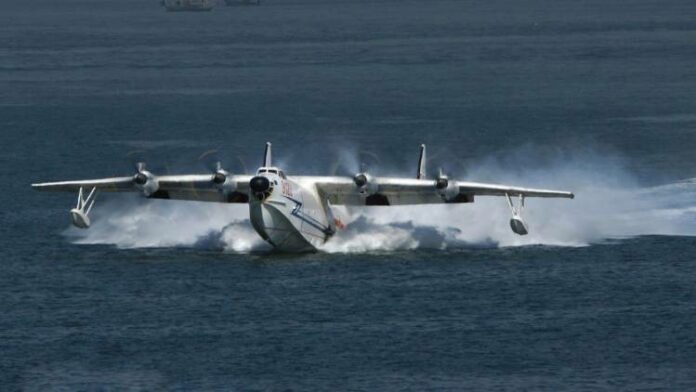
A market for faster transportation of containers has been developing over several years. Across extended distances separated by ocean, wing-in-ground effect transportation technology shows possible promise. Russia built the Caspian Sea “Monster” also known as the “Ekranoplan” that was originally intended for military transportation. Boeing developed a concept ground-effect plane called the “Pelican” that was intended to fly with 300-feet wingspan. It was intended to travel a few feet above water across ocean and on approaching a coast, increase altitude to up and over 10,000 feet. Boeing suspended the Pelican project.

Present wing-in-ground effect vessel builders have so far developed small versions of the technology, several utilizing the triangular or reverse delta wing profile while a single German builder utilizes the tandem wing arrangement. Triangular wing builders are located in Singapore, South Korea, Germany and Australia. Russian designers combine the rectangular main wing with a high-mounted tail wing, a feature also common to the triangular wing variants. One Russian concept proposes to carry four lengthwise rows of containers, placed in six columns built into special compartments across the upper width of each “blended” wing that involves extreme chord length.

Heavy-lift Freight Aircraft

While several designs of heavy freight aircraft are able to carry standard shipping containers, these heavy-lift carriers operate mainly in military transportation service. Boeing has shown a simulation presentation of a concept civilian heavy-lift carrier of 28 standard shipping containers stacked in two levels of 14 containers carried width-wise, with rapid loading and unloading capability. The largest heavy-lift freight aircraft in the world is the Russian built Antonov-AN-225 with a take-off weight of 700 tons. 

Many commercial companies engage in fast transportation of freight using modified commercial aircraft, but they have been reluctant to develop air transport of standard containers. Fuel consumption represents the single biggest cost factor in commercial freight aviation, and very few airports internationally can serve an aircraft of 700-ton weight and 289-foot (88-meter) wingspan. 

The market for international fast transportation of standard shipping containers may require a trans-oceanic vehicle that is faster than ships and perhaps travels at the speed of a long-distance fast freight train, while consuming a fraction of the fuel of heavy-lift commercial aircraft. There may be an evolving market application for a large, heavy-lift wing-in-ground effect vehicle that lifts off from and touches down at seaplane runways.  

Fuel Consumption

Fuel consumption varies with engine power output that in turn varies with vehicle speed. Aerodynamic (hydrodynamic) drag varies with the square of vehicle speed while power required = drag x speed making power vary with the cube of the speed. Doubling vehicle speed increases power requirement by a factor of eight, in turn increasing energy consumption by a factor of eight. For equal weight and frontal cross sectional area, a ground effect vehicle traveling close to a ground or water surface will require a third of the power of the identical vehicle flying at 1,000 feet elevation using aeronautical wings. 

Air density at ground level is 1470/347 = 4.25 times that at 35,000-feet, so converting a jet liner to a ground effect vehicle will increase power requirement and fuel consumption by a factor of 4.25/3 = 1.42 times. By slowing the plane from 500 mph to 250 mph, power requirement and fuel usage would drop to 1.42/8 = 0.18 or about 20 percent of the amount consumed at 35,000 feet at 500 mph. A type-A ground effect vehicle built up to 2,000 tons laden weight and carrying standard shipping containers, could touch down on and lift off from designated seaplane runways at protected bays and inlets.

Vehicle Economics

Economy-of-scale would contribute to the economic case of large type-A ground effect vessels built to several times the laden weight of commercial freight aircraft and traveling at about a third the speed to reduce energy consumption. While carrying many times containers as freight aircraft, the transportation cost per container is intended to be a fraction of that of such aircraft. A percentage of the market may be willing to delay delivery of their containers by a few hours compared to air freight, to realize savings in transportation rates. Builders may need to collaborate to build such a vehicle.

Potential Routes

U.S.-U.K.-Europe: Railway lines at the City of Bristol connect into the Western Europe via a tunnel built under the English Channel. Bristol is located on the Trent-Severn channel where a designated seaplane runway for ground effect vehicles may be possible. Along the American east coast, a designated seaplane runway may be possible at Long Island Sound with a container terminal being located near La Guardia Airport or near railway lines located on both sides of the sound. The ground effect vehicle would be able to accelerate to lift-off speed on calm water at both ends of the route.

U.S.-Australia: There may be scope to designate seaplane runways at both the bay at San Francisco and at Botany Bay, Sydney Australia, where container terminals for ground effect vehicles may be located next door to the international airports. Railway access would be possible at both Sydney and San Francisco. Both locations would provide calm water for a ground effect vehicle to accelerate to lift-off speed.

Asian Locations: There may be scope to designate a seaplane runway for ground effect vehicles at Johor Strait near Singapore, where a container terminal may be located near Changi Airport. At Hong Kong, a designated seaplane runway may be possible right next to the international airport, where a container terminal may be located. At Osaka in Japan, a seaplane runway may be possible next to Kansai International Airport. At South Korea, a designated seaplane runway may be possible near Seoul and close to Incheon International Airport.

Brazil: The international airport at Rio de Janeiro is located at the inner bay where a container terminal for ground effect vehicles may be developed. Upon arriving at and departing from Rio, the central span of the bridge measures 300 meters (1,000 feet) while the spans of the immediate adjacent spans each measure 200 meters (660 feet). The bridge is of sufficient height to clear large ships and airborne ground effect vehicles guided by automated computer navigation control. Route connections to the eastern U.S. and Europe (via the U.K.) are possible.

Trans-Arctic route: Between late in April to early December, ground effect vehicles that fly at sufficient elevation could travel via the Arctic region, connecting east coast U.S. to eastern Asia, west coast U.S. terminal in U.K. and also a major western European terminal to major Asian terminals. Ground effect vehicles would still be capable of travel across the Arctic when early winter conditions prevent ships from sailing via the region.

Trans Ocean Requirements

A large ground effect vehicle may likely be built with catamaran twin hulls or even triple hulls to provide good stability in wave conditions during touch down and lift off. Designers may consider including retractable hydrofoils to increase speed during journey departure to assist with lift off. An airborne vehicle traveling at perhaps two meters elevation above “calm” deep seawater could manage waves where crests could be 1,000 meters or 1,600 feet apart and wave height of six meters (20 feet). The vehicle could also be designed to travel at higher elevation when storm conditions occur on the open ocean.

Russian designers claimed that the Ekranoplan could travel at 10 meters (33 feet) above the Caspian Sea. The South Korean built ground effect vehicle could apparently climb to an elevation equal to 40 percent of its wingspan, suggesting that a vehicle built to a 40-meter (132-foot) wingspan may be able to climb to 16 meters (52 feet) elevation. Type-B wing-vessels are designed to climb to 150 meters (500 feet) elevation, and some routes would require such performance capability. Ground effect vehicles intended for trans-ocean service across the open ocean would require sufficient elevation capability to travel across storm driven seas.

Vehicle Research Challenge

Courtesy of the presence of a local industry building ground effect craft, engineering researchers at National University of Singapore studied the dynamics of such technology. They discovered that changing the scale of the technology revealed changes in vehicle dynamics that were inconsistent with change of scale. Russian researchers who have built large-scale ground effect vehicles for military purposes have been reluctant to elaborate on vehicle dynamics inconsistencies related to change of scale. The large-scale Russian vessels built with rectangular main wings provide a basis to add a second wing in tandem configuration behind the main wing.

In Germany, research engineer Gunther Jorge built several tandem wing ground effect vehicles in Germany. The configuration offers future promise of an extended length mega-size type-A vehicle built with two-pairs of main wings (60-meter wingspan) in tandem configuration plus the high elevation tail wing for improved stability when carrying heavy payloads over rough seas. Such a configuration would require further research, as would a mega-size vehicle built with triangular or reverse-delta shaped wings of up to 60 meters wingspan. Researchers would need to focus on a possible 2,000-ton vehicle capable of extended-distance trans-oceanic service.

Partial Scaling Alternative

Several years ago, a researcher who discovered that some occurrences that involve either fluid dynamics or thermodynamics cannot be scaled, suggested an alternative that involves partial scaling. When applied to a rectangular wing profile, the partial scaling approach would involve building a section of wing, including a tandem wing configuration at full height and length, but only 0.3 meter or one foot in width. Fans would blow air at varying flow rates into the narrow and high inlet. A rectangular wing would involve building and testing multiple narrow sections of wing profile that represent different regions of wing.  

The intended objective of partial scaling research would be to develop a wing capable of carrying a trans-oceanic ground-effect vessel of 2,000 tons at speeds of 25 to 35 percent that of commercial freight aircraft, at sufficient elevation to assure passage across storm driven ocean wave conditions. Each of the forward and rear wings of a tandem wing configuration would likely involve greatly extended wing chord length to carry such a weight objective involving a vessel of perhaps 60-meter wingspan and the overall length of a bridge span. 

Propulsion

The largest hydrofoil boats built involve a weight of 300 tons or less than 50 percent the take-off weight of the Antonov AN-225 aircraft. A catamaran hull vessel of 2,000 tons weight and built with ground effect wings would need to accelerate to between 100 km/hour and 150 km/hour to become airborne then lift to sufficient elevation to travel above waves at speeds of over 200 km/hour (125 miles/hour). Gas turbine engines with exhaust heat reclamation to improve efficiency would form the basis of propulsion, possibly driving propellers the diameter of helicopter rotors to maintain high propulsive efficiency.

One American proposal that eliminates the reduction gearbox uses an engine-driven turbo-compressor to pump air through a pipe and into air ducts housed inside a rotor-propeller built with jets at the blade tips. General Electric is apparently developing a compact closed-cycle gas turbine engine that generates electric power that could drive multiple propellers on a mega-scale ground effect vehicle. The turbine engine industry seems able to provide engines capable of accelerating a 2,000-ton ground effect vehicle to lift-off speed and maintaining a high trans-oceanic cruising speed, provided that researchers could design a potentially successful version of such a vehicle. 

Forward Propellers

The leading edge of the wings of ground effect scoop air to generate the necessary air dynamics to lift the vehicle as it accelerates. To enhance the lifting dynamics, some Russian builders have installed propellers forward of the leading edges of the wings. The arrangement directs a portion of the rearward moving fast stream of air under the wings, to enhance lift. There may be merit to installing forward propellers ahead of the wings of large-scale ground effect vehicles to enhance vehicle lift upon acceleration to higher speed and while traveling, to increase vessel elevation to ride above waves.

There may be scope to install an electrical generator to the main turbine engine, to produce electric power to activate forward propellers. At some future time, compact size closed-cycle turbine engine that drive electrical generators would provide power to sustain operation of both forward mounted and rear mounted propellers.

Navigation

There is much ongoing development internationally related to autonomous vehicle navigation. Such navigation has for decades assisted commercial airline pilots on long-haul flights. In this modern era, there would be scope to adapt an undated version of automatic pilot control to navigate mega-size ground effect vehicles traveling extended distances across ocean. Following departure from a terminal, a reel-out glider housed in the tail assembly would reel out to an elevation of up to 2,000 feet to scan ahead and feed information to the automatic pilot. It would reel in upon arrival at the destination terminal.

Upon departure and arrival, remote crews located at shore-based play stations would navigate the ground effect vehicles using restricted-frequency radio control. An alternative could involve a small aircraft being attached to the vessel upon departure, with crew providing navigation. Once away from shore, the small aircraft would detach and return to its base, with crew onboard. Prior to arrival at a terminal, crew piloting a small aircraft would touch down on the deck and assume pilot control, guiding the mega-vessel to a terminal.

Possible Collaboration

While Boeing is recognized for building commercial and military aircraft, the company has also built hydrofoil ferry vessels. Researchers in the faculty of engineering at National University of Singapore have for several years investigated various aspects of wing-in-ground effect vehicles, courtesy of Singapore being home to a builder of a 12-passenger version of such a vehicle based on triangular or reverse delta wings. The Wing-ship group of South Korea has built a 50-passenger version of such a vessel. In Germany, the Flair-boat company has built several vehicles that use a tandem wing arrangement.

While a Russian builder has shown a design of a container-carrying ground effect vessel, an extended length tandem wing version of the vessel could likely increase container carrying capacity from 48 to 60 TEU. Perhaps there may be scope for Boeing to discuss future prospects of mega-scale ground effect technology carrying containers over extended distances across ocean, with Asian and German builders of the triangular wing and tandem wing versions of ground effect craft. There will need to be discussions with possible customers such as UPS and FEDEX or even ship transportation companies. 

Conclusions

Railway transportation along the East Asia – Western Europe container transportation link has revealed a market niche for fast movement of containers at premium tariffs.

Based on the Asia – Europe train, as yet untapped market niches that involve faster trans-oceanic container transportation than ship at much lower tariff than air freight would likely include several international links that is beyond the development of railway service could. 

Potentially viable market niches may exist on links between East Asia and Western U.S., also between the northeastern U.S. and Western Europe.

The business case of a viable container-carrying ground effect vehicle built to many times the weight of the largest heavy-lift commercial aircraft, would be to carry many times the number of shipping containers at much lower per-container transportation that its high-altitude competitor.

Source:maritime-executive

Maritime Connectivity Platform Launched

0

The Maritime Connectivity Platform Consortium has been established and a Platform launched on Friday during the conference e-Navigation Underway 2019.

The Maritime Connectivity Platform (MCP) is an open source, vendor-neutral digital maritime domain to bring common internet standards to maritime navigation and transportation systems. The MCP enables infrastructures for efficient, secure, reliable and seamless electronic information exchange among maritime stakeholders using available communication systems. 

The platform has been evolving for a number of years. Around 2015, development escalated significantly, when three large projects collaborated on the common use and further development of the technology. These were the E.U. projects EfficienSea2, the STM Validation project and the SMART Navigation project funded by the Korean government. During these projects an MCP test bed was established, which now has been running for several years, and now nearly 100 organizations have signed up to the platform.

The MCP supports actors using use digital services to exchange public as well as private information. 

The Consortium will act as the coordinating body for the provision of guidelines and standards. Members include: OFFIS, Germany, KRISO, Republic of Korea, RISE, Sweden, University of Copenhagen, and the General Lighthouse Authorities of UK and Ireland. The Danish Maritime Authority, Swedish Maritime Administration and the Ministry of Ocean and Fisheries of the Republic of Korea are joining as governmental observers.

Source:maritime-executive

Hapag-Lloyd touts new steel floor boxes as the future of containers

0

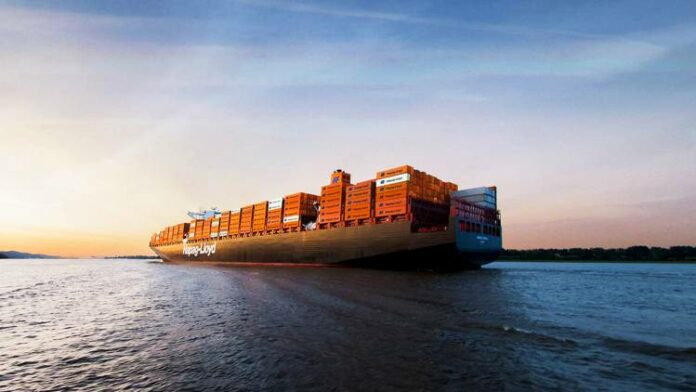
Hapag-Lloyd has created a new steel floor container, which it claims can carry heavier cargoes than existing wood-floored boxes.

“The steel floor container is the future. It was designed so that all types of cargo could continue to be transported in it . But it has one major advantage over wooden floors: Much larger loads can be loaded into it per running metre, which makes it particularly interesting for heavy goods like machines,” said the German line’s head of special cargoes in a release.

Hapag-Lloyd statistics show a wooden floor teu can load 4.6 tonnes per metre, while a steel floor box can load 7.6 tonnes per metre. The difference is even greater with a feu box. While one with a wooden floor can withstand a load of three tonnes per metre, the steel floor one can withstand twice as much.

Another advantage of the new container, according to Hapag-Lloyd, is a much higher number of lashing rings, which makes securing loads easier and more efficient. Lashing rings in containers with steel floors have 2,000 kg pull load . By way of comparison, for standard containers, this figure is 1,000 kg for the rings on the floor and only 500 kg per lashing on the upper rails.

Another bonus with a metal floor, Hapag-Lloyd states is that the container can always be delivered clean and free of residues from the previous loading. Unlike wooden floors, steel does not absorb any odours or liquids resulting from possible leaks. The slightly wavy shape of the floor also prevents the cargo from sitting in any moisture if liquids have escaped or if condensation has formed.

The tare weight of steel floor containers is also about 150 kg lighter than those with traditional floors. This, in turn, means that the customer can load a higher load weight.

Agreement reached for European Maritime Single Window

0

On 8 February 2019 an agreement was reached between the European Council, the European Commission and the European Parliament, regarding the proposal to harmonize ship notifications in Europe, through the a European Maritime Single Window.

The final text includes an agreement that provides security for Port Community Systems in relation to the public National Single Windows that have to act as a 'mailbox' for reports to authorities.

Namely, Port Community Systems that meet the requirements of the European reporting interface module must be allowed by member states as a reporting system.

According to the the final text, which has yet to be published, the Port Authority will examine the consequences of the European Maritime Single Window Regulation for the reporting process in European ports and discuss this with, among others, the ministry responsible for the elaboration at Member State level.

Commenting about this development, the Port of Rotterdam Authority and other major ports in Europe, said that it was of great importance that investments in current Port Community Systems (Portbase) and port call optimization processes in European ports would not be affected.

On 15 October 2018, the European Parliament’s Committee on Transport and Tourism published the draft report on the Commission’s proposal for a Regulation creating a European Maritime Single Window environment, which came out on 17 May.

The report focuses on the harmonisation of data elements and data sets, and supports the cooperation between customs and maritime authorities at both national and Union level. It also recognises that, even with a fully harmonised data set, relevant authorities might require additional data.

Moreover, the draft report states that Member states should allow the use of port community systems, as long as those systems are then passing the necessary information to the National Single Window.

What is more, the report underlines the importance to provide National Single Windows with a governance dimension and takes a realistic approach concerning the reporting only once principle.

Source:safety4sea

Remote Monitoring of Confined Spaces Reduces Risks

0

According to an International Dry Bulk Terminals Group study, there is a disturbing industry uptick in crewmember deaths in confined spaces. While human error is the root cause generally, there are technologies that ship managers may implement to prevent such tragedies from occurring. 
 
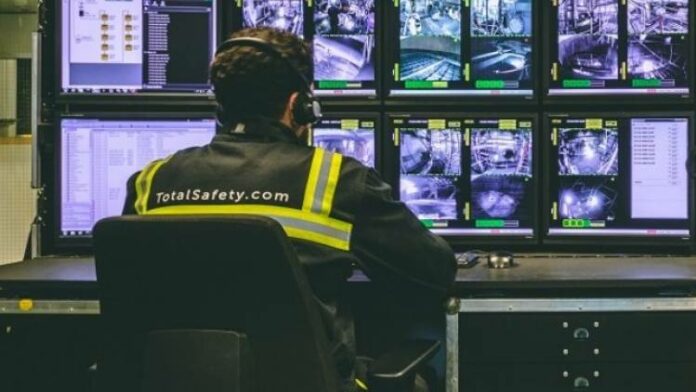
Remote centralized confined-space monitoring systems compliant with OSHA's confined-space entry standards may be set up either on the vessel or onshore to enhance safety and manage any issue quickly, acting as another layer of protection as crew members follow existing confined space entry procedures. 

One significant advantage of a remote centralized confined space monitoring system is that it requires fewer workers to manage multiple confined space entries. Headcount required to monitor multiple confined spaces can be reduced eliminating the risk of exposure to a potential incident by up to 75 percent, according to Total Safety’s data.

The remote centralized confined space monitoring control center continually identifies workers within the space with a sophisticated badge/ID reader. The system operator clears authorized workers to “badge” into the confined space.

All the while, the control room maintains a live visual of the workers via external and internal cameras and a clear line of communication via the push-to-talk communications system to safely manage work behavior inside and outside the confined space in real time. The camera system has both color and infrared technology for low-light conditions, while the embedded microphone and speaker allow the control room to communicate with workers inside and outside the confined space. The integrated intercom system reduces the need for two-way radio, and improves communication. Therefore, should a crewmember inside the confined space encounter a safety issue, the rescue commander can respond immediately. 

The system also monitors the atmosphere for toxic or dangerous gases and delivers appropriate alarms if gas exposure occurs. The gas detection system placed inside the confined space continuously monitors the atmosphere. The atmospheric readings are then displayed in real time in the control room for easy monitoring, and alarms are automatically triggered in the confined space should there be a safety issue. 

While remote monitoring is a significant safety tool, it is only one part of a comprehensive confined space safety program. Programs must also include worker training, comprehensive evaluation of confined spaces, work permit verification, confined space rescue equipment and teams, as well as gas detection, fall protection, and required personal protective equipment to protect workers.

In conclusion, data from the badge/ID reader technology, fixed gas monitoring, closed-circuit cameras, audible and visual alarms, and push-to-talk communications are all provided to ship management to further improve operations and safety. Overall, the system requires fewer workers to manage the job to keep the ship safe and protect the lives of all on board.

Mark Barker is the Senior Vice President of Total Safety and has worked in industrial safety for 36 years. Visit www.totalsafety.com for more information on centralized confined space monitoring.   

Source:maritime-executive

A key attribute of a successful organisation

0

Since the collapse in oil price in 2014, the whole industry has been undergoing a painful readjustment to the new market environment. 

This has affected all companies in the marine contracting sector, resulting in significant down-sizing of businesses onshore and offshore. To the extent that the industry is now considerably smaller than it was during the thriving times of $100/barrel oil.

The impact at a human level has created considerable stress and anxiety, for the obvious reasons of job security, financial hardship, and uncertainty about the future.

Leading IMCA members have come together to develop a Resilience Awareness Programme tailored to the marine contracting industry. A key attribute of a successful organisation is its ability to cope with challenging issues and to bounce back – its capacity to do so is largely dictated by the resilience of its people.

Resilience is about working through difficult experiences and having the ability to bounce back quickly. Resilience is learning from the way we cope with a difficult or stressful situation and making good use of that learning experience in the future .

The six videos and accompanying guidance notes explain the main concepts of resilience. The programme is designed to be used by groups of employees, to help promote discussion and share thoughts, so that they become more resilient.

Seattle In Line For Us$300m Investment

0

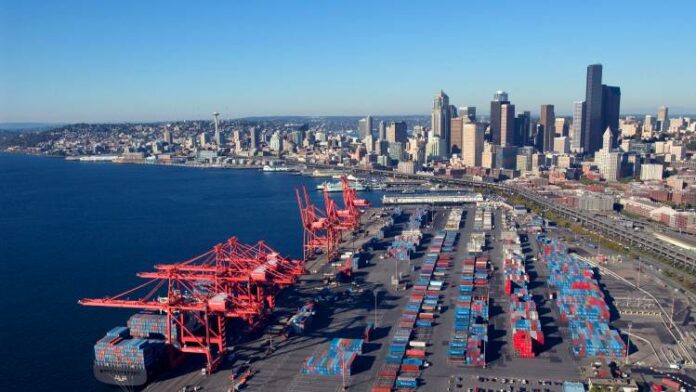
More than US$300m in infrastructure improvements is being considered as part of a drive to grow international marine cargo to the Port of Seattle.

To prepare for ever-larger container vessels, the port commissions of Seattle and Tacoma met at the Northwest Seaport Alliance (NWSA) managing member meeting to discuss recommendations for significant new investments, which also include a new tenant at Seattle’s Terminal 5.

“With the largest marine cargo vessels entering the trans-Pacific trade, our Terminal 5 investments are critical for Washington state exports to Asian markets, in addition to growing cargo volumes and maritime jobs in the Puget Sound region,” said the NWSA.

Terminal 5 growth

Seattle’s Terminal 5 is marked for development because of its naturally deep berth, wide footprint, and the availability of an on-dock rail yard, which allows containers to be directly loaded from the ship onto rail lines.

“The new ultra-large container ships, however, require larger, heavier cranes with a longer reach, which in turn requires strengthening the dock and upgrading utilities,” stressed the NWSA.

Seattle and Tacoma port commissioners have also directed staff to bring forward environmental investments to enhance water and air quality for the community. These investments include updating stormwater treatment systems and installing shore power infrastructure to cut air emissions.

The plan also includes technology improvements to manage truck flow around the terminal and a railroad “quiet zone” to reduce noise impacts for the surrounding community.

Source:portstrategy

Canada Signs With Lockheed-BAE Team for Frigate Mega-Contract

0

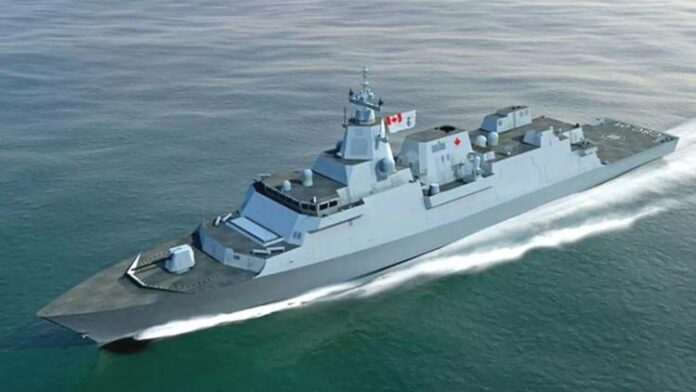
Canada has formally signed a $185 million contract with Lockheed Martin, BAE and Irving Shipbuilding for the design of the Royal Canadian Navy's next-generation frigate, marking the first step in what will be the Canadian government's largest purchase ever. 

A Lockheed-BAE joint proposal won the contract last year with a design based on BAE's Type 26 frigate, which is currently under construction for the Royal Navy and Australia. Lockheed is also a partner in the consortium building the Freedom-class Littoral Combat Ship, and is designing a "frigate" variant based on the LCS hull form in the competition for the U.S. Navy's FFG(X) contract.

The $45 billion, 15-ship contract for Canada's next warship is the "largest, most complex procurement ever undertaken by the Government of Canada,” according to Public Services and Procurement Canada. The vessels will replace Canada's current large surface combatants and will provide the bulk of its naval power for decades to come.

On Friday, union officials at Irving Shipbuilding celebrated the news of the contract award. "We are very happy to see this deal made official, and I'm proud to stand beside my sisters and brothers at the yard today and every day," said Ryan Lapointe, the president of the local branch of the amalgamated union Unifor. "All I can say is: there's no ship like a Halifax-made ship."

Other bidders for the contract included Spain's Navantia and U.S. contractor Alion, a behind-the-scenes defense technology company that served as the naval architect for the Zumwalt-class destroyer. Alion is currently suing the Canadian government over the process that led to the contract for Lockheed-BAE. 

Source:maritime-executive

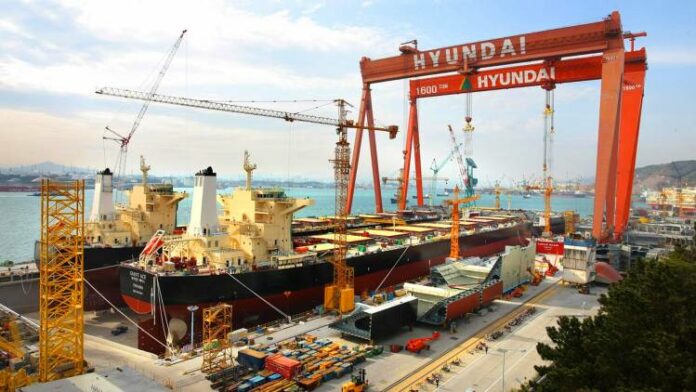
Hyundai Heavy Industries May Be Sole Bidder for DSME

0

Samsung Heavy Industries is not likely to compete with Hyundai Heavy Industries for rights to acquire Daewoo Shipbuilding and Marine Engineering (DSME). South Korean policy bank KDB is preparing to sell its majority stake in DSME to Hyundai Heavy Industries, and has signed a memorandum of understanding for the terms of the $2 billion deal; however, KDB left the door open for Samsung Heavy Industries to make a competing bid. 

On Friday, Yonhap reported that Samsung Group – Samsung Heavy Industries' parent company – is not likely to have an interest in expanding its presence in shipbuilding. Samsung has until the end of the month to submit a bid, and is presently reviewing its options. It has previously denied an interest in taking over its rival. 

At the end of January, Hyundai Heavy Industries (HHI) signed a preliminary agreement to take over DSME from the South Korean government. The complex agreement centers on a large stock swap, and HHI will partially fund its investment by selling a stake in a refining subsidiary. The merger of two out of South Korea's "Big Three" shipbuilders would create the largest shipbuilding company in the world, with a global market share of about 20 percent (and half the world's LNG carrier orderbook). 

At a press conference announcing the deal, KDB Chairman Lee Dong-gull said that the agreement was not yet finalized, and that Samsung Heavy Industries would also have a chance to bid for DSME. However, foreign bids will not be encouraged: KDB's policy objective is to end up with two large Korean shipbuilders, not one foreign-owned shipbuilder competing with two domestically-owned yards.  “In order to fundamentally enhance the competitiveness of the industry, it is crucial to eliminate the inefficiency caused by overlapping investment under the current 'Big Three' structure,” Lee said. 

Plans for a Korean shipbuilding mega-merger have led to new speculation on the possibility of a merger between China's two state-owned shipbuilding giants CSSC and CSIC. The two conglomerates have denied any knowledge of merger plans in the past, but China's central government recently expressed an interest in consolidating its shipbuilding holdings to improve competitiveness.  

Source:maritime-executive