-5.2 C
New York
Home Blog Page 1143

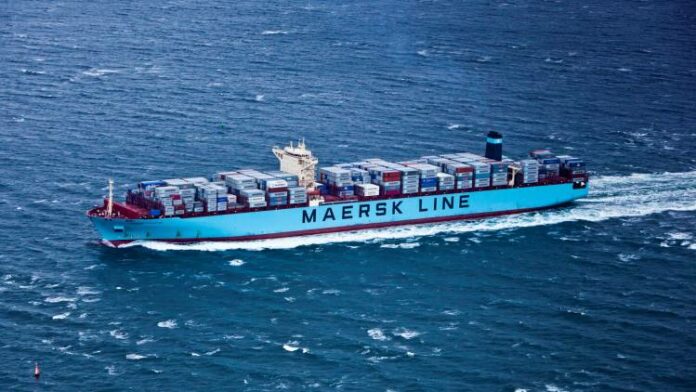
Maersk in landmark Ganges shipment

0

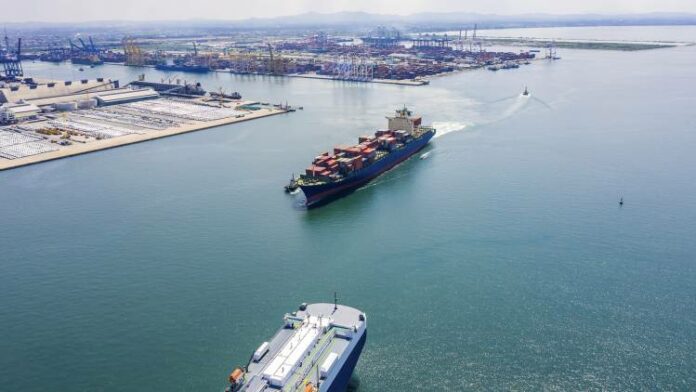
India is easing its cabotage rules to help develop connections across the giant country and with its neighbours. Today Denmark’s Maersk Line will move 16 containers along the River Ganges for the first time from Varanasi to Kolkata.

India has been spending huge amounts of money to make the 1,390 km long Ganges more navigable to commercial shipping. Ships of up to 2,000 dwt can now transit from Varanasi to Kolkata.

“With Maersk on board, the cargo from the hinterland will move directly to and from Bangladesh and rest of the world through the Bay of Bengal,” a press release from India’s Ministry of Shipping stated yesterday.

The government has set out to triple the amount of goods shipped on India’s waterways to hit 150m tons by 2023, something that is expected to spark a sizeable shipbuilding boom at local yards.

Source:splash247

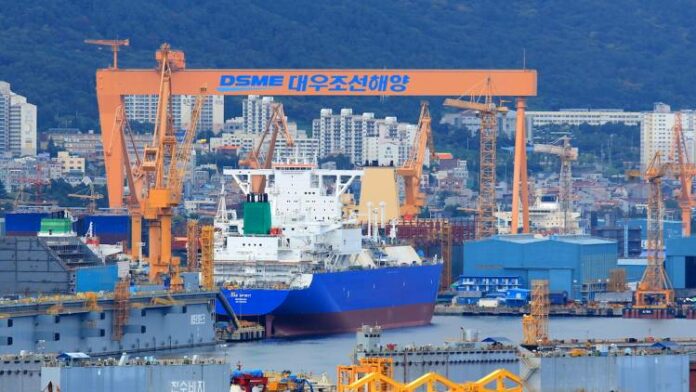
Unions At HHI and DSME Protest Merger Agreement, Daewoo Shipbuilding and Marine Engineering

0

Unions at Hyundai Heavy Industries (HHI) and Daewoo Shipbuilding and Marine Engineering (DSME) are contemplating a labor action to demand job security after the two giant conglomerates merge. The $2 billion deal would make HHI the world's largest shipbuilder and satisfy two policy objectives for South Korea: to sell its controlling stake in DSME and to consolidate the nation's "Big Three" shipyards into a stronger, more competitive "Big Two." 

At the end of January, Hyundai Heavy Industries (HHI) signed a preliminary agreement to take over DSME from the South Korean government. The complex agreement would give HHI a global shipbuilding market share of about 20 percent. “In order to fundamentally enhance the competitiveness of the industry, it is crucial to eliminate the inefficiency caused by overlapping investment under the current 'Big Three' structure,” said Lee Dong-gull, chairman of state-owned Korea Development Bank, in announcing the deal.

However, union officials are wary of this objective, as it is likely to lead to more job losses. Korea's shipbuilders have been reducing head count for years, a response to intense competition from China and a longrunning industry downturn. The dearth of work has put historically-thriving shipbuilding centers like Geoje into decline. While a recent resurgence in LNG carrier orders has brought in new revenue for the "Big Three," Korean unions do not wish to see payrolls shrink again due to the "efficiencies" of a merger. 

At HHI, union leaders called for management to give labor a seat at the table during the merger talks. “The management should apologize for closed-door negotiations, and promise the union’s participation in the takeover process,” the union said in a statement. “Labor-management relations could go from bad to worse should the management go ahead with the takeover push without guaranteeing existing jobs."

At DSME, workers will hold a vote on February 18-19 on whether to strike in protest of the merger. The two unions are coordinating, and HHI's workers could potentially join in a unified protest.

Source:maritime-executive

Scotland aims to new tidal projects

0

The Scottish Government relaunched the 'Saltire Tidal Energy Challenge Fund' aiming to help commercial deployment of tidal projects. The £10 million fund goals to enhance and boost the commercial deployment of tidal energy in Scottish waters through driving innovation and reduction in the cost of electricity generated. The Saltire Prize challenge was firstly launched in 2008 to reward wave and tidal energy breakthroughs.

This concentrated support for tidal energy sits alongside the parallel £30 million committed to date by the Scottish Government to Wave Energy Scotland (WES), and a further £10 million proposed for WES in 2019/20.

In addition, Paul Wheelhouse, Scotland's energy minister, noted that the UK believes plays a crucial role in the future energy system, but it has substantial export potential.

The investment climate has been harmed by the UK Government’s decision in 2016 to remove a ring-fenced subsidy for marine energy and by the parallel uncertainties caused by the UK’s withdrawal from the EU.

The Saltire Tidal Energy Challenge Fund provides a timely and appropriate approach for the Scottish Government to support the current needs of the sector and to help ensure Scotland’s huge marine energy potential.

Moreover, the Scottish government states that the application process and criteria will be available via the Scottish Government Marine Energy website.

Concluding, the applications to the fund will close on 6 December 2019, with successful projects planed for deployment in Scottish waters no later than March 2020.

Source:safety4sea

Ocean Infinity Searches for Lost S.Korean Ship

0

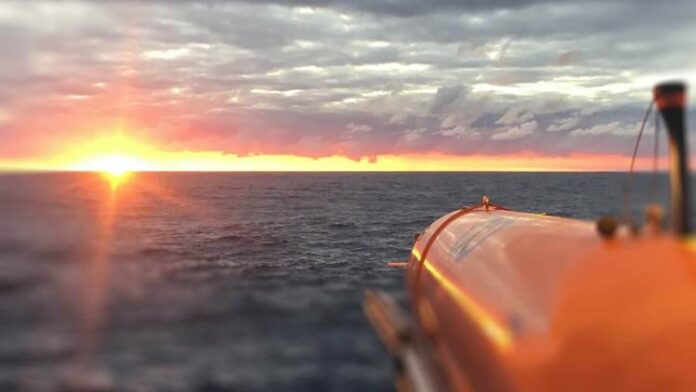
The seabed survey and ocean exploration company Ocean Infinity announced that its vessel, Seabed Constructor, sets sail from Cape Town to begin the search for the lost South Korean ship, Stellar Daisy.

Stellar Daisy sank on 31 March 2017, with the tragic loss of 22 of its 24 crew.  The ship, which was transporting iron ore from Brazil to China, is believed to have gone down in the South Atlantic Ocean approximately 1800 nautical miles due west of Cape Town.

The Ocean Infinity team is expected to be on site and commencing search operations by mid-February 2019.  Ocean Infinity will use its proven approach of deploying a fleet of Autonomous Underwater Vehicles (AUVs) simultaneously to search for Stellar Daisy.  Upon locating the ship a survey of the wreck will be carried out, before an attempt to recover the voyage data recorder is made.

Ocean Infinity’s AUVs are the most technologically advanced in the world.  They are capable of operating in water depths from 5 meters to 6,000 meters.  The AUVs are not tethered to the vessel during operations, allowing them to go deeper and collect higher quality data for the search.  They are equipped with a side scan sonar, a multi-beam echo-sounder, a sub-bottom profiler, an HD camera, a conductivity / temperature / depth sensor, a self-compensating magnetometer, a synthetic aperture sonar and a turbidity sensor.

Oliver Plunkett, Ocean Infinity’s CEO, said: “The team and equipment are set to execute the Stellar Daisy search plan and we are pleased that our ship begins her journey today to the search area, in one of the most remote areas of the South Atlantic.  We are working closely with the Government of South Korea, and in turn with the families of the lost crew."

"We are pleased to confirm that as with our previous projects both the Government and the families are represented on board, and we will be providing regular updates on our progress back to Seoul,” he added.

Source:marinelink

Ørsted Sells Half of US Offshore Wind Assets

0

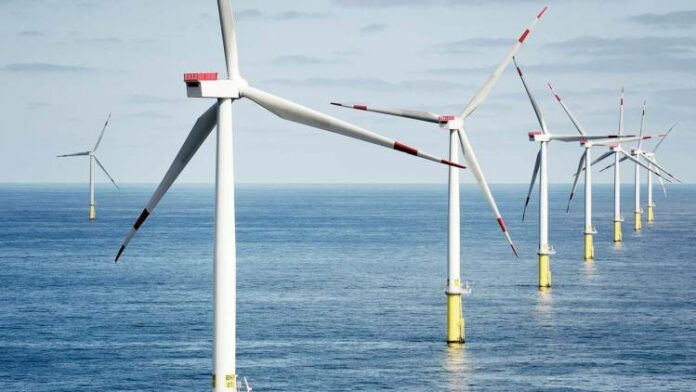
Denmark’s Ørsted is selling a 50% stake in a portfolio of offshore wind assets to New England utility Eversource Energy, for about $225 million.

"Ørsted and Eversource have been partners in the Massachusetts Bay State Wind offshore wind project and with this announcement, we further strengthen our strategic 50-50 partnership in the North-East," said a press release from the largest energy company in Denmark.

The divestment includes the 704MW Revolution Wind project off the coast of Rhode Island that will deliver power to Rhode Island (400MW) and Connecticut (304MW), and the about-130MW South Fork project east of Long Island that has a long-term power purchase agreement with the Long Island Power Authority.

The sale also encompasses two undeveloped lease areas – Massachusetts North and Massachusetts South – which can potentially be developed into significantly above 1GW offshore wind capacity, Orsted said.

Martin Neubert, Executive Vice President and CEO of Offshore at Ørsted, said: “More than ever, the US offshore wind market has great growth potential with several states committing to significant buildout volumes. I’m delighted to extend our strategic partnership with Eversource in the North-East and welcome them to our new offshore wind projects which will enable the joint venture to harvest synergies across the different New England projects. Combined, Ørsted’s world-leading track-record in offshore wind and Eversource’s strong regional footprint offers a powerful setup for developing offshore wind projects in New England.”

Source:marinelink

ETA in MeyGen Project Stroma Deal with Atlantis

0

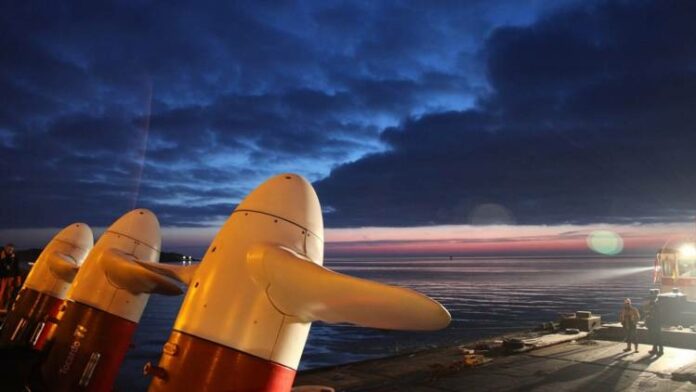
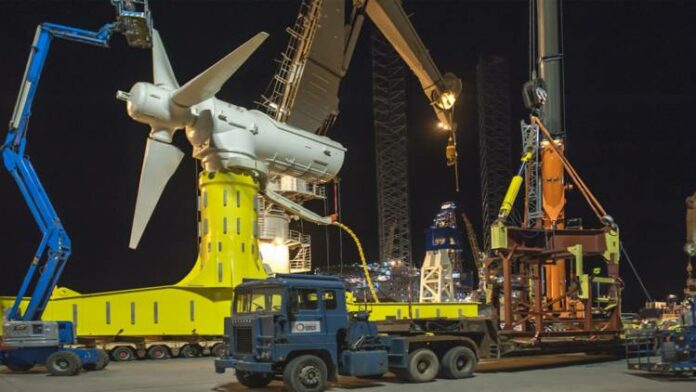
SIMEC Atlantis Energy Limited, a diversified sustainable energy generation company, is pleased to announce that it has today awarded a contract to subsea engineering specialists ETA Limited for the manufacture and delivery of the world’s most advanced subsea tidal turbine connection system which will underpin the MeyGen extension activities known as Project Stroma.

The subsea hub will allow multiple turbines to be connected to a single power export cable, which will significantly reduce the costs associated with grid connection. The length of power export cable as well as the amount of onshore conversion equipment required for grid connection will be significantly reduced, as will the amount of horizontal directional drilling required and the amount of vessel time required for cable installation.

Project Stroma will connect two additional Atlantis AR2000 turbines via the new subsea hub to a single power export cable which will then be connected via the MeyGen substation to the National Grid.

Management are currently exploring a number of funding options for the capital expenditure associated with Project Stroma, including a potential issue of the Company’s first listed bond.


Transocean Ltd. Provides Quarterly Fleet Status Report

0

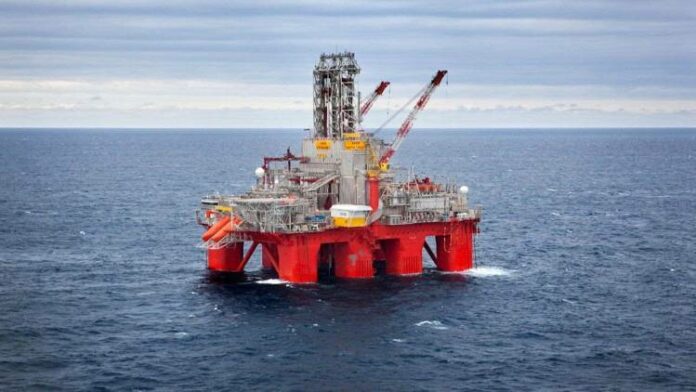
Transocean Ltd. (NYSE: RIG) today issued a quarterly Fleet Status Report that provides the current status of, and contract information for, the company’s fleet of offshore drilling rigs.

Since its last Fleet Status Report, Transocean closed the acquisition of Ocean Rig UDW, Inc. on December 5, 2018. The transaction adds eight high-specification ultra-deepwater drillships and two harsh environment semisubmersibles to the Transocean fleet. In addition, the acquisition includes two high-specification ultra-deepwater drillships currently under construction at the Geoje Samsung shipyard in South Korea.

Transocean added approximately $907 million in contract backlog since its last report, bringing the company’s backlog to $12.2 billion.

Among the contract additions, Transocean signed a rig design and construction management contract, as well as a five-year drilling contract, with Chevron USA, Inc. for one of Transocean’s two dynamically positioned ultra-deepwater drillships under construction at the Jurong shipyard in Singapore. The drilling contract has an estimated backlog of $830 million, excluding mobilization and reimbursables. The rig will be the first ultra-deepwater floater rated for 20,000 psi operations and is expected to commence operations in the Gulf of Mexico in the second half of 2021.

This quarter’s report also includes the following new contracts:

  • Dhirubhai Deepwater KG2 – Awarded a four-well contract offshore Australia via a term swap with the GSF Development Driller I. It was also awarded one four-well option;
  • Leiv Eriksson – Customer exercised a one-well option in the Norwegian North Sea;
  • Transocean Arctic – Customer exercised two one-well options in the Norwegian North Sea and the rig was awarded a two-well contract with another customer in the Norwegian North Sea;
  • Discoverer India – Customer exercised two one-well options offshore Ivory Coast; and
  • Transocean 712 – Customer exercised a one-well option offshore U.K. North Sea.

Additionally, the company intends to scrap the Ocean Rig Paros in an environmentally responsible manner; the rig is classified as held for sale.

PSA and DP World Lead Race for Cairo Port

0

Three consortiums have submitted applications to build the US$100 million Cairo dry port, according to Reuters.

Quoting a statement from the Egyptian Ministry of Finance (MoF), the news agency has said the main contenders are being headed up by PSA, DP World and Egyptian company Elsewedy Electric.

The project will see the port being built on 104 acres of land approximately 20 miles west of Cairo, the Egyptian capital.  

Once completed, the new dry port will act as a “port for customs clearance of containers handled through the Alexandria and Dekheila ports, which will contribute to easing container traffic,” according to the MoF.

All technical and financial bids are expected to be presented in May and the successful bid will be announced shortly afterward.

The chosen consortium will operate the dry port for 30 years, after which it will be nationalized and come under the ownership of the Egyptian General Authority for Ports and Dry Land.

The port of Alexandria signed memorandum-of-cooperation with the Ukrainian Sea Ports Authority (USPA), the aim of which is to establish a bilateral working group for port operations modernization between the Egypt and Ukraine.  

Source:porttechnology

ICS Prioritises Major Reduction in Emissions

0

The International Chamber of Shipping (ICS) has made the reduction of sulphur and greenhouse gas (GHG) emissions a priority at its latest board meeting in London, UK.

Speaking to senior representatives of shipowners’ associations, ICS Chairman Esben Poulsson asserted the game-changing potential of 2020’s global sulphur cap, which is predicted to have “profound implications for the economics of shipping”.

Poulsson said: “We are rapidly moving into a multi-fuel future to be followed we hope, in the 2030s, by the arrival of commercially viable zero CO2 fuels suitable for global application.”

Attendees of the meeting reviewed their progress in persuading the UN’s International Maritime Organization (IMO) to address possible implementation problems of the 2020 cap, including safety and fuel compatibility issues associated with the use of new 0.5% sulphur blends.

In addition to this, there is continuing uncertainty over the availability of compliant fuels in every port worldwide, a particular challenge for tramp trades.

Shipowners will have to begin ordering compliant fuels in the coming months, placing pressure on the IMO’s Marine Environment Protection Committee to deliver solutions at its next meeting in May 2019.

Poulsson commented: “While fuel suppliers must play their part in providing sufficient quantities of safe and compliant low sulphur fuels, shipowners must urgently prepare their ship specific implementation plans for 2020."

This should be carried out using the IMO template adopted at the industry’s request and the detailed advice prepared by ICS which we have just updated to take account of other recent IMO decisions.

“This will be vital to reduce the possibility of teething problems or in the event of initial Port State Control difficulties due to factors beyond the shipowner’s control.”

The ICS Board has also endorsed the finalisation of proposals to the IMO regarding ambitious GHG reduction targets, which consist of a 40% efficiency improvement by 2030 and a 50% total cut in the sector’s GHG emissions by 2050.

Proposals include the tightening of the Energy Efficiency Design Index (EEDI) for new ships, requiring ships built in 2025 to be 30% more efficient than those delivered before 2013.

Source:porttechnology

Watch: Arctic Council launches ship traffic data

0

The Arctic Council’s Working Group on the Protection of the Arctic Marine Environment (PAME) has launched a comprehensive Arctic shipping activity database, to enhance knowledge of historical Arctic ship traffic activity and the factors that affect it, as sea ice extent, meteorological and oceanographic conditions and international regulations. The database is designed to allow authorized users to analyze vessel traffic patterns, fuel use and air emissions, among other economic and environmental conditions.

Specifically, the database includes information from 2005 to 2018 and is regularly updated.

More importantly, the data mostly focus on

  • Number of ships in the Arctic, distances sailed and hours operated;
  • Location of ships, ship routes and ship speed;
  • Ship types, including size and flag;
  • Pollution measurements from ships, including CO2 emissions;
  • Other environmental information such as sea ice extent.

According to the Arctic Council’s Working Group, container ships in the Arctic polar code area have increased and decreased from 2014 to 2017.

For instance, the number of unique ships that passed the Arctic polar code area in 2014 were 12, whereas in 2017 were 11.

Moreover, the total distance sailed by all container vessels was in 2014 170.243, in comparison to 2017 that the total distance was 164.976.

The operational hours reported in 2014 were 19.859 and in 2017 were 21.309.

According to the database, the total fuel consumption by all vessels in cubic metres in 2014 was 12.962, whereas in 2017 it was 14.329.

The total emissions of CO2 in metric tonnes was 35.509 in 2014, and 38.739 in 2017.

The Arctic Shipping Best Practice Information Forum was established in 2017 by the eight Arctic States (Canada, Denmark, Finland, Iceland, Norway, Russia, Sweden and the U.S.) to help raise awareness and to promote the effective implementation of the Polar Code.

Source:safety4sea