-4.7 C
New York
Home Blog Page 1145

Equinor Moves Forward with Planning for Empire Wind

0

Norwegian energy company Equinor is moving forward with planning for a giant offshore wind farm in the "New York Bight," an 80,000 acre lease area just off the entrance to New York Harbor. It has deployed a high-tech buoy to measure wind speed, direction, wave conditions and other characteristics on site to determine the resource potential of the site.

The floating LiDAR buoy device uses laser light detection and ranging to take wind measurements, and its solar panels, onboard wind turbines and batteries allow it to operate for extended periods without intervention. 

“The deployment of this specialized buoy marks another step forward in the multi-year process of bringing a reliable source of renewable energy to the New York / New Jersey area,” said Christer af Geijerstam, President, Equinor Wind US. “Offshore wind power today is made possible by a host of innovative technologies, from larger and more efficient turbines to sophisticated LiDAR systems like this that enable us to gauge invaluable information about the characteristics of this offshore lease area.”

Equinor won the federal lease auction for 80,000 acres south of New York and east of New Jersey in 2016. The company is currently working on two potential projects at the site – Empire Wind for New York and Boardwalk Wind for New Jersey. Late last year, it also paid $135 million for a giant lease area off Massachusetts in the highest-value wind auction in U.S. history. 

Equinor (formerly Statoil) derives almost all of its revenue from oil and gas, but it is moving to expand into renewables. It holds four projects in the UK and Germany, generating enough electrical power for one million homes, and it recently commissioned the world's first commercial floating offshore wind installation off Scotland. Floating wind platforms are a technological solution borrowed from offshore oil and gas, and could expand wind's potential into much deeper waters. 

Source:maritime-executive

Kongsberg clinches award for dynamic positioning technology

0

Long range relative positioning of offshore support vessels and drilling rigs is more reliable and effective with a new sensor unit.

Kongsberg Maritime introduced the XPR 100 microwave-based solution for DP applications that require long-range relative positioning in 2018 to enhance safety and reliability even in harsh weather.

For this innovation, Kongsberg was awarded Offshore Support Journal’s Dynamic Positioning Award during a gala dinner presentation in London. This award, which is sponsored by Damen Shipyards, recognises the developer of an innovative DP product or system, or contractor responsible for an especially innovative application of DP on a project. It was presented to Kongsberg during the Annual Offshore Support Journal Conference in London.

"This award recognises what we have done in developing sensors for DP operations for years to come," said Kongberg Maritime Vidar Bjorkedal.

Kongsberg’s XPR 100 provides precision readings, with high bearing accuracy, up to a distance of 10 km from a target, which introduces a new level of versatility for diverse DP operations. It is compact and lightweight, has no moving parts and operates in the most extreme weather conditions.

It operates in the 9.2-9.3 GHz band and each lightweight panel has an opening angle of 100°. XPR 100 can utilise several sensor panels, which can be deployed on suitable locations on the vessel dependent on the construction and operation. This provides an extended operational area and avoids blind angles.

Its performance and operation can be configured and monitored using application software, which enables the sensors to interface with remote systems via serial lines or an Ethernet-based network. XPR 100 is designed to fill the need specified by IMO for DP-classed vessels.

XPR 100 has an in-built system for testing, which means it can be verified before arriving at the location, reducing the risk of costly vessel DP system downtime. Kongsberg said XPR 100 features a highly intuitive human-machine interface that enables operators to assess the quality of vessel positioning rapidly and effectively during operations. Operators can select between a set of colour palettes and night display for operations under different light conditions.

Kongsberg won the award against stiff competition from the International Marine Contractors Association (IMCA) and ABB Marine. IMCA was nominated for its DP station keeping events database and detailed case studies to ensure that lessons learned from industry incidents and accidents can be disseminated throughout the industry.

ABB was nominated for its Ability Marine Pilot Control DP system. This fulfils the same role and functionality as a traditional DP system, while allowing for simplified operation through a touchscreen-based interface.

Source:marinemec

PSA Norway finds safety issues during Valhall audit

0

PSA Norway after conducting an audit on Aker BP’s Valhall field, resulted to irregularities and safety issues. The audit took place from November 21 to December 6, 2018 and focused on how Aker BP, drilling contractor Archer, and the subcontractors planned and executed drilling and well operations for the Valhall IP water injection platform.

Vallhall IP, which entered service in 2002, was originally a water injection platform. However, today both production and injection wells are drilled from the platform. This resulted to alters in risk and barrier management.

Moreover, the offshore safety regulator noted that the aim of the audit was to monitor how companies along with subcontractors, were in line with the regulatory requirements for planning, risk assessment, and execution of drilling and well operations as well as following up the requirements for managing major accident risk.

Also, as the audit was continuing, PSA mostly focused on decision support, criteria, and processes, as well as risk assessments, are established and implemented to safeguard well integrity and ensure robust operations.

Specifically, the three audits that were identified were:

  1. Deficient establishment of a barrier management system for Valhall that matches actual conditions on the platform;
  2. Deficiencies in performance of functional testing of blow out preventer (BOP) and non-conformity in closing time of BOP shear ram;
  3. Deficiencies in well control training and exercises.

Consequently, four improvements were demanded  regarding the lack of specific detailed measures in the event of planned weakness in the primary barrier during drilling into the reservoir, lack of well control procedures in the event of a major loss during drilling in the reservoir section, deficiencies in well design and well integrity, and lack of documentation of BOP shear capacity on the drill floor.

PSA ordered Aker BP to report on how the non-conformities would be addressed by March 1, 2019.

Concluding, they also requested for feedback to see further improvement.

Source:safety4sea

Solstad builds support vessel contract backlog

0

Solstad Offshore has secured offshore contracts for various large platform supply vessels in its fleet.

The Sea Spear and Sea Supra (both built in 2014) will work for an unnamed company for three months each, plus extension options, starting in 2Q 2019.

The Sea Spear will soon start work for Saipem in the Mediterranean on a 45-day firm assignment. In 2Q, this vessel and the Sea Supra will begin a three-month program for an unnamed company, with extension options.

In addition, Solstad has agreed to a new charter for the anchor handler tow support vessel Far Sagaris with Queiroz Galvão Exploração e Produção offshore Brazil. The firm period starts this month and runs for 95 days with a 180-day extension option.

The vessel will support operations at the Atlanta field in the Santos basin.

Source:offshore-mag

Maersk semisub to drill for Cairn offshore Mexico

0

 Maersk Drilling has issued an update on its offshore drilling rig fleet.

Offshore Norway, Aker BP has awarded the jackup Maersk Integrator a one-year contract. It is expected to begin in June 2019.

Equinor has exercised two options of two months each for the jackup Maersk Intrepid. The rig is now contracted until the end of February 2020.

Offshore the Netherlands, Wintershall Noordzee has awarded the jackup Maersk Resolve a 90-day contract from January 2019. The company also awarded the rig a 180-day contract plus three months options from Sept. 1, 2019.

Petrogas and TAQA have awarded the jackup Maersk Resolute contract extensions for 85 days and 72 days, respectively. Petrogas’ contract is expected to start next month and end in June. TAQA has contracted the rig from September 2019 to February 2020.

Off the UK, Ithaca has awarded the jackup Maersk Resilient a 120-day contract. It is expected to start in April 2019.

In Timor-Leste, Eni has awarded the semisubmersible Mærsk Deliverer a contract for one exploration well plus one option well. Drilling is expected to start next month.

Offshore Mexico, Cairn has awarded the semisub Mærsk Developer a 110-day contract plus four option wells. It is expected to start in September 2019.

Offshore Ghana, Eni has exercised a 35-day option on the drillship Maersk Voyager in direct continuation of its current contract.

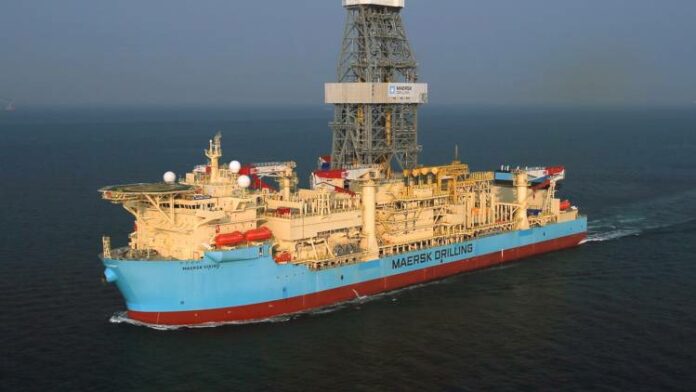
Aker Energy has exercised two options of 41 days and 49 days, respectively, on the ultra-deepwater drillship Maersk Viking in direct continuation of its current contract.

Source:offshore-mag

Petrobras extends charter of FPSO Piranema Spirit

0

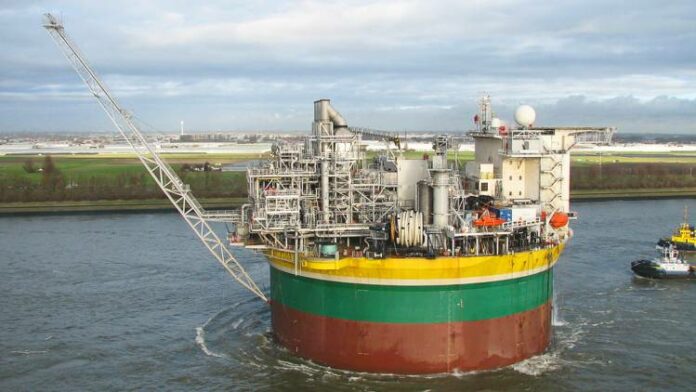
Teekay Offshore has signed a three-year contract extension for the FPSO Piranema Spirit.

However, the terms include customer termination rights with 10 months of advanced notice.

Last October Teekay Offshore entered a further settlement agreement with Petrobras concerning a dispute related to the charter of the vessel.

Around the same time the two parties also reached a settlement on various disputes concerning the previously-terminated charter contracts of the HiLoad DP unit and the Arendal Spirit for maintenance and safety (UMS).

Petrobras agreed to pay $96 million to Teekay Offshore in three instalments by the end of 2021.

Teekay has a seven-year contract for the FPSO Petrojarl Varg to operate on Alpha Petroleum Resources’ Cheviot field development in the UK northern North Sea.

The fixed term begins from first oil, which was originally targeted for 2Q 2021, but start-up looks likely to be delayed to allow for completion of a life extension and upgrade program for the vessel at Sembcorp Marine’s shipyard in Singapore.

The agreement remains subject to Alpha finalizing its project financing and approval by relevant governmental authorities for the final Cheviot development plan.

Source:offshore-mag

Japan joins offshore wind jack-up brigade

0

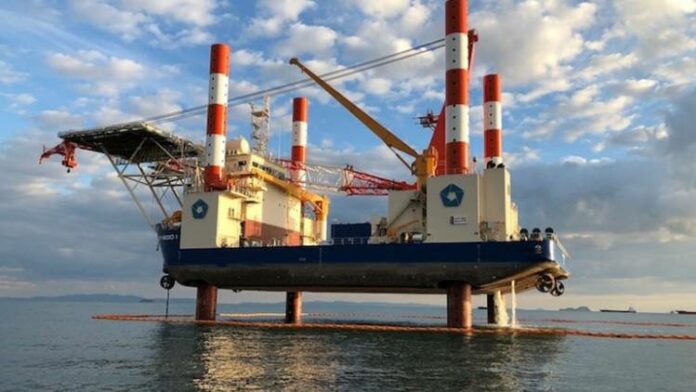
Japanese company Penta-Ocean Construction has completed a jack-up vessel for work in the local offshore wind industry.

The CP-8001 vessel is a GJ-3750C GustoMSC design and is the first such ship built for the offshore wind industry in Japan.

Penta-Ocean ordered the GJ-3750C GustoMSC design at the Japan Marine United shipyard in the autumn of 2016.

The vessel is capable of installing turbines up to 10MW in size and has accommodation for 120 people.

GustoMSC commercial director Jan-Mark Meeuwisse said: “The CP-8001’s unique features allow highly efficient operations in Japanese ocean side areas with harsh wave and weather conditions, while not (compromising) on the welfare of the crew."

The proven technology makes it most suitable for various installation works from a safe and stable self-elevating platform.

The enactment of relevant Japanese regulations will undoubtedly provide further potential for offshore wind farm projects.

Source:renews

Digital twins and sensor monitoring

0

DNV GL has developed a methodology for hull condition monitoring that incorporates the use of the ship’s digital twin, a virtual model prepared during the design stage. Combined with wave, position and sensor monitoring, it vastly enhances the value of predictive and preventive maintenance.

"Design models, which are also sometimes referred to as digital twins, die at birth. It is our ambition to bring these models back to life during the operational phase of an asset," says Dr Gaute Storhaug, Principal Specialist at DNV GL Maritime Advisory. In its Nerves of Steel Extraordinary Innovation Project, DNV GL – Maritime has been investigating new ways of calculating the wave-induced damage risk for ship hulls. Designers and yards invest significant amounts of time and money in preparing analytical models to document the design of ships and offshore structures and to perform simulations. The continued use of such a virtual model as a digital twin during operation is a great means to visualize all key components, perform analyses and calculations, and improve the understanding and control of the long-term effects of operation on the ship’s structural and functional components. This adds significant value to the asset.

In addition, a digital twin can be very useful for inspection and maintenance planning, while extending the ship's lifetime through preventive actions to avoid hull damages. The increased transparency and control that the digital twin provides can even result in a competitive advantage by improving predictability. This makes the vessel more attractive to cargo owners, banks, insurance companies, class societies, vetting companies, investors, buyers and other stakeholders.

Sensors create synergies in monitoring

"Using sensor technology to determine the response of a vessel or offshore structure to specific wave conditions, as well as to monitor structural and functional components, is common practice in the industry today," says Ørjan Fredriksen, Senior Engineer, Technical Advisory Structures, who was the project manager for the Nerves of Steel Extraordinary Innovation Project. "Sensors can capture physical effects such as deformation, vibration or temperature under real-life conditions that cannot always be easily described by numerical models," he adds. "But the number of sensors installed on board limits the number of data points available to monitoring. Considering the complexity of modern ships and the interdependencies between all their components, comprehensive instrumentation can provide crucial insights."

Combining the data provided by these sensors with the ship's digital twin makes sensor-based hull condition predictions much more meaningful and accurate. It does this by extending the range of structural details accessible to monitoring. This may include any element considered during the design that may be critical during operation. Examples of typical fatigue-critical details on ships are the stiffener end connections of frames and transverse bulkheads, stringer toes and heels, or terminations of hatch coamings.

A hybrid monitoring approach as described above can also be helpful in determining the best sensor positions to ensure cost-effective instrumentation. This concept has been applied successfully on assets of various types, including container ships, FPSOs, semi-submersibles, flare towers, pipelines, and fixed platforms. 
 

Contamination fears fuel calls for greater bunker transparency ahead of 2020

0

Calls are growing for greater transparency in the bunker industry ahead of the 2020 global sulphur cap.

International Union of Marine Insurance (IUMI) is trying to force refineries to conduct testing on low sulphur fuels, a host of other bunker experts have called for greater cooperation among the partners of the bunker supply chain to ensure next year’s sulphur cap proceeds smoothly.

VeriFuel, part of French class society Bureau Veritas, has urged the marine bunker sector, upstream supply chain, and fuel testing organisations, to embrace a new culture that promotes far greater cooperation and transparency in preparation for 2020 and beyond.

Bureau Veritas’ global technical manager for marine fuels, Charlotte Røjgaard, commented in a release issued yesterday: “With under a year to go until the 2020 sulphur cap regulation comes into force, the marine fuel supply chain must band together and use this as an opportunity to help dispel increasingly outdated bunker fuel delivery processes and procedures. A lack of transparency does not adequately serve the interests of the shipowners, shipmanagers, operators, or charterers. Instead of pulling in different directions, we need to work collaboratively for the greater good of the industry.”

There have been a series of marine bunker fuel contamination cases around the world over the past 12 month that have spooked many owners trying to get their heads around how best to meet the sulphur cap requirements.

The International Council on Combustion Engines (CIMAC) has found that no single chemical could be blamed for the engine failures caused by off-specification fuel.

While testing has previously been conducted in isolation, VeriFuel warned yesterday that this approach is not helping to solve the underlying problem. According to VeriFuel, without industry-wide cause-and-effect analysis on a global scale, testing will remain limited to advising owners afterwards what “might” have caused their problem.

Røjgaard explained: “VeriFuel believes that trust is absolutely critical to achieving greater cooperation and transparency. We are committed to working collaboratively to find practical ways to share information, which focus on the technical elements rather than contentious and commercially sensitive details. As digitalisation moves the industry away from slow, analogue processes and procedures, technologies such as blockchain could have an important role to play by delivering greater data transparency, traceability and security in bunker supply chains.”

She concluded: “Treating fuel contamination issues as a commercial opportunity, rather than pulling together at this critical time will not only exacerbate fuel quality challenges, it will also continue a culture of mistrust that has plagued the bunker industry for years. We must all contribute to problem-solving.”

Low sulphur fuel supply is not consistent around the world with IUMI, the global marine insurance body, pointing out this week that this type of fuel often contains a high level of cat fines which onboard systems and processes often fail to filter out. Differences in flashpoint and combustibility are also evident.

IUMI is calling for regulation that obliges refineries to guarantee the quality of their fuel and for vessel operators to enhance their systems, processes and training to protect their vessels against the potential impact of using low sulphur bunkers.

Rahul Choudhuri, managing director of Veritas Petroleum Services (VPS), told Splashtoday that IUMI’s refinery demands were unlikely as the bunker fuels supply chain is complex with blenders and cargo suppliers involved.

Douglas Raitt from Lloyd’s Register’s Fuel Oil Bunkering Advisory Services (FOBAS) told Splash today he was aware of certain bunker suppliers trying to sell compliant product to the market ahead of 2020 on a trial basis. The pushback from buyers, he said, is that they are prepared to do so provided suppliers can demonstrate the fuel is fit for purpose.

Samples are being sent to testing agencies to test new products. However, testing to tables 1 and 2 of ISO 8217 is not enough, Raitt said. “To get full insight in these new fuels the physical properties – tables 1 and 2 testing, chemical composition as well as combustion properties – ideally test bed engine – should be carried out to get a fuller understanding of these fuels general performance.”

Concluding VPS’s Choudhuri had some advice for owners and operators. They will need to get a risk assessment and mitigation plan in place fast, he urged.

“This means deciding which new fuels are going to be used and carrying out detailed R&D testing on these fuels – well in advance – not only on the standard ISO 8217 tests, but also additional stability, compatibility, ignition and combustion, chemical contamination tests,” Choudhuri explained.

Such a preparation would be in line with the IMO Ship Implementation Plan signed off at MEPC 73 as well being aligned to the need for detailed fuel quality testing included in Intertanko’s new Bunker Compliance Guidelines.

“Shipowners and operators need to do their homework and be prepared to implement additional fuel quality tests in preparation for 2020,” Choudhuri stressed.

Source:splash247

Next Generation of Z-Tech Tugs Arrive

0

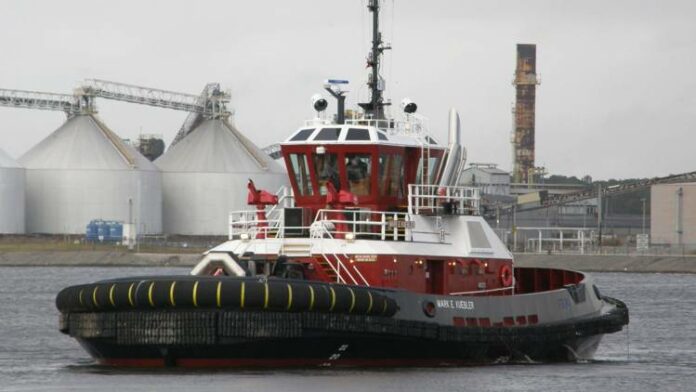
At the end of 2018, Gulf Island Shipyards completed the first of ten Z-Tech 30-80 tugs, five of which were ordered by Bay Houston Towing Company through its operator G & H Towing Company in Galveston, Texas. 

The Z-Tech 30-80 tug Mark E. Kuebler evolved from the previous Z-Tech 7500 design for the same owner. Once again, the design team and client worked seamlessly addressing operational challenges the vessel will face. A main feature of this latest Z-Tech is incorporating Robert Allan Ltd.’s unique RAstar series sponsoned hull form into the existing Z-Tech design. Computer simulations conducted by Robert Allan Ltd.’s in house CFD team demonstrate escort performance of the new tug will be significantly increased by generating more than 100 mt steering force at 10 knots which is particularly important for escorting large vessels.

Particulars of Mark E. Kuebler are:

  • Length Overall: 98’-6”
  • Beam, moulded: 42’-8”
  • Depth, moulded: 16’-5”
  • Gross Tonnage:
  • ITC: 411
  • US Regulatory: 297

The tugs were designed and constructed to comply with all applicable Rules and Regulations of:

ABS ✠A1 Towing Service, ✠ AMS, Escort Service, Fire Fighting Vessel Class 1 and all applicable U.S. Coast Guard regulations

Tank capacities are as follows:

  • Fuel oil: 42620 GAL
  • Potable water: 6700 GAL
  • Sea trial results showed Mark E. Kuebler met all requirements to the design:
  • Bollard pull, ahead: 81.5 MT
  • Free running speed, ahead: 13 knots

Customized general layout of the tug represents more than a decade of cooperation by Robert Allan Ltd. naval architects and the owners. The Master and Chief Engineer’s cabin along with galley and mess are located on the main deck while two cabins for four crew members are located on the lower deck.

Main propulsion for the tug comprises a pair of Caterpillar 3516E, EPA Tier 4 certified diesel engines, each rated 3386 bHP at 1800 rpm, and driving a Schottel SRP 510FP Z-drive unit with Ø2800 propeller. The tug is fitted with a Fire Fighting 1 system with two FFS 6200 gpm pumps driven by two Caterpillar engine C18 respectively.

The electrical plant consists of two identical John Deere 6068AFM85 diesel gen-sets, each with a power output of 125 eKw 480V, 3-Ph, 60 Hz.

Ship-handling fenders at the bow consist of one tier of 36” OD x 18” ID cylindrical fender at the main deck level with 16” thick double loop soft fenders between the main deck and the knuckle at bow and along the sheer lines of main deck. 16” OD x 8” ID cylindrical fendering is used at the stern.

Source:marinelink