-5.2 C
New York
Home Blog Page 1142

Chevron contracts Transocean ultra-deepwater drillship

0

Transocean Ltd. has provided an update on its offshore drilling rig fleet.

On Dec. 5, 2018, the company closed the acquisition of Ocean Rig UDW Inc. The transaction adds eight high-specification ultra-deepwater drillships and two harsh environment semisubmersibles to the Transocean fleet. In addition, the acquisition includes two high-specification ultra-deepwater drillships currently under construction at the Samsung shipyard in Geoje, South Korea.

Among the contract additions, Transocean signed a rig design and construction management contract, as well as a five-year drilling contract, with Chevron USA Inc. for one of its two dynamically positioned ultra-deepwater drillships under construction at the Jurong shipyard in Singapore. The drilling contract has an estimated backlog of $830 million, excluding mobilization and reimbursables.

The rig will be the first ultra-deepwater floater rated for 20,000 psi operations and is expected to start operations in the Gulf of Mexico in the second half of 2021.

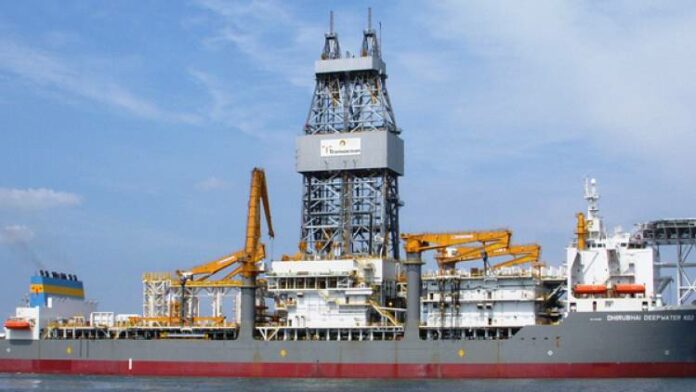
Offshore Australia, Chevron has awarded the ultra-deepwater drillship Dhirubhai Deepwater KG2 a four-well contract via a term swap with the ultra-deepwater semisubmersible GSF Development Driller I. It was also awarded one four-well option. The contract is expected to start this August and end in May 2020.

In the Norwegian North Sea, Lundin Petroleum has exercised a one-well option for the harsh-environment semisubmersible Leiv Eiriksson. Wellesley Petroleum has exercised two one-well options for the harsh environment semisub Transocean Arctic, and Capricorn Norge awarded the rig a two-well contract.

Offshore Ivory Coast, CNR has exercised two one-well options for the ultra-deepwater drillship Discoverer India.

In the UK North Sea, Fairfield Energy Ltd. exercised a one-well option for the semisub Transocean 712.

In addition, the company said that it intends to scrap the ultra-deepwater drillship Ocean Rig Paros. The rig is classified as held for sale.

Source:offshore-mag

BP brings two more gas fields onstream offshore northern Egypt

0

BP has produced first gas from two more fields in the West Nile Delta(WND) concession in the Mediterranean Sea offshore Egypt.

According to partner DEA Deutsche Erdoel, gas is flowing from eight recently completed wells on the Giza and Fayoum fields through newly installed subsea infrastructure and pipelines.

Initially they should deliver around 400 MMcf/d combined, ramping up gradually to a maximum of 700 MMcf/d.

Two years ago, operations started at the first two WND fields, Taurus and Libra. Work on the final field, Raven, should be completed later this year, with further discoveries likely to be developed at some point.

Once all the fields are onstream, total WND production should reach 1.4 bcf/d, equivalent to roughly one-fifth of Egypt’s current gas production. All the gas will supply the domestic Egyptian market. 

The WND gas-condensate fields are 65-85 km (40-53 mi) off the coast of Alexandria, Egypt. Taurus, Libra, Giza, and Fayoum fields hold gas within the Pliocene formations, while Raven’s gas is in the deeper Miocene formations. 

Sentinel Midstream proposes deepwater crude oil export facility

0

Sentinel Midstream has outlined its planned development of Texas GulfLink, a deepwater crude oil export terminal near Freeport, Texas.

The completed facility will be capable of fully loading very large crude carriers, the company said.

Texas GulfLink will include an onshore terminal with up to 18 MMbbl of storage, a 42-in. offshore pipeline, and a manned offshore platform to facilitate port operations with two catenary anchor leg mooring single point mooring buoys. The company said projected export loading rates will be up to 85,000 b/hr, with a nominal capacity of 1.2 MMb/d over the course of a calendar year.

Sentinel Midstream President and CEO Jeff Ballard said: “Texas GulfLink will provide the United States with an economical solution to clear the over-supply barrels destined for the Gulf Coast. We have compiled a team of industry leading professionals who possess unique experience in construction and operations of deepwater ports and are well positioned to leverage that experience as prudent operators."

“Our team of seasoned professionals is committed to developing Texas GulfLink with a specific focus on exceeding industry standards for safety and environmental protection.”

Over the past year, the company developed Texas GulfLink in conjunction with multiple stakeholders, including federal, state, and local agencies. The project has secured necessary commercial support to justify the capital investment and is preparing its submission of a formal permit with the United States Maritime Administration (MARAD).

Project financing is being provided by Cresta Fund Management.

Cresta Managing Partner Chris Rozzell said: “We view the company’s value proposition, which provides a neutral infrastructure solution without the inherent conflicts of affiliated marketing, as the best approach to support the interests of US producers and lead to the greatest outcome for all stakeholders.”

Source:offshore-mag

Jan De Nul to start key dredging works in Australia

0

The Pilbara Ports Authority will cooperate with Jan De Nul Group to dredge the channel and further improve the safe and sustainable access to the Port of Port Hedland. The project is part of the Channel Risk and Optimisation Project that aims to sustain the long-operation, development, and future growth of the port.

For a long time Jan De Nul Group is being the lead contractor of the majority of the dredging projects and the maintenance dredging works within the port precinct of Port Hedland.

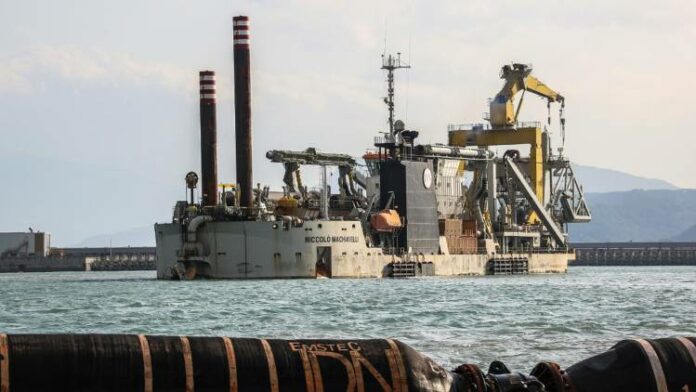
During Q1 of 2019, the company will deploy a large self-propelled Cutter Suction Dredger Niccoló Machiavelli with a total installed capacity of approximately 24,000 kW.

In addition, the project is expected to be completed in mid 2019 and will also provide an emergency passing lane along the shipping channel, improved water reguge zones and increased water depth in targeted areas of the access channel.

Port Hedland is Australia's largest export port in yearly throughput.

Moreover, it is the largest bulk mineral export port globally, with iron ore being the lead export commodity.

Concluding, Pilbara Ports Authority facilitates approximately $140 million of trade through the Port of Port Hedland daily, which currently requires the safe and efficient management of approximately 6,000 vessel movements in the port each year.

Source:safety4sea

The Digital Twin Concept explained

0

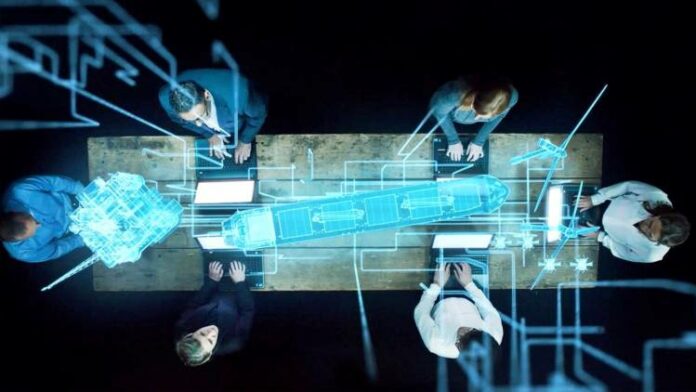
As digitalization is becoming an integral part of the shipping industry, more and more operators can benefit from its use. An interesting new technology that aspires to move maritime forward, is the digital twin concept. Digital twins provide a virtual model of a physical ship, producing valuable insights from data. So, what exactly is a digital twin ship?

Brief history of the digital twin concept

Michael Grieves, from the University of Michigan, was the first to write about this technology, using the term ‘digital twin’, back in 2002. However, NASA was using pairing technology, the predecessor of digital twin, back at the beginning of space exploration.

NASA wanted to find a way to operate, or repair systems when they are not near them. Especially, when the Apollo 13 disaster took place, it was this technology that enabled engineers and astronauts to see how they could rescue the mission.

Today, NASA uses digital twins to test and build its equipment in a virtual environment, according to John Vickers, NASA’s leading manufacturing expert and manager of NASA’s National Center for Advanced Manufacturing.

When they are sure that a system performs perfectly to the necessary requirements, only then they proceed to manufacture it. After that, the physical asset is connected with a digital twin to enable better inspection.

What is a digital twin?

A digital twin is a digital replica of a living or non-living physical entity. By combining the physical and the virtual world, data is provided enabling the virtual entity to exist at the same time with the physical entity.

Specifically, a digital twin digitally replicates physical assets that can be used for various purposes. This digital representation provides the elements and the dynamics of how an Internet of Things (IoT) device operates and lives throughout its life cycle.

The fact that these processes are presented digitally, means that there is no need to arrange for a physical test cycle.

Today, there are estimates that the digital twin concept will be widely used in the near future. In fact, by 2021, half of large industrial companies will use digital twins, achieving 10% improvement and effectiveness.

How does the digital twin works

A digital twin basically links the physical and digital world.

At first, smart components use sensors to collect data about real-time status, working condition, or position that are incorporated within a physical item.

These components are connected to a cloud-based system that receives and analyzes all the data the sensors monitor.

The technology then provides lessons learned, while opportunities are presented within the virtual environment. These opportunities can then be applied to the physical world.

Better evaluation of ship’s performance

What is very important is the fact that a digital twin can simulate how the ship will perform without needing to test it in the real world. This concept can also allow access to every bit of information on a ship, from engine performance to hull integrity, available at a glance throughout the full lifetime of the vessel.

The use of a virtual model such as the digital twin during operation, provides a great opportunity to visualize all important components, carry out analyses, and improve the operation on the ship’s structural and functional components.

In addition, using the digital twin, operators can plan for a more efficient inspection and maintenance. This can also lead to an extension of the ship's lifetime, as preventive measures will be taken to avoid damages.

Specifically, operators can create visual models of the ship and its underlying systems, such as engine spaces and pumps, and continuously record its fuel consumption, distributed on sources of energy, such as engines, boilers and batteries.

Other outcomes could be simulation and analytical models that are developed to acquire the optimum fuel consumption for a particular voyage with a specific cargo, by including external factors such as wind, current and weather conditions.

Commenting about the advantages of digital twins, Gaute Storhaug, Principal Specialist, DNV GL, said :"The increased transparency and control that the digital twin provides can even result in a competitive advantage by improving predictability."


At a glance, some areas for potential improvements that can be calculated by a digital twin are:

  • Optimal operation of machinery systems.
  • Optimal retrofit of batteries, more efficient thrusters, bulb etc.
  • Performing hull or propeller cleaning.
  • Verify ship performance on a detailed level. Visualise the effect of design choices and changes.
  • Benchmarking performance towards other vessels in the fleet.

Of course, as many actors are involved in the shipping industry, the digital twin can benefit the wider sector:

  • For ship owners, digital twins will provide a tool for visualisation of ship and subsystems, qualification and analytics of operational data, optimisation of ship performance, improved internal and external communication, safe handling of increased levels of autonomy and safe decommissioning.
  • For equipment manufacturers, the digital twin will provide a tool to facilitate system integration, demonstrate technology performance, perform system quality assurance and promote additional services for monitoring and maintenance.
  • For authorities, the digital twin will offer a systematic framework that can be set up with applications to feed live information and generate required reports from each ship. This can ensure higher quality reporting on critical issues without putting extra burdens on crew.
  • For universities, the digital twin offers a new platform on which to increase system understanding and facilitate knowledge exchange enhancing research and development and education in a range of technological disciplines.
  • For maritime academies, the digital twin can act as a platform for training that can increase each candidate’s understanding of the whole ship and train them in systems thinking to see the integrated consequences of actions taken.
  • Digital twins will require specialised consultancy services. Their role will be to accelerate efficient generation of the digital twin concept, e.g. with regard to state-of-the art requirements and standards for model exchange and handling of large scale data.

Early adopters of digital twins

The concept is currently taking off. In fact, the Danish Maritime Authority has focused on 'Digital Twin' concept for shipping. As Mogens Schrøder Bech, Senior Consultant on R&D at the Danish Maritime Authority, said: "The potential of the digital twin is huge because it is possible to make a number of decisions on optimisation digitally rather than by means of physical tests. And this potential will increase along with the development of digital tools."


Moreover, during 2017, Rolls-Royce Marine, The Norwegian University of Technology Science (NTNU), SINTEF Ocean, and DNV GL signed a memorandum of understanding (MoU), to create a digital platform, for ships to use. Namely, a prototype of the Open Simulation Platform (OSP) is running with a simulated ship and a DP system, performing a dynamic positioning operation. This prototype uses cloud technology, facilitating teams to enhance system design and vessel performance, verify correct handling of failures within the control system of the vessel’s automated positioning system, and verify system changes and the operational impact.

MPA Singapore has also jumped on the digital twin train. MPA signed an MoU with Keppel Offshore & Marine and the Technology Centre for Offshore and Marine, Singapore (TCOMS), to jointly develop autonomous vessels for a variety of operations.

Under the deal, a project will develop a Digital Twin of a tug which will simulate vessel behaviour to help optimise the vessel operations using data analytics and visualisation tools. TCOMS will provide expertise in coupled physical-numerical modelling and simulation to evolve solutions that improve on the predictability and control of the behaviour and response of the vessel.

There is no doubt that the digital twin is the future. Being able to predict potential dangers and create the optimum design, will enhance safety and operation greatly. With the element of the unknown significantly limited, the digital twin concept can help the shipping industry make better use of digitalization, and move to a new era.

Source:safety4sea

E-learning to take over hands-on training in maritime industry?

0

Over 70% of the respondents of MarTID (Maritime Training Insights Database) survey initiative, World Maritime University (WMU) expect an increase in simulators and e-learning in the coming years. In year 2019, traditional classroom teaching, and simulation training are the most popular training methods for operators, while there has been much debate about whether e-learning in maritime industry works or not. Some believe there is no replacement for hands-on training, others believe there is.

Benefits of Hands-on training:

  • Provides the context and experience
  • Offers repeated practice
  • Offers interaction with peers and instructors
  • Provides tactile feedback
  • Provides realistic work conditions
  • Helps avoid the risks associated with novice crew mistakes

Benefits of E-learning:

  • Provides variety of training scenarios
  • Provides control and better management of the training activities
  • Aligns with the technological advancements and digital landscape
  • Has the minimum cost
  • Meets the generation Z alternative ways of thinking, communicating and cooperating

Training in the maritime industry, needs to be adapted to offer training without time and location constrains, directly accessible to everybody. Moreover, since maritime is an industry with demanding, constant and continuously changing training needs, e-learning is proved to be the most suitable solution for training.

Why combining the two techniques is better than one alone?

Physical experiences can meet the digital ones in order to enhance learning practices. Shipping organisations are already changing the way of teaching and learning with platforms that connect individuals from all over the world; 3D animated marine safety videos and Virtual Reality (VR) are among the most popular digital means of training in the industry.

However, there are practical skills in maritime that cannot be taught through 3d, VR and eLearning and require hands-on training. Taken together, it’s clear that each approach offers something the other one does not.

Conclusion

Digital learning is not here to take over hands-on training in maritime industry but to enhance it. The real question is how we apply the strengths and advantages that e-Learning brings to maritime, an industry which requires better training and what we can do to achieve this.

Source:safety4sea

StormGeo and DNV GL partner on fleet performance solution

0

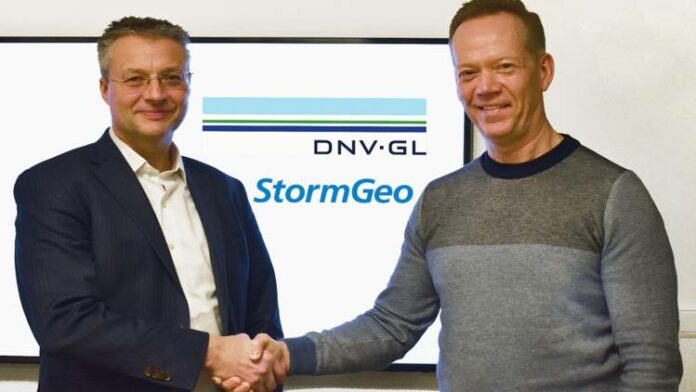
StormGeo and DNV GL have agreed to consolidate their fleet performance solutions under one banner.

DNV GL’s ECO Insight and Navigator Insight solutions will be combined with StormGeo’s FleetDSS and ship reporting solutions to offer shippers a complete fleet performance portfolio. The solution will offer route advisory, weather intelligence, navigation and planning, and fleet performance management to over 12,000 vessels.

According to StormGeo, the consolidation creates the largest vessel performance data set and developer team in shipping. Existing services will be maintained and strengthened within StormGeo, with all solutions brought together in the back-end, providing an improved data infrastructure for better decision making.

DNV GL’s 26.4 per cent share held in StormGeo since 2014 will ensure it retains a strong connection to the new solution. It will also give technical support to its ECO Insight customers and users will continue to share data through DNV GL’s open industry platform Veracity.

Per-Olof Schroeder, CEO, StormGeo, said: “Partnering with DNV GL enables us to accelerate the development of our fleet performance management offering by pooling the competence, software, and insight of both companies.”

“Bringing these solutions together will give our clients even more ways to enhance the safety, efficiency, and transparency of their operations. Finally, it builds on our vision of establishing StormGeo as the leading provider of performance management solutions to the shipping industry,” added Schroeder.

Trond Hodne, senior vice president, DNV GL – Maritime, commented: “Since its introduction in 2014, ECO Insight has grown into the largest performance solution in shipping, with installations on more than 2,000 vessels. In addition, already 22 industry partners connect their data and analytics to the solution."

ECO Insight has already been an outstanding success, and by combining it with StormGeo’s services we believe we can offer our customers a solution that not only gives broader functionality but taps into a richer data set. This will give our customers new and exciting services and insights to boost their competitiveness. We look forward to seeing ECO Insight going on to further success as part of StormGeo.

The agreement is subject to the fulfilment of certain customary closing conditions. The partners expect that the transaction will close no later than March 2019.

Source:thedigitalship

PAME launches Arctic Shipping Database

0

Arctic Council’s Working Group on the Protection of the Arctic Marine Environment (PAME) launched a comprehensive Arctic shipping activity database. The launch is a significant milestone in PAME’s work to improve knowledge of historical Arctic ship traffic activity and various factors that affect such activity, such as sea ice extent, meteorological and oceanographic conditions, and international regulations.  The database will allow authorized users to analyze vessel traffic patterns, fuel use, and air emissions, among other economic and environmental conditions.

The database includes archived information from 2005 to 2018 and will be updated regularly. Information contained in the ASTD database includes: Number of ships in the Arctic, distances sailed, and hours operated; Location of ships, ship routes, and ship speed; Ship types, including size and flag; Pollution measurements from ships, including CO2 emissions; Other environmental information such as sea ice extent.

Access to the database, which may be used only for non-commercial purposes, is available to all Arctic Council members, accredited academic institutions, and other recognized research entities.

Comment by PAME Chair Renée Sauvé: “When PAME released the Arctic Marine Shipping Assessment Report in 2009, it contained data on Arctic shipping activities that had been collected by asking Arctic nations to fill in an Excel spreadsheet.  Now, we are able to use satellites to gather information on shipping traffic in the Arctic. I am confident that the ASTD database will benefit PAME, the Arctic Council, and others by providing an invaluable tool to support a wide range of reports and analyses. The ASTD will increasingly be pivotal as we seek to better understand the growth of Arctic ship traffic in the years to come.”

Source:portnews

Orion Marine Concepts launches fleet management app

0

India-based Orion Marine Concepts has launched a fleet management application, NAU Fleet Performance, to improve efficiency, lower operational costs and cut emissions.

The NAU app provides information on each aspect of operation and activity of a vessel’s voyage. It provides a complete operational overview through performance KPIs, such as consumption, speed, charter party compliance, weather and next port information with ETA, decision support, voyage tracking, inventory overview, energy efficiency operating, calculation of CO2, nitrogen oxides (NOx) and sulphur oxides (SOx).

The NAU Fleet Performance app benefits from a user-friendly user interface that is not interactive and helps the user to control the

Capt. Mohit Sabharwal, director, technical and operations, said: “The operator receives invaluable information on every operation and activity on the APP based on the acquired measurements, a set of performance parameters which are calculated continuously and available for the fleet to the users to manage their vessels in a more economical and environmentally beneficial way.”

Source:thedigitalship

Damen deploys smart sensor mapping

0

Damen Shipyards has deployed Flicq sensors to improve remote monitoring across various vessels.

The sensor mapping solution from Flicq was selected by Damen in September 2018 to automatically gather and categorise data from every sensor on-board a vessel to give a uniform view of a vessel’s health.

In addition, smart sensors were installed on Damen connected vessels to fill in the data gaps. Flicq’s smart sensors enable instantaneous and autonomous processing of data. They reduce total cost of ownership by removing the need for sending spurious data to the cloud. According to Flicq, its sensors are specifically suitable for carrying out remote monitoring and predictive maintenance.

Toine Cleophas, Damen manager research, explained: “We were looking for a more generic system that was more flexible and in tune with the diversity of our clients’ requirements. Our clients want to have one single system that can handle all their data. This wasn’t available at that moment”.

Flicq founder and CEO Karthik Rau, added: “What makes them unique is that our sensors use edge intelligence. Battery life is longer, and you cut down the costs of bandwidth between the sensor and data centre”.

Source:thedigitalship