-5.2 C
New York
Home Blog Page 1141

Minesto raises SEK 44.4 million from warrants program

0

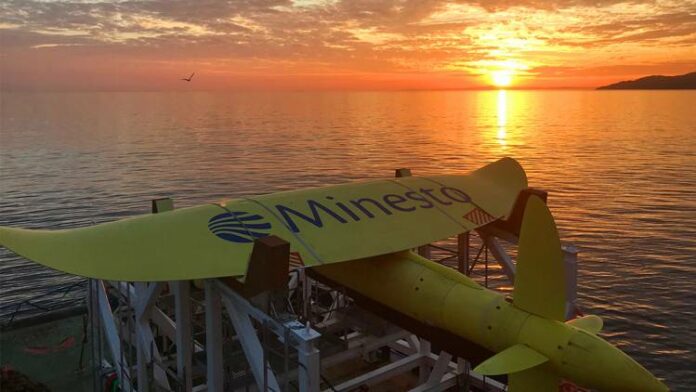
Marine energy developer Minesto has concluded its warrants program of series TO 2. In total, 98 percent of outstanding warrants were exercised, which means that Minesto will add approximately SEK 44.4 million in proceeds before issue costs to the commercialisation activities of the company’s unique subsea kite technology.

Commenting on the outcome of the warrants program Minesto’s CEO Dr Martin Edlund said: “We are pleased that so many have chosen to exercise their warrants and subscribe for new shares in Minesto. We will use this capital injection together with our other sources of funding to continue the development of our Deep Green technology as well as existing and new projects, to establish our product on the market.”

In total, 6,336,031 new shares in Minesto AB were subscribed through the warrants program, corresponding to a subscription rate of 97.8 percent. This means that Minesto will add approximately SEK 44.4 million in proceeds before deduction of issue costs.

The new shares have been delivered to the subscriber's account as interim shares. Next, they will be admitted to trading on Nasdaq First North as soon as the issue has been registered with the Swedish Companies Registration Office and Euroclear, which is expected to occur about three weeks after the subscription period’s ending on 8 February.

PG Flow Solutions Wins VARD Contract

0

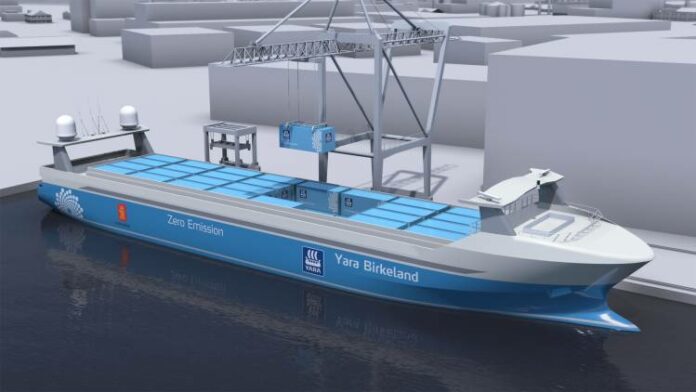
Norway's designer and shipbuilder of specialized vessels VARD has contracted PG Flow Solutions to supply the engine room pump system to the world’s first autonomous and electric container vessel, Yara Birkeland.

According to a press note from PG Flow Solutions, the provider of OSV cargo systems and below-deck well service solutions, Norwegian shipyard Vard Brevik has been tasked with building the NOK 250 million vessel on behalf of Oslo-listed international fertilizer producer YARA.

Liquid handling and pump specialist PG Flow Solutions will deliver a complete engine room pump system, consisting of coolers – including cooling pumps for the vessel’s battery pack and tunnel thrusters, bilge pumps, ballast water pumps and fire water pumps plus other associated equipment, spare parts and services. The pump systems will be delivered in April 2019. PG Flow Solutions’ contract value is undisclosed.

“We have delivered close to 2,000 engine and utility pump installations over the past four decades, but being chosen as supplier to the world’s first autonomous and electric container vessel is a particularly proud moment for us. An autonomous vessel requires the most reliable, high-quality equipment in the market, hence we are immensely proud that VARD has chosen our engine room pumps,” says Steve Paulsen, CEO of PG Flow Solutions.

The vessel’s hull will be supplied by Vard Braila in Romania, while the complete Yara Birkeland autonomous vessel is scheduled to be delivered from Vard Brevik in Norway in Q1 2020. The vessel will gradually move from manned operation to fully autonomous operation by 2022.

The Yara Birkeland project was initiated in an effort to improve the logistics at Yara’s Porsgrunn fertilizer plant. Every day, more than 100 diesel truck journeys are needed to transport products from Yara’s Porsgrunn plant to ports in Brevik and Larvik where the company ships products to customers around the world.

With this new autonomous battery-driven container vessel YARA moves transport from road to sea and thereby replaces 40,000 truck journeys per year, which in turn reduces NOx and CO2 emissions and improves road safety in a densely populated urban area.

“Our pump systems are energy efficient and have very low maintenance requirements. They are a good fit for the vessel’s requirements,” says Morten Espenæs, sales manager at PG Flow Solutions.

Source:marinelink

Petronas charters Rowan drillship for work offshore Mexico

0

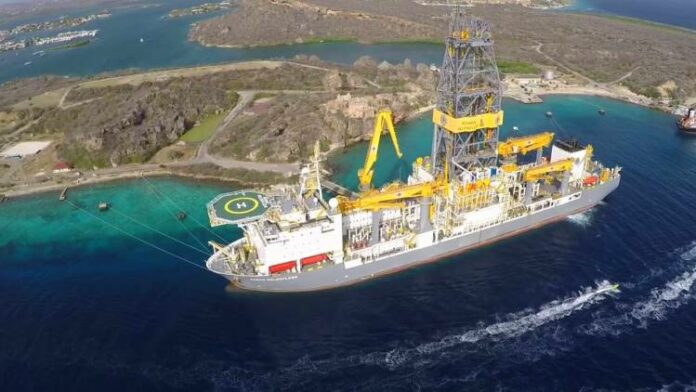
Rowan Companies plc announced today that the Rowan Renaissance, an R-Class ultra-deepwater drillship, has been awarded a one-well contract in Mexico by PC Carigali Mexico Operations, S.A. de C.V. ("Petronas") for an estimated duration of 80 days that is expected to commence in the second quarter of 2019. 

Following the initial contract term, Petronas has a one-well priced option with an estimated duration of 80 days.  The Rowan Renaissance is currently under contract with Total in Mexico's Gulf of Mexico until about March 2019.

The 2014-built UDW drillship is of a GustoMSC P10,000 design. It is capable of drilling wells to depths of 40,000 feet in waters of up to 12,000 feet.

Somalia opens offshore licensing round

0

Somalia is inviting bids for 15 blocks across various basins under the country’s 2019 offshore licensing round.

Delegates from the country’s Federal Ministry of Petroleum and Mineral Resources outlined the terms in London last week at an event organized by Spectrum Geo.

The presentation was the first of its type ever staged outside Somalia.

According to head of the Ministry Abdirashid Mohamed Ahmed, the licensing round was first announced in Cape Town last November, and it had been a long process administering the resources to get to this point.

“In recent years the Ministry and government have been working together to put together proposals,” he said.

Spectrum acquired and processed the 2D seismic data-sets over the offshore areas offered. The results, according to Eng. Karar Shukri Doomey, director general at the Ministry, suggest Somalia’s offshore hydrocarbon resources could be the largest anywhere in East Africa, or even across Africa as a whole.       

July 11, 2019 will be the final date for companies wishing to apply for qualification for bidding, he added, with the Ministry set to qualify potential operators and non-operators on Aug. 29. Would-be operators must demonstrate drilling experience beyond 500 m (1,640 ft) water depth.

Bids must be received by Nov. 7 and signing of production-sharing agreements (PSAs) should follow a month later, involving three initial exploration phases lasting up to eight years. The PSAs should take effect on Jan. 1, 2020.

Dr Pedro van Meurs, a consultant to Ministry who helped draw up the fiscal regime, said the team involved had examined recent experiences of other countries around the world pitching offshore exploration rounds.

The government has sanctioned PSA terms that are less strict than those operated by Kenya, Tanzania and Mozambique, he said, in recognition that Somalia “is totally a frontier area.”

In cases where the offshore exploration leads to discovery and subsequent development of a larger field, and assuming that the oil price is higher and costs are lower, the government take will be greater.

However, the less attractive the discovered resource is, the less the government gets,” he explained. “So, the fiscal terms are devised to suit a wide range of conditions, in line with the more moderate terms that Ghana offers.”

Royalties on gas finds will be lower than for oil, in recognition of the difficulties East Africa is facing in monetizing gas as LNG, he added. And unlike most other African nations the state will not have a carried interest in the first round exploration licenses, so this should help keep costs down, he suggested.

The blocks on offer extend from north to south, off the south-facing side of Somalia’s coast on the ‘Horn of Africa.’

Selection was based on analysis of 20,185 km (12,542 mi) of 2D long-offset seismic data over water depths of 30-4,000 m (98-13,123 ft) that Spectrum acquired and processed following a co-operation agreement with the government, complemented by 20,500 km (12,738 mi) of existing 2D data from 2014.

The survey was designed to allow for seismic coverage over the shelf, slope and basin floor with dip, strike and recording time intervals suitable for defining a range of leads and prospects.

Streamer lengths of 10,050 m (32,972 ft) were used to record information at all offsets, and to assist imaging of the underlying syn–rift geometries.

In addition, Spectrum Geo applied modern processing algorithms to the data to optimize imaging of steeply-dipping extensional and compressional features and illumination of amplitude anomalies. The final pre-stack depth and time migration (PSDM and PSTM) products are available to bidders.

Analysis of the area over the northern offshore blocks had revealed six different source rocks that could be generating hydrocarbons, said Spectrum’s geoscience director Karyna Rodriguez.

Work with Leeds University in northern England suggests potential for large oil fields in an extensive Jurassic carbonate build-up, she added.

Over the southern area, there are also indications of a Late Cretaceous carbonate complex, “and this too looks like it could be an oil province,” she said, with potential for 2-3 Bbbl finds.

Data from US Geological Survey images revealing evidence of oil slicks on the sea surface appears to support this idea.

“All the blocks have prospectivity,” Rodriguez concluded, “and the prospectivity is the greatest we have ever identified, with a potential total resource of 30 Bbbl offshore Somalia.
Source:offshore-mag

ICS: Shipping Cannot Achieve Climate Goals Using Fossil Fuels

0

The International Chamber of Shipping has concluded that it will not be possible to achieve the IMO's target for greenhouse gas cuts using fossil fuels. 

The determination is in line with recent research on the greenhouse-gas profile of liquefied natural gas, the primary alternative marine fuel on the market today. Studies have found that LNG offers a relatively small 6-10 percent GHG reduction compared with HFO (and, with certain engine designs, the possibility of a GHG increase). By comparison, IMO aims for a 50 percent cut in GHG emissions by 2050. 

"The ICS Board agreed that the industry cannot achieve the 2050 GHG reduction target using fossil fuels," said ICS chairman Esben Poulsson. "Over the next decade we are therefore going to require massive investment in research and development of zero CO2 emitting propulsion systems and other technologies which don’t yet exist in a form that can be readily applied to international shipping, especially in deep sea trades."

As recently as two years ago, ICS leadership had indicated that change was certain in the long run, but shipping would still have to rely on fossil fuels for decades. "Governments need to recognize that many ships will remain dependent on fossil fuels probably at least until around 2050,” Simon Bennett, ICS Director of Policy, at a bunkering forum in Athens in November 2017. “But the momentum created by the Paris Agreement on climate change means that the wholesale switch to alternative fuels and propulsion systems will be relentless and inevitable.

Short term changes

In the short term, ICS now endorses IMO's goal to tighten the Energy Efficiency Design Index (EEDI) standards – which have long been criticized by environmental groups as too lax – and to strengthen Ship Energy Efficiency Management Plan (SEEMP) requirements. 

“We need IMO to make progress with short term GHG reduction measures as soon as possible to achieve measurable additional GHG reductions by 2023,” said Poulsson. “But while these short term measures are very important we want IMO to move on to developing the critical long term measures that will truly help the industry to decarbonize completely.”  

Source:maritime-executive

U.S. Military to Use AI to Empower not Replace Warriors

0

The U.S. Department of Defense (DOD) has released a summary of its strategy on artificial intelligence (AI): Harnessing AI to Advance Our Security and Prosperity. The DOD says AI is poised to change the character of the future battlefield and the pace of threats faced in today's security environment. However, the DOD states: “The women and men in the U.S. armed forces remain our enduring source of strength; we will use AI-enabled information, tools, and systems to empower, not replace, those who serve.”

The Strategy states that other nations, particularly China and Russia, are making significant investments in AI for military purposes, including in applications that raise questions regarding international norms and human rights. “These investments threaten to erode our technological and operational advantages and destabilize the free and open international order. The United States, together with its allies and partners, must adopt AI to maintain its strategic position, prevail on future battlefields, and safeguard this order. We will also seek to develop and use AI technologies in ways that advance security, peace, and stability in the long run.”

The department's strategic approach to AI emphasizes its rapid, iterative, and responsible delivery and then the use of lessons learned to create repeatable and scalable processes and systems that will improve functions and missions across the department.

Examples include:

• Improving situational awareness and decision-making. AI applied to perception tasks such as imagery analysis can extract useful information from raw data and equip leaders with increased situational awareness. 

• Increasing safety of operating equipment. AI has the potential to enhance the safety of operating aircraft, ships and vehicles in complex, rapidly changing situations by alerting operators to hidden dangers.

• Implementing predictive maintenance and supply. AI will be used to predict the failure of critical parts, automate diagnostics and plan maintenance based on data and equipment condition. Similar technology will be used to guide provisioning of spare parts and optimize inventory levels. 

• Streamlining business processes. AI will be used with the objective of reducing the time spent on highly manual, repetitive and frequent tasks. 

The DOD will continue to undertake research and adopt policies as necessary to ensure that AI systems are used responsibly and ethically. One example of existing guidance is DOD Directive 3000.09, issued in 2012, which establishes guidelines to minimize the probability and consequences of failure in autonomous and semi-autonomous weapon systems that could lead to unintended engagements. The Directive requires that such systems be designed to allow commanders and operators to exercise appropriate levels of human judgment over the use of force. The Directive also requires realistic and rigorous testing and clear human-machine interface, as well as appropriate training for commanders and operators, so that those weapons function as anticipated in realistic operational environments against adaptive adversaries.

The DOD will continue funding research and development for “explainable AI” so users can understand the basis of AI outputs and therefore understand, appropriately trust and effectively manage AI systems.

The DOD plans to engage with the open source community by contributing data, challenges, research, and technologies as a vehicle for attracting talent and identifying and advancing new AI technologies.

The focal point of DOD AI is the Joint Artificial Intelligence Center, established last June under DOD Chief Information Officer Dana Deasy and led by Lt. Gen. John "Jack" Shanahan, to provide a common vision, mission and focus to drive department-wide AI capability delivery.  

DOD's AI strategy supports the National Defense Strategy and is part of DOD's overall efforts to modernize information technology to support the warfighter, defend against cyber attacks and leverage emerging technologies. 

Source:maritime-executive

Maersk Acquires Leading American Customs Brokerage

0

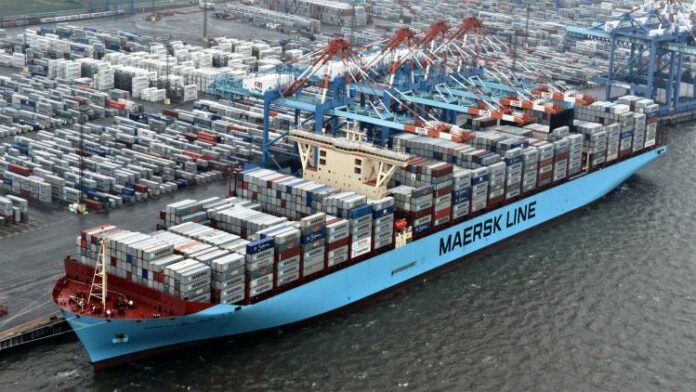
As part of its new strategy to provide customers with end-to-end solutions, not just ocean freight, Maersk has acquired the well-regarded American customs brokerage firm Vandegrift. 

“Customers have been asking us to simplify the complexity of their global supply chains and reduce their risk, so we analyzed the North America market to see who had the best reputation in the brokerage/trade compliance industry," said Klaus Rud Sejling, head of global logistics and services at Maersk. 

New Jersey-based Vandegrift has a network of 12 offices and 170 employees around the nation. It specializes in trade compliance – ensuring that imports and exports meet all regulatory requirements – and has a team of former U.S. Customs and Border Protection (CBP) officials on staff, as well as experts with backgrounds in customs brokerage, retail and law. With the addition of this expertise, Maersk augments the capabiliities of its door-to-door services. 

“Transportation costs and trade compliance risk management are a strategic issue for our customers. We believe we have an opportunity to better design a more holistic customs brokerage and trade compliance plan and overarching strategy for customers," said Sejling. 

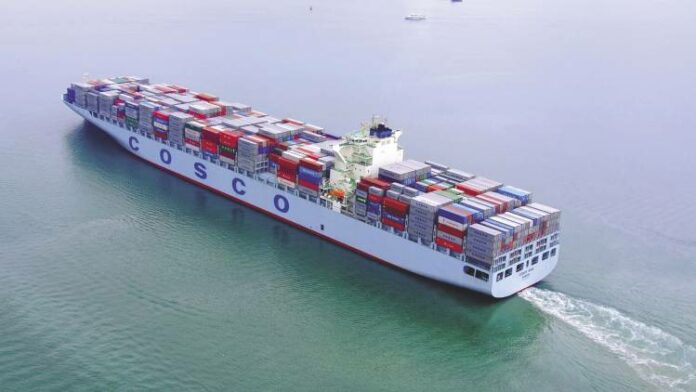
The move comes as Maersk competitor CMA CGM launches a $1 billion takeover bid for freight forwarder CEVA Logistics. CMA CGM has been moving towards an acquisition of CEVA for months as part of a strategy comparable to Maersk's: both lines seek to offer a full logistics solution with multiple value-added services, expanding their revenue streams beyond the volatile and highly commoditized business of ocean freight.

Source:maritime-executive

Nigerian navy reports 34 oil theft pirate attacks in 2018

0

According to the Nigerian Navy, thirty-four pirate ship attacks were reported in 2018, stating that evasive manoeuvre from the legal regime have been the bane in the fight against oil theft prosecution.

Mainly, Director of Training and Operation, Rear Admiral Mackson Makonju Kadiri, reported that from January to December 2018, from the 34 reported pirate attacks, the 9 were successful, whereas the 25 were unsuccessful.

In addition, 20 sea robbery attacks were reported in 2018, with 6 having success, in comparison to 14 being unsuccessful.

He continued stating that despite the threat migration, mostly with regards to incessant illegal refining of crude oil, piracy, sea robbery, crude oil theft, illegal oil bunkering, IUUF, insurgency among others, significant gains were accomplished, that resulted to increased output in maritime trade and particularly oil production.

So far, 9 houseboats otherwise known as Naval Security Stations (NSS) have been deployed where crude oil theft and illegal refining activities are known to be prevalent.

He addressed that there have been many arrested for conveying stolen crude oil and illegally refined products, since the introduction of the Choke Point Control Regime.

Finally, Chief of Policy Plans, Rear Admiral Begroy Ibe – Enwo, prior to presenting the Chief of the Naval Staff, Vice Admiral IE Ibas noted that the dialogue was organised mostly to focus on the efforts of the Nigerian Navy in effectively tackling maritime security.

EA1 toasts first blade

0

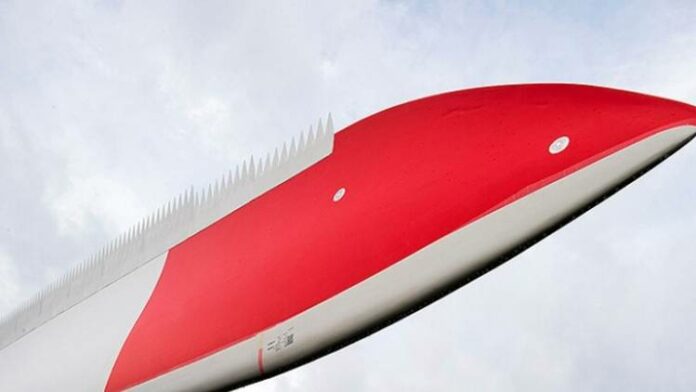
Production of the first wind turbine blade for the 714MW East Anglia 1 (EA1) offshore wind farm has been completed.

Inspection and sign-off of the blade, produced at Siemens Gamesa’s Green Port factory in Hull, north-east England, was completed on 7 February.

In total, Siemens Gamesa is producing 306 75-metre long blades for its 102 7MW turbines for the £2.5bn EA1 project, being developed by ScottishPower Renewables.

The wind farm, which is being built off the coast of eastern England, is due online in 2020.

ScottishPower Renewables EA1 project director Charlie Jordan said: “The manufacture of the first blade from Hull is a fantastic milestone in the development of our wind farm, signalling the start of turbine installation."

The fabrication of the blades from Siemens Gamesa’s facility in Hull further demonstrates our commitment to spending over 50% of the project investment in the UK, ensuring the benefits of East Anglia 1 are felt across the country.

Following production at Siemens Gamesa’s £160m Green Port factory, the blades will be shipped down the coast to Great Yarmouth, where the turbine components will be pre-assembled following a £5m co-investment to prepare Peel Ports Great Yarmouth for construction and installation activities.

ScottishPower Renewables is investing £25m in the Port of Lowestoft with the construction of an operations and maintenance building.

The base, at Associated British Ports’ Hamilton Dock, Lowestoft, will employ 100 staff to manage EA1’s day-to-day operations and maintenance activities.

East Anglia 1 is the first of four offshore wind farms ScottishPower Renewables is developing in the region.

Siemens Gamesa project manager Andrew Elmes said: “The East Anglia 1 offshore wind farm is a world-leading project to be a part of, providing a significant boost to the UK economy and it’s extra special to be able to support it from our amazing factory in Hull.”

Source:renews

Fincantieri Launches Seven Seas Splendor

0

Regent Seven Seas Cruises (RSSC) launched its second extra-luxury cruise ship Seven Seas Splendor at the Ancona plant of Fincantieri. RSSC is brand of the Norwegian Cruise Line Holdings Ltd (NCLH) group.

According to a press note from the Italian shipbuilding company, the delivery of Seven Seas Splendor, the sister ship to Seven Seas Explorer,  is scheduled for 2020.

Like her sister ship Seven Seas Explorer, delivered by Fincantieri at the Sestri Ponente (Genova) shipyard in 2016, “Seven Seas Splendor” will be 55,000 gross tonnes with accommodation for 750 passengers. Last January Fincantieri has received an order from NCLH for a third unit of the series, which will be delivered in 2023.

The construction process will implement the latest environmental-friendly technologies. The interiors will be particularly sophisticated, with every attention paid to passenger comfort.

Seven Seas Splendor is an all-suite, all-balcony ship, offering up to 750 guests the most elegant accommodations, the company said.

Fincantieri has built 88 cruise ships from 1990 to today (65 from 2002), while other 55 are currently being designed or built, ensuring work continuity in all the Group’s yards for the next years.

Source:marinelink