-3.6 C
New York
Home Blog Page 1135

Change management: Keeping pace with digital transformation

0

Change management (CM) drivers vary from technological evolution, process reviews, crisis, and consumer habit changes to pressure from new business entrants, acquisitions, mergers or organizational restructuring. In this article we are about to focus on the all-important one; technological evolution and digital transformation.

In the maritime world, digital transformation is gaining ground with automation reaching increasing interest while IMO puts the issue of autonomous ships high on the agenda, stepping up efforts toward their adoption. AI based predictive positioning systems are already being trialed for shipping. Also, advanced software and simulation capabilities are emerging, and maritime connectivity gets improved. How are shipping organizations about to keep pace with this digital evolution, though?

BCG says that companies should 'scan' the business environment for digital inspiration by monitoring digital trends along the entire transport value chain, while emphasizing on how other innovative companies have successfully adopted digital technologies.

McKinsey has unpacked the change management trend highlighting the critical part change management plays in driving successful outcomes. However, the firm also finds that most change management efforts fail because outdated models and change techniques are fundamentally misaligned with today’s dynamic business environment.

A definition for change management

Change management refers to how people and teams are affected by an organizational transition.

– It includes methods on how we prepare, equip and support individuals to successfully adopt change in order to drive organizational success and outcomes.

– It deals with many different disciplines, from behavioral and social sciences to information technology as well as business solutions.

From individual change to organizational change

Individual change management is an approach of how one person makes a change successfully. Whether at home, in the community, work, individuals move through the change which provides the framework to make a transition.

Created by Prosci founder Jeff Hiatt, the ADKAR Model is a goal-oriented change management model that guides individual and organizational change. The acronym represents the five tangible and concrete outcomes that people but also organizations need to achieve for lasting change: awareness, desire, knowledge, ability and reinforcement.

Moreover, Dr. John Paul Kotter, Konosuke Matsushita Professor of Leadership, Emeritus, Harvard Business School, has observed countless leaders and organizations as they were trying to transform or execute their strategies. He identified and extracted the success factors and combined them into a methodology, the 8-Step Process for Leading Change.

  1. Establishing a sense of urgency
  2. Creating the guiding coalition
  3. Developing a vision and strategy
  4. Communicating the change vision
  5. Empowering employees for broad-based action
  6. Generating short-term wins
  7. Consolidating gains and producing more change
  8. Anchoring new approaches in the culture

Our proposal for successful digital change management

  1. Plan ahead by tracking and mitigating digital transformation risks
  2. Identify executive stakeholders and change agents
  3. Align with a center of excellence (COE) to manage all digital transformation efforts
  4. Define key tactics that will drive your intended change
  5. Strengthen change team role definitions, workstreams
  6. Resolve business process impacts
  7. Create a measurement plan; include KPIs
  8. Develop a content strategy plan
  9. Design a training plan
  10. Develop a communication plan
  11. Monitor and address the change frequently

"The rate of change is continuing to increase exponentially, giving us more and more wild moments in every generation. Humanity will change more in the next 30 years, than in the previous 300"…. said Christian Vakarelis, Navarino.

Source:safety4sea

High-Tech Simulators to Boost Argentina Terminal

0

Terminal Zárate, located in Buenos Aires, Argentina, has signed an agreement with training solution provider GlobalSim for two new crane simulators.

As part of a plan to improve training and preparation for crane operators, the facility will receive GlobalSim’s Essential Plus system, a simulation platform with various configuration options that include rubber-tyred gantry cranes (RTGs), mobile harbour cranes, and ship pedestal cranes.

In addition to this, Terminal Zárate will also leverage a portable virtual reality system to provide training for operators working with its hydraulic telescopic crane.

Both systems, which are currently being developed at GlobalSim’s headquarters in Salt Lake City, USA, will undergo testing before being installed at Terminal Zárate in Q2 2019.

Gustavo Oliver, General Manager at Terminal Zárate, commented: “When we began revamping our logistics, the fundamental essence was to train our staff and develop operators to become more efficient."

We knew that incorporating a GlobalSim simulator into our program would be just the element we needed to accomplish our training goals.

GlobalSim’s simulators are as real as the actual equipment. We know it is going to make the transition to actual equipment easier for our operators.

Oscar Delgado, International Sales Director at GlobalSim, added: “This is an exciting project for GlobalSim as we look forward to partner with Terminal Zárate to provide these simulators."

Terminal Zárate will have the ability to conduct simulated, real-life situations seen in their area and cut the time and costs of their training.

Source:porttechnology

BP: More energy is needed with fewer emissions

0

BP published its Energy outlook for 2019, exploring key uncertainties that could impact global energy markets up until 2040. The greatest uncertainties over this period regard the need for more energy to support rising global economic growth and prosperity, along with the need for faster transition to a lower-carbon future.  The Outlook also analyzes the possible impact of an escalation in trade disputes and the consequences of a tightening in the regulation of plastics.

Namely, the 'Evolving Transition' scenario, which assumes that government policies, technologies and societal preferences evolve in a similar manner to the recent past, predicts that:

  • Global energy demand increases by around a third by 2040, driven by improvements in living standards, particularly in India, China and across Asia;
  • Energy consumed by industry and buildings accounts for around 75% of this increase in overall energy demand, while growth in energy demand from transport slows sharply relative to the past as gains in vehicle efficiency accelerate;
  • The power sector uses around 75% of the increase in primary energy;
  • 85% of the growth in energy supply is generated through renewable energy and natural gas, with renewables becoming the largest source of global power generation by 2040;
  • The pace at which renewable energy penetrates the global energy system is faster than for any fuel in history;
  • Demand for oil grows in the first half of the Outlook period before gradually plateauing, while global coal consumption remains broadly flat. Across all the scenarios considered in the Outlook, significant levels of continued investment in new oil will be required to meet oil demand in 2040;
  • Global carbon emissions continue to rise, signalling the need for a comprehensive set of policy measures to achieve a substantial reduction in carbon emissions.

Moreover, the report says that renewables and natural gas will together account for the vast majority of the growth in primary energy. In the evolving transition scenario, 85% of new energy is lower carbon.

However, the Outlook considers a number of additional scenarios. Some of the key ones are:

More energy

More energy is needed to support growth and help billions of people to move from low to middle incomes. In fact, there is a strong correlation between human progress and energy consumption. Currently, about 80% of the world’s population live in countries where average energy consumption is less than 100 GJ per head. In order to reduce that number to one-third of the population by 2040, the world would need around 65% more energy than today, or 25% more energy than needed in the evolving transition scenario.

The Outlook also highlights the need for more action to reduce carbon emissions."This is the dual challenge for the world – to provide more energy with fewer emissions."

Rapid transition 

The rapid transition scenario is the combination of analyses which bring together the policy measures in lower carbon scenarios for industry and buildings, transport and power. This could lead to a 45% reduction in carbon emissions by 2040 in comparison to current levels. This is in the middle of a sample of external projections with aim to be consistent with meeting the Paris Agreement climate goals.

This fall represents a combination of:

  • Gains in energy efficiency;
  • A switch to lower-carbon fuels; material use of CCUS;
  • A articular importance in the power sector, a significant rise in the carbon price.

According to BP, the power sector is the largest source of carbon emissions from energy use and it is crucial for the world to continue to find ways to reduce emissions from this sector.

However, reductions in carbon emissions from the transport industry in all scenarios to 2040 is relatively small in comparison. Even in the rapid transition scenario, an important level of carbon emissions remain in 2040. To meet the Paris climate goals, in the second half of the century these remaining emissions would need to be greatly reduced and offset with negative emissions.

To achieve this, a near-complete decarbonization of the power sector would be necessary. This will require greater use of renewables and CCUS, along with natural gas and greater electrification of end-use activities. If electrification is not possible, other forms of low-carbon energy and energy carriers will be key, such as hydrogen and bioenergy.
Source:safety4sea

Watch: ABS presents FCI Cyber Risk Model

0

ABS launches the FCI Cyber Risk Model that enables the maritime cyber security risk to be more accurately measured. This methodology was developed by ABS Advanced Solutions. With the FCI Risk Model, one can measure and quantify risks based on critical functions, interconnections and identities that access those critical functions through digital connections.

As Keon Mcewen commented, the FCI method is a quantified method of calculating the risk. It allows researchers to break down risk in three sections.

Moreover, the FCI method enables them to quantify and measure risk based on the critical functions, inter-connections and the identities that access them.

Rick Scott, P.E. Senior technical Advisor, noted that "When untrusted identities can access critical functions through digital connection, then cyber risk exists."

Finally, ABS Smart Solutions received the received the 2019 SMART4SEA Cyber Security Award for this methodology to measure cyber security risk associated with operational technology, providing marine and offshore clients a calculated risk index for vessels, fleets and facilities.

Source:safety4sea


Police seize 3.3 tonnes of cocaine from ship off Portugal

0

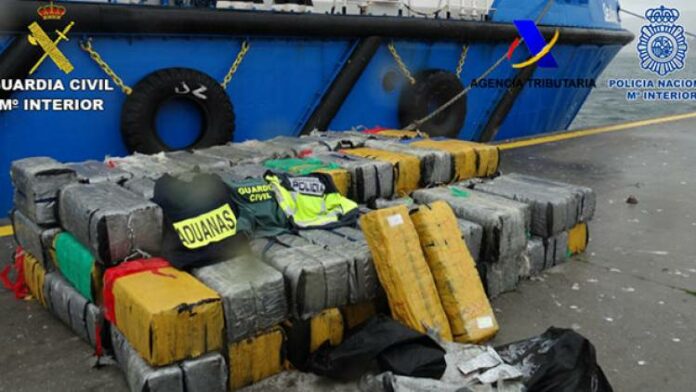
Portugal's authorities seized 3.3 tonnes of cocaine and arrested 11 people off the country's Atlantic coast, after boarding a drug smuggling ship on the high seas, 150 nautical miles off the country’s coast. The seizure is estimated to to be worth around $148 million at European street prices.

The investigation into the gang, which started in 2017, was led by Spanish authorities, Reuters reported.

The seizure took place on 30 January and the ship was traveling to Europe from South America. It was then transferred to the port of Setubal, 50 kilometers south of Lisbon.

Authorities found 80 bales of pure cocaine stored on the ship’s top deck, all of them equipped with hooks to facilitate transfer to smaller boats. According to authorities, the smuggling gang hoped to operate from the ship itself by transferring the cocaine into smaller, faster boats, which would then bring the drugs into Spain and elsewhere in Europe.

Of the 11 arrested, eight were from the Ukraine, one from Georgia, one from the Netherlands and one French.

Global cocaine production reached a record high of an estimated 1,410 tonnes in 2016, according to the UN Office on Drugs and Crime.

Source:safety4sea

Ruben Brothers offer for RBD Armatori sees fleet auction cancelled

0

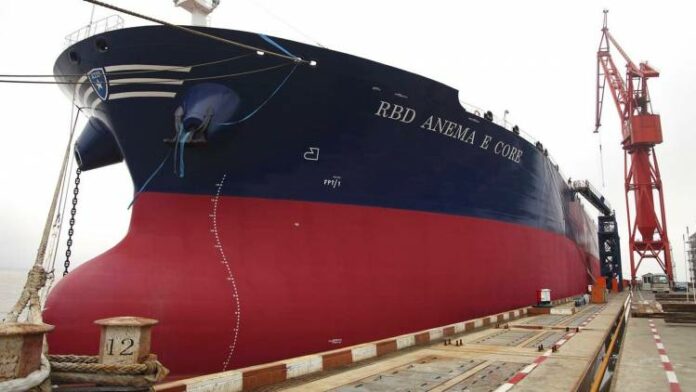
With an offer on the table from Ruben Brothers investment fund, the planned auction of RBD Armatori’s shipping assets has been cancelled by the local Court of Torre Annunziata, Naples.

The fleet consisting of the 13 vessels (6 aframax tankers, 3 capesize and 4 post-panamax bulkers) together with charter contracts and personnel was set to be auctioned on February 22, with a starting price of $190m.

As reported by Splash earlier this month, an offer for the whole company (real estate properties included) was submitted to the liquidators by Reuben Brothers fund for a total of €270m ($305m). With the auction now cancelled, it looks like the offer made for the Torre del Greco-based shipping company is likely to be accepted by the local court.

VesselsValue and MSI value RBD Armatori’s fleet at €248m ($282m) and €251.5m ($284.3m) respectively.

Source:splash247

Malaysian Port Unveils AI Upgrade

0

The Port of Tanjung Pelepas (PTP), Malaysia’s biggest and most technologically advanced port, has signed an agreement with cloud software specialists Ramco Systems to upgrade its current Enterprise Resource Planning (ERP) system.

The upgrade, according to a statement, is part of PTP’s ongoing efforts to improve its digital logistics infrastructure and operational efficiency.

It will see PTP utilize advanced smart technologies, such as artificial intelligence (AI) and Chatbots, which will help it meet growing customer demand and accelerate its drive to become a regional transshipment hub.

Under the agreement, Ramco will implement its comprehensive ERP suite comprising procurement, inventory, finance, maintenance, human capital management, treasury loan management and planning and budgeting.

Speaking about the deal with Ramco, PTP’s CEO Marco Neelsen said: “Given the pace at which technological advancements are changing the world, it is imperative for PTP to remain competitive and attractive. By investing in the latest technology, we are establishing our terminal as one of the best equipped and most technologically advanced terminal port in the region”.

We also wanted to choose a digital solution partner with tools that can aid us in our growth as well as give us the right platform to integrate to advanced technologies. With the product and service that Ramco provides us, we believe it will benefit us well.

Source:porttechnology

U.S. Coast Guard Receives Funding for New Heavy Icebreaker

0

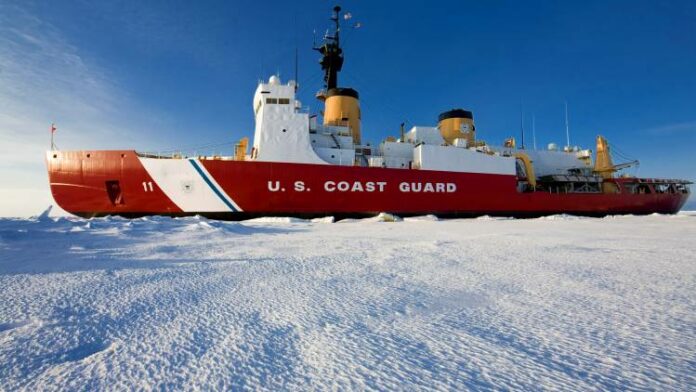
The compromise federal funding package that President Donald Trump signed into law on Friday has received attention for its passage – which averted a second government shutdown – and for the relative shortage of border security funding in its 1,100-plus pages. It also contains significant good news for the Coast Guard, which received $655 million to build one heavy icebreaker and $20 million in long-lead-time funding for a second, according to USNI News. 

As part of the budget deal finalized this week, Congress appropriated $2.25 billion in capital expenditures for Coast Guard shore facilities, vessels, ATON and aircraft. This is slightly more than the Department of Homeland Security's FY2019 budget proposal, which requested $1.9 billion, including $750 million for one icebreaker. Before the shutdown in December, the Senate version of the DHS appropriations bill included the icebreaker, but the House version did not, putting priority on funding a border wall instead. After the shutdown, the balance appears to have shifted in favor of the Senate's bill – putting the Coast Guard on a path to replace an aging platform with significant reliability problems.

The Coast Guard has one remaining heavy icebreaker, the 1976-built Polar Star. She is among the most capable vessels of her type, with enough power to break through ice of up to 21 feet thick, but she is now well past her designed service life. In her 2018 icebreaking season, she suffered a shaft seal failure leading to flooding, along with an electronic control failure that took out one of her three turbines. This year, one of her electrical systems began to smoke, causing damage to wiring in an electrical switchboard, and one of her evaporators failed. Like last year, she also experienced a leak from a shaft seal, which halted icebreaking operations until scuba divers could make repairs. 

The Star's sister ship, Polar Sea, left service in 2010 after a catastrophic engine failure. She now serves as a parts donor to sustain the Star's Cold War-era systems. The Coast Guard has noted that it has no self-rescue capability in the event that the Star should suffer a similar breakdown in heavy ice. 

Given these vulnerabilities and the increasing need for a U.S. national security presence in the Arctic, the Coast Guard hopes to build three heavy and three medium medium icebreakers. Its ambition is to deliver the first heavy icebreaker – rebranded as the "Polar Security Cutter" – by 2023. 

Source:maritime-executive

Toledo Ship Fire Under Control

0

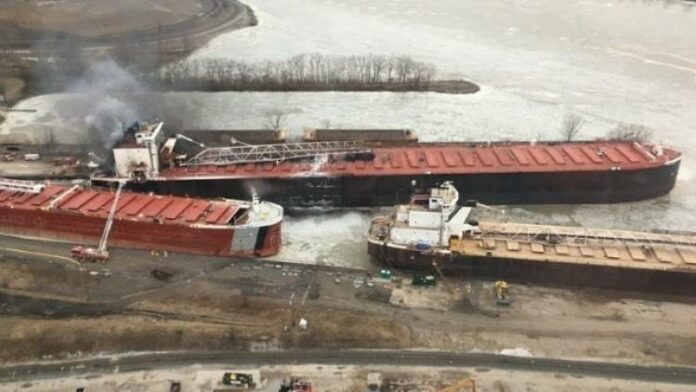
The U.S. Coast Guard is conducting pollution assessment of the Maumee River following a fire on board a vessel at the CSX Torco terminal in the Port of Toledo, Oregon, on Saturday.

The fire was located on the stern of the St. Clair, a 762-foot vessel moored in the Port of Toledo for winter season repairs. No one was on board, and there was no cargo on the vessel at the time of the fire, which is currently under control. Preventative measures continue on adjacent ships using water-cooling techniques. 

Eight local fire departments are involved. The fire was combated mostly with water from water tank trucks. Aqueous Film Forming Foam (AFFF) was also used overnight and will be cleaned up by vacuum trucks.

A helicopter crew and a pollution responder, on board a helicopter from Coast Guard Air Station Detroit, conducted an aerial observation of the area at first light on Sunday and determined there was no pollution in the Maumee River.

The American Steamship Company, owner of the vessel, has contacted the National Response Corporation which has contracted Marine Pollution Control to be on scene and ready to respond to any possible pollution. 

The St. Clair was built by Bay Shipbuilding and entered service in May 1976. She is used for the long-haul transport of iron ore pellets, coal and limestone on the Great Lakes.
Source:maritime-executive

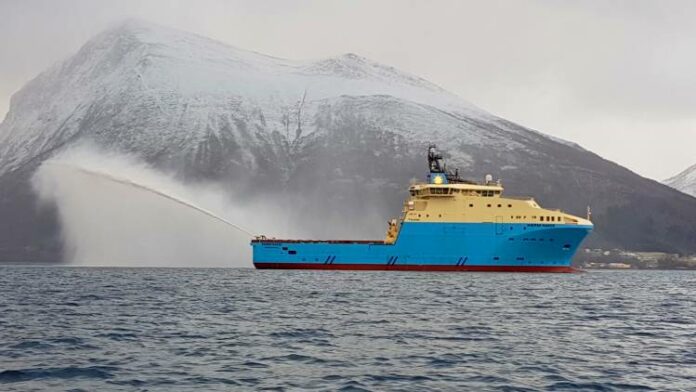
Kleven Shipyard delivers to Maersk the AHTS Maersk Maker

0

An official delivery / acceptance ceremony for the Maersk Maker, the sixth and last in a series of Anchor Handling Tug Supply vessels ordered by Maersk Supply Service A/S, was held at Kleven Verft Shipyard 14 February 2019. This is the tenth newbuild vessel delivered to MSS fleet since March 2017 and is the final vessel of the company’s Starfish AHTS newbuilding series, the shipbuilding firm said in a press release. 

The M-series vessel featuring several innovations was designed for operation on deep sea depths.

Maersk Maker had a naming ceremony at Kleven yard, with Rikke Eskjær as godmother. The vessel will leave Kleven in a few days, heading to Aberdeen and the spot market in the North Sea.

Olav Nakken, CEO of Kleven Verft AS commented: “The project has been very important for Kleven as well as for all subcontractors who have been involved. Maersk is a quality and safety conscious customer whom we have learned a lot from, especially with focus on HSE and initiation of machinery system. As the Starfish fleet is complete, we take a goodbye with Maersk for now, and of course we wish them welcome back!”

“As some of the newest vessels operating in the offshore support vessel industry, the M-class series have proven their highly advanced capabilities from the moment of delivery. These vessels are building impressive track records within a range of services and we’ve received positive feedback from our customers around the world,” says Chief Executive Officer Steen S. Karstensen, Maersk Supply Service.

The Mærsk Maker is of the Salt 200 type and has an open deck area of more than 800m2, with 102m2 covered deck area as well. She is also equipped with anchor handling winch of 450 tons. This is placed in a closed garage so that the crew and equipment are protected from the rough surrounding the vessel occasionally operates in. Mærsk Maker has ice class and is also prepared for ROV operations and oil cleanup- operations. The traction to the vessel is measured at 260 tons.