-0.1 C
New York
Home Blog Page 1131

Tilbury2 port construction project gets greenlight

0

The UK’s Port of Tilbury has received green light from the country’s government to build Tilbury2 – a new multimillion pound port terminal adjacent to the current 930-acre site in Thurrock, on the outskirts of Greater London. The construction operations are projected to begin in a few weeks. When operational in Spring 2020, Tilbury2 will be the UK’s largest unaccompanied ferry port and the country’s biggest construction processing hub, with AEO-trusted trader status.

Specifically, when the construction begins, Tilbury2 will be built on an area that covers the excess of 150 acres, which on the past was the location of the former Tilbury Power Station.

According to Forth Ports' statement, the expansion is of a big importance for the efficient operation of the port, as it needs to cope with rising demand for construction materials and aggregates from Britain’s construction sector, imported and exported cars, as well as an increase in commercial ferry traffic, which carries consumer goods, perishables (food and drink) and steel between Europe and the UK.

Tilbury2 will provide:

  • A ro-ro ferry terminal for importing and exporting containers and trailers to northern Europe, collaborating with P&O ferries;
  • A facility for importing, processing, manufacturing and distributing construction materials;
  • A strategic rail terminal which can accommodate the longest freight trains of 775m;
  • Storage sectors for a diversity of goods, including exported and imported cars.

In addition, the construction of the port, will include a new rail and road connection, deep water jetty and pontoon, will bring the project cost to in excess of GBP 200 million (USD 260.7 million).

The tender process for a contractor to complete this build has been completed and an announcement will be made shortly, Forth Ports Group said.

Charles Hammond, Chief Executive of Forth Ports Group, reported "This is great news for the UK at a time when the country needs its ports more than ever before. Tilbury2 will deliver much needed port capacity to support businesses importing and exporting to and from Europe and the rest of the world."

Finally, the new terminal will be fit-for-purpose for the UK’s departure from the European Union as it will acquire state-of-the-art technology.

Source:safety4sea
Clean Shipping Alliance Concerned About E.U. Scrubber Proposal

0

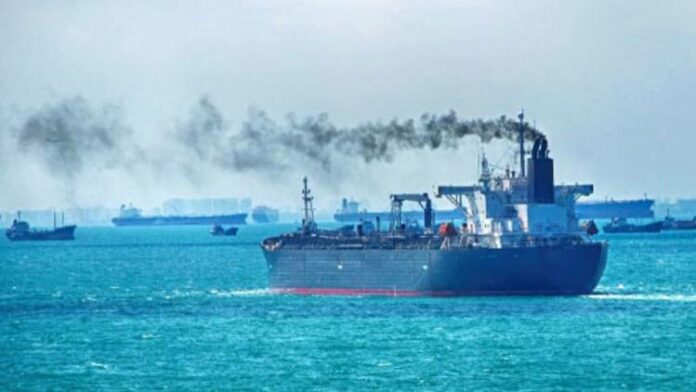
The Clean Shipping Alliance 2020 (CSA 2020) has expressed concerns about a proposal submitted by the European Commission (E.C.) which urges the IMO to change its exhaust gas cleaning system (scrubber) guidelines.

The proposal calls for “evaluation and harmonization” of scrubber discharges across all ports, worldwide. The proposal is intended for consideration by the 74th session of the IMO’s Marine Environment Protection Committee (MEPC 74) which meets in May.

“This proposal is an attempt by the European Commission to push forward restrictions on scrubbers, which are accepted globally by the IMO, E.U. and others as acceptable means of improving air emissions quality in controlled areas,” said CSA 2020 Executive Director Ian Adams. 

The E.C. initiative is needlessly creating baseless concerns at a time when there are already very real issues in the maritime industry regarding the future availability, suitability and cost of fuels and the effects on global trade and shipping that this will have. There could also be safety implications should ships be required to change fuels in high traffic areas close to ports.

CSA 2020 members, who represent over 30 leading commercial and passenger shipping companies, have been investing for years to prepare their ships in time to meet emissions abatement targets in accordance with existing IMO and E.U. rules, which endorse the use of open and closed-loop scrubbers in all waters,” said Adams. “To see the Commission take this step within months of the entry-into-force of the Global ECA is beyond disappointing.”

In a letter to its membership, seen by CSA 2020, a European national shipowners’ association says: “The E.C. submission does not identify any scientific evidence of potential risks but is lost in assumptions and speculation about possible contaminant levels and claimed risk potentials.”

In its proposal, the Commission refers to the interim result of a study to be completed in May 2019 by the Federal Maritime and Hydrographic Agency (BSH) for the investigation of scrubber wash water from closed loop and open loop systems. As the preliminary conclusions of the BSH study do not appear to align with the Commission’s proposal, it is far from clear whether it will contain any suggestion of new restrictions on scrubber wash water, says Adams.

China's Maritime Safety Administration announced a ban on scrubber wash water release, effective January 1, 2019. The ban follows a similar one announced in November last year by Singapore's Maritime and Port Authority of Singapore (MPA). The MPA will not allow ships with open-loop scrubbers to discharge scrubber wash water in port after January 1, 2020. In order to remain in compliance, ships will have to switch to closed-loop scrubber operation if set up to do so or burn 0.5 percent sulfur fuel. 

In a recent review of the situation, consultant Jad Mouawad advised that more research will likely be needed to answer questions about scrubber wash water's environmental impact. "A quick analysis of the concerns raised with wash water from scrubbers indicate that more independent research and a more thorough analysis of the environmental risks those systems pose is needed. This applies regardless of whether the system is open, closed or hybrid," he concluded. "My strong recommendation is that the IMO member states put forward suggestions to that regard, rather than start applying restrictions on scrubbers."

source:maritime-executive

Stena Forth to drill Jethro-Lobe offshore Guyana

0

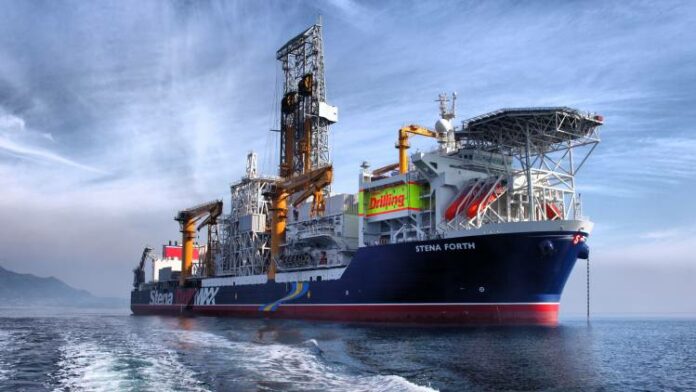
The partners in the Orinduik block offshore Guyana have contracted the drillship Stena Forth for their first exploration well.

After completing its current program offshore West Africa, the rig is set to spud the well on the 250-MMbbl Jethro-Lobe prospect in June, close to and up-dip from numerous discoveries in the deepwater Stabroek block and in the same proven resource intervals.

According to one of the block partners Eco (Atlantic) Oil and Gas, the agreement with contractor Stena also defines a window for a second well after Jethro-Lobe has been drilled.

The Tullow Oil-led partnership has already secured or ordered long-lead items for two wells, including wellheads from DrilQuip and casings, and is currently negotiating support vessel and infrastructure arrangements.

The partnership expects to formalize plans for the second well in the next few weeks.

 The Stena Forth, Eco Atlantic added, was its preferred choice because of the vessel/crew’s previous experience of operating in a similar drilling environment, and because of Stena’s understanding of the operating requirements.

Colin Kinley, Eco Atlantic’s COO, said: “While the Jethro-Lobe is a Tertiary target, which we believe is similar to the Exxon Hammerhead discovery that appears to extend onto Orinduik, we will also drill down to test the Cretaceous section below Jethro.”

UAE Partially Lifts Ban on Qatari Shipping

0

The UAE has partially lifted a ban on Qatari shipping, easing the sanctions imposed as part of the Saudi-led pressure campaign on Qatar that began in 2017. 

According to an advisory published by Abu Dhabi Ports last week, Qatari-origin cargoes can now enter the UAE's ports and vice versa. However, Qatari-owned or -flagged vessels are still banned from the UAE, and UAE-flagged vessels are still not permitted to visit Qatar.

The broader boycott shows no signs of ending soon. On February 18, UAE foreign minister Dr. Anwar Gargash asserted that "the crisis has turned Qatar into an orphaned state," and that "Doha is still floundering." He suggested that the four participants in the embargo – Saudi Arabia, Bahrain, the UAE and Egypt – would not be divided and would maintain their "principled position." 

In June 2017, these four nations imposted a boycott on Qatar in retaliation for Doha's alleged support for terrorism – a charge the Qatari government denies. The Muslim Brotherhood, the popular Islamist group that the Saudi government once welcomed but now shuns, has a strong presence in Qatar; Riyadh views the Brotherhood as an existential threat, and its status is at the center of the dispute. 

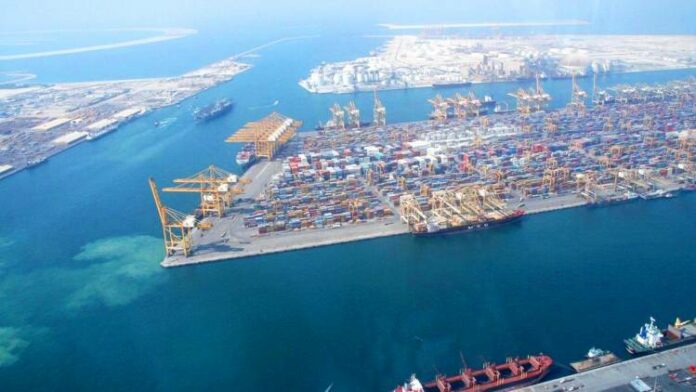
At the outset of the boycott, Saudi Arabia shut its land border with Qatar, and the rest of the participants imposed a range of shipping sanctions. As the UAE port of Jebel Ali is a major regional hub for containerized cargoes, Qatar had to make alternate arrangements for import and export logistics, including new routes to and from Oman. 

As the world's largest exporter of LNG, Qatar has significant financial resources, and has largely continued its business through the embargo without difficulty. It is currently contemplating the purchase of up to 60 new LNG carriers, which would double its existing fleet. The order could provide a multi-billion-dollar boost to South Korea's shipbuilding industry – which holds a dominant position in the LNG market – in a single move.

Source:maritime-executive

Meygen sets new tidal power export record

0

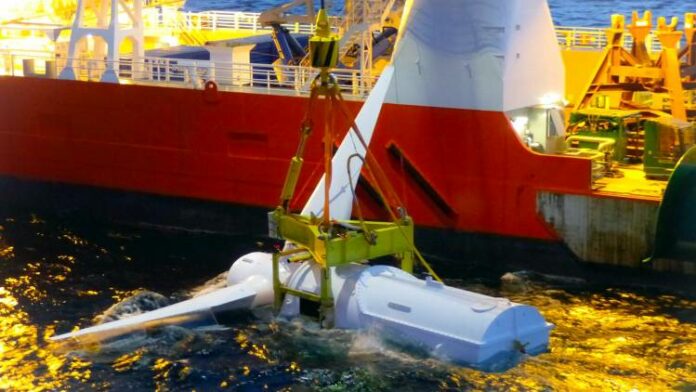
Simec Atlantis Energy’s Meygen tidal array has exported more than 12 gigawatt hours of electricity to the Scottish grid, beating the previous world record held by SeaGen.

The 6MW MeyGen Phase 1A tidal array, in the Pentland Firth in northern Scotland, entered the 25-year operations stage in April last year.

MeyGen Phase 1A comprises three 1.5MW Andritz turbines and a single 1.5MW Atlantis AR1500 unit installed on gravity turbine support structures.

The pilot project was developed to demonstrate the development of tidal array projects is both commercially viable and technically feasible.

Through the second half of 2018 Simec Atlantis Energy carried out operations and maintenance work on the machines at its Nigg Energy Park base in Easter Ross, redeploying two Andritz machines in October and the remaining Andritz and the AR1500 unit in December.

By the end of this year the developer will connect additional bigger capacity tidal turbines using a subsea connection hub. The system will allow multiple machines to export via a single cable, to slash grid connection costs and reduce tidal power's levelised cost of energy.

The proposed works, known as Project Stroma, will benefit from a €16.8m revenue support package under the European Commission’s NER300 programme.

Subsea engineering specialist ETA is supplying the tidal turbine connection system, which aims to make extensive use of the Scottish supply chain.

Shearwater and TGS Partner on Brazilian Survey

0

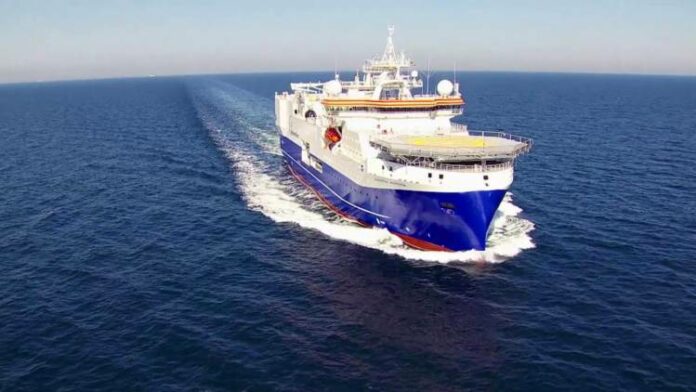
Offshore survey specialist Shearwater GeoServices has been awarded a major exploration survey in Brazil via TGS.

The project will be executed by the survey vessel Amazon Warrior and commence in the first quarter.

The survey will provide contiguous 3D coverage over the highly prospective Brazil Round 16 blocks located in the outer Campos Basin.

“Shearwater and TGS have a long-established relationship and we are very pleased to develop this partnership further. Shearwater’s Amazon Warrior is equipped with industry leading single sensor Qmarine technology and will provide TGS and their clients with a powerful and effective platform for the survey, ideally suited to environmental conditions offshore Brazil,” said Irene Waage Basili, CEO of Shearwater GeoServices.

Source:splash247

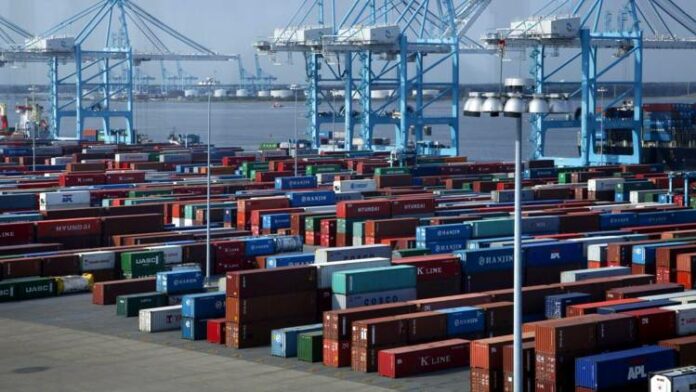
Port of Virginia finishes stack-yard project at VIG

0

The Virginia International Gateway (VIG) completed another step in its expansion project as it launched operations at its container stack No. 1. The end of the stack-yard work leaves only two projects to be completed before the entire $320 million effort comes to an end in June.

Mainly, John F. Reinhart, CEO and executive director of the Virginia Port Authority noted that the new capacity is rapidly being integrated into the port's operation and the results are already obvious.

As the No.1 stack is completed, the terminal now is provided with 13 additional stacks. Each of the 13 stacks consists of two new rail-mounted gantry cranes (RMGs).

Additionally, the new stacks support the 15 existing stacks that are also served by RMGs. Those stacks are scheduled to be renovated through 2019, with two stacks complete and three underway.

According to the port, the expansion has doubled the terminal’s annual container throughput capacity. Specifically, VIG can now process 1.2 million container lifts annually.

The expansion of the shipyard is in line with four new ship-to-shore cranes and 800 extra feet of berth space.

Mr. Reinhart noted "In February 2017, we started work on what was a green-field site — we started from scratch – and now we are just a few months from completion." 

After its completion, the VIG expansion is expected to increase the port’s overall annual container capacity by 40 percent, or 1 million container units, by 2020.

Source:safety4sea

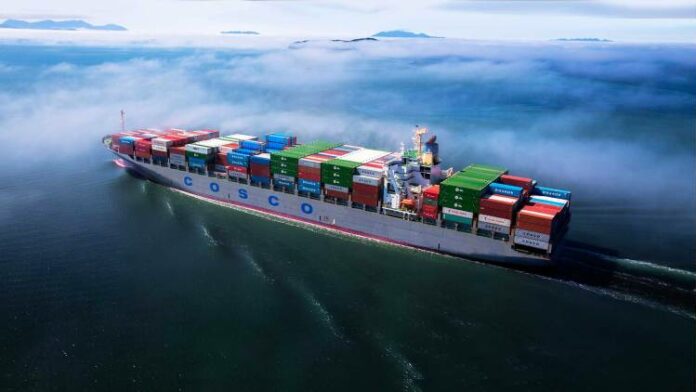
COSCO SHIPPING Lines and Bolloré Transport & Logistics sign a MoU to develop new synergies

0

In the presence of Messrs Wang Haimin and Cyrille Bolloré, COSCO SHIPPING Lines and Bolloré Transport & Logistics have signed on January 29, 2019 a strategic Memorandum of Understanding in Shanghai.

The two companies, partners for over 20 years, want to densify their commercial relations while exploring new opportunities for cooperation in transport, logistics and port infrastructure.

Through this agreement, the two companies have agreed to explore the possibilities of commercial collaboration in order to develop their respective activities and satisfy the needs of their customers, particularly in terms of digitalization.

Bolloré Transport & Logistics and COSCO SHIPPING Lines share the common ambition to intensify international flows, particularly on the African continent, where Bolloré Transport & Logistics is known for its expertise and has a large network of maritime agencies and also a unique know-how in corridor management.

Source:portnews

Petrobras kicks off oil and gas production from P-76 FPSO

0

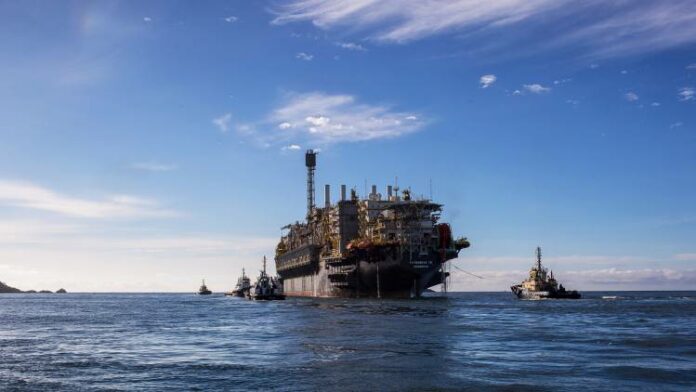
Brazilian oil company Petrobras has started producing oil and gas from the P-76 FPSO in the Búzios field in the Santos Basin, offshore Brazil.

With a daily capacity to process up to 150,000 barrels of oil and compress up to 6 million cubic meters of natural gas, P-76 is the second FPSO to start-up in 2019 for Petrobras. The oil company plans to add two more FPSO’s in 2019.

The Búzios field, in the pre-salt of the Santos Basin, was discovered in 2010 and is the main field under the Transfer of Rights Agreement. The field started production in April 2018, and another platform is expected to start-up this year, the P-77.

The FPSO is located approximately 180 km off the coast of the state of Rio de Janeiro, at a water depth of 2,030 meters.

The project provides for its interconnection to ten producing wells and seven injector wells. The offload of oil production will be made by relief vessels, while gas production will be drained through the pre-salt pipeline routes.


Sembmarine to close its Tanjong Kling yard four years ahead of schedule

0

Singapore shipyard group Sembcorp Marine (Sembmarine) is set to cease operation its Tanjong Kling Shipyard at year end, formerly Jurong Shipyard, as it consolidates business at its Tuas Boulevard mega-yard.

In its full year results announcement Sembmarine revealed the group is continuing with its transformation and yard consolidation strategy as it will move all operations from its Tanjong Kling yard by end-2019, four years ahead of schedule. The Tanjong Kling yard was previously known as Jurong Shipyard.

After Sembmarine has consolidated its operations at its integrated Tuas Boulevard Yard, the group is expected to realise cost savings estimated at SGD48m per annum from its financial year 2020.

Speaking about the market Wong Weng Sun, president and ceo of Sembmarine, of noted that offshore rigs utilisation and day rates for most segments have continued to stabilise or improve, underpinned by more drilling activities. Offshore capex spending has also continued to improve with more production projects moving towards final investment decision stage.

“While offshore drilling activities have increased, offshore rig orders will take some time to recover as the market remains oversupplied,” Wong said.

“The ship repairs and upgrades segment remains intensely competitive although the market is expected to improve with higher work volume from the new IMO regulations requiring the installation of ballast water treatment systems and gas scrubbers,” he said.