-0.1 C
New York
Home Blog Page 1130

ADNOC plans to add 25 vessels to fleet

0

Abu Dhabi National Oil Company (ADNOC) plans to add more than 25 vessels to its shipping fleet over the next five years.

The fleet expansion plan will also include the acquisition of ADNOC’s first crude oil tankers.

ADNOC believes its ambitious growth plan will enable the company to sell more of its commodities on a delivered basis, increasing its global reach, unlocking new market opportunities and stretching the value of its supply chain.

We have set out a clear growth strategy for ADNOC Logistics & Services and defined our intent to meet the group’s present and future shipping and marine services requirements. At the same time, there will be a focus on ADNOC’s trading ambitions, which foresee a significant growth in the delivery of products to our global customers,” said Dr Sultan Ahmed Al Jaber, UAE minister of state and CEO of ADNOC.

“ADNOC Logistics & Services is a crucial link in the ADNOC supply chain, delivering oil, gas and petroleum products to our customers across the world. As we grow our trading business and strengthen our integrated maritime capabilities, we will capitalize on market growth opportunities and position the company as the largest regional integrated maritime services company,” Al Jaber added.

According to ADNOC, it will increase its oil production capacity of 4m barrels per day (mmbpd) by the end of 2020 to 5 mmbpd by 2030. The company also intends to triple production of petrochemicals to 14.4m tons per annum and double its crude refining capacity by 2025.

Additionally, ADNOC L&S and China’s Wanhua Petrochemical signed an MOU to explore the creation of a joint venture for the transport of gas. Wanhua Petrochemical is an existing customer of ADNOC, having signed 10-year LPG purchase contract for 1MMPTA.

Source:splash247
Watch: Port of Hamburg Outlook for 2019

0

The Port of Hamburg has released a video of Jens Meier, CEO of Hamburg Port Authority, discussing the port's plans for 2019 including the renovation of the St. Pauli Elbe tunnel, the expansion of the port fleet, the fairway adaptation and the new Kattwyk railway bridge.

The port handled over 135 million tons of seaborne cargo in 2018 (down one percent). Its rail seaport-hinterland freight accounted for totals of 46.8 million tons – up 2.7 percent – and 2.44 million TEU – up 4.7 percent. More than 60,000 cargo trains with around 1.6 million freight cars were handled during 2018. This topped the record total set in 2016.

China again remained the Port of Hamburg’s largest trading partner in 2018. One in three of all containers handled in the port are for, or from, China, and more than 235 connections by rail are now offered from Hamburg along the New Silk Road.

The port and its handling terminals are already clearing mega-ships with slot capacities of over 21,000 TEUs and, looking to the future, are preparing to clear arrivals and departures by even larger vessels.

Source:maritime-executive

Remote control USV technology demonstrated in the UAE

0

Technology for remotely controlling workboat and defence vessels has been demonstrated in the United Arab Emirates by Al Marakeb Boat Manufacturing Co.

The technology was developed with autonomous system providers and another boat builder as part of the Abu Dhabi Vision 2030 programme.

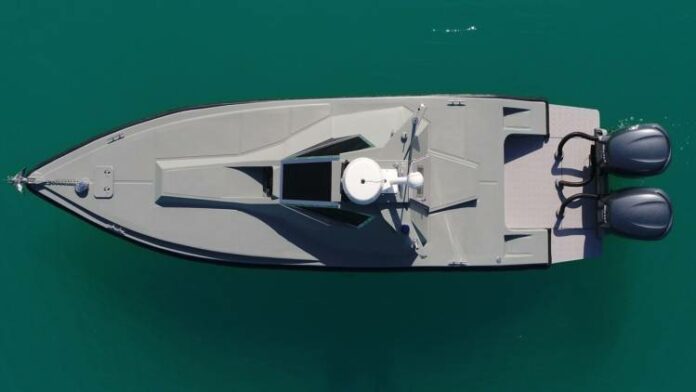
Al Marakeb introduced a 13-m unmanned surface vessel (USV), AHM13 USV, in collaboration with vessel builder Al Hareb Marine. During demonstrations in the UAE this week, the vessel was stationed at Ghantoot 70 km from the command and control station.

The vessel is remotely controlled using MAP Pro autonomous technology. This relays engine diagnostics, route management, a live camera feed, radar screens and an obstacle warning alarm in real-time from the USV to the command centre.

Al Marakeb chief operating officer Nour Al Sayyed said this technology was developed through collaboration with other industry players “towards implementing latest the innovations in the USV market”.

Al Marakeb has developed a smaller 11-m drone vessel, AHM11 USV, with propulsion and a MAP Pro autonomous conversion kit. Both vessels were developed for the UAE defence sector to tackle surface and aerial threats, but also have commercial non-defence applications.

This is one of a growing number of demonstrations of remotely controlling vessels in commercial and defence sectors, with more companies testing the technology. Svitzer and Rolls-Royce collaborated with Lloyd's Register to remotely control a harbour tug. Kotug has tested remote control of a training vessel and Purple Water has demonstrated remote control of the Lloyd’s Register-certified 26-m double-ended tugboat, Giano.


Cargo Discharge Set to Begin for Fire-Damaged Yantian Express

0

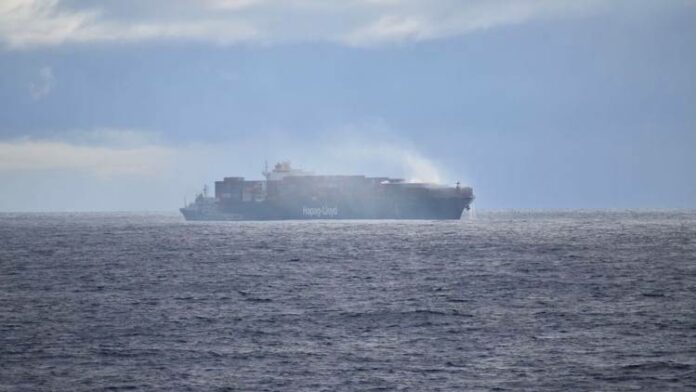
The fire-damaged container ship Yantian Express is moored at the Freeport Container Port in Freeport, Grand Bahama, awaiting the unloading of damaged cargo. In a customer update, carrier alliance ONE said that the local port authority is monitoring the preparation of the reception site and is expected to give its final approval to start discharge operations in the next few days.

The work will begin with damaged cargo, and ONE expects the process to take about two months. According to the general average surveyor, 202 containers are suspected to be a total loss, and another 460 were stored in the affected area and require inspection. 17 reefers were turned off during the firefighting operation and will also require a survey. 

No timeline has yet been set for removing the undamaged containers – which constitute the majority of the goods on board – but the alliance is exploring its options and expects to announce a plan as soon as possible. 

All cargo interests will have to post salvage and general average guarantees in order to retrieve their goods. The salvage guarantee provides for cargo owners' liability up to a maximum of 32.5 percent of the CIF value of the cargo. For uninsured cargoes, the general average bond requires a cash deposit of 28 percent of the cargo value; for insured cargoes, the insurer will address this portion of the liability. This adds up to a maximum total deposit of 60.5 percent of the value of the cargo. Some portion of these funds may be refunded after the salvage award is finalized and the general average adjustment has been completed, but these processes will likely take time, according to adjuster Richards Hogg Lindley. 

On January 3, a cargo fire broke out on the Yantian Express' foredeck as she transited off Canada's eastern seaboard. Efforts to extinguish the fire were launched immediately, but these initial operations had to be suspended due to deteriorating weather. All crew safely evacuated from the Yantian Expressonto the response tug Smit Nicobar on January 6, and five returned to the Express to rejoin the firefighting effort on January 9. Once the fire was under control, the Express diverted to the Bahamas to offload her cargo and conduct a damage assessment. Smit Salvage handled the response under a Lloyds Open Form contract with operator Hapag-Lloyd. 

Source:maritime-executive

Dutch sign up to methanol project

0

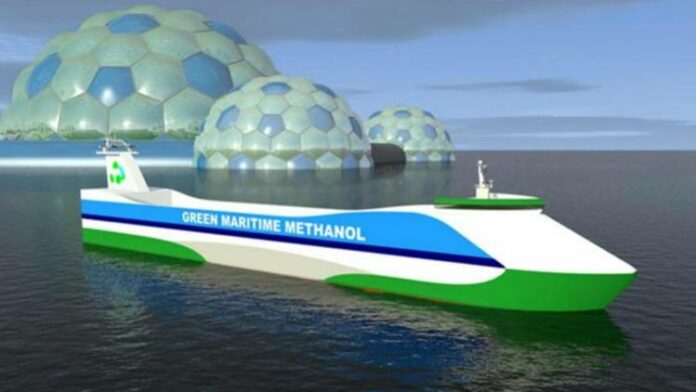
A consortium of Dutch maritime companies, supported by Maritime Knowledge Centre, have joined forces to further investigate the feasibility of methanol as a sustainable alternative transport fuel in the maritime sector.

Shipowners Boskalis, The Royal Netherlands Navy, Van Oord and Wagenborg Shipping will take part in the consortium, together with shipbuilders, Damen Shipyards, Feadship, Royal IHC and engine manufacturers Pon Power and Wärtsilä together with their trade association VIV. Specialized marine equipment suppliers like Marine Service Noord and maritime service providers including C-Job Naval Architects complete the maritime supply chain.

Work to study the infrastructure and supply chain for methanol is also addressed by the participation of the Netherlands’ two largest ports; Rotterdam and Amsterdam, as well as methanol suppliers BioMCN and Helm Proman and trade organisation The Methanol Institute.

“Together the consortium partners – which include all the main stakeholders in the transport supply chain – bring extensive experience and knowledge which will help to make this project a success,” said Pieter Boersma, business director maritime & offshore of TNO, a Dutch research consultancy. “The inclusion of shipowners, shipyards, OEMs, ports and methanol suppliers demonstrates the strong interest to integrate experience and knowledge from the entire value chain in the Green Maritime Methanol project. As part of the project, the partners will look at concrete possibilities to adopt methanol as marine fuel on either newbuilds or conversions of the existing fleet.”

Finally, some of the Netherlands’ leading research institutes including TNO, TU Delft, NLDA and Marin will invest in this theme and provide knowledge-building and research capacity for the project by studying operational profiles, ship configurations, engine configurations, performances, various emissions as well as many other relevant topics.

The Green Maritime Methanol project is supported by TKI Maritime and the Netherlands Ministry of Economic Affairs and will be completed within two years.

Source:splash247

New Ferry for Red Funnel Floated Out

0

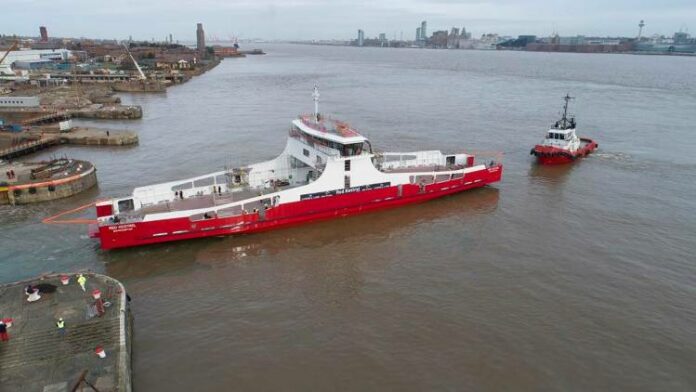
Cammell Laird recently floated out a new $13 million ferry built for Isle of Wight ferry operator Red Funnel.

Dubbed Red Kestrel, the freight-only RoRo is slated to operate between Southampton and Isle of Wight, scheduled to join the fleet in May 2019 after finish and sea trials. 

Red Kestrel is Red Funnel’s first ship to be designed for freight traffic. As a freight vessel it is limited to 12 passengers and builtspecifically to provide additional year-round freight capacity for Red Funnel’s Southampton-East Cowes route, which currently handles 53% of all freight movements across the Solent. Red Kestrel is due to enter service in May 2019, with the current ferry timetable to be updated to accommodate the vessel.

At 74m long, itwill provide 265 lane meters of RoRo freight capacity and will carry up to 12 passengers. To minimize the environmental footprint, the hull shape has been designed specifically to reduce wash and a propulsion package has been selected to make her highly fuel efficient while meeting the latest Tier III emission regulations. The ship is propelled  by Rolls-Royce azimuth thrusters to enhance maneuverability. The crossing time of 55-60 minutes will be identical to Red Funnel’s existing Raptor class RoPax ships and she will use the same berths in Southampton and East Cowes.

Source:marinelink

Watch: Subhub Tidal Platform Deployment

0

Scottish engineering consultancy QED Naval has released a video footage of recently-deployed Subhub tidal platform leaving Belfast Harbour and arrival in Strangford Lough.

Subhub successfully completed the 50 nautical mile offshore passage from Belfast Harbour to Strangford Lough. The final stage of the departure was the approval from the Belfast Harbour Pilots.

The Pilot brought together all the contractors who included: Ian Coleman from Inyanga who were contracted as towing agents. Also included were the skippers of MTS Taktow, as the main tow vessel, Ferran & Sons Farset as the rear tow vessel and the licensed operators to handle the mooring lines on the D1 quayside. Final clarifications and adjustments were made with the departure plan and then the Pilot took control from that point forward.

A.P. Moller – Maersk initiates demerger and separate listing of Maersk Drilling

0

In continuation of the announcement on 17 August 2018, the A.P. Møller – Mærsk A/S (A.P. Moller – Maersk) Board of Directors has decided to initiate the separation of A.P. Moller – Maersk’s drilling activities through a demerger of A.P. Moller – Maersk, the company said in its release.

The shares in Maersk Drilling Holding A/S and its subsidiaries as well as certain other assets and liabilities will be con-tributed to a new company with the legal name ‘The Drilling Company of 1972 A/S’ and the shares hereof will be admitted for trading and official listing on Nasdaq Copenhagen A/S (Nasdaq Copenhagen). In the following the company will be referred to as Maersk Drilling.

Following the anticipated signing and publication of statutory demerger documents on 4 March 2019, the Board of Directors of A.P. Moller – Maersk intends to propose the demerger for ap-proval by the shareholders at the A.P. Moller – Maersk Annual General Meeting on 2 April 2019.

Subject to such approval of the demerger, the shares in Maersk Drilling will be distributed to A.P. Moller – Maersk shareholders, who in addition to their shareholding in A.P. Moller – Maersk will become shareholders in Maersk Drilling. The anticipated first day of trading on Nasdaq Copenha-gen is on 4 April 2019.

The A.P. Moller – Maersk Board of Directors intends to propose a single share class structure for Maersk Drilling with the newly listed shares in Maersk Drilling being distributed to the A.P. Moller – Maersk shareholders on a pro-rata basis based on the nominal value of the shares in A.P. Moller – Maersk. Shareholders will receive one share in Maersk Drilling per nominal A.P. Moller – Maersk DKK 500 share and two shares in Maersk Drilling per nominal A.P. Moller – Maersk DKK 1,000 share. The demerger and distribution of the Maersk Drilling shares will be tax-exempt for Danish tax purposes.

A.P. Møller Holding A/S has agreed to a 360-days lockup of their shareholding in Maersk Drilling, subject to certain customary exemptions.

“Maersk Drilling is an industry leader in the global offshore drilling market, based on its well-reputed and safe operations and a fleet that is among the youngest and most advanced in the industry. The demerger will create a listed Danish-based offshore drilling company with a clear investment profile and long-term development prospects. Maersk Drilling is well-positioned to capitalise on the value creation opportunity of a globally leading pure play offshore drilling com-pany to the benefit of both its long-term blue-chip customer base, as well as its investors”, says Claus V. Hemmingsen, Vice CEO of A.P. Moller – Maersk and Chairman of the Maersk Drilling Board of Directors.

Robotic arm for autonomous marine operations

0

Marine-i, the EU funded program set up to boost marine innovation in Cornwall, awarded Submarine Technology Ltd (STL), a specialist marine technology company, with a grant to proceed with the construction of a futuristic robotic arm. The arm is a ship-based multi-axis robotic arm for autonomous operations.

Specifically, the arm will form a fundamental part of the new Autonomous Synchronized Stabilised Platform (ASSP), enabling intervention tasks that will be conducted by Autonomous Surface Vessels (ASV).

According to Marine-i, usual intervention tasks consist of equipment transfer and payload management, survey and inspection, launch and recovery.

In addition, ASVs will play a crucial role in the inspection, servicing and repair of offshore wind farms and other renewable energy technologies.

STL’s Managing Director, David Kirkley, stated "We already have a system to transfer people or equipment from a dynamic platform to a fixed platform. The ASSP is more complicated as it requires synchronous stabilization between two moving platforms, for instance between an autonomous vessel and a floating wind turbine or wave-energy converter."

STL is partnering with Marine-i partner, the Offshore Renewable Energy Catapult.

The Sector Lead on Wave and Tidal Energy, Simon Cheeseman commented on the project that it is a great opportunity for Cornwall to be leading this new field in marine technology.

The safe and reliable transfer of cargo between autonomous ships and moving platforms and other intervention tasks will be critical in supporting operations in the offshore wind farm industry.

Finally, he highlighted that the innovation has the potential to reach a massive worldwide market.
Source:safety4sea

DEME consolidates offshore offering

0

Belgian marine engineering group DEME has integrated its various offshore subsidiaries, including GeoSea, Tideway, A2Sea and EverSea, into one unit.

DEME Offshore will consolidate all of the company’s offshore activities, expertise and capabilities from both its offshore wind and oil and gas activities.

Hugo Bouvy has been appointed as DEME Offshore’s managing director.

Bart De Poorter will assume the role of general manager for all DEME Offshore’s renewable activities. These span foundation and turbine transport and installation, cable installation, operations and maintenance, in addition to full engineering, procurement, construction and installation (EPCI) contracts.

DEME chief executive Luc Vandenbulcke said: “We see the transformation of the energy market as a great opportunity."

By joining forces and expertise, combined with our state-of-the-art fleet, we are confident that DEME Offshore will be in a unique position to help our customers achieve their aspirations in the offshore oil, gas and renewable energy sector.

Source:renews