-0.3 C
New York
Home Blog Page 1129

IBIA to participate in IMO’s PPR 6

0

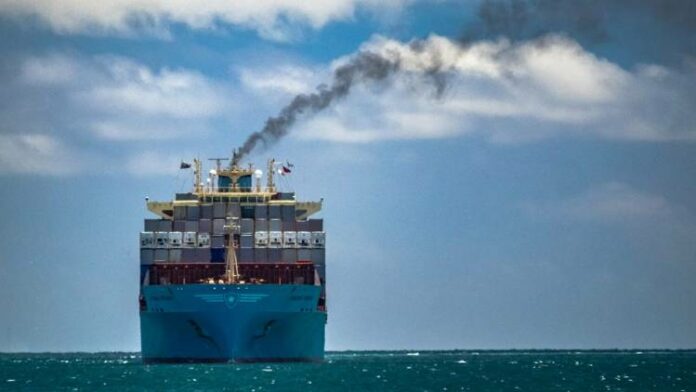
IBIA announced that it will be present at the 6th session of the IMO’s Sub-Committee on Pollution Prevention and Response (PPR 6), which will endeavour to complete work on remaining issues relating to consistent implementation of the 0.50% sulphur limit set to take effect from 1 January 2020, so that these can be sent to the 74th meeting of the Marine Environment Protection Committee (MEPC 74) in mid-May for any final revision and approval.

Mainly, IBIA's members are interested on the finalization of draft guidelines on consistent implementation of the 0.50% sulphur limit under MARPOL Annex VI, draft amendments to MARPOL Annex VI relating to sulphur testing and verification issues, and associated existing guidelines such as Port State Control (PSC) guidelines.

Moreover, IBIA pressures on the matter of a sensible and uniform approach to sulphur testing and verification. If this was to be accomplished, ship operators and bunker suppliers would not be subjected to unreasonable and different treatment from one jurisdiction to the next.

IBIA also proposed to add a definition of 'sulphur content' under regulation 2 of MARPOL Annex VI, referring to a specific test method to ensure that the final and binding analysis to determine compliance with MARPOL Annex VI sulphur limits is always carried out using the same test method (ISO 8754:2003) performed by a properly accredited laboratory.

Additionally, as the amendments will not come into force until the mid 2021, IBIA hopes that IMO will support the decision for these principles to be included in guidelines now, so they are in place before 2020. IBIA and co-sponsors have submitted a proposal to PPR 6 to this effect.

PPR 6 also needs to agree on what should be in a standard reporting format for fuel oil non-availability to be developed by IMO, generally referred to as a fuel oil non-availability report (FONAR).

IBIA highlights that FONARs are not exemptions from the sulphur limit. On the contrary, they are a way for vessels to self-report that they are non-compliant because they were unable to obtain compliant fuel, as provided for in Regulation 18.2 of MARPOL Annex VI.

Finally, the Association participated in the IMO Correspondence Group (CG) which has been working on a revision of the 2015 Guidelines for exhaust gas cleaning systems (EGCS Guidelines) to clarify a number of issues.

Source:safety4sea
Flexport secures $1bn in new financing

0

California-based digital forwarder Flexport yesterday announced it has secured $1bn in a funding round led by the SoftBank Vision Fund with participation from existing investors Founders Fund, DST Global, Cherubic Ventures, Susa Ventures and China’s SF Express.

Flexport, founded in 2013, said it will use the capital to deepen its technology and data capabilities, grow its global logistics infrastructure footprint, and invest in industry expertise to help clients navigate what it described in a release as “increasingly complex global trade environments”.

“Our vision is to unite the planet in a seamless web of commerce, unhindered by physical borders, boundaries or political agendas,” said Ryan Petersen, founder and CEO of Flexport. “The Vision Fund shares our belief in using technology to create a better, more interconnected world and their support will propel us into that future, making global trade easier for everyone.”

“Logistics is a $7trn industry that is crucial for global trade, yet extraordinarily fragmented. Even the largest companies only hold single-digit market share,” said Michael Ronen, managing partner at SoftBank Investment Advisers (SBIA). “Flexport’s pioneering use of technology and its data advantage position the company for exceptional growth in this multi-trillion dollar industry.” Ronen will represent SBIA on the Flexport board, and Ed Shrager, director at SoftBank Investment Advisers, will join as a board observer.

In 2018, Flexport doubled top-line revenue, generating nearly $500m in sales, increased headcount to nearly 1,000 employees, expanded its geographic presence to 11 offices and warehouses around the world, and in September achieved the ranking of 11th largest freight forwarder by ocean volume on the transpacific eastbound.

Source:splash247

Wintershall, DEA merger on track

0

 Wintershall and DEA aim to close their merger during the first half of this year, creating what they claim will be Europe’s largest independent gas and oil producer.

The new company will look to increase combined production (in 2017) of 575,000 boe/d by around 40% to 800,000 boe/d between 2021 and 2023.

Growth will come from the existing portfolio and new production regions such as Mexico (where DEA is one of the new permit holders), and Abu Dhabi, where Wintershall recently joined the offshore Ghasha concession.

Through the merger, the two companies anticipate synergies of at least €200 million ($227 million) annually from higher production increases and cost reductions.

They expect to cut their combined global workforce of 4,200 by around 1,000, with roughly 800 jobs going in Germany and the remainder in Norway, mainly related to the completion of large field development projects.

More than half of the cuts in Germany will be within the corporate functions at the two companies’ present headquarters in Hamburg and Kassel. In the future, Wintershall DEA’s Business Unit Germany will be based in Hamburg.

Barnstorf in Lower Saxony, the current headquarters for Wintershall’s German operations, will comprise a production site with well services, the recently opened technology center, the central core storage facility, and the center for vocational training.

DEA’s laboratory and core storage facility in the same region will relocate to Barnstorf.

Source:offshore-mag

Fincantieri in Pact with Abu Dhabi Shippbuilding

0

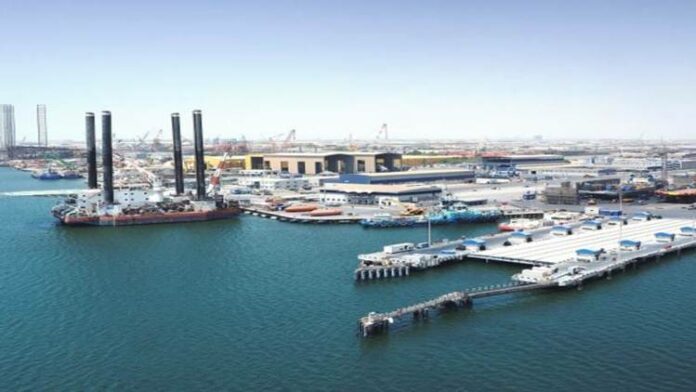
Italian shipbuilder Fincantieri and Abu Dhabi Shipbuilding (ADSB) have reached a framework agreement to explore future forms of industrial and trade collaboration in the shipbuilding sector in the UAE.

The accord is part of Fincantieri's development strategy in the Middle East based on fostering local activities both in the shipbuilding segment and in services and after sales activities in the region, a statement from Fincantieri said.

The details of the accord between Fincantieri and ABDS – which is specialized in the construction, repair and refit of military and commercial vessels – will be finalised "in the near future" with the signing of a Memorandum of Understanding, said the statement.

The MoU – will cover future shipbuilding programmes involving the UAE’s Navy and as its Critical Infrastructure and Coastal Protection Authority, as well as refitting and maintenance activities for the UAE Navy's future fleet. ADSB is the market leader in the UAE for the building, repairing and refitting of military and mercantile ships.

"In the last decade, Fincantieri has built an excellent relationship with the United Arab Emirates Navy. In fact, it is present on the local market since 2008 and has delivered three vessels built in the Group’s Italian yards in 2013, one “Abu Dhabi” class corvette of 90 meters in length and two “Falaj 2” class patrol vessels, all operating within the UAE Navy’s fleet with full customer satisfaction," said the statement.

Fincantieri had established the local joint venture Etihad Ship Building to support the maintenance and the full operational capability of the units delivered to the UAE Navy.

Carnival and DNV GL study claims scrubber washwater is safe

0

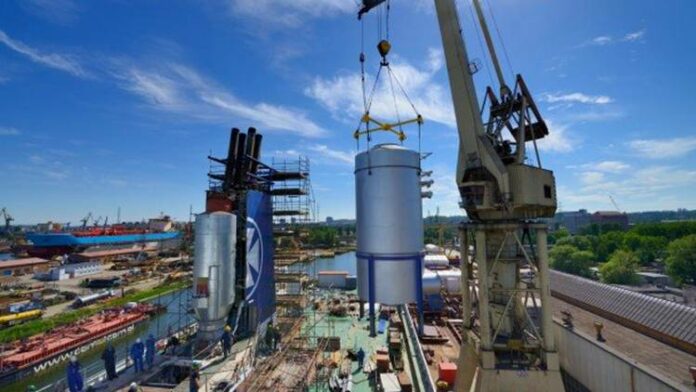
The pro-scrubber lobbying group, Clean Shipping Alliance 2020 (CSA 2020), held its first technical conference yesterday in London during which it provided a 49-slide study, which claims the toxic nature of exhaust gas cleaning system washwater is not as severe as has been reported.

A three-year study led by cruise giant Carnival collected 281 washwater samples from 53 scrubber-equipped cruiseships. The samples were then assessed against 54 different test parameters by ISO accredited independent laboratories.

The resulting laboratory analysis reports were then evaluated by classification society DNV GL’s Maritime Advisory Services and the data compared against various water quality standards, after first confirming that the samples analysed were within the allowable IMO criteria and regulatory limits.

The results were then compared to selected national and international water quality standards and land-based wastewater discharge limits, including the German Waste Water Ordinance, the EU Industrial Emissions Directive 2010/75/EU, and the EU Surface Water Standards Directive 2013/39/EU, to which CSA 2020 claimed yesterday the results compared favourably.

Ian Adams, executive director of CSA 2020, commented yesterday: “We want to emphasise that this major study was intended to provide an objective assessment of the quality of scrubber washwater through a rigorous comparison to other world water quality standards, and it now represents the largest, most credible and verifiable data set available. And importantly, the results reaffirm that exhaust gas cleaning systems are effective and safe for the ocean environment.”

CSA 2020, which includes Carnival, Oldendorff, Cargill, and Trafigura among its founding members, was founded last year in response to huge amount of negative comments regarding the technology. The group has long claimed that the small amounts of sulfate contributed by exhaust gas scrubbing are “insignificant and benign”.

Over the past year, attacks on scrubbers have dominated shipping headlines, variously described by leading owners as “towers with showers” and “the industrialisation of pollution”. The most high profile opponent of the technology has been Paddy Rodgers, the soon to depart head of tanker giant Euronav, who has repeatedly said the solution to pollution is not dilution.

Source:splash247

Major European Port Joins Global Association

0

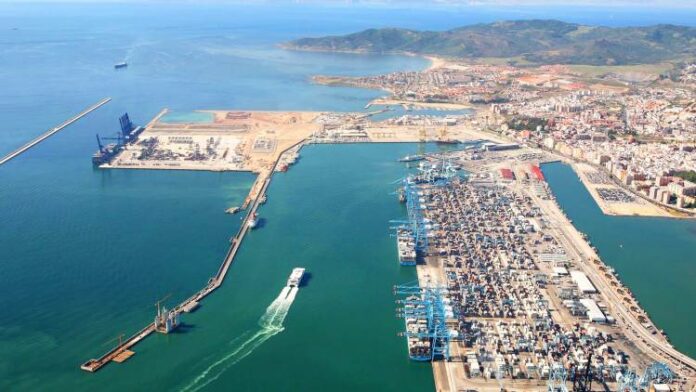
The Port of Algeciras has officially joined the International Port Community Systems Association (IPSCA) as it looks to drive digital collaboration and improve trade logistics, according to a statement.

The Algeciras Port Bay Authority (APBA) has said joining the association will accelerate its drive towards digital visibility and operational management.

This is particularly true for the development of Teleport 2.0, its soon-to-be new port community system (PCS), which will APBA says will be a revolution in port logistics functionality.

The APBA was a founder member of the Teleport Port Community System in 2011, which used a Single Window approach to various integrated EDI and web applications into a common platform.

Speaking about the announcement and the development of Teleport 2.0, Paco Saucedo, the APBA’s project manager, said: "Algeciras is a unique port because we handle such a wide variety of cargoes and traffic, including containers, vehicles, trucks, petrochemicals and bunkers – and we hold the first, second or third place in Spain for different types of cargo."

We are also a full service port with facilities for repairing and ship supply.

Teleport 2.0 will focus on services, processes and community collaboration to reach common goals with new technology.

We have planned to introduce 2.0 in an agile way, transitioning from Teleport 1.0 stage by stage – because the port never stops.

The APBA said it is planning to play a proactive role on a number of IPSCA’s specialist working groups, in particular, collaborative efforts around e-commerce and integration between port community systems.

It will also look to utilize the IPSCA’s blockchain initiatives – the port adopted TradeLens, the blockchain collaboration between Maersk and tech giant IBM in January 2019, a story PTI reported on.

Richard Morton, secretary general of IPSCA, welcomed APBA: “We are delighted to welcome the Port of Algeciras Bay Authority as our newest member."

IPCSA has grown rapidly in recent years – in terms of membership, which is now over 40, and also in the breadth of expertise of our members.

We are well established as an international association with an unrivaled level of expertise and experience and we have a strong relationship with a number of international bodies, including the IMO, WCO and UN/CEFACT.

IPCSA prides itself in sharing knowledge and experience and we look forward to welcoming representatives of the Port of Algeciras Bay Authority to our working groups and regular conferences and meetings.

Source:porttechnology

Ensco semisub to drill for Apache in the Gulf of Mexico

0

 Ensco plc has provided an update on its offshore drilling rig fleet.

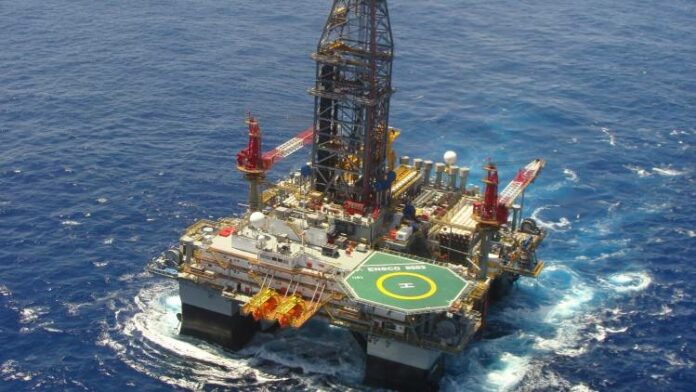
In the US Gulf of Mexico, Apache has awarded the semisubmersible ENSCO 8503 a four-well contract. The estimated duration is June to August 2019.

Offshore Australia, Woodside has awarded the semisub ENSCO DPS-1 a two-well contract, which is expected to begin in February 2020. The contract includes a seven-well option that if exercised would keep the rig under contract into 2021.

In addition, Jadestone Energy has awarded the jackup ENSCO 107 a one-well contract offshore Australia. Estimated duration is March to April 2019. The contract includes a one-well option.

In the North Sea, ONE has awarded the jackup ENSCO 121 a three-well contract, which is expected to begin this April. The contract includes three one-well options.

In the UK North Sea, Repsol-Sinopec has awarded the jackup ENSCO 100 a five-well contract, which is expected to start in June.

Offshore Saudi Arabia, Saudi Aramco has extended the contract for the jackup ENSCO 96 by six months to August 2019.

Offshore Egypt, the drillship ENSCO DS-7 is expected to work for six months beginning in 2Q 2019.

Source:offshore-mag

NOAA makes changes in channel depths on raster nautical chart products

0

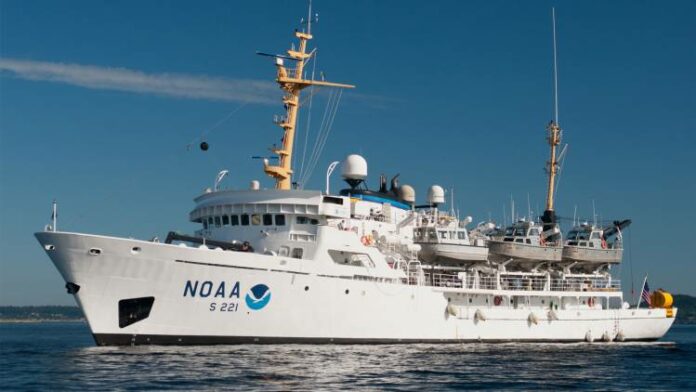
NOAA’s Office of Coast Survey announced its plans to change the US Army Corps of Engineers (USACE) maintained channel depth values on raster nautical chart products, which include paper nautical charts and the corresponding digital raster navigational chart.

Minimum depths are collected during periodic USACE sonar surveys of channels. These depths were provided on raster charts, but controlling depths will now be replaced with the original channel design dredging depths used by the USACE. Improving depth presentation on these products will improve data consistency and overall safety. The implementation will begin early in 2019.

NOAA’s suite of electronic navigational charts will not be affected and mariners are encouraged to use NOAA ENCs for critical safety information as these products are typically updated up to one month ahead of raster products.

NOAA has as a priority to update ENC over RNC products. This often leads to RNC products not accurately reflecting the most current controlling depth values. To avoid inconsistencies among controlling depths, NOAA will only show project depths on raster chart products in the future. The Initial implementation of this change will focus on deep draft shipping channels where the main product used for navigation is the ENC.

As the changes are made on individual charts, NOAA will include a note on each chart directing mariners to review the USACE website and use NOAA ENC to access the latest controlling depths. Additionally, a statement drafted jointly by Coast Survey and the US Coast Guard is being published weekly in the Coast Guard’s Local Notice to Mariners:"NOAA recommends that mariners take advantage of the most recent  chart updates by using the NOAA Electronic Navigational Chart (ENC) for navigation in U.S. waters. ENCs provide the most up to date  information, whereas paper and raster nautical chart updates may  be up to one month behind the corresponding ENC coverage. Over the  next few years, mariners will see continued improvement in the  extent and detail of ENC coverage, while there will be a reduction  in RNC and paper chart coverage and service. ENCs will include routine changes between editions that are not published through  notices to mariners. One significant change to the RNC and paper charts will be the removal of controlling (minimum) depth  information from many maintained channels. Controlling channel  depths will still be provided on ENCs."

In addition, channels are divided into a series of individually named sections called 'reaches.' There are two different depths related with each reach that are reported by the USACE, the project depth and the controlling depth. Project depths are the original design dredging depths of a channel reach constructed by the USACE. They may or may not be maintained by dredging after completion of the channel. Controlling depths, or minimum depths, are the least depths within the limits of a channel reach. These depths are updated with each new USACE survey. Minimum depths limit the safe use of a channel to ships with drafts less than the minimum.

Finally, the change from showing, often outdated, controlling depths, to showing channel project depths on raster nautical chart products, will provide more clarity and safety for mariners. The project depths shown on raster charts will give users an idea of the original channel design dimensions. The updated controlling depths provided on NOAA ENCs and on the USACE website will give users the latest information on the safe depth in which ships may sail through federally maintained channels.

Source:safety4sea

Neptune opts for parallel North Sea Gjøa area tiebacks

0

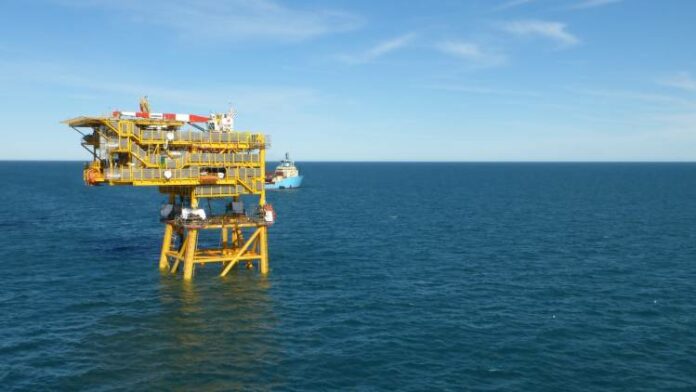
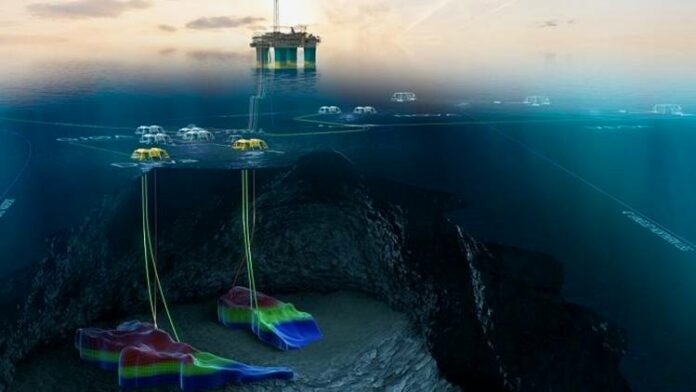
Neptune Energy has submitted its plans for two subsea tiebacks to the Gjøa semisubmersible platform in the Norwegian North Sea.

These will be on the Duva (ex-Cara) field, discovered in August 2016 in license PL 636, 6 km (3.7 mi) northeast of the Gjøa field and 12 km (7.4 mi) from the platform; and the Gjøa P1 segment in the northern part of the Gjøa field in PL153. Water depth is around 360 m (1,181 ft).

Neptune expects production to start in late 2020/early 2021. It estimates combined recoverable resources at 120 MMboe, with peak production of 54,000 boe/d.

Duva will have three wells – two oil producers and one gas producer, and potentially a further oil well. These will be connected to a four-slot subsea template, with production sent to the platform for processing and export.

Neptune has applied for exemption from a plan of development and operation for the Gjøa P1 segment redevelopment and this is already covered by the Gjøa field development plan.

Erik Oppedal, Projects & Engineering Manager for Neptune Energy in Norway, said: “We have worked closely with our partners and suppliers to find concepts that both utilize existing infrastructure and maximise the value in the fields."

The execution of the projects will take place in parallel and will thus create synergies and reduce the cost for both developments.

Other partners are Petoro, Wintershall, OKEA, and DEA.

Source:offshore-mag

Van Oord and PortXL: frontrunner in innovation

0

Rotterdam, 21 February 2019 – Selecting the best start-ups and scale-ups for the maritime industry, that is the goal of the innovation programme PortXL

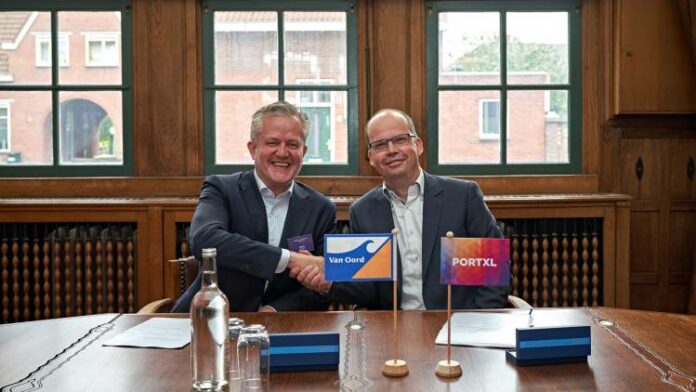
The names of the start-ups and scale-ups were announced this week. Van Oord is one of the founding partners and for the fourth time in a row main sponsor of the PortXL programme. By means of this port and maritime accelerator platform, we encourage innovation within the global maritime industry. 

During the selection process, not only start-ups had the opportunity to participate. Scale-ups can also be part of the acceleration programme from this year. These companies have promising  and innovative products. A different approach and mentoring is required, so that their technology can be applied directly within Van Oord. An experienced group of Van Oord specialists is looking forward to working with these selected companies.

"PortXL provides the opportunity to be inspired by innovative ideas that aim to support businesses outside the normal routine of Van Oord. This incubator can be used to encourage the outside-in perspective of Van Oord employees to catch ingenious ideas that add value to Van Oord business."said Giuseppe Petrina, Van Oord Lead Mentor