-0.3 C
New York
Home Blog Page 1128

MODEC Awarded Contract of FPSO for SNE Field offshore Senegal

0

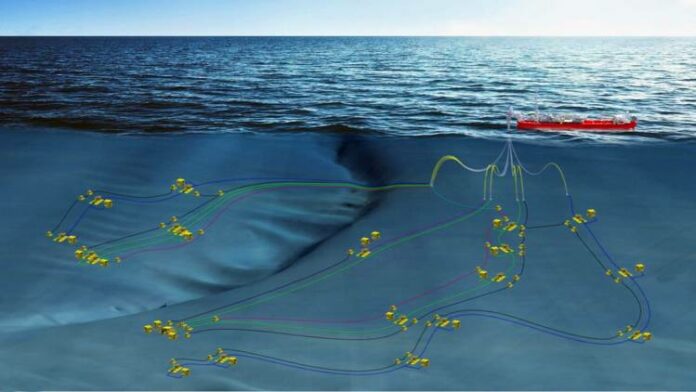
MODEC, Inc. is pleased to announce that its subsidiary, MODEC International Inc., has been awarded a contract by Woodside Energy (Senegal) B.V., as Operator of the SNE Field Development, for a Floating Production Storage and Offloading (FPSO) vessel for Senegalese waters.

Under the contract, MODEC will perform Front-End Engineering Design (FEED) for the FPSO and, subject to a final investment decision on the project in 2019, will be responsible for the supply, charter and operations of the FPSO.

The SNE deep-water oil field is expected to be Senegal's first offshore oil development. The field is located within the Sangomar Deep Offshore permit area, approximately 100 kilometers south of Dakar, Senegal.

The FPSO will be designed to produce around 100,000 barrels of crude oil per day, with the first oil production targeted in 2022. The FPSO will be moored in water depth of approximately 800 meters.

In recent years, numerous offshore oil fields have been discovered in West Africa, and MODEC considers this as one of its most important core regions. MODEC currently operates three (3) FPSOs in Ghana and Côte d'Ivoire and has supplied another seven (7) floating production facilities, such as FPSO / FSO / Tension Leg Platform (TLP), that have been installed in Angola, Cameroon, Equatorial Guinea, Gabon and Nigeria.

The SNE field is held by Woodside Energy (Senegal) B.V. (35%) as Operator, Cairn Energy Senegal (40%), FAR Limited (15%) and PETROSEN (10%) under a Production Sharing Contract (PSC).

Aswan picks up Hyundai Glovis post-panamax bulker

0

Qatar limestone specialist Aswan Trading and Contracting has acquired Japanese-built post-panamax bulker Glovis Donghae, according to brokers.

Both Seasure Shipbrokers and Advanced Shipping & Trading are reporting that Aswan has forked out a little over $11m to Korea’s Hyundai Glovis for the 2004-built vessel. Seasure is reporting a price of $11.2m, despite a VesselsValue valuation of $9.2m, while Allied is reporting a price of $11.3m.

Hundai Glovis acquired the vessel (formerly named Eternal Power) for just $6.2m in April 2016.

Aswan currently has a fleet of two vessels, made up of one handy size bulker and one post-paamax bulker.

BW LPG moves up the supply chain with new product services division

0

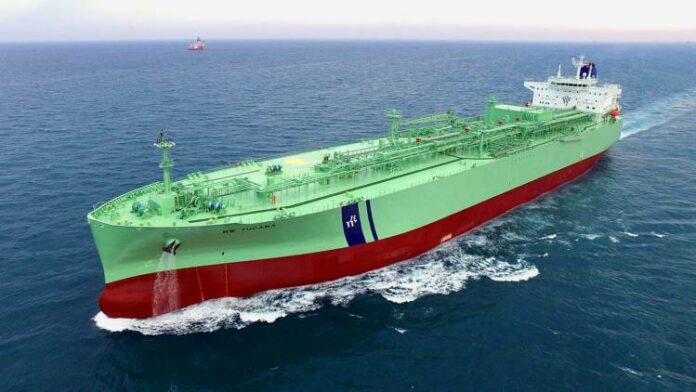
BW Group’s liquefied petroleum gas shipping unit BW LPG has established a product services division which will see the company providing full LPG delivery services.

“The Product Services division is part of BW LPG’s ambition to propose a low-risk and fully-integrated product delivery service to customers,” the company said in a statement.

BW will purchase LPG and offer it delivered on the basis of cost, insurance and freight, directly to the end user. The service is aimed at maximising the utilisation of its vessels, and will see it provide a full LPG delivery service, including product.

Martin Ackermann, CEO of BW LPG, commented: “The new product services division reflects BW LPG’s ambitions to provide existing and new customers with reliable, integrated LPG delivery services. Whilst LPG shipping remains our core business, we aim to diversify our business offerings, innovate to capture market opportunities, and maximize value for both customers and shareholders”.

Source:

Venezuelan Navy Threatens Aid Ship

0

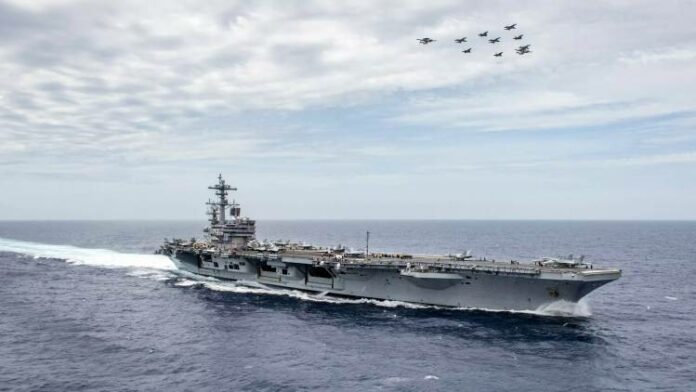
A Venezuelan Navy vessel threatened to open fire on a ship from Puerto Rico carrying humanitarian aid on Saturday. The vessel had six U.S. citizens on board, and Puerto Rican Governor Ricardo Rosselló said he has informed the U.S. government of the issue.

The Vanuatu-flagged ship, carrying around 200 tons of food and medicine in nine shipping containers, was threatened after entering Venezuelan territorial waters and subsequently retreated to Curaçao. 

Venezuela has face political and economic turmoil over the last few years, and at least 2.7 million people have fled the nation since 2015. Violence continues in the nation where embattled President Nicolás Maduro is facing mounting opposition globally. Maduro, backed by Russia, Cuba and China, has said that aid deliveries would pave the way for U.S. military intervention.

Venezuelan opposition leader Juan Guaidó is backed by the U.S. Guaidó declared himself interim president last month after claiming irregularities in the nation's 2018 election render Maduro's leadership illegitimate.

U.S. Senator Rick Scott of Florida, a state with one of the largest Puerto Rican communities in the nation, said the U.S. would not tolerate any threats against American citizens. Scott has been critical of the Venezuelan government and issued multiple threats via Twitter over the last week.

The U.S. has already instigated sanctions against the largest state-owned oil company in Venezuela and pledged more than $20 million in humanitarian assistance. 

On Saturday, convoys of U.S. aid were blocked at the Venezuelan border by troops loyal to Maduro, although there are also reports of defections among the soldiers too. Around 300 people were injured in associated violence.

U.S. Vice President Mike Pence is expected to announce “concrete steps” to address the Venezuela crisis when he meets with regional leaders in Bogota, Colombia, on Monday. U.S. President Donald Trump has in the past said military intervention in Venezuela was “an option.”

Source:maritime-executive

APM Terminals Barcelona enhances reefer capacity, limits CO2 emissions

0

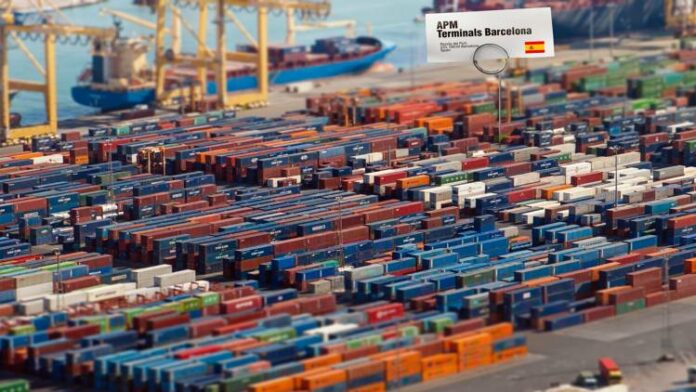
APM Terminals Barcelona, Spain has increased reefer capacity by 31%. The electrical capacity of the terminal has also been enhanced, leading to a reduction in CO2 emissions of 600 tonnes per annum. In addition, 152 reefer plugs have been added at the terminal, increasing the total to 677.

New reefer racks facilitate reefers to be stacked up to 4 containers high, compared with 3 on current racks. The modern design also improves safety for employees carrying out repairs and maintenance.

The new reefer racks are connected to the central power supply. This means that over-capacity reefers do not depend on diesel gensets, providing a reduction of around 600 tonnes of CO2 emissions per year. Connecting to the electricity supply network also limits localised pollution in the terminal environment.

Moreover, under a wide program for alternative fuel use in the Port of Barcelona, APM Terminals will collaborate with LNG services provider HAM, technology provider IDIADA and Naturgy Iberia, on a pilot to convert a current straddle carrier to natural gas. The straddle carrier's two 150 kW diesel-based motor engines are now being converted to natural gas. The pilot is planned for October 2019.

APM Terminals Barcelona uses a wireless network to provide real-time data on all the details of a container’s itinerary, from the moment it is unloaded off a ship, until it is dispatched from the port, or vice versa. This makes sure that the procedure is fast and efficient.

Furthermore, the terminal also has its own on-dock rail connection, immediate access to the motorway network, as well as automated gate access for optimum intermodal efficiency. The Terminal provides direct access to a large hinterland.

Source:safety4sea

Norway gives Equinor safety order for not correcting non-conformities

0

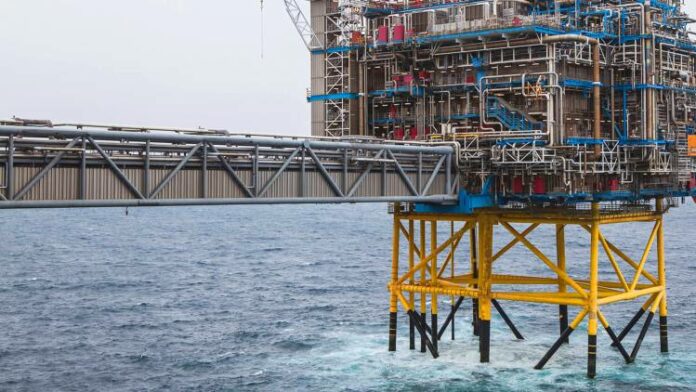
The Petroleum Safety Authority Norway (PSA) has issued an order to Equinor after an audit of material handling and management of the working environment on Martin Linge A. This showed that non-conformities that were identified earlier by the PSA have not been corrected.

Carried out from 21-24 January 2019, this supervisory activity regarded Equinor and its material handling and working environment management during commissioning of the A facility on the Norwegian North Sea field.

The audit found that the lifting equipment operator, who was responsible for carrying out daily and monthly maintenance, did not have the necessary training to inspect and maintain steel wire rope. In addition, the existence of a system for inspecting and maintaining such rope on the cranes could not be identified.

In addition, the audit showed that the local supplement to Norsok R-003, which is the basis for Equinor's fulfilment of the requirements in section 92 of the activities regulations, was deficient in its description of critical lifting operations, crane restrictions and conditions regarding the use of the cranes in offshore hook-up work.

PSA director of supervision Ingvill H Foss, stated:"These nonconformities relate to procedures for crane and lifting operations and to training. We consider it important for safety that these procedures are in place."

The same problems were identified by an audit of Equinor on 4-5 June 2018 as well. On 22 June 2018, the PSA gave Equinor its consent to take parts of Martin Linge A into use, but under the condition that the non-conformities which had then been identified were corrected.

Before consent was given, Equinor provided the PSA with written confirmation that the non-conformities identified by the authority would be mitigated with before the facility was taken into use.

Despite this confirmation, PSA Norway informed that Equinor has not corrected the non-conformities and has breached the conditions of the consent.

As a result, Equinor now has to:

  • Review its systems for follow up and use of lifting equipment on facilities, including local procedures and necessary competence for personnel using such equipment;
  • Implement the necessary measures identified by the review in order to correct non-conformities.

The deadline for compliance with the order is 8 March 2019. PSA must be informed when the order has been conducted.

Source:safety4sea

Crowley Christens LNG-Fueled Con/Ro for Puerto Rico Route

0

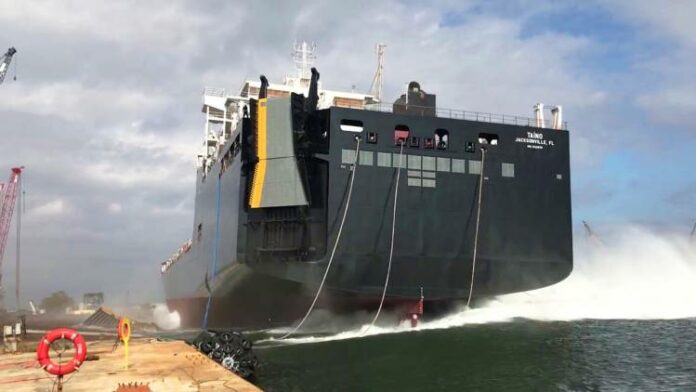
On Friday, Crowley Maritime christened its second LNG-fueled con/ro, Taíno, in a ceremony at its terminal in Puerto Rico. The first, El Coquí, entered service last year. 

“We are thrilled to christen this magnificent new ship here with our employees, customers and people of Puerto Rico, whom she will serve for many years to come,” said CEO Tom Crowley. 

Both of the new Jones Act ships were constructed at VT Halter Marine in Pascagoula, Mississippi, with Crowley Solutions providing the construction management services. To complement the two new ships, Crowley invested in a new 900-foot pier and three ship-to-shore gantry cranes at its Isla Grande terminal – the first newly constructed cranes for San Juan Harbor in more than 50 years. The company also rolled out a new terminal operating system and added container staging areas and handling equipment, which will contribute to reduced turn times.

Mr. Crowley took time to address recent criticism of the Jones Act, the law that requires that American domestic routes be served by American built, flagged, owned and crewed ships. Puerto Rico Gov. Ricardo Rosselló recently requested a Jones Act exemption for foreign-flagged LNG carriers, which his administration would like to see used for carriage of natural gas between the U.S. mainland and Puerto Rico. 

“While the act ensures that we have a robust shipbuilding capability and skilled merchant mariners in the U.S. essential to our national defense, it has also created a commercial shipping market between the mainland and Puerto Rico that is highly competitive, customized and dedicated,” said Crowley. “We should be strengthening this critically important maritime law, not tearing it down as some special interest groups espousing highly inaccurate and misleading information would like to do.

Source:maritime-executive

Maastricht Maersk makes a maiden call to Rotterdam and honours Maersk’s commitment to The Netherlands

0

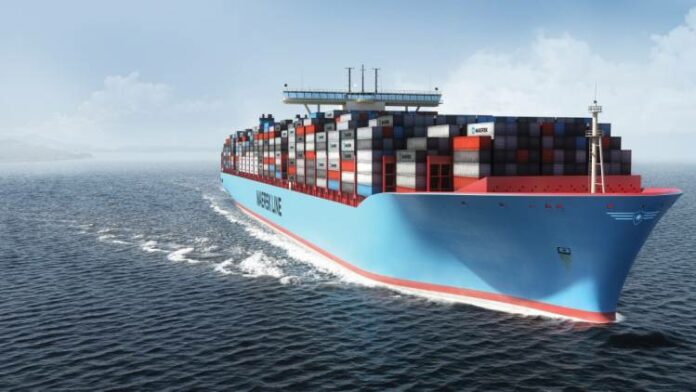
Maersk welcomes the latest latest next-generation Triple-E vessel – the most modern in the fleet – which has made her maiden voyage to Rotterdam. Maersk’s commitment to Dutch customers continues, with product portfolio including both ocean and logics and services and two terminals serving as a major gateway to the country.

In 2017, Maersk launched its second generation of Triple-E vessels, known for improved energy efficiency and environmental performance. On 21 February, the latest vessel, Maastricht Maersk, arrived for the first time to Rotterdam on her westbound voyage from Asia.

“The Dutch name of the new vessel is a symbol of our long-lasting and mutually beneficial relationship with The Netherlands and local customers”, shares Bo Lindberg Andersen, Benelux Countries Manager at Maersk. “What is even more important is our continuous commitment to serve the Dutch market and provide services that support local trade ambitions and trigger growth.”

The vessels in this class all bear names stating with “M” and are called after cities in countries where Maersk has strong presence and a significant share of business. The company offers a wide range of direct connections from The Netherlands to all parts of the world via the Port of Rotterdam, where Maersk subsidiary APM Terminals operates two container terminals, including APM Terminals Rotterdam and the automated facility Maasvlakte II, opened in 2015.

As of January 2019, Maersk offers ocean products, as well as logistics and services, under a single brand, offering Dutch customers a wide range of end-to-end supply chain solutions. One of the company’s strongholds in The Netherlands has traditionally been intermodal, with a broad portfolio of products including dedicated rail connections, barges and trucking. Maersk is also expanding its non-physical products offer in The Netherlands, notably with Trade Finance or Customs House Brokerage.

On this symbolic occasion of Maastricht Maersk’s arrival, we thank our customers for their support and trust and we look forward to unlocking many new business opportunities in the future.

About Maastricht Maersk
Length overall: 399 metres
Beam (breadth): 58.6 metres
Height (above baseline): 75.7 metres
Height (above waterline): 59.7 metres
Draught: 16 metres
Main engine: MAN B&W
Nominal capacity: 20 568 TEU (twenty-foot-equivalent-unit)
Reefer capacity: 1 000 plugs
Standard crew: up to 28
Builder: Daewoo Shipbuilding & Marine Engineering (DSME), Korea
Flag state: Denmark
 

Confidential data theft becomes a major threat

0

David Jacoby, senior security researcher at Kaspersky, reported that data hacking is a major threat and this applies at both an individual and societal level. In light of cyber attacks, some companies have taken novel steps to try to thwart credential stuffing attacks against their users by obtaining the breached data themselves and cross referencing it against their own database.

In order for companies to be protected from cyber attacks, they can easily alert the users of password reuse or issue a password reset to ensure their accounts are protected from credential stuffing.

Another important step is to inform users how to react after being attacked. For instance, US Coast Guard published a Bulletin concerning a cyber incident that occurred on a commercial vessel. The paper aimed to inform possible victims how to prevent cyber attacks and also provides additional information on who to inform if one is under attack.

Additionally, the cost on average of identifying and stopping a data breach is $2.1 million (Dh7.7m), compared to $3.5m in the Gulf Cooperation Council region.

Because up to 300 cyber attacks were reported in 2017 in the GCC region, at least half a dozen resulting in data breaches, Gard Club in collaboration with DNV GL explained what are the possible cyber threats and how we can mitigate them or prevent them.

Concerning cyber attacks Mr Blatteis, who is the former head of Gulf government relations and public policy at Google, commented…"Recent data breach attacks prove there needs to be a long overdue, understated wider conversation with platforms and governments about privacy and security in our region."

Moreover, data theft was among the top five global risks alongside natural disasters, cybercrime and climate change in the World Economic Forum’s Global Risks Report 2019.

The average cost of data breaches in the Arabian Gulf region’s two biggest economies – the UAE and Saudi Arabia – was $5.31m in 2018, a 7.1% year-on-year increase.

Concerning UAE, a cyber attack that hit Saipem’s servers in Middle East had many effects on the serves' operation in Saudi Arabia, the United Arab Emirates and Kuwait.

Also, Rabih Dabboussi, senior vice-president at UAE-based cybersecurity firm DarkMatter, stated that "The UAE’s digital footprint continues to be an attractive target for cyber attacks."

According to IBM’s report, organisations in Saudi Arabia and the UAE are most likely to experience a malicious or criminal attack globally, reaching the 61%.

They are followed by France 55%, US 52%, Germany 51% and UK 50%.

Cyber experts say it is also important to be alert of any phishing attempt where criminals try to extract confidential details such as usernames, passwords and bank information by masquerading as a legal entity in an electronic exchange of communication.

Companies and individuals should also familiarise themselves with policies from retailers and online services that may request their banking or personal information and ensure they understand how to use sensitive data.
In addition, according to the report, the mean time to identify (MTTI) data breach globally was 197 days in 2018, while the mean time to contain (MTTC) was 69 days. Companies that identified a breach in less than 100 days saved more than $1m as compared to those that took more than that.
Concluding, more than 50% of global consumers expressed anxiety about identity theft, including hacking of financial, medical or other personal information.

Source:safety4sea

Aker Solutions to Develop Digital Twin for Wintershall’s Nova Field

0

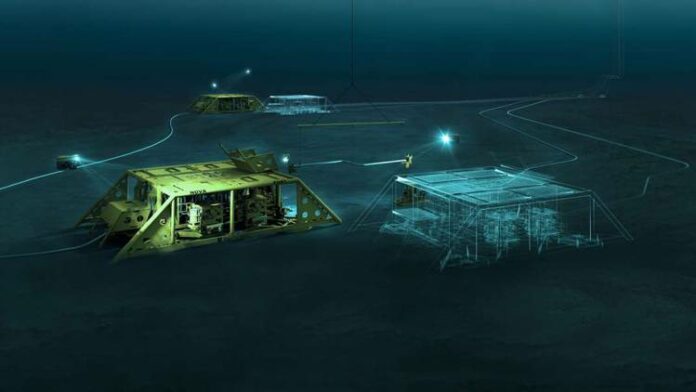
Aker Solutions has been appointed by Wintershall AS to build a complete digital replica of the Nova production system to enable data driven engineering, production and maintenance decisions.

Through two separate agreements, Aker Solutions will provide both a fully interactive digital replica of the integrated production system as well as undertake a study to enable live data streaming and condition monitoring of the subsea equipment.

The digital twin will become an advanced replacement to traditional paper-based handbooks and equipment documentation, ensuring that all relevant engineering data is held centrally in a single, interactive and searchable solution. It will be built on a cloud-based architecture capable of processing live data and ensuring that vital engineering information is kept up to date at all times.


The connected study to enable live data streaming from the subsea production equipment will be instrumental in driving forward real time subsea condition monitoring, production optimization and predictive maintenance for the field.

“These ground breaking pieces of work will ensure that the Nova field operates as a truly digital asset,” said Are Føllesdal Tjønn, Head of Software Development for Aker Solutions. “We are delighted to work with our customer to support the realization of their ambitious digital plans and to help set new standards for the energy industry.”

Nova was discovered in 2012 and is situated in the Quadrant 35 area in the Norwegian North Sea. Aker Solutions was awarded the contract to deliver the subsea production system for the field in early 2018.