-0.3 C
New York
Home Blog Page 1127

HHC Takes Two from Damen

0

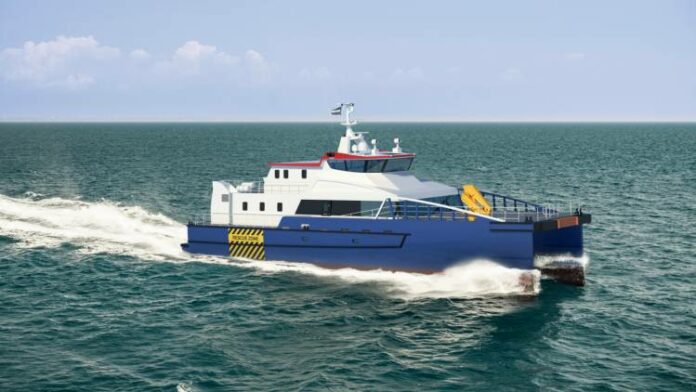
Hung Hua Construction (HHC) of Taiwan placed an order for two of Damen’s latest fast crew supply vessel; the FCS 2710. The contract was signed at the end of January and the vessels will be built at Damen Shipyards Singapore for delivery in early 2020.

HHC is Taiwan’s largest dredging and nearshore construction company, and a promising evolving market is the country's offshore wind sector, as the government has targeted 5.5GW by the end of 2025. Following its successful installation of the first offshore project in Taiwan; the Southern Weather Observation Tower for the Taiwan Power Company, HHC is now looking ahead to the next phase of their mutual cooperation by supplying them with fast crew transfer and support services.

The twin-hulled FCS 2710 with its Damen Axe Bow is just one meter longer and extends just one meter higher above the waterline than its predecessor the FCS 2610. However, it can carry twice as many personnel as well as offer more flexibility, more tank capacity, greater usable deck space, increased comfort and more accommodation.

Source:marinelink

European Commission greenlights four floating demonstration offshore wind farms in France

0

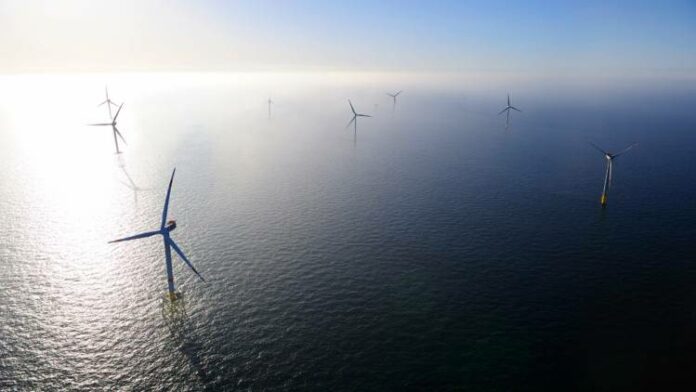
The European Commission gave the green light to French plans on supporting four demonstration floating wind farms for producing electricity. The “Groix Belle Ile”project will be located in the Atlantic Ocean, while the other three projects('Golf du Lion', 'Eolmed', and 'Provence Grand Large') will be located in the Mediterranean Sea.

Mainly, the demonstration floating wind farms will consist of 3 to 4 turbines and each one will have a total installed capacity of 24 megawatt.

The turbines will be installed in the sea on floaters and will be interconnected with each other and connected to land through an underwater cable.

Each of the four wind turbines will use a different combination of turbine, floater and cables.

Specifically, the aim is to trial these different technological solutions, with the long-term goal to test this technology before deploying it on a larger scale.

The wind farms will have operating and investment aid. Part of the investment aid will be paid in the form of repayable advances, as well.

After assessing the Commission's Guidelines on State Aid for Environmental Protection and Energy, they resulted to:

  • The French projects will promote the growth of a new kind of offshore wind energy and the potential growth of a novel renewable energy technology.
  • The level of aid granted to the four projects is proportionate and will avoid overcompensation for the beneficiaries of the public support, in line with the requirements of the Guidelines.

The Commission resulted that the four projects will promote the use of electricity generated from renewable sources and will help France meet its climate targets, without unduly distorting competition.

Source:safety4sea

Sinanju and MOL sign up for Singaporean LNG bunker ship

0

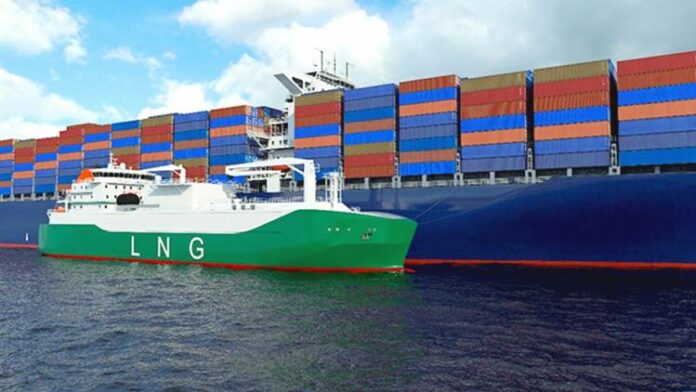
Singapore-based bunkering shipowner and operator Sinanju Tankers Holdings has entered into a shipmanagement collaboration agreement with Japan’s Mitsui OSK Lines (MOL) for a 12,000 cu m LNG bunker vessel.

The ship is currently on order at Sembcorp Marine and is scheduled for delivery in early 2021. It will be the largest LNG bunkering vessel set for use at the Port of Singapore for ship-to-ship LNG bunker deliveries.

Pavilion Energy and Total Marine Fuels Global Solutions have formed an agreement to co-share the utilisation of the dual-fuel LNG bunker tanker that will be chartered by Pavilion Gas, a wholly owned unit of Pavilion Energy, which is one of two licensed suppliers of LNG bunker fuels in Singapore.

“We are delighted to partner MOL to promote the development of infrastructure and competencies in LNG fuel deliveries for Singapore. MOL’s expertise in LNG and our strong foundation in fuel oil bunkering augurs well for a successful collaboration in meeting the growing demand for LNG as a marine fuel,” said Ju Kai Meng, managing director of Sinanju Tankers.

“While Singapore has entrenched itself as the world’s largest bunkering port, our foray into LNG bunkering is still in its early stages. Sinanju is committed to extend our unstinting support towards developing Singapore as a leading LNG bunkering hub as we have in the marine fuel oils sector,” Ju added.


Cosco Shipping’s investment plans for Piraeus port rejected

0

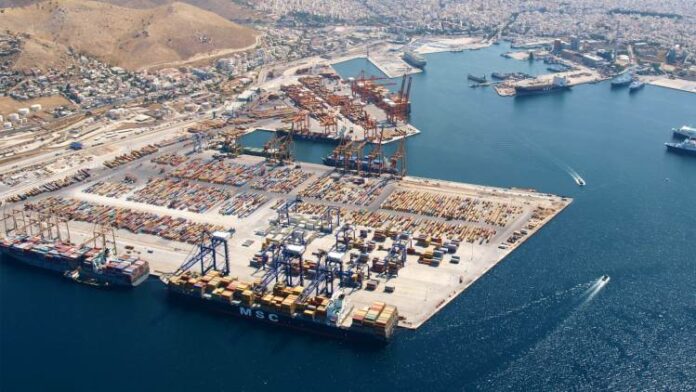
Cosco Shipping’s ‘honeymoon period’ between it and the Greek state is essentially over, following the rejection by the state of much of Cosco’s investment plan for Piraeus port.

For certain the EUR580m ($650m) investment programme for Piraeus Port Authority (PPA) has reached an impasse, after a Shipping and Island Policy Ministry-affiliated Port Planning and Development Commission nixed the PPA management's investment master plan.

The rejection came although the overall performance of Piraeus continues to bound along, at an ever more impressive level since the major port's privatization agreement, in August 2016 between the Greek government and Shanghai-based Cosco, a global giant in shipping and port management.

For many months Cosco has been maintaining the Ministry was dragging its feet regrading the investment plan. News of the rejection brought no official response from the PPA management, although unofficially "displeasure, towards all sides involved” was said to have been expressed.

Mostly based on environmental impact studies, Greece’s port regulator cited discrepancies over the projects Cosco must implement at the port as part of a concession agreement. Under its concession contract Cosco is obliged to pump another EUR293m in investment through the PPA. Cosco has stressed its investment plan can only apply in its entirety.

Projects failing to get the "green light" were a shopping mall in the vicinity of a new cruise terminal, one of four proposed hotels, the creation of a logistics centre within the port premises and adjacent to the western municipality of Keratsini municipality, in the region of the booming Cosco-run container terminals II and III, the installment of a synchrolift, and two new parking areas.

While the Port Planning and Development Commission was meeting the 20,000 teu COSCO Shipping Pisces docked in Piraeus, after sailing nearly a month from China on her maiden voyage. The vessel spent 24-hours in the port before departing for Antwerp in Belgium.

Meanwhile, a draft bill was to be tabled in the Greek parliament February 21, to allow the privatisation of specific activities at 10 regional port authorities around the country. The shares of the 10 regional ports are held by Greece's privatisation agency, Taiped.

As opposed to the full privatisation as was the case with Greece's two biggest ports, Piraeus and Thessaloniki, the state will not grant ownership of the regional ports through share purchases, but through activity concessions.

Source:seatrade-maritime

​World’s first hybrid cruise ship conducts sea trial

0

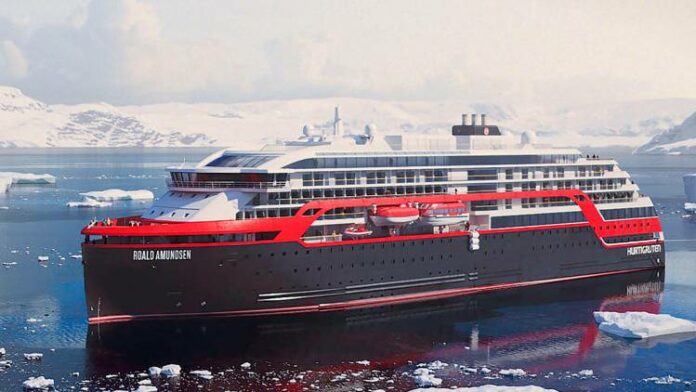
Hurtigruten’s MS Roald Amundsen is nearing completion at Kleven Yard. The world’s first hybrid powered cruise ship completed its first sea trials in the fjords along the western coast of Norway. The cruise ship is for the time being undergoing its final outfitting, alongside MS Fridtjof Nansen at Kleven Yard in Ulsteinvik, Norway.

Specifically, the hybrid cruise ship is able to accommodate 350 guests.

Also, it is provided with green technology as battery packs and specially designed ice-strengthen hull.

Both vessels are designed and built with sustainability at their base and on each detail.

Kleven CEO Olav Nakken noted after the vessel's trial "I am very pleased with the results of the sea trial. The Kleven employees, along with our sub-contractors, has done a great job leading up to the successful sea trial."

Moreover, project director Asbjørn Vattøy at Kleven, reported that it is of a big importance for the company to make sure that everything works efficiently as the vessel has many technical complications.

Concluding, after delivery this spring, MS Roald Amundsen’s maiden season includes expedition cruises along the Norwegian coast, to Svalbard and Greenland, before traversing the legendary Northwest Passage and heading south to Antarctica.


Inferno in Jakarta VIDEOS

0

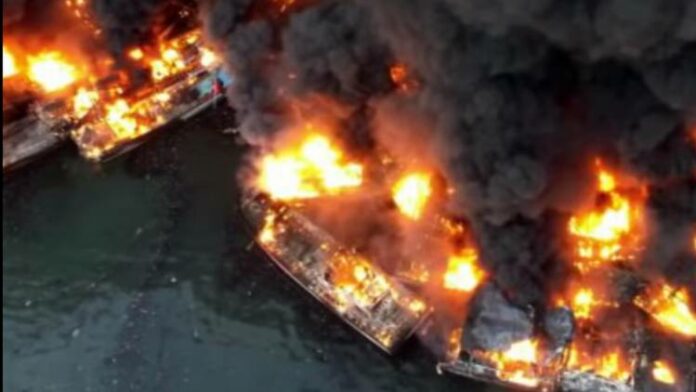
Research vessel BARUNA JAYA I, which became well-known after taking part in search for crashed flight Lion Air JT 610 black box, was nearly gutted by the disastrous fire in Muara Baru, Penjaringa, North Jakarta.

Fire started in the afternoon Feb 23 on one of dozens of local fishing vessels and boats, berthed in harbor, and quickly spread to other, mainly wooden, vessels.

As of afternoon Feb 24, firefighters were still dousing fire, which destroyed at least 35 vessels. Reportedly, BARUNA JAYA I was rescued from fire, and remained undamaged. Several videos give a good impression of the inferno in Muara Baru.


Marathon Oil Signs Agreement for Divestiture of U.K. Business

0

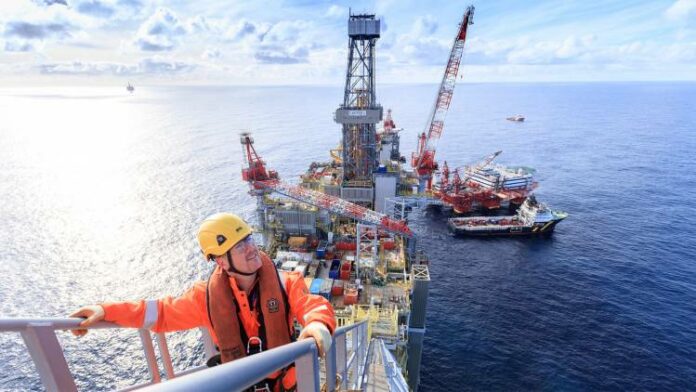
Marathon Oil Corporation announced today the Company has entered into a share purchase agreement through its subsidiaries for the sale of its U.K. businesses Marathon Oil U.K. LLC (MOUK) and Marathon Oil West of Shetland Limited (MOWOS). The transaction represents a complete country exit for Marathon Oil.

MOUK holds a 37 to 40 percent operated interest in fields in the Greater Brae Area, and MOWOS holds a 28 percent interest in the outside-operated Foinaven Field unit and 47 percent in Foinaven East. The buyer, RockRose Energy PLC, will assume all obligations associated with MOUK and MOWOS operations in the U.K, including decommissioning liability.

Subject to customary adjustments, the closing consideration payable to Marathon Oil will be approximately $140 million, which reflects the assumption by the buyer of MOUK and MOWOS working capital and cash equivalent balances, which were approximately $350 million on Dec 31, 2018.

"Today's announcement to divest our U.K. business represents our continued commitment to portfolio management and further concentrates our portfolio on high margin, high return U.S. resource plays," said Lee Tillman, Marathon Oil chairman, president and CEO. "I'd like to recognize the significant contributions of our U.K. employees – both current and past – who built and have operated the Brae Field for more than 30 years."

Though there remain certain contractual requirements that must be satisfied, the transaction is expected to close in the second half of 2019, with an effective date of Jan. 1, 2019. At year-end 2018, the Company carried 21.4 million barrels of oil equivalent of proved reserves in the U.K., and 2018 production averaged approximately  13,000 barrels of oil equivalent per day.

Maritime automation will not spare seafarers

0

Humans have a tenuous relationship with automation. On balance, we love it. It has made our lives easier. Freed up time for leisure. Freed up time for thinking … about more automation. Progressively, we have made automation cleverer. First, we armed it with simple decision trees, then with supervised reasoning, until we arrived at self-learning mathematical algorithms. Along the way, automation equipped with artificial intelligence allowed us to eliminate human efforts all around.

To put it in perspective, we started with replacing elevator operators with buttons and self-locking doors. We arrived at autonomous cars making better driving decisions than humans themselves. In the process, we also depopulated, among others, factory floors, bank branches, public services offices, and airport service areas.

Are you thinking that a more specialised human workforce is going to be immune? An artificial intelligence program developed in China combs through test results, health records and even handwritten notes, to consistently match or outperform primary care pediatricians. Welcome to the “depopulated” doctor’s office.

Industrial manufacturing led the way, deploying robotics and artificial intelligence on the factory floors to automate labour-intensive, repetitive processes and task processes, then moved on to back-office processes such as purchasing, invoicing, collections, and customer service. Predictive analytics were put to work to improve demand forecasting, increase asset utilisation, and more economically maintain diverse pieces of equipment. In all cases, AI-based technology showed itself to learn and improve in a way similar to humans, but with virtually unlimited capacity for processing and retaining data.

Transportation is not immune from the automation trend and displacement of humans with some form of automation, often augmented by artificial intelligence. Back offices of transportation companies came first. Contract optimisation took out contract administrators, pricing optimisation reduced the number of pricing analysts, allocation optimisation reduced the need for tradelane analysts, and talking bots displaced humans in customer service centers. 

The front lines of transportation have not been immune from those changes, although here the causes were different. Trucking has been hit most severely, as numbers of retiring drivers far exceed numbers of new candidates to take their places. Added weight of regulations affecting drivers’ employment, like that seen in countries of European Union pushed many drivers back to their home countries, unintentionally triggering a driver supply crisis earlier than predicted.

Train drivers and train operations staff will follow. Rail operators are watching full train automation spearheaded by Rio Tinto, a mining company in Australia. Using driverless trains, robotic operators, cameras, lasers, and tracking sensors, the company is able to manage their mine-to-port supply chain remotely, while improving the overall safety of their rail operations. Their competitor, BHP Billiton is on the cusp of designing and enabling a fully automated mine. With humans taken out of the equation, the mine can be designed more efficiently, as human safety procedures are removed, and dangerous operations like blasting can continue without need to wait, while humans are being removed from the dangerzones.

Maritime not immune

However you look at automation, its introduction has always led to less need for human workers. Companies jumping on the full automation bandwagon claim that their displaced employees can be re-trained and reassigned to more attractive jobs overseeing the new technology. So far, not one of those companies managed to prove that point. They always end up with less employees in the end.

Maritime transportation is not immune from all those automation trends. On the terminal quays, gangs of 25 workers have been downsized to 8-10. In terminals where gang sizes are still about 15, you will see half of the gang workers milling about. On the ships, technology is reducing human activities from the engine room all the way up to the bridge. Yes, things are still breaking down and they call for a safe pair of human hands and human brainpower, but the overall need for the sizes of crews of old is diminishing. Larger ships don’t require larger crews and modern ships replacing older ships size for size allow for smaller crews. Ignore the hype of fully autonomous vessels cutting the need for human crews to zero. That’s a fantasy. The reality of the staffed ships of today tells a sufficiently worrying story for the future of human employment.

Thus, it is surprising to find a report taking a contrarian position. Researchers at the World Maritime University came to conclusions that are hard to believe. They reference studies showing that jobs lost due to automation were replaced by more jobs created in areas of increasing demand for the products manufactured by automated production lines, or to translate, for every one job lost on the production line, companies hired more than one person in sales and marketing.

They then neatly extrapolated this research into the world of maritime, or specifically into the seafaring workforce. Under all tested scenarios, their simulations showed only growth in the demand for seafarers between 2020 and 2040. Inexplicably, some of their scenarios showed that seafarers’ numbers will almost double from the approximately 1.6m employed today. These simulations didn’t concern themselves with any other factors other than automation. Believing this would require automation technology progress to stop at current levels and produce no new employment-reducing innovations for the next 20 years. Arrested human ingenuity does not feature in my thinking, does it feature in yours?

I am interested in hearing your thoughts on the subject of automation replacing maritime jobs. Can the maritime industry defy the trend of automation reducing need for human workers?

Source:splash247

Rosmorport set to test unmanned hopper barge in 2019

0

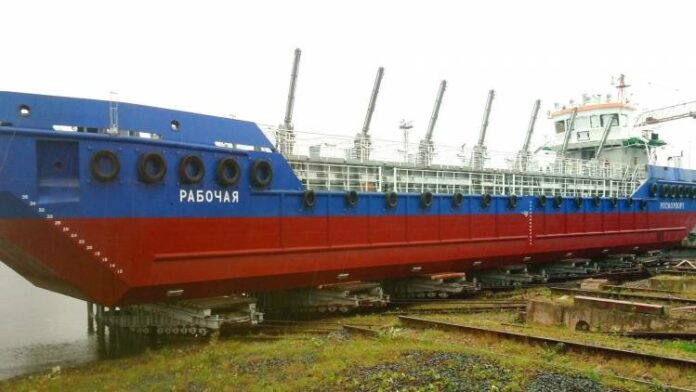
FSUE Rosmorport is going to test an unmanned hopper barge in 2019, Vasily Strugov, Deputy General Director of Rosmorport, said at the 2nd Hydraulic Engineering Structures. According to him, the Rabochaya barge with a hopper of 900 cbm is under construction at Onezhsky Shipbuilding, Ship Repair Yard (Onega Shipyard). The delivery is scheduled for May 2019.

The vessel will be used for operational testing of unmanned navigation equipment as part of R&D project “Development of a unified technological platform for unmanned operation of commercial and technological seagoing vessels” supervised by RF Ministry of Industry and Trade. The work is being performed together with the MariNet Working Group of the National Technological Initiative and Kronshtadt Group which will develop documentation for equipment installation. This project is also supposed to involve shipping companies Sovcomflot and Pola Rise.

The hopper barge will work in conjunction with a dredger and will be controlled from it.

Kenya attacks Somalia on offshore block auction over territorial dispute

0

Somalia is to give offshore blocks to oil companies that are interested, as part of its first offshore licensing round. However, due to maritime territorial dispute between Somalia and Kenya its offshore oil production goals could be risked. Thus, Reuters reported that Kenya ordered its ambassador back home from Somalia, after the Mogadishu government’s decision to auction oil and gas exploration blocks in the Indian Ocean.

Specifically, the International Court of Justice (ICJ) in The Hague is considering a claim on the two countries’ maritime boundaries brought by Somalia in 2014 after negotiations over the 100,000 square km stretch of sea floor broke down.

Kenya also announced that summoned its ambassador, Lucas Tumbo, back and asked Somalian ambassador Mohammed Muhamud Nur to go back to Mogadishu to discuss with the government.

Somalia denied the accusation of the auction that took place on February 7 in London.

In addition, the Somali government stated: "There was no auction of oil blocks."

Moreover, Mogadishu officials supported that they could secure the territorial integrity of the country in the Hague, expecting the court to decide based on justice.

Despite Somalia denying the accusation, Spectrum, a seismic company, published on its website 15 License Blocks available that seemed to be Kenya's maritime territory, as the latter addressed.

Kenya quoted that:"This unparalleled affront and illegal grab at the resources of Kenya will not go unanswered and is tantamount to an act of aggression against the people of Kenya and their resources."

Finally, a report published by Fitch Solutions highlighted that licensing of exploration blocks offshore Somalia risks further tensions with Kenya over a maritime border dispute.

Source:safety4sea