2.6 C
New York
Home Blog Page 1126

Confidential data theft becomes a major threat

0

David Jacoby, senior security researcher at Kaspersky, reported that data hacking is a major threat and this applies at both an individual and societal level. In light of cyber attacks, some companies have taken novel steps to try to thwart credential stuffing attacks against their users by obtaining the breached data themselves and cross referencing it against their own database.

In order for companies to be protected from cyber attacks, they can easily alert the users of password reuse or issue a password reset to ensure their accounts are protected from credential stuffing.

Another important step is to inform users how to react after being attacked. For instance, US Coast Guard published a Bulletin concerning a cyber incident that occurred on a commercial vessel. The paper aimed to inform possible victims how to prevent cyber attacks and also provides additional information on who to inform if one is under attack.

Additionally, the cost on average of identifying and stopping a data breach is $2.1 million (Dh7.7m), compared to $3.5m in the Gulf Cooperation Council region.

Because up to 300 cyber attacks were reported in 2017 in the GCC region, at least half a dozen resulting in data breaches, Gard Club in collaboration with DNV GL explained what are the possible cyber threats and how we can mitigate them or prevent them.

Concerning cyber attacks Mr Blatteis, who is the former head of Gulf government relations and public policy at Google, commented "Recent data breach attacks prove there needs to be a long overdue, understated wider conversation with platforms and governments about privacy and security in our region."

Moreover, data theft was among the top five global risks alongside natural disasters, cybercrime and climate change in the World Economic Forum’s Global Risks Report 2019.

The average cost of data breaches in the Arabian Gulf region’s two biggest economies – the UAE and Saudi Arabia – was $5.31m in 2018, a 7.1% year-on-year increase.

Concerning UAE, a cyber attack that hit Saipem’s servers in Middle East had many effects on the serves' operation in Saudi Arabia, the United Arab Emirates and Kuwait.

Also, Rabih Dabboussi, senior vice-president at UAE-based cybersecurity firm DarkMatter, stated that "The UAE’s digital footprint continues to be an attractive target for cyber attacks."

According to IBM’s report, organisations in Saudi Arabia and the UAE are most likely to experience a malicious or criminal attack globally, reaching the 61%.

They are followed by France 55%, US 52%, Germany 51% and UK 50%.

Cyber experts say it is also important to be alert of any phishing attempt where criminals try to extract confidential details such as usernames, passwords and bank information by masquerading as a legal entity in an electronic exchange of communication.

Companies and individuals should also familiarise themselves with policies from retailers and online services that may request their banking or personal information and ensure they understand how to use sensitive data.
In addition, according to the report, the mean time to identify (MTTI) data breach globally was 197 days in 2018, while the mean time to contain (MTTC) was 69 days. Companies that identified a breach in less than 100 days saved more than $1m as compared to those that took more than that.
Concluding, more than 50% of global consumers expressed anxiety about identity theft, including hacking of financial, medical or other personal information.

Source:safety4sea
ICS Warns Shipowners on Sulfur Cap “Free Pass”

0

The International Chamber of Shipping (ICS) has welcomed in principle the decision made at the IMO PPR 6 meeting last week that safety or operational concerns about the quality of low sulfur fuels may, in exceptional circumstances, be a valid reason for shipowners to be issued with a Fuel Oil Non Availability Report (FONAR) when the sulfur cap takes effect.

However, ICS is warning shipowners that this should not be regarded as a “free pass” either to use or carry non-complaint fuel. “FONARs remain a tool of last resort and are not something that a ship will be able to use routinely,” said ICS Deputy Secretary General Simon Bennett. “The circumstances in which a FONAR can be used are very limited and conditions attached to their use will be strict. Shipowners still need to remain focused on doing everything possible to ensure full compliance in 2020.” 

ICS says it is possible that in some ports worldwide shipowners may initially encounter quality or compatibility problems with the new 0.5 percent blended fuels which they may have intended to use.  But ICS emphasizes that the higher cost of alternative compliant fuels – including 0.1 percent distillates if these are the only other fuels available – will not be considered as a valid basis for claiming non-availability of safe and compliant fuel.

ICS recently updated its guidance Compliance with the 2020 Global Sulphur Cap which states that ships will be expected to bunker and use other compliant fuels including 0.10 percent Smax distillates in cases where 0.50 percent Smax fuels are unavailable. Exceptions to this option may only be accepted by Port State Control (PSC) authorities following consideration of the ability of the ship’s fuel oil system to safely store, process and consume other compliant fuels and the need for cleaning out the tanks of all remaining fuel residue prior to loading non-compatible alternatives into the same tank. In such cases, ship operators must ensure the availability of documentary evidence on board to prove these limitations during subsequent PSC inspections following the issuance of any FONAR.

ICS also warns that only the minimum possible quantity of non-compliant fuel should be bunkered if a FONAR is issued, as it is likely that any remaining non-compliant fuel will be required by PSC to be debunkered at the next port of call and cannot be used on subsequent voyages.  

According to MARPOL, it is up to PSC authorities that receive the FONAR at the next port of call to take into account all relevant circumstances and the evidence presented to determine whether or not to detain the ship. PSC will also take into consideration the number of FONARs a ship has submitted in the past 12 months, as well as the number the operator has submitted for other ships in its fleet and whether other ships on similar voyages have submitted FONAR reports.

“Above all else, the onus will be on the ship operator to provide documentary evidence that every reasonable step has been taken to ensure compliant bunkers will be available in the planned bunkering port,” Bennett concluded.

ICS urges shipowners to prepare their ship specific implementation plans for 2020.

Source:maritime-executive

Smart Maritime Council to Boost Software Compatibility

0

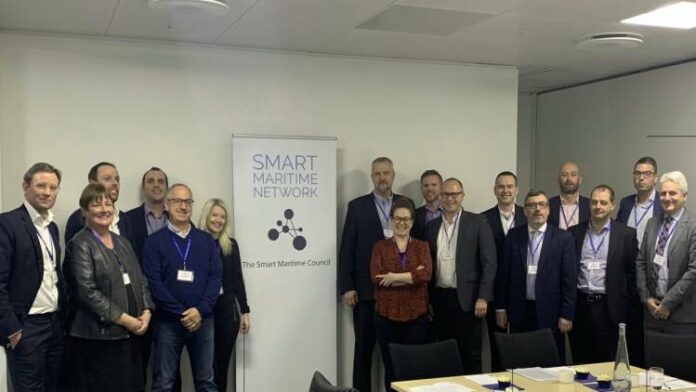
Representatives from major maritime technology companies gathered in London on Tuesday for the inaugural meeting of the Smart Maritime Council, a new initiative created by the Smart Maritime Network to support collaboration and standardization in the development of IT systems for the shipping sector.

Smart Maritime Network was formed in January 2019 to promote the benefits of enhanced integration and data sharing among stakeholders within the maritime and transport logistics sectors. A core element of the initiative is the creation of a Smart Maritime Council consisting of maritime technology developers, systems integrators and other key stakeholders, which will hold a series of meetings to discuss areas of mutually beneficial collaboration on issues relating to the compatibility, standardization and harmonization of the technology used in the modern shipping industry.

Vessel operators are also represented within the membership, to provide the end-user’s perspective on maritime technology development and to help to guide the Council’s discussions by making sure that shipping companies’ real-world operational requirements play a central role in future IT development.

The Smart Maritime Council will hold a further five meetings in 2019, each taking place in a different global maritime center. Conclusions from these meetings on the direction of future technology development, and guidance on improving systems integration, will be shared with the wider maritime industry through a series of four regional conferences to be held throughout the year, beginning in Athens on May 9.

The Greece-based Association of Maritime Managers in Information Technology and Communications (AMMITEC), a non-profit organization representing the interests of vessel IT managers in the world's biggest shipowning nation, is one of the Council's founding members. Katerina Raptaki, IT Manager of the Navios Group of Companies and AMMITEC board member, commented: "As Steve Jobs used to say, 'The only way to do great work is to love what you do', and these people love their work. They are passionate and devoted to it."

I trust that this new initiative will exceed our expectations and offer the shipping industry a new forum for research, knowledge sharing and new opportunities in such a demanding, highly collaborative, challenging and rapidly progressing environment.

The founding members of the Smart Maritime Council include:

ABB
AMMITEC
Ceragon
Cobham SATCOM
Danish Ship Finance
Dell EMC
Dualog
IB – Influencing Business
Inmarsat
Intellian
JLT
KNL Networks
Kongsberg
MSC
Monohakobi Technology Institute
Sperry Marine
Wallem
Wärtsilä

Source:maritime-executive

Riga Looks to Boost Cruise Amenities

0

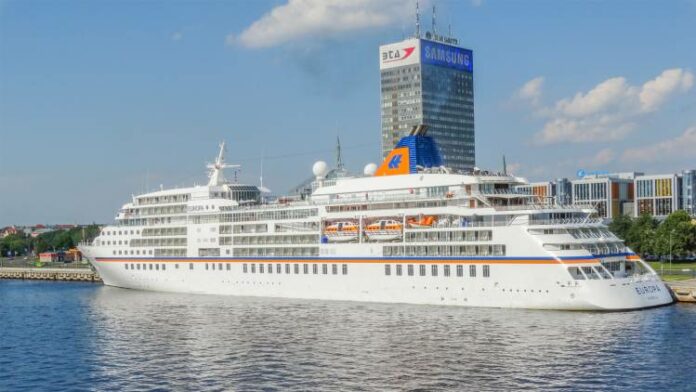
The Green Cruise Port – Sustainable Development of Cruise Port Locations project completed an action plan for Baltic Sea cruise ports including options for the Latvian port of Riga. 

The project was financed from the European Regional Development Fund, and its purpose was to unite the Baltic Sea cruise ports to enable them to jointly examine: sustainable port infrastructure development, environmentally friendly passenger land transport links with ports and the environmental and economic impact of cruise passenger sightseeing on port cities. 

Market trends suggest that the number of cruise passengers worldwide may increase by another third by 2030, and the Freeport of Riga aims to almost double the number of cruise ship and passenger visits. The port handled 75,000 cruise passengers in 2018 and plans to increase this number to almost 160,000 by 2030.

However, existing cruise terminal infrastructure is insufficient. The Riga Passenger Terminal has a good location, but the length of the pier and the surrounding area are limiting factors. The Krievu Island terminal, which is currently being used for cruise ships during peak periods, is not ideal for development as it is a long distance from the city center and is an unattractive environment.

New opportunities are being provided as cargo handling is gradually moving from the historical center of Riga, potentially making space available for cruise passengers and tourists. A pier over 600 meters long pier, as well as access roads and infrastructure, are being vacated in Andrejsala and Ekportosta. 

The Green Cruise Port study has shown that the Port of Riga has the necessary main preconditions for sustainable development of the cruise terminal infrastructure. It highlights the Andrejsala site as a good one to create a sustainable cruise terminal complying with the most demanding environmental standards.

“By putting this territory in order, cruise passengers will be ensured access to the city center on the right bank. This gives us an opportunity to not only efficiently handle the current flow of cruise ships, which tends to grow, but also to implement an ambitious plan, i.e. to make the Port of Riga a place where cruises both start and end,” said Edgars S?na, Deputy Manager for Port Development.

Port CEO Ansis Zelti?š said: “The cruise industry worldwide and in the Baltic Seas region is developing very rapidly. We at the Port of Riga are also happy that the numbers of visits of cruise ships and the numbers of cruise passengers are growing. In the new Freeport of Riga development program, we have set a goal to make Riga an important cruise port in the Baltic Sea region.:

At the same time we understand that cruise ships have significant impact on the environment, city infrastructure and people. One of the greatest challenges for cruise ports is the fact that the ships get bigger and bigger carrying even more passengers at once. Not only does it require the appropriate infrastructure to accept ships and passengers in the port, but also the introduction of solutions that would minimize the impact of the ships and tourism on the city environment. Our aim is not only to make the Port of Riga frequently visited and important but also a truly sustainable and green cruise destination.

Source:maritime-executive

Operation to Raise Norwegian Frigate Underway

0

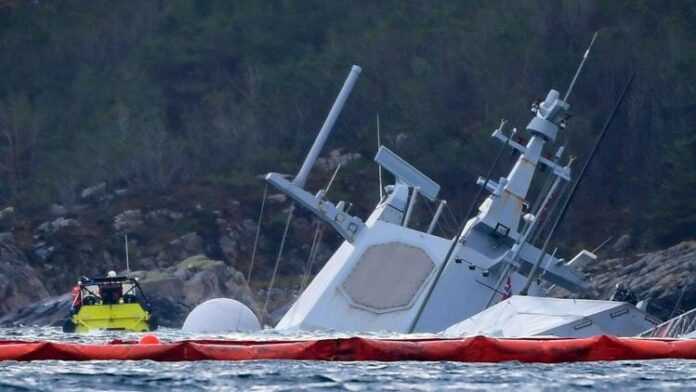
The operation to raise the partially sunken frigate HNoMS Helge Ingstad started early morning on Tuesday 26 February. The operation is estimated to take five to six days.

The frigate was involved in a collision with the oil tanker Sola TS just outside the coast northwest of Bergen in western Norway on November 8, 2018. 

The operation to raise the ship out of the water has been complex, and it has been postponed several times due to rough weather conditions. In order to raise the frigate safely, wind and waves must be calm for the duration of the operartion. Maximum wave height must not exceed 0.5 meters.

Two barges have now anchored up next to the frigate. Divers have placed several lifting chains around the hull. Four large hoists on the two barges will now slowly lift the frigate from the seabed. 

The frigate will then be raised onto a sub-surface barge, which then will be raised to the surface. On board the barge, HNoMS Helge Ingstad will be shipped to Haakonsvern Naval Base, Bergen. If the operation goes according to plan, the ship may be at Haakonsvern some time during the weekend March 1–3.

Source:maritime-executive

Teekay puts ethylene carriers into Lauritzen pool

0

Teekay LNG Partners has agreed a deal with Lauritzen Kosan, the gas carrier division of J. Lauritzen, to place its fleet of ethylene gas carriers into the Lauritzen Kosan pool.

Seven ethylene gas carriers owned by Teekay LNG will join the pool from March 1.

Thomas Wøidemann, CEO of Lauritzen Kosan, commented: “We are proud to have Teekay LNG, a world leader in energy transportation, joining us in our strategy to service existing and new customers. This is an indication of our strong market position in the gas carrier industry.

The vessels joining the pool are 5,500 cbm carrier Camilla Spirit, 5,800 cbm carriers Pan Spirit and Cathinka Spirit, 8,500 cbm carrier Sonoma Spirit, 10,200 cbm carrier Napa Spiritand 12,000 cgm carriers Vision Spirit and Unikum Spirit.

The injection of ships grows the pool to 21 vessels, 11 of them Lauritzen Kosan vessels.

With Lauritzen Kosan’s close and long-lasting customer relationships, we are confident that we have found the right commercial and operational platform for our fleet of ethylene gas carriers”, said Mark Kremin, president and CEO of Teekay Gas Group.

Source:splash247

US closes liner collusion investigation

0

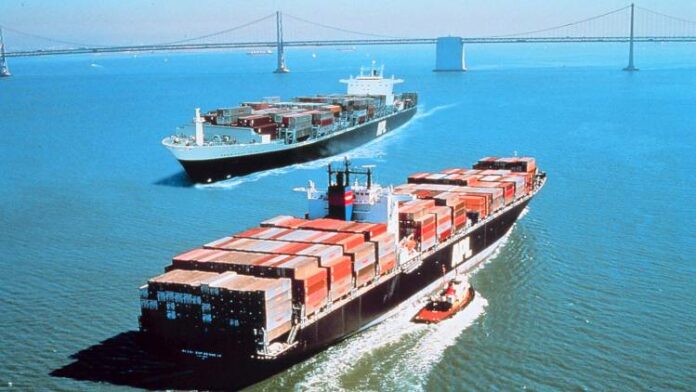
A two-year investigation by the US Department of Justice into collusion among the world’s top liners has closed, without bringing charges or imposing penalties.

Two years ago the FBI paid a call on executives meeting at the Box Club, the informal liner gathering, kickstarting an investigation that lasted 18 months longer than had initially been forecast.

“This is an important decision where the global container shipping industry has, once again, been fully investigated and exonerated.”

Source:splash247

Golar to build new FLNG at Keppel for 20-year BP charter

0

Golar LNG, via newly created subsidiary Gimi MS, has entered into a 20-year lease and operate agreement with BP for the charter of an FLNG unit Gimi.

The FLNG vessel will be used at the Greater Tortue Ahmeyim project, with production expected to commence in 2022. Greater Tortue Ahmeyim project is located on the Mauritania and Senegal maritime border.

The FLNG-owning subsidiary Gimi MS is 30% owned by Singapore’s Keppel Capital, and LNG carrier Gimi has been relocated to Keppel Shipyard where conversion works will commence shortly.

Construction of the Gimi is expected to take around for years and cost $1.3bn.

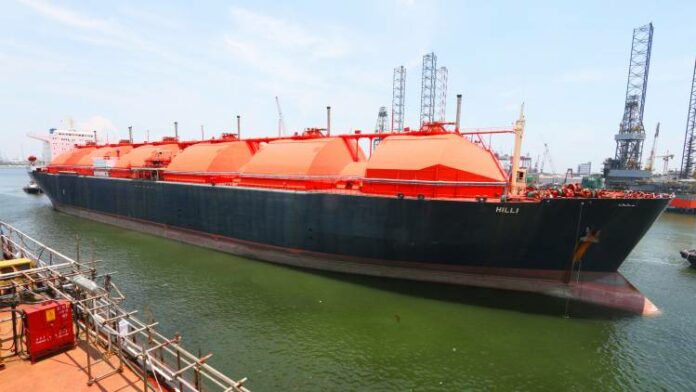
Iain Ross, CEO of Golar LNG, commented: “This landmark 20-year agreement with BP, which is Golar’s second FLNG tolling agreement, is the culmination of a lot of hard work and commitment from the project and commercial teams that commenced late 2017. The potential of Golar’s floating LNG solution was reinforced by FLNG Hilli Episeyo’s proof of concept, Heads of Terms were agreed with BP and its partners in April 2018 and work has been ongoing via the previously reported Limited Notice to Proceed. Golar is delighted to have the opportunity to demonstrate the safe and reliable operation, quality and value of its FLNG offering to such a world class energy company as BP and looks forward to safely delivering and building on this long-term relationship over the decades ahead.”

Source:splash247

Seadrill awarded three rig contracts

0

John Fredriksen’s Seadrill has secured three new rig contracts with total value of around $89m, according to the company’s latest fleet status report.

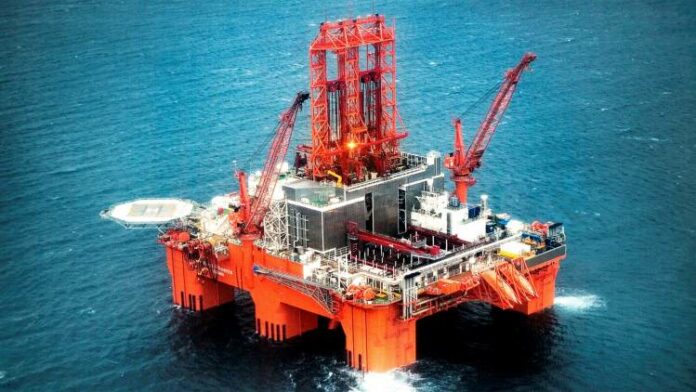
Semi-submersible rig West Phoenix was awarded a two-well contract and six options with Equinor in the UK and Norway, which is expected to commence in direct continuation with its current contract. Three of the options have been exercised resulting in total backlog of approximately $51m.

The West Castor jackup rig was awarded a contract by Staatsolie in Suriname commencing in March. The total backlog including mobilisation is approximately $25m.

Additionally, the West Callisto jackup rig was awarded a 6-month extension with Saudi Aramco which will see the unit keep working for the company until July, adding about $13m in backlog.

“The offshore drilling market continues to show signs of improvement with increased tendering activity and better contract economics. We expect more activity in 2019 to lead to a tighter supply demand balance and improved pricing in 2020 as the recovery progresses,” said Anton Dibowitz, CEO of Seadrill.

Earlier this month, Seadrill formed a 50:50 joint venture with Sonangol to operate drillships with a focus on opportunities in Angolan waters.

DOF Bags Three ROV Contracts in Brazil

0

Norwegian supply shipping company DOF Subsea has been awarded contracts for three remotely operated (ROV) Support Vessels (RSV) with Petroleo Brasileiro S.A. (Petrobras).

All contracts have a firm duration of three years and can be extended for another two years, informed the offshore support vessel owner.

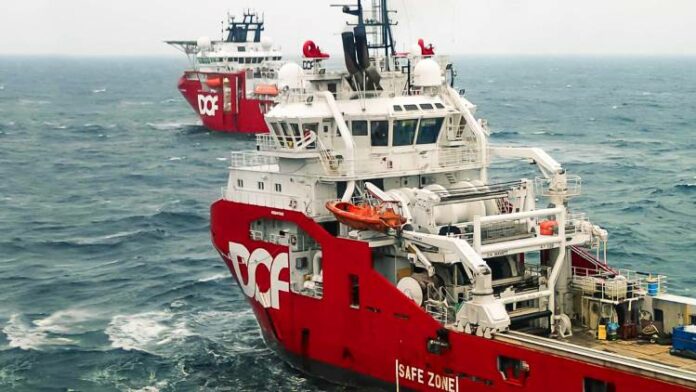
The vessels allocated for the contracts are Skandi Commander, Skandi Olympia and Skandi Chieftain, all owned by DOF Rederi AS (100 % owned by DOF ASA).

Each vessel will be equipped with two state of the art work class ROVs owned and operated by DOF Subsea Group.  
 
All three contracts are expected to commence in 2nd quarter 2019. Estimated total firm contract value is NOK 1,3 billion.  
 
Skandi Olympia (built 2009) has been on charter with Fugro since her delivery in 2009. She was redelivered from Fugro by the end of 2018 and been idle in Norway since.

Skandi Commander (built 2007) completed a RSV contract with Petrobras in November 2018 and is now working on a 60 days contract with Total in Brazil.

Skandi Chieftain (built 2005) worked the 2018 season in Canada and has been idle in St. Johns since November 2018. Before moving to Canada Skandi Chieftain worked on a long-term RSV contract Brazil.  
 
DOF ASA CEO, Mons S. Aase, said “We are delighted with these awards which further strengthen our market position in Brazil. We are combining our vessel and subsea expertise across our global organization. Adding these contracts to the previous announced awards in 2019 has given us a fantastic start in 2019.”