3.9 C
New York
Home Blog Page 1112

Maersk Involver heading to Denmark

0

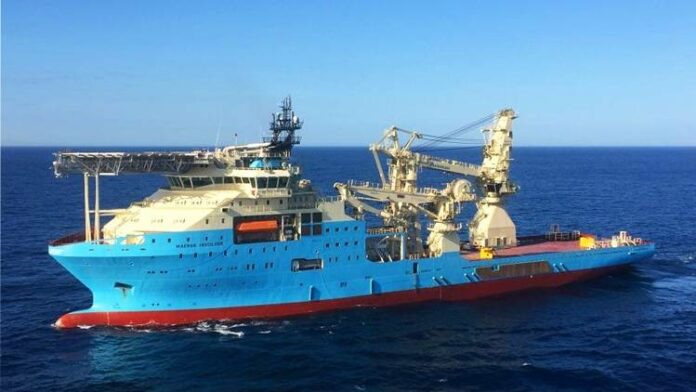
Total Denmark has awarded the Maersk Involver a 161-day contract for walk-to-work and accommodation services in the Danish North Sea.

The Stingray-class subsea support vessel will assist maintenance of the Dan F platform. The contract is expected to begin next month.

Delivered in November 2017, the Maersk Involver features DP-3 station keeping capabilities and 120 modern single cabins. It has been outfitted with an Ampelmann E-type active motion-compensated gangway system and pedestal, as well as a boat landing to perform personnel transfer via crew transfer vessels.

This is the second walk-to-work contract Maersk Supply Service has received from Total Denmark. In July 2018, the company commissioned the anchor handling tug supply vessel Maersk Tracker to provide multi-purpose field support in the North Sea for three 

Source:offshore-mag

Port of Marseille supports blockchain pilot scheme

0

The Marseille Fos port authority will be among the financial supporters of a blockchain technology pilot scheme that aims to demonstrate improved freight logistics on the Mediterranean-Rhone-Saone (MeRS) axis.

Planned to start in June, the proof of concept prototype will test the securitisation of the digital transport chain as a means of improving the fluidity, reliability and competitiveness of intermodal pre- and postforwarding on the hinterland axis.

The blockchain solution will provide certified users direct access to protected documentation, enabling several parties to share data without the need for dedicated infrastructure.

The pilot project, designated by an inter-ministry MeRS development body, was initiated at a seminar hosted by the leading French port. The scheme has also received financial support from La Banque des Territoires – part of the public sector investment institution Caisse des Depots – and waterways authorities Voies Navigables de France and La Compagnie Nationale du Rhone.

Implementation of the pilot will be shared by three companies:

  • Marseille Gyptis International (MGI);
  • BuyCo;
  • KeeeX.

More expertise will be provided by consortium members including shippers, transport companies and intermodal operators.

The Marseille Fos port authority expects that the combination of logistics and technological expertise will lead to an innovative system that gives greater control and visibility throughout the supply chain. This system will also be able to be marketed and reproduced in ports around the world.

Source:safety4sea

Maersk Tankers’ Bunker Adjustment methodology receives Lloyd’s Register recognition

0

Maersk Tankers uses the methodology Bunker Adjustment to distribute payments to pool partners based on the bunker consumption of their vessels compared to the pool average. The methodology has now been reviewed by Lloyd's Register, confirming its conformity to recognised industry quality standards.

The Bunker Consumption methodology calculates how much fuel each pool vessel consumes in relation to the pool average and allows Maersk Tankers as a pool manager to distribute payments to pool partners accordingly, giving pool partners a fair and transparent distribution of money.

Independent subject matter experts from Lloyd’s Register have conducted an audit of the Bunker Adjustment calculation engine and have assessed its conformity with established methodologies and published international standards, such as ISO 15016:2015 and ISO 19030:2016. “We use the Bunker Adjustment methodology, as we believe it is the fairest and most accurate way of distributing payments related to bunker consumption to our partners. The third-party verification by Lloyd’s Register speaks to that,” says Ulrich Schittek, Head of Management Services, After Sales, at Maersk Tankers.

Pool partners gain financially and in knowledge

Bunker Adjustment rewards good operational performance and offers a healthy return on investment to pool partners that invest in the fuel efficiency of their vessels, which they can do for instance through applying anti-fouling hull paint or training their crews to operate the vessel in a fuel-efficient way.

The rewards are tangible, not only for pool partners with the most fuel-efficient vessels. Inherently, Bunker Adjustment encourages bunker performance and through that, benefits the pool as a whole. The data that goes into the methodology is further utilised to evaluate each vessel’s saving potential. “We support pool partners on initiating the right actions to improve fuel performance and consequently, the pool partners’ earnings,” explains Per Navndrup Pedersen, Head of Bunker at Maersk Tankers. Through this, efficiencies are achieved across all pools.

High transparency

Bunker Adjustment uses data which is normalised to remove the impact of speed, draft, cargo handling and weather from a vessel’s performance. Through this, the actual performance of all vessels is assessed under the same conditions.

The methodology was launched in August 2015 and is built on robust metrics and algorithms and known naval architectural methodologies. The backbone of Bunker Adjustment is calculated by the external performance provider Vessel Performance Solutions (VPS). “The fact that we combine naval architectural practices with the pool distribution allows us to compare the vessels’ performance by equal standards and is unique in the industry,” says Pedersen. 

Through Maersk Tankers’ pool partner platform InSite digital, pool partners can examine adjustments for the vessels in their pool. The platform allows pool partners to compare the actual consumption of their vessel with the optimal consumption which includes vessel specifics and, for example, the time until the next upcoming drydocking. “Insite digital assists partners in maximising their vessels’ potential and increasing their earnings,” says Schittek.

IKEA and CMA CGM pilot biofuel voyage from Rotterdam

0

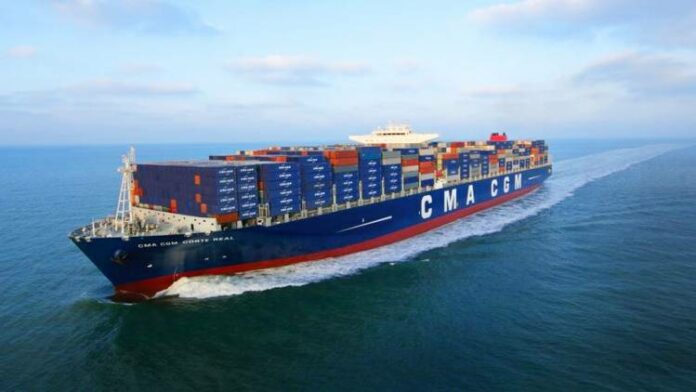
IKEA Transport & Logistics Services, CMA CGM, the GoodShipping Program and the Port of Rotterdam have today announced they will cooperate in a first of its kind partnership to test and scale the use of sustainable marine biofuel oil. The test will commence with a landmark bunkering of the marine biofuel oil on a CMA CGM container vessel on March 19, in what the companies claimed in a release marked a “major step towards the decarbonisation of ocean freight”.

The biofuel oil is completely derived from forest residues and waste oil products, with the parties involved saying it should deliver 80-90% well-to-propeller CO2 reduction versus fossil equivalents, and virtually eliminate sulphur oxide (SOx) emissions – all without any requirement for engine modifications.

Elisabeth Munck af Rosenschöld, head of sustainability, IKEA Global Transport & Logistics Services, said: “Through our pilot we want to show that the means for decarbonisation in terms of alternative fuels are available. We have a responsibility to do our part to reduce the impact of our ocean freight. Through our participation we send a signal to our customers and the ocean industry on our commitment to decarbonise. Only through collaboration can we achieve rapid, necessary change. With a successful pilot completed, our intention is to put the equivalent of at least all our containers out of Rotterdam on biofuel.”

Source:splash247

Hapag-Lloyd Cruises Commits to MGO for Expedition Fleet

0

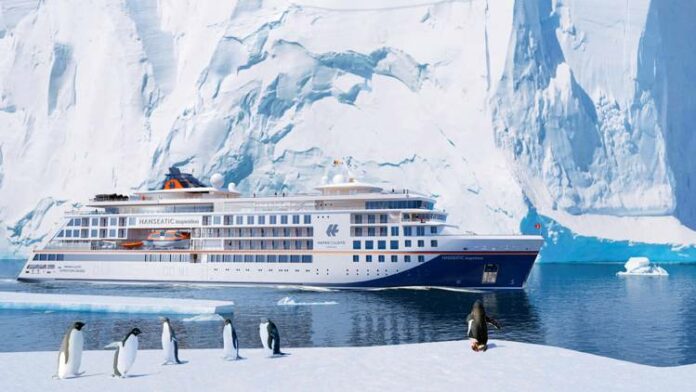
Hapag-Lloyd Cruises has announced that it will use marine gas oil (MGO) on all routes sailed by its expedition ships – the HANSEATIC nature, the HANSEATIC inspiration and the Bremen from July 2020. Joining the fleet in 2021, the HANSEATIC spirit will also use this fuel.

The use of low-sulfur fuels in the Antarctic has already mandatory, and Hapag-Lloyd Cruises already uses MGO voluntarily in other sensitive regions, such as the Arctic and Kamchatka. In addition, the new expedition ships are equipped with an SCR catalytic converter that reduces nitrogen oxide emissions by almost 95 percent. They are also fitted out to use shore power. 

The routes sailed by the vessels will be planned so that an optimum speed for fuel efficiency will be maintained, cutting fuel consumption by around one third. 

The announcement that the vessels will sail exclusively on MGO comes along with the news reported in TradeWinds that Carnival Corporation claims to have switched all of its cruise ships traveling to the Arctic to MGO. When the change took place is unclear.

Since December 2016, international environmental organizations with the Clean Up Carnival coalition have been calling on the cruise giant to reduce its environmental and human health impacts by ending its use and carriage of heavy fuel oil.

"Stand.earth applauds this as an important step in the right direction, and a move that puts the shipping sector on the pathway to a truly heavy fuel oil-free Arctic,” said Kendra Ulrich, Senior Shipping Campaigner at Stand.earth. “Now Carnival should take the next logical step to ensure that none of its ships traveling to the region are carrying heavy fuel oil onboard.” 

Carnival Corporation is the largest dues-paying member of the trade industry organization Cruise Lines International Association (CLIA), and Carnival CEO Arnold Donald sits on CLIA’s board. The trade organization regularly participates in international policy negotiations at the IMO. The Clean Up Carnival coalition is asking CLIA to follow Carnival’s example and fully support a ban on heavy fuel oil in the Arctic.

Nine Carnival-owned ships travel to IMO-defined Arctic waters, while 49 Carnival-owned ships travel north of the 50th parallel to the wider geographic Arctic, Subarctic and Alaska.

Source:maritime-executive

Cosco introduces bulk shipping platform

0

Cosco Shipping Technology, the shipping technology development unit of China Cosco Shipping, has introduced a new third party digital platform for domestic coastal bulk shipping.

The platform, named Chuan Huo Yi, will mainly offer market data and cargo-to-ship matching services. The company also plans to add financial, procument as well as SaaS solutions at a later stage.

It is very rare for a shipowner set up an open digital shipping platform, and Cosco Shipping Bulk has joined the platform as its first user.

According to an official at Cosco Shipping Technology, the platform will help build a sustainable market environment and facilitate the cooperation and healthy development in the industry.

Source:splash247

DNV GL rolls out remote surveys for all vessels

0

Leading classification society DNV GL announced that all DNV GL classed vessels are now able to utilize the possibility of remote surveys for some inspections through the Veracity data platform. This means that for a range of surveys, a DNV GL surveyor will not be required to travel to the vessel. Instead, by using an online connection or video streaming link, a dedicated team of remote surveyors can provide support to vessels anywhere in the world with documentation, images, video (streaming or recordings), and input provided by the customer and crew. 
 
More than 1,000 remote surveys were completed in the pilot and scaling up phase by the Direct Access to Technical Experts (DATE) units based in the Maritime Operational Centre in Høvik, alongside units in Hamburg, Singapore, Houston and Piraeus. Technology testing began in 2017, with the first production pilots in June 2018, and now the entire DNV GL fleet is able to take advantage of the service.
 
When a customer makes a survey request through DNV GL’s fleet portal on the Veracity platform, they may, for some survey types, be given the option by the system to choose to carry out the survey remotely. All such survey requests are then evaluated by a remote surveyor to make sure that the survey can be offered remotely. The remote survey regime has been constructed to ensure that the level of assurance is equivalent to an onboard survey. 
 
The types of surveys able to be offered as remote surveys include: occasional surveys that fall between periodical surveys, documentation-based surveys, testing and witnessing systems during normal operation, and surveys not ordered together with annual surveys. Periodical surveys like the annual survey of a vessel are not part of the remote survey programme as they require a surveyor onboard.

Source:portnews

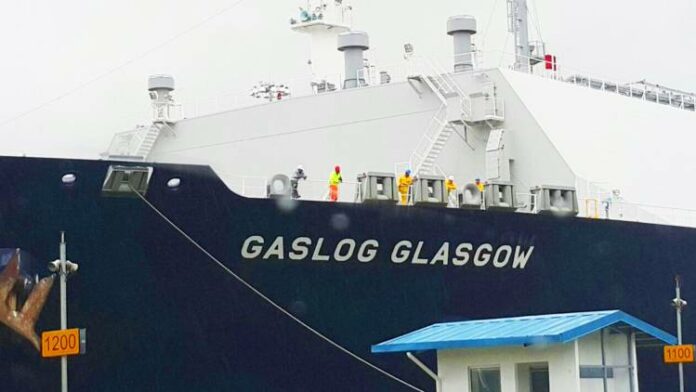
GasLog Partners LP announces acquisition of the GasLog Glasgow from GasLog Ltd. for $214 mln

0

GasLog Partners LP and GasLog Ltd. announced that the Boards of Directors of both companies and the Conflicts Committee of GasLog Partners have approved entering into an agreement for the Partnership to purchase from GasLog 100% of the shares in the entity that owns and charters the GasLog Glasgow. The aggregate purchase price for the Acquisition will be $214 million, which includes $1 million for positive net working capital balances to be transferred with the vessel, the company said in its release.

The Partnership believes that the Acquisition will be immediately accretive to distributable cash flow per unit and is consistent with its strategy to grow cash distributions through drop-downs and third-party acquisitions. GasLog Partners estimates that the GasLog Glasgow will add approximately $23.5 million to EBITDA in the first 12 months after closing. Accordingly, the Acquisition purchase price represents a multiple of approximately 9.1x estimated EBITDA. Upon closing, the Acquisition will be supportive of GasLog Partners' guidance of 2% to 4% year-on-year distribution growth in 2019.

The GasLog Glasgow is a 174,000 cubic meter tri-fuel diesel electric liquefied natural gas (“LNG”) carrier built in 2016 and operated by GasLog since delivery. The vessel is currently on a multi-year time charter with a wholly owned subsidiary of Royal Dutch Shell plc (“Shell”) through June 2026. Shell has the option to extend the charter for a period of five years.

GasLog Partners expects to finance the Acquisition from its available sources of liquidity, including proceeds from its 8.500% Series C Cumulative Redeemable Perpetual Fixed to Floating Rate Preference Units issued in November 2018, and the assumption of the GasLog Glasgow’s $134 million of existing debt. The Acquisition is expected to close early in the second quarter of 2019 and is subject to the satisfaction of certain customary closing conditions.


Israeli Blockchain Start-Up Completes First International Shipment

0

Israeli-based blockchain start-up LogChain has completed its first full cycle of an international blockchain-backed maritime shipment. 

The successful shipment of beverages from Belgium to Israel was carried out using the end-to-end digitized and tamper-proof LogChain platform which handles all aspects of the supply-chain including electronic bill of lading and Letter of Credit.

The LogChain platform reduces an estimated seven to nine percent of shipment costs and can reduce approximately two weeks of documentation time down to few minutes, removing altogether the need for original documentation using carriers.

As all features are fully orchestrated by LogChain's smart contracts and invoked by the freight-forwarder, exporter and the importer involved – they are all accessible and visible to all parties in the supply chain, until the shipment is successfully released by the shipping company. 

The LogChain platform is running on Microsoft Azure cloud solution, using Ethereum. Founded in 2018, LogChain is a global supply chain and trade finance blockchain platform backed by technology and IT company Aman Group. 

The shipment is not a first for the industry. On January 31, 2019, Pacific International Lines used an electronic Bill of Lading built on the IBM Blockchain Platform in a successful real-time pilot tracking shipment of mandarin oranges from China for the Lunar New Year celebrations.

In November last year, nine ocean carriers and terminal operators signed an MOU to form a consortium to develop the Global Shipping Business Network (GSBN), an open digital platform based on blockchain technology. The participants include ocean carriers CMA CGM, COSCO Shipping Lines, Evergreen Marine, OOCL, and Yang Ming; terminal operators DP World, Hutchison Ports, PSA International and Shanghai International Port; and software company CargoSmart. The new platform will connect all stakeholders, including carriers, terminal operators, customs agencies, shippers and logistics service providers to digitize their supply chain.

Source:maritime-executive

Grimaldi Con/Ro Catches Fire off Finistère

0

On March 10, the Italian con/ro Grande America caught fire about 140 nm off Finistère, forcing all 27 members of her crew to abandon ship. 

The French maritime agency Premar Atlantique received a distress call from the America at 2000 hours Sunday night. Her master initially reported that the vessel would make her way to a port of refuge at A Coruña, Spain, but the situation on board quickly deteriorated. The fire grew out of control, with several containers burning on board, and the ship halted her course. 

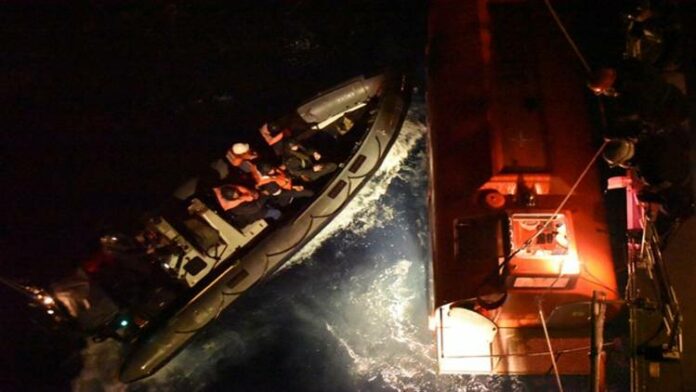
The Royal Navy frigate HMS Argyll diverted to the scene to provide assistance, along with the rescue tug Abeille Bourbon. At 0200 hours, with the fire worsening, the master of the Grande America ordered abandon ship, with all 27 crewmembers aboard one lifeboat.

According to the Royal Navy, the lifeboat was damaged by heavy seas as it launched and it was unable to make headway on its own. HMS Argyll launched her small boat, which pushed the lifeboat alongside the frigate so that the America's crew could transfer over. By 0400, Argyll's crew successfully brought all of the survivors aboard.  

"The conditions were horrendous – the vessels were rolling at 30 degrees, which made it extremely hairy getting the sailors safely on board," said Lt. Commander Dave Tetchner. Cmdr. Toby Shaughnessy, the Argyll's CO, described the sea state as "on the limit for recovery." 

None of the crew sustained life-threatening injuries, but several required hospital treatment. A medical transport helicopter based in Brest provided them with medevac services on Monday morning. "Every one of them suffered smoke inhalation," said Tetchner. 

Premar Atlantique said in a statement that the Abeille Bourbon remains on scene and is working to fight the fire using her water cannon. The agency has asked the America's operator to formulate a salvage response plan.