-0.1 C
New York
Home Blog Page 1111

IMO 2020 – BP unveils supply locations for 0.5% marine fuels

0

Oil major BP has announced that it will begin to sell very low sulphur fuel oil (VLSFO) with a maximum sulphur content of 0.5% that meets the upcoming IMO 2020 regulation, following successful sea trials in the Amsterdam/Rotterdam/Antwerp (ARA) and Singapore hubs.

BP said it has been working closely with the IMO, customers and partners to develop a marine fuel offer that includes this new VLSFO along with marine gas oil and also high sulphur fuel oil for vessels that are equipped with scrubbers.

The VLSFO will first be available in Seattle, Panama (Balboa/Cristobal), South Africa (Cape Town/Durban/Richards Bay), Oman (Salalah), ARA, China and Hong Kong, Singapore, Australia (Fremantle/Gladstone/Brisbane), and New Zealand.

BP intends to retail the new 0.5% sulphur VLSFO globally, although it did not say when the fuels would be available worldwide.

The relatively limited list of initial ports, which does not include major bunkering hubs such as Fujairah, would seem to underscore industry concerns, that at least initially, many smaller bunker ports will not be able to supply compliant low sulphur fuel. 

“BP supports the ambitions of Marpol to reduce air pollution from ships and we have been actively working with partners to prepare for its introduction. We have undertaken a comprehensive test campaign, conducting ship-board trials of our new very low sulphur fuel. Following the success of these sea trials, and working closely with our customers, we believe we now have a robust commercial offer that will support customers in complying with Marpol,” said Eddie Gauci, global Head, BP Marine.

BP said that in order to manufacture a full range of Marpol-compliant marine fuels, its refineries have made a number of configuration changes to support the segregation, handling and storage of the fuels.

Source:seatrade-maritime
BOEM announces Gulf of Mexico Lease Sale 253

0

The Bureau of Ocean Energy Management (BOEM) has proposed to offer 78 million acres for a region-wide lease sale scheduled for August 2019.

The sale would include all available unleased areas in federal waters of the Gulf of Mexico.

Lease Sale 253, scheduled to be livestreamed from New Orleans, will be the fifth offshore sale under the 2017-2022 National Outer Continental Shelf Oil and Gas Leasing Program.

It will include approximately 14,699 unleased blocks, located from 3 to 231 mi (5 to 372 km) offshore, in the Gulf’s Western, Central, and Eastern planning areas in water depths ranging from 9 to more than 11,115 ft (3 to 3,400 m).

Source:offshore-mag

Jackup sets down lightweight platform offshore Sarawak

0

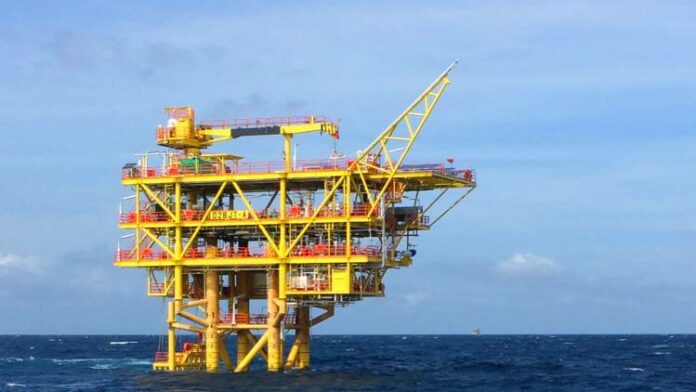
2H Offshore has installed a conductor-supported wellhead platform at a Petronas Carigali-operated field offshore Sarawak.

Under the program, a partnership with local fabricator OceanMight, 2H was responsible for the concept, detailed design, transportation and installation in 35 m (115 ft) of water for the D28 oilfield Phase 1 project.

The lightweight substructure is supported by the conductors, with a correspondingly lightweight topsides. Both components were installed using a jackup drilling rig, a first for Petronas offshore Malaysia, 2H claimed.

Project execution and completion were achieved within seven months of the project award, making this one of the quickest offshore platform installations in Malaysia, the company added.

This was the fourth conductor-supported platform installation campaign using a jackup in Malaysian waters for the company’s Kuala Lumpur office. Work continues on five further wellhead platforms.

Source:offshore-mag

Vietnam offshore fields exceeding expectations

0

Premier Oil expects the Chim Sao and Dua oil fields offshore Vietnam to continue producing until 2030, a decade longer than in the original development plan, according to new partner Ophir Energy.

Ophir came onboard following its recent acquisition of Santos’ producing interests in fields in the Asia/Pacific region.

Last year Chim Sao outperformed budget by 18%, the company said, adding that Premier had now started a field-life extension assessment of all the facilities and expects to complete all required modifications by 2020.

Most critical are the wellhead platform and main field flowlines which originally had 10-year design lives.

This year a series of well interventions should help offset the natural reservoir decline rates. Ophir plans to work with Premier to determine how to optimize production from the fields during the coming decade.

Also, as part of the Santos package, Ophir gained operating interests in the Madura Offshore and Sampang PSCs in East Java.

In Madura Offshore, the Maleo gas field came onstream in 2006 and is now in the decline phase. Its output is sold to PGN and PLN through the East Java pipeline. Another field, Peluang, is currently on plateau production.

Ophir has decided to develop the Meliwis field, discovered in 2016, 11 km (6.8 mi) south of Maleo, via a single-well wellhead platform tieback to Maleo.

In Sampang, the Oyong field has produced gas since 2007 while the Wortel field has delivered gas and condensate since 2012. All production is piped to the onshore processing site at Grati.

Both fields produced at 33% above budget last year, mainly due to higher than forecast gas demand. Ophir plans to revise the subsurface models next year, with a view to adding further gas reservoirs.

It also believes that pressure-lowering projects at Grati could generate added value by extending the production lives of Oyong and Wortel.

There are two undeveloped discoveries on Sampang and exploration upside in both this and Madura Offshore, but exploiting it would entail seeking extensions to both PSCs, which are currently set to expire in 2027.

At Ophir’s Bualuang field in the B8/38 concession offshore Thailand, production averaged 8,100 boe/d during 2018, and last summer the company initiated the Phase 4 development, divided into two sub-phases.

Phase 4A, designed to boost production from the existing facilities, involved drilling three new producer wells and four workovers.

Under Phase 4B a new 12-slot, conductor-supported platform (Bualuang Charlie) will be installed and the field’s water disposal capacity will be increased from 75,000 b/d to 100,000 b/d to boost recovery.

BJC Heavy Industry is building the new platform at Sattahip: it should be installed at the offshore location in June allowing drilling to start in July.

During the associated field center shutdown Ophir plans repairs and upgrades to the Alpha and Bravo platform equipment.

First oil from the Charlie platform is due in October. On completion of Phase 4 output from the field should peak at 14,000 b/d.

Source:offshore-mag

Chevron chooses subsea compression for Jansz-Io gas

0

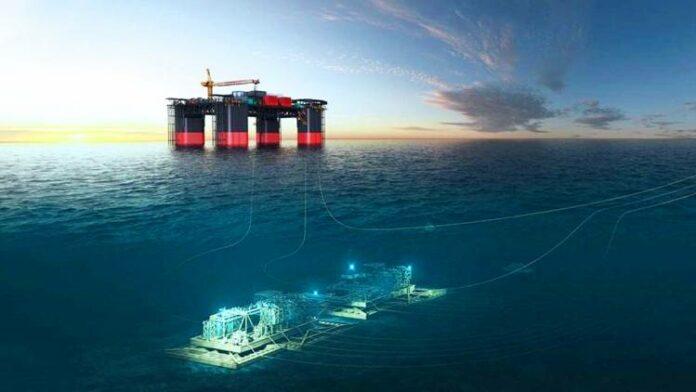
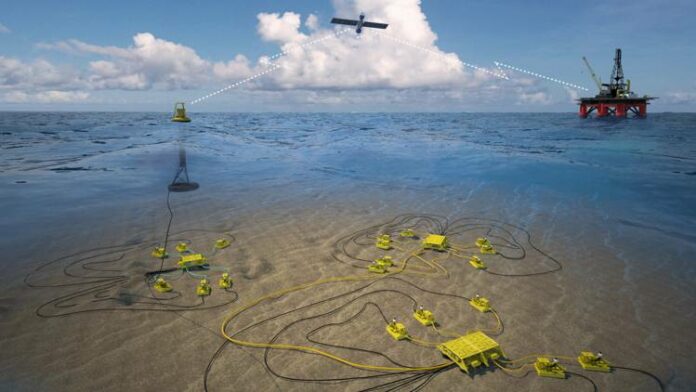
Chevron has contracted Aker Solutions to support delivery of a subsea compression system for the Jansz-Io gas field, 200 km (124 mi) offshore the northwest coast of Western Australia.

Initially the contractor will perform front-end engineering and design (FEED) of a subsea compression station to boost gas recovery.

The FEED scope will also cover an unmanned power and control floating platform and field system engineering services. The field control station will send power from the shore to the subsea compression station. 

Subsea compression system should help Chevron recover the gas more cost-effectively and with a smaller environmental footprint than a conventional semisubmersible compressor solution, Aker Solutions said.

In 2015, the company delivered the world’s first subsea compression system for Equinor’s Åsgard field in the Norwegian Sea. 

“Aker Solutions has worked closely with its partners MAN Energy Solutions and ABB to reduce the size and cost of the compression system,” said CEO Luis Araujo. “Australia will be the first place outside of Norway to use the subsea compression technology,” he added.

Compression should help maintain plateau gas output over time as reservoir pressure declines. Placing compressors on the seafloor, close to the wellheads, improves recovery rates and reduces capital and operating costs, Aker Solutions said.

Jansz-Io, in water depths of around 1,350 m (4,429 ft), is part of the Chevron-operated Gorgon project.

Source:offshore-mag

MSC and CMA CGM join forces Down Under

0

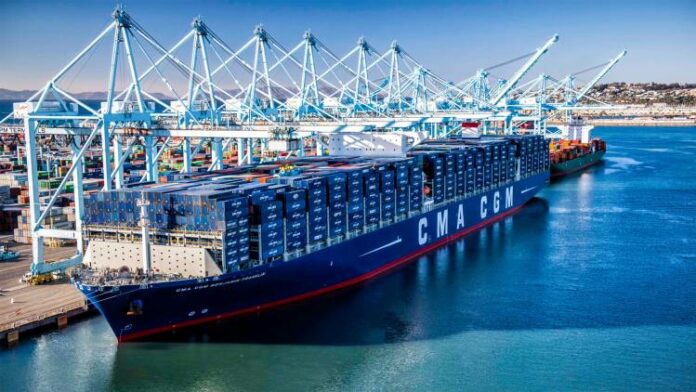
Two of the world’s largest liners are joining forces to offer a unique Europe – Oceania service.

MSC and CMA CGM have announced the formation of a new vessel sharing agreement for the trade from Europe to the Indian Ocean and Australia.

From mid-September 2019, the carriers will operate a joint service which will return from Australia to Europe via Southeast Asia and the Indian Subcontinent.

With the launch of their joint service, CMA CGM and MSC will be the only carriers to offer direct services between Europe and Australia, according to Alphaliner. All the other main carriers serve Oceania via transhipment in Southeast Asia.

A fleet of 14 ships of about 9,500 teu will be deployed on the new service which replaces MSC’s Australia Express service and CMA CGM’s New North Europe Med Oceania service, which is jointly operated with Hapag-Lloyd.

The ships deployed on the new service will be the largest to call at Australia in the ongoing global supersizing of container shipping.

Source:splash247

Ocean Power Technologies Signs Agreement With Premier Oil

0

Ocean Power Technologies, Inc.announced today that the Company has signed an agreement with Premier Oil , an international oil and gas company, to study the feasibility of using the PB3 PowerBuoy for decommissioning operations in the North Sea.

 The contract outlines work that will determine the viability of using the PB3 for monitoring and guarding remaining wells and subsea equipment after removal of a floating production, storage and offloading vessel and prior to subsea decommissioning and/or well plugging & abandonment operations.

The PB3 would primarily be used to provide site monitoring and surveillance to prevent vessel intrusion and disturbance of remaining subsea infrastructure.  The study will also evaluate the PB3’s ability to monitor well pressures and temperatures by connecting to subsea control modules.  This added functionality could allow more precise planning and prioritization of plugging and abandonment activities by giving accurate real-time information on well integrity, while also enabling PMO to provide regulators with higher quality information on well conditions.

George H. Kirby, President and Chief Executive Officer of OPT, stated, “We are excited about this new relationship and look forward to helping Premier Oil further enhance its operations.  We believe our PowerBuoy could enable Premier Oil and other Operators to enhance the decommissioning planning process and at the same time ensure the safety of other users of the sea.  The PB3 could potentially serve as an alternative to an on-site guard vessel, aiming to improve health, safety and environmental statistics and reducing operational costs while incorporating clean power into their offshore operations.” 

During the study, OPT will work closely with Premier Oil’s other subsea equipment suppliers to produce a design to integrate their equipment into the PB3.  If the feasibility study is successful, the next step could be to prove the solution through a North Sea trial deployment in 2018.

“This technology aligns with our goals of increasing safety, efficiency and operational effectiveness through the development and utilization of the most advanced technologies that support our oil and gas activities.  The PowerBuoy system will deliver on all these aspects and offer a step change in our decommissioning planning processes.  It also opens up potential future applications for intelligent, remotely controlled small field developments,” said Pieter voor de Poorte, Subsea Decommissioning Lead, of Premier Oil. 


GTT notified by Samsung Heavy Industries for the tank design of two LNG carriers for CELSIUS TANKERS

0

GTT has received an order from the Korean shipyard Samsung Heavy Industries (SHI), concerning the tank design of two 180,000 m3 LNGCs, on behalf of ship-owner CELSIUS TANKERS.

GTT will design the tanks of the vessels, which will be fitted with the Mark III Flex membrane containment system, a technology developed by GTT. The deliveries of the ships are planned during the second quarter of 2021.

Philippe Berterottière, Chairman and CEO of GTT, declared: “We are very pleased to receive this new order from SHI, which confirms CELSIUS TANKERS’ entry into the LNG industry, whom we are pleased to accompany, once more, with our technology.”

Source:portnews

Fast Ferry Collides with “Whale,” Injuring 80 Passengers

0

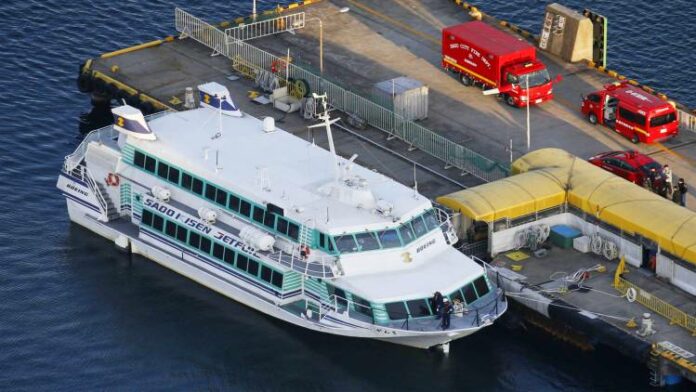
On Saturday, 13 people were seriously injured when a high-speed hydrofoil ferry struck a submerged object off the coast of Sado Island, Japan. The Japan Coast Guard and operator Sado Steam Ship believe that the object was a "marine animal," likely a whale. 

The Niigata-Ryotso ferry is an ultra-fast vessel capable of making more than 40 knots, and its hull emerges fully from the water at operating speed. At 1215 hours, it was in the middle of its run to Sado Island when it experienced an abrupt slowdown. About 80 passengers sustained varying degrees of injury as they were thrown forward, including 13 with broken bones and other serious injuries. 

The vessel safely made it to port at Ryotso at about 1330 hours, and an inspection revealed damage to its rear hydrofoil and a six-inch crack towards the stern. The Japan Coast Guard believes that the ferry may have struck a whale, and the Japan Transport Safety Board has launched an investigation. 

NKH reports that similar accidents are not uncommon in the region. In 2016, a hydrofoil ferry was disabled after apparently striking a whale off Izu Oshima Island, near Tokyo. 

Source:maritime-executive

Mocean Joins TechX Pioneer Programme

0

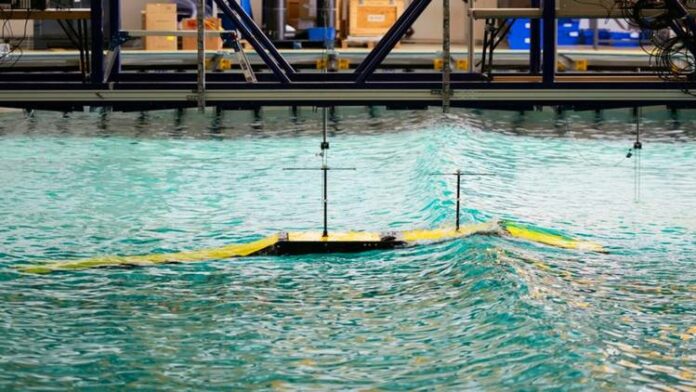
Wave energy developer Mocean Energy has been selected for the Oil & Gas Technology Centre’s TechX Pioneer Programme.

The Edinburgh-based company joins nine other start-ups that will get up to £100,000 to develop their business and technology as part of an intensive 16-week accelerator programme that includes expert mentors, development partners and deep access to the industry.

After graduating, Pioneers have the opportunity to join a 12-month incubator called TechX+, with two companies awarded an additional share in £130,000 funding from strategic partner, BP.

All funding is provided with no equity or payback, and intellectual property is retained by the Pioneer – a distinctive approach that sets TechX apart from other global accelerator programmes.

The company has also been awarded funding by Wave Energy Scotland to build a half-scale wave energy machine and test it in real ocean conditions at the European Marine Energy Centre (EMEC) in Orkney.