13.4 C
New York
Home Blog Page 1087

Nigerian Port Authority launches marine simulation centre

0

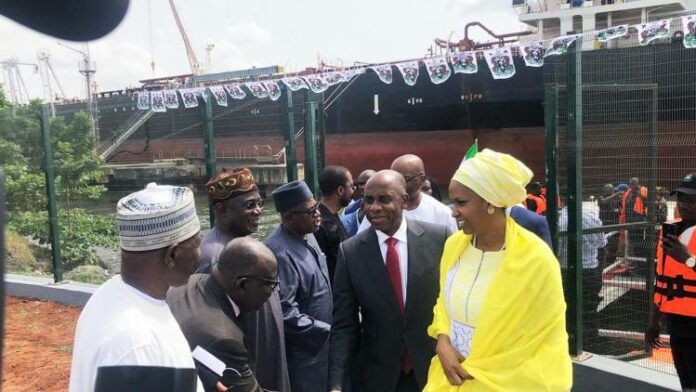
The Minister of Transportation, Rotimi Amaechi, has launched a high-tech marine and harbour simulation centre established by the Nigerian Ports Authority (NPA) at the NPA Dockyard, Apapa, Lagos.

The Minister commented that the centre would have saved the Federal Government foreign exchange that would have been used in training personnel abroad.

He continued that this step shows that government is desirous of encouraging local content development towards growing the economy.

"It is a testament that we are attaining the status of the desired maritime destination of choice. This facility would attract professionals from within and outside the country"… Amaechi stated.

In the meantime, the Managing Director of NPA, Hadiza Bala-Usman, noted in light of the new centre that the centre signals the Federal Government’s preparedness and firm resolve at competing global maritime space.

She highlighted that the simulation centre is expected to engender greater operational efficiency in the activities of the organisation with the expectant patronage from within Africa and indeed globally.

Moreover, the centre is included in the authority's strategic positioning and intent at becoming the leading powers in port services in Africa and beyond.

Yet, the Managing Director urged administrators of the facility and stakeholders to always observe required Standard Operational Procedures (SOP), adding that the NPA would prioritise maintenance of the Centre.

Also speaking at the event, NPA Board Chairman, Emmanuel Adesoye, stated the new facility will help in advancing the industry forward much as it would result in boosting the nation’s economy.

Source:safety4sea

US Navy trials AR technology for training and operations

0

The US Navy's classes begin to trial augmented reality and virtual reality technology for training. In the possibility that the trial's successful, this advanced tech could eventually make its way to the deckplate level.

Specifically, Philip Pitts, an AR/VR research specialist with the Naval Undersea Warfare Center, Division Keyport commented "Virtual reality training is well suited to training tasks that are dangerous, rarely performed or expensive to perform."

He continued that AR/VR enables those trained to interact with entire systems onboard vessels, submarines and aircraft, without the cost of building full-scale mock-ups.

This could result to saving millions of dollars and help ensure the training material is modern.

Additionally, AR/VR are helpful for operations as well. If ruggedized, it could be used to guide bomb-disposal vehicles in the field, or to inform repair operations under way.

However, Pitts stated that there are two challenges:

Firstly, making the devices hard enough to withstand a seagoing or shipyard environment.

Secondly, making the software secure enough to withstand hacking.

"There’s a hefty investment in making sure our systems can meet the cyber security requirements in the fleet"…. Pitts addressed.

Source:safety4sea

MPA Singapore unveils its future digitalization plans

0

The Maritime and Port Authority of Singapore (MPA), during the 4th Singapore Maritime Technology Conference, announced its plans to focus on digitalization, assisting companies innovate and be more productive. The Singapore Maritime Institute (SMI) will present the Singapore Maritime R&D Roadmap 2030 to optimise R&D efforts and resources for greater value co-creation within the maritime industry, Dr Lam Pin Min, Senior Minister of State, Ministry of Transport & Ministry of Health reported.

Specifically, as Ms Quah Ley Hoon, Chief Executive of MPA highlighted "Innovation and digitalisation are key areas for Maritime Singapore to sharpen our competitive edge. We recognise that some companies need help to kick-start their digitalisation journey."

She continued that in light of the above, MPA has formed the Circle of Digital InnOvators (CDO) network to champion the adoption of technology and innovation.

Also, MPA is collaborating with the Singapore Shipping Association (SSA) to encourage more maritime corporates to join the CDO network, which was set up in late 2018 to help drive transformation through the adoption of technology and innovation.

CDO's goal is to spread digitalization goals in the marine sector and boost the innovation hub status of Maritime Singapore.

In the meantime, MPA is partnering with the Infocomm Media Development Authority (IMDA), Enterprise Singapore (ESG) and SkillsFuture Singapore (SSG), to launch the Sea Transport Industry Digital Plan (IDP) for the ship agency and harbour craft sub-sectors.

Similar to the Sea Transport Industry Transformation Map, the Sea Transport IDP provides small and medium enterprises in the Sea Transport industry with an easy-to-use guide on digital solutions to adopt at each stage of their growth.

The process of SMEs being digitalized are becoming simpler, in order to access the right digital capabilities to achieve internal efficiencies, reduce cost and improve their services for sustained growth in the digital economy.

Moreover, the IDP includes a Digital Roadmap (Training) to make sure that the industry is ready to adopt the new digital solutions. MPA noted that the amount of $3.7 million has already been secured to help SMEs in the following three years.

As mentioned above, the SMI has renewed the Singapore Maritime R&D Roadmap. The Roadmap is based on five strategic research thrusts:

  1. Efficient and Intelligent World-Class Next Generation Port
  2. Strategic Sea Space and Maritime Traffic management
  3. Smart Fleet Operations and Autonomous Vessels
  4. Effective Maritime Safety & Security
  5. Sustainable Maritime Environment & Energy

Additionally, another 'smart' step MPA made is the cooperation between the Research Council of Norway (RCN) and the Singapore Maritime Institute (SMI). The research will be based on ultra-high power density wireless charging for maritime applications.

During the conference, MPA roped in the maritime CDOs to help articulate industry problem statements, to provide innovation opportunity for various groups such as:

  • Global start-ups through PIER71 Smart Port Challenge;
  • Singapore-based technology companies through Maritime Innovation & Technology (MINT) Fund Call for Proposals;
  • Local universities and research institutions through SMI Call for Proposals.

Following, MPA and NUS Enterprise will launch the 2019 edition of Smart Port Challenge (SPC) under the PIER71 initiative, which will be enhanced in the areas of start-up mentorship, corporate partnership and access to potential investors. MPA has since awarded 13 projects for pilot testing with maritime companies as test-bedding partners from the 2018 cohort of start-ups.

These include the test-bedding of a data accelerator product to improve throughput efficiency of satellite communication by SkyLab Services; development of an AI-Prediction Engine for Vessel Arrival Timing by AIDA Technologies; and a Ship Suppliers Platform to improve productivity for ship chandlers and visibility of ship supplies by Ship Supplies Direct.

Concluding, during the conference, the winners of the Low Cost LNG Retrofit (LCLR) Challenge, organised by Nanyang Technological University through its Maritime Energy & Sustainable Development (MESD) Centre of Excellence (MESD COE), Shell Tankers (Singapore) Pte Ltd (Shell) and DNV GL Singapore Pte Ltd (DNV GL), were unveiled too. The LCLR Challenge was organised to develop new ideas which could overcome the economic challenge of retrofitting an LNG fuel system to an existing vessel.

Shell Quits Gazprom-Led Baltic LNG Project

0

Royal Dutch Shell has decided to withdraw from the Baltic liquefied natural gas (LNG), its joint project on the Russian Baltic coast with Gazprom after the Russian gas holding decided to change the concept of the project’s development.

“Following Gazprom’s announcement on March 29 regarding the final development concept of Baltic LNG, we have decided to stop our involvement in this project,” Cederic Cremers, Shell Russia’s chairman, said in a statement.

According to Reuters, the development comes as Western firms struggle to expand in Russia because of pressure from sanctions imposed by the United States, while for Gazprom it could mean limited access to Shell’s technology as well as the need to fund the project without the help of the Anglo-Dutch major.

Shell, which has a long history of energy cooperation with Russia, said earlier it was studying the possible implications of a recent decision by Gazprom to move towards the full integration of its Baltic LNG and gas processing plants.

In 2015, Shell became the only partner of Gazprom in the Baltic LNG project. In late 2018, Gazprom and Shell inked a framework agreement on the technical concept of the Baltic LNG.
 
The Baltic LNG is the plant to be located in the area of Ust-Luga seaport on the Baltic Sea. Countries of the Atlantic region, Middle East, South Asia and small-capacity LNG markets in Baltic and North Seas regions are viewed as target markets for LNG produced at the plant.

Source:marinelink

Hohe See, Albatros feet up

0

All the foundations have been installed at EnBW's 609MW Hohe See and Albatros offshore wind complex in the German North Sea.

A2Sea vessel Sea Installer installed transition pieces, while GeoSea jack-up Innovation completed monopile installation.

Work on the foundations restarted in February following a six-month hiatus caused by a vessel accident.

Swire Blue Ocean jack-up Pacific Osprey had planted 63 of the project's foundations when its main crane collapsed in August 2018 while loading monopiles at Eemshaven.

Earlier this week, Fred Olsen Windcarrier jack-up Brave Tern, assisted by Blue Tern, installed the first 7MW Siemens Gamesa turbine at Hohe See.

A total of 87 machines will be installed at the projects, which are due to be grid-connected by year end.

Source:renews

IMO’s Single Window Solution Ready

0

The IMO's single window software system is now globally available after being implemented in Antigua and Barbuda.

A maritime single window enables all information required by public authorities in connection with the arrival, stay and departure of ships, people and cargo, to be submitted electronically via a single portal, without duplication. This type of system is recommended by IMO's Facilitation Convention, the treaty which aims to reduce administrative burdens and make shipping and trade by sea more efficient.

New requirements which came into effect on April 8, 2019 require national governments to introduce electronic information exchange between ships and ports. The maritime single window is recommended. 

The maritime single window source code developed during the project will be released under the Open Source MIT License and made available on the web-based hosting service GitHub.

The generic system is not customized to any particular country, application or process, but will provide basic services to support the general acknowledged processes within any country that seeks to meet the obligations of the FAL Convention. The system will allow submission of standardized information covered by the FAL Convention to a single entry point, including the ability to upload several spreadsheets (including Crew and Effects, Passenger and Ship Stores Lists).

IMO Secretary-General Kitack Lim said the generic Maritime Single Window system developed under the Norway-led project would perform many different services within the realm of ship reporting and information exchange, helping to make cross-border trade simpler. These services typically relate to registering port calls and facilitating the clearance of ships, passengers and crew members.  

Lim said the IMO would now look into establishing an appropriate and permanent funding system to implement Maritime Single Windows in other countries.

The project to implement a single window in Antigua and Barbuda was launched in October 2017. Norway provided in-kind and financial support to Antigua and Barbuda and the IMO assumed a coordination role. The fully functional generic maritime single window was delivered in December 2018. The final takeover of the system by Antigua and Barbuda was made in the first week of February 2019. The commencement of the pilot project (involving testing of the electronic procedures/parallel to existing procedures) launched on March 8, 2019 and will run to October 31, 2019. Transition to the full electronic system will commence on November 1, 2019.

Source:maritime-executive

LR Intros World’s Largest Autonomous Ship

0

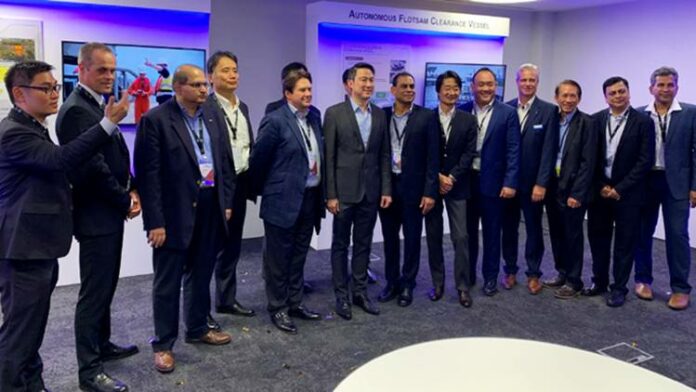
UK classification society Lloyd’s Register (LR) has joined with ST Engineering Electronics (STEE), Mitsui & Co., and Smart City Solutions to develop the world’s largest autonomous vessels.

The partners will collaborate on the ‘Development of Ocean-going Autonomous Navigation System on a Marine Asset’, the MoU forms the foundation of the MPA-funded ‘World’s Largest Ocean-Going Autonomous Vessel Programme’, which was also announced today.

“LR’s involvement in this project builds on the capability and experience already gained from our partnership in other industry-leading and world first autonomous projects,” said Andy McKeran, LR Commercial Director Marine & Offshore.

“However, this project, a world first for the deployment of autonomous navigational technology to an ocean-going vessel for commercial operations, pushes the boundaries of autonomous technology and moves the industry towards deployment of autonomous navigation systems onboard vessels for enhanced performance and critically, safety,” Andy added.

“Increasing interest in maritime autonomy and remote access/control technologies is a specific example of larger technological changes we are currently seeing in the maritime industry. Essential to the successful and safe adoption of these technologies is that robust use cases are established, for example to improve navigational safety, supply chain efficiency or operational costs of marine assets. Autonomous systems will also provide opportunities for skilled seafarers to focus on what they do best, and the safe and sustainable integration of autonomous systems relies on the appropriate engagement with seafaring professionals.”

He continued, “Working with STEE, who have already developed and proven this capability and are now looking to work to scale in the commercial marine market, is what sets this project apart; STEE provide world-class technical expertise, technology and advanced learnings on autonomous systems in the marine environment. We will support with expertise on assurance, certification and regulation for the application of autonomy in the maritime environment as well as approval of systems where appropriate.”

DEME wins Elbe deepening contract

0

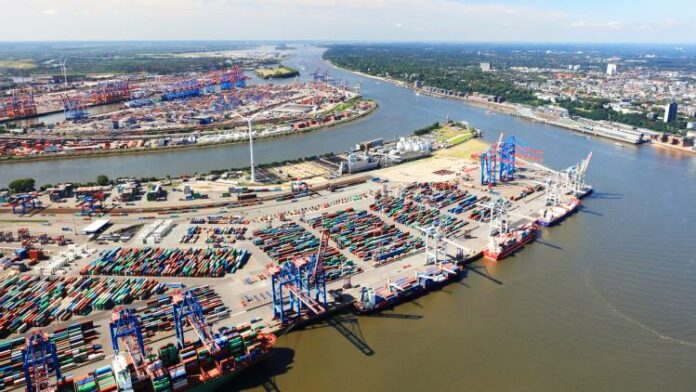
A deepening contract for the Elbe fairway in Germany has been awarded to Belgian dredging, environmental and marine engineering group, DEME. The project includes the widening and deepening of the 116 km long fairway between Cuxhaven and Hamburg to a level of -14.5 meters.

Specifically, the dredging program will enable vessels to sail River Elbe with a draught of 13.5 meters, compared to 12.5 meters that exist now.

In the meantime, the vessels will not be restricted by the tide and with a 14.5 meters draught (tide-dependent) when sailing from and towards the port of Hamburg.

The 238 million euros grant was given by The Waterways and Shipping Administration Cuxhaven (WSA Cuxhaven) to DEME Group’s subsidiaries Nordsee Nassbagger- und Tiefbau and Dredging International.

For the project, the company will use its trailing suction hopper dredgers, backhoe dredgers and spreader pontoons for the dredging, transportation and relocation of around 32 mio m³ of material.

Christopher Iwens, General Manager German Subsidiaries commented "The preparatory phase of this important project is now in full swing and is taken care of by our specialist teams located in our offices in Bremen."

Source:safety4sea

Shell divests stake in Caesar-Tonga

0

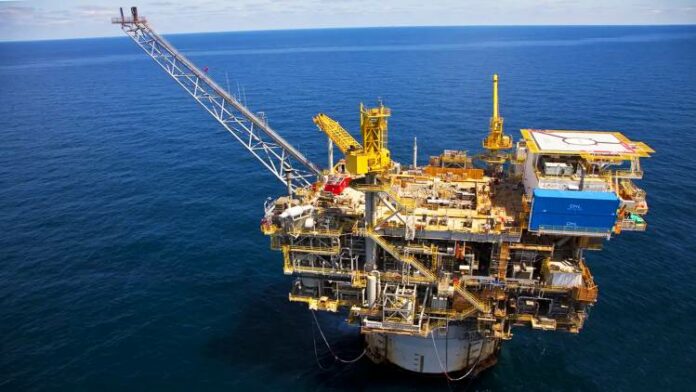
Shell Offshore Inc. has signed an agreement to sell its 22.45% non-operated interest in the Caesar-Tonga asset in the deepwater US Gulf of Mexico to Delek CT Investment LLC, a subsidiary of Delek Group Ltd.

The total consideration for this deal is $965 million in cash.

The sales and purchase agreement is subject to certain conditions, including regulatory approvals. The transaction is likely to close by the end of 3Q 2019, with an effective date of Jan. 1, 2019.

Andy Brown, Upstream Director, Royal Dutch Shell, said: “This transaction represents our continued focus on strategically positioning our deepwater business for growth and is consistent with our upstream strategy of pursuing competitive projects that deliver value in the 2020s and beyond."

“The sale will contribute to Shell’s ongoing divestment program and allow us to direct resources to the areas where we see the most value in the longer term.”

Caesar-Tonga lies in Green Canyon blocks 683, 726, 727, and 770 in water depths of about 4,921 ft (1,500 m). Located 190 mi (306 km) from New Orleans, the development consists of three discoveries: Caesar, Tonga, and Tonga West. They were combined into one project and developed as a subsea tieback to the Anadarko-operated Constitution spar.

Production began in 2012 and currently averages more than 70,000 boe/d total gross.

Anadarko Petroleum Corp. is the operator and holds 33.75%. Co-owners are Equinor (23.55%) and Chevron (20.25%).

As part of the transaction, Delek Group will sign a long-term off-take agreement with Shell Trading (US) Co. to purchase oil produced from the field for a period of 30 years at either market prices or prices matched to-third party offers.

Asaf Bartfeld, president and CEO of Delek Group, said: “This is a strategic opportunity, which provides the group access to a producing oil asset with significant proven reserves, with a strong cash flow and partnership with leading players in the global energy market.”

Source:offshore-mag

DSME to Build LNG Carrier for Maran Gas

0

South Korean shipyard Daewoo Shipbuilding & Marine Engineering Co (DSME) said  that it has secured a deal to build a liquefied natural gas (LNG) carrier from Maran Gas Maritime Inc.

DSME is expected to deliver the 174,000-cubic meter LNG ship during the first quarter of 2022 to  Maran Gas, the gas shipping unit of Angelicoussis Shipping Group, said a report by Yonhap.

The deal is estimated to be worth some US$188 million, industry sources said. Since 1994, Daewoo Shipbuilding has secured orders from the Greek shipping firm to build a total of 105 ships.

So far this year, DSME secured a combined USD 1.3 billion worth of orders. The builder’s 2019 orderbook includes four LNG carriers, all of which were contracted by Maran Gas Maritime.

Daewoo Shipbuilding is targeting to win orders worth $8.37 billion for the year, Yonhap said.

Source:marinelink