3.1 C
New York
Home Blog Page 1056

Training for success in ballast water treatment

0

Compliance in ballast water treatment depends on crew knowledge as well as the treatment system. To help customers secure it, Alfa Laval has a complete range of training options for Alfa Laval PureBallast 3. Among them are open crew trainings, which the company now provides in three additional locations.

 Alfa Laval now offers PureBallast 3 crew training courses at dedicated centres in Houston, Manila and Mumbai. These strategically located sites complement Alfa Laval’s state-of-the-art facility in Stockholm, forming a network of training locations to serve customers worldwide.

“Training is integral to success in ballast water treatment,” says Anders Lindmark, Head of Alfa Laval PureBallast. “Marine authorities have made clear that a lack of crew knowledge is not a valid reason for non-compliance. So Alfa Laval is making convenient courses available where our customers do business.”

No matter which site they choose, customers can expect well-equipped facilities that are modern and purpose-designed. Likewise, they will encounter knowledgeable and experienced instructors, ready to share insights and best practices developed over years of hands-on work with ballast water treatment.

The right training mix

Lindmark points out that training is more than a matter of system knowledge. “PureBallast 3 is designed for ease of use, which means crews can quickly learn its operation and maintenance,” he says. “However, ballast water treatment is still a relatively new application. For crew members to get it right, they need to understand not only how, but also why and when the ballast water treatment system should be used.”

Likewise, Lindmark notes that a range of training forms is needed. “Individual crew members have different ways in which they learn best, and there are different advantages to each training situation,” he says. “Just as our open courses provide a balance between instruction and hands-on work, customers should consider using a mix of different training options within their fleet.” 

Going beyond the classroom

In Alfa Laval’s training offering for PureBallast 3, customers will find a range of training types. These including training on board, for example at the time of commissioning. Onboard training has the advantage of letting crews work with their own system setup, including the specific ballast pumps and vessel control system in use. 

Of course, crews frequently rotate, which means ship owners and operators can have difficulty training everyone on board – or keeping crew knowledge fresh and up to date. To provide ongoing support, Alfa Laval also offers digital training in the form of PureBallast 3 Computer-Based Training (CBT). “PureBallast 3 CBT is a complement to face-to-face training that customers use in different ways,” says Lindmark. “For crew members who have yet to be trained, it can lay valuable groundwork for understanding. And for customers already familiar with PureBallast 3 operation, it can serve as a reference to keep their knowledge sharp.”

“By providing numerous PureBallast 3 training options – at training centres, on board and on screen – we make it possible for customers to find the mix that best supports their own operations and compliance,” Lindmark concludes.


IMO organized workshop for getting audit-ready in Cameroon

0

Auditing IMO Member States to assess how effectively they enforce key IMO treaties is an important part of the Organization's work to ensure its regulatory framework is universally adopted and implemented, IMO says in a press release.

IMO's Member State Audit Scheme (IMSAS) is the subject of a national workshop taking place in Yaoundé, Cameroon (13-17 May).

The participants are made up of senior administration personnel involved in preparing audits for their government. Participants also received specific training on documentation needed to conduct an audit.  

The scheme became mandatory in January 2016. To date, 65 mandatory audits have been carried out, with a further 12 planned for later year. All Member States are required to undergo a mandatory audit within the seven-year audit cycle.

The workshop was organized by IMO and hosted by the Ministry of Transport of Cameroon.

Study Finds 24 Percent of West Antarctic Ice is Unstable

0

Over the past 25 years, ice has thinned across West Antarctica so rapidly that a quarter of its glacier ice is now affected, according to a new study.

Scientists at the Centre for Polar Observation and Modelling (CPOM), based at the University of Leeds in the U.K., have combined 25 years of European Space Agency satellite altimeter measurements and a model of Antarctica’s regional climate to track changes in snow and ice cover across the continent.

The study finds Antarctica’s ice sheet has thinned by up to 122 meters in places, with the most rapid changes occurring in West Antarctica where ocean melting has triggered glacier imbalance. This means the affected glaciers are unstable as they are losing more mass through melting and iceberg calving than they are gaining through snowfall.

Altogether, ice losses from East and West Antarctica have contributed 4.6 millimeters to global sea level rise since 1992, according to the study.

The rate of glacier thinning has not been static over time. Since 1992, the thinning has spread across 24 percent of West Antarctica and over the majority of its largest ice streams – the Pine Island and Thwaites Glaciers – which are now losing ice five times faster than they were at the start of the survey.

The study used over 800 million measurements of the Antarctic ice sheet height recorded by the ERS-1, ERS-2, Envisat, and CryoSat-2 satellite altimeter missions between 1992 and 2017 and simulations of snowfall over the same period produced by the RACMO regional climate model. Together, these measurements allow changes in the ice sheet height to be separated into those due to weather patterns, such as less snowfall, and those due to longer term changes in climate, such as increasing ocean temperatures that eat away ice.

Source:maritime-executive

Wärtsilä and LUT University to collaborate on research for 100% renewable energy systems

0

The technology group Wärtsilä and Lappeenranta-Lahti University of Technology LUT, a Finnish public university, have signed a research agreement on strategic power system modelling with the aim of understanding and developing paths towards 100% renewable energy systems. The agreement was signed in March, the company said in its release.

The scope of the agreement covers collaboration on detailed energy system modelling of the transition taking place with the global energy sector. Under the agreement, LUT University’s solar economy research group will support Wärtsilä’s development work in this field, including providing access to LUT University’s database of power systems data. Wärtsilä has accumulated superior capabilities in the strategic modelling of the industry’s ongoing transition, both at power system and country levels. The work has focused on understanding the value of flexible power assets within power systems, as well as the role of different power generation and storage technologies in achieving electricity systems capable of utilising 100% renewable energy sources.

The LUT University’s research team, led by solar economy professor Christian Breyer, has carried out world leading research on modelling the energy transition on an hourly level. This research includes not only electricity generation and storage technologies, but also changes in demand by industries, transportation and cities. The basis of the research is to show an economically viable pathway to a carbon neutral global energy system by 2050, with electricity as the major energy carrier. By combining this work with that of Wärtsilä, the research is expected to reach a new, and even higher, level.

“Wärtsilä has a long history of research cooperation with LUT University, with focus in finding solutions for a renewable energy future. The collaboration with their solar economy research group is in line with our vision of a 100% renewable energy system, and it strengthens our understanding on the optimal development paths towards achieving it. The energy sector is changing rapidly, and with this collaboration Wärtsilä as energy system integrator can build the know-how to lead that change,” commented Matti Rautkivi, Director Strategy & Business Development, Wärtsilä Energy Business.

“LUT University is proud to be chosen as Wärtsilä’s partner in this strategic modeling project, and we look forward to working together with them,” commented Juha-Matti Saksa, the rector of LUT University. “This is a new step for our innovative university in its international challenger’s role. Wärtsilä’s global network improves the accuracy of the modelling”.

Shelf Drilling awarded long-term jackup rig contract

0

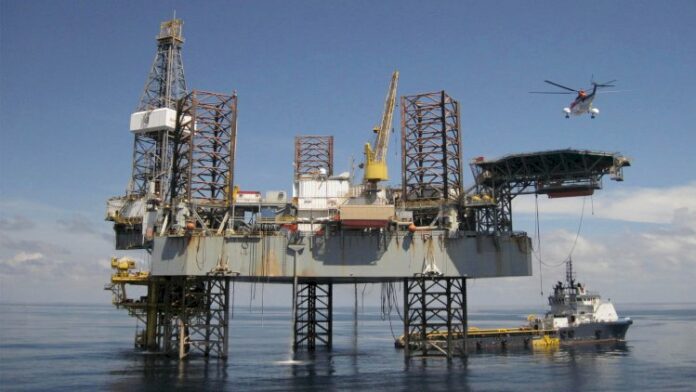
Dubai-based rig owner Shelf Drilling has secured a three-year contract for its jackup rig Shelf Drilling Achiever for operations in the Arabian Gulf.

The contract includes a one-year option, and the rig is planned commence operations in the fourth quarter.

Shelf Drilling Achiever, formerly Bestford 5, is one of two newbuild jackup rigs the company acquired from China Merchants earlier this year.

Currently the company owns a fleet of 39 jackup drilling rigs.

Source:splash247

Global merchant fleet surpasses 2bn dwt for the first time

0

The global merchant fleet has surpassed the 2bn dwt mark for the first time, doubling in size in just 13 years, and could be on track to hit 3bn dwt by 2033, according to data from Clarkson Research.

Clarkson data shows that at the start of this year the global shipping fleet capacity stood at 1.98bn dwt. It crossed the 2bn dwt mark earlier this month.

The first billion dwt capacity was achieved in April 2006. The fleet grew at a compound average growth rate of 5.4% from 2006 to hit today’s 2bn dwt mark. 50% of the added capacity from 1bn to 2bn has been in the bulk carrier sector, which is heading towards 1bn dwt itself at 848m dwt. Tankers have contributed 27% of the expansion in dwt capacity (15% in crude tankers), and containerships 15%.

As well as many additional ships, there has clearly been plenty of upsizing too, Clarkson Research noted in its most recent weekly report. From 2006 to the present day, the average size of a unit in the world fleet has expanded from 14,238 dwt to 20,755 dwt, an increase of 46%. The largest increase in average size was seen in the containership fleet where the average dwt size increased by 64%.

With Clarkson Research predicting growth of 3% per year, it would only take another 14 years to reach 3bn dwt.

Source:splash247

MSC invests in modernization of container terminal at Port of Las Palmas

0

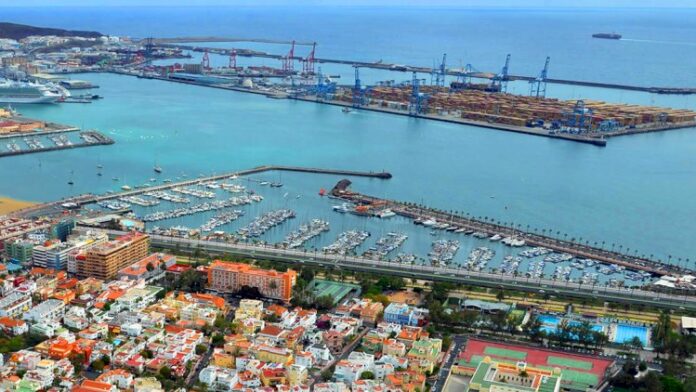
Mediterranean Shipping Company (MSC) along with the Port Authority of Las Palmas (APLP) have ratified an investment plan for the Port of Las Palmas in the Canary Islands. The aim is to establish the Port of Las Palmas as a key hub for shipping traffic with the African West Coast.

During a meeting in Geneva, MSC and APLP representatives analyzed the relations between the two parties. They concluded that they must commit to the project in order to be immediately developed.

In addition, the port authority pledged to increase the competitiveness of the Port of Las Palmas and improve its port service offering.

Under the project, MSC will invest in the Operaciones Portuarias Canarias S.A. (OPCSA) container terminal, and will rearrange the accesses to the terminal. This aims to enable the facility to provide further berthing capacity and extend the services it offers.

Approximately EUR 9 million (USD 10.05 million) will be funded to modernize the Port, a process that will take place over the course of eight years.

OPSCA is the first terminal on the West African coast to use the new Navis N4 operating system, automating its operations. With the new system, OPCSA aspires to enhance the efficiency of local operations, begin the modernization process and increase its productivity.

Largest cruise ship carrying Japan’s flag to be equipped with scrubber

0

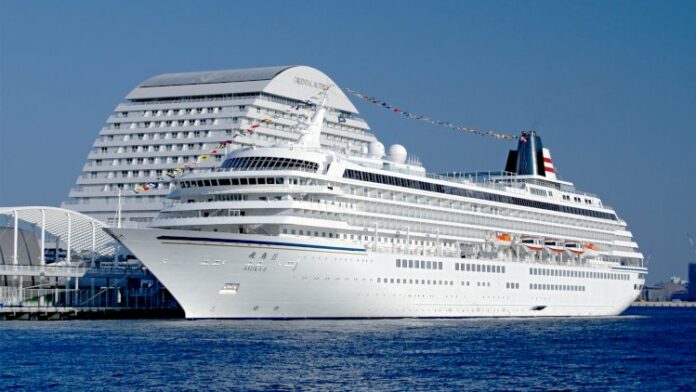
NYK Cruises informed that the cruise ship Asuka II, the largest cruise vessel carrying the Japanese flag, will undergo works at the Sembcorp Marine Admiralty Yard in Singapore from the middle of January 2020, during which it will be retrofitted with a scrubber.

Asuka II, the largest cruise ship carrying the Japanese flag, will receive new features during a 45-days makeover at the Sembcorp Marine Admiralty Yard in Singapore.

During this period, a SOx scrubber will be installed to address tightening global environmental regulations.

The NYK Group will now resume efforts to further enhance the Asuka Cruise brand and achieve growth by offering environment-friendly cruise experiences.

Earlier during 2018, NYK Line had announced that it has secured a 9 billion yen (USD 80.65 million) syndicated loan agreement with MUFG Bank Ltd., with the aim to install scrubbers. According to the company, the proceeds will be used 'solely for the purpose of funding environment-friendly projects'.

This forms part of NYK’s medium-term management plan, which includes the group’s intent to integrate environmental, social, and governance (ESG) initiatives into management strategy by establishing new medium- to long-term environmental targets.

source:safety4sea

New agreement eyes autonomous system on SAR vessels

0

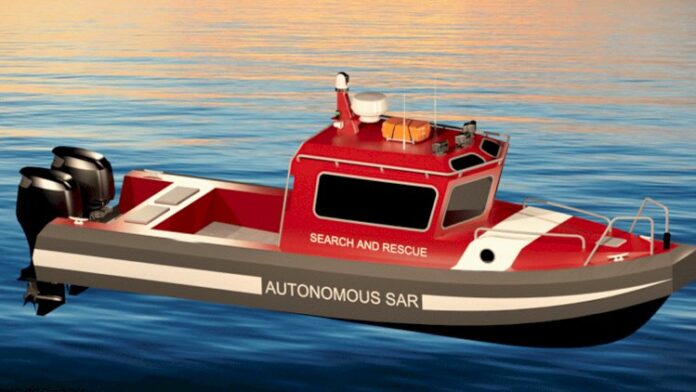
Boston-based Sea Machines Robotics announced a new partnership with Canadian workboat manufacturer Hike Metal, to integrate an autonomous vessel control system aboard commercial vessels tasked with search-and-rescue (SAR) missions.

The collaboration seeks to develop the capabilities of autonomous marine technology for increasing the productivity and safety of SAR operations.

Under the deal, Hike Metal will install on its vessels the Sea Machines' SM300 autonomous system to provide them with autonomous SAR capability, obstacle avoidance, remote vessel and payload control, and data-driven waypoint following and mission planning, among others.

Phase I demonstrations will begin this summer, near Hike Metal’s headquarters on Lake Erie, aboard a new-build, 27-foot Rigid Hull Inflatable Boat (RHIB).

The vessel will be outfitted with twin 200-HP engines, a remote-control Flir camera system, a heated survivor seating area, remote-control rescue cradles and extended-range fuel reserves.

"Response times are critical in the success of search-and-rescue missions, due to the limited survival time of victims who fall overboard and inherent risks to rescuers… We are thrilled to partner with Hike Metal on such an important prototype that will help to modernize marine responses, save lives and recover critical property faster,"..said Sea Machines’ Don Black, vice president, sales and marketing.

Source:safety4sea

Royal Navy Escorts Russian Destroyer Through English Channel

0

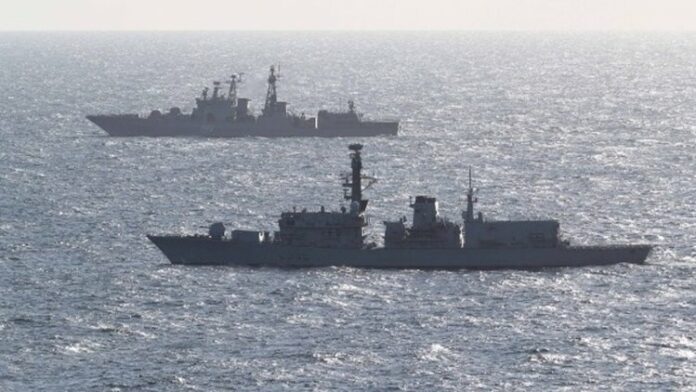
Royal Navy warship HMS Northumberland has escorted a Russian destroyer through the English Channel. The Devonport-based Type 23 frigate was activated to meet the Severomorsk, an Udaloy-class guided missile destroyer. The Russian ship passed through the English Channel on the way back to her home port after operations in the Mediterranean.

HMS Northumberland is one of the Royal Navy's ships kept at high readiness to protect the integrity of UK waters. Before shadowing the Russian vessel, the ship had been honing her submarine hunting skills in the waters off the UK.

Commander Ally Pollard, HMS Northumberland's Commanding Officer, praised her ship's company for their efforts over the past few days. "This has been a particularly intense period for HMS Northumberland.It is credit to the team on board that they have been able to switch from the demands of anti-submarine warfare to conduct escorting duties through home waters with such ease," she said. 

As a high-readiness unit, HMS Northumberland may be called upon at any time to help prevent arms trafficking, people smuggling, conduct counter-terrorism operations, maritime search and rescue, or escort duties. She is equipped with a Merlin helicopter of Culdrose-based 814 Naval Air Squadron, state-of-the-art radar and the Royal Navy's new Sea Ceptor missile system.

Source:maritime-executive