2 C
New York
Home Blog Page 1034

IMO: Women in Port Management

0

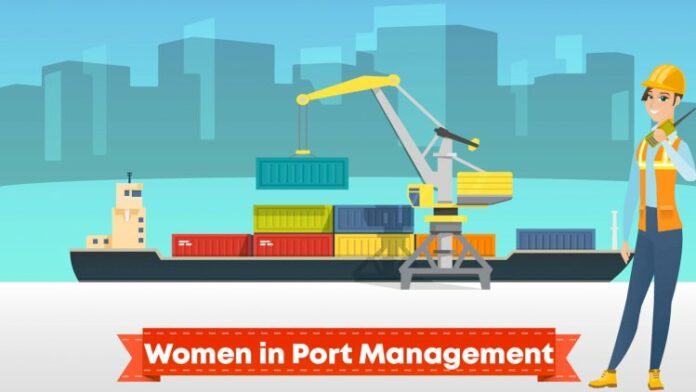
More women are joining the maritime ranks in a variety of professions within the industry. To encourage this trend, IMO supported a training course aimed at female officials from maritime and port authorities.

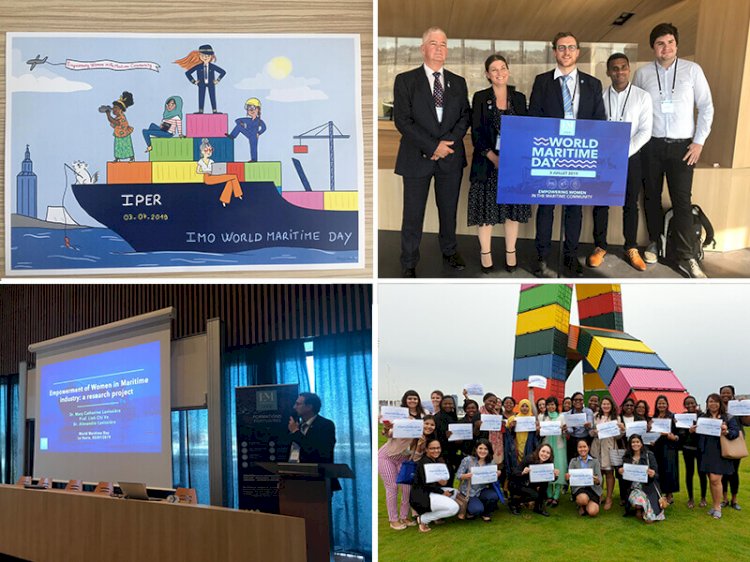
25 women from 17 developing countries took part in the two-week "Women in Port Management" course, hosted in Le Havre, France (24 June – 5 July). The course covered lectures on port management, port security, marine environment, facilitation of maritime traffic, marketing, port logistics and other topics.

Participants learnt about the necessary skills required to improve the management and operational efficiency of their ports. Visits were organized to the Port of Le Havre and the Port of Rouen, giving participants the chance to experience for themselves the day-to-day operations of a port, with a view to applying this knowledge back in their respective countries.

The port management course was delivered through IMO's Women in Maritime programme, supported by the Ministry of Transport of the People's Republic of China and in partnership with the Port Institute for Education and Research (IPER) and the Le Havre Port Authority. It comes as part of IMO's ongoing and increasing efforts to support the UN Sustainable Development Goal number five: achieve gender equality and empower all women and girls.

This is the 15th workshop of its kind. So far, 333 women have received training under this activity. Demand for the course has continued to grow substantially over the past years.

Inmarsat Introduced a Global Mobile Broadband Service in Arctic Region

0

The new Global Xpress (GX) payloads support the rapidly growing demand among both commercial and government users for seamless, reliable, high-speed mobile broadband services in the Arctic and throughout the world.

In commercial markets, the GX Arctic payloads are designed to specifically address the needs of merchant fleets, fishing vessels, commercial airlines and the energy market, where high-speed mobile broadband connectivity is driving both major operational and efficiency improvements and supporting the introduction of new business models.

For the Government sector, the new GX payloads will provide continuous, assured communications to tactical and strategic government users operating in the Arctic region, including customers in the USA, Canada, Scandinavia and other Arctic regions.

Inmarsat’s new Arctic capabilities will further increase network flexibility and efficiency through multi-beam, high-throughput capacity that can be fully dialled up and down depending on customer demand in the region.

Rupert Pearce, Chief Executive Officer, Inmarsat said:

“I would like to thank Space Norway for providing this opportunity to deliver dedicated GX capacity in the Arctic region. It is the home to one of our most advanced research and development centres, located at the Norwegian Maritime Competence Center (NMCC) based in Ålesund. Announcement with Space Norway is a further example of the strength of this relationship… As part of the existing Inmarsat GX network, customers will now have seamless, high-quality mobile broadband services as they travel in and out of the Arctic region. “I am delighted to say that Inmarsat will be the only provider of the mobile broadband connectivity our customers need in the Arctic region.”

Jostein Rønnerberg, CEO of Space Norway said:

“In close collaboration with Inmarsat and government partners we are about to get in place a strategically important capacity for all those currently operating in the Arctic without access to broadband capabilities. Our focus is on the users – fishermen, researchers, rescue personnel, coast guard, military and others. We are proud to join forces with Inmarsat and we are confident that this collaboration will be welcomed by those operating in the High North”.

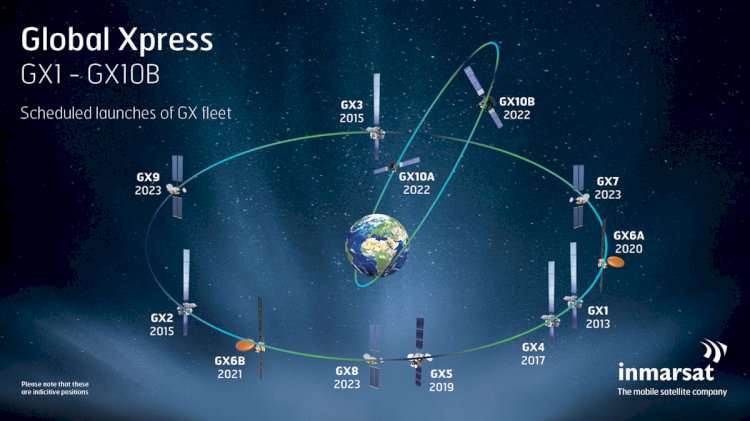
Inmarsat’s current GX fleet is comprised of four operating satellites (GX1-4) and is planned to be augmented to seven satellites by mid-2021 with the launch of a further three GX payloads (GX5 and GX6A & B) which are currently under construction and scheduled for launch in 2019, 2020 and 2021 respectively. Inmarsat recently announced the addition of a further three GX satellites (GX7, 8 & 9) to the global GX constellation.

Photo: Inmarsat

With the two Arctic satellites announced yesterday (GX10A, GX10B), Inmarsat’s aggregate constellation will therefore be comprised of twelve payloads.

Saab to Ensure Maritime Traffic Safety and Efficiency in New Dubai Harbour

0

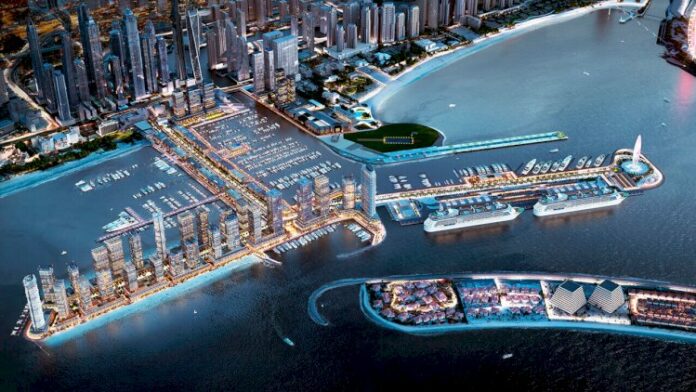
The contract was awarded by the owner and developer of the project, Meraas, a diversified Dubai-based holding company. Once complete in Q4 2020, Dubai Harbour will be home to the region’s largest marina.

The combination of 1100 luxury yacht berths and two cruise terminals for the latest mega cruise ships with a capacity of 1.2 million passengers per year, means that there will be considerable and very varied traffic in the area.

"This project shows the versatility of our maritime solutions, that can equally well be used in container ports, marinas and the offshore industry. The project further expands our civilian footprint in the Middle East".

says Jessica Öberg, head of Saab business area Industrial Products and Services.

As per the agreement, Saab's solution will play an important role in ensuring that people sailing to and from Dubai can do so in an orderly and safe manner, regardless of weather, visibility and traffic. It will enable the operators to keep track of activities on the water at all hours of the day and to act when necessary.

Saab will also use their MaritimeControl solution to monitor the waters in and around the harbour with the use of multiple radars. Strategically placed high-resolution CCTV and infrared cameras will further enhance situational awareness. At 7.3 billion US$, the maritime sector represents 7 percent of Dubai's GDP, underscoring the importance of the safety and efficiency that Saab's system provides.

AAL Europe has formally launched a ‘Europe – Far East Service’

0

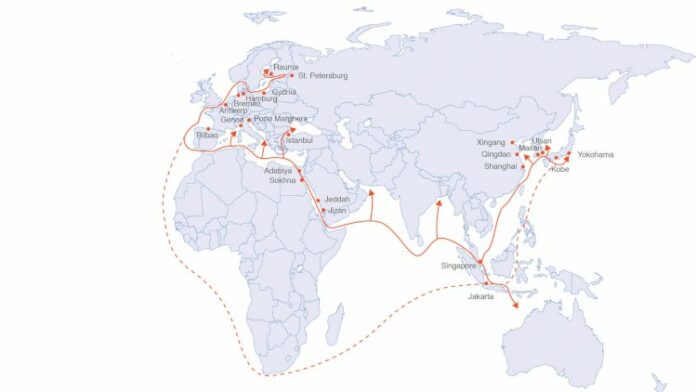
Trusted multipurpose operator AAL Europe has formally launched a ‘Europe – Far East Service’, to offer regular sailings and highly flexible port calls between Northern Europe (ARA range and the Baltic region), Middle East, South East Asia and over to the Far East. The service’s backbone will be the carrier’s owned and highly flexible 19,000 dwt S-Class heavy lift vessels (700 t max lift) and complemented by ad-hoc sailings of its A-Class and W-Class mpv fleet, to provide customers the assurance of frequent sailings and tonnage options.

Eike Muentz, AAL Europe’s General Manager commented,

‘We have actually been operating S-Class and other vessel sizes on the trade between Europe and Asia since the start of the year and have built-up the sustainable cargo flow and broad market interest to justify employing more S-Class vessels permanently on the trade. With multiple cargo stowage configurations on deck and under (in secure holds) a key feature of the S-Class design – along with a significant 700 t max lift – we can accommodate a huge variety of cargo types from large and heavy project cargo, to breakbulk, steel and dry bulk commodities and all at the same time.The default routing from Europe will be via the Med, but we can also sail via West Africa or PG / Middle East depending on cargo demand. Our aim is to establish monthly calls from Antwerp, Rotterdam, Hamburg and one or two additional loading ports in the Med. When called upon we can also draw upon any of the other vessel classes within our fleet, even the ‘mega size’ heavy lift A-Class (31,000 dwt) and W-Class (33,000 dwt).’

Maritime Leaders presented a new bulk carrier design that meets IMO environmental targets for 2030

0

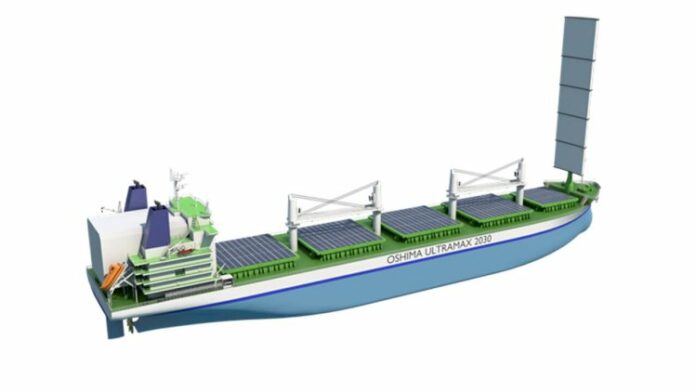
At the recent Nor-Shipping exhibition held in Norway, the project partners announced a next-generation 62,000 dwt Ultramax Bulk Carrier design that is optimised according to actual operating profiles, and that will meet coming emissions legislation. The design demonstrates that emission levels from conventional merchant vessels can be significantly reduced in line with International Maritime Organization (IMO) targets.

The project goals included the achievement of low emission levels, both at sea and in port, the fulfilment of the IMO’s requirements to reduce CO2 emissions per ship´s capacity-mile by at least 40% by 2030, and zero emissions during waiting time. A further aim of the project has been to create a new standard that maximises the return on investment (ROI) for the owner. A key objective was to minimise greenhouse gas (GHG) emissions through the application of currently available technologies.

“Our smart marine initiative emphasises collaboration between the various stakeholders, and this project is a prime example of how effective such collaboration can be. The design is based on actual operating profile data from Ultramax bulk carriers and it incorporates an LNG-fuelled Wärtsilä 31DF dual-fuel main engine connected to a power take out (PTO) shaft generator and controllable pitch propeller (CPP), and the result out-performs all existing designs in terms of efficiency and sustainability,”

says Stein Thorsager, Director, Merchant and Gas Carrier, Wärtsilä Marine.

“To help the industry meet the ambitious GHG reduction targets set by the IMO, the industry needs to come together to advance ship design. This design halves the EEDI (Energy Efficiency Design Index) of comparable vessels, and sets a new standard for low emission bulk carriers,”

says Trond Hodne, Director of Sales & Marketing at DNV GL.

The high efficiency of the propulsion solution reduces the EEDI by 50 percent compared to standard vessels of this size and type. The EEDI provides a specific figure for an individual ship design, expressed in grams of carbon dioxide (CO2) per ship's capacity-mile.

Additional benefits include the ability to operate in an environmental mode while in port through the main use of solar panels, the installation of an LNG tank that is dimensioned based on the capacity needed for the operating profiles and the availability of LNG bunkering infrastructure, an optimized hull shape, and the option to also install a hard sail to generate extra propulsion. The hard sail system is being developed jointly by Oshima Shipbuilding and Mitsui O.S.K. Lines.

“Greater efficiency and better environmental performance has been made possible through collaboration with Wärtsilä and DNV GL. Oshima alone could not have come up with this new innovative design, which includes optimised propulsion, energy storage and solar panels. It represents a future proof solution that will enable bulk carrier owners to comply with legislation while also lowering operating costs,”

says Eiichi Hiraga, President at Oshima Shipbuilding.

Wartsilla merged Biogas and Puregas Solution groups

0

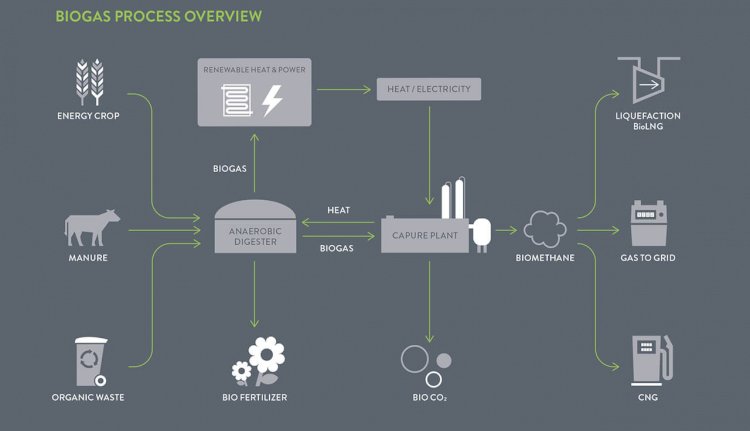
Wärtsilä Puregas Solutions, specialists in biogas upgrading technology, is now merged with Wärtsilä’s biogas liquefaction team, a unit with expert capabilities in liquefying upgraded biogas for end-customer use. Wärtsilä Biogas Solutions will now be better able to offer customers a one-stop-shop service for advanced biofuel production.

The market for advanced biofuels is growing in line with efforts regarding the reduction of fossil fuels. The European Union, for example, under its RED II directive, has directed that by 2030, member states must require fuel suppliers to supply a minimum of 14 percent of fuel consumption in road and rail transportation from renewable sources. Additionally, in both Europe and the USA, efforts are being made to de-carbonise the natural gas grid. Wärtsilä’s biogas technology supports this trend by removing carbon from the waste cycle, thereby lowering greenhouse gas effects and reducing the level of carbon intensity. Furthermore, fossil driven natural gas grids may see an expansion towards transporting bio-related gases, such as biomethane or even synthetic methane, in the near future.

“Wärtsilä Biogas Solutions offers products for biogas upgrading to biomethane, and the liquefaction of biomethane into bioLNG. Currently, our market share in this field is almost 60 percent, and we expect this to continue to grow as we further develop our capabilities,”

says Arne Jakobsen, General Manager, Wärtsilä Biogas Solutions.

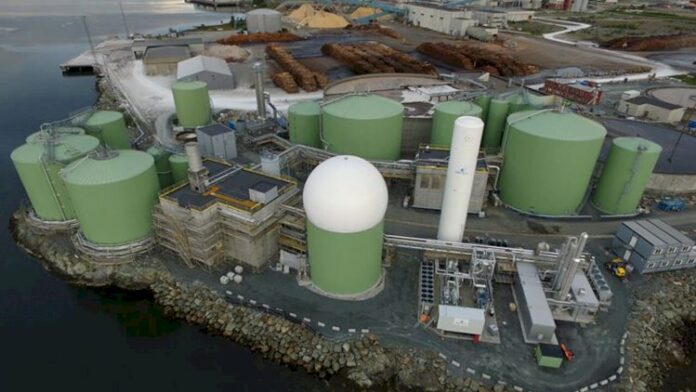
Wärtsilä has earlier provided the turnkey installation for the world’s largest bioLNG facility located in Skogn, Norway and will, by the end of the year, deliver two more bio-LNG plants to customers in Scandinavia. Interest from both the European and North American markets is high, and Wärtsilä anticipates continued strong growth in this sector.

Wärtsilä’s biogas upgrading plants utilise its in-house Puregas CA technology, a process that recovers more than 99.9 percent of the biomethane present in raw biogas. The process separates the CO2 from the biogas through chemical adsorption. The process is highly tolerant of variations in the raw gas composition resulting from changes in the feedstock.

The benefits of Wärtsilä’s in-house developments and offering are considerable. They include the ability to deliver turnkey solutions, easy integration of all systems, a single point of contact throughout the project lifetime, fast delivery time, and full technical and service support. Wärtsilä Biogas Solutions supports the company’s vision for a 100 percent renewables future.

The energy sector is undergoing a transformation towards the integration of increasing levels of power from renewable sources, and Wärtsilä’s development activities are focused on providing flexible solutions that speed and enable this transformation.

DNV GL supports 50 MW floating solar project

0

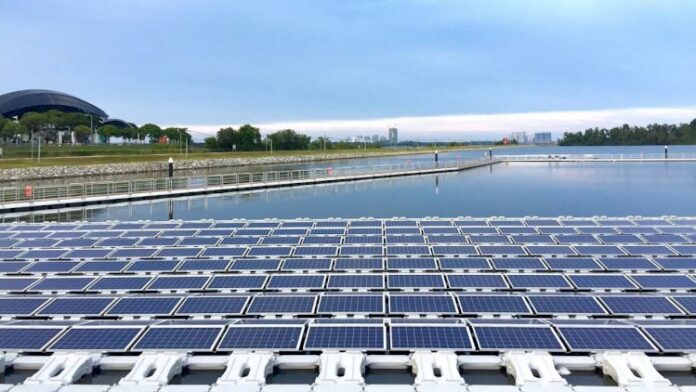
DNV GL has been contracted by PUB, Singapore’s national water agency, as technical advisor for the 50 MW floating solar photovoltaic (PV) project at the Tengeh Reservoir in Singapore. On the completion, the floating solar project will be one of the largest single floating solar systems in the world. The project is south-east Asia’s largest public tender for floating PV to date and will feature a pioneering business model consisting of both conventional and renewable energy components.

DNV GL will support PUB throughout the tender preparation, bidding, design, construction and operational phases of the project. The Tengeh Reservoir floating solar PV project is due to be operational by 2021. It will power the reservoir’s water treatment facilities, eliminating 28,000 tonnes of carbon dioxide emissions per year – the equivalent of about 6000 cars.

Despite having limited renewable energy options, Singapore has made firm commitments to reducing its greenhouse gas emissions. Solar power is the country’s most viable renewable energy source. In such a densely populated country, the emerging technology of floating PV offers an attractive way to optimize the use of space while increasing the level of green energy.

On June 7, PUB launched a public tender to seek proposals to design, build, own and run the 50MW floating solar PV Project at Tengeh Reservoir. As part of this process, DNV GL’s local energy experts have been tasked to carry out preliminary design, independent energy assessment, technology benchmarking and business model studies which have now been completed.

This is the first utility-scale public tender for floating PV in south-east Asia and PUB has appointed DNV GL as technical advisor for the next phase of the project. It will include providing tender support and proposal evaluation during the bidding phase. Subsequently, DNV GL will also carry out design reviews, testing and commissioning reviews during the construction phase as well as performance analysis and site testing when the project is operational.

“DNV GL has a strong track record in floating PV projects, having worked on close to 800MW of projects in the Asia Pacific Region,”  The scale of the Tengeh Reservoir project makes it an important milestone in the development of this rapidly emerging technology. We are looking forward to bringing our expertise across various forms of energy generation to this project and support the Singaporean government in meeting its ambitious solar generation targets.”

said Nicolas Renon, Executive Vice President Asia Pacific, at DNV GL – Energy.

KVH Videotel and Seagull AS invest $30m in new technology

0

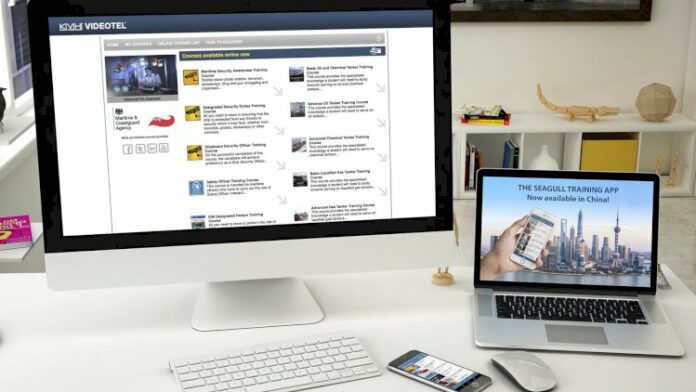
Following the acquisition by Oakley Capital of Videotel and Seagull, the group, with more than 20,000 vessels using their products and the largest library of learning courses available, affirms its position as the world’s largest Maritime eLearning companies. On 1st July 2019 the group announces today a commitment to invest more than $30 Million over the next 5 years in new courseware and technology.

According to companies, maritime clients want the confidence that their learners have access to the best, widest and deepest courseware that meet today’s exacting compliance standards and which will deliver the desired learning outcomes to grow their employees.

Today’s learners want their courses delivered quickly, in bite-size, they want to come back to their course, wherever, whenever and on whatever device they choose. They also want learning paths, and their courses delivered in a modern consumer-led experience.

The group intends to invest more than $30 Million over the next 5 years on new courses and technologies to deliver on these desires with brand new reimagined courseware delivered on a consumer led platform experience to any device, using the latest technologies like micro learning and the most engaging methods and tools including gamification, virtual and augmented reality.

To celebrate their new collaboration, the management teams have agreed to release selected content to each other’s platforms on the vitally important subject of Seafarer Mental Health and Resilience. These packages are designed to help seafarers to thrive at sea and ready themselves for the challenges they may face in their work and private lives.

New courses coming this year

Combining the world-class expertise of their collective content teams, the group believe they will be able to offer unrivalled creativity and educational excellence in maritime. The group are currently in the process of selecting a number of topic areas in which they will collaborate.

“By working together rather than making our individual versions of the same topics, we believe we can add more of the things our learners enjoy such as high-end video, animation and greater interactivity”,

says Roger Ringstad, Managing Director Seagull Maritime AS

“Our customers want access to the most effective learning they can find. Something that makes a difference to their safety and operational efficiency of their organization. In pooling our efforts and making our budgets go further, we can offer a richer experience at an affordable price point.”,

adds Raal Harris, Managing Director Videotel.


New IACS Chairman sets the priorities

0

The IACS Council held its 79th session (C79) in Busan, S. Korea last week, where Quality operations, new technologies and industry engagement were high on the agenda.  C79 was unanimous and forthright in expressing its absolute commitment to maintaining IACS as a badge of quality and to a culture of continuous improvement in Quality Operations. The IACS Council has therefore initiated a process to introduce further enhancements to its Quality System Certification Scheme (QSCS) while, in parallel, continuing to work on the evolution of the International Quality Assessment Review Body (IQARB) whose aim is to provide greater transparency and independent oversight of IACS Members’ quality performance.

Recognising the value of good data in decision-making, the IACS Council has also established a high-level group to assess how IACS can embed data into its policy making processes. The importance of objectively justified, scientifically evidenced positions was noted as crucial in enabling IACS to continue to provide policy makers and stakeholders with the robust, detailed and well-argued technical support that they require.

C79 reaffirmed further moves from IACS to deliver on its commitment to transparency and industry engagement.  To this end, IACS launched its new vision and mission statement which is available at IACS Website. The Council also welcomed the fact that IACS is now engaging more deeply and frequently than ever with its industry partners.  Through a structured programme of engagement, mutually beneficial feedback is obtained both via detailed technical meetings, and high-level policy meetings with shipbuilders, owners and marine insurers.  These mechanisms ensure that industry concerns and aspirations are properly reflected in the IACS work programme and provide a proactive feedback loop so that progress can be shared and, where possible, common positions adopted.

C79 marked the conclusion of the Korean Register’s Chairmanship of IACS. Looking back on his year in office, KR Chairman and CEO, Mr Jeong-Kie Lee said: 

“The past year has seen IACS advance a number of key issues.  I was particularly pleased to be able to deliver 12 Recommendations on Cyber Safety and to oversee the successful launch of the IQARB initiative.  It was also my privilege to Chair IACS during its 50th anniversary year and to be able to highlight the many achievements of the Association in a special edition of our annual review’.


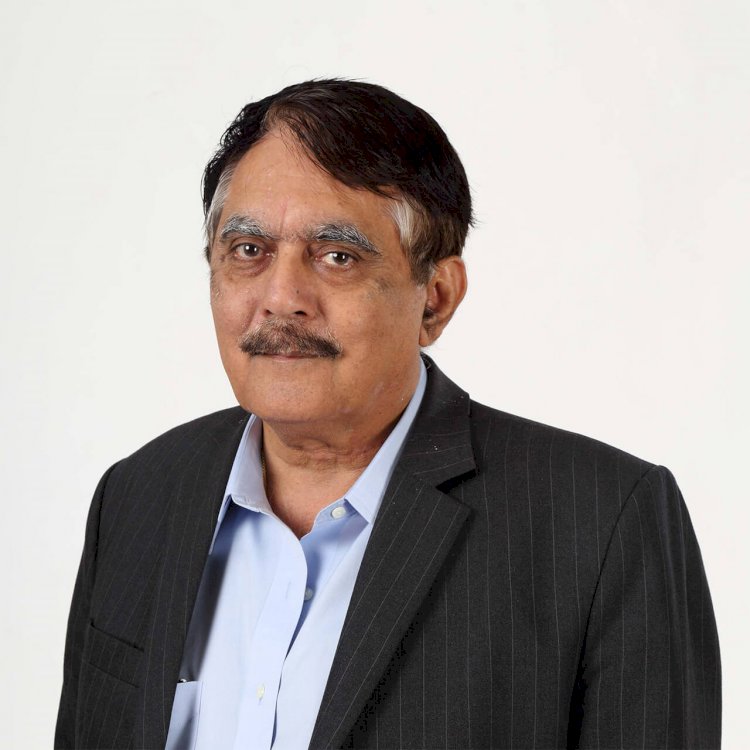
Taking over the IACS Chairmanship on 1 July 2019 is Mr Arun Sharma, Executive Chairman of the Indian Register of Shipping, said

‘I am honoured to be taking on the Chairmanship of IACS as it continues to evolve to meet the challenges posed by a rapidly changing maritime world.  IACS has in place a number of related initiatives and my focus will be on bringing those to fruition whilst also ensuring IACS continues to provide expert technical advice and guidance to the international shipping community driven by its mission of promoting the safety of life at sea and the protection of property and the environment.’

Addressing the IACS Council, Mr Sharma outlined how his Chairmanship will look to continuously improving the governance and leadership of the Association, investigating the introduction of data driven decision making and renewing commitment to Quality operations including the further development of IQARB.  Congratulating Mr Lee on the progress made during his time in office, Mr Sharma went on

I am grateful to Jeong-Kie for his personal commitment to IACS during his Chairmanship and for laying the groundwork on a number of key initiatives that will be my responsibility to bring to conclusion.  I am confident that with the support of all my Council colleagues, IACS will be able to demonstrate the proactive commitment necessary to ensure that the Association remains well positioned for the many challenges that face the maritime community.’

International Association of Classification Societies (IACS) makes a unique contribution to maritime safety and regulation through technical support, compliance verification and research and development. More than 90% of the world’s cargo carrying tonnage is covered by the classification design, construction and through-life compliance Rules and standards set by the twelve Member Societies of IACS. 

Big Data in Autonomous Shipping

0

The Club consulted owners, operators and manufacturers of autonomous vessels to ensure they had the right cover in place so that Members can focus on their operations knowing they are appropriately covered if anything should go wrong. Two Shipowners’ Club members demonstrated that autonomous shipping is steadily moving into the realms of commercial application.

Club’s initial UK based member, Hushcraft designed and built the SEA-KIT™ vessel (registered as USV Maxlimer, MMSI 232010486). SEA-KIT™ has been designed to be the first unmanned mother-ship for Remote vehicles such as Large AUVs or ROVs.

Video: Hushcraft

This unique ability allows for missions such as deep water bathymetry or mine clearance without placing any human personnel in harm's way and at significantly reduced costs compared to traditional manned vessels.

SEA-KIT's Long-Range and Long-Endurance capability means that extended missions can be undertaken in a solo capacity or as part of a larger group of manned or unmanned vessels. SEA-KIT™ is currently developing automatic AUV charging to allow multiple missions to be undertaken without human interaction. Data can be transmitted via Broadband link or via satellite following on-board processing and compression. Alternatively data can be stored on-board for retrieval at a later date if required.

SEA-KIT™ can also be fitted with various sensor for Bathymetry or other scanning. These include Multi-beam Echo Sounding equipment. Security & Surveillance Capability SEA-KIT™ can be configured to perform unmanned missions for:

• Fire-fighting

• Environmental Response

• EM Surveillance

• Visual Surveillance

• Compliance Monitoring

• Vessel Interdiction

The Long-Endurance of SEA-KIT™ allows for a vessel to be placed on station for an extended period of time and to be brought into action as circumstances require. As an unmanned asset, SEA-KIT™ can be placed into situations where a commander would hesitate to send a manned vessel. In the case of toxic events or other scenarios where there is a hazard to human heath and well-being, SEA-KIT™ can be utilised to gather information for situational awareness and decision making using either Visual, IR or other sensors or be used to act decisively at an early stage to limit an unfolding situation.

SEA-KIT recently completed an unmanned voyage from the UK to Belgium carrying a cargo of oysters. The vessel departed from West Mersea in Essex and arrived at Oostende port in Belgium on 7 May. It was welcomed by Belgian customs officers who took delivery of a box of oysters caught around Mersea Island. The voyage, which lasted 22 hours, represents the first commercial crossing of the North Sea by an autonomous vessel, and marks a significant breakthrough in unmanned ocean transit. Its success showcased un-crewed navigation capabilities through GPS and satellite communication, including marine traffic avoidance in what is one of the world’s busiest shipping routes.

The team of subsea engineering firm Soil Machine Dynamics Ltd and Newcastle University, named Team Tao, developed a cost-effective platform. This will enable rapid access to their ocean’s vital signs, using a CubeSat-like philosophy to change the way to collect and understand ocean data.

There are two main components in compact autonomous platform: The BEMs (Bathypelagic Excursion Module), a swarm of vertically swimming AUVs and the surface vessel, a 'vending machine' style autonomous surface catamaran that is responsible for the horizontal transit, data handling and comms. At the heart of the system is a swarm of subsea drones.
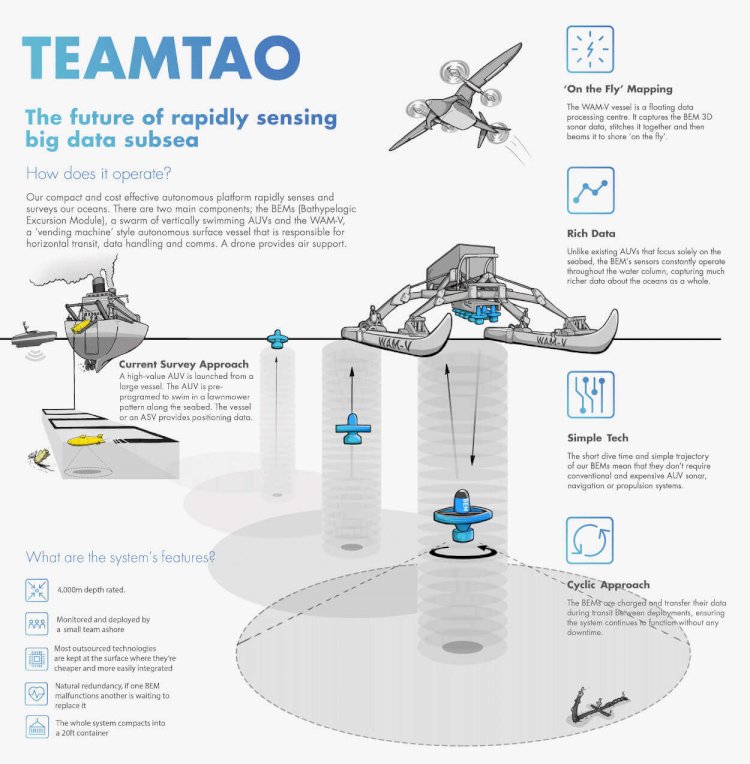
Photo: Team Tao

Combining expertise in subsea engineering, acoustics and material science, Team Tao testing and validating a step-change in AUV technologies to make deep sea data rapidly attainable and affordable.