8.6 C
New York
Home Blog Page 11

CSA Ocean Sciences wins metocean projects in South America and Pacific Ocean

0

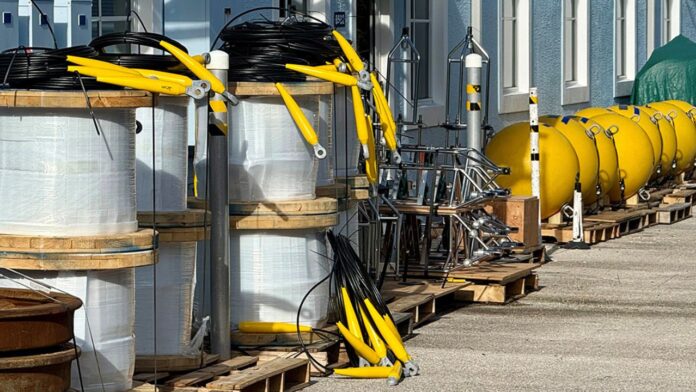
The projects, with concurrent deployments to depths of 6,000 meters in waters offshore East Africa, West Africa, South America, and the Pacific Ocean depths, will be supported by CSA’s latest additions to its expanding inventory of metocean systems, including newly acquired acoustic Doppler current profilers (ADCPs) and other new instruments for arrays.

Metocean platforms integrate real-time data acquisition from buoys, sensors, and satellite systems, providing unparalleled accuracy in measuring wind, wave, and current conditions. CSA’s comprehensive portfolio of monitoring technologies enables continuous monitoring of the key variables throughout the water column and can also be integrated with acoustic systems. In recent years, CSA has set a new benchmark in providing turnkey metocean solutions for developers from the offshore energy, subsea infrastructure, and marine mining industries operating in these ultra-deep waters.

“We are excited by these opportunities to further demonstrate CSA’s capacity to provide offshore developers with timely, cost-effective, and scientifically robust data to inform key offshore planning and management decisions,” said CSA CEO Kevin Peterson. “CSA has the long lead equipment available, as well as the operating experience and technical resources to develop custom metocean packages, mobilize rapidly, and deliver fully processed data and analysis on a global scale.”

CorPower Ocean leads €30m push to scale UK wave energy

0

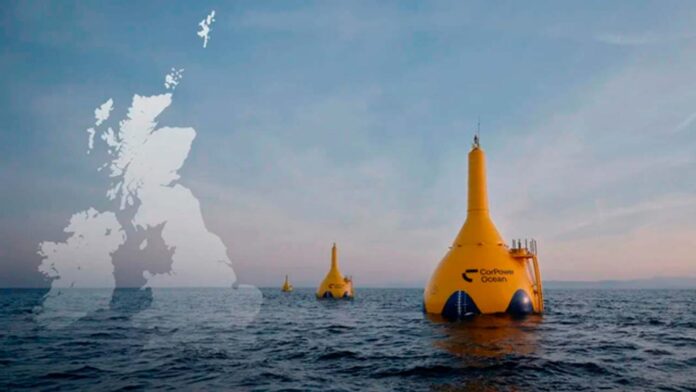
CorPower Ocean has been selected to lead the €30 million POWER-Farm EU Project, addressing the competitiveness and bankability of wave farms by validating the technology in conditions required for large-scale deployment in UK waters.

The initiative, partly funded by a €19 million grant from Horizon Europe, will underscore wave energy’s role as a mainstream renewable sector. With potential to supply up to 17% of electricity in key EU countries by 2050, the project also targets volume manufacturing across the EU.

The consortium includes EMEC (European Marine Energy Centre), The University of Edinburgh, Ocean Energy Europe, Renewable Risk Advisers and Kristinehamn Teknik & Service.

Together they will demonstrate the survivability, reliability and performance of wave energy systems at EMEC’s test site in Scotland. With the UK’s 25 GW practical wave deployment potential and Scotland’s globally recognised resource, POWER-Farm strengthens the UK’s position as a key market in CorPower Ocean’s global rollout plan. It also supports the development of local supply chains, high-value jobs and wider socio-economic benefits as the UK transitions toward a net-zero and more self-reliant energy system.

According to research from Supergen ORE Hub and the Policy and Innovation Group at the University of Edinburgh, wave energy could deliver over £30 billion in Gross Value Added (GVA) to the UK economy under a ‘high ambition’ scenario where the UK develops a strong, modernised domestic supply chain and leads in global deployments. Taken with tidal stream, which could contribute more than £20 billion, it could support over 80,000 jobs.

The project builds on CorPower Ocean’s innovative WEC (wave energy converter) technology currently deployed off the Atlantic coast of Portugal, while also placing strong emphasis on proving the scalability of a European, and particularly UK and Scottish, supply chain capable of supporting larger wave energy farms.

Anders Jansson, Head of business Development at CorPower Ocean, said:

“The POWER-Farm EU initiative arrives at a pivotal moment for the wave-energy sector, as the industry shifts from research and development to commercial deployments. With Europe investing to bring wave energy to farm-scale readiness, we urge the UK to match this ambition and unlock its vast wave-energy potential. The UK is uniquely positioned to become a global leader in this emerging frontier, establishing a major new sector driving economic growth and job creation. With the right support and a clear route to market, developers and investors will have the certainty they need to deliver the nation’s first commercial wave-energy arrays, while ensuring the UK can capitalize on this golden opportunity.”

Momentum continues to build across Europe, with the UK recently launching a Marine Energy Taskforce led by Energy Minister Michael Shanks and supported by the Crown Estate and Crown Estate Scotland. The Taskforce aims to unlock the UK’s wave and tidal potential through a strategic roadmap covering site development, financing, innovation and supply chain growth, laying important groundwork for a sector capable of delivering long-term societal value.

Wave energy’s consistent and complementary power profile helps stabilise output from solar and wind, enabling 24/7 clean power at lower system cost. Studies show that energy systems incorporating wave power require less than half the installed capacity, grid infrastructure and storage compared to systems relying solely on solar and wind.

With over 500 GW of accessible global wave potential, wave energy is positioned as a vital component of the future energy mix. For the UK and Scotland, this represents a major opportunity to lead a global sector while delivering long-term benefits to communities and the national energy system.

Equinor and Shell complete formation of Adura

0

Adura, jointly owned by Shell (50%) and Equinor (50%), combines decades of North Sea expertise into a joint venture that is positioned to deliver a more cost-competitive portfolio and maximize long-term value for UK assets.

Adura CEO Neil McCulloch, who brings more than 30 years’ experience in the energy sector, said: “It’s a rare privilege to be part of a company’s first chapter. A commitment to safety, a belief in the future of the North Sea, and the combined expertise from Equinor and Shell form the foundation of our exciting new company. I can’t wait to begin working with this exceptional team.”

Shell’s executive vice president for Conventional Oil & Gas, Rich Howe said: “Forming the largest independent producer together with Equinor is an historic moment for our business and the UK energy industry. With an exceptional asset base and industry leading expertise, Adura is well-positioned to lead in this mature basin.”

Equinor’s executive vice president for Exploration and Production International, Philippe Mathieu, said: “Adura represents a new chapter in the UK North Sea, bringing together two strong portfolios and decades of experience. With the focus, scale and operational flexibility needed to succeed, the company is positioned for long-term impact. As owners, we are confident that Adura will generate long-term value and reinforce the UK North Sea’s role in meeting the country’s energy needs.”

Adura assumes Equinor and Shell’s interests in 12 producing oil and gas assets and projects in execution, including: Mariner, Rosebank, Buzzard, Shearwater, Penguins, Gannet, Nelson, Pierce, Jackdaw, Victory, Clair and Schiehallion. It also holds a number of exploration licenses. The company is headquartered in Aberdeen. Staff from both Shell and Equinor have transferred into Adura, ensuring that industry-leading expertise is retained.

Washington State Ferries selects ABB to power their first hybrid-electric newbuild vessels

0

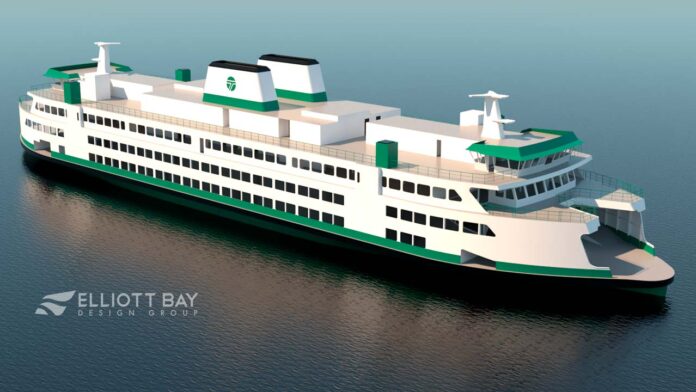
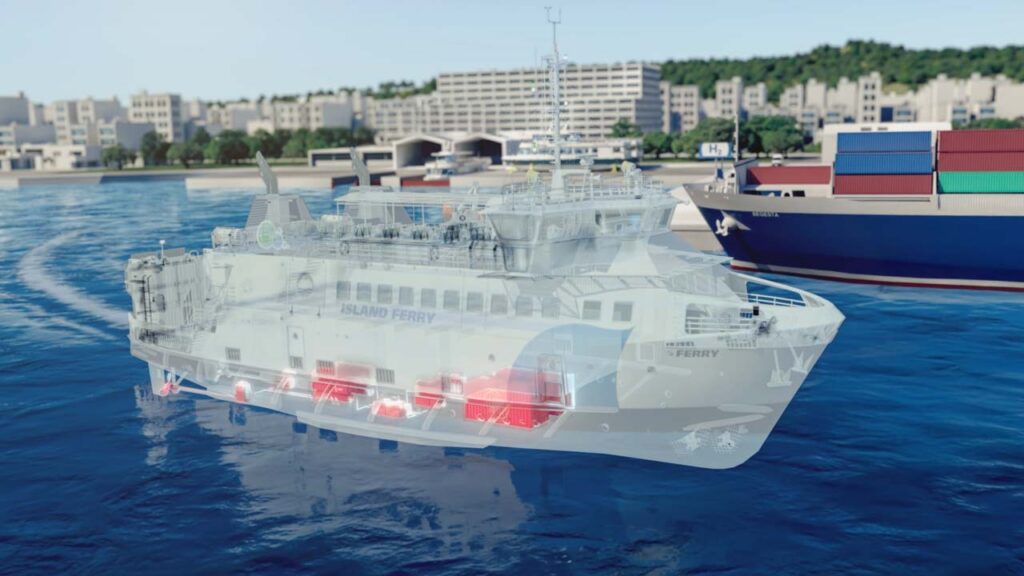
ABB has secured an order with Washington State Ferries (WSF), the United States’ largest ferry operator, to supply and integrate hybrid-electric propulsion systems for two hybrid-electric 160-auto ferries that initiate the owner’s ambitious System Electrification Program.

With the first two ships scheduled for delivery from Eastern Shipbuilding Group, one apiece in 2030 and 2031, the contract also includes an option for a third ferry. WSF has previously announced plans to build up to 16 ships by the end of 2040, as part of a ferry electrification program targeting lower emissions.

ABB will supply and integrate end-to-end systems including power distribution, advanced energy management, and marine automation for ferries that will include the largest ship batteries ever installed in the US. Based on ABB Onboard DC Grid™ and PEMS™ power and energy management system, the hybrid-electric propulsion systems will achieve substantially lower fuel consumption and operating costs than existing WSF vessels serving the same routes. Each ship’s 13.2-megawatt-hour energy storage systems will also enable all-electric, emissions-free operations on short routes and in port.

The order builds on ABB’s early-stage involvement as the propulsion single source vendor in the WSF project, announced in 2024, with the contract amended to reflect the confirmed initial shipbuilding contract for two ships plus one option.

“The Washington State Ferries System Electrification Program is the largest of its kind in the United States, and ABB’s continued involvement, secured through this new order, helps mitigate risk and ensure on-time vessel delivery,” said David Sowers, System Electrification Program Administrator for Washington State Ferries. “ABB’s state-of-the-art hybrid-electric propulsion systems demonstrate the company’s proven expertise in complex system integration. These systems will substantially reduce emissions and enhance operational reliability across the WSF fleet, advancing our long-term modernization objectives and helping people and businesses thrive throughout the Puget Sound.”

The ABB systems on board will also reduce vessel noise and vibrations, increasing comfort for passengers and crew while minimizing impact to local wildlife and coastal communities.

“This contract marks another important step in our collaboration with Washington State Ferries,” said Bruce Strupp, Vice President Americas, ABB’s Marine & Ports division. “It reflects the trust placed in ABB’s hybrid-electric propulsion technology and our ability to deliver reliable, scalable solutions that support WSF’s long-term sustainability goals. We’re proud to continue helping WSF modernize its fleet to maintain reliable service and reduce environmental impact.”

SSU strikes at Russian oil production platforms in the Caspian Sea for third time in a week

0

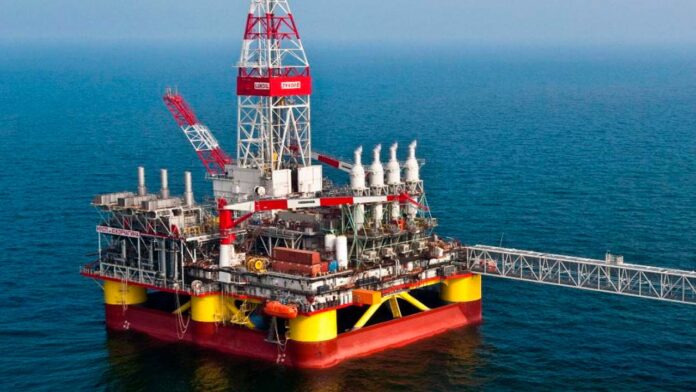
For the third time in a week, long-range drones of the SSU’s Alpha Special Operations Center have hit oil production platforms of Lukoil-Nizhnevolzhskneft operating in the Caspian Sea.

This was reported by the Hromadske media outlet, citing its own sources in the SSU.

According to the source, a platform at the Korchagin oil and gas condensate field was hit. The attack damaged critical equipment at the facility, and production processes stopped.

The SSU continues to work actively to reduce the flow of petrodollars to the Russian budget, and, accordingly, the ability to finance the war against Ukraine. No Russian facility working for the war is safe, regardless of its location,” the source said.

Based on reports from Russian monitoring channels, the DroneBomber channel found that around 11 a.m. on December 15, Russians warned of the approach of Ukrainian UAVs to the Krasnodar Territory with a vector of movement deep into the territory.

The Korchagin field, discovered in 2000, was the first field launched by Lukoil in the Caspian Sea. Production at the field began in 2010.

The field’s reserves by category are estimated at 77.8 million tons of oil. The maximum level of oil and gas condensate production is 2.3 million tons per year, and gas production is 1.2 billion cubic meters per year.

The previous attacks on Russian oil and gas infrastructure in the Caspian Sea took place on December 11 and 12, when oil production platforms at the Filanovsky field were also attacked. In addition, on December 12, a platform at the Yuri Korchagin field was attacked for the first time.

In addition, on December 12, the Special Operations Forces of Ukraine, in cooperation with the Russian resistance movement Black Spark, hit two Russian vessels in the Caspian Sea that were transporting weapons from Iran.

It is stated that as a result of this successful operation, Russian ships were detected and destroyed off the coast of the Republic of Kalmykia.

“Among the affected vessels are the Composer Rachmaninoff and Askar-Saryzha, which are used by the Russian Federation for military purposes and are under US sanctions for their participation in the supply of military goods between Iran and Russia,” the Special Operations Forces said.

These are asymmetric actions of the Ukrainian Defense Forces to undermine the offensive capabilities of the Russian occupation army.

ENEOS, NYK, ABS and SEACOR begin U.S. Gulf Coast methanol bunkering study

0

American Bureau of Shipping, ENEOS, Nippon Yusen Kabushiki Kaisha, and SEACOR Holdings Inc. have begun a joint study to develop a methanol bunkering and supply chain network along the U.S. Gulf Coast.

The four parties aim to establish the first commercial-scale ship-to-ship methanol bunkering operations in the U.S. In the global maritime industry, the International Maritime Organization (IMO) has set a target of net-zero greenhouse gas (GHG) emissions by 2050, and practical solutions are increasingly required. Low-carbon methanol produced from renewable or bio-based sources is gaining attention as a next-generation marine fuel due to its easy handling as a liquid at ambient temperature and pressure, as well as its potential to reduce GHG emissions.

ENEOS will explore the procurement and supply of low-carbon methanol, including green methanol to be produced by C2X, a company in which ENEOS holds an equity stake, through the Beaver Lake Renewable Energy project in Louisiana.

NYK Line will leverage its experience in developing LNG bunkering infrastructure and provide technical expertise for preparing methanol bunkering vessels.

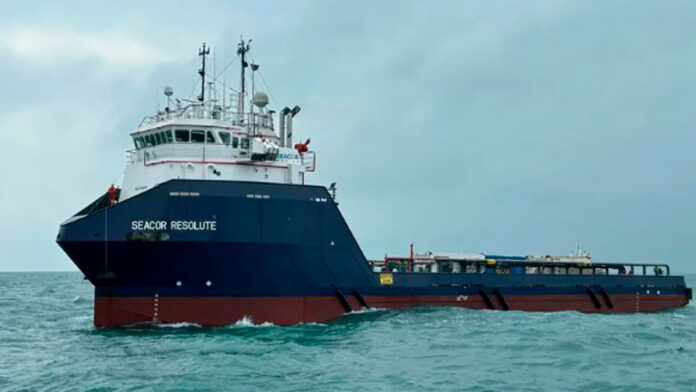
SEACOR will contribute its expertise as a long-term Jones Act qualified owner and operator of diversified assets across the U.S. coastwise and inland waterways, in addition to its design, engineering and construction capabilities.

ABS will provide class and regulatory support needed to establish methanol bunkering operations in the U.S.

Odfjell launches the first operational green corridor between Brazil and Europe

0

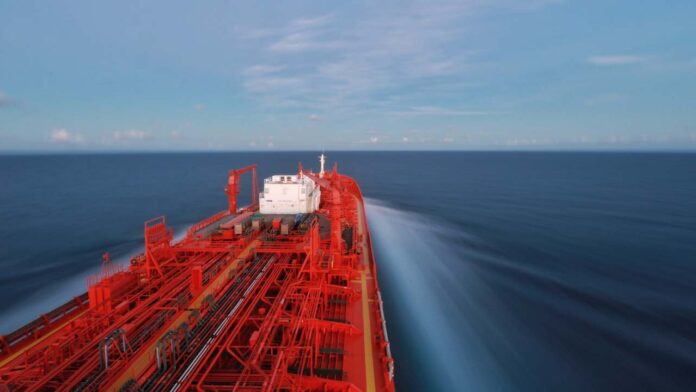
Odfjell’s chemical tankers are now sailing the 5,000-nautical-mile route between Brazil and Europe with substantially lower emissions.

Odfjell has established an offtake of B24 sustainable biofuel in Rio Grande to secure long-term fuel availability. The Ports of Antwerp, Rotterdam and Rio Grande are working together with Odfjell to advance the green corridor through increased efficiency and optimized port-stay processes.

“We do this to demonstrate that certified fuel, technology, and infrastructure are already available,” says CEO Harald Fotland. “Through this, we show that sustainable biofuel is a viable option for deep-sea shipping today.”

Fotland emphasizes that this is not a one-off demonstration but a long-term commitment.

“With this corridor, we integrate greener fuel as a new pillar in our decarbonization strategy. We activate the entire value chain to find ways to decarbonize our operations, and we are encouraged that key stakeholders are joining us in this groundbreaking initiative.”

Norway-headquartered Odfjell has taken independent action—self-funding the project and moving ahead without subsidies.

“By covering the additional cost ourselves, we eliminate the financial element and move directly into operational implementation. It may not be a perfect corridor yet, but a solid start. Its success depends on collaboration across the value chain, and we are committed to developing it further together with relevant stakeholders,” Fotland says.

This includes collaboration with ports to increase efficiency, with customers to maximize capacity utilization, and with fuel providers to increase the influx of green fuels.

In Brazil, the currently available sustainable biofuel quality is the so-called certified B24 – a blend of 24% renewable biodiesel derived from waste and 76% VLSFO.

Introducing biofuel marks another step in Odfjell’s decade-long work to reduce emissions. The company has already improved its carbon intensity by more than 54% compared to the 2008 benchmark, achieved through a wide range of technical and operational measures.

The initiative aligns with IMO’s 2030 targets and the EU’s Fit for 55 ambitions, and builds on the 2024 Norway-Brazil MoU to establish a green, transatlantic shipping corridor.

“We hope to inspire broader industry action and welcome continued collaboration with regulators, ports, producers, other ship operators, and customers to accelerate the transition to low-emission maritime transport,” Fotland ends.

Stena Surprise officially joins the Swedish Registry

0

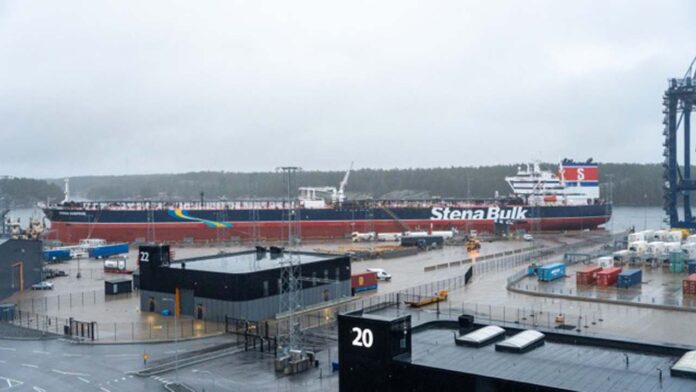
Leading tanker shipping company Stena Bulk has announced that it has officially reflagged its Suezmax tanker Stena Surprise under the Swedish flag, marking a significant milestone for Swedish shipping.

A ceremony was held on board the vessel in Nynäshamn, Sweden. Andreas Carlson, Minister for Infrastructure and Housing, attended to witness the hoisting of the Swedish flag.

Built in 2012, Stena Surprise is the latest Suezmax tanker to join the Swedish Shipping Register, following Stena Sunrise and Stena Suede in flying the Swedish colours. The latest transfer is part of an ongoing strategic initiative to reflag some of Stena Bulk’s vessels in Sweden.

Choosing to flag the vessels in Sweden highlights the strategic importance of improving the country’s global shipping footprint, reinforces the nation’s standing in international maritime trade, and supports a competitive and sustainable Swedish fleet.

Based on available records and internal knowledge, these Suezmax-class vessels are the first of their type to be flagged in Sweden and among only a handful of large crude carriers ever to do so.

Erik Hånell, President and CEO of Stena Bulk, said: “The reflagging of Stena Surprise is a proud moment for Stena Bulk, and it is a particular honour to have been able to do this in a Swedish port.

“This initiative is a testament to the close collaboration we have with the Swedish authorities and ship registry. Welcoming this vessel under our national flag reinforces our commitment to strengthening Sweden’s maritime presence.”

ABB and HDF Energy to develop high-power fuel cell unit for large seagoing ships

0

ABB and HDF Energy have signed a joint-development agreement (JDA) to develop a high-power fuel cell unit for marine applications.

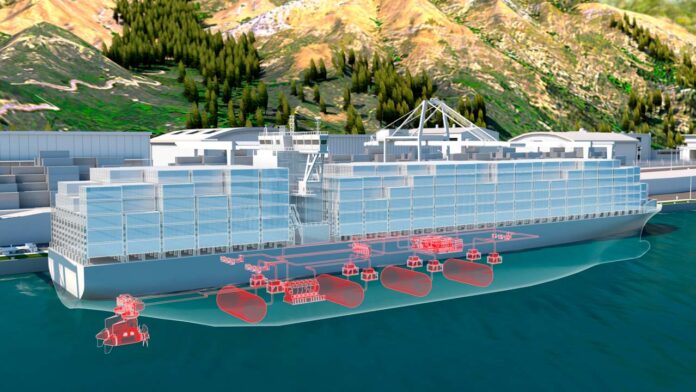
Enabling megawatt-scale hydrogen fuel cells, the project anticipates installations on board several vessel types, even large seagoing vessels such as container feeder ships and liquefied hydrogen carriers. The agreement builds on an earlier Memorandum of Understanding (MoU) signed between ABB and HDF Energy in 2020, envisaging the collaboration1.

Foreseeing pilot installations in 2028–2029 and serial production from 2030, the agreement initiates a significant step forward for developing fuel cells as a commercially viable option to support maritime decarbonization.

The collaboration combines ABB’s system integration expertise with HDF’s unique capabilities in designing and producing large fuel cell units. France-based HDF will provide the fuel cell technology, while ABB will supply power converters, power management, and electrical and control integration, with the two parties collaborating on specifications, conceptual design, and commercial opportunities.

The high-power fuel cell unit will enable reducing maritime emissions by facilitating the construction of large hydrogen-electric vessels and allowing diesel auxiliary gensets to be replaced with hydrogen fuel cell units on board existing ships. Where the fuel cells utilize a carbon-neutral fuel such as green hydrogen, the decarbonization impact will be particularly significant.

ABB’s Onboard DC Grid™ power system will ensure the unit can be integrated seamlessly with other power sources and subsystems such as battery energy storage, where the fuel cells will maximize the operational range and flexibility of the hybrid power system. The unit also has the potential to accelerate marine electrification as an auxiliary power source for shore-power and -charging infrastructure in ports, supporting peak power demands when grid capacity is limited.

“We at HDF are very excited to combine our fuel cell knowledge with ABB’s marine systems integration expertise to provide a practical means of decarbonizing the maritime industry,” said Hanane El Hamraoui, CEO of HDF Energy.

“ABB and HDF have been collaborating for several years, making significant progress toward a viable solution for decarbonizing larger vessels,” said Rune Braastad, President, ABB’s Marine & Ports division. “We at ABB remain fully committed to developing technologies that accelerate maritime decarbonization, and this new agreement with HDF reflects another important step forward.”

Ukrainian underwater drones blow up Russian submarine

0

Ukrainian attack drones have hit a Russian submarine in the port of Novorossiysk.

The Security Service of Ukraine said that they used Sub Sea Baby underwater drones for this purpose.

The submarine was a 636.3 Varshavyanka class submarine (Kilo in NATO classification).

The submarine was armed with four Kalibr cruise missile launchers.

The drone struck near the stern of the submarine, where the propeller, vertical rudder, aft horizontal rudder, and the diving planes are located.

It was a joint operation of the SSU’s 13th Main Directorate of the Military Counterintelligence Department and the Ukrainian Navy. The blown-up submarine was forced to stay in the port of Novorossiysk because of the special operations by the Sea Baby surface drones that drove Russian ships and submarines out of the Sevastopol Bay in temporarily occupied Crimea.

Ukraine has been developing various underwater attack drones for a long time. No official information has been disclosed about Sub Sea Baby.

However, it is known that at least three underwater drones were developed in Ukraine: TLK 1000; TLK 400; TLK 150.

The largest , TLK 1000, depending on the task, can be from 4 to 12 meters long and carry a warhead of up to 5,000 kg.

It is not unlikely that Ukrainian underwater drones were also used to detonate the supports of the Crimean bridge in June this year.

Back then, the underwater supports of the bridge were severely damaged at the seabed level, with reports stating that “1100 kg of TNT equivalent explosives contributed to this.”

Source: militarnyi