
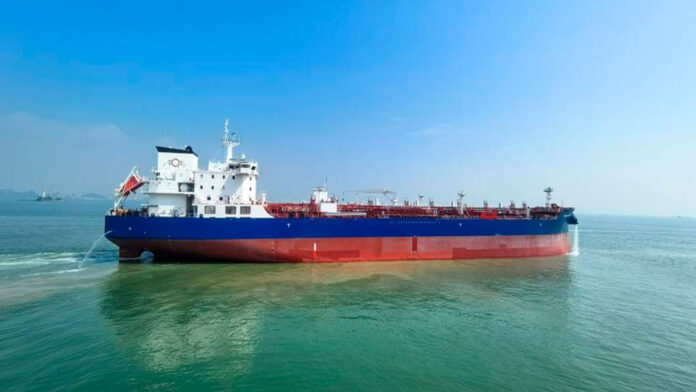
Bureau Veritas Marine & Offshore (BV) welcomes the delivery of the fourth and final dual-fuel methanol chemical IMO II medium-range (MR) tanker for Hafnia and Socatra, completing the ECOMAR four-vessel newbuilding programme constructed at Guangzhou Shipyard International (GSI) under Bureau Veritas class.
The first three vessels in the series were delivered during 2025. The conclusion of the four 49,800 deadweight methanol dual-fuel tankers represents a key milestone as the first methanol dual-fuel tanker series for Hafnia and Socatra, reflecting a shared commitment with BV to supporting the safe adoption of lower-carbon fuel solutions in commercial shipping.
Designed to operate on both conventional marine fuels and methanol, the vessels offer enhanced operational flexibility while supporting the maritime industry’s transition toward lower-carbon energy solutions. As green methanol availability increases, methanol dual-fuel capability provides the potential to significantly reduce greenhouse gas emissions, alongside substantial reductions in nitrogen oxides (NOx), sulfur oxides (SOx), and particulate matter.
In addition to alternative fuel capability, the vessels are of the latest energy efficiency design by Guangzhou Shipyard International (GSI) and have been developed with a future-ready approach to energy efficiency and decarbonization. Their design includes shaft generators and provisions for further energy-saving technologies, including structural arrangements to accommodate wind-assisted propulsion systems in the future. The vessels are also prepared for future shore power connection, with dedicated arrangements for high-voltage shore power infrastructure, supporting further emissions reductions as port infrastructure and regulatory frameworks evolve.
Alex Gregg-Smith, President, Marine & Offshore at Bureau Veritas, said:
“The delivery of this fourth methanol dual-fuel tanker completes a landmark first series for Bureau Veritas, Hafnia, Socatra, and Guangzhou Shipyard International. Methanol will play an important role in the maritime energy transition, and we are proud to actively support the safe adoption of alternative fuels through classification services, technical expertise, and close collaboration with shipyards, shipowners, and technology providers.”


