7.6 C
New York
Home Blog Page 976

Joint group to provide a new cyber security solution for marine operations

0

ABS Group of Companies, Inc. (ABS Group) and Atos, a global leader in digital transformation, have announced plans to provide the industry's first full-service Information Technology (IT) and Operational Technology (OT) cyber security solution to reduce cyber risk across the global marine and offshore energy supply chain.

This comprehensive solution supports implementing cyber security at the earliest stages of asset design and development, making cyber risk management a consistent and integral part of operations from the beginning.

Ian Bramson, Global Head of Cyber Security at ABS Group, says:

"Cyber security is the new frontier in marine and offshore safety. As these assets become more digital, the industry must be ready to deal with a broader range of threats. Atos is a digital transformation leader in cloud-based cyber security and high-performance computing. Working together, we are able to deliver a converged IT/OT solution for safer, more secure assets and operations."

As owners and operators look to reap the benefits of increased automation and digitalization, they are also more exposed to cyber threats that could have serious consequence to operations and the safety of people and the environment. This drives the need for better control, visibility and management of cyber risks in maritime operations.

Jerome Sandrini, Senior Vice President and Head of Big Data and Cybersecurity, Atos North America, says:

"Historically, OT and IT acted as stand-alone systems in the maritime industry. Uniting Atos' established cyber security expertise with ABS' marine and offshore operational expertise provides a new industry solution in securing both IT and OT assets, devices and networks. We look forward to working with ABS Group to provide converged cyber security management that combines the physical OT systems with IT's real-time digital operations to protect personnel, company, cargo and the environment from the evolving threat landscape and prevent unwanted incidents from occurring."

ABS Group's portfolio of cyber security solutions provides risk based capabilities at every stage of cyber defense and includes the proprietary Cyber Risk Reduction and Cyber Risk Rating (CybeR2) program to help clients assess, understand and control their cyber risk. The CybeR2 Program builds on the ABS FCI Cyber Risk™ method developed with the Maritime Security Center, a U.S. Department of Homeland Security Center of Excellence.

Atos is the world's third largest managed security services provider in the world with deep experience in IT and the new cyber security challenges presented by IT/OT convergence as well as IoT.
 

VIDEO: Mammoet completes phase 1 of terminal expansion in Veracruz

0

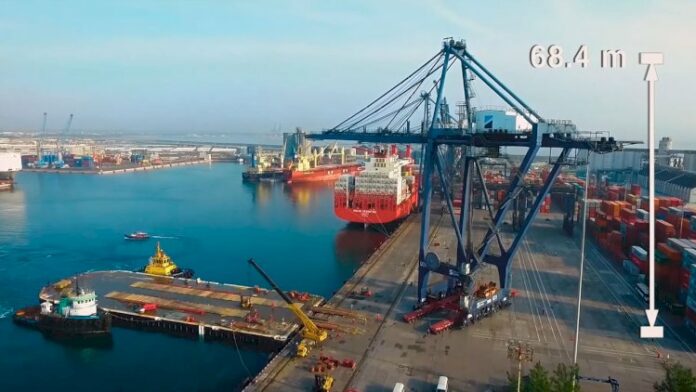
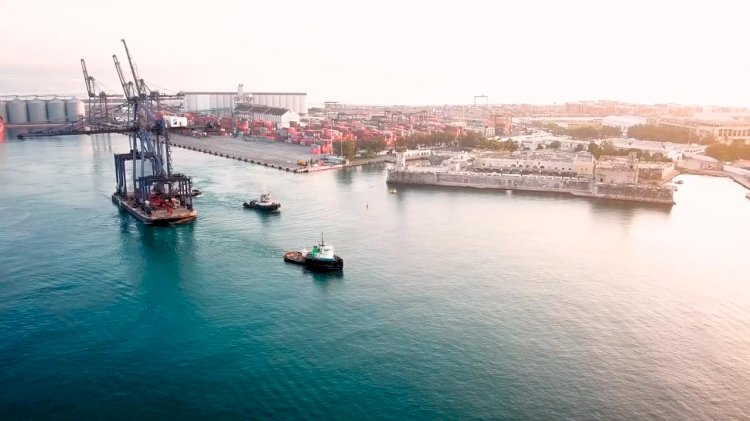
Mammoet crews in Veracruz, Mexico recently relocated several shipping container cranes for client Hutchison Ports ICAVE as part of a planned port expansion.

For phase one of the project, Mammoet transported three Ship-to-Shore (STS) cranes and 18 Rubber-Tired Gantry cranes (RTGs). The heaviest STS crane, weighing 1,365-ton, was loaded onto two trains of 28 axle-lines of SPMT, rolled on to a waiting barge and sailed a total of four miles from the old port location to the new location where the expansion is taking place.

Eight of the RTGs were moved in the same way, with the heaviest RTG weighing in at 197 tons. Once at the new location, the cranes were offloaded and ready for use. The remaining STS cranes and RTG cranes will be transported in December.

New LNG floating power plant by Kawasaki Heavy Industries

0

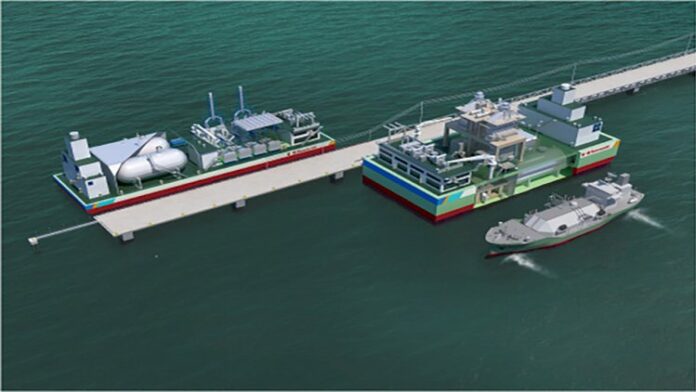
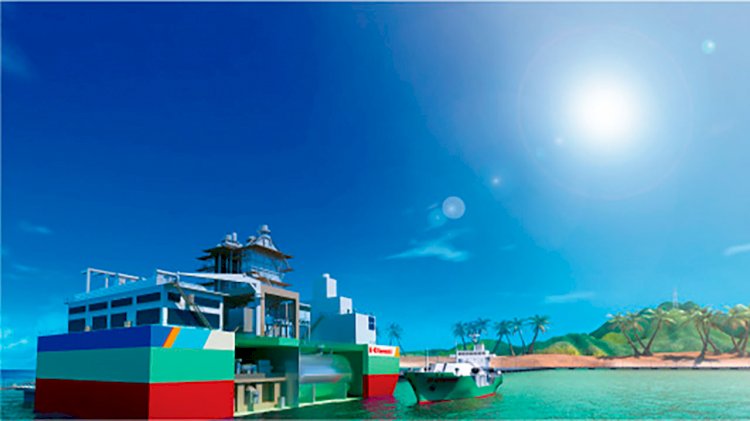
Kawasaki Heavy Industries, Ltd. has obtained Approval in Principle (AiP) for its liquefied natural gas (LNG) floating power plant equipped with its own gas turbine (combined cycle power plant (CCPP) model). This approval was obtained from world-leading ship classification organization DNV GL  based on its latest “Gas Power Plant” rules, which were introduced in 2018.

An LNG floating power plant is an integrated system in which LNG fuel tanks, LNG regasification unit, power generation equipment and switchyard are all outfitted on the hull. It is towed on the sea or river and then moored at the installation site, where it generates power on the hull that is then supplied to the onshore power grid.

Demand for this type of power plant is expected to be strong in countries where demand for electricity is rapidly increasing, such as in Southeast Asia, especially on islands or in locations where it is difficult to secure stable power sources, and also in areas with geographical problems such as lack of land for constructing onshore power plants.

LNG, which is the fuel used for power generation, has a cost advantage over heavy oil and emits less greenhouse gases than coal and heavy oil. As an environmentally friendly fuel, the scale of supply and demand as well as applications of LNG are expected to expand.

With this AiP, following a previous AiP obtained in May of this year for an LNG floating power plant equipped with Kawasaki's own gas engine (gas engine model), Kawasaki's lineup now consists of a CCPP model and a gas engine model, thus enabling the company to better meet a wider range of customer needs.

The main features of the CCPP model are as follows:

  • The gas turbine, heat recovery steam generator (HRSG), steam turbine, LNG fuel tank and other main components can be manufactured in Kawasaki's factories, thus enabling reliable service in terms of delivery, product quality, and maintenance and other after-sales services.
  • It comes equipped with Kawasaki's own gas turbines (simple cycle: 40.3%; combined cycle: 54.4%) featuring the world's highest level in class of power generation efficiency. Each gas turbine uses a self-developed dry low emission (DLE) combustor to achieve the world's lowest level of nitrogen oxide (NOx) emission, 15 ppm or less (at 15% O2), thus reducing the system's environmental load. In addition, borescope inspections and a module exchange method enable greater ease of maintenance, and longer overhaul intervals reduce overall life cycle costs.
  • A durable, heat-resistant aluminum tank with the same specifications as for small domestic LNG carriers/LNG bunkering vessels is placed inside the hull, with gas turbines installed in its upper portion. Furthermore, vertical HRSGs are installed on the upper side of gas turbines, thus reducing equipment installation footprints and enabling a smaller hull size.
  • The configuration of multiple shafts (two gas turbines, two HRSGs, and one steam turbine) enables compatibility with a wide range of loads and provides redundancy for main components.

Since constructing Asia’s first LNG carrier in 1981, Kawasaki has built over 40 LNG-related vessels, designing and manufacturing a wide range of LNG fuel vessels, LNG bunkering vessel and others. The development of this LNG floating power plant achieves the dynamic/static inclination countermeasures, which are indispensable in a floating power plant, and compact layout design by incorporating the LNG carrier and hull design technologies of the Kawasaki Ship & Offshore Structure Company along with the power plant technologies of the Kawasaki Energy System & Plant Engineering Company.

Taking advantage of synergies between these LNG and energy-related technologies, Kawasaki will actively market its energy-related equipment.


Marlink and Intelsat expand connectivity services for maritime sector

0

Extension of successful, long-term partnership ensures availability of reliable, high-speed broadband connectivity to support ship operations and crew needs.

Marlink and Intelsat have agreed to a multi-year renewal and expansion of their partnership to provide broadband services to maritime vessels around the world. The multi-year agreement will deliver additional throughput to vessels via multiple layers of space-based coverage, ensuring that ship owners and operators have the flexibility and access to reliable, high-quality, always-on connectivity. 

Initiated in 2014, the partnership between Marlink and Intelsat enabled Marlink to enhance its extensive portfolio of maritime VSAT services. It also unlocked applications that improve operational efficiencies for ship owners and operators across all maritime segments, including the oil/offshore, transportation, cruise and ferry, and fisheries sectors.

Under this extension, Marlink’s customers will see even greater benefits on board. The flexibility, reliability and reach provided by Intelsat’s global network of wide beam and high-throughput Intelsat EpicNG satellites provide unprecedented high-speed connectivity to maritime vessels, enabling the delivery of a diverse range of value-added services and applications such as asset tracking and improved cyber security that supports their current and future connectivity needs.

Samer Halawi, Intelsat’s Executive Vice President, Chief Commercial Officer, said:

"Our partnership is a great example of how pairing Intelsat’s robust, global communications infrastructure with Marlink’s diverse portfolio of communications solutions results in the ultimate connectivity experience at sea. With Intelsat’s global connectivity, Marlink is delivering the services that are most in demand by ship owners and operators today. The coverage and flexibility provided by Intelsat’s space-based and terrestrial network allow Marlink to scale and meet their customers’ increasing demands and changing requirements."

Erik Ceuppens, Chief Executive Officer, Marlink Group, said:

"The demand for dependable, high-quality VSAT connectivity in the maritime sector has increased significantly in recent years. Together, Marlink and Intelsat have matched this escalation every step of the way, constantly working to drive improvements in service efficiency and resilience for our customer base. Marlink is now the world’s largest Maritime VSAT Satellite Service Provider both in revenue and number of vessels, which is driving Marlink’s desire to secure long-term partnerships to future-proof our connectivity services."

BMT designed a new catamaran Ro-Pax ferry for Pentland Ferries

0

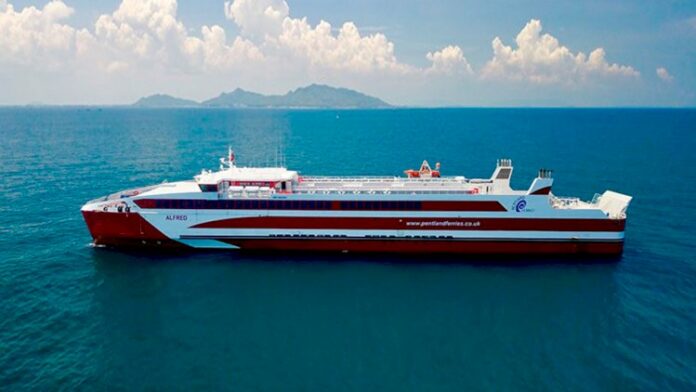
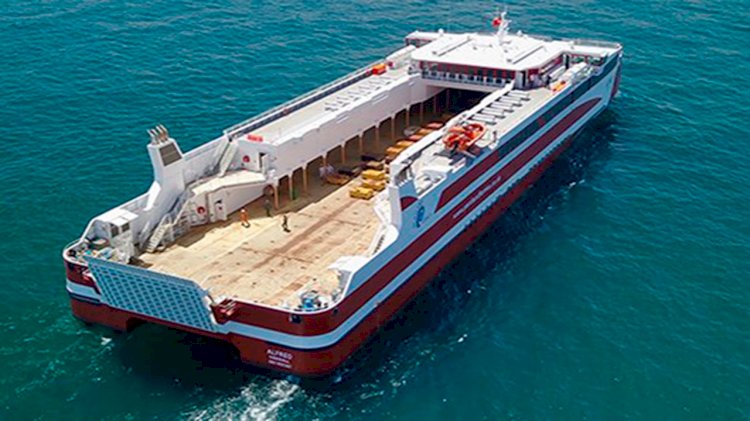
BMT Specialised Ship Design has recently designed an 85m catamaran vehicle-passenger ferry built by Strategic Marine Vietnam, for family-owned Scottish ferry operator Pentland Ferries.

The vessel is the latest in a series of collaborations between Strategic Marine and BMT, which now includes a variety of ferries and the extensive portfolio of windfarm support vessels, with the partnership continuing to expand. The MV Alfred, delivered on Thursday 29th August, was named after the father of Andrew Banks, the owner and managing director of Pentland Ferries.

John Bonafoux, Business Development Director of Specialised Ship Design at BMT, said:

“I am pleased to announce the delivery of our new 85-meter catamaran Ro-Pax ferry that was ordered by Pentland Ferries and, I would like to welcome them to the large and growing family of BMT-designed vessels. This new design adds further depth to our diversified fleet portfolio where we are currently receiving strong interest from clients around the world due to the high efficiency of these purpose-built vessel design-solutions.”

Designed by Southampton-based BMT, construction began in mid-2017 at Strategic Marine’s Vung Tau facility in Vietnam. Launched in January 2019, with sea trials over the summer, the vessel has now completed the long voyage from Vietnam and arrived at her home port in the Orkney Islands last week.

MV Alfred will operate in the rough waters of the Pentland Firth, between Gills Bay on the Scottish mainland and St Margaret’s Hope, Orkney, with a transit time of around one hour. Entry into service is planned for later this year and, the vessel will significantly expand the operator’s capacity on the route, carrying up to 430 passengers and 98 cars, or 12 lorries with 54 cars.
Powered by four Yanmar 6EY17W engines and quad-screw propulsion, the low-emissions vessel is quiet and efficient, achieving a service speed of 16 knots. With a hull form specifically designed for the area of operation, the new vessel ensures a comfortable transit for those onboard, and maximum operability for the vessel’s owners.


Tidal energy: Minesto receives approval for EU-funded project

0

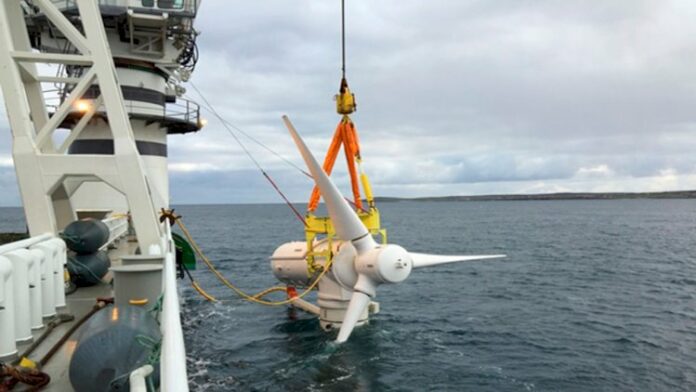
Leading marine energy developer Minesto has received approval for an EU-funded project aiming at installing the company’s unique renewable energy technology at the grid-connected Paimpol-Bréhat test site in France, operated by the French electric utility company EDF with the support of the Brittany Region.

Minesto, as part of a wider EU-funded project called TIGER, will utilise a grant of approximately €2.4 million to manufacture, install and operate Minesto’s marine energy converter DG100 at a grid-connected site off Brittany operated by the electric utility company EDF.

Minesto’s CEO Dr Martin Edlund commented:

“The delivery of this project is in line with our product commercialisation roadmap. It will position Minesto in continental Europe and strengthen our relationship with one of the world’s largest power companies. It will also demonstrate Minesto’s Deep Green technology off the European Atlantic coastline, which is a substantial tidal resource neighbouring many countries, all with the common need to make the transition to renewable energy systems.”

The Tidal Stream Industry Energiser Project, known as TIGER, is an ambitious €46.8m project, of which €28m comes from the European Regional Development Fund via the Interreg France (Channel) England Programme.

The TIGER project has been developed to accelerate the deployment of tidal stream energy technology in France and the UK, bringing together 19 partners from industry and academia. This will be the first time that such a significant number of influential developers and stakeholders has been brought together in a single project to deliver a range of outputs that will support the tidal energy industry’s future growth.

Samskip to connect Portugal and the UK direct

0

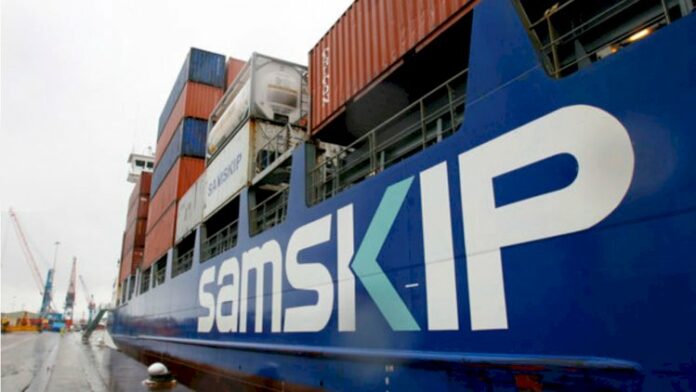
Samskip has launched a new, direct weekly service connecting Portugal and the UK, introducing its own vessel to sustain links between Tilbury, Lisbon and Leixões and its multimodal hub port of Rotterdam.The Netherlands-based group introduced a 1,000TEU container ship on charter from November 1. It will sustain a UK-Portugal transit times of five days, while continuing to offer four-times weekly services from Rotterdam to Leixões and weekly to Lisbon via space booked with other carriers.

The upgrade will allow Samskip to grow its Portugal-UK volumes by 30-40%, according to Lisa Westerhuis, Samskip Trade Manager Iberia.

Westerhuis said:

“We have been building our multimodal presence in Portugal for over a decade through shortsea, rail and last mile road services. Now, Samskip is responding to growing UK-Portugal demand with its own ship: when new capacity is required, we seek solutions where reliability and efficiency is in our own hands.”

Luis Paz da Silva, International Commercial Managing Director of Noatum Maritime Services, Samskip’s agency in Portugal, said 45ft length containers were proving key in persuading Portuguese importers and exporters to switch away from road haulage:

“The 45-footer is especially competitive with trailers at distances of up to 200km from the ports, including cross-border.”

He estimated that the 45ft market in Portugal today is four times what it was 10 years ago.

The last decade has seen Samskip build strong relations with Portuguese exporters to the UK, with food and drinks businesses a specific target for the new direct service. Southbound, the European Samskip multimodal network that feeds shortsea links out of Rotterdam was being boosted by Norwegian exports in transit after the integration of the company’s 2017 acquisition Nor Lines, said Paz da Silva: 

“People are paying attention to shortsea for door-to-door services as never before and the timing is right to introduce a higher quality direct shortsea link. We also envisage this route as a platform for value added services, such as cross-docking and LCL, and a new opportunity to work hand in hand with Deepsea carriers.”

Westerhuis added that, as well as aligning with EU transport policy aspirations, the shortsea option is bringing significant CO2 emissions savings over its road competitor.

As the service launch is coinciding with continuing doubts over full Brexit outcomes, she emphasized that Samskip had added staff to customer services in Portugal and to its UK customs team, while its customs clearance expertise already covers key markets external to the EU, such as Norway.

iXblue supplies Inertial Navigation Systems to SEA’s research vessels

0

iXblue will supply Octans Fiber-Optic gyrocompass to both tall ship research vessels operated by the U.S.-based Sea Education Association (SEA).

SEA is an internationally recognized leader in undergraduate ocean education. For nearly 50 years and more than one million nautical miles sailed, they have educated students about the world’s oceans through their Boston University accredited study abroad program, SEA Semester. SEA is based on Cape Cod in the oceanographic research community of Woods Hole, Massachusetts and has two research vessels: the SSV Corwith Cramer, operating in the Atlantic Ocean, and the SSV Robert C. Seamans, operating in the Pacific. In 2016, SEA was honored with the National Science Board's Public Service Award for its role in promoting the public understanding of science and engineering. Last year, the National Maritime Historical Society presented Sea Education Association with the Walter Cronkite Award for Excellence in Maritime Education.

The Corwith Cramer, which has been using an Octans first generation for the past 18 years, is renewing its equipment while her sister ship, the Robert C. Seamans, will be equipped for the first time with iXblue’s high-grade gyrocompass. Octans is built on iXblue’s trusted and unique ultimate-performance Fiber-Optic Gyroscope technology with thousands of units manufactured. The last generation Octans is an all-in-one product for diverse challenging applications, which raises the industry standard in measurement accuracy for roll, pitch and heave.

Dr. Paul Joyce, Dean of SEA, credits the Octans technology with providing his organization with years of excellent service:

“We installed an Octans Fiber-Optic gyrocompass on Corwith Cramer in 2001 and it has worked reliably, giving us accurate heading data for both navigation and our oceanographic research. The customer and technical support were excellent as we considered our options for an upgrade of the ships’ navigation system.  This long-time reliability, accuracy and service are what have driven us to purchase not only a new Octans for the Corwith Cramer but also for the Robert C. Seamans.”

New LNG-powered ship for AIDA Cruises

0

On October 15, 2019, the first building-block for AIDA Cruises’ second LNG-powered cruise ship was put in place at the Neptun Werft shipyard in Rostock. The two trainees, Charleen Hoffmann (AIDA Cruises) and Kenny Schaft (Meyer Werft shipyard) placed the traditional lucky coin beneath the first of a total of 90 blocks.

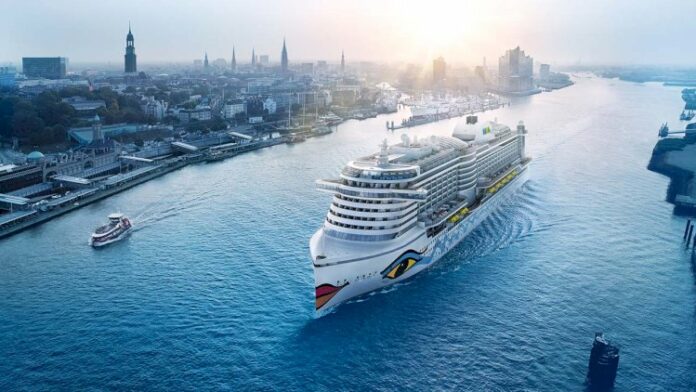
On the occasion of the keel-laying, the name of the new ship and its first routing were announced: the ship will be named AIDAcosma, and will be cruising from Kiel to the Norwegian fjords and the Baltic Sea from summer 2021.

Together with the Managing Director of the Meyer Werft shipyard Tim Meyer and the head of the Neptun Werft shipyard in Rostock Manfred Ossevorth, AIDA President Felix Eichhorn welcomed numerous guests from the worlds of politics and business including Birgit Hesse, President of the Mecklenburg-Western Pomerania state parliament, Rostock’s Mayor Claus Ruhe Madsen, and the President of Rostock’s municipal assembly Regine Lück. In his speech Harry Glawe, the Mecklenburg-Vorpommern Minister for Economics, Construction and Tourism emphasized the importance of this maritime location on the Warnow, and praised AIDA Cruises for its great commitment.

AIDA President Felix Eichhorn:

“With AIDAcosma we are consistently continuing our sustainable growth. The keel-laying of our second LNG-powered cruise ship here in Rostock is also an expression of our company’s economic and innovative power in Rostock and throughout northern Germany.”

In 2018 AIDA Cruises alone contributed over 1.6 billion Euros to northern Germany’s economic growth. The company’s economic performance in Rostock alone (exclusive of ship-building) amounted to around 160 million Euros according to a study carried out by Deloitte & Touche in conjunction with the Universities of Hamburg and Genoa.

Felix Eichhorn added:

“AIDA stands for some 8,200 direct and indirect jobs with our suppliers here in the north. With our investments in the development and use of sustainable technologies, we are providing key momentum for research and science clusters throughout Germany.”

By making investments of over two billion Euros in Germany by 2023 with the construction of AIDAcosma and a third LNG-powered cruise ship, the company will be contributing to further value creation and the creation of secure jobs in ship-building and the maritime supply industry.

With gross tonnage of 183,900 and a length of 337 meters, AIDAcosma will have 20 decks, and space for 2,600 staterooms. A new feature on this ship is the Fun Park at the stern of the ship with a children’s pool, a twin water chute and the Water Slide. For the first time, the outdoor Sport Deck will have a boulder wall. The Pool Deck in the stern extends across the entire width of the ship. The crowning touch is the breathtaking infinity pool. The ship has more spaces in the sun on the three tiered Sun Decks above. Guests will be pampered in culinary terms at 17 restaurants and 23 bars. The diverse range of gastronomic choices is being enhanced with a new restaurant: The Beach House Restaurant will be serving deliciously summery and light dishes. The interior, in soft cream and sand shades, conjures up a pure vacation feel. The specialty restaurant Mamma Mia is also new, offering home-made pasta and fresh Italian cuisine with table service. The many public amenities include the Theatrium, shops, a disco, a gym area, the lavish Body & Soul Organic Spa, and the clubs for tiny tots, kids and teens.

AIDAcosma will begin her maiden season in summer 2021: From May to October she will be sailing from Kiel on two beautiful northern routes. On alternating weeks, the ship will travel to the Norwegian fjords and to some of the most beautiful cities on the Baltic Sea. Depending on the travel date, AIDAcosma will stay overnight in St. Petersburg, Tallinn or Helsinki. Those who wish to secure their places immediately can pre-book a cruise now. Booking officially opens on November 21, 2019.

With the keel-laying for AIDAcosma, the company is continuing on its current course, making a further contribution to reducing emissions in cruising. In 2023 the third of AIDA Cruises’ LNG-powered cruise ships “Made in Germany” will be put into service. Thanks to the use of LNG, emissions of particulates and sulfur oxides are almost totally avoided, while emissions of nitric oxides and CO2 are long-lastingly reduced.

Shore power to improve air quality in Port of Tallinn

0

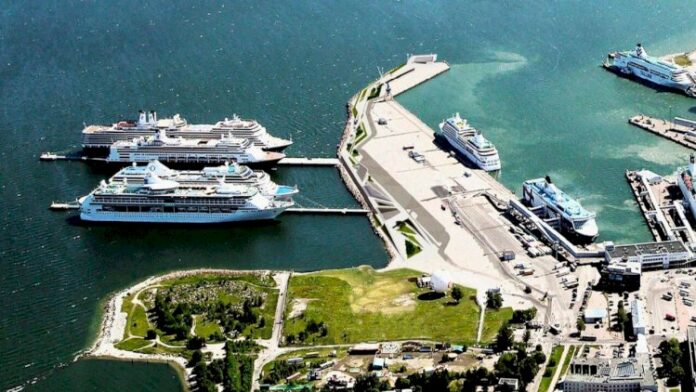
Port of Tallinn will install the latest ABB shore power systems on five of its piers in the Old City Harbour as part of the first shore power project in Estonia, the aim of which is to supply the vessels that visit the port with shore electricity and thus reduce emissions and noise created by the ships’ engines. 

Valdo Kalm, CEO of the Port of Tallinn, said:

"The Tallinn Old City Harbour is one of the busiest ports in a capital city in Europe, so installing shore power facilities in the harbour is an important step forward in reducing the environmental impact of shipping on the city. Considering the improved air quality and reduced noise pollution, this project is great news for all the citizens and visitors of Tallinn, but also for the ship operators, who can positively contribute to the development of the city environment through this project.“

The first pier will have the shore power facilities ready by the end of this year and the first vessels to be connected to the shore power in Tallinn Old City Harbour will be Tallink Grupp’s Tallinn-Stockholm route vessels. The next vessels to be connected to shore power in the first half of 2020 will be the Estonia-Finland route vessels operating from the Old City Harbour.

Captain Tarvi-Carlos Tuulik, Tallink Grupp’s Chief Captain and Head of Ship Management, commented:

"According to our calculations, a ship that uses green shore power for at least 7 hours per day while docked in port, will generate 120 tonnes less CO2 per month. The air quality will also improve generally when the ship’s engines are stopped, with fewer emissions and particle matter being emitted into the air in the port area. We have already taken a step towards using shore power with our vessels in the Port of Stockholm, thus significantly improving the air quality in this capital city.“

The technical solution installed in the Port of Tallinn is the most modern shore-to-ship system of its kind, provided by ABB and it creates the possibility to connect the vessel to shore power with a 11kV voltage. To guarantee safety, the system is fitted with a duplicated control mechanism, which guarantees that high voltage will switch off in all emergency situations. There is no need for onshore personnel for connecting the ship to the shore power facility – the ship’s crew will navigate the cable crane on the pier to the ship’s shore power reception facility with a remote control and will connect the cable with the ship’s equipment. The ship’s electricity will not be interrupted during the connecting or the disconnecting process.

Jukka Patrikainen, Regional Manager for ABB Baltics, said:

"ABB is the leading shore power systems provider for 20 years already and we currently have the best portfolio of these products on the market. It is an honour to partner with the Port of Tallinn in the installation of the first solution of this kind in Estonia and to contribute to this ground-breaking project with ABB’s technical capability."

The Port of Tallinn carried out an international tender process for the installation of shore power facilities for five of the Old City Harbour piers (piers number 3, 5, 7, 12 and 13) and the successful tenderer was AS Elero. The substation equipment and automation will be supplied by ABB and the remote controlled crane required for the electrical connection will be supplied by an Estonian company Scaleup Plc.

The project, which is implemented in partnership with ship operators, is co-funded by the European Union TWIN-PORT 3 project. The total cost of the project is EUR 3.5 million.

The Port of Tallinn, Port of Helsinki, Port of Stockholm and Port of Turku signed a Memorandum of Understanding in 2016, according to which the busiest ports around the Baltic Sea located in city centres will develop shore power facilities in the ports based on a common standard.