-5 C
New York
Home Blog Page 935

HHLA to prepare its employees for the challenges of the digital transformation

0

“Thinking, acting and leading digitally.” Under this principle, Hamburger Hafen und Logistik AG (HHLA) has launched a qualification programme with the goal of purposefully training staff members for the challenges of the digital transformation.

The “pilots for the future” will gain the abilities to successfully manage projects and processes and to lead staff members. The training campaign will be promoted as part of the German government’s law for qualification opportunities and implemented by the Federal Employment Agency’s Hamburg office.

HHLA’s Chief Human Resources Officer Torben Seebold at the presentation of the programme said:

“The ‘pilots for the future’ will act at important interfaces within the Group to safeguard HHLA’s successful digital transformation and sustainable development.”

As the engine of digital change at the Port of Hamburg, HHLA wants to actively contribute to shaping the processes associated with digitalisation. This should include more than investing in innovative technologies and in the future highly promising sectors.

Torben Seebold added:

“At the same time, we must also prepare our employees for the forthcoming changes. The digital transformation is changing jobs and creating new ones. We will only be able to face the ever-more complex challenges in a prompt and flexible manner with the help of qualified staff members who are open to new ideas and complete their tasks with courage and a sense of responsibility.”

The qualification of HHLA specialists and managers as certified “pilots for the future” has been taking place since December. At the core of the measures is the expansion of agile methodological competences, modern innovation processes, collaboration in complex systems and the transition to a project and network-oriented organisation. In order to deal responsibly with the fears and defensive reactions triggered by digitalisation, social skill sets and empathic leadership are also part of the programme. 18 staff members from a broad range of areas within HHLA will participate in the first round of this qualification measure. They represent the three container terminals in Hamburg as well as Unikai, Hamburger Container- und Chassis-Reparatur-Gesellschaft (HCCR), HPC Hamburg Port Consulting and the holding company.
 
HHLA’s Chief Human Resources Officer Torben Seebold emphasised that training and education measures are the backbone of the company’s strategic personnel development. In 2018, the Group invested € 4.6 million in the training and education of its employees in Hamburg alone. He also thanked Sönke Fock, Chairman of the Board at the Federal Employment Agency’s Hamburg office, for the support and promotion of the “pilots for the future” qualification measure.
 
The Federal Employment Agency covers or subsidises the costs for the courses and the payment of salaries during the training period. Sönke Fock keeps a close eye on the changing labour market:

“Companies based in Hamburg must also constantly prove their competitiveness in a market that is becoming more and more global. At the same time, employees must face new challenges in the work process.”

He thanks HHLA for its smart and far-sighted decision to allow its own staff to take part in the transformation and to help shape it:

“Operations, administration and work processes, and therefore almost all employees, will have to face digital changes in ever-shorter intervals. Career profiles will not disappear but will change considerably. Therefore, professional training during active employment is the decisive key for the successful implementation of the structural change. Accordingly, the Federal Employment Agency in Hamburg supports local companies.”
NYK and Van Oord to jointly operate offshore wind installation vessels in Japan

0

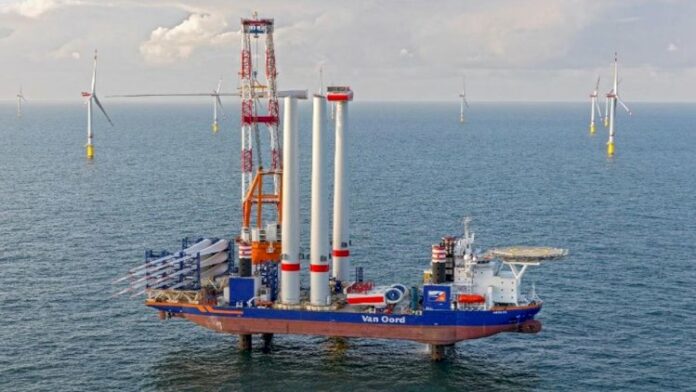
NYK and Van Oord have signed a memorandum of understanding (MoU) to jointly own and operate offshore wind installation vessels under the Japanese flag.

The partners aim to start operating a jack up vessel in Japan by 2022 at the earliest. The vessel will have a crane capacity of more than 1,000 mt and will be suitable to install the latest generation of wind turbines. The collaboration will make use of Van Oord’s technical and operational expertise in offshore wind and the NYK Group’s knowledge of the Japanese market.

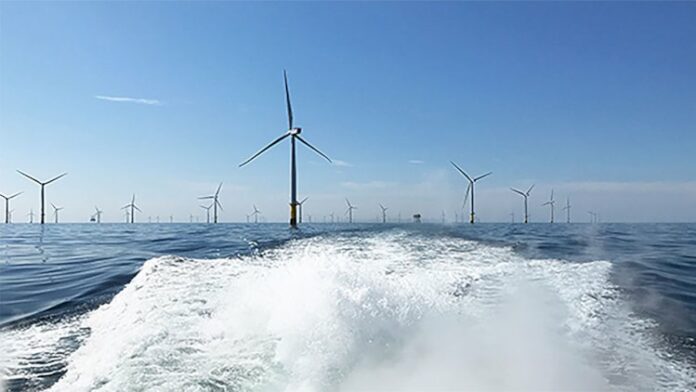
The vessels will be used for the transport and installation of both the foundations and the wind turbines for offshore wind farms. The installation vessel is equipped with a large crane and jack-up legs. The vessel will place the legs into the seabed and will then jack the hull of the vessel out of the water. This creates a stable working platform for the crane to perform the installation activities.

In addition to the collaboration for offshore installation vessels, NYK and Van Oord are also exploring opportunities to collaborate on other types of vessels required for the construction and operation of offshore wind farms.

In response to the growing offshore wind market in Japan, a new law came into force in April 2019 that aims to facilitate the development of offshore wind projects in Japan. As a result, demand within the offshore wind market is expected to increase. Challenges for the development of offshore wind in Japan include the lack of resources (experienced workforce and specialised equipment required for the installation of the large foundations and turbines for offshore wind farms). By joining forces, NYK and Van Oord intend to meet these challenges and contribute to the successful development of offshore wind as a sustainable energy source for Japanese society.

As a market leader, Van Oord has been involved in over 40 offshore wind projects as an Engineering Procurement Construction and Installation (EPCI) contractor in Europe, where the offshore wind industry is already well developed. With over 15 years of experience within the offshore wind market, the knowledge of its people and its specialised offshore wind equipment, Van Oord is able to contribute to the Japanese offshore wind market.

The NYK Group operates more than 700 vessels, both internationally and locally. The group has ample experience in reflagging vessels to and operating vessels under the Japanese flag. This is a requirement for offshore wind contractors when working in Japanese territorial waters.

The NYK Group is dedicated to achieving the SDGs through the group’s business activities and its medium-term management plan “Staying Ahead 2022 with Digitalization and Green.” NYK will continue its efforts to contribute to promoting the renewable energy business in Japan and overseas.

Svitzer completes acquisition of Port Towage Amsterdam

0

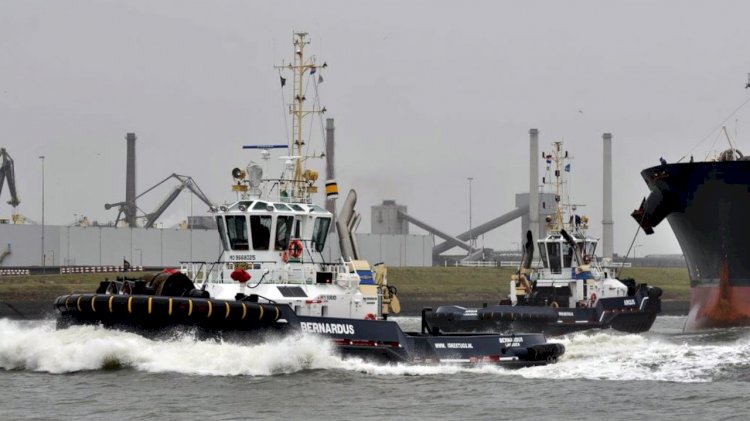
Svitzer, a leading provider of global marine services, has announced it has closed a deal to acquire Port Towage Amsterdam (PTA).

Under the agreement, which was first announced in December 2019, Svitzer obtains 100% ownership of PTA. The deal sees Svitzer take over more than 30 employees, including crew from Iskes Towage and Salvage and nine shore based staff from PTA. In addition, seven Iskes tugs now join Svitzer’s European fleet.

The acquisition marks the next step in Svitzer Europe’s 2025 strategy, which will see the organisation bolster its marine services offering and connect sea and shore through efficient and innovative towage operations.

Fred Jeeninga, Cluster Managing Director of Svitzer Continental Europe, now heads Svitzer’s new operations in Amsterdam.


Odfjell’s chemical tanker collided with fishing boat in Galveston Bay

0

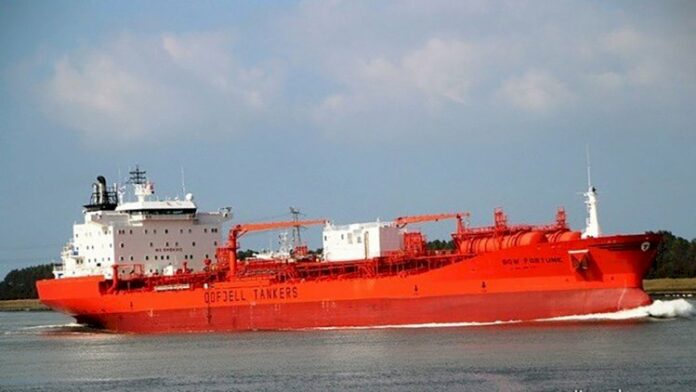
At 15:55 local time Tuesday January 14, Odfjell's chemical tanker Bow Fortune reported that it had made contact with a fishing boat in Galveston Bay entrance.

At the time of the incident, Bow Fortune was inbound and under pilotage as first vessel in a convoy. At the time of the incident, there was heavy fog in the area. 

One of the four crew members onboard the fishing boat has lost his life. Two of the crew members on the fishing boat are still missing. One crew member is reported rescued.

Bow Fortune is currently moored in Galveston. The crew onboard is safe and accounted for. Bow Fortune’s integrity is intact and there is no pollution stemming from the ship.

The cause of the collision will be subject to investigation. Odfjell will fully support and contribute to this investigation.

Mayflower Wind selects Bladt and Semco for its offshore substation project

0

Semco Maritime and Bladt Industries joint venture inks offshore substation contract with Mayflower Wind Energy LLC.

Mayflower Wind Energy LLC (a joint venture of Shell New Energies US LLC and EDPR Offshore North America LLC) has awarded a contract for the fabrication and delivery of the Mayflower Wind project’s offshore substation approximately 40 kilometres south of Nantucket, Massachusetts, to a joint venture comprised of long-standing business partners Bladt Industries and Semco Maritime. The offshore substation project will be initiated in January 2020.

Bladt Industries and Semco Maritime have formed a joint venture for the design and construction of the 1,200 MW offshore substation. The offshore substation will consist of a topside of 4,700 tons and a 3,000 tons jacket foundation. The project scope comprises engineering, procurement and construction works, including steel structure and jacket foundation by Bladt Industries, as well as design, procurement and installation of electrical equipment, auxiliary systems and inter-array cables by Semco Maritime. The offshore substation is scheduled for delivery from Bladt Industries’ site in Denmark in 2024.

Nils Overgaard, Chief Sales Officer, Bladt Industries, says:

“We are proud that Mayflower Wind has selected Bladt and Semco for this comprehensive offshore substation project on the US East Coast. We consider it an important recognition of our joint competencies and our strong focus on HSE during the construction phase. We are very much looking forward to the close cooperation with the strong team behind Mayflower Wind, and we do hope this will be the first of several projects.” 

Carsten Nielsen, Senior Vice President, Renewables, Semco Maritime, says:

“Semco and Bladt’s strong track record of providing competitive turnkey offshore wind electrical infrastructure is a door opener in the market. The Mayflower Wind project provides a unique opportunity to firmly establish our companies as highly experienced pioneers in the nascent and promising US offshore wind industry. We will build strong relationships with Mayflower Wind’s parent companies – Shell and EDP Renewables – as well as other involved parties. We will draw on the experience gained, as well as the resources and capabilities, that we have built up over the years to put further focus on our offerings to bring offshore energy to shore.”

The Mayflower Wind project has been chosen by the Commonwealth of Massachusetts to supply 804 MW of clean, renewable energy from offshore wind with expected start-up in 2025. Once in operation, the project will provide enough electricity to power approximately half a million homes in the state and eliminate 1.7 metric tons of CO2 emissions annually.

Michael Brown, Chief Financial Officer, Mayflower Wind Energy LLC, said:

“Mayflower Wind is focused on launching a safe and reliable offshore wind project to help meet Massachusetts’s greenhouse gas reduction goals. We look forward to working with Bladt Industries and Semco Maritime – companies with a proven track-record in the industry. Recent changes to U.S. tax law now allow projects that meet qualification standards in 2020 to secure Federal Investment Tax Credits at the 18% level. This contract is a key step for us to meet these standards and secure tax credits that would ultimately result in a lower rate for electricity customers in Massachusetts.”

Bladt Industries and Semco Maritime will act as equal partners in the new joint venture.

Industry leaders join forces on ammonia-fuelled tanker project

0

MISC, Samsung Heavy Industries, Lloyd’s Register and MAN Energy Solutions to work collaboratively on addressing shipping’s decarbonisation challenge.

MISC Berhad, Samsung Heavy Industries (SHI), Lloyd’s Register (LR) and MAN Energy Solutions have announced that they will work together on a joint development project (JDP) for an ammonia-fuelled tanker to support shipping’s drive towards a decarbonised future.

The creation of the alliance has been motivated by the partners’ shared belief that the maritime industry needs leadership and greater collaboration if shipping is to meet the International Maritime Organisation’s 2050 Greenhouse Gas (GHG) emission target, an ambition that requires commercially viable deep-sea Zero-Emission Vessels (ZEVs) are in operation by 2030.

Ammonia is just one of the pathways towards zero-carbon emitting vessels. The partners recognise that the shipping industry will need to explore multiple decarbonisation pathways and hope their collaboration will spur others in the maritime industry to join forces on addressing this global challenge.

The partners believe that the creation of such alliances will send a clear message that shipping can progress itself to fit times and circumstances, ahead of regulatory action.

The drive to decarbonise shipping will be a dominant focus of the decade ahead and follows a year of action in 2019 that saw the launch of Getting to Zero Coalition, an alliance of leading maritime, energy, infrastructure and finance companies committed to getting commercially viable deep-sea ZEVs powered by zero emission energy resources into operation by 2030.

Shipping’s decarbonisation as a shared obligation was also a key talking point during the Global Maritime Forum held in Singapore in October 2019 where more than 220 industry leaders congregated to discuss the challenges facing the shipping industry.

Yee Yang Chien, President & Group CEO MISC Berhad said:

“At MISC, we believe the global maritime industry needs to be more collaborative in defining our future together, rather than being confrontational and fragmented in our efforts. I am very glad that our distinguished partners have come together with MISC to showcase joint leadership in developing one of the pathways towards a zero-carbon future for the maritime industry. We need more shining examples of partnerships and collaborations in our industry and it is my hope that this will encourage our peers in the industry to also join hands with others to advance the zero-carbon agenda.”

Joon Ou Nam, President & CEO of Samsung Heavy Industries said: We are very delighted to be a key member of this meaningful industry collaboration together with competent partners. We all know that the industry–wide movement is vital, and new zero-carbon fuel technologies, such as ammonia fuel, are to be brought on the table, in order to take action proactively on maritime GHG emissions in accordance with the IMO’s ambitious road map. We hope SHI’s experience and expertise in novel ship design development will effectively contribute to this joint development project and all JDP partners could get better insight into the feasible and sustainable zero-carbon fuel vessel design solutions.

Nick Brown, Marine & Offshore Director, Lloyd’s Register said:

“As we start the 2020s we are proud to be among a four-party team to make deepsea Zero-Emission Vessels (ZEVs) a reality within this decade. The IMO’s 2050 GHG ambitions, which prescribes that international shipping must reduce its total annual greenhouse gas emissions by at least 50% of 2008 levels by 2050, require substantial and collaborative input from all maritime stakeholders and we are confident the lead taken by this partnership will encourage others to work collectively to address the challenge. These are exciting times as we commence the industry’s fourth Propulsion Revolution as during LR’s history we have supported the transition from wind to coal to oil and now look forward to safely decarbonising.”

Bjarne Foldager Jensen, Senior Vice President, Head of Two Stroke Business at MAN, said:

“Joining this project makes perfect sense for MAN Energy Solutions as system technologies that help our customers to reduce emissions and lead the way to a carbon-neutral future form a significant part of our business strategy. Low-speed diesel engines are the most efficient propulsion system for trans-oceanic shipping and already run on a sizable number of emission-friendly fuels. We look forward to adding ammonia to the list and welcome the opportunity to work with industry partners in this venture.”

Troll partners start the electrification project to reduce CO2 and NOx emissions

0

On behalf of the Troll partners, Equinor has awarded Aker Solutions a front-end engineering and design contract (FEED) for topside modifications to accommodate power from shore at the Troll B and C platforms.

Peggy Krantz-Underland, Equinor chief procurement officer, says: 

"This is an important award that supports the industry’s ambition to reduce its greenhouse gas emissions in Norway with 40 percent by 2030 and to near zero by 2050. Using electrical power from shore will require large and complex modification work at the Troll B and C platforms. We are glad to award the FEED contract to mature the topside modification work to Aker Solutions, a supplier who has worked with the Troll field for many years and has a good knowledge of the installations."

Upon final investment decision Equinor has the possibility to exercise an option for engineering, procurement, construction and installation (EPCI), that is included in the FEED contract.

Geir Tungesvik, senior vice president for project development in Equinor, says:

"The main driver in the electrification project is to reduce CO2 and NOx emissions from the Troll B and Troll C platforms by using electrical power from Kollsnes and replacing the existing gas turbine driven electricity generators and gas compressors with electrical equipment. The selected concept for the electrification is full electrification of Troll C and partial electrification of Troll B with a possibility to fully electrify Troll B later."

The CO2 reductions is expected to be 450.000 tonnes/year after the project is completed.

The electrical system and power cable from shore will be designed to accommodate full electrification for Troll B and Troll C. The Troll partners together with Aker Solutions will use the next year to plan the work in detail to ensure it can be executed safely without harm to personnel, environment or installations.

Troll A was the first platform on the Norwegian continental shelf to utilize power from shore, already from initial startup back in 1996. Now Troll B and Troll C are important building blocks towards zero emission of the Troll gas strategy in 2040​.

Eni and the Area 4 partners launch the hull of Coral Sul FLNG

0

The launch marks the timely progress of the project, which exceeds 60% completion and is in line with production start up by 2022.

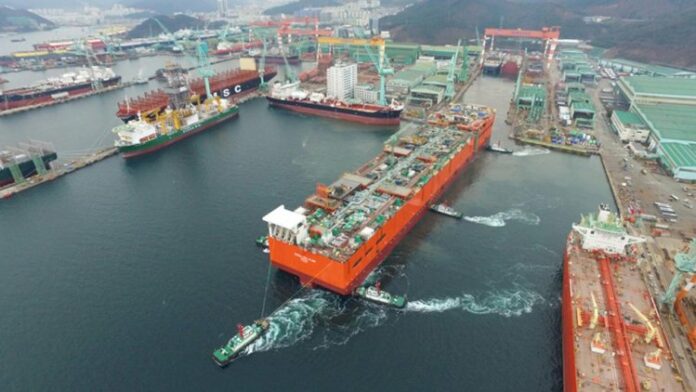
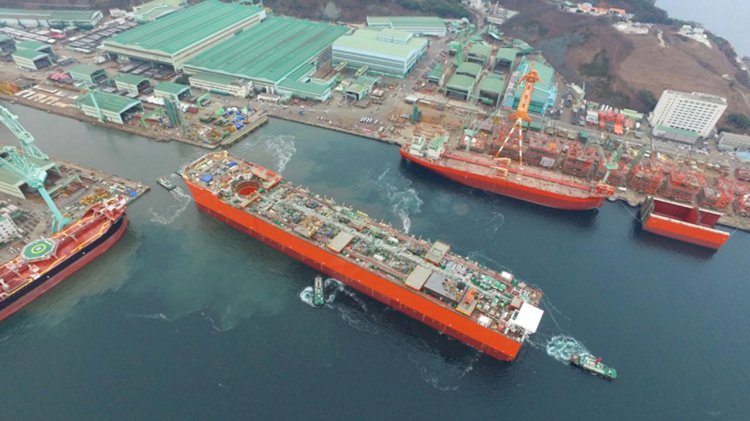
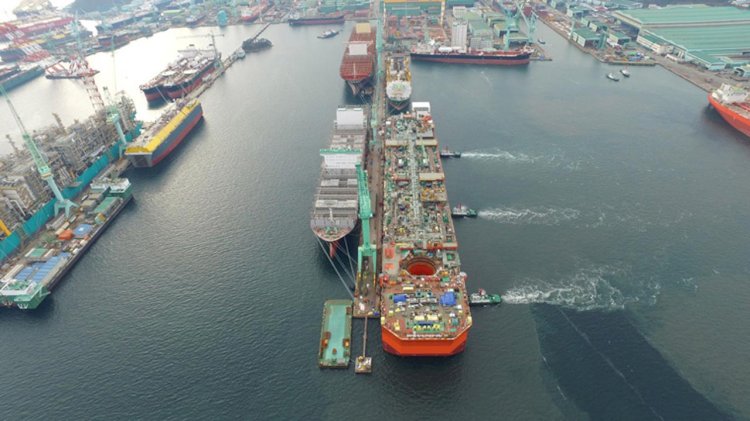
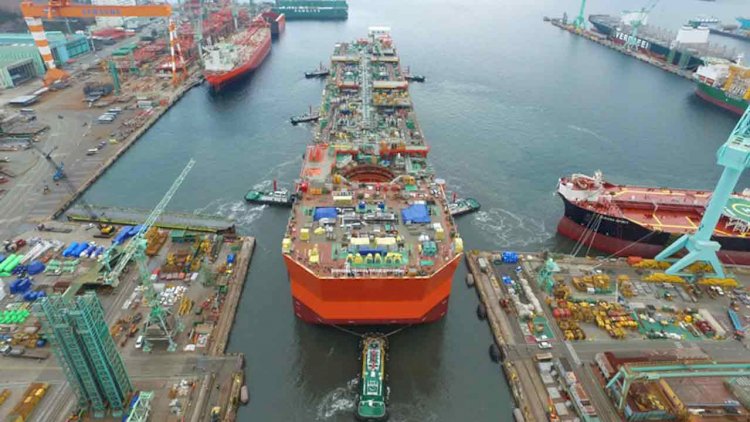
Eni and the Area 4 partners have announced in Geoje, South Korea, the launch of the hull of the Coral Sul Floating Liquefied Natural Gas (FLNG) treatment and liquefaction facility. The FLNG is part of the Coral South project that will put in production 450 billion cubic meters of gas of the Coral reservoir, offshore Mozambique. The launch marks the timely progress of the project, which exceeds 60% completion and is in line with production start up by 2022.

Coral South is the first LNG project in Mozambique. It includes initiatives aimed at enhancing the overall capabilities of the local workforce and supply chain, as well as to develop local SMEs.

The hull is 432 meters long, 66 meters wide and weighs approximately 140,000 tons. Its eight-storey accommodation module, which will house up to 350 people, is also ready to be lifted and integrated with the hull system. Fabrication activities are also well underway for the 12 gas treatment and LNG modules, with all main equipment ready for integration and first deck stacking executed.

With a gas liquefaction capacity of 3.4 million tons per year (MTPA), the Coral Sul FLNG will be the first FLNG ever deployed in deep waters, at water depth of approximately 2,000 meters, and the first purpose-build FLNG in Africa. Drilling and completion activities for the six subsea wells that will feed the liquefaction unit are ongoing offshore Mozambique.

Mr Adriano Mongini, Eni’s EVP, West Africa Region, said that:

“the Coral Sul FLNG hull launching is an outstanding milestone which has been possible thanks to the commitment of Eni, its Area 4 partners, contractors and Mozambican authorities. We share the belief that Coral South is a pioneering project that will trigger further developments and new investments”.

Mr Carlos Zacarias, Chairman of the Mozambican Institute of Petroleum (INP), representing the Government of Mozambique, commented:

“We believe that at this rate we will in fact have, by 2022, the production, liquefaction and export of the first LNG cargo gas from the Coral FLNG Project, and from Mozambique, consequently making the expected transformations in job creation, development of local business and incomes from LNG sale of the first gas liquefaction project in the country, benefiting the Mozambican state and people over the duration of the project”.

Coral South is the first LNG project in Mozambique. It includes initiatives aimed at enhancing the overall capabilities of the local workforce and supply chain, as well as to develop local SMEs. Direct training and recruitment activities for more than 800 Mozambicans are under implementation in Mozambique, South Korea, and Italy, while vocational training opportunities and local content plan initiatives for further 1000 resources are being carried out by Coral South contractors.

PGS’ solutions can make seismic surveys more environmentally friendly

0

In October the Norwegian engineering magazine, Teknisk Ukeblad, wrote an article about PGS’ technical developments on alternatives to airguns.

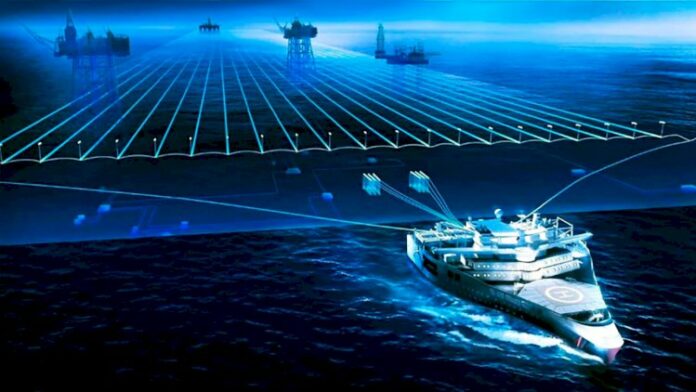
Without compromising on quality and efficiency, electrical marine vibrator sources and the eSeismic acquisition and processing method both have the potential to significantly reduce environmental impact compared to the conventional use of airguns. PGS’ ingenious solution for a marine vibrator has held up reliably in testing so far and will soon be used to generate its first seismic data. A larger geophysical test will require a commercial partner.

GeoStreamer, launched by PGS in 2007, was a groundbreaking advance in seismic acquisition sensor technology. Now, PGS is working on a new breakthrough that may revolutionize seismic sources.

PGS’ technical solutions can make seismic surveys more environmentally friendly while improving data quality at the same time. 

PGS’ marine vibrator Section Manager Øystein Trætten to Teknisk Ukeblad says:

“For us, operational efficiency and the best possible data quality always have central focu.”

The advantage of using marine vibrators over airguns is the ability to limit audio signals to only the frequency range necessary for seismic. The source is all-electric, demands less energy, and there is no need to operate large air compressors. But the challenge industry has faced is designing the vibrator with sufficient size and capacity to produce enough sound pressure without shaking itself apart. PGS has an ingenious solution based on a modular system using stacked plates. This has superseded other configurations to take primary place in PGS’ marine vibrator development initiatives.     

The key difference PGS’ vibrator has to other designs is that the densely stacked plates significantly increase the total surface area while minimizing the overall unit size. PGS has produced sufficient sound pressure level at the crucial lower end of the frequency band at operational depth. Accurate control of system resonance is defined so that the structural load of the vibrator is secure. So far the design has proved itself robust and reliable during both a 1 000 hour tank test, and at full power at depths of 60 m in a harbor. The next step is to perform a geophysical test on top of PGS MultiClient data for comparison.

The eSeismic method can be used with either marine vibrator technology or with standard air source elements to provide a quieter environment for fish and sea mammals. While the standard method uses a simultaneous array of 30 air source elements, eSeismic uses only one. It releases an alternation of 40, 90, and 150 cubic inches several times a second to generate a continuous wavefield. Sound exposure and peak sound pressure levels are significantly reduced compared to standard methods which releases 4 130 cubic inches of compressed air every 10 seconds.

PGS’ eSeismic project leader, Jostein Lima, told Teknisk Ukeblad that:

“eSeismic provides a quieter environment for fish and sea mammals, which is the primary environmental benefit of this method. Looking ahead, we’re working to increase the efficiency of seismic acquisition by mapping larger areas over fewer days, without compromising on seismic quality”.

A recent field trial offshore Brazil showed significantly lower sound pressure levels than traditionally produced by air source elements using the standard method. Its viability in assessing deep geological layers was successfully proven and eSeismic commercialization work is ongoing. PGS is planning to acquire more eSeismic data in 2020.

The development of eSeismic technology has been supported by the Research Council through the Demo2000 program in collaboration with Equinor.

Unprecedented number of crew kidnappings in the Gulf of Guinea

0

Despite overall piracy incidents declining in 2019, there was an alarming increase in crew kidnappings across the Gulf of Guinea, according to the International Chamber of Commerce’s International Maritime Bureau’s (IMB) annual piracy report.

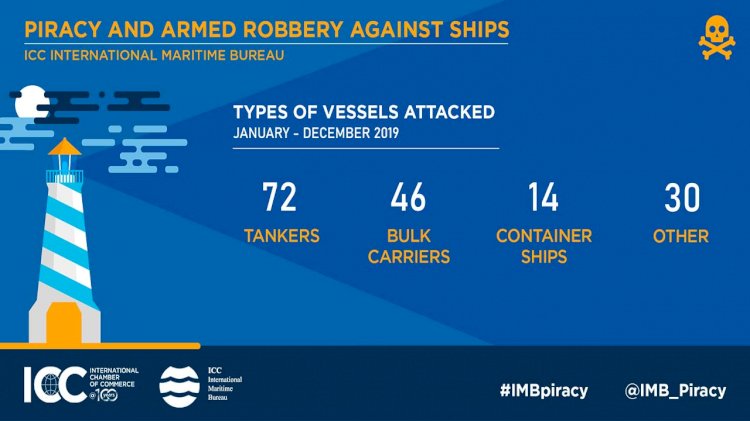
In 2019, IMB’s Piracy Reporting Centre received 162 incidents of piracy and armed robbery against ships worldwide, in comparison to 201 reported incidents in 2018. The incidents included four hijacked vessels, 11 vessels fired upon, 17 attempted attacks, and 130 vessels boarded, according to the latest IMB figures. While the overall decline in piracy incidents is an encouraging development, vessels remain at risk in several regions, especially the Gulf of Guinea.

The number of crew kidnapped in the Gulf of Guinea increased more than 50% from 78 in 2018 to 121 in 2019. This equates to over 90% of global kidnappings reported at sea with 64 crew members kidnapped across six separate incidents in the last quarter of 2019 alone. The region accounted for 64 incidents including all four vessel hijackings that occurred in 2019, as well as 10 out of 11 vessels that reported coming under fire.

Michael Howlett, Director of the ICC International Maritime Bureau, said:

"We remain concerned that this region has recorded an unprecedented rise in crew kidnaps. These latest statistics confirm the importance of increased information exchange and coordination between vessels, reporting and response agencies in the Gulf of Guinea Region. Without the necessary reporting structures in place, we will be unable to accurately highlight the high-risk areas for seafarers and address the rise of piracy incidents in these persistently vulnerable waters."

Similarly, the Singapore Straits experienced a rise in armed robbery attacks with 12 reported incidents in 2019, including 11 in the last quarter of 2019. The same region accounted for just three incidents for the entirety of 2018.

IMB’s latest figures also report that vessels were successfully boarded in 10 incidents across the region last year. Despite this rise, IMB considers the intensity of the attacks in the Singapore Straits to be ‘low level’ and usually limited to armed robbery from the vessel. 

Howlett continued:

"This is a distraction and potentially dangerous for the crew in control of the vessel whilst navigating through these congested waters. The IMB PRC is grateful to Singapore law enforcement agencies for responding promptly to some of these incidents."

Armed robbery attacks in Indonesian ports are down from 36 incidents in 2018 to 25 in 2019. Dialogue and coordination between the Indonesian Marine Police (IMP) and the IMB PRC has led to a decrease in regional incidents, according to the report.

Elsewhere, in the Indian sub-continent, Bangladesh reported zero incidents for 2019. This is the first time since 2015 that no piracy or armed robbery incidents have been reported around Bangladesh.

Across the Indian Ocean, Somalia reported zero piracy incidents, yet the IMB PRC advises that vessels and crews remain cautious when travelling through the region. In particular, the report warns that 'Somali pirates continue to possess the capacity to carry out attacks in the Somali basin and wider Indian Ocean.'

As with all piracy-related incidents, IMB urges all shipmasters and owners to report all actual, attempted and suspected piracy and armed robbery incidents to the IMB PRC. This first step in the response chain is vital to ensuring that adequate resources are allocated by authorities to tackle this crime.