-5.7 C
New York
Home Blog Page 932

ICEYE Dark Vessel Detection now globally available for government organizations

0

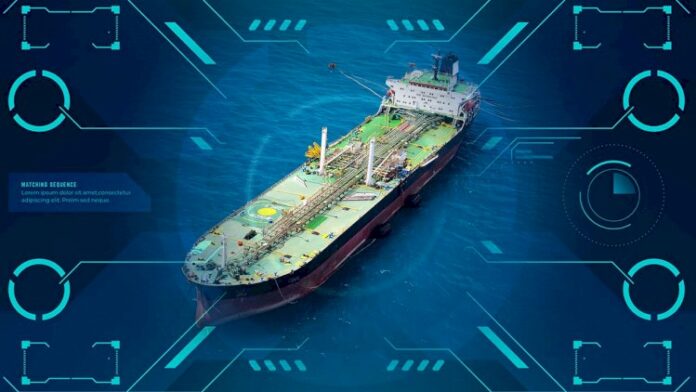
ICEYE has announced the launch of its global Dark Vessel Detection solution for governmental maritime security customers.

The unique solution combines synthetic-aperture radar (SAR) satellite data from ICEYE, and automatic identification system (AIS) data from vessels. Dark Vessel Detection is used as a source of actionable information for governments monitoring their Exclusive Economic Zones (EEZ), day and night, and even through cloud cover.

Steve Young, Vice President, Business Development and Sales, ICEYE, said:

“Dark Vessel Detection offered by ICEYE is built for governments around the world for improving the maritime safety of their regions. This unique solution enables authorities to take action based on reliable information. Data users can improve their enforcement activities against illegal transshipments of goods, help them in addressing illegal fishing, and assist in curbing drug and human trafficking.”

Vessels engaged in illegal activities can choose to turn off their AIS transponders to avoid detection from authorities. ICEYE’s Dark Vessel Detection service’s core is built on the company’s own radar imaging satellite constellation data, which provides a reliable source of information at all times of the day and in all weather conditions. ICEYE’s customers have access to both location information and radar satellite images of all detectable vessels – even when they do not have their AIS transponders turned on.

Pekka Laurila, Chief Strategy Officer and Co-founder, ICEYE, said:

“Together with our partners, ICEYE has developed a unique dark vessel detection capability for solving far-reaching maritime safety issues. Our roadmap to achieve near-real time delivery capabilities for dark vessel data, on a global basis, is very short. With the introduction of our current standardized data format, actionable information is available already today.”
Mystic orders four more Explorer Class Polar expedition vessels

0

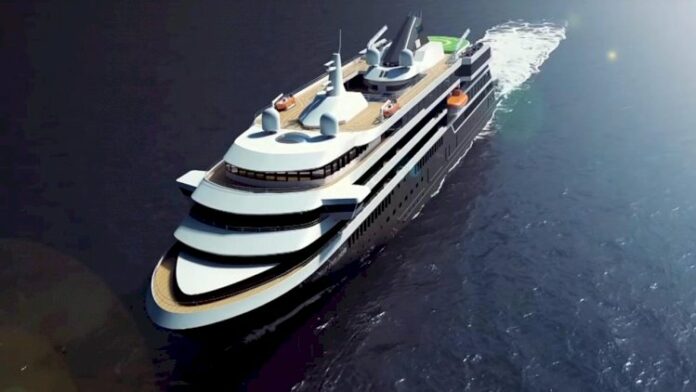
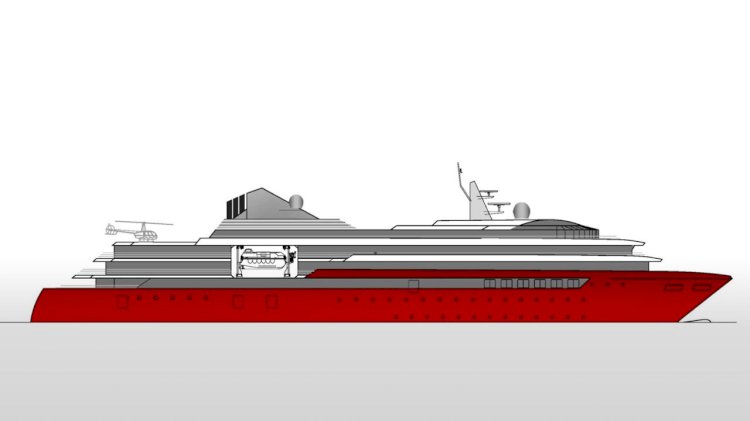
New Portuguese expedition cruise line Mystic Cruises’ promises to become a major player in the global expedition cruise vessel market have been further reinforced by placing an order for a further four Explorer Class polar vessels, due for delivery in 2023. The four new vessels have been ordered at a total cost of EUR 286.7 million.

Mystic already has three 9,300gt, 200-passenger capacity Explorer Class vessels on order at WestSea Viana Shipyard, the first of which, WORLD EXPLORER, was delivered in the summer of 2019 to Mystic subsidiary Nicko Cruises and is currently on charter to Quark Expeditions. The remaining two vessels, WORLD VOYAGER and WORLD NAVIGATOR, are currently under construction in Portugal and due to enter service in 2020 and 2021, respectively.

The latest four ships of this class, to be named WORLD TRAVELLER, WORLD SEEKER, WORLD ADVENTURER and WORLD DISCOVERER, will operate for Mystic’s US brand Atlas Ocean Voyages. The ships are being financed via local Portuguese banks and takes Mystic’s investment in new ships past the EUR 500 million mark. Kongsberg is supplying the complete propulsion package, comprising two Bergen C25:33L8P main engines and a Bergen C25:33L6P auxiliary dual generator.

These units connect to a low voltage AFE ‘SAVeCUBE’ power electric system, which allows the engines to operate at variable speeds, maximising their efficiency for the required power. Kongsberg is also supplying automation and control systems, as well as the vessel’s complete Promas propulsion system with two cp propellers integrated with two flap rudders, steering gear and thrusters. For enhanced station-keeping duties and alleviating the use of anchors in particularly environmentally-sensitive areas, all seven Explorer Class vessels will also be fitted with a dynamic positioning system. The concept and tender design of the 126m long and 19m beam Explorer Class has been designed by Knud E. Hansen. Leadship has executed the basic engineering on behalf of the shipyard.

New energy revolution is coming in the USA

0

According to fresh research by Rystad Energy, installed offshore wind capacity in US waters could reach 20 gigawatts (GW) by 2030 and annual investments in the sector could surpass $15 billion by the mid-2020s.

Such a trajectory means capital expenditure in US offshore wind will likely exceed those in US offshore oil and gas within the next five years.

Tim Bjerkelund, Head of Consulting New York at Rystad Energy, says:

“There are currently 6 GW of offshore wind projects in the US that have been sanctioned for development, requiring collective investments of more than $20 billion over the next five years. Assuming continued support from the regulators, many more projects will be sanctioned in the coming years and we expect to see yearly investments in the sector exceed $15 billion by the middle of the decade. That would certainly signal an energy revolution and offshore suppliers should take note.”

By comparison, Rystad Energy expects annual expenditure on US offshore oil and gas projects to average $14.8 billion between 2020 and 2025.

The US Northeast has for decades been dependent on importing energy, either from other states or from other countries. Renewable energy could offer a remedy but wind and solar projects are typically land-intensive, which poses problems in areas of high population density such as the US Northeast.

Bjerkelund says:

“This is reminiscent of problems faced by European countries, and the states in the Northeast have wisely picked up the same playbook. Benefiting from the technological developments and cost efficiencies introduced in the North Sea, these states are adopting the lessons learned and are rapidly rolling out targets for a much higher share of renewables in their power mix.”

Projects such as Vineyard Wind are expected to see costs close to the levels of European projects. This bodes well for an industry that is still in its infancy. According to the Energy Information Administration, the potential for offshore wind in the US is 7200 TWh. If all of this were to be realized, it would equal hundreds of projects similar to the ones already sanctioned, with each requiring investments of around $3 billion on average.

Bjerkelund concludes:

“The emergence of offshore wind as an industry in the US is truly exciting. The energy transition is taking place now – not through small test projects, but through utility scale projects that each require billions of dollars in investment. US suppliers should take note – this new industry could outgrow offshore oil and gas in only a few years’ time, providing lots of new opportunities.”

Wärtsilä launches a new LNG bunkering and supply system simulator

0

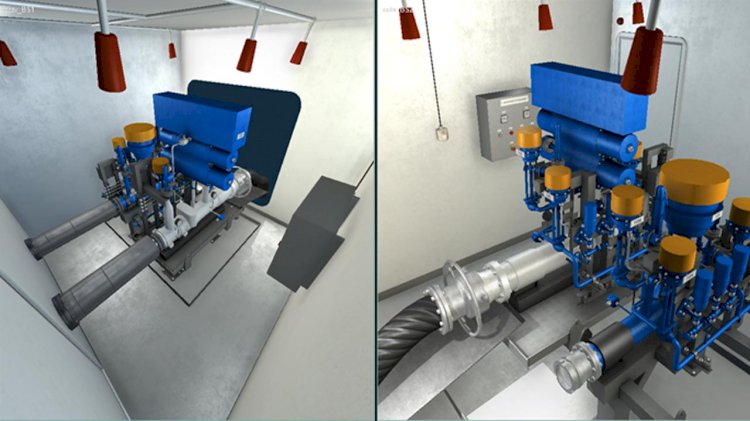
The technology group Wärtsilä is launching its new LNG Bunkering & Supply System simulator.

The simulator will promote greater safety onboard LNG fuelled vessels by improving the level of training for operators of LNG systems. The design is based on the well proven Wärtsilä LNGPac and Gas Valve Unit (GVU) technologies, and includes all auxiliary systems used in connection with the fuel supply. The design is also in accordance with the STCW requirements for training seafarers onboard gas fuelled ships to standards demanded by the IGF Code – the international code of safety.

The official launch of the Wärtsilä LNG Bunkering & Supply System simulator takes place at the Global LNG Bunkering Summit 2020 conference, being held in Amsterdam from January 28 to 30.

The scope of simulation includes all operations related to the use of LNG fuel, from bunkering to gas fuel supply and engine operations, as well as troubleshooting. It provides realistic representation of the user interface for remote and local operating posts, as well as animated 3D visualisation to facilitate situational awareness training. A ready prepared set of scenarios for tutorials and assessments is available as an additional option.

Sergey Tarasov, Solutions Manager, Wärtsilä Voyage Solutions, says:

“As the move towards LNG fuel gathers pace in the marine industry, it is essential that crews are thoroughly and expertly trained on handling the related systems. This new simulator is designed to raise training levels on LNG bunkering and supply systems, and will therefore also raise onboard safety levels.”

The Wärtsilä LNG Bunkering & Fuel Supply System simulator is available as a one-off purchase or on an annual subscription basis. It is part of the successful TechSim 5000 product line, which includes various engine room and liquid cargo handling simulators that have been installed in training centres around the world. The LNGPac simulator enables a number of different configurations tailored to the customer’s needs.

Installations have been carried out at maritime academies and consulting facilities in Italy, Malaysia and Finland. The simulator can also be utilised for in-house training by ship owners and ship management companies.


Pioneering autonomous-ship project receives NOK 200 million in EU funding

0

This project is receiving funding of almost NOK 200 million (Euro 20.1 million), one of the largest grants ever given to Norwegian players, from Horizon 2020, an EU research programme.

Egil Haugsdal, CEO of Kongsberg Maritime, says:

"The Norwegian maritime cluster, which KONGSBERG is part of, is the world leader in autonomous shipping. Now we are further strengthening our position through the AUTOSHIP project which will accelerate the realisation of next-generation autonomous ships and create a roadmap for commercialising autonomous shipping in the EU in the next five years."

AUTOSHIP, a four-year Horizon 2020* project, is a collaboration between KONGSBERG and Norway's leading research organisation, SINTEF, as well as several European partners. The Research Council of Norway is also providing support.

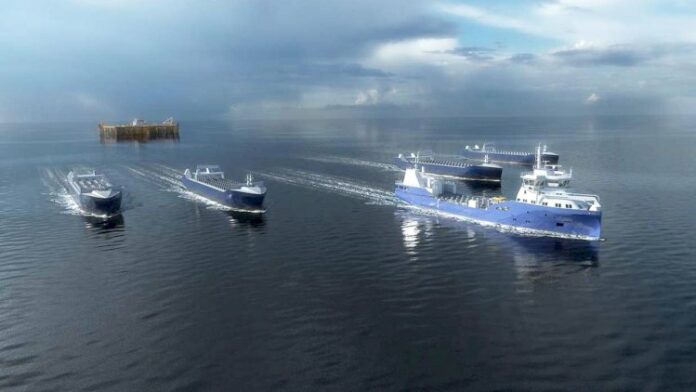
Two autonomous vessels will be demonstrated for use especially in short sea coastal shipping and Europe's inland waterways.

Iselin Nybø, Norway's Minister of Research and Higher Education, says:

“The AUTOSHIP project gives Northern Europe with Norway a leading edge in developing the next generation of autonomous vessels. The race is underway internationally. The technology contributes to safer, more efficient and sustainable operations at sea, both in transport and aquaculture. The project now receives one of the largest allocations from the EU's Horizon2020 program to a Norwegian player ever. This is a NOK 200 million mark of quality."

Today's event took place in Kristiansund on board the Eidsvaag Pioneer, which is one of the two vessels that will now be equipped for remote-operated and autonomous maritime transport. This ship is owned by the Eidsvaag shipping company and operates along the Norwegian coast and in vulnerable fjord areas where it carries fish feed to fish-farms.

The markets for both short sea coastal shipping and transport on inland waterways are expected to explode in the next few years, both in Norway, Europe, and worldwide.

Haugsdal says:

"We will demonstrate that it is possible to remotely operate several ships from land and over large geographical areas. The technology is used in different ways on the vessel to show that the solutions can be applied widely. This is a market with a significant potential."

The aim of the project is to test and further develop key technology linked to fully autonomous navigation systems, intelligent machinery systems, self-diagnostics, prognostics and operation scheduling, as well as communication technology enabling a prominent level of cyber security and integrating the vessels into upgraded e-infrastructure.

Hege Skryseth, the CEO of Kongsberg Digital, says:

"We will contribute by developing cloud-based communications systems and advanced simulations to test and ensure that the autonomous vessels operate safely and optimally."

The other vessel to be equipped with autonomous technology is a Belgian pallet shuttle barge owned by Blue Line Logistics NV. This operates on canals in Europe, transporting goods to and from large container ports. Europe's inland waterways can achieve major environmental gains by using new technology. An autonomous barge in operation is expected to take around 7,500 trucks off the roads each year and will result in reductions in both traffic congestion and emissions.

Haugsdal says:

"There is increasing market demand for waterborne transport in the EU. The results of the AUTOSHIP project will lead to safer and greener transport in Europe with one of the major outcomes being a shift of goods transport from roads to waterways."

*) This project has received funding from Horizon 2020, an EU research and innovation programme, under grant agreement no. 815012.
 

Coal carrier Sunshine Pride Enters service for Joban Joint Power

0

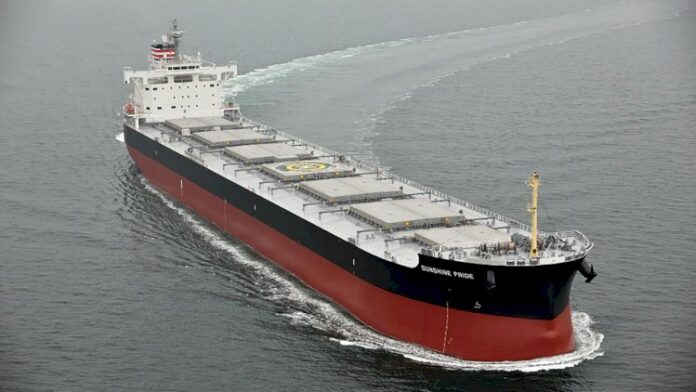
Sunshine Pride, an NYK-operated coal carrier for Joban Joint Power Co. Ltd., was delivered at Tsuneishi Shipbuilding Co. Ltd.

Under a long-term contract, this vessel will be dedicated to the transport of coal mainly from overseas to generate electricity at the Nakoso Power Station in the city of Iwaki. This power station makes use of efficient clean coal technology to support the recovery of Fukushima prefecture.

The resource transportation provided by NYK will have less of an environmental impact because this vessel comes equipped with a scrubber system* that is compliant with the International Maritime Organization’s more stringent SOx emission regulation, which became effective in January 2020.

In accordance with its medium-term management plan “Staying Ahead 2022 with Digitalization and Green” announced last year, NYK continues to contribute to a stable energy supply for local society through the operation of environment-friendly ships, thus realizing the sustainable creation of new corporate and social value.

* Scrubber system

A system that effectively addresses the strengthened SOx (sulfur oxides) fuel regulation that will soon enter into force. Scrubber systems use seawater and chemicals to remove sulfur from ship exhaust gases, effectively eliminating 97 percent of SOx emissions.
 

SCHOTTEL to supply propulsion units for BC Ferries’ vessels

0

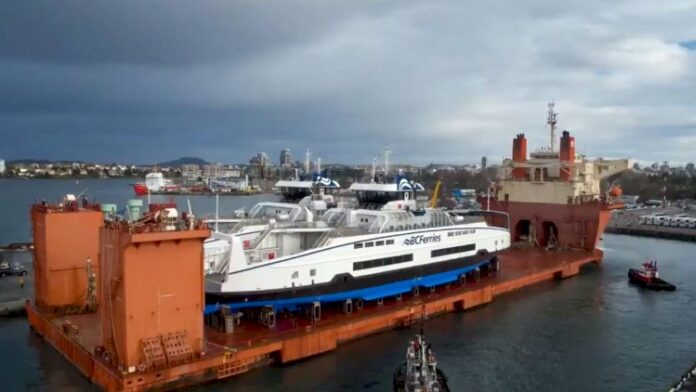
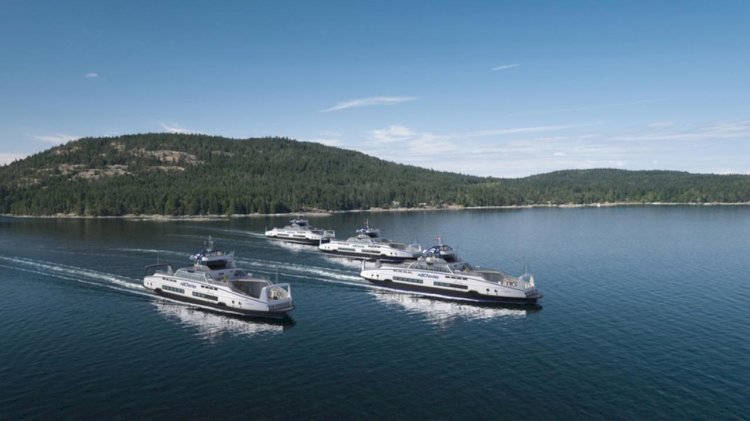
German propulsion manufacturer SCHOTTEL has again secured an order to provide propulsion units for 81-metre road ferries to Damen Shipyards Galati in Romania.

Each of the four newly built vessels ordered by Canadian operator BC Ferries will be equipped with two high-efficiency SCHOTTEL Twin Propellers. These vessels – built to Damen’s Road Ferry 8117 E3 design and also known as the "Island Class vessels" – will be capable of carrying up to 300 passengers and crew as well as 47 vehicles.

Captain Jamie Marshall, Vice President, Business Development and Innovation at BC Ferries:

"We've had positive experiences with SCHOTTEL azimuth thrusters in our Salish Class ferries, and opted for the German manufacturer for our Island Class as well. The propulsion system is efficient, quiet and sustainable, and a good fit for our Island Class ferries."

The main propulsion for each ferry consists of a pair of electric motors – each rated 950 kW at 1,700 rpm and driving the SCHOTTEL STP 340 azimuthing thrusters. Provided with a propeller diameter of 1.85 m, the STP enables a free-sailing speed of 14 knots.

SCHOTTEL Twin Propellers are the ideal alternative for quiet vessels or applications with limited installation space, draught or propeller clearance. By sharing the load between two propellers, the risk of cavitation is minimized and tip clearance is increased. Both of these characteristics, in turn, lead to lower under water radiated noise and vibration levels. This concept also improves the efficiency of the propulsion system and reduces fuel consumption compared to single propellers.

VIDEO: New oil recovery vessel by Baltic Workboats

0

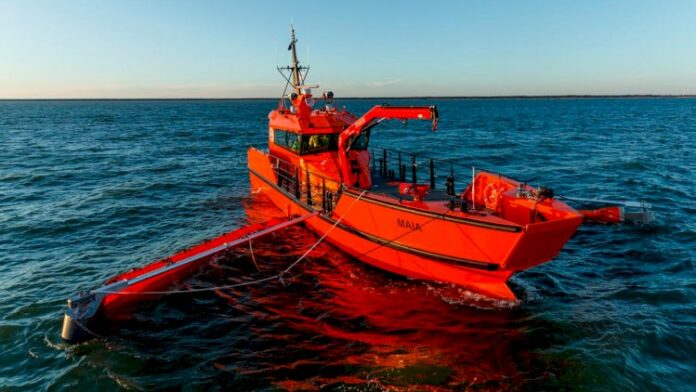
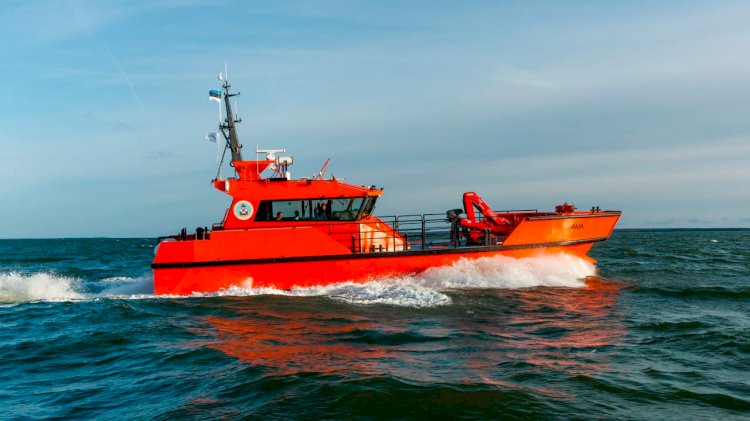
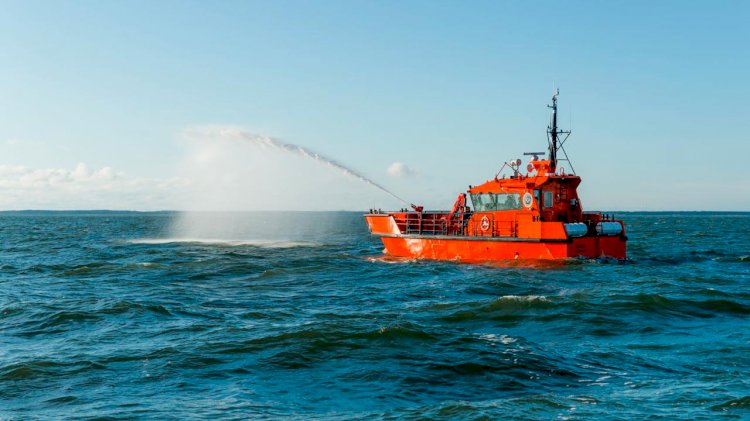
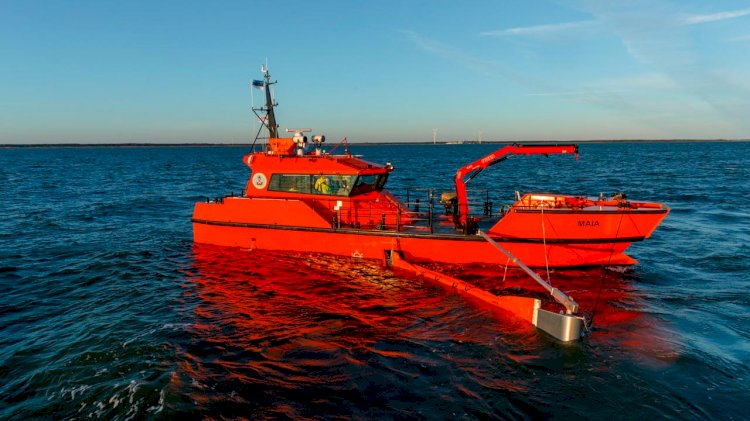
Baltic Workboats has launched its new oil recovery vessel.

The boat has the capacity to carry 5 t of cargo and accomodate 10 people onboard and is equipped also with a small crane.

The range in cruising speed (20 kn) is about 350 nm.

Geothermal energy research in Port of Rotterdam enters next phase

0

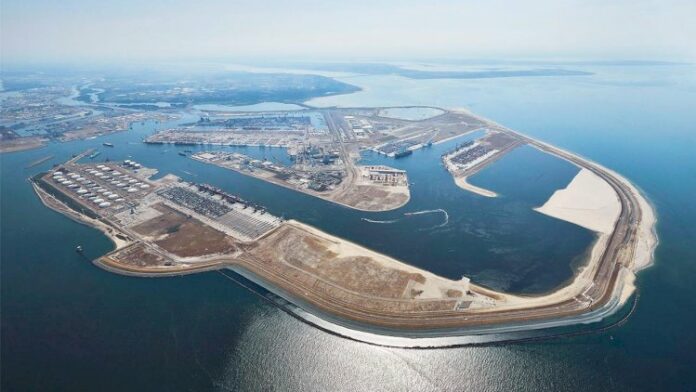
Shell Geothermal BV and the Port of Rotterdam Authority are together investigating the possibilities for geothermal energy in the Port of Rotterdam’s western section. The two companies have received an exploration permit from the Ministry of Economic Affairs for this.

The subsurface has been mapped out thoroughly in recent years as part of the Ultra-Deep Geothermal Energy (UDG) green deal. Obtaining the exploration permit means that Shell and the Port Authority will have time in the coming years to further detail their plans, with the aim of developing geothermal energy projects in the port’s western section. The focus in the course of the coming two years will be on making agreements with potential geothermal energy purchasers, detailing the costs, determining a potential location for test drilling and an investigation into how the infrastructure could look. It is also essential that geothermal energy can compete with energy from other sources. Test and other drillings are not required at this point.

Industry in Rotterdam consumes a lot of energy. If geothermal heat can be brought to the surface as hot water, it can serve as a good renewable source of energy, particularly for the production of steam for industry. Moreover, once slightly cooled following use by industry, the water can be used to heat homes and greenhouses via a regional heat network.

Shell and the Port Authority will involve EBN (Energy Beheer Nederland) in the detailing of the plans.

Aker BP to use Maersk Integrator rig at Ivar Aasen

0

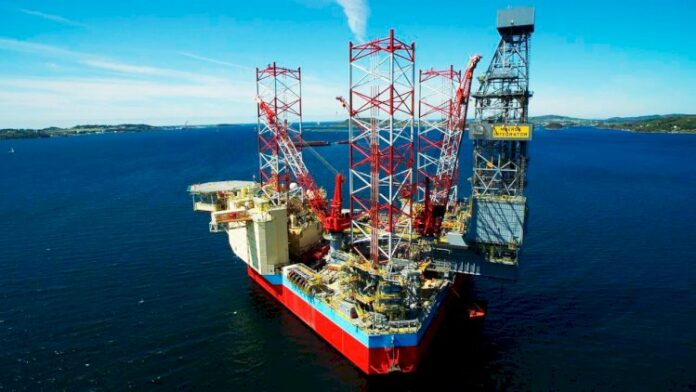
Maersk Drilling has secured a two-well contract extension from Aker BP for the ultra-harsh environment, low-emission jack-up rig Maersk Integrator.

In direct continuation of the rig’s current workscope, Maersk Integrator will move to the Ivar Aasen field offshore Norway to drill two wells, with work expected to commence in October 2020. The extension has an estimated duration of 93 days and a contract value of approximately USD 25.5m, excluding a potential performance bonus. The contract includes an additional one-well option.

Maersk Integrator is contracted under the terms of the alliance agreement Maersk Drilling entered into with Aker BP and Halliburton in 2017. The tripartite alliance uses a shared incentives model, thereby securing mutual commitment to collaborate to reduce waste and deliver value. Contracts under the alliance are based on market-rate terms but add the possibility of an upside for all parties, based on actual delivery and performance.

COO Morten Kelstrup of Maersk Drilling says:

“We are thrilled to be able to firm up activities for Maersk Integrator in 2020 by continuing to work closely together with Aker BP in an alliance which is enabling new ways of working across the value chain. The alliance is enhancing efficiency through increased coordination and involvement, and we are starting to see the first tangible results of this. Higher efficiency in itself reduces the CO2 emissions associated with a drilling campaign, and this is further improved by the low-emission upgrades Maersk Integrator will receive before it begins working at Ivar Aasen.”

Maersk Integrator is an ultra-harsh environment CJ70 XLE jack-up, designed for year-round operations in the North Sea. It was delivered in 2015 and is currently operating offshore Norway for Aker BP. The rig is expected to perform its scheduled Special Periodic Survey in August 2020 and will undergo a series of upgrades to turn it into a hybrid, low-emission rig prior to moving to the Tambar field in September 2020.