-2.3 C
New York
Home Blog Page 921

Fugro awarded Aker Energy contract for Pecan field surveys offshore Ghana

0

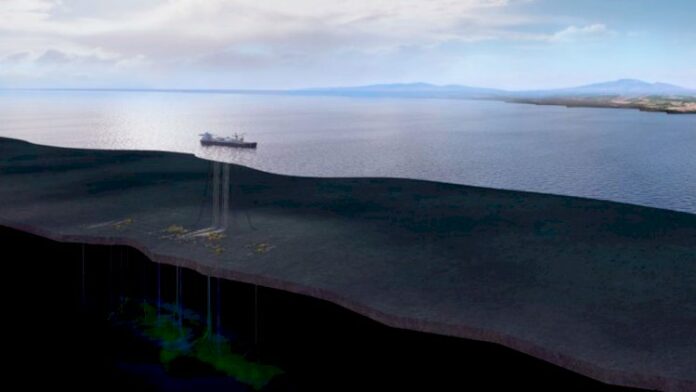
Aker Energy has awarded Fugro a contract for geotechnical and geophysical survey services in relation to the Pecan field, offshore Ghana.

The surveys will obtain critical seabed and sub-seabed information to facilitate the planning and emplacement of the Pecan subsea infrastructure and the floating, production, storage and offloading (FPSO) ship.

Jaco Stemmet, Fugro’s Director for Africa said:

“This project will build on the extensive experience that our vessels and staff have gained in Ghana and the wider West Africa region, and we look forward to using this knowledge to execute a safe and successful campaign.” 

The contract includes surveys performed from two state-of-the-art vessels for a 10-week period starting in March, and subsequent laboratory testing. Geophysical survey data will be acquired using the Fugro Searcher and one of Fugro’s fleet of deepwater AUVs, Echo Surveyor VI; the geotechnical vessel Fugro Scout, specifically designed for geotechnical operations in water depths of up to 3000 m, will then follow to provide drilling, and seabed sampling and in situ testing.

Olav Henriksen, Senior Vice President for Projects at Aker Energy, said:

“For Aker Energy, this contract is an important next step as we prepare for the ramp up of the Pecan project. We are eager and excited to get started and Fugro’s services are world class, making them a natural choice to partner with.”

As part of the contract, an emphasis has been placed on local involvement via Fugro’s Ghanaian office. The shore base for the two ships will be Takoradi, in the west of the country, materials will be locally sourced where possible, and the Fugro team will comprise at least one trainee surveyor and one experienced surveyor from Ghana. In addition, a series of educational and capacity-building activities will be rolled out through partnerships with Ghanaian educational institutions and the Petroleum Commission of Ghana.
Passengers held on World Dream cruise have left the vessel

0

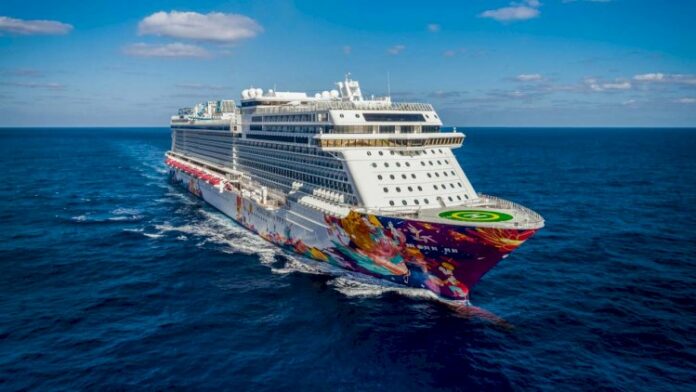
Passengers held on the Genting (Hong Kong)-owned World Dream due to fear they may be infected by the novel coronavirus have left the vessel following the completion of testing by the Centre for Health Protection (CHP).

Subsequent to the notification of confirmed cases of novel coronavirus infection the CHP’s Port Health Division efforted in carrying out the port health inspection work on the cruise.

Personnel of the Port Health Division have been assessing the health condition of over 1,800 passengers and over 1,800 crew members on board through health declaration and temperature checking. Samples were collected from all crew members reported to have symptoms for testing on novel coronavirus. All passengers and crew members were required to stay on board prior to completion of the health inspection and permission by the DH.

Now the Port Health Division of the Department of Health has completed health quarantine work on the World Dream cruise and all people on board have now disembarked. The Government will facilitate immigration procedures for passengers. The cruise company will arrange passengers to disembark in an orderly manner and will provide them with a shuttle bus service.

A spokesperson for the Hong Kong Government reiterated:

“In view of the spread of the novel coronavirus infection in the community, public health is our utmost priority. As some travellers who took the World Dream cruise were earlier confirmed to have been infected with the novel coronavirus, some crew members might have had direct contact with them. Upon relevant experts’ advice, the CHP decided to conduct tests on crew members with a view to protecting the health of passengers. The purpose of the tests was to exclude that they are infected and thus will not pose health threats to the passengers.”
 

Energy Observer and CMA CGM join forces to accelerate the development of energy solutions

0

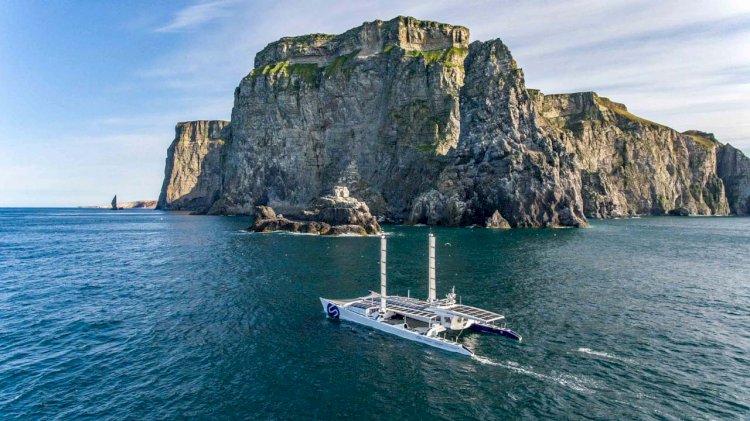
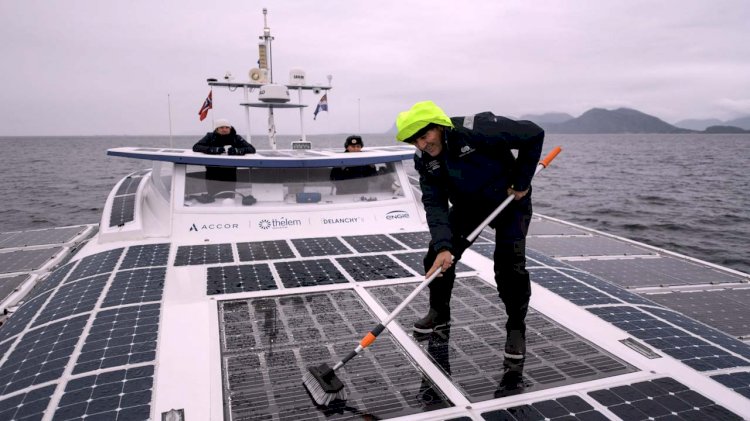
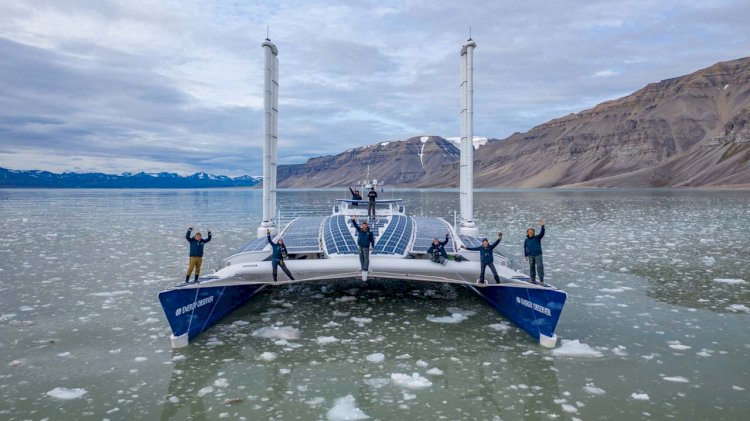
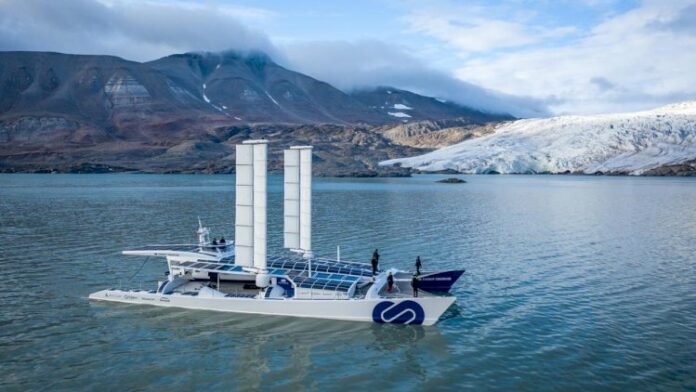
Energy Observer, formerly a legendary race boat, is now a genuine experimental platform for tomorrow’s energy sources. It is sailing round the world in order to speed up development of the most innovative solutions for the environment.

This partnership with CMA CGM deals with the development of cleaner and more sustainable energies to eliminate CO2 emissions, greenhouse gases and air pollutants. It aims to experiment, test and develop energy solutions based on hydrogen, solar, tidal and wind power.

Hydrogen is a limitless energy source that generates up to 4 times more energy than coal, 3 times more than diesel. The green hydrogen used by Energy Observer is made from seawater using on-board renewable sources of electricity (solar, wind and hydropower). Producing and burning hydrogen does not result in any greenhouse gas or fine particle emissions.

CMA CGM will contribute its industrial expertise to our floating lab, in order to promote the use of hydrogen as a zero-emission fuel source for the shipping industry in the years to come.

Energy Observer and CMA CGM R&D experts will pool their expertise and knowledge to develop technological solutions capable of limiting the environmental impact of shipping. The mobilization of CMA CGM will make possible the industrialization of new concrete energy solutions tested on board our floating smart grid.

CMA CGM will also contribute its shipping and logistics expertise to Energy Observer. The Energy Observer village will be made from containers converted and transported by CMA CGM with the large-scale operational support from the whole CMA CGM network around the world. It will travel the globe, presenting the latest technological innovations to the largest possible number of people and raising awareness about ecological transition issues among all audiences.

CMA CGM has long been committed to protecting the environment and reducing its carbon footprint. Between 2005 and 2015, the Group reduced its CO2 emissions per container transported by 50%, and it has set itself the target of reducing it by a further 30% between 2015 and 2025.

Tanya Saadé Zeenny, Executive Officer of the CMA CGM Group, said:

“CMA CGM is joining forces with Energy Observer to accelerate the development of tomorrow’s energy solutions, particularly hydrogen.  Our partnership will mobilize all of CMA CGM’s know-how. Our teams of engineers and R&D experts are already working and our network around the world will be strongly mobilized to ensure the logistical support of Energy Observer’s worldwide ports of call.”

Victorien Erussard, Energy Observer’s Founder and Captain, added:

“CMA CGM is a key partner in our quest for clean transport. With CMA CGM’s huge experience in the shipping industry, our respective engineers and our technology partners, we have every chance of achieving our goals, which are ambitious but increasingly realistic. We are all driven by the same passion for technology and the desire to develop alternative energy solutions. The sea is something we can all share, and it is time to share our skills in order to protect the ocean, our favourite environment. We are delighted to be joining the 500-plus vessels in the CMA CGM fleet.”

Wärtsilä and DNV GL will work together on accelerating marine sector’s digital transformation

0

The technology group Wärtsilä and classification society DNV GL have signed a Memorandum of Understanding (MoU) in which they agree to work together to contribute to the marine industry’s ongoing digital transformation. In particular, the two companies wish to further explore the potential use of digital technologies, collaborative data sharing, and standardisation to enhance existing products and services, and to develop new ones.

The agreement was signed by Roger Holm, President, Wärtsilä Marine and Knut Ørbeck-Nilssen, CEO, DNV GL – Maritime on 6th February.

Among the focus areas will be collaboration on digital technologies and big data in classification and the requirements for their use. The project will examine the application of these technologies in areas such as autonomous ships, advanced remote services, new bridge technologies, and data sharing. Cyber security will be another natural area of cooperation.

Roger Holm said:

“The marine industry stands to benefit enormously from our rapidly expanding and unprecedented capabilities in collecting, compiling, processing, analysing, and distributing data digitally. Wärtsilä is committed to leading this digital transformation that will undoubtedly lead to greater efficiencies, better safety, and sustainability. We look forward to working with DNV GL to accelerate this transformation.” 

Knut Ørbeck-Nilssen, CEO, DNV GL – Maritime, said:

“At DNV GL, we are committed to using digitalization to help our customers extract the maximum value from their data. Working together with Wärtsilä, we can identify and minimize the barriers to data sharing, provide innovative class and assurance services, and find ways to capitalize on the new possibilities this opens up for shipping. Enabling greater sharing requires building trust, and DNV GL has worked to enable this, for example with our independent platform Veracity which provides seamless sharing, while ensuring the quality of data and algorithms our customers rely on.”

Andrea Morgante, Vice President, Strategy & Business Development, Wärtsilä Marine, said:

“This important collaboration between a marine industry technology leader and the world’s leading classification society will help to standardise and shape the regulatory environment, and will also enable the innovations needed for the sector to achieve the decarbonisation goals set out by the IMO. The IMO’s target is to cut absolute greenhouse gas emissions by at least 50 percent from 2008 levels by the year 2050.”

In announcing the agreement, the two companies noted that digital transformation developments can have an immediate and transformative impact on operations and existing business models.

WE Tech Solutions to deliver an integrated solution to newbuild Donsötank tankers

0

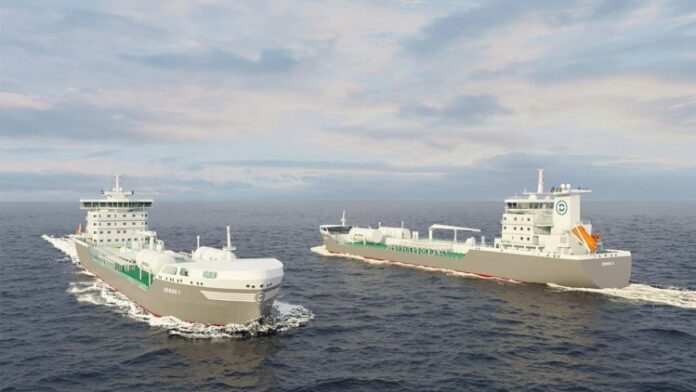
WE Tech Solutions, a leading energy efficiency solution provider for the maritime industry, has signed an agreement to deliver an integrated solution to two newbuild product and chemical tankers for Swedish shipowner Rederi AB Donsötank.

The 22,000 DWT vessels, currently under construction at China’s Wuhu Shipyard Co. Ltd, will benefit from a solution built around the WE Drive™ variable frequency drive and Yaskawa Environmental Energy / The Switch’s permanent magnet (PM) shaft generators. The technology delivers lower emissions, significant efficiency gains, and lower operational and maintenance costs for the advanced ice-class 1A tankers.

Finland’s WE Tech, a specialist in providing flexible, reliable and innovative marine hybrid solutions, will provide a comprehensive technology package for the sister ships, with delivery starting in spring 2020. Sitting at the heart of the solution, the WE Drive™ works with the market-proven The Switch PM machines to tailor energy efficiency, production and consumption according to vessel needs.

In the Power Take Out (PTO) mode, the solution allows mechanical energy from the propeller shaft to be converted to electrical energy – the most energy-efficient way to generate power in a vessel. Switching to the Power Take In (PTI) mode enables the technology to convert auxiliary generator power to propulsion power by utilizing the PM shaft generator as an electrical motor. This effectively boosts the propulsion system for demanding operations, such as those in ice-covered water.

Mårten Storbacka, Managing Director of WE Tech, comments:

“This is both an environmentally friendly and operationally powerful solution. In the PTO mode, there is no need to run auxiliary engines and generators when sailing, slashing fuel costs, emissions and saving on maintenance requirements. Switching to PTI allows the vessel to adapt to the most demanding conditions, using the shaft generator as a reliable and economical auxiliary propulsion drive.”

For a forward-thinking shipowner like Donsötank, with an acknowledged commitment to safe, efficient and low-emission shipping, it is the perfect solution – delivering stable, cost-effective, flexible, and environmentally conscious performance.

Yaskawa Environmental Energy / The Switch has a long history of working alongside WE Tech as a key supplier. Together, the two have collaborated on a series of deliveries to customers such as ESL Shipping, Saga LNG Shipping, Rederiet Stenersen and Wallenius Shipping, among others.

According to Juha Reinilä, Key Account Manager, Marine, Yaskawa Environmental Energy / The Switch, the latest delivery encapsulates the industry’s current drive to harness innovative technology to deliver benefits for the various stakeholders. Reinilä explains:

“It’s a win-win solution for everyone. By capturing mechanical energy from the propeller shaft and converting it to green electrical energy for the vessel, OPEX is reduced, emissions are cut, and a new level of energy efficiency can be realized. The customer gains a competitive advantage, society is saved from many tons of pollution, and the industry receives further proof that environmental and commercial sustainability really do go hand in hand.”

£1.4m to map carbon storage potential of UK offshore areas

0

A new study will identify the UK’s best sites and produce a road map for carbon storage to help the country reach its net zero targets, geologists say.

The gas fields of the southern North Sea are the focus of the Heriot-Watt University study, which has received funding from the Oil and Gas Technology Centre (OGTC) and support from the UK regulator, the Oil and Gas Authority (OGA), offshore operators and data owners.

Professor John Underhill, from Heriot-Watt University in Edinburgh, believes the southern North Sea is one of the most promising options for large-scale carbon capture and storage in the UK.

Professor John Underhill said:

“The Southern North Sea faces three of some of the UK’s largest carbon emission areas: the industrial hubs of Teesside, Humberside and the Thames estuary. It also has a number of depleted gas fields that could be repurposed to store carbon. We are going to systematically examine the geology of these sites and determine which critical factors allow carbon to be safely stored over long, geological timescales.”

The team will create a roadmap for other sites by mapping the geological features and their carbon storage potential.

The best sites and any potential leakage points will be identified. Accurate mapping of the overburden will be used to develop mitigation strategies and early warning systems for any carbon escape or seepage. 

The team will use data from the OGA’s National Data Repository (NDR), one of the largest-ever single open releases of field and infrastructure data from the UK’s oil and gas industry, which was made open access for the first time in 2019.

The project will receive funding from the OGTC’s Subsurface Solution Centre, which is supporting accelerating decarbonisation technologies in the UK.

Gillian White, Subsurface Solution Centre Manager at the OGTC said:

“This is an exciting example of transferring skills from the oil and gas industry to carbon capture and storage, alongside sharing knowledge and data. Ultimately this project will give policymakers the tools they need to determine the most suitable sites for carbon capture and storage, which is aligned with OGTC’s vision to transform the UKCS into a net zero basin.”

The OGTC award aligns with its 2025 goal of advancing research in the clean energy transition and has attracted matched funding from industry and Heriot-Watt University.

Professor John Underhill said:

“If we are to reach net zero targets we must make serious progress in carbon capture and storage. We need to identify the best sites based on their geology and evaluate the risk of leakage, so that we select the right sites, in the most logical order, and understand the total volume of carbon that could be stored. We must do this correctly and on a large scale. We won’t get a second chance to get this right, as all credibility will be lost if leakage takes place from a poorly-selected site.”

Polar Sea Ice detection using reflected GNSS signals

0

Working with Surrey Satellite Technology Ltd (SSTL), the National Oceanography Centre (NOC) have released new datasets that demonstrate how reflections of satellite navigation signals collected in space can be used to accurately map the extent of the sea ice in the Arctic and Antarctic.

The measurements were taken by an SSTL small satellite called TechDemoSat-1, launched in 2014, which carried the SGR-ReSI, an instrument designed to demonstrate accurate measurement of ocean wind speeds around the globe using GNSS reflectometry. With funding from ESA, NOC developed the algorithms to estimate the wind speed from GNSS reflections, and recently added the capability to discriminate between ocean and ice.

By exploiting the way that GNSS signals are used as radar sources it is believed that the ice edges can be detected with a higher resolution than using passive sensing methods, and this information is potentially valuable for shipping and off-shore energy, as well as climate and polar ice research.

Images show the sea ice extent during November 2018 over the Arctic and Antarctic. The hole over the North Pole shows the high latitude limit of the TechDemoSat-1 satellite’s ability to collect GPS satellite reflections.

Phil Brownnett, Managing Director of SSTL, said:

“This is another important demonstration of the benefits of GNSS-Reflectometry for both commercial and scientific communities. SSTL, in collaboration with partners, has taken this new technique from feasibility to a world-leading capability which will see new missions uncovering further applications over ocean, ice and land.”

Giuseppe Foti, Senior Scientist of NOC, said:

“These recent results show how collaboration between academia and industry is critically important to improve our understanding of ocean and ice processes that have a global impact on our planet.”

The SGR-ReSI instrument from SSTL is flying on the 8-satellite NASA CYGNSS mission launched in 2016 to enable the measurement of hurricanes. The sensor can be carried on a very small satellite and a future constellation could offer low delay, high accuracy ice edge mapping, in addition to the other benefits GNSS reflectometry brings over land, ice and ocean.

SSTL is working on a number of projects to exploit GNSS reflectometry for different applications and the SSTL HydroGNSS concept for sensing land hydrographic climate variables using GNSS reflectometry has recently been down-selected for the ESA Scout mission opportunity.

RAL’s new tugs for GPHA

0

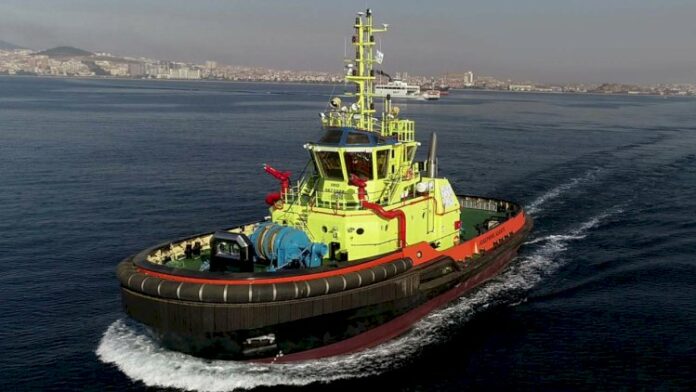
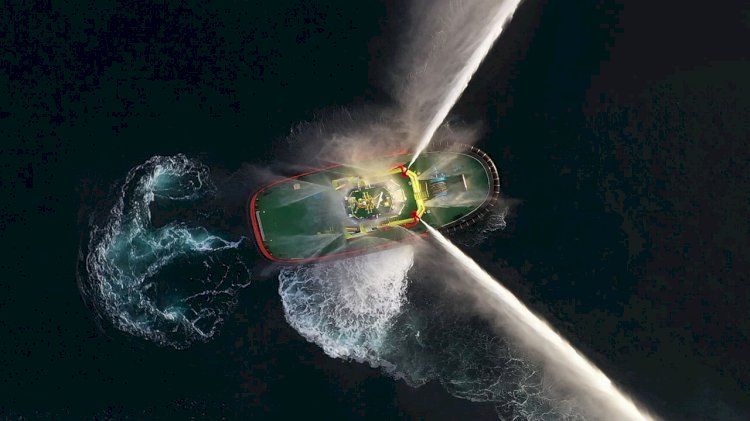
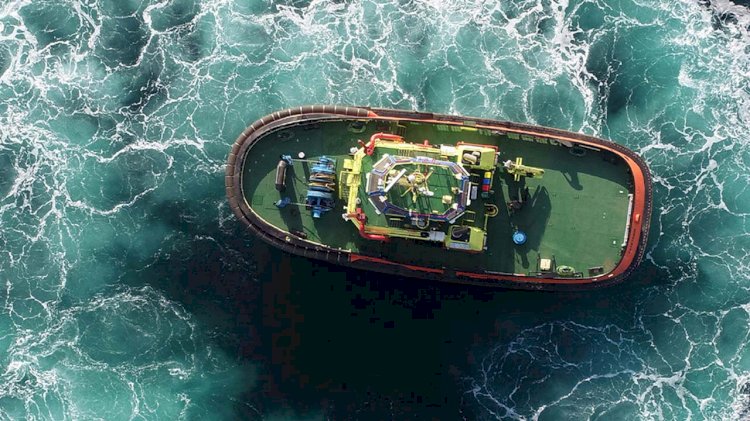
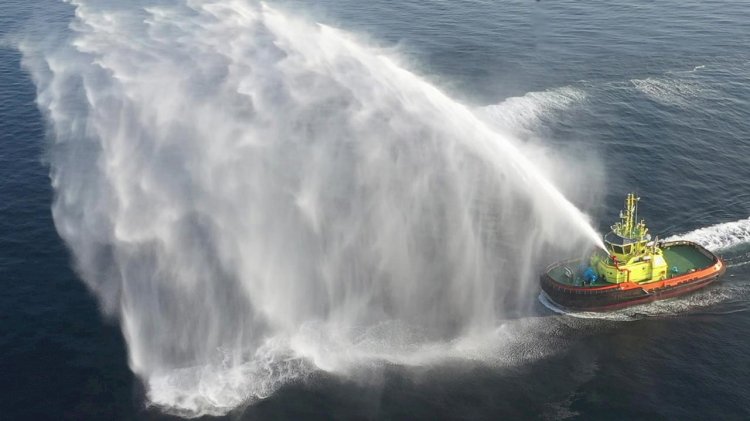
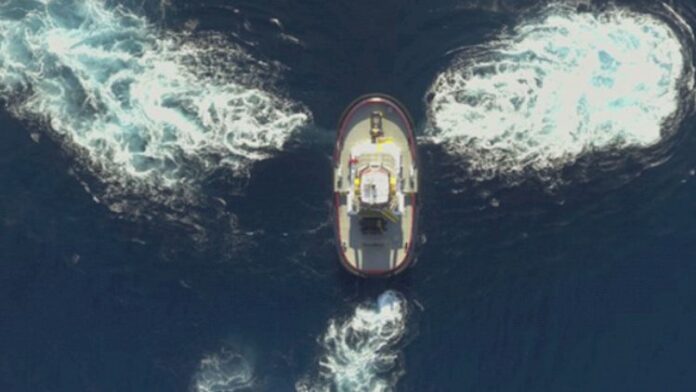
Robert Allan Ltd. is pleased to announce that TOR Group of Companies’ (TOR) shipyard in Tuzla Bay (Istanbul), Turkey has successfully delivered the Ben Owusu-Mensah, the third of three RAstar 3300 tugs for Ghana Ports & Harbours Authority (GPHA). With keels for all three tugs laid on February 19th of 2019, these deliveries are especially notable for the speed of construction.

These three new tugs are equipped to fulfill a multitude of missions for the GPHA, including but not limited to ship-assist, fire-fighting, and pollution response. Driven by high speed engines and Z-drive propellers, the Ben Owusu-Mensah and its sisters comfortably meet all contractual performance requirements, including the achievement of 82 tonnes of bollard pull and speeds in excess of 14 knots on trials.

Each of these tugs is well equipped for GPHA’s ship-handling and towing needs, with a Kongsberg hawser winch forward, with 225 tonne brake holding load, and a 100-tonne safe working load Mampaey tow hook mounted to a tow post aft.

Main propulsion machinery is comprised of the first Cummins QSK95-M engines used in a tug application, each delivering 2,560 kW at 1800 rpm, and driving 2.8 metre diameter Kongsberg US255S P30 fixed pitch Z-drives. Electrical power is generated by a pair of Cummins QSB7 gensets, each capable of producing 136 ekW at 50 Hz.

The Fi-Fi 1 class off-ship fire-fighting system is powered by a dedicated Cummins QSK38-M1 engine, driving a single 2,750 m3/hr Marsis fire pump. A pair of Marsis water and foam capable monitors are mounted on the forward deckhouse top and include fog/jet nozzles. A water spray system is also outfitted.

In addition to their primary ship-handling and fire-fighting duties, the tugs feature tankage for recovered oil, with a corresponding oil recovery notation. A Heila 25-2S folding knuckle boom crane on the aft deck of each tug provides additional utility with 8.6 metre reach.

Spacious and climate-controlled MLC 2006 compliant accommodations provide comfort for a crew of up to 8 persons, even on days where exterior temperatures may rise as high as 50o C. Two single officer cabins with ensuite WCs are located in the deckhouse, along with large and well appointed galley and mess spaces. Three large double cabins, all well in excess of MLC area requirements are located below deck, along with a common lavatory space. A generous galley store is also located on this deck, as is the air-conditioned switchboard room.

SCHOTTEL to supply six rudderpropellers to Seabulk Towing Inc

0

German propulsion manufacturer SCHOTTEL has been awarded a contract from Master Boat Builders to supply a total of six rudderpropellers to US-based Seabulk Towing Inc, a subsidiary of SEACOR Holdings Inc

Both new builds will feature the Advanced Rotortug® (ART) design: a triangular propulsion system which significantly improves tug manoeuvrability and enables safe working conditions at all times.

Daniel Thorogood, President of Seabulk:

"These tugs represent the latest in technological innovation and showcase our responsiveness to structural and environmental stewardship changes in the shipping sector. With SCHOTTEL Rudderpropellers, we are highlighting Seabulk’s ongoing commitment to provide the best available equipment to serve our customers’ developing demands."

Both the tugs will be propelled by three SCHOTTEL Rudderpropellers type SRP 430 FP with a propeller diameter of 2.40 m, each driven by a 1,771 kW diesel engine. With this propulsion system, each vessel will achieve a free running speed of 14.5 knots. They will also have a bollard pull of approximately 80 tonnes, which is sufficient for manoeuvring the ultra-large container ships.

The ART incorporates the patented triple Z-drive Rotortug® concept, featuring omni-directional manoeuvrability and the benefits of a fully redundant and precise propulsion machinery configuration. The triple Z-drive also offers increased redundancy for ship-handling and escort towing, as well as enhanced crew safety.

The new vessels will operate alongside the company’s existing harbour fleet in the Gulf of Mexico and the East Coast of the United States. Delivery is scheduled for the second half of 2021 and 2022.
 

SEDNA and SHIPNEXT to digitize workflow related to shipping

0

SEDNA, the leading provider of cloud-based transaction management software, announces an integration with SHIPNEXT that will enable organizations to digitize the workflow related to shipping, transportation, and freight negotiations.

As part of the integration within SEDNA, users dealing with dry-bulk, wet-bulk, and heavy or oversized cargo will be able to be instantly matched with shipping solutions within their email flow or directly from SHIPNEXT, a shipping marketplace and blockchain-based ecosystem.

The results will reduce the amount of work required to source cargo information from hours to seconds.

An increasing amount of emails and requests are creating a growing problem related to data search and processing. Traditionally, if a broker wanted to find the latest information regarding a specific vessel, they were required to search through multiple systems. The issue is compounded when having to compare several ships and searching through thousands of emails to gather the most relevant information. Through this integration, SEDNA and SHIPNEXT are helping to automate routine data processing by creating one seamless system that will spare the industry from traditional email circulars and hours of work. 

Research shows that a vast amount of resources are wasted due to inefficient and error-prone manual processes. Many organizations are using email as the first step in digitally transforming their organizations to meet people where they work and provide a better solution for collaboration, searching for information, and filtering for only the most relevant messages.

According to Alexander Varvarenko, CEO of SHIPNEXT:

“We view SEDNA as the most user-friendly solution that when combined with our technology, we are creating a mobile workstation that is second to none. Together, we are providing a solution that will save valuable time and reduce manual errors when initiating Cargo-to-Ship and Ship-to-Cargo matching.”

When discussing the value that SHIPNEXT will deliver to the market, Dan James, VP of Product at SEDNA said:

“Companies like SHIPNEXT are unlocking huge value for their customers by applying technologies like machine learning and AI to rethink cluttered business practices. At SEDNA, we value companies who want to help customers succeed.”

When asked about SHIPNEXT, Jean-Guy Faubert, CRO of SEDNA, said:

“Both companies are modernizing a legacy software system long-neglected, but too important to abandon as enterprise organizations manage an increasing amount of laborious workarounds.”

As Mr. Faubert explains, the value of the time savings can be significant:

“Time is a highly valuable commodity and there are thousands of hours, worth millions of dollars, being wasted on tasks that software systems like SEDNA can eliminate by integrating with SHIPNEXT.”

The future as Mr. Varvarenko envisions is “an integrated and decentralized blockchain solution across the entire supply chain and all sectors of transportation to create one ecosystem. These results will not only make a positive impact on an organization, but the environment as well.”