3.2 C
New York
Home Blog Page 916

Radio Holland renews MSA contracts with Jumbo Shipping

0

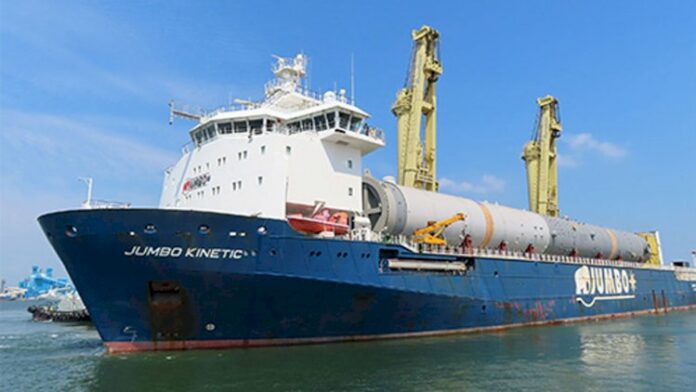
Radio Holland recently renewed MSA (Managed Service Agreement) contracts with Jumbo Shipping. The renewal of the MSA contracts concerns four vessels and has been established for the next four years.

Addition of critical equipment and mandatory surveys Jumbo renewed the Managed Service Agreement contracts with Radio Holland to minimize the hassle of managing multiple suppliers by outsourcing all NavCom service work to Radio Holland technicians.

Where the previous contracts focused mainly on radar and gyro equipment, the new contracts involve the complete range of navigation and communication equipment with the addition of critical equipment on board such as the VDR, Inmarsat C system, Speedlog, Echosounder and Autopilot.

To further optimize service management of the equipment on board, Jumbo decided to add the mandatory inspections and surveys, including the Radio Holland SBM certificate, to the MSA contracts. The renewal of the service contracts has been concluded for a fixed amount per year or quarter which means a clear financial view for Jumbo. The four vessels concerned are the Fairlift, Stellaprima, Fairmaster and Jumbo Kinetic.

Paul Smulders of Radio Holland says:

“Radio Holland is aiming to reduce the operational costs for our customers on a continuous basis. To this end we have introduced the Managed Service Agreements many years ago. To ensure operational availability of the NavCom equipment on board at all time in the most efficient and planned way. The service database in our Global Service System supports this with a lot of data about the equipment on board. We are happy to see that Jumbo values our MSA’s and that we can continue to support their assets with highest availability.”

Radio Holland’s Managed Service Agreement ensures safe and efficient shipping, always operational NavCom equipment and includes annual equipment health checks, tailored maintenance solutions as well as a planning and budget for an agreed period.
MOL and DSME join forces to develop an Environmental Friendly FSRU Technology

0

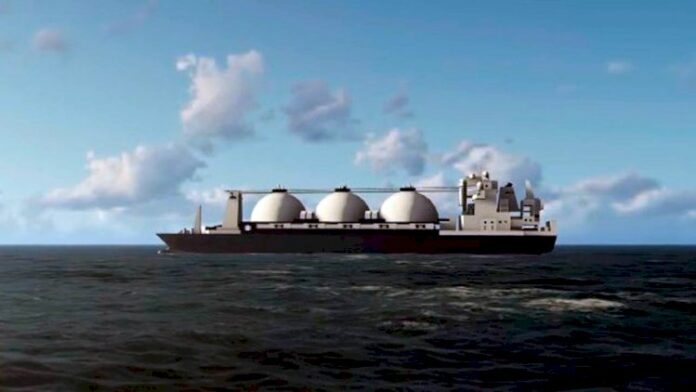
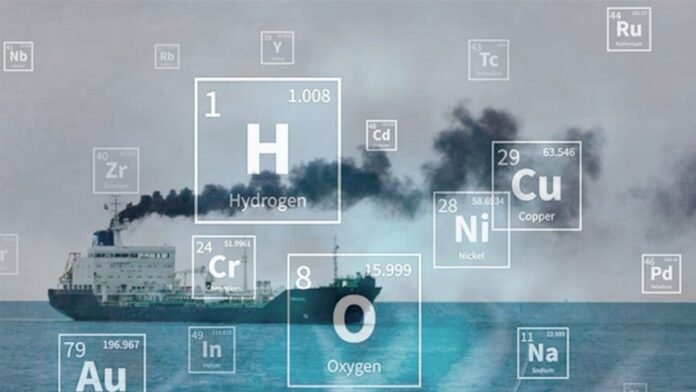
Mitsui O.S.K. Lines, Ltd. and Daewoo Shipbuilding & Marine Engineering Co., Ltd. have entered into an agreement to jointly develop a new technology to reduce environmental impact for Floating Storage and Regasification Unit (FSRU).

This new technology named "Cryo-Powered Regas" will enable to utilize the LNG cold energy, which used to be disposed, as power generation energy by adopting the Organic Rankine Cycle in the regasification process of FSRU. "Cryo-Powered Regas" technology is expected to reduce fuel consumption and CO2 emission of FSRU significantly.
MOL and DSME plan to test the technology in a small-scale pilot facility within 2020 and provide the safe and environmental friendly technology to customers in future FSRU projects.

MOL values promoting environmental and emission-free businesses. This project is one of the cases where MOL will take proactive measures to enhance environmental compatibility of its services.

In MOL's management plan, "Rolling Plan 2019", MOL has positioned its Offshore Business as a field where MOL can leverage its strengths. FSRUs are drawing attention as a solution for flexibility and mobility in both the LNG and Electricity supply chain. MOL will promote the FSRU business and its associated services, which meets customer needs for diversified energy procurement and SDGs achievement (i.e., environmental condition and stable development), as the leading company of FSRU business in Asia.

BW LPG retrofits gas carrier vessels with Wärtsilä’s LFSS

0

The technology group Wärtsilä’s LPG Fuel Supply System (LFSS) has successfully completed full scale testing with a full sized 2-stroke marine engine burning liquid petroleum gas (LPG) as fuel.

This was the world’s first such testing protocol. It was initially decided to retrofit the Wärtsilä LFSS to four very large gas carrier (VLGC) vessels owned by Oslo-listed BW LPG, the world’s largest gas shipping company. However, following the tests, in which the performance exceeded expectations, BW LPG decided to exercise their option to retrofit an additional four vessels, making a total of eight ships to benefit from this technology. The initial order with Wärtsilä was placed in December 2018, and the order for the four additional retrofits was signed in February 2020.

Wärtsilä has been designated as the system integrator for the retrofittings. This involves not only the installation of the LFSS, but also the required ship design modifications, integration of the LFSS control system into the ships’ integrated automation system (IAS), and acting as the coordinator between the yard, the engine manufacturer, and the owner.

Peter Zürcher, Project Manager, Wärtsilä Marine, says:

“This project is yet another example of Wärtsilä’s leading position in bringing innovative systems that increase efficiency and support environmental sustainability, to the market. The use of LPG as a marine fuel is likely to increase in the future, and a high quality, reliable, supply system is essential if this is to happen.”

Serge Schwalenstocker, Project Manager, BW LPG, says:

“BW LPG is pleased to work with Wärtsilä and collaborate on industry-leading innovations. We are confident that through such partnerships, BW LPG can play a leading role in the decarbonisation of our industry, and the broader transition towards cleaner energy.”

Retrofitting of the Wärtsilä LFSS to the first of the vessels will take place in April 2020. The system is available as a stand-alone solution, or as an integrated element within the LPG cargo handling system.

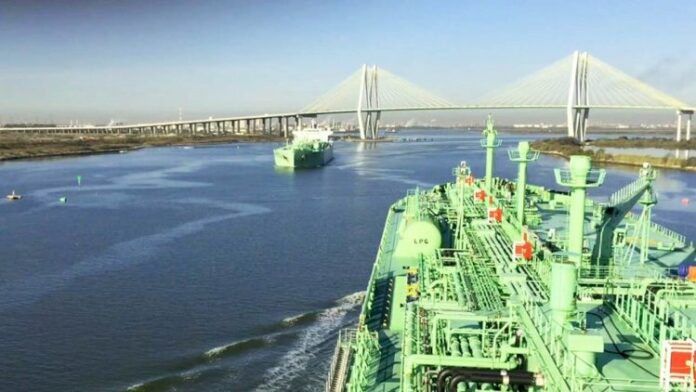
Image caption: BW LPG, the world’s largest gas shipping company, will retrofit eight very large gas carrier vessels with Wärtsilä’s LPG Fuel Supply System (LFSS).

Kidnap of personnel from tanker whilst in transit towards Lagos

0

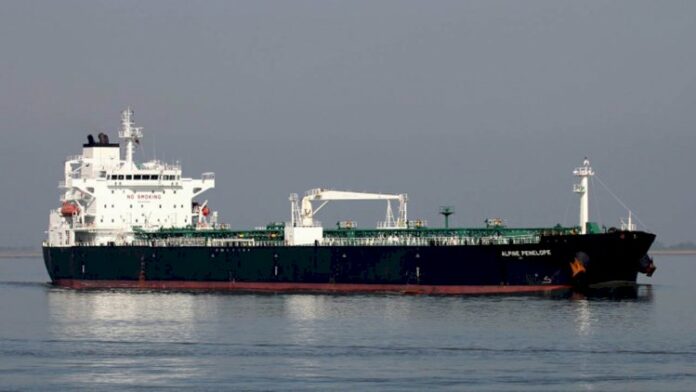
Dryad Global has informed that on the 20th of February the tanker, ALPINE PENELOPE has been attacked 76nm SW Cotonou, whilst in transit towards Lagos, resulting in the kidnap of 9 personnel.

A short report indicates that the officer on watch identified two armed men on board. It is understood that an alert was sent by the tanker, following which communications were lost. Communications were re-established with the vessel around 0940UTC. The vessel is now proceeding to Lagos.

Whilst the identities of the kidnapped crew remains unknown, the vessel, is known to have a crew of 24 personnel, consisting of Georgians, Filipino and Ukrainian nationals.

This is the 7th incident to occur in the waters off Cotonou since Jan 19. Of those, 5 have resulted in illegal boarding’s offshore, two of which resulted in kidnappings of crew. This latest incident has occurred only 11nm west from an illegal boarding event on 19 Jan 20.

In this incident, the container ship ATLANTIC DISCOVERER was illegally boarded by two unknown persons with five persons identified as being alongside in a skiff.  The fate of the crew remains unclear at this stage and dryad will continue to update this post as more information becomes available.

Within 2019 the waters off Lomé and Cotonou witnessed an increase in both volume and severity of maritime crime incidents. Dryad advise that all vessels transiting the area be subject to thorough transit risk assessment prior to entry into the area and implement full mitigation measures.

Free VoIP calls to ISWAN’s SeafarerHelp hotline

0

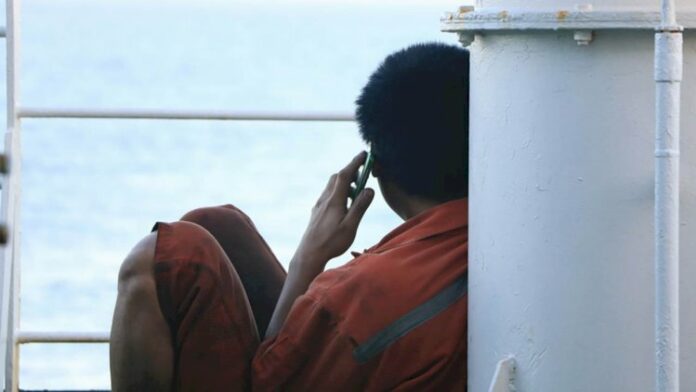
Mariners on any vessel with KVH VSAT service can place free VoIP calls to ISWAN’s confidential 24-hour SeafarerHelp phone line.

KVH has announced that seafarers on vessels with KVH VSAT service may place free VoIP calls to ISWAN’s SeafarerHelp hotline while at sea. SeafarerHelp is an important initiative by the International Seafarers’ Welfare and Assistance Network (ISWAN) to support mental wellbeing for seafarers around the world. The hotline is confidential, multilingual, and available 24 hours per day, 365 days per year.

Roger Harris, executive director of ISWAN, says:

“We are thrilled that KVH is supporting this initiative so that seafarers can get the help they need when they need it. In our experience, we have seen that seafarer issues range from the simple to the complex and the most pressing need is having someone empathetic to confide in, which can be challenging in the onboard environment. This hotline is dedicated to ensuring seafarers speak to someone in time, and with KVH’s involvement they can do so without having to worry about technical issues or data costs.”

Recently, the maritime industry has begun to raise awareness around the importance of seafarers’ mental wellbeing and to support initiatives to encourage discussion. Experts note that the same everyday stresses and emotions that a seafarer experiences on land are present at sea but may be exacerbated by the challenge of being on a ship 24/7 for extended stays. Talking to someone about their issues is an important first step.

Free VoIP calls to SeafarerHelp are available immediately from KVH VSAT vessels; seafarers simply use a VoIP phone on the vessel and call the helpline: +44 (0)20 7323 2737.

A global maritime VSAT connectivity provider, KVH has a long history of providing crew wellbeing services, including news and entertainment content, basic safety training, crew calling cards, and crew data allocation for Internet connectivity. KVH recently announced a new digital news and entertainment service called KVH Link, which helps promote seafarer wellbeing via satellite delivery of daily news updates, favorite movies, TV, music, and sports.

For more information about SeafarerHelp, please visit the website, seafarerhelp.org.

First K-Sim Fishery simulator at Lofoten Vocational School

0

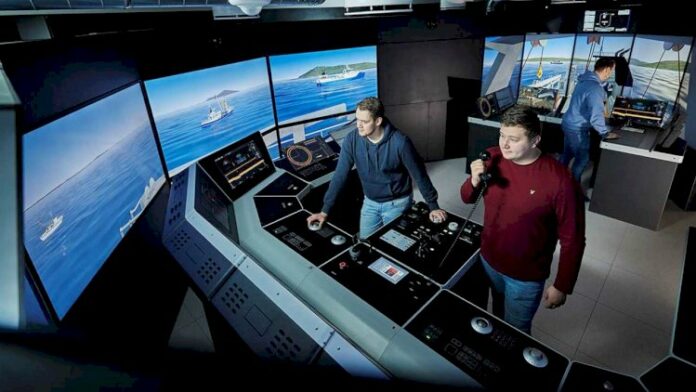
Kongsberg Digital (KDI) has announced the delivery and commissioning of the first K-Sim® Fishery simulator. The installation, which leads the way in bringing this type of training to the fishing industry, was unveiled today at a short ceremony at Lofoten Vocational School’s new facility in Leknes, Norway.

The brand-new K-Sim Fishery simulator is developed with input from Lofoten Vocational School with the aim of using modern simulation technology to build competence that improves safety, sustainability and quality in fishery. The simulator provides a full-scale training environment with realistic vessel behavior due to the advanced physical engine. It is designed as a fishing vessel bridge with all necessary equipment to carry out a fishery scenario. Integrated with Kongsberg Maritime (SIMRAD) professional fishery equipment, including echo sounder, sonar and trawl monitoring systems, it enables fish finding and catching training to secure the right catch and reduce possible bi-catch.  

K-Sim Fishery is therefore a complete system for the education and competence development of fishing vessel crew, helping them to become familiar with and operate different types of equipment whilst building an understanding of a variety of fishing techniques and their applications. Students will perform exercises where they learn to safely use the equipment and vessel, efficiently store the fish, carry out maneuvers to control the gear and ensure the quantity and quality of the catch, and optimize working hours and fuel consumption.

Finn Axel Hartvigsen, Manager Maritime department, Lofoten Vocational School, said:

“We are very pleased and proud to be the first training center with the K-Sim Fishery simulator. The system is perfectly in step with the industry’s technology, allowing us to deliver training which is completely relevant and immediately applicable to our students’ everyday working lives. We firmly believe that, through this approach, we can help make the fishing industry both safer and more sustainable.”

K-Sim Fishery complies with the latest STCW-F and DNV GL certification standards for training. K-Sim Fishery has also been sold to several other training institutes including, the Flemish Service for Employment and Vocational Training (VDAB) and the Greenland Maritime Center.

Tone-Merete Hansen, Sr. Vice President Maritime Simulation, Kongsberg Digital, added:

“Improving the safety and productivity of fishing through targeted training is directly relevant to over 50 million people who rely on fisheries and aquaculture for their livelihoods. Safety, efficiency and sustainability go hand in hand: by equipping fishermen with the knowledge and equipment they require to increase the quality and repeatability of their catch, we can help to reduce the risk of overfishing, while experience with the vessel and equipment involved increases safety. We are delighted to be able to facilitate these goals through K-Sim Fishery and look forward to supporting Lofoten Vocational School and other schools as they develop their training strategy using the new system.”

Fugro kicks off major cable route site investigation for innogy’s wind farm

0

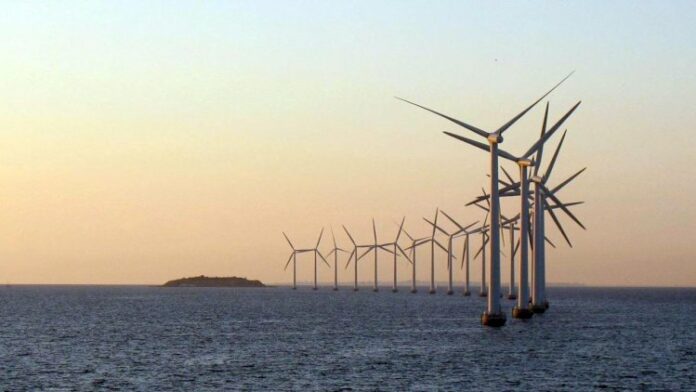
Fugro’s multipurpose vessel Fugro Pioneer left the Port of Sunderland in the UK earlier this month to kick off a 6-month offshore site investigation and survey campaign for innogy’s Sofia offshore wind farm.

With a consented capacity of 1.4 GW, Sofia will be one of the world’s biggest offshore wind farms; Fugro will provide geophysical and geotechnical services over the project’s 220 km export cable corridor, in what is believed to be one of the longest cable route surveys ever performed for an offshore wind farm, as well as further works on the wind farm array.

The objective of Fugro’s site investigation is to comprehensively characterise subsurface conditions along the cable route corridor to better understand the benthic ecology and offshore archaeology of the site, and to enable detailed design for the proposed wind farm, which is located 195 km off the coast of north-east England.

The site investigation will include surveys performed from five state-of-the-art vessels and will be complemented with a full suite of conventional and advanced laboratory testing. As well as Fugro Pioneer, geophysical survey data will be acquired using the Fugro Frontier and Fugro Seeker; two of Fugro’s geotechnical vessels will then follow to provide drilling, and seabed sampling and in situ testing. Once the Geo-data is acquired, Fugro will produce a ground model for innogy that will provide standardised datasets and interpretation in a clearly identifiable and easy-to-access format.

Sally Dalrymple, Senior Project Manager for Fugro, said:

“For Fugro, this project is an exciting opportunity for multiple vessels and multidisciplinary project teams to work together to provide an excellent service to innogy and support the Sofia team in achieving its objectives from the outset.”

Coronavirus increases demand for Eastern European crew

0

As global restrictions due to the coronavirus outbreak begin to impact the shipping industry, crewing specialist Danica reports an increase in enquiries from shipping companies seeking to employ Eastern European crew but says, as yet, salaries have not been affected by any shortages.

Danica, which has manning recruitment offices across Eastern Europe, advises that it is increasingly having to step in to assist with crewing problems, especially where crew changeovers are overdue.

Danica Managing Director Henrik Jensen said:

“We are getting requests for help from shipping companies which would normally employ seafarers of Chinese nationality because crew members are not able to join the vessels due to the travel bans. Fortunately we have so far been able to cover these requests as the increased demand is relative small compared to the large number of Eastern European crew available in the countries we cover. As a result, this shortage is not currently impacting salary levels.”

He added:

“All our seafarers joining these vessels are informed about the precautions to be taken and we have not yet experienced any reluctance from Eastern European seafarers to join vessels. However, we do see some disturbances in the flow of crew changes of all nationalities due to vessels being idle off the Chinese coast or in countries where travel restrictions prevent seafarers from joining or leaving vessels.”

Shell – Global LNG demand is expected to double to 700 million tonnes by 2040

0

Global demand for liquefied natural gas (LNG) grew by 12.5% to 359 million tonnes in 2019, according to Shell’s latest annual LNG Outlook published today – a significant increase that bolsters LNG’s growing role in the transition to a lower-carbon energy system.

2019 saw key developments that are helping to reshape the industry:

  • an industry record of 40 million tonnes of additional supply becoming available and being consumed by the market.
  • the belief in long-term demand growth triggering record investment decisions in liquefaction capacity of 71 million tonnes.
  • an increase in diversity of contractual structures, providing a wider range of options to LNG buyers.
  • the growing role of gas in improving air quality through coal-to-gas switching in the power and industrial sectors, with coal generation phase-out announcements more than trebling.

Natural gas emits between 45 and 55% fewer greenhouse gas emissions and less than one-tenth of the air pollutants than coal when used to generate electricity.

Maarten Wetselaar, Integrated Gas and New Energies Director at Shell, said:

“The global LNG market continued to evolve in 2019 with demand increasing for LNG and natural gas in power and non-power sectors. Record supply investments will meet people’s growing need for the most flexible and cleanest-burning fossil fuel. While we see weak market conditions today due to record new supply coming in, two successive mild winters and the Coronavirus situation, we expect equilibrium to return, driven by a combination of continued demand growth and reduction in new supply coming on-stream until the mid-2020s.”

Europe absorbed the majority of 2019 supply growth as competitively-priced LNG furthered coal-to-gas switching in the power sector and replaced declining domestic gas production and pipeline gas imports.

New spot-trading mechanisms and a wider variety of indices used for long-term contracts point towards LNG becoming an increasingly flexible commodity.

There was a modest rise in imports to Asia in 2019, compared to the previous two years, a result of mild weather and rising electricity generation from nuclear power in Japan and South Korea, two of the three largest global importers.

In China, LNG imports increased by 14% in 2019 as efforts continued to improve urban air quality. Also notable was LNG demand growth in South Asia. In total, Bangladesh, India and Pakistan imported 36 million tonnes, an increase of 19% over last year, pointing to emerging growth countries in Asia.

Over the longer-term, global LNG demand is expected to double to 700 million tonnes by 2040, according to forecasts, as gas plays a significant role in shaping a lower-carbon energy system. Asia is expected to remain the dominant region in the decades to come, with South and South-east Asia generating more than half of the increased demand.

Sillimanite gas field successfully comes on stream in the Southern North Sea

0

Wintershall Noordzee B.V. (a Joint Venture of Wintershall Dea and Gazprom EP International) has successfully started gas production from its operated Sillimanite field. Discovered in June 2015, the unitized gas field stretches across the UK and the Dutch Continental Shelves and is located approximately 200 kilometers off the coast of Den Helder. 

Hugo Dijkgraaf, Chief Technology Officer and Board Member at Wintershall Dea, says:
“With first gas from Sillimanite we once more underline our ability to successfully explore for hydrocarbons and transfer development projects successfully into production. As Sillimanite will increase the amount of gas produced in Europe, it underlines Wintershall Dea’s capabilities as Europe’s leading, independent gas and oil producer.”

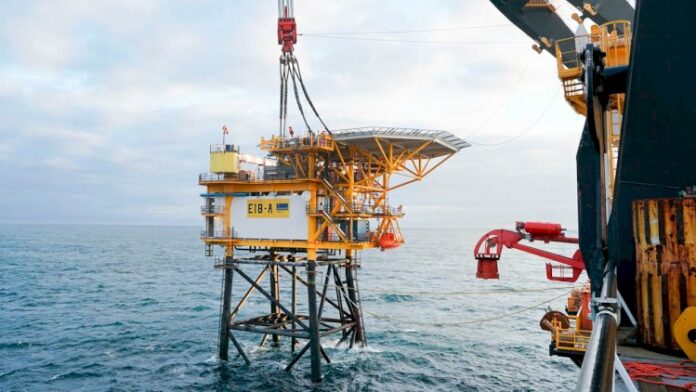
Wintershall Noordzee, active for over 50 years as a full cycle operator in exploration, development, production and decommissioning, has for the second time recycled the topside of its recently decommissioned E18-A platform, formerly P14-A topside, in the Sillimanite project.

Dijkgraaf says:

“As part of our sustainability programme, we pay highest attention to the re-use of offshore platforms where the production has ceased. In this way, we can further improve our company’s environmental footprint and at the same time keep our operations cost-efficient. Giving this platform topside a third life, now at Sillimanite is a best-case example for our industry. In addition, Sillimanite will be monitored 24/7 from the Remote-Control Operations Center in Den Helder. This enables us to make our operations even leaner and more cost efficient. The project was delivered safely, within just 16 months from the investment decision”.

Besides Sillimanite, Wintershall Noordzee plans to further invest in activities in the Southern North Sea. Dijkgraaf says:

“We have a diverse project pipeline in the Southern North Sea ahead of us! With the Dutch Rembrandt/Vermeer oil developments we plan another exciting project. We are currently in the Define Phase and we plan for the final investment decision late 2020. Additionally, we are also evaluating the development potential of the Greater Ravn Area in Denmark.”

The development concept for Rembrandt/Vermeer will be a proven Southern North Sea type shallow water installation. On Vermeer, an integrated wellhead, process, utility and living quarters platform on top of a subsea storage tank as well as an offloading installation for oil export with shuttle tankers will be built. On Rembrandt, a normally unmanned wellhead platform with minimal facilities is planned. All projects help Wintershall Dea to secure the European energy supply via domestic production.