1.9 C
New York
Home Blog Page 905

New research vessel Atair under construction in Germany

0

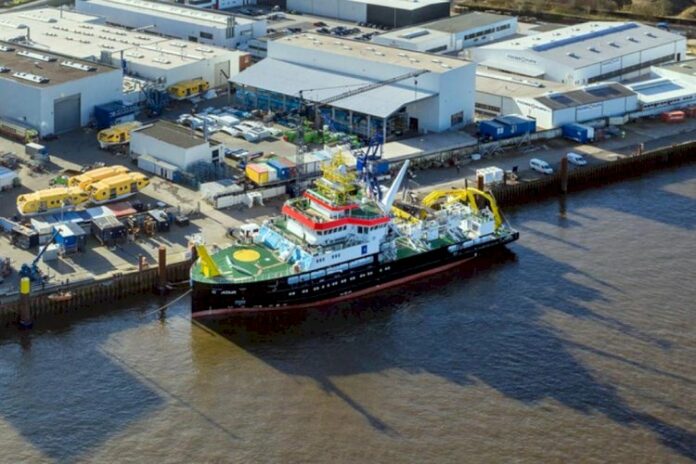
The “Atair” survey, wreck-search and research vessel – currently under construction at Fassmer in Berne, Germany – is equipped with SCHOTTEL propulsion systems.

Ordered by the German Federal Maritime and Hydrographic Agency (BSH), the vessel meets the highest environmental standards and is considered the first seagoing government agency vessel with low-emission liquid gas propulsion.

The propulsion system of the “Atair” comprises a SCHOTTEL Pump Jet type SPJ 220 (1,000 kW), one SCHOTTEL Transverse Thruster type STT 1 FP (330 kW) in the bow and one SCHOTTEL Transverse Thruster type STT 170 FP (200 kW) in the stern. The research vessel thus achieves maximum manoeuvrability. The Pump Jet can also be used as a standby unit (take-home device). 

The vessel’s underwater noise has been optimized to meet the DNV SILENT Class Notation (SILENT R). The SCHOTTEL propulsion units are also characterized by particularly low noise emissions. This ensures a protected maritime environment as well as optimal conditions for scientific work aboard the vessel.

The “Atair” is powered by liquefied natural gas (LNG). There is a large 130 m³ tank on board which enables the ship to run on LNG alone for ten days. When opting for diesel operation (dual fuel), high-quality diesel fuel oil with a sulphur content less than 0.1 percent is used.

The new BSH ship also complies with the stringent International Maritime Organisation (IMO Tier III) standards for the emissions of Nitrogen Oxides (NOx) as well as the regulations of the US Environmental Protection Agency (US EPA Tier IV) for soot particle emissions. It meets the requirements for the “Blue Angel” awarded by the German Federal Ministry of the Environment for eco-friendly ship design.

The vessel can accommodate a total of 18 crew members and 15 scientists. The equipment includes several laboratories, a station for measuring air pollution while at sea, a crane, a bridle beam for geological activities on the seabed, a large 200 m² work deck and extensive diving equipment – including a diving chamber.

The “Atair” is 75 m long and roughly 17 m wide, making it the largest research vessel in the BSH fleet. The new research vessel, whose home port will be Hamburg, will replace the previous “Atair”, which entered operation in 1987.

It is due to be commissioned in the spring of 2020.
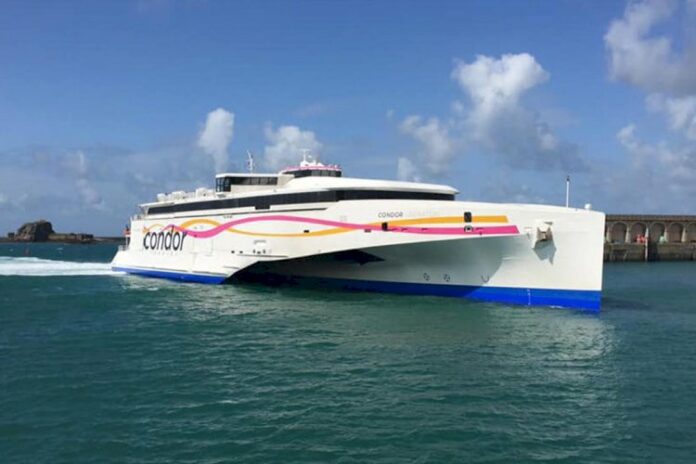
Brittany Ferries completed deal for purchase of Condor Ferries

0

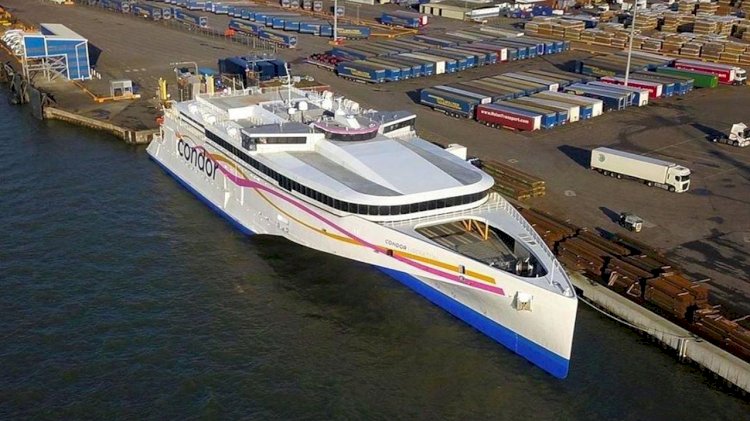
The deal, announced last year, had been subject to scrutiny by competition authorities. But following their green light at the end of January, and work to complete the transition in February, the sale has now been finalised.

Christophe Mathieu, CEO Brittany Ferries, said:

“This is excellent news for Brittany Ferries, our new partners and for Condor Ferries. We are committed to working closely in the months and years to come to ensure the best level of service to customers and support to our friends and colleagues in the Channel Islands. This will be business as usual for Condor, but within a new ownership structure.”

Brittany Ferries is the minority shareholder in the company. Last November, Columbia Threadneedle European Sustainable Infrastructure Fund (ESIF) and Brittany Ferries reached an agreement with Macquarie Infrastructure and Real Assets (“MIRA”) for the acquisition of 100 percent of Condor Ferries

Condor Ferries is an operator of lifeline freight and passenger ferry services. Each year, Condor Ferries carries approximately 1 million passengers, 200,000 passenger vehicles, and over 900,000 freight lane meters between Guernsey, Jersey, the United Kingdom, and the Port of St Malo in France.

TechnipFMC awarded contract for the BP Platina Field in Angola

0

TechnipFMC has been awarded a significant* integrated Engineering, Procurement, Construction and Installation (iEPCI™) contract from BP Angola for the Platina field development, located offshore Angola in Block 18 at water depths ranging from 1,200 to 1,500 meters.

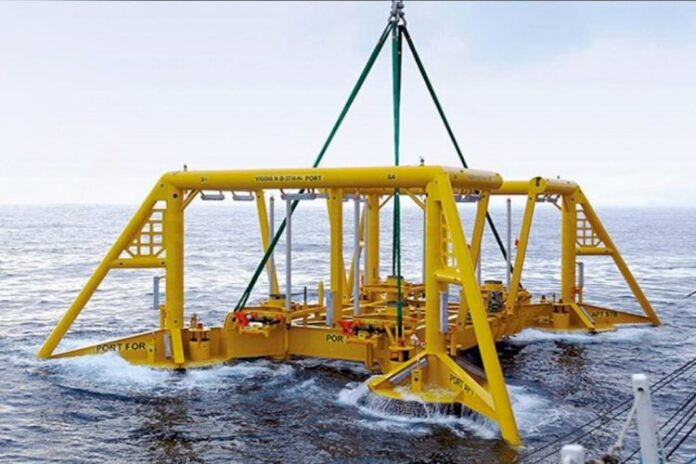
The contract covers the manufacture, delivery and installation of the subsea equipment including subsea trees, a production manifold with associated subsea control and connection systems, as well as rigid pipelines, umbilicals and flexible jumpers.

Arnaud Pieton, President Subsea at TechnipFMC, commented:

“We are very pleased to have been selected by BP for this important deepwater development offshore Angola. We are committed to BP and to supporting the Angolan oil and gas industry. This iEPCI™ follows iFEED™ work and will utilize our local assets such as our service base in Luanda and our umbilical factory in Lobito.”

* For TechnipFMC, a “significant” contract is between $75 million and $250 million

iXblue launches new sonar for high-precision marine works

0

iXblue, a major provider of advanced navigation, subsea positioning and imagery solutions dedicated to the Offshore market, announces the launch of its new SeapiX-C solid-state 3D multibeam sonar.

Providing increased efficiency and safety, this new sonar offers real-time georeferenced static bathymetry capabilities to marine works operators for instant monitoring and decision-making.

Frédéric Mosca, Head of iXblue’s Sonar division, explains:

“Increasing efficiency and reducing vessel-time is a key focus for all companies working in the Offshore industry. Because we strive to always bring new innovative solutions to support operators in their daily operations, we developed a unique static bathymetry solution dedicated to marine works.

Providing highly accurate and robust static bathymetry, SeapiX-C is a valuable solid-state seabed-mapping solution that brings about more efficient and flexible operations, as well as increased safety to marine works, and which is perfectly suited for challenging jack-up barges deployments and dredging operations.”

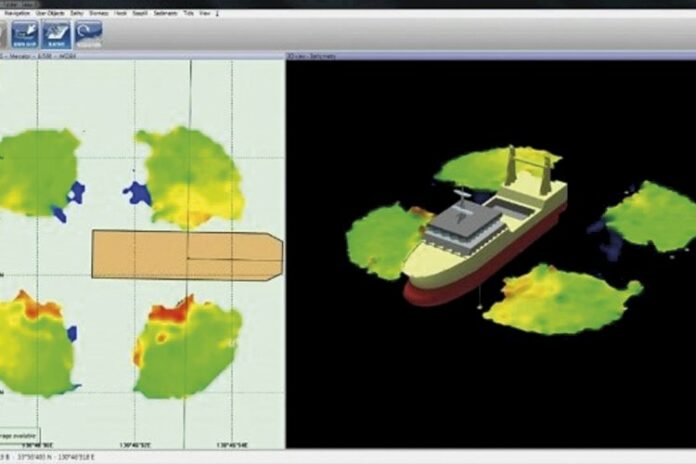
Offering a new static 3D imagery solution able to display the seabed in real-time during jack-up barges deployment, SeapiX-C enables operators to directly see where they are positioning the legs of the platforms, bringing higher efficiency and safety to deployment operations by removing the need for time-consuming and costly pre-lay diver operations. All real-time bathymetric results, platform information and other critical information are furthermore displayed within a single user-friendly interface to facilitate operations.

SeapiX-C is also a valuable solution that increases operational efficiency for dredging works by enabling real-time monitoring of construction or maintenance operations. With this new georeferenced static bathymetry capability, operators can observe and monitor their work directly into their existing dredging software, preventing ineffective or out of specifications dredging and reducing dredging-time.

Already benefiting from a strong track record within the marine works industry, with all dredging platforms already equipped with the company’s Octans inertial navigation system, iXblue is now enhancing its offer to provide unprecedented monitoring capabilities for high precision marine works.

SMD prepares to reveal its field test ready electric Quantum EV ROV

0

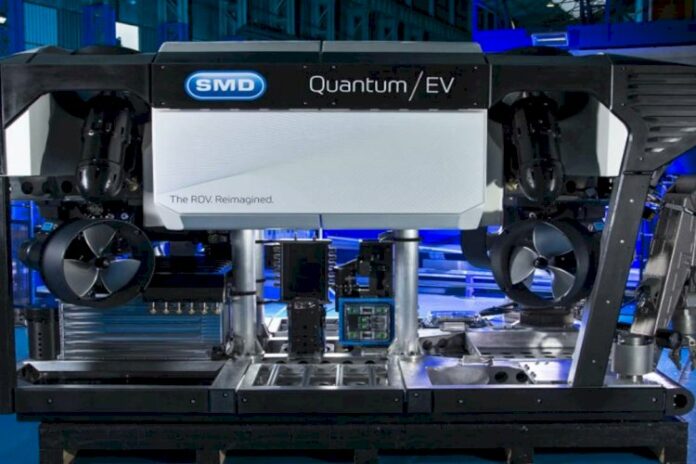
The release of the next generation of Work Class ROV comes significantly closer this week, as subsea technology specialists SMD prepare to reveal its field test ready electric Quantum EV ROV.

The ground breaking technology that underpins the high performance electric ROV was unveiled in September 2019 at OE19 and since then SMD has been developing this prototype Quantum EV, for rigorous, multi-layered testing of simulated real-world conditions.

The high capability Quantum EV is part of SMD’s environmentally responsible solution to next generation subsea robotics. It is designed around five key principles covering performance, reliability, flexibility, ease of use and cost.

The first phase in a robust series of stress-tests on the full range of components that make up the innovative modular EV ROV design is now complete. Data released by SMD reveals that all components are now certified to perform at depths of 6,000 metres and have passed gruelling environmental testing. The development of the propulsion system allows for optimum performance as well as longevity, stability and consistency. Quantum EV can reliably run for longer, without the need for manual intervention.

The vehicle is equipped with a range of cutting-edge technologies including the completely new 200kW high power electric thrust system, a new long-distance DC transmission solution and locally managed DC power system. Quantum EV has a 15% increase in performance while using half the energy of a current Work Class ROV. The new platform also features advanced flight processing for high quality survey, battery compatibility for tetherless operations and is future proofed to accept AI command technology.

The next phase of development has started. Dynamic tests will take place during a series of wet trails, many in open water over the coming months. First deliveries are expected to begin in 9-12 months.

What’s more, the SMD EV program forms part of SMDs long-term strategy to engineer a series of adaptable technologies based on an open-electric framework for whatever shape vehicle is required and that can be adapted for a variety of operations. Quantum EV will soon be joined by other models in the range. As well as being used to maintain traditional subsea infrastructure, this new generation ROV technology is being developed for use with robotic Unmanned Surface Vessels (USVs). It’s ability to interface with autonomous, onboard decision making, make the Quantum EV the ideal partner for the new breed of over-the-horizon technologies, without compromise on the ability to do high quality work.

Mark Collins, SMD’s Director for Remote and Autonomous Technologies has been involved throughout the development process. He said:

“Over the past four years our engineering and innovation teams have been on a journey to develop a high performing, stable vehicle that gives our customers ultimate control across a range of sectors and tasks.
The development of the EV-ROV has taken place very much in collaboration with our customers and our partners – their needs continue to be at the heart of this ground-breaking technology. Since September we have put a large amount of effort into testing components in a range of real-world scenarios. We are confident it will significantly outperform the current models, even in the most challenging of subsea situations.

We have focused on developing a tool that can be relied upon to take operational efficiency to a new level that’s easy to own and use. The technology will support our client’s ambitions and is suitable for traditional vessel, Unmanned Vessel and resident applications. One of the novel things about the EV technology is its modular flexibility. We’ve created future-ready, component-based, modular architecture which can be extrapolated for different uses; easily transferred for use in AUVs and USVs. The resulting electric workclass vehicle will work in the strongest currents with performance surpassing even the best hydraulic vehicles.”

Stephen Wilson, SMD’s Innovation Manager commented on the launch of this new EV technology; “Utilising the latest technology, we have spent a significant amount of time and input advancing the prototype unveiled in 2019 and developing the impressive machine we have today.

Stephen Wilson, SMD’s Innovation Manager commented on the launch of this new EV technology:

“Utilising the latest technology, we have spent a significant amount of time and input advancing the prototype unveiled in 2019 and developing the impressive machine we have today.

This has involved drawing on our considerable experience, developing electric motors and ROV thrusters for over 20 years as well as working with the very best engineers in the business. As specialists in high power motor drive technology, our parent company, CRRC Tec, have given us access to high power systems technology that would be otherwise inaccessible to the subsea sector. All of this, combined with financial support from our parent and Innovate UK has put us in a unique position to bring a world class electric ROV system to the market.”

LR certifies CETENA’s digital solution for use on the cruise vessel

0

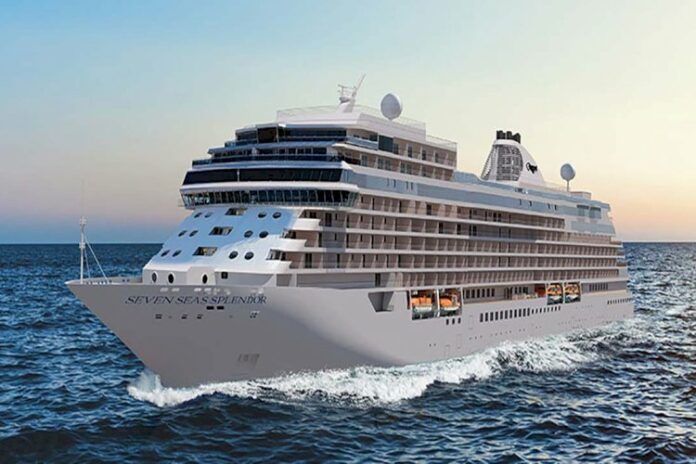
A solution that helps to reduce unnecessary operation expenditure, increase safety and replace hard copy Safe Return to Port (SRtP) documentation on Regent Seven Sea Cruises’ newbuilding.

Lloyd’s Register has certified the ‘ASSIST’ digital solution, a tool developed by CETENA that replaces hard copy Safe Return to Port (SRtP) documentation with a tablet-based solution allowing for key safety manuals to be centrally updated.

ASSIST – a shipboard operator Smart Assistant for Safe Return – was installed on the 55,000 gt Seven Seas Splendor, Regent Seven Sea Cruises’ newest fleet addition, which was built at Fincantieri’s Ancona Shipyard.

Under SOLAS, all vessels require a SRtP Operations Manual and this digital system – the first tool to replace hard copy SRtP documents – will substantially reduce the amount of paper documentation that a ship needs to store and avoids the wear and tear of hard copy manuals as well as human errors relating to sheet replacements and physical updates.

LR first classified the use of a SRtP onboard a passenger ship five years ago and this milestone has helped to develop a SRtP culture focused on improving onboard procedure and helping crew identify key risk factors.

The installation of ASSIST was undertaken in collaboration with the cruise ship’s flag, the Republic of the Marshall-Islands (RMI) Maritime Registry, the shipyard and the system manufacturer.

Gabriele Sancin, Fire and Safety Team Leader, LR Trieste Technical Support Office, said:

“Onboard Seven Seas Splendor, paper copies of SRtP documentation are now not needed, as all relevant SRtP information is now part of the ASSIST system, which has been developed and supplied by CETENA with technical support from LR colleagues in Trieste along with representatives from Marshall Islands. As part of a global and multi-disciplinary team, LR contributed and offered support for every stage of this project.”

Alessandro Bonvicini, CETENA, Head of Design for Safety said:

“The ship houses cutting edge technology, such as CETENA’s Safe Return to Port (SRtP) ASSIST, an electronic digital solution that is equivalent to the  SRtP Operations Manual required by the International Convention for the Safety of Life at Sea (SOLAS), Regulations II-1/21 and 22, it’s the first electronic SRtP program that meets SOLAS requirements in a modern, responsible way.

The fully independent software system greatly reduces potential for errors during emergency situations, reduces the environmental footprint of the paper manuals, and ensures any changes made are updated to the central database immediately. It is the first time such technology has been approved by a Flag State Administration for use onboard a ship, thanks in large part to the certification by Lloyd’s Register. The installation of the SRtP system was performed by Fincantieri shipyard during the ship’s construction”.

Bill Gallagher, President of International Registries, Inc., which provides administrative and technical support to the RMI Registry, said:

“This breakthrough and innovative technology that CETENA has produced and developed sets a new level of service for ships in the future. Like Regent Seven Seas Cruises, the RMI Registry is known worldwide for our high quality standards, and we’re proud to have the vessel in our Registry.”

Ivana Elice, Fincantieri Project Manager of Regent Seven Seas Splendor, said:

“In our field a key factor of success is the creation of an “innovation ecosystem”, enabling long-term partnerships and supporting a long lasting and sustainable capability to compete in highly technological markets: the project ASSIST summarises this approach and helps us with boosting our technological leadership”.

Splendor Seven Seas recently departed from the Port of Miami for its first voyage through the Panama Canal.

Intelsat expands its High Throughput Satellite coverage in the Indian ocean

0

Intelsat, the HTS satellite network operator that provides the backbone to Navarino’s Ku-band service Prodigy, has announced its plan to update the FlexMaritime service region 15 (Southern Indian Ocean region):

  • The current Southern Indian Ocean Best Efforts subregion (sub-region 15a) will no longer exist, and a full Quality of Service will be available across the entire Southern Indian Ocean Region
  • The new regional coverage map will no longer include a sub-region 15a, but instead show the updated region 15
    Prodigy is Navarino’s hybrid Ku-band/L-band service that combines Intelsat’s FlexMaritime network with the Iridium Certus L-band network. It is a new concept in connectivity and evolves together with your applications and needs.

FlexMaritime’s multi-layered design provides a cost-efficient solution for ship operators without having to sacrifice speed or throughput to each ship, even in the most densely populated shipping lanes. This means that ships have access to multiple satellites in most place across the globe, greatly reducing and even eliminating blockages from vessel structures or land-based obstructions. Ship operators can also maintain connectivity, even when their routes and bandwidth demand shift unexpectedly.

Prodigy provides high performance connectivity, ultra reliability and true redundancy based on it’s core advantages, namely that it is based on a dual satellite constellation as Intelsat FlexMaritime and Iridium are independent networks, and combined with Infinity this means that there is no single point of failure for the Prodigy service.

New online platform for ocean energy data sharing

0

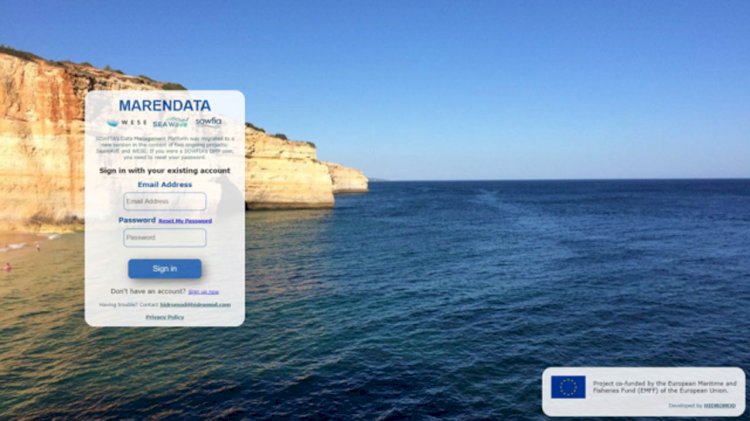
An online platform, MARENDATA, has been launched in collaboration by the SEA Wave and WESE projects to disseminate environmental monitoring data collected within the marine energy industry.

Co-funded by the European Maritime and Fisheries Fund, both SEA Wave and WESE are undertaking bespoke environmental research campaigns to better understand the potential environmental effects associated with deploying and operating some of the world’s leading marine energy technologies.

MARENDATA is a dedicated data sharing platform which will host a range of compiled data collected from a range of marine energy test sites, including the European Marine Energy Centre (EMEC) in Orkney, Scotland; BiMEP in the Basque Country; and Peniche, in Portugal.

Data derived from the test sites will include resource characterisation, underwater noise, and video capturing seabed ecology and species behaviour. Data uploaded on the platform will be relevant in evaluating the potential positive and negative environmental effects of wave and tidal energy devices.

Data acquired from the former SOWFIA project, funded by EU Intelligent Energy Europe, has been amalgamated with the data collected through SEA Wave and WESE and will also be uploaded to MARENDATA.

A host of marine energy experts are filtering the raw data collected from the test sites as it becomes available to ensure it has been quality checked, is compatible and coherent and follows existing standards. This is achieved through links to existing databases such as EMODnet, SeaDataNet and Copernicus.

Secondary data will also be available through the platform to better serve the needs of various stakeholders including academia, industry and the general public, whom may require access to this nature of data.

José Chambel Leitão from HIDROMOD, MARENDATA developer, said:

“This platform was based on three concepts in order to make it useful and specific to the marine energy industry. The first was to build on a previous data platform concept from the SOWFIA project. The second was to target the relevance of the data to the marine energy industry, as opposed to generic data platforms. And finally, the third concept was to have the support of industry experts, partners of WESE and SEA Wave, selecting the appropriate information to relay to end-users.”

CSRS released updates with new functionality

0

Common Structural Rules Software LLC (CSRS), a joint venture company formed by ABS and Lloyd’s Register (LR), has released updates with new functionality added to both the Prescriptive Analysis (PA) and FE Analysis (FEA) applications.

Patrick Ryan, ABS Senior Vice President, Engineering and Technology, said:

“We have worked together with Lloyd’s Register and the CSRS Team to ensure our tools continue to evolve and meet the needs of our clients, keeping pace with technological developments in the maritime and offshore industries. This latest release offers many new advantages over earlier versions.”

Nick Brown, LR Marine and Offshore Director, commented:

“LR and ABS’s partnership continues to improve functionality, integration and modularity of the CSR Software to ensure that we provide the best tools for the industry to use when applying Common Structural Rules.”

CSR PA now allows users to directly import the NAPA cross sectional structural data. Using this feature, users can quickly create new ship models using an existing NAPA model.

PA also now includes features to model multiple small openings within transverse primary supporting members. The transverse assessment will take into consideration these openings while performing various calculations. FEA software is now capable of carrying out local model analysis. This feature allows a fine mesh model to be built outside of the global model so that multiple engineers may work on a design simultaneously.

Both the PA and FEA Software are compatible on both the Win 7.0 Operating System and Windows 10 Operating System. The software provides users with an easy way to evaluate designs. It has been cross-checked by IACS and both software products: CSR Prescriptive Analysis and CSR Finite Element (FE) Analysis, demonstrated very high accuracy compared to other software.

Improvements to this leading software facilitate compliance to IACS Common Structural Rules (CSR), providing users with an easy way to evaluate designs. Developed from the technical strengths of LR and ABS, the CSR Prescriptive Analysis and CSR Finite Element (FE) Analysis software is now employed by over 600 users and growing every day. Regular updates will continue to improve functionality and address rule changes.

Train 3 of the Freeport LNG Project has reached the final commissioning stage

0

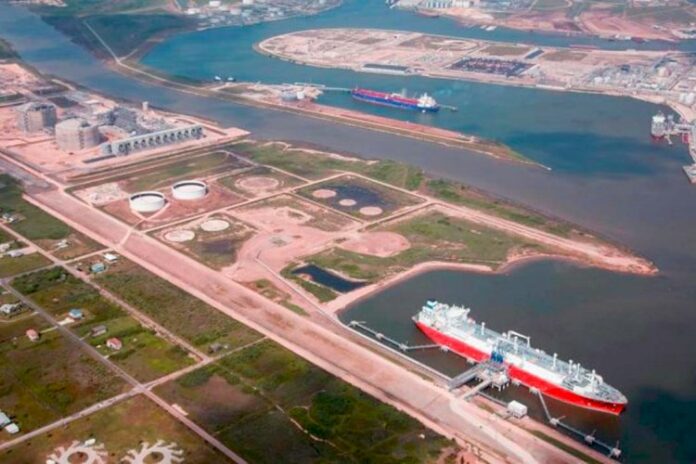
McDermott International, Inc., with its joint venture partners, Chiyoda International Corporation and Zachry Group, announced today that Train 3 of the Freeport LNG Liquefaction project on Quintana Island in Freeport, Texas, has reached the final commissioning stage. This includes the introduction of feed gas into Train 3 of the liquefaction export facility.

This marks a significant accomplishment for the project as the team works to complete the final train for the project. The Freeport LNG facility incorporates the largest electric motor-driven refrigeration compressors within the U.S. and, once fully completed and commercially operational, will significantly improve North America’s energy export capabilities.

Mark Coscio, McDermott’s Senior Vice President for North, Central and South America, said:

“Congratulations to the entire team for upholding the high safety and quality standards for which we’re known. We have achieved substantial completion for Trains 1 and 2, and now focus on delivering Train 3 as it transitions from construction phase to start up.”

Zachry Group, as the joint venture lead, partnered with McDermott for the Pre-FEED in 2011, followed by FEED works to support the early development stage of the project as a one-stop shop solution provider for Trains 1 and 2. Later Chiyoda joined the joint venture partnership for work related to Train 3. The project scope includes three pre-treatment trains, a liquefaction facility with three trains, a second loading berth and a 165,000 m3 full containment LNG storage tank.

Freeport LNG Train 3 is on track to reach initial LNG production in the first quarter of 2020.