0.6 C
New York
Home Blog Page 903

Industry involvement vital in creation of unique new Cyber-SHIP Lab

0

With funding from Research England, there are 18 commercial partners working alongside the University of Plymouth to bring it to fruition.

The Cyber-SHIP Lab was awarded funding by Research England (part of UK Research and Innovation) in November 2019, and will bring together a host of connected maritime systems currently found on an actual ship’s bridge.

Once the build phase of the project is complete, it will complement the University’s world-leading maritime facilities, and enable researchers to improve global shipping security while providing training for those working in the sector.

A key element of the project is its extensive collaboration with industry, and there are 18 commercial partners working alongside the University to bring it to fruition.

They include ship operators as well as companies involved in the supply of hardware and software, the construction of ship’s bridges and the training and management of personnel who work in the commercial shipping industry all over the world.

Professor Kevin Jones, Executive Dean for Science and Engineering and Principal Investigator for the Project, said:

“This project has the potential to be a real game changer for the shipping industry. Cyber-attacks are a Tier1 National UK threat and the need to protect our maritime operations has never been more crucial, or more challenging. As such, the industry involvement in this project is vital, as it is only by working with those in the sector that we can develop the solutions that can be applied in the real world.”

The Cyber-SHIP Lab has been funded for three years with a view to it then becoming self-sustaining, and will address a number of complex and interlinked issues affecting the maritime industry. It will take into account both technological and human behavioural aspects in order to effectively mitigate threats, especially considering the huge variation in vessel types.

VIDEO: Rotortug®, for the most challenging operations

0

A short overview on the specific features of the Rotortug®, which makes this vessel stand out and explains why it is the preferred tugboat type for some of the most challenging operations in difficult offshore and environmental conditions.

Holland Shipyards Group to supply five fully-electric ferries to GVB

0

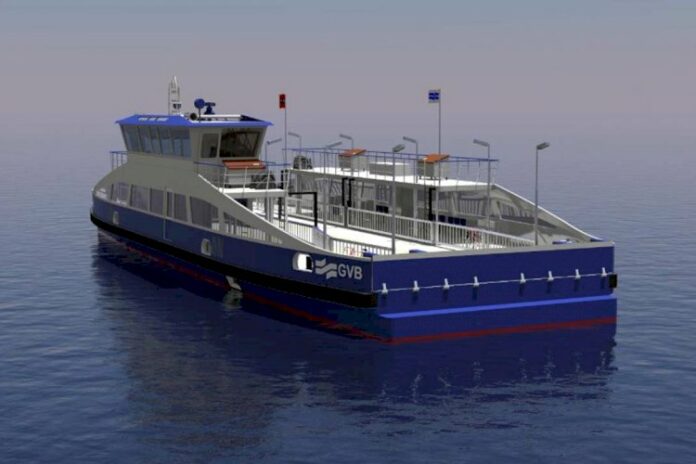
After taking delivery of the IJveer-60 series, GVB, Amsterdams municipal public transport provider, has awarded Holland Shipyards Group a contract to build five new fully-electric ferries which will be operating in the North Sea Canal area. The first ferry is expected to enter service in 2021, the delivery of the last ferry will be in 2023.

The ferries, measuring 41,00 m long and 13,90 m wide, are intended to operate fully-electric and are charged by means of a 1.600 kW shore charging facility. Each ferry has a battery capacity of 2 x 340 kWh and a propulsion capacity of 2 x300 kW.

Charging the batteries takes approximately 3 minutes and is automatically done while boarding and unboarding the passengers and vehicles. The ferries have a capacity of 20 cars, 4 trucks or 400 passengers. The well-designed shore charging system is integrated in the infrastructure, which means the existing landings do not require large modifications.

The new fully-electric ferries will replace the current fleet, built in the 1930s. The replacement of the ferries is in line with the sustainability goals set by GVB and the Municipality of Amsterdam to provide zero-emission public transport in the Municipality of Amsterdam and surroundings.

Holland Shipyards Group has distinguished itself from the traditional shipbuilding market by actively seeking out and embracing projects with renewable components. For the ferry market batteries have proven to be an ideal solution, but also other renewable resources are investigated and Holland Shipyards Group is proud to also be involved in its first Hydrogen project.  

‍The collaboration between Holland Shipyards Group and GVB has been a good one over the past years. Both parties have become experienced in electrification of vessels and the operational challenges that come with this process.

By delivering the current IJveer-60 series, the yard has delivered a noteworthy reference in the market, which has resulted in an orderbook consisting of mostly fully-electric vessels in 2020.

PivotBuoy detailed design unveiled

0

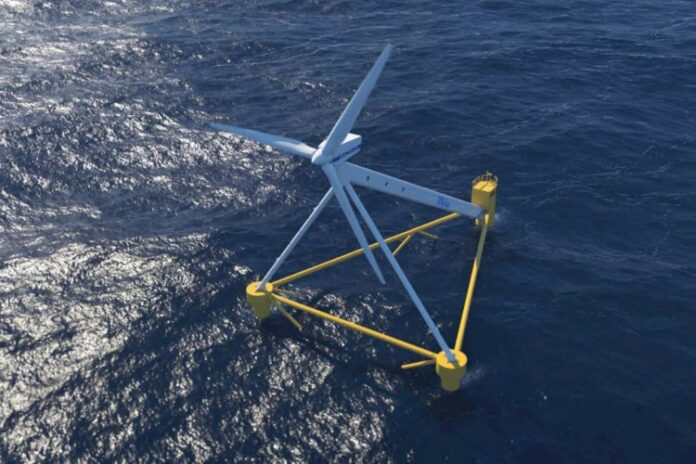
The PivotBuoy project Detailed Resign review (DDR) meeting was held at X1 Wind offices in Barcelona, and the design of the PivotBuoy system has been completed and is now ready for manufacturing at DEGIMA facilities in Santander.

The PivotBuoy Project aims to validate the benefits of the “PivotBuoy” system, An Advanced System for Cost-effective and Reliable Mooring, Connection, Installation & Operation of Floating Wind. This will be done by testing a part-scale platform with a Vestas V29 turbine adapted in a downwind configuration and grid connected to PLOCAN test site in the Canary Islands.

The meeting brought together experts from the consortium partners to review the detailed design of the PivotBuoy system. This meeting represented a critical stage gate to formally approve the detailed design and advance to the manufacturing phase. The design phase has been completed after 10 months of intense design work, which benefited from a strong interaction of the consortium partners and brings together different project work packages: WP2 (design) WP3 (manufacturing), WP4 (assembly, installation & testing), WP5 (simulation) and WP6 (reliability).

The project has now entered the manufacturing phase prior to assembly and installation which is planned for Autumn 2020.

Arctic researchers assess how marine organisms respond to light

0

Marine scientists have used the cover of darkness to expose how ‘light pollution’ is affecting creatures in the Arctic Ocean.

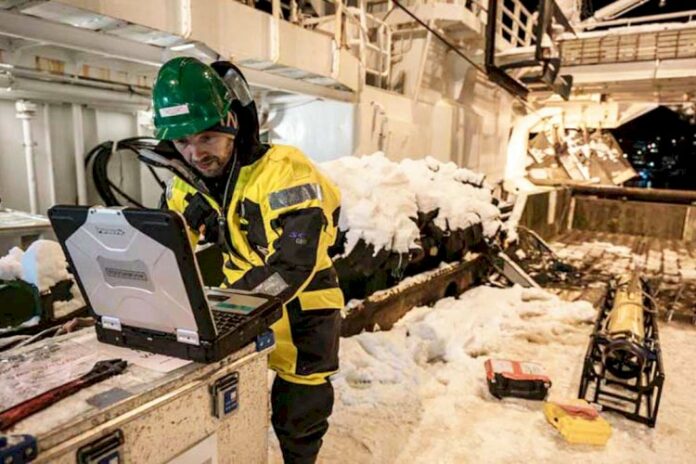
Working during the depths of the constantly dark Arctic winter in January 2018, a team of Norwegian and UK researchers used a novel strategy of switching off every source of light, plunging themselves into complete darkness, to examine the marine biology of the polar north.

By then using a super sensitive light sensor developed at Oban’s Scottish Association for Marine Science (SAMS) and echo sounders to detect the presence of organisms in the Barents Sea, they discovered that marine creatures, from tiny zooplankton to fish, reacted to even the smallest detection of light, often moving away from the source.

Light dictates how marine organisms behave, acting as a prompt for when to migrate through the water column to find food and avoid predators. It is hoped this latest discovery will allow scientists to better predict how an increase in light penetrating the Arctic seas – a result of the reducing sea ice cover brought on by climate change –  will impact on marine communities.

The findings, published in Communications Biology, also raise questions over how we currently survey Arctic marine populations in winter, including commercially-important fish.

SAMS Arctic scientist Prof Finlo Cottier, a co-author on the paper, led the UK contingent on the expedition. He said: “During the polar night, marine organisms respond to the faintest of natural light during months of darkness. We therefore believed that introducing artificial light from a ship or even a head torch might not give an accurate sample of what is happening down there. Switching off the lights gave us a much clearer picture of natural behaviours in the ocean.”

Co-author Dr Phil Anderson of SAMS added:

“Using a super sensitive light sensor developed at SAMS we could see just how sensitive these organisms were to light. We were able to capture the few photons of light that are scattering in the ocean at that time of year, conditions that the human eye would consider to be pitch black. Even the smallest detection of light was enough to make these marine organisms react.”

The team found that fish and zooplankton exhibited an almost instantaneous response when suddenly exposed to artificial light. What’s more, this reaction was recorded 200 metres deep, the maximum depth of the water surveyed.  This suggests that extreme caution must be taken when conducting scientific surveys or stock assessments with artficial light during the Arctic winter.

Project leader and lead author on the paper Prof Jorgen Berge, from UiT The Arctic University of Norway, has been investigating the ecology of the polar night for nearly a decade. He said:

“This is another discovery about the responsiveness of organisms to light, in one of the darkest places on surface of the planet. We’re slowly understanding how the black box of the polar night functions.”

The study, which was supported by the Research Council of Norway, is the first to document the effect of artificial light on an entire pelagic community.

Solitaire to install export line to Troll A platform in Norwegian Sea

0

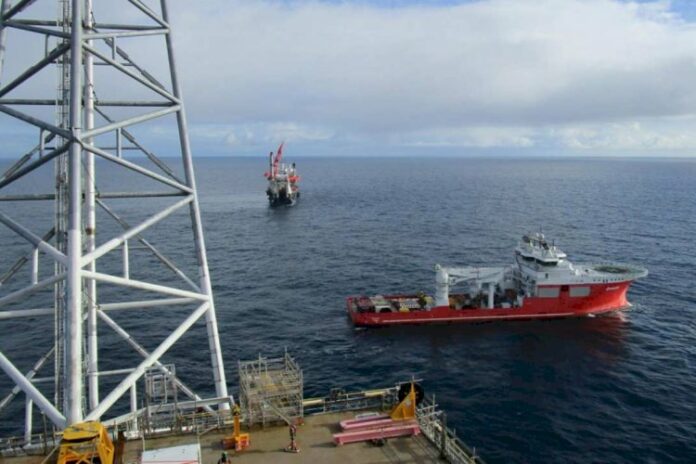
Allseas‘ pipelaying queen Solitaire is back in the Norwegian Sea to install the export line connecting the Troll A platform with gas reserves Equinor is developing in the western part of its Troll field.

Positioned a few hundred metres from the platform, Solitaire, with assistance from Oceanic, started operations with a pull-in of the first pipe section into a special “seal tube” at the base of Troll A, some 300 m below the water surface.

Solitaire is one of the largest pipelay vessels in the world. The vessel has been operational since 1998 and has since steadily improved her performance. Her long length and ship-shape ensures excellent workability, and a pipe carrying capacity of 22,000 t makes her less dependent on offshore pipe supply in hostile areas. Precise manoeuvring on full dynamic positioning allows the vessel to work safely in congested areas.

Solitaire has laid numerous deepwater pipelines. In 2005 her S-lay capacity was increased to a holding force of 1050 t, enabling her to lay the heaviest pipelines. In 2007 she set the world record for ultra-deepwater pipeline installation, laying pipe to a depth of 2775 m (9100 ft). Solitaire’s high cruising speed, high laying speed and substantial carrying capacity make her competitive for pipelay projects anywhere in the world.

Several companies stoped cruise sales

0

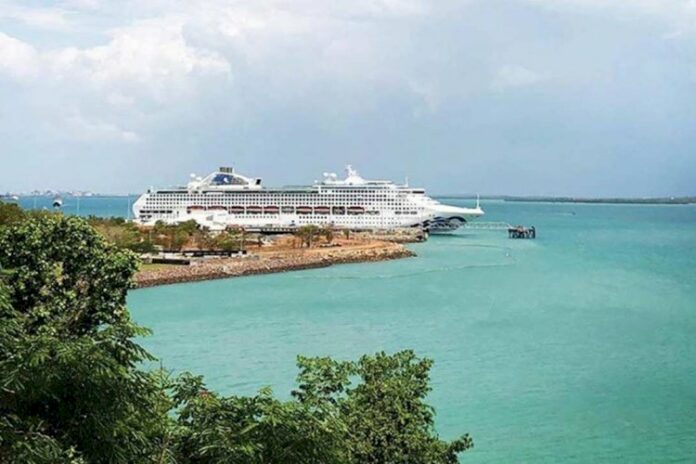
In proactive response to the unpredictable circumstances evolving from the global spread of COVID-19 and in an abundance of caution, Princess Cruises announced that it will voluntarily pause global operations of its 18 cruise ships for two months (60 days), impacting voyages departing March 12 to May 10.

Jan Swartz, president of Princess Cruises, said:

“Princess Cruises is a global vacation company that serves more than 50,000 guests daily from 70 countries as part of our diverse business, and it is widely known that we have been managing the implications of COVID-19 on two continents. By taking this bold action of voluntarily pausing the operations of our ships, it is our intention to reassure our loyal guests, team members and global stakeholders of our commitment to the health, safety and well-being of all who sail with us, as well as those who do business with us, and the countries and communities we visit around the world.” 

Those currently onboard a cruise that will end in the next five days will continue to sail as expected through the end of the itinerary so that onward travel arrangements are not disrupted. Current voyages that are underway and extend beyond March 17 will be ended at the most convenient location for guests, factoring in operational requirements. Princess will do everything possible to return each guest home with the greatest amount of care possible. During this time, our operations and medical teams across the fleet will remain vigilant in their care and service for guests and crew onboard. 

For those who are impacted by this business decision, Princess is offering guests the opportunity to transfer 100% of the money paid for their cancelled cruise to a future cruise of their choice. To add a bonus incentive for guests to accept this offer, the company will add an additional generous future cruise credit benefit which can be applied to the cruise fare. In addition, Princess will honor this offer for those guests who had made final payment and cancelled their booking on or after February 4, 2020. The future cruise credit can be used on any voyage departing through May 1, 2022.   

Princess will protect travel advisor commissions on bookings for cancelled cruises that were paid in full and for the total amount of the future cruise credits, in recognition of the critical role they play in the cruise line’s business and success. 

If the future cruise credit option does not work for some guests, they will be able to complete an electronic form on Princess.com to request a cash refund. Princess asks guests not to call the Reservation Call Center due to the possibility of high call volumes and the potential of long on-hold wait times due to this unprecedented action. Guests and their travel advisors will be sent communications on how to manage cancellations and desired compensation. Information and instructions for requesting a refund are available online at Princess.com.

Princess Cruises plans to be back in operation beginning with cruises departing May 11, 2020

Photo: Tallink Grupp

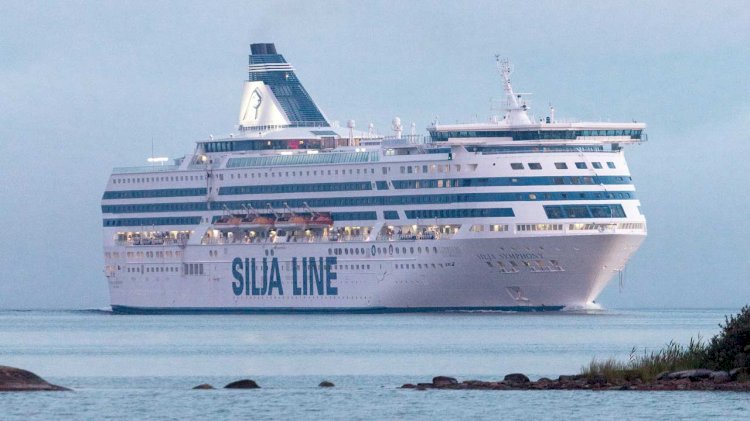
Tallink Grupp has announced that it will stop selling cruise tickets, i.e. return tickets, on the Tallinn-Stockholm route from 13 March until 1 May 2020. From 13 March 2020 customers can only buy one way, i.e. single, tickets on this route. Cargo transportation will also continue on this route.

This step comes as part of the ongoing coronavirus situation and is one of the measures implemented to help prevent further spread of the virus in the region.

Tallink will work with authorities to identify further measures to implement on the company’s vessels to further prevent the spread of the virus. Additional measures will be communicated as soon as the respective measures have been agreed.

Paavo Nõgene, CEO of Tallink Grupp, said:

“We completely understand the necessity of implementing the measures that our governments are implementing and will cooperate fully with the Estonian, Finnish, Swedish and Latvian authorities with one common goal in mind – to ensure the health and safety of us all. We will work with the authorities now on the specifics and details behind all the measures announced and identify the best solutions for preventing the spread of the virus. We are ready to take any steps necessary and to act decisively and without delay in this current situation. We will communicate any additional measures, decisions and actions without delay.“

Jotun and Kongsberg deliver innovative hull cleaning solution

0

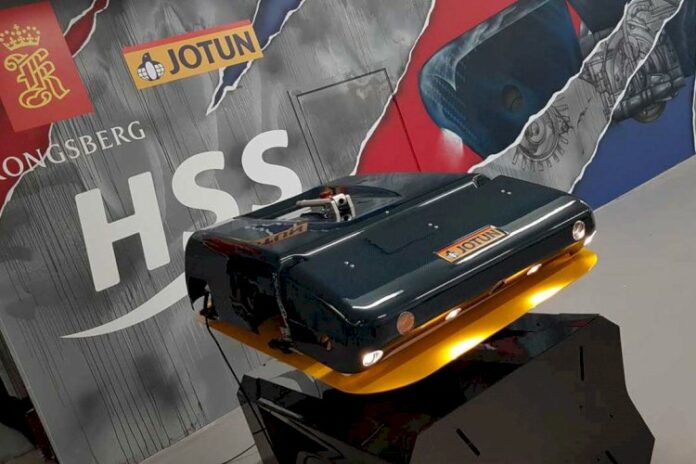
Jotun HullSkater is part of a revolutionary climate friendly robotics-based solution that introduces proactive hull cleaning with remotely operated technology to achieve optimal running performance

Jotun and Kongsberg Maritime have joined forces to develop a game-changing proactive hull cleaning solution designed to provide full operational flexibility and an unbeatable environmental footprint. Called Jotun HullSkater, this new lean, green cleaning machine is part of Jotun Hull Skating Solutions. This is the first solution developed for proactive bio-fouling control on ships and offers the potential to reduce fuel costs by around US$3.6 million and CO2 emissions by 12.5% annually, on a typical vessel.

As Jotun’s strategic partner on the HullSkater project since 2015, Kongsberg Maritime has contributed to the technology and know-how including development of secure remote control, cloud-based data storage, battery technology, acoustics and composite materials. HullSkater also uses KONGSBERG’s global communications infrastructure and Kognifai cloud ecosystem, both of which contribute to its ability to abolish significant performance losses caused by fouling and negate the need for waste collection.

Already established as the market’s leading marine robotics manufacturer, Kongsberg Maritime is responsible for the industrialisation and manufacturing of HullSkater, which will take place at a new facility located close to its Sensors & Robotics campus in Horten, Norway. HullSkater will be supported by extended performance and service level guarantees, with global technical support from Jotun and Kongsberg Maritime.

 Alfie Ong, Vice President, Jotun Marine Coatings, said:

“Kongsberg Maritime’s expertise in subsea robotics, remote communications and data management, allied with their dedication to sustainability, made them a perfect fit to partner with us in the development of HullSkater. Together, we have devised a truly innovative solution, which we believe will revolutionise the shipping industry, moving away from traditional, reactive methods of managing fouling to a proactive approach which will ensure that vessels are always operating efficiently and sustainably.”

HullSkater can inspect a 10,000m2 hull in approximately two hours. As a permanent member of crew, it is always on station, ready to clean all known fouling from the hull, which if left to accumulate causes increased drag leading to extra fuel consumption and emissions to air (GHG and CO2).

Egil Haugsdal, President, Kongsberg Maritime, commented:

“We are delighted to offer our 70 years of underwater technology experience as partner with Jotun to develop a solution that can help customers make their businesses safer, more sustainable and more efficient. Conserving our ocean environment and enabling sustainable marine operations is a priority for KONGSBERG, and HullSkater offers a uniquely proactive way to solve the difficult problem of fouling growth.”

ClassNK grants AiP on LPG reformed gas fueled coastal LPG carrier

0

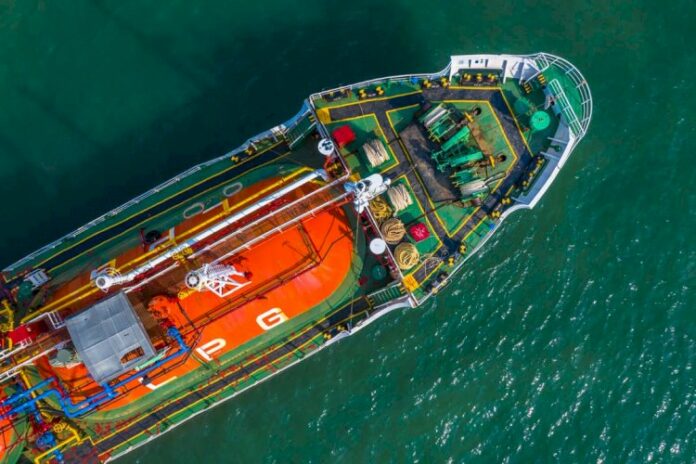
Leading Classification Society ClassNK granted an Approval in Principle (AiP) based on its Rule Part N which adopts IGC Code and its Guidelines for Ships Using Low-Flashpoint Fuels to Daihatsu Diesel for their concept design of an LPG reformed gas fueled coastal LPG carrier developed in cooperation with Iino Gas Transport, Osaka Gas, Izumi Steel Works, and Miura Shipbuilding in terms of safety assessments.

The Vessel is designed to be equipped with an LPG reformer developed jointly by Daihatsu Diesel and Osaka Gas, and a dual fuel engine developed by Daihatsu Diesel. The LPG Reformer is designed to convert LPG into synthetic methane gas equivalent to the kind found in LNG. Due to being mainly composed of propane and butane, LPG is susceptible to knocking (abnormal combustion), making it difficult to use as a fuel for lean burn gas engines and dual fuel engines. In contrast, by converting LPG into synthetic methane gas with the LPG Reformer prior to fueling the engine, the risks of knocking can be restrained, which is expected to have an equivalent operational performance observed when using LNG.

Speaking on the occasion, ClassNK Senior Executive Vice President T. Shigemi said:

“We have cautiously confirmed the design’s safety and are proud to be involved with this project. LPG is starting to become an option in the maritime industry and we have high expectations for the possible benefits that its use may bring in terms of environmental safety and efficiency.”

Daihatsu Diesel President S. Kinoshita said:

“We have developed dual-fuel engines from the view point of global warming prevention, and this LPG reformer will provide more options for customers. We would like to make further efforts toward a zero carbon society. I thank ClassNK and our partners for their efforts and cooperation in making the concept design and safety assessment.”

IntelliTug project: Initial sea trials successfully completed

0

The technology group Wärtsilä and PSA Marine have successfully completed initial sea trials for the “IntelliTug” project.

The PSA Polaris, a harbour tug owned and operated by PSA Marine, has been retrofitted with a suite of Wärtsilä technology to enable autonomous navigation. The project is a collaboration between technology provider Wärtsilä, marine services provider PSA Marine, classification society Lloyd’s Register, the Technology Centre for Offshore and Marine Singapore (TCOMS), and co-funded by Maritime and Port Authority of Singapore’s (MPA) Maritime Innovation and Technology (MINT) Fund.

Carried out in Singapore, the trials commenced in September 2019. They verified the IntelliTug’s capability to avoid a variety of obstacles, including virtual and real-life moving vessels. These trials are Singapore’s first for commercial Maritime Autonomous Surface Ships (MASS) using the MPA MASS regulatory sandbox, which has been established to facilitate the testing of MASS and other autonomous technologies in a safe and controlled environment within the Port of Singapore.

The IntelliTug trials are part of MPA’s MASS initiative, which aims to accelerate the industry’s R&D capability in this field, and validate new MASS-related concepts of operations and technologies. This would enable technology developers, the research community, and maritime stakeholders to capture future MASS-related opportunities.

Captain M Segar, Assistant Chief Executive (Operations) of MPA, said:

“It is critical that we prepare the Port of Singapore for MASS. With MPA’s MASS regulatory sandbox, I am glad that Singapore can contribute to the sea trials and eventual adoption of MASS. We will be happy to share our MASS experience with other ports and coastal administrations.”

The PSA Polaris is a 27-metre harbour tug with dual azimuth thruster controls. It has been fitted with a sensor suite, including Wärtsilä’s RS24 near-field high resolution radar and Wärtsilä’s Dynamic Positioning (DP) system, to enable autonomous capabilities. Data collection via the sensors has been ongoing since the start of the project in conjunction with the development of a collision avoidance algorithm.
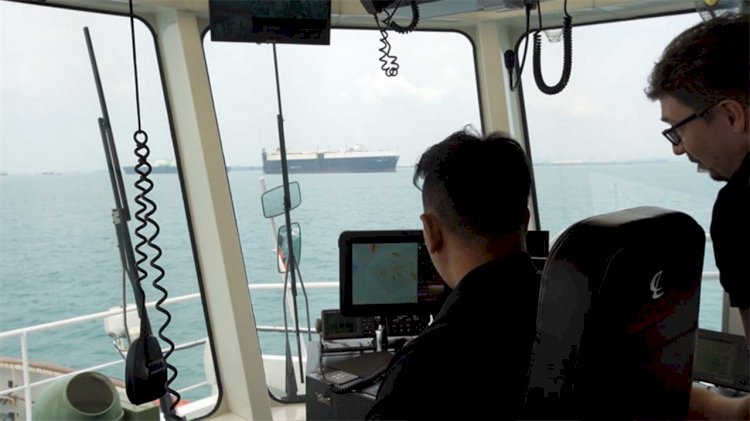
The project is aimed at developing and field-testing intelligent vessel capabilities and viable pathways towards smarter, safer, and more efficient ways of operating a harbour tug. This is achieved through the provision of human-centric technology, design-thinking, and man–machine collaboration.

Peter Chew, Managing Director of PSA Marine, said:

“PSA Marine is constantly innovating to redefine the capabilities of our tugs. The achievement seen in the IntelliTug project is a testament that with strong partnership, alignment of purpose and the courage to innovate, ideas can be turned into reality. With the incorporation of feedback and experience from our tug masters, the smart technology developed in the IntelliTug project augments our tug masters’ situational awareness and amplifies their capabilities. We will continue to work closely with the stakeholders and look forward to future developments of the project.”

Before sea trials commenced, system integration and digital testing began with the use of Wärtsilä’s autonomous ship simulator. TCOMS has carried out further validation of the various data gathered from the sensor suite, as well as real-world performance of the tug through a physics-based digital twin that incorporated the effects of the physical environment faced in the sea trials. Lloyd’s Register has been closely involved throughout the project to support the development of the trials’ safety case, while collaborating on the human factors and technology design processes.

Thomas Brightwell, SACA Software Manager, Wärtsilä, says:

“Wärtsilä has taken a rigorous, staggered approach to the sea trials, first to prove the fundamental safety and accuracy capabilities of the system, and then moving on to real obstacle-free path planning. It has further progressed to more complicated test cases, previously attempted in digital batch testing and digital first-person simulation. The design of the test cases was a collaborative effort involving Tug Masters and a Master Mariner, with close review and continuous refinement with MPA throughout the project.”