6.8 C
New York
Home Blog Page 895

MeyGen to develop a subsea tidal turbine connection hub

0

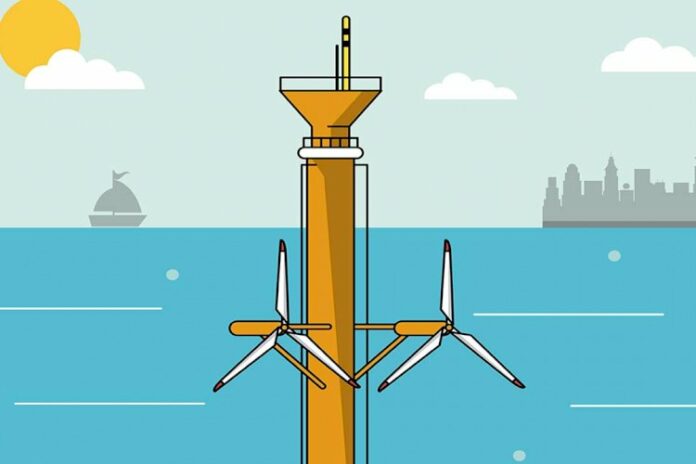
SIMEC Atlantis Energy Limited (“Atlantis”), a global developer, owner and operator of sustainable energy projects, has advised that MeyGen Plc (“MeyGen”) has been awarded a £1.545 million grant from the Scottish Government’s Saltire Tidal Energy Challenge Fund to develop a subsea tidal turbine connection hub for the next phase of development of the MeyGen tidal power array, the world’s largest tidal stream power project.

The Saltire Tidal Energy Fund is a £10 million fund supporting the commercial deployment of tidal energy generation in Scottish waters through driving innovation and a reduction in the cost of electricity generated.

The awarded funding will be used to design, procure, install, connect and commission the subsea hub and associated subsea connection infrastructure, which is a key enabler for future array phases, as it will deliver cost reductions in power production by connecting multiple turbines to a single export cable.

The technology leverages the innovative design of the Atlantis turbine wet mate connection system, which enables rapid and automatic connection and disconnection of power and communication infrastructure offshore without any intervention. This grant award will prove the application and benefits of subsea hub for the global tidal power industry. Once proven, the hub will be made available to project developers to help to achieve cost-competitive commercial deployment across the sector.

As a result of the grant award, the Atlantis’ Turbine and Engineering Services Division (“ATES”) will be awarded a £2.4 million Engineering, Procurement and Construction Contract (“EPC Contract”) for delivery and installation of the subsea hub by the MeyGen project company on the MeyGen project site in the Pentland Firth, Scotland.  The subsea hub, which will be assembled and tested in Scotland, will be installed later this year (2020).

Tim Cornelius, CEO of Atlantis, commented:

“We are very grateful and appreciative of the Scottish Government’s continued support for tidal stream energy by awarding this grant to help fund MeyGen’s ongoing expansion. The first of its kind globally, the new subsea hub represents a significant milestone in the cost reduction path that tidal power is currently on and also has exciting application in the floating offshore wind market.  

The subsea hub we have designed and developed is a key part of our overall cost reduction strategy for tidal power generation. This hub will also have direct application for other forms of marine energy such as floating offshore wind and wave energy. We are very proud to be taking the lead in realising the full potential of our oceans’ energy, delivering a cleaner energy future.

I would also like to personally thank our dedicated marine energy team for their hard work bringing this project to fruition. The next phase of MeyGen, which will supply ocean energy to a large data centre to be built in Scotland, requires us to deliver cost competitive energy to our future customers and the use of subsea hubs to reduce the number of export cables required to deliver this power from the 40 x 2MW turbines we plan to install is central to our plans. This is a wonderful development for the MeyGen project, our ATES division and the tidal power sector in the UK.“

ABS extends industry-leading remote survey options

0

ABS is expanding its remote survey options for vessel owners and extending its remote survey and audit services for equipment and materials manufacturers and other key service provider firms.

Christopher J. Wiernicki, ABS Chairman, President and Chief Executive Officer, said:

“As organizations rely more heavily on remote and virtual operations, ABS is making it easier for vessel owners and equipment manufacturers to leverage digital applications by offering even more remote surveys and audit options.”

A leader in remote survey for vessels, ABS has expanded its remote offerings to include Drydocking Extensions and Radio Renewals and will offer additional remote services in the near future.

Additionally, ABS has extended its remote survey and audit services to existing equipment manufacturing and external specialist clients enrolled in ABS programs in the United States, South America and Europe.

Powered by advances in remote technology, remote surveys and audits augment the traditional survey experience by allowing surveyors to perform a range of actions without being physically present while simultaneously capturing all survey and audit requirements. Access to remote surveys and audits allows for business continuity, particularly during challenging times that may create scheduling conflicts, personnel or logistical issues such as the current COVID-19 period.

ABS has created an easy five-step process to simplify the scheduling and delivery of remote survey and audit requests.

Customised Wärtsilä ship design chosen for two new P&O ships

0

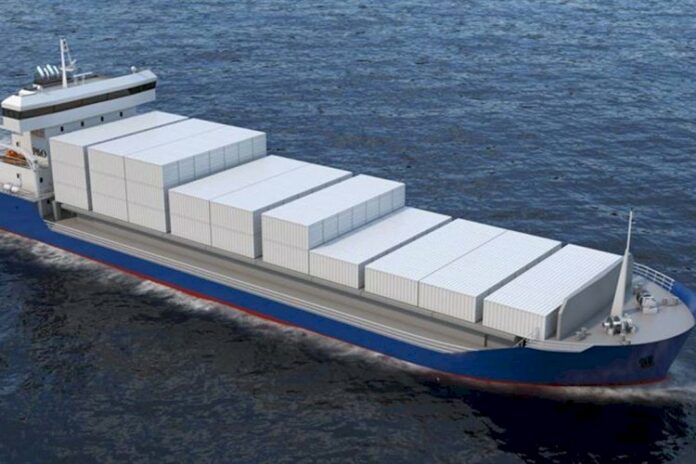
The technology group Wärtsilä has been selected to provide the design for two new bulk and container carriers.

The ships are being built for Dubai based P&O Maritime Logistics at the Fujian Mawei Shipbuilding yard in China. The order with Wärtsilä was placed in January 2020. There is an option for a third vessel to the same Wärtsilä design.

The special purpose customised design takes into consideration the specific operating conditions and limitations the ships will encounter. Built to operate along the Fly River and coastal areas near Port Moresby in Papua New Guinea, the vessels will need to be capable of manoeuvring in narrow and shallow waters, while at the same time having maximised cargo capacity and deadweight.

Tomaz Nabergoj, Director, Ship Design, Wärtsilä Marine says: “Our experience in delivering efficient, customised designs was tremendously important in the award of this contract. Also, the fact that we have earlier designed a vessel for P&O that successfully meets the same operational challenges in Papua New Guinea, very much counted in our favour.”

John Connor, Head of Australia and PNG at P&O Maritime Logistics, says:

“It has been our pleasure to work with Wärtsilä on the ship design for this project. Their cooperation enabled us to evaluate and select the best design solution, taking into consideration the size and propulsion configuration. The customised design selected fully meets our needs and expectations.” 

The 90 metres long, 5400 DWT ships will have a nominal container capacity of 229 units. The first vessel is scheduled to be delivered by Q3 2021.

Port of Rotterdam increased its efficiency thanks to a new digital solution

0

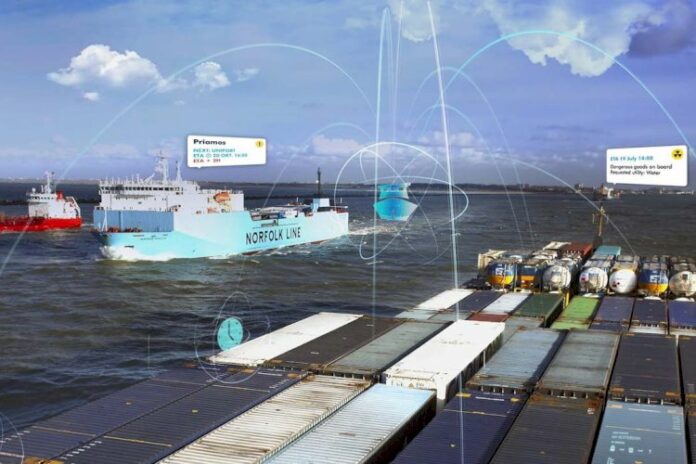
Gaining insight into port calls, nautical services, cargo and assets helps port authorities to optimally manage their operations and get the most out of their port.

Digital solutions and data analysis play an increasingly important role in this. The modular management system Portmaster enables both small and large ports to lay a smart foundation to focus and monitor their objectives. And gradually increase their digital maturity level.

Portmaster is one of the digital solutions developed by the Port of Rotterdam Authority in recent years. These applications are also marketed as a service for other port authorities under the name PortForward. This way the Port of Rotterdam also enables other ports to benefit from the digital knowledge that has been built up in Rotterdam. The aim of which is to contribute to the creation of a worldwide network of ‘smart connected ports’.

Jan Gardeitchik, Business Development Manager Digital at the Port of Rotterdam Authority, says:

“As a management system, Portmaster is at the heart of the operations that take place in a port. Based on big data and artificial intelligence, it provides extremely accurate information about, among other things, vessel times of arrival and departure.”

Dashboards can be used to track the operational KPIs and monitor safety and sustainability performance of the port. Notable issues or incidents are quickly registered using the system. Portmaster can also keep track of information about cargo – which cargo is on board, or, in the case of cruise ships, how many people are on board. Operational details can be easily tracked and reported, which also improves the transfer of information between different shifts and departments.

Jan Gardeitchik says:

“As a management system, Portmaster is at the heart of the operations that take place in a port. Based on big data and artificial intelligence, it provides extremely accurate information about, among other things, vessel times of arrival and departure.”

Port authorities can easily collect all required information to automatically calculate their port dues in Portmaster. This includes the dimensions and durability class of vessels and the frequency with which vessels call at the port. This way the system supports the automatic calculation and invoicing of port dues and port authorities meet their legal obligations.

Thanks to the modular construction of Portmaster, users can enter easily and expand the system in stages. The first step is to gain insight into the port calls: which vessels are calling at the port, or are or have already been there?

Gardeitchik explains:

“This module contains an overview of the port. This can be a simple map showing where the vessels are located, to a complete graphical overview of the port and its assets. Port dues can be calculated simply and accurately based on port call data. It is also the stepping stone to digital planning.”

Commercial vessels calling at a port are obliged to report to the port authority 24 hours in advance. When doing so, they indicate their expected time of arrival. Actual time of arrival depends on various factors, including weather and tidal development. Numerous digital tools are currently available to predict such developments fairly accurately. By linking these within the Postmaster environment to the expected times of arrival, port authorities can better estimate the actual times of arrival, leading to better planning and optimal use of the port’s assets. For example, tug boats, linesmen and pilots can be used more efficiently.

Quays, berths and other port infrastructure can be digitally mapped in Portmaster and linked to information about accessibility and availability. How long is a quay or berth? What is the water depth? But also, when was the last dredging work performed for the quay and what is the maintenance status? Gardeitchik:

“Nowadays we can equip quays with sensors that provide real-time information about the occupation. Likewise, rubbish containers on the quay, for example, can indicate themselves when they have to be emptied. This provides opportunities to better organise port processes, predict maintenance and schedule it at the right time. This allows you to make optimal use of your port facilities at a lower cost and to shift any physical extensions to a later point in time.”

The Portmaster modules for planning and monitoring assets, maintenance and services help port authorities to get the most out of their assets and revenue. Infrastructure is better utilised, port operations are carried out more efficiently. At the same time, port authorities are becoming important providers of information to their port community. Gardeitchik:

“During a port call, numerous service providers are active around the vessel. From the bunkering company to the baker that brings the bread on board – all service providers know via Portmaster when the vessel will be in port. As a port authority, this not only makes you smarter, but also more attractive to clients.”

New CMA CGM’s solution guarantees priority transportation of goods

0

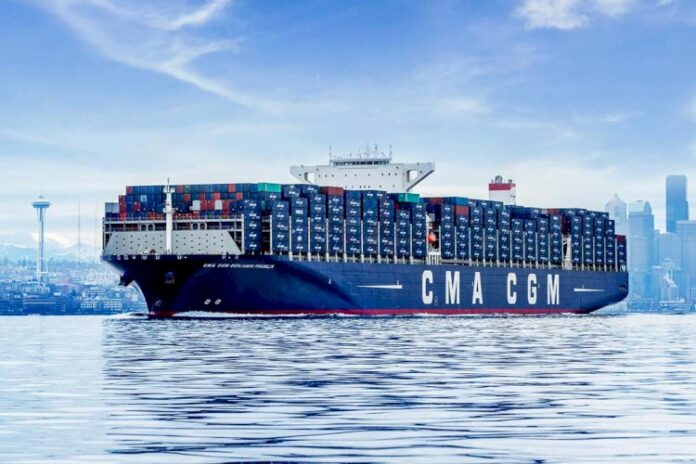
The CMA CGM Group, a world leader in shipping and logistics, is launching SEAPRIORITY Go, a new high value-added service within the CMA CGM+ range of solutions designed to meet the needs of its customers.

SEAPRIORITY Go provides customers exclusive treatment: their goods will be given priority whether it be for container allocation or loading on board. Part of the BOOST category under the CMA CGM+ umbrella, this new solution helps to expand our customers’ business, even when demand is strong, giving them more agility, flexibility and protection.

SEAPRIORITY Go will be offered for all shipments on major trades operated by CMA CGM effective March 27th, 2020. It will be available online on My CMA CGM as of this same date.

In line with its Customer Centricity strategy, CMA CGM launched CMA CGM+, a range of solutions that complement its conventional maritime transport and logistics services. Equipped with this comprehensive range of products and services, the Group is able to provide customised solutions to meet all customer expectations: whether they wish to protect their cargo or grow their business, CMA CGM+ is specifically designed to meet their needs.

ZIM responds to COVID-19 crisis with electronic bill of lading

0

ZIM has completed an additional stage in advancing electronic bill of lading (e-B/L) with the launch of a fully operational e-B/L issued from its legacy system.

The first shipment with automatically managed e-documentations from ZIM’s legacy system through Wave platform was completed last month by leading Israeli exporter Gan Shmuel Group, and its freight forwarder ICL Intelligent logistics, which embraced the opportunity to improve their end-to-end service and accompanying customer experience while benefiting from significant time and cost reductions and added efficiencies.

The Wave technology enabling the process is designed to reflect issuance of original paper documents and associated processes in an entirely digital format that matches the legal standards recognized and practiced by the international trade industry, thus reducing the inefficiencies, risks, and losses.

Nir Avni, ZIM Israel Managing Director:

“Especially during the current Coronavirus crisis, the ability to digitally transmit original documents between parties, replacing traditionally physical activities, is of the highest importance. ZIM leads the way in providing these solutions. Following our successful cooperation with Wave since 2018, we have finalized the integration of Wave with ZIM’s legacy system. We’ve effectively shrunk the time for transferring documents from days to a couple of minutes.”

Jeanne Flavian, Wave CSO concludes:

“Our latest milestone underscores our ongoing efforts to provide the industry with a groundbreaking digital process in a format that broadly benefits all stakeholders. We are thrilled to be chosen by industry leaders to pioneer their digitization efforts. We invite all leading trade industry stakeholders to join the use of Wave technology.”

Nokia completes phase one of Port of Zeebrugge digitalization

0

Nokia completes phase one of Belgian Port of Zeebrugge digitalization with 5G-ready private wireless network 

Nokia has announced that it has completed the first phase of Port of Zeebrugge’s 5G-ready, industrial-grade private wireless network deployment.

By deploying the Nokia Digital Automation Cloud platform, it will provide private wireless connectivity to more than 100 endpoints across the entire port operations. This will enable Zeebrugge to deliver a range of new and enhanced services that not only improve the port’s operational performance, but which also differentiate Zeebrugge as a leader in port transformation and digitalization.

Following successful deployment of the Nokia private wireless network, Zeebrugge will be able to track, analyze and manage connected devices across multiple port-based applications in real time. The end-to-end, high-performance 5G-ready network will accelerate port innovation and automation with deployment of IoT, autonomous vehicles, augmented reality and drones.

Rick Goetinck, CEO, Port of Zeebrugge said:

“Introduction of an advanced private wireless network will act as a beacon for our partners to develop and deliver new solutions right across the logistics value chain. Nokia, in close collaboration with local service provider Citymesh, has demonstrated outstanding 5G capabilities during platform deployment, making phase one a complete success.”

The network is now being used for connectivity with tugboats, air pollution detectors, security cameras and quay sensors. Its high-bandwidth and low-latency connectivity will also be leveraged during the upcoming construction of a new sea lock and during building and maintenance of offshore wind farms. Phase one has established increased automation in Zeebrugge’s outer port area. Phase two, due for completion in mid-2020 will focus on the inner port.

Stephan Litjens, General Manager, Nokia Digital Automation said:

“By deploying a Nokia 5G-ready digital automation platform with a private wireless network, the Port of Zeebrugge brings high-performance connectivity and digitalization to enhance safety, accelerate innovation, enable advanced applications and deliver new levels of logistics performance.”

Several external suppliers have also signed up to the network, which will be used by port-based companies for dispatching, connectivity with straddle carriers, track and trace systems and integrated communications.

Goetinck added:

“The introduction of a 5G-ready platform at the port of Zeebrugge brings benefits to a wide range of stakeholders across local enterprises, ancillary shipping businesses and government. The Port of Zeebrugge is an ultra-modern logistics center that serves European and intercontinental markets, and our investment in hyper fast connectivity can only improve the competitive position of our port.”

Nokia has partnered closely with Citymesh to deliver the private wireless network, and it will continue to assist with end-to-end support and network commercialization.

Nokia Digital Automation Cloud is an industrial-grade global digital automation service platform that provides a reliable, secure, and high-performance private wireless network, which is scalable according to needs.

Corvus Energy invests in Canadian battery production

0

Corvus Energy has announced that the company is moving forward with plans to invest in its Canadian operations by expanding its Richmond, B.C. facility and increasing manufacturing capacity.

As reported in early 2018, Corvus Energy is rolling out plans for expanded maritime battery manufacturing facilities in both Bergen, Norway and Richmond, B.C., Canada. A new automated battery factory in Bergen began producing energy storage systems (ESS) in Q4 2019. Now Corvus has signed a contract for investment in new production line equipment in the Richmond, B.C. plant.

Geir Bjørkeli, Chief Executive Officer of Corvus Energy, comments:

“With anticipated growth in the market, increased capacity and production flexibility are crucial to keeping up with customer demand. The Canadian facility will begin producing our newest multi-megawatt hour ESS, which we call Blue Whale and expect to be the cornerstone of Corvus’ growth in coming years. The market for these enormous battery systems will increase rapidly as cruise ships, large ferries and merchant vessels strive for zero-emissions operation. Some forecasts predict it will be a $1 billion USD market by 2026. Corvus is well positioned to be an innovator and market leader in zero-emissions solutions.”

The total investment in research and development (R&D), plant and equipment is expected to be over $16 million USD. The R&D carried out in Richmond, B.C. is partly funded by Canada’s National Research Council Industrial Research Assistance Program (NRC IRAP).

Alongside the new production line and new test facilities, Corvus plans to expand its office space and make improvements that enhance productivity, collaboration and aesthetics.

Richard Wing, Executive Vice President Engineering and Program Management at Corvus Energy, says:

“The state-of-the-art production equipment in Canada will be based upon the same flexible robotic technology used in our highly successful battery factory in Norway. Using digital and automated solutions, we establish scalable, high quality cost-efficient production. Having our manufacturing co-located facilitates collaboration — in Norway with the largest sales and service team and in Canada with the engineering team — to add value to our products quickly. Further, it builds competence throughout the company as well as locally in our operating regions.”

Corvus Energy plans to begin shipping Blue Whale ESS from the Richmond plant in early 2021. The two Corvus Energy manufacturing facilities will be well positioned to serve all its largest market for maritime batteries: Northern Europe, and the growing North American and Asian markets. Total capacity from both locations will be in the range of 1200 MWh per year in five distinct ESS product lines.

New double-ended ro-pax ferry for operation in Tasmania

0

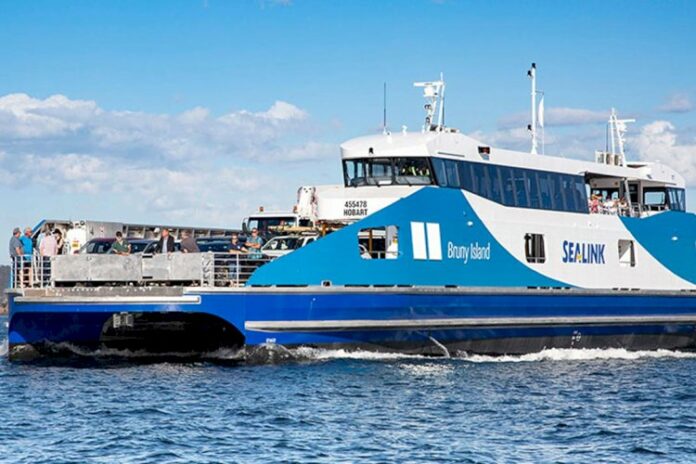
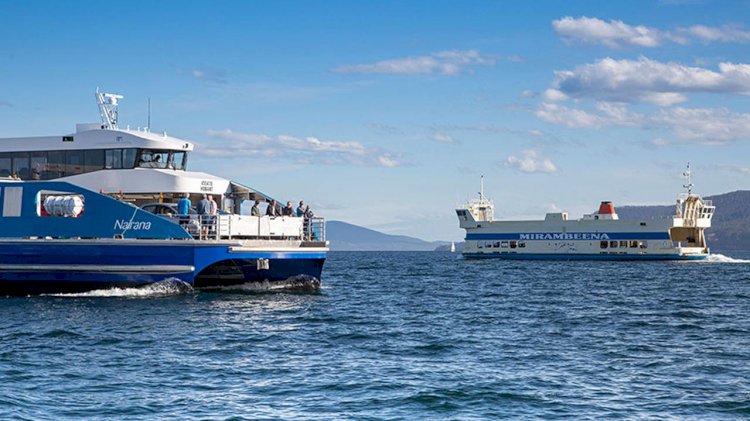
Incat Crowther has announced the launch of Nairana, a double-ended ro-pax ferry for operation to Bruny Island in Tasmania. The Incat Crowther 44 was commissioned by Sealink Travel Group and built by Richardson Devine Marine in Hobart.

Nairana breaks new ground by combining robust aluminium structure, double-ended functionality and a catamaran platform. The catamaran hull platform with its generous beam offers significant fuel savings compared to a monohull. The vessel will bring improvements in both transit and turn-around times.

In addition to improved performance, Nairana brings modern vessel technology, including the latest in fitout and convenience.

The vessel is configured to carry 36 cars and 192 passengers. Three of the vehicle lanes are unrestricted in height, with the central two lanes carrying a total 90 lane meters of trucks. It is certified to carry dangerous goods.

The elevated superstructure – located to one side of the vessel – has both interior and exterior spaces. The indoor space seats 32 passengers in booth seats with tables, whist the outdoor space features café style seating for 30 passengers.

Incat Crowther worked with Sealink to customize the vessel to the operator’s docks, as part of a wholistic approach to the operation, including design and on-site fitment. This approach targets long-term value and minimizes risk to the operator. Nairana performed well on recent performance and docking trails, exceeding her contract speed and successfully interacting with shore-based infrastructure. 

Nairana is powered by four Scania DI13 070M main engines, each producing 200kW. Positioned in each of the four corners of the vessel, these engines are directly coupled to Schottel SRP 100 azimuthing drives. As well as offering exceptional maneuverability, the azimuthing drives provide propulsion efficiency with all four delivering thrust in the direction of vessel travel. If required, the vessel can operate on two pods during off-peak periods, further reducing operating costs.

A second vessel is under construction at Richardson Devine Marine.

Fugro and SEA-KIT join forces to develop a new range of USVs

0

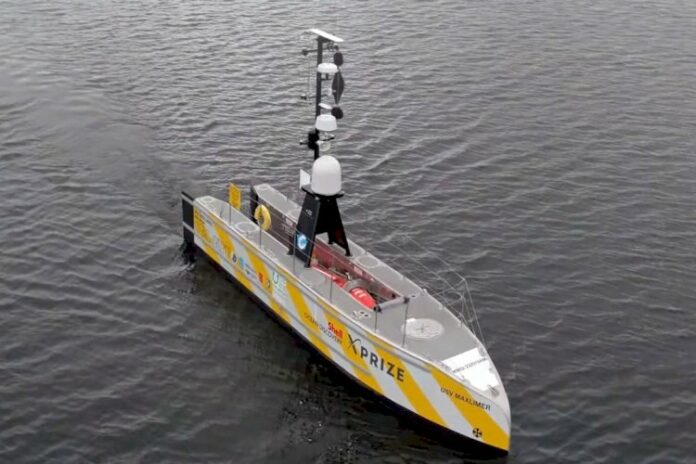
SEA-KIT, a global provider of hi-tech solutions to maritime and research industries, will work with Fugro to develop a new range of agile and compact uncrewed surface vessels (USVs) which can deploy remotely operated vehicles (ROVs) and autonomous underwater vehicles (AUVs) for marine asset inspections.

The first USVs will be launched before the end of this year, and a larger USV model is being designed for delivery in 2021. These inspection-related USVs are being developed alongside Fugro’s range of USVs for hydrographic data acquisition.

Mark Heine, Chief Executive Officer at Fugro, said:

“We are excited to be partnering with SEA-KIT International to develop a range of USVs that will transform the marine industry. Together with other strategic alliances, this partnership represents a major acceleration to our strategy of leading the development of remote and autonomous solutions, which is key to delivering a safer and more sustainable approach to constructing and maintaining marine assets.”

Ben Simpson, Managing Director of SEA-KIT International, commented:

“We’re delighted to announce our partnership with Fugro, which will combine our design and build expertise with Fugro’s track record in the marine inspection market. Together we can push for better sustainability in the marine industry and lead the way for others to follow.”

In addition to investing in USVs and remotely operated vehicles (ROVs), Fugro has built a global network of seven remote operations centres (ROCs) to deliver fast, safe and efficient inspection and positioning services, including two new ROCs in Aberdeen, Scotland, and Leidschendam, the Netherlands, both opened in 2019. By the end of 2020, Fugro will be the first company in the world to provide offshore subsea inspections via USVs and ROVs that are operated from onshore ROCs.

Fugro and SEA-KIT International will accelerate the development and use of uncrewed vessels, remotely operated from Fugro’s ROCs, to improve safety, efficiency, and reduce the environmental impact on marine activities. The new range of USVs will consume up to 95 % less fuel than traditional vessels, supporting international ambitions for zero global emissions in the marine industry.