6.5 C
New York
Home Blog Page 894

IDENTEC SOLUTIONS launches NB-IoT solutions

0

IDENTEC SOLUTIONS, a leading provider of wireless localisation solutions, is putting their focus on the development of Narrow Band Industrial Internet of Things (NB-IoT) solutions as well as the consistent development of new fields of application for the said. IDENTEC SOLUTIONS has its sights firmly set on the future and on sustainable growth.

The new 5G standard for more efficient and powerful communication is gaining ground all across the globe. The expansion of the network is to be pushed forward strongly until 2023. This is just one of the reasons why IDENTEC SOLUTIONS is shaping up to develop 5G-compatible solutions for its various Industry 4.0 applications.

CEO Urban Siller:

“We will further strengthen this focus in the coming years in order to expand our market position. A number of companies are engaged in research in this direction. We are the first with a ready-to-use solution, making us pioneers in our sector.”

The in-house developed solutions for wireless identification, positioning and status detection of persons, materials and objects are largely aimed at niche markets with very harsh environmental conditions. The industries supplied range from oil rigs, mines and container ports, right to manufacturing plants for mass production. The new 5G communication standard using NB-IoT opens up important perspectives, particularly in these harsh, sometimes remote areas of application where extensive connectivity plays a crucial role.

The software engineer Martin Sobotka from IDENTEC SOLUTIONS explains:

“The new radio technology is designed for M2M (machine-to-machine) communication and offers the opportunity of very energy-efficient communication via the existing mobile radio infrastructure. Moreover, it promises a good building penetration. This is where we see the greatest advantages for the digitization of industry and logistics.”

With around 10 gigabits per second, the 5G mobile radio standard has a significantly higher bandwidth than its predecessor 4G, which is particularly useful for home applications such as data streaming. Bandwidth, however, plays a subordinate role in industrial use of 5G.

Urban Siller, CEO of IDENTEC SOLUTIONS AG, explains:

“We use standards such as CAT-NB1 (alias NB-IoT) or CAT-M1. These standards stand for a slow but constant data transmission at low frequency and thus contrast with high-frequency home applications such as data streaming. These two standards are part of 5G and are already globally available.”

In a first step, the company will continue to improve on its very successful Reefer Runner solution for the automated monitoring of reefer containers. A prototype is already being used for inland marine transport on the Rhine between Basel and Rotterdam.

Thanks to the real-time monitoring of the reefer containers, the transport of cheese and fish from the Netherlands to Switzerland, for example, as well as pharmaceutical products and chocolate from Switzerland to the Netherlands can be guaranteed without interruption of the cooling chain ¬ regardless of the manufacturer type of the container. This eliminates the need for manual inspection ¬ which not only increases efficiency but also minimizes the risk for the carrier.

Sobotka concludes:

“What used to be a major investment in terms of local wireless infrastructure can now be offered as a cloud application without local infrastructure and without local software installation. Customers can thus monitor their refrigerated containers conveniently via devices such as PCs, notebooks, tablets and smartphones. This primarily benefits smaller companies. The range of potential use cases for this solution is wide. The use in road and rail transportation for example is conceivable, to only name a few.”

The first 5G-compatible solutions will be delivered in autumn 2020.

VolkerInfra awarded contract at the Neart na Gaoithe offshore wind farm

0

VolkerInfra has secured a new £15.5m contract from Prysmian PowerLink to deliver services at the Neart na Gaoithe (NnG) offshore wind farm in Scotland.

The team will install 2No. 220Kv onshore export circuits following the completion of the Pre-Construction Activities (PCA) works.

Located 15.5km off the coast of Fife, EDF Renewables acquired the project in May 2018.

Once completed, NnG will power 450MW of renewable energy, enough to support around 375,000 Scottish homes.

The contract includes:

  • Enabling works along the cable route corridor, including: haul road construction and removal, pre and post construction drainage, trial holes, removal of any environmental or ecology obstacles and fencing
  • Excavation, duct installation, backfill and reinstatement of cable trenches along the proposed 12.3km cable route
    Installation of 220kV underground cable and fibre optic cable into pre-installed ducting from the landfall point at Thorntonloch to the Crystal Rig Onshore Substation
  • Construction of the cable jointing bays, including excavation, backfilling and reinstatement
  • Design, construction and commissioning of horizontal directional drilling (HDD) system
  • HDD works required along the cable route
  • Supply and installation of steel support structures, including all scaffolding to facilitate terminating works
  • Jointing support to assist with the installation of 220kV joints and terminations
  • Testing support to assist with the AC resonance testing works

Commenting on the contract, Peter Cooke, technical development director at VolkerInfra, said:

“We are delighted to have been awarded this latest contract from Prysmian PowerLink and are looking forward to delivering a first-class installation service at the Neart na Gaoithe offshore wind farm.

With extensive experience in this field, and with services exceeding all expectations at the Moray East and Hornsea II offshore wind farms, our fantastic team are well placed to deliver this nationally significant infrastructure project in a safe, efficient and professional way.”

Oma Baatbyggeri delivers the last of three 39m catamarans to Norled

0

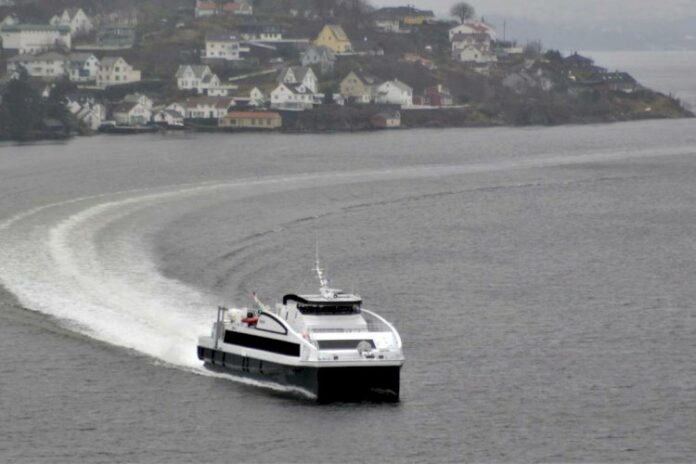
Oma Baatbyggeri AS and Norled AS signed a contract for the delivery of three 39-meter passenger catamarans with capacity for 296 passengers in 2018.

M/S “Fjorddronningen”, the first of the three sister ships, was delivered to Norled AS on October 15 2019, while M/S “Fjordprinsen” was delivered on December 10 2019. Both vessels will be operational from 1 January 2020. With the delivery of M / S «Fjordjarl» this week, Norled has now received the three vessels. The boats will traffic in Troms in the route between Tromsø, Finnsnes and Harstad.

The vessel type is a further development of the renowned Oma Passenger catamarans, which the shipyard has delivered many of, to various Norwegian shipping companies.

This new building has a design and is equipped with engines that will provide further reduction in energy consumption. With this new build, Oma Baatbyggeri confirms its leading positions in terms of low fuel oil consumption, low noise and high passenger comfort. Furthermore, the layout of the vessel is arranged to accommodate passengers with disabilities ensuring comfortable travel for all onboard.

In May 2018, it was official that Norled had won the big tender contract for the fastboat connection between Harstad and Tromsø from 2020 to 2030. With this, Norled manifested its position as by far the largest fast boat company in Norway. At the same time, Norled is now the world’s fifth largest fast boat operator, and the player that drives much of the technology development in the industry. The company is also a leader in fjord tourism and sees great potential for further development of the tourism sector in Northern Norway.

CEO Lars Jacob Engelsen says:

“Our ambition is to be a driver for new and environmentally friendly technology. Cooperation within the maritime technology cluster in Norway is very special and is in many ways similar to the leading technology environments in the world, with a high degree of trust and a high degree of flexibility at the same time. We have worked closely with Oma Baatbyggeri for many years and know through experience that they build vessels that are of a very high quality, modern and provide an excellent travel experience.”

Teekay announces new bareboat contract for the Foinaven FPSO

0

Teekay Corporation has announced that it has entered into a new bareboat charter contract with the Foinaven Operator, for the Petrojarl Foinaven (Foinaven) floating production, storage and offloading (FPSO) unit for up to approximately ten years (the Contract).

Under the terms of the Contract, Teekay is expected to receive an upfront payment of approximately $67 million in cash, a nominal per day rate over the life of the Contract, and a lump sum payment at the end of the Contract period, which is expected to cover the costs of recycling the FPSO unit in accordance with the EU Ship Recycling Regulations.

As part of the transaction, Teekay Offshore Partners L.P., now known as Altera Infrastructure L.P. (Altera Infrastructure) has entered into agreements with the Foinaven Operator directly to provide the operations and shuttle tanker services for the Foinaven FPSO.

Kenneth Hvid, Teekay’s President and CEO, commented:

“We are pleased to announce this new contract for the Foinaven FPSO, which allows our customer to continue to maximize the value of the Foinaven field whilst eliminating Teekay’s operational exposure to the FPSO unit. The new contract further reduces our exposure to the offshore business, which is a strategic priority, improves our profitability, and allows us to further delever and strengthen our balance sheet.”

BP North Sea Regional President, Ariel Flores, said:

“This new arrangement will enable BP and its joint venture partner RockRose Energy to introduce an innovative contractual framework for the FPSO’s operating services and shuttle tanker provision, giving BP greater influence over the strategic direction of operations, while allowing us to build on our existing strong relationship with Altera Infrastructure.  It will also help ensure safe, reliable and efficient operations out to at least 2025 and give us space to set the Foinaven area up for future success.”

Altera Infrastructure FPSO President, Chris Brett, commented:

“We are proud of our 24 years of continuous operations on the Foinaven field in the harsh West of Shetlands environment. This innovative new contractual model allows us to keep providing our unique competency to BP and their partners as we work together to extend the Foinaven field safely into the future.”

Cavotec to equip two berths with its APS for charging of e-ferries

0

Cavotec signs order to extend leadership in Norwegian e-charging market estimated to be worth EUR 60 million in the next five years.

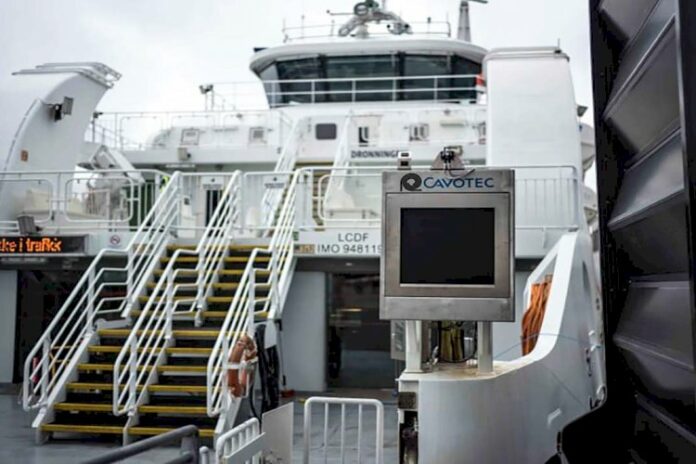
Cavotec has received a repeat order from Fjord1 in Norway – one of the world’s largest operators of e-ferries – to equip two new berths with its next generation Automatic Plug-in System (APS) for charging of e-ferries. The APS solution will charge three e-ferries on the Halsa and Kanestraum route. 

With this order, Cavotec extends its leadership in the Norwegian e-ferries market, having received orders for more than 20 APS systems from all major e-ferry operators in the past two years, bringing the company’s market share in Norway to approximately 50 per cent.

Norway is expected to equip about 200 more berths with automatic e-ferry charging systems before 2025 – a market estimated to be worth around EUR 60 million.

Mikael Norin, CEO, says:

”This repeat order is very encouraging, and confirms that we are well positioned in the fast growing e-vessel market. Our success in Norway also positions us strongly in neighbouring markets in Denmark, Finland and Sweden, where we are actively pursuing opportunities that exist there. In addition, we are also seeing interest for similar solutions in the US and Canada.”

APS connects ships to shore side electrical power during on- and off-loading prior to subsequent sailings, maximizing the amount of time vessel batteries are charged and enabling safe, emission-free and energy-efficient vessel charging.

MOL invites NAPA to add data analysis expertise to FOCUS project

0

NAPA, the leading maritime software, services, and data analysis provider, and Mitsui O.S.K. Lines (MOL), the multimodal transport group, today announced that NAPA has joined MOL’s FOCUS project for enhancing the collection and application of ship operation data.

With this agreement, the “FOCUS” project will be developed with four companies—MOL, NAPA, Mitsui E&S Shipbuilding Co., Ltd., and Weathernews Inc.

FOCUS is a multi-year project developed by MOL with the aim of applying its operational data to develop digital applications that enhance the safe operation of its fleet and reduce its environmental impact. Additional partners include Mitsui E & S Shipbuilding and Weathernews.

As part of FOCUS, NAPA will develop various safety and environmental applications, combining its unrivaled hydrodynamic modeling expertise with big data solutions.

NAPA and MOL have an extensive history of successful collaboration. NAPA has provided analytic services to measure and enhance voyage and vessel performance since 2014. In addition, NAPA has executed the performance analysis and reporting for nearly 100 of MOL’s time-chartered bulk carriers with zero on board installation since 2018.

NAPA will build on this legacy to create powerful, user-friendly tools for both shoreside and shipboard teams to use in the FOCUS project.

Naoki Mizutani, Executive Vice President of NAPA Shipping Solutions, at NAPA, commented:

“We are proud to have been selected by MOL for this project and are excited to become a part of FOCUS. The clock is already counting down for shipping to drastically reduce its carbon footprint by 2050, therefore we need to start collaborating now to develop the solutions that will get us where we need to be, while ensuring that safety remains a top priority and continues to improve. From working with MOL for many years, we have demonstrated how NAPA’s combination of ship modeling and big data expertise can deliver results across a range of vessel types, regardless of onboard hardware. We are looking forward to working as part of FOCUS to create a new generation of solutions.”

Marinfloc announces its new combined separator for EGR and Bilge

0

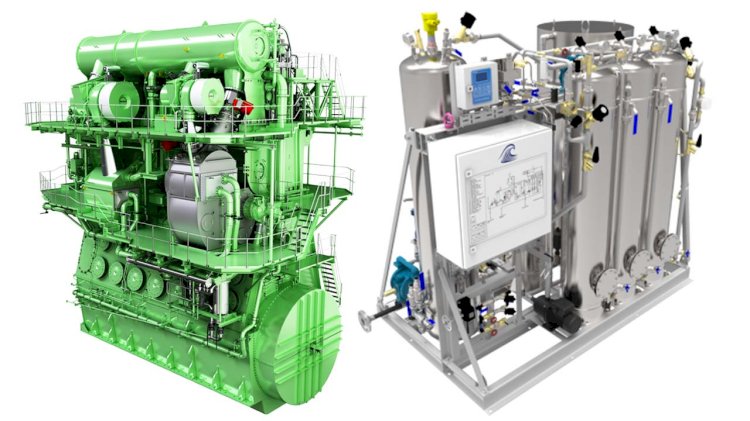
Marinfloc has announced their combined Exhaust Gas Recirculation Bleed Off water treatment system and Bilge water separator.

Their innovative solution is approved by both DNV GL and MAN Energy Solutions and fulfils the requirements of MEPC 107(49) and MEPC 307(73). The approval means that only one separator is required instead of two. Reducing the amount of equipment needed on a vessel will provide shipyards, engine makers and ship owners with a significant cost saving solution.  

Exhaust Gas Recirculation (EGR) is used to reduce NOx as per the Tier III requirements when use with compliant fuel. The EGR process will generate a portion of bleed off water that must be treated to < 15 PPM which is also the requirement for bilge water. By combining the two treatment systems, the Capital Expenditures will be significantly reduced without any negative impact on performance. Additionally, there will also be a welcomed reduction in Operating Expenditures as maintenance, spare parts and training are needed only for one unit. 

The system is based on Marinfloc’s well-known flocculation technology with thousands of references worldwide. The Whitebox® is included as standard to segregate the waste streams, to eliminate cross contamination and record all activities. Moreover, the Whitebox® fulfils the EXXON requirements and is Marinfloc’s recommendation on all US calling vessels. 

Photo: Marinfloc

Martin Gombrii MD at Marinfloc S&P says:

“Both treatment units are mandatory, so why not combine them. It would be foolish to have a separate treatment unit that might not even be in use for the majority of the year. This way neither crew nor owners will lose any sleep going into NECAs as they are already operating the unit on a daily basis.”

The development of this solution started back in 2016 at MAN Energy Solutions facilities in Copenhagen and concluded when DNV GL approved the system design in early 2020.  

Mr. Benny Carlson, Chairman of Marinfloc, says:

“Sometimes new products are done overnight, sometimes they take five years. Looking at the result I’m glad that we didn’t rush anything. We have developed a truly unique product and are proud to be a MAN Energy Solutions approved supplier.”

VAALCO brought the South East Etame 4H well onto production

0

VAALCO Energy has provided an update on the successful completion of its 2019/2020 drilling program as well as an operational update.

Cary Bounds, Chief Executive Officer, commented:

“We are proud of the highly successful 2019/2020 drilling campaign in which we have drilled and brought online three development wells and drilled two successful appraisal wellbores that confirmed additional resources to exploit from this quality asset. The drilling campaign has been transformational for VAALCO and has added meaningful production and cash flow with minimal increase in operating costs.

This has helped to improve our margins and drive our operational breakeven down to $31 per barrel of realized pricing.  Following the completion of the South East Etame 4H well, we began the planned workover on the South East Etame 2H well to replace ESPs. We expect to bring the South East Etame 2H well back online around the end of March, which should restore production of approximately 2,400 gross BOPD.

Our lowered operational breakeven, strong hedge position and increased production has enabled us to establish a solid financial footing which puts us in a stronger position to navigate the current low price oil environment. With that said, the global pandemic and energy industry events that began in late February of 2020 have been unprecedented and caused significant uncertainty across the oil sector with regards to outlook and budgets.

The world is battling COVID-19 which has disrupted our everyday lives and negatively impacted the worldwide economy. As of right now, VAALCO’s operations have not been disrupted, and we have managed through the logistical challenges that we have faced since the outbreak. VAALCO has contingency plans in place in the event that we are directly impacted, and we continue to put the safety of our workers and local stakeholders first.  We remain committed to generating long-term value for our shareholders by focusing on capital efficiency, controlling costs and optimizing production.”

With the drilling of the South East Etame 4H well, VAALCO has completed its 2019/2020 drilling campaign.  As previously announced, with the drilling of the South East Etame 4P appraisal wellbore, VAALCO has also satisfied the drilling commitment as part of the PSC extension that VAALCO signed in late 2018.  

After installing production equipment, the South East Etame 4H well was brought online at an initial rate of approximately 2,200 gross BOPD, (600 BOPD NRI to VAALCO), with no H2S which is at the high end of the February 2020 pre-drill initial production rate of 1,200 to 2,500 gross BOPD (325 to 675 BOPD NRI to VAALCO).  The well was drilled and completed as planned, with no safety or environmental incidents.

On March 7, 2020, the South East Etame 2H well stopped producing due to an ESP failure.  The drilling rig on the South East Etame North Tchibala (“SEENT”) platform was already scheduled to replace the ESP on that well in a preemptive workover upon completion of the South East Etame 4H well.  The workover on the South East Etame 2H well is currently underway and the well is expected to be returned to production around the end of March.  The well was producing 2,400 gross BOPD, or 650 BOPD NRI to VAALCO, when the ESP failed.  VAALCO will not perform any additional workovers with the contracted drilling rig and the rig will be released after completion of operations on the South East Etame 2H well.

SCHOTTEL wins propulsion contract to equip U.S. Navy vessels

0

SCHOTTEL has again secured several orders to provide propulsion systems for U.S. Navy vessels. This additional order of five Workboat Docking vessels and two YTL tugs – all of which are to be built at the Modutech Marine Inc. yard in Tacoma, Washington – represents a continuation of the strong relationship between the parties.

On the heels of several projects for different navies around the world, one of the largest navies is once again placing its trust in the long-standing know-how of the German propulsion expert.

Brian Swindahl, CEO of Modutech Marine, explains the success of the partnership as follows:

“SCHOTTEL’s quality products combined with their excellent US-based sales and new construction management, allow us as shipyard to focus on building the vessel in time and on budget for the U.S. Navy.”

Dan Shimooka, U.S. Navy:

“The SCHOTTEL SRP installed on the Navy’s existing YT 802 Class harbour tugboats have performed well and have proven to be reliable in service. SCHOTTEL has also provided good service and support for the thrusters. Therefore, we are looking forward to working with Modutech Marine and SCHOTTEL on the new YTL 815 Class tugs.”

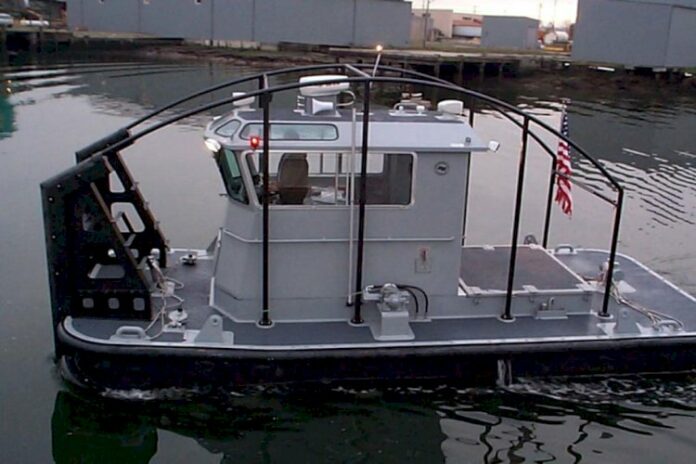
The main propulsion for each Workboat Docking vessel consists of a SCHOTTEL SRP 150 azimuthing unit with fixed pitch propellers with a diameter of 1.05 m and an input power of 335 kW. These are driven by diesel engines. The rudderpropellers will be equipped with the new high-efficiency nozzle SDC40, which combines compact design and high propulsion efficiency.

Each of the Robert Allan designed YTL tugs will be propelled by two SCHOTTEL Rudderpropellers type SRP 270 FP with a propeller diameter of 1.85 m and an input power of 970 kW. They will be powered by diesel engines. With this propulsion system, the vessels achieve a free running speed of approximately 10 knots and an expected bollard pull of 32.7 tonnes.

The design for the U.S. Navy will also include updates to suit new EPA Tier 4 engines and associated systems while also featuring extensive fendering above and below the waterline to handle U.S. Navy surface ships, submarines and barges. The 19.2 m long and 9.4 m wide tugs are essentially configured as “day-boats”. Nevertheless, they also provide accommodation for a crew of up to four persons.

Construction of the lead tug is to commence in 2020.

DNV GL’s remote surveys surge with 15,000 completed since launch

0

DNV GL introduced remote surveys in October 2018. More than 15,000 surveys have been completed remotely since then.

The impact of the global COVID-19 crisis has reinforced the value of DNV GL’s industry first remote survey services. With some 15,000 surveys and inspections undertaken since the launch in October 2018, customers have benefited from greater flexibility and efficiency through the continued digitalization and integration of DNV GL’s class services.

Knut Ørbeck-Nilssen, CEO, DNV GL – Maritime, says:

“In these challenging times we are seeing the benefits of the full scope of digitalization initiatives that we have been building up over the past few years. The use of remote surveys has meant that we have been able to limit disruptions to customer operations resulting from travel bans or quarantines involving our surveyors.

Ship operators are able to receive immediately updated and verified electronic certificates, which make their business dealing with class, authorities and vendors much more efficient. This has all been backed by expert teams in the regions and through our DATE hubs, which cover technical and survey requests around the globe 24/7 and have solved 500,000 cases since the launch of the service five years ago.”

Remote surveys were first rolled out by DNV GL in October of 2018 and have been gaining in popularity ever since. In 2019, for some survey types, up to 25% of all surveys were conducted remotely, with more than one third of customers having utilised the service at least once.

Customers are able to request remote surveys around the clock, independent of port calls, location, and time zone. Remote surveys are being offered both through DNV GL’s global DATE (Direct Access to Technical Experts) service, delivered through expert teams from Høvik, Singapore, Hamburg, Houston and Piraeus, and via regional offices.

About Remote Surveys:

Remote surveys and inspection mean that for a range of surveys, a DNV GL surveyor will not be required to travel to the vessel. Instead, by using an online connection or video streaming link, a dedicated team of remote surveyors can provide support to vessels anywhere in the world with documentation, images, video (streaming or recordings), and input provided by the customer and crew onboard. Some periodical survey items can also be handled remotely, subject to flag acceptance, where required.