-2.2 C
New York
Home Blog Page 89

BAE Systems secures contract for naval gun to support the Colombian Navy

0

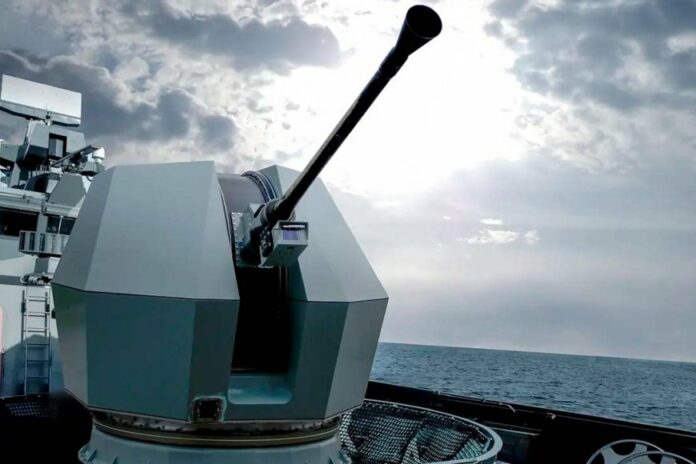
BAE Systems has received a contract from Damen Naval for a Bofors 40 Mk4 naval gun system to be installed for anti-aircraft and anti-surface operations on the PES frigate of the Colombian Navy – a Damen Naval SIGMA-class ship.

With more than 70 systems sold to eight countries since 2015, Colombia is the second Latin American customer to adopt the highly versatile and multi-target naval gun. Brazil also selected the Bofors 40 Mk4 as their standard primary gun system for small- to medium-sized vessels.

“We continue to be a trusted partner in Latin America, providing world-leading capabilities in the region to support future growth,” said Stefan Löfström, marketing & sales director at BAE Systems Bofors. “We are delivering cutting-edge solutions that include advanced firepower and the lightening quick response that the Colombian Navy requires.”

The Bofors 40 Mk4 is a compact and lightweight naval gun system designed for anti-aircraft and anti-surface warfare operations. It can switch seamlessly among ammunition types, which delivers versatile targeting of air, land, and sea-based threats. The programmable 40 mm Bofors 3P ammunition provides the naval gun system with the highest possible combat flexibility, as it can be programmed in six different function modes to provide optimized effect. The proven 40 mm gun, together with the latest in munitions technology, forms a platform ready to meet both the expected – and the unexpected.

“Damen Naval is very pleased that BAE Systems Bofors will strengthen the versatile combat capabilities of the SIGMA 10514 based PES frigate with their Bofors 40 Mk4 for the Colombian Navy,” said Damen Naval Project Director Jasper Oreel. “As this is the first (direct) procurement contract between BAE Systems Bofors and Damen Naval, we are looking forward to further establishing our business relationship and the PES project execution.”
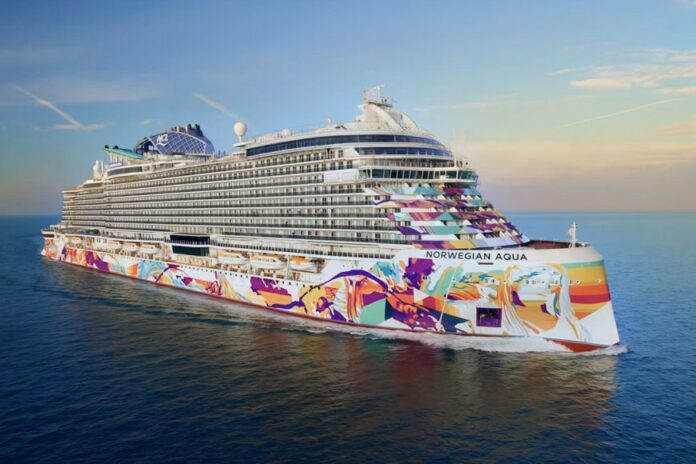
 

Fincantieri delivers Norwegian Aqua to Norwegian Cruise Line

0

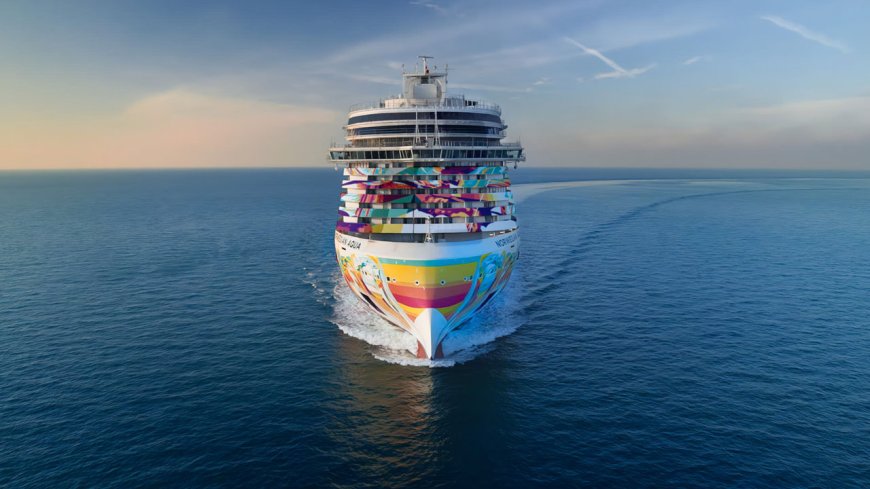
Fincantieri announced the successful delivery of the Norwegian Aqua, the first ship in the expanded Prima Plus Class, built for Norwegian Cruise Line.

The delivery ceremony took place at Fincantieri’s Marghera shipyard, attended by executives from both companies, including Fincantieri Chairman Biagio Mazzotta, CEO Pierroberto Folgiero, and General Manager of the Merchant Ships Division Luigi Matarazzo, as well as Harry Sommer, President and CEO of Norwegian Cruise Line Holdings, and David J. Herrera, Brand President of Norwegian Cruise Line.

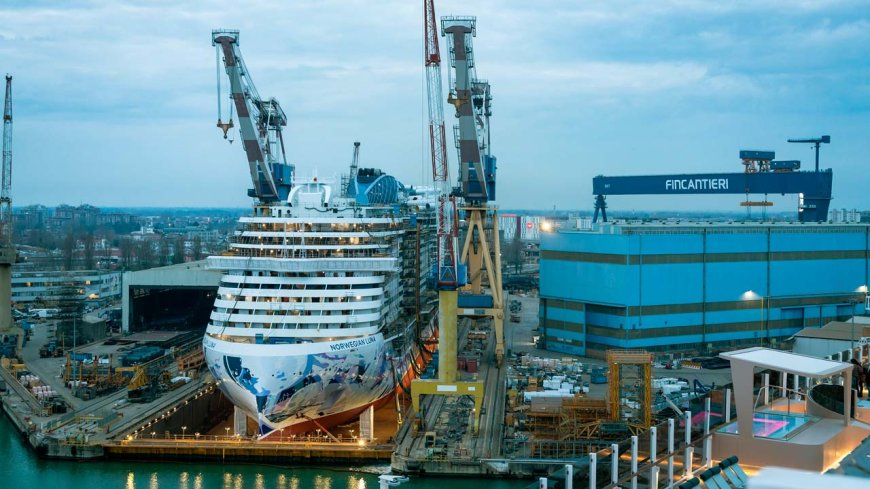
Following this delivery, Fincantieri is preparing for the launch of Norwegian Aqua’s sister ship, the Norwegian Luna, scheduled for Friday, March 14. The Norwegian Luna is set to debut in Spring 2026.

With a gross tonnage of 156,300 and a length of approximately 322 meters, the Aqua is 10 percent larger than the first two Prima Class ships, the Norwegian Prima and Norwegian Viva.

ABS approves Hanwha Systems’ advanced cybersecurity solution

0

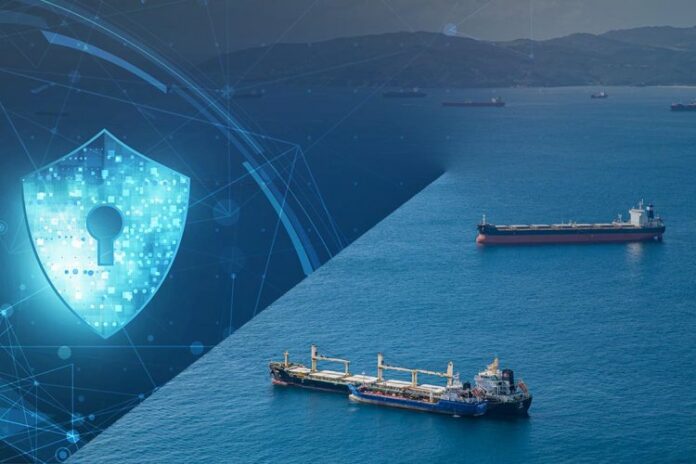
Hanwha Systems’ SecuAider® is a software solution that offers protection to a vessel’s data and networks from advanced cyberattacks, such as ransomware and malware.

The ABS E27 certification is part of the ABS Cyber Resilience Program that evaluates a range of digitally enabled systems and equipment, looking at the security controls implemented at the design, construction, commissioning and operational life of a vessel, to support the vessel owner’s cyber resilience program.

“Our cyber evaluations support equipment vendors by evaluating compliance with IACS and ABS Cyber Resilience requirements. We look forward to continuing our work with Hanwha Systems where together we are helping owners and operators assess digital vulnerabilities in maritime computer systems,” said Gareth Burton, ABS Senior Vice President, Global Engineering.

Myeong Seob Cho, Naval Business Division Leader and Vice President for Hanwha Systems, said:

“Hanwha Systems’ SecuAider® is a cybersecurity solution that protects data and networks.  It is installed in the ship’s network and linked to on-board systems and equipment. With SecuAider®, ships would have enhanced cyber resilience to protect against advanced cyberattacks, such as ransomware, DDoS attacks or malicious code infections, which have been rapidly increasing in recent years. It analyzes and controls cyber situations in real-time without degrading performance of legacy on-board systems and equipment of a ship. Hanwha Systems’ cutting-edge cybersecurity system integration (SI) technology, featuring SecuAider®, not only provides solutions to ensure ships comply with E26 requirements but also significantly enhances cyber resilience to a defense standard.”

Removal of contaminated sediment begins along Portland Waterfront

0

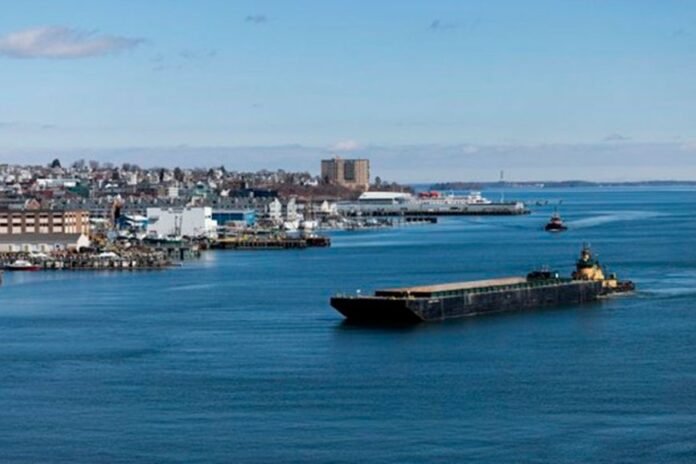
The first phase of the $25 million Portland Harbor dredging project — construction of a 9-acre confined aquatic disposal pit, or CAD cell — was completed early in March, wrapping up after 40 days despite bad winter weather, said Bill Needelman, Portland’s waterfront director. 

“It went exactly as planned,” Needelman said. “The CAD was constructed just as it was designed, and aside from a few routine maintenance shutdowns, everything went very smoothly. Now we can move on to the kind of routine dredging that should be normal for an urban harbor like ours.”

The CAD was dug in a shallow, little-used South Portland cove just downstream from Casco Bay Bridge, near Coast Guard Station South Portland. The trapezoidal, 9-acre burial site is 50 feet deep at its deepest, with sloped sides that run about 800 feet long and 425 feet wide.

The excavated silt, marine clay and glacial till removed to make the hole was dumped 7 miles off Dyer Point in Cape Elizabeth.

The early finish gives the contractor, Cashman Dredging of Massachusetts, enough time to start filling the excavated pit with an estimated 31,780 cubic yards of sediment from the first three dredge sites: Maine State Pier and Ocean Gateway in Portland and Turners Island in South Portland.

These are among the 47 piers, marinas, boatyards, boat launches and barge landings in Portland Harbor that are participating in the project, which will deposit an estimated total of 245,000 cubic yards of contaminated sediment into the CAD pit. Cashman required two transport barges to carry the excavated CAD materials to the open ocean disposal site, but it will only need one to carry the dredged Portland Harbor material to the CAD pit for disposal. But operations are still likely to run round-the-clock. The first three sites were chosen because they are easily accessible, have little or no complicating infrastructure present, and are big enough to be dug out with the large dredge that Cashman used to dig the CAD pit, Needelman said. The soils being removed have also been thoroughly tested.

The navigation channel linking Portland Harbor and the Gulf of Maine is dredged every 15 years or so — most recently in 2014, by the U.S. Army Corps of Engineers. But it has been many decades since the sediments have been dredged along the waterfronts. It is up to the owners or the city to remove sediment that shoals up between piers, wharves, marinas or boat launches. And that work has been prohibitively expensive because the sediment requires special handling and disposal.

The sediment deposited in Portland Harbor’s working waterfront by three-quarters of a century of industrialization is too contaminated to be dumped at sea. Tests found it high in remnants of fossil fuels, heavy metals like zinc, mercury, copper and lead, and pesticides. Hauling it to a hazardous waste disposal landfill was too costly for any individual property owner to bear. Local officials have been trying to secure grants for a waterfront dredge for years. The final piece of the puzzle fell into place in January 2024, when the state released $10 million in American Rescue Plan Act funds that state lawmakers had earmarked for the project.

CIMC Raffles delivers the new wind turbine installation vessel “Huaxia Honghu 01”

0

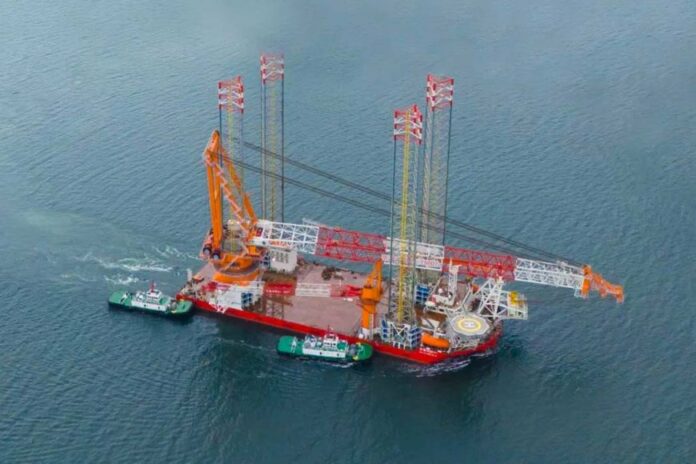
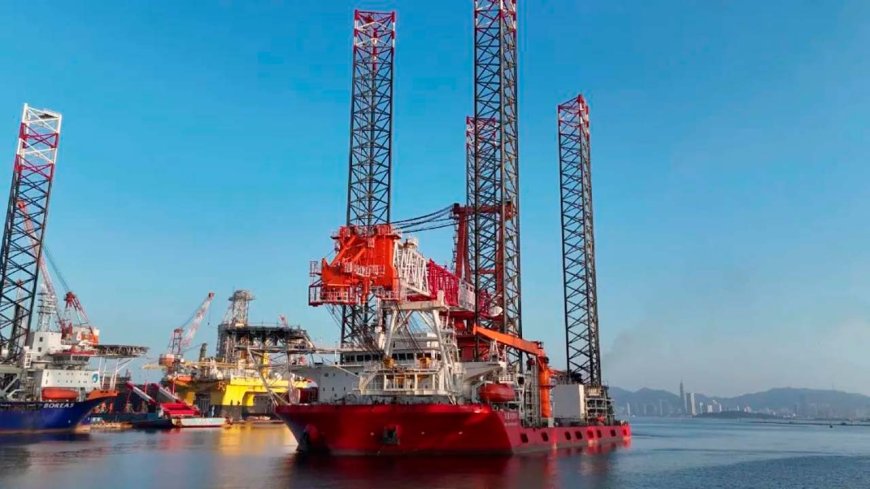
On 6th March, the “Huaxia Honghu 01,” a self-elevating and self-propelled wind turbine installation vessel constructed by CIMC Raffles that a subsidiary of CIMC Group for Huaxia Financial Leasing, was delivered in Yantai. 

This marks the addition of a powerful tool for the development of offshore wind farms in China, which will inject new vitality into promoting the transformation of the energy structure and the marine economy development. This vessel is the second wind turbine installation ship delivered by CIMC this year and the first delivery in the Year of the Snake.

The “Huaxia Honghu 01” is the fourth-generation of self-elevating and self-propelled wind turbine installation vessels which is more advanced in China. The vessel is 139M in length, 50M in width, with a molded depth of 10M, and a cruising speed of approximately 8 knots. It is equipped with a DP-2 dynamic positioning system, which can flexibly cope with the challenges of offshore wind power construction in waters depths below 70M. The vessel is outfitted with a 1500-ton full-revolving pile-guide crane and has the capability to install various types of offshore wind turbines of 15MW and above.

Its overall technical indicator are leading in China and advanced in the world, particularly in terms of lifting capacity, hoisting height, and operational water depth, which elevates the technical level of China’s self-elevating wind power operation platforms to a new height.

The first delivery of dual-fuel methanol tanker for Hafnia and Socatra

0

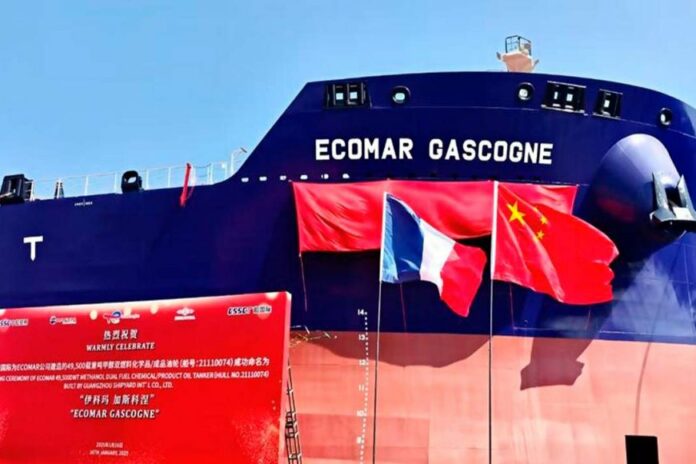
Bureau Veritas Marine & Offshore (BV M&O) has announced the recent delivery of the ‘Ecomar Gascogne’.

The “ECOMAR GASCOGNE” is the first of four newbuild dual-fuel methanol chemical IMO II medium-range (MR) tankers built at Guangzhou Shipyard International for owner Socatra and its joint-venture partner Hafnia.

Since these vessels are dual-fuel, they can run on both conventional fuels and methanol. These ships will be able to lower their emissions, as the production of green methanol increases. 

Green methanol can cut CO2 emissions and also significantly reduces nitrogen oxides, sulfur oxide and particulate matter emission levels.

David Barrow, MV M&O SVP Western Europe and Americas, said: “The Ecomar Gascogne symbolises our commitment to advancing sustainability and to decarbonising the maritime industry. We look forward to continuing our successful collaboration with Socatra and Hafnia as we work with the entire sector to support the adoption of alternative fuels.”

Hai Long offshore wind farm in Taiwan load-out and sail-away

0

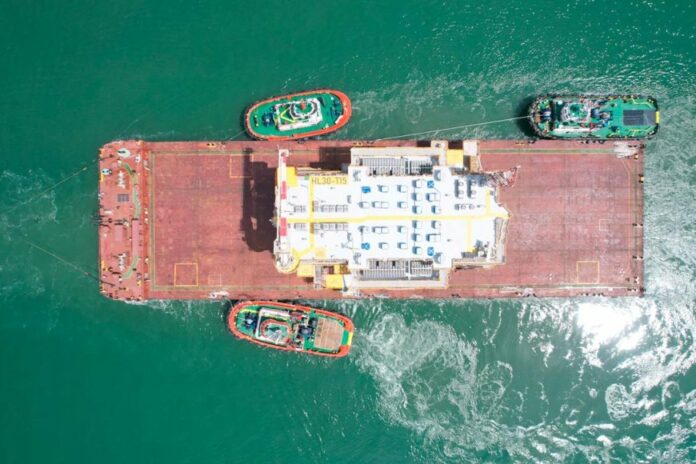
Consortium partners Semco Maritime and PTSC M&C have completed the successful load-out and sail-away of the second and last offshore substation for the Hai Long Offshore Wind Project after being awarded the EPC contract for Hai Long 2 and Hai Long 3 in 2022.

With the successful load-out and sail-away of offshore substation topsides for Hai Long 2 in April 2024 and Hai Long 3 on 8 March 2025, the Hai Long Offshore Wind Project is progressing well to meet the goal of contributing to the realization of the Taiwanese government’s energy transition ambitions. The project exceeds 1 GW and consists of Hai Long 2 and Hai Long 3 wind farms in the Taiwan Strait 45-70 kilometers off the coast and is jointly developed by Mitsui & Co., Ltd., Northland Power Inc., and Gentari.

The consortium has delivered detailed design and procurement as well as the construction of the two offshore substations at PTSC M&C’s yard in Vung Tau City, Southern Vietnam. The Hai Long 3 offshore substation is expected to be installed and prepared for offshore commissioning by the second quarter of 2025.

“It has been a pleasure to cooperate closely with the parties involved in the Hai Long Offshore Wind Project in recent years, and the strong team performance with our consortium partner and sub-contractors on this exciting project holds great promises for the future,” says Senior Vice President, COO Renewables, Semco Maritime, Frank Holm.

“This significant milestone in the Hai Long projects exemplifies the unwavering commitment and expertise of our esteemed consortium with Semco Maritime in delivering premier renewable energy services. We remain resolute in our dedication to fulfilling our commitments to our valued clients and advancing the offshore wind energy sector,” says Mr. To Ngoc Tu, PTSC M&C’s Managing Director.

Tim Kittelhake, CEO and Project Director of Hai Long Project, said “The overall construction of the Hai Long Project continues to progress steadily. We are very pleased to have reached this critical milestone of our Hai Long Project through close cooperation with our partners at Semco Maritime and PTSC M&C. We now look forward to completing the next phase of the projects, enabling us to bring clean energy to more than a million households in Taiwan.”

MOL and Fujitsu leverage AI for efficient crew replacement planning

0

Full-scale operation is scheduled to begin as a trial in Japan in May 2025 and beyond.

Shipping companies create crew replacement plans by combining various conditions, including seafarer rank, qualifications, onboard and vacation periods, ship type, and schedule.

MOL previously relied on its crew planing personnel to extract conditions from individually managed databases to create these plans. This resulted in significant time being spent on adjusting crew schedules and vacation periods and on planning.

The new system, which was developed by Fujitsu AI consultants, utilizes mathematical optimization techniques to support crew replacement planning by considering various complex factors. The system offers the following three key features:

Meets customer needs:

  • Plans crew assignments that meet the needs of each customer.
  • Balances onboard and vacation periods:
  • Ensures crew assignments that even out onboard and vacation periods throughout the year among seafarers.
  • Considers seafarers’ personal life events:
  • Plans crew assignments to make it easy for seafarers to take leave during important life events such as weddings and births.

The implementation of this system optimizes crew replacement planning, directly improving seafarers’ work-life balance through shorter consecutive onboard periods and sufficient vacation time. Furthermore, the system is projected to drastically improve efficiency by reducing the time required for the creation of schedules by approximately 70%.

EnBW lays first submarine cable for He Dreiht offshore wind farm

0

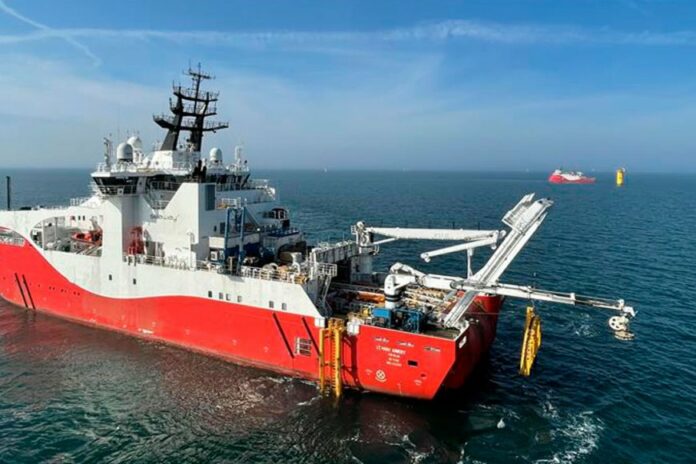
EnBW is laying the first submarine cable for the internal wind farm cabling that connects all 64 wind turbines of the He Dreiht offshore wind farm. The company Seaway7 has been commissioned with the task.

Two installation vessels will have laid and buried a total of around 100 kilometers of cable on the seabed of the North Sea by the summer. The cables will then be pulled into the foundations of the wind turbines and connected. Cable manufacturer JDR manufactured the 66-kilovolt submarine cables in the UK.

The internal wind farm cabling will later be connected to the converter platform managed by the transmission system operator TenneT, which is due to be installed at sea in the summer.

This is where the generated electricity will be concentrated, converted from alternating current to direct current and brought ashore using two high-voltage DC export cables.

EnBW He Dreiht is currently the largest offshore wind farm in Germany with a total output of 960 megawatts (MW). It is being built about 85 kilometers northwest of Borkum and 110 kilometers west of Heligoland without state funding. Around 2.4 billion euros have been invested in the wind farm. The major project is being coordinated by EnBW’s offshore office in Hamburg. 

More than 500 people work on this large offshore construction site at peak times and over 60 vessels are involved. The 64 foundations were installed last year. From spring onwards, the latest generation of Vestas wind turbines will be installed, each with an output of 15 MW. EnBW He Dreiht will generate enough electricity to meet the needs of around 1.1 million households. 

Jacksonville Harbor to undergo annual maintenance dredging starting mid-march 2025

0

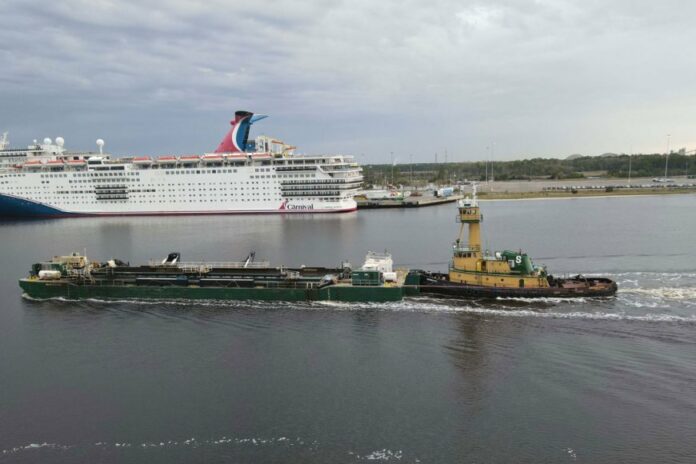
In mid-March 2025, the U.S. Army Corps of Engineers will begin dredging work along Jacksonville Harbor’s Federal Navigation Channel, a process scheduled to be completed by September 2025, weather permitting. This year’s dredging will focus on removing critical shoaling along the channel, which can interfere with safe vessel passage.

Jacksonville Harbor’s strategic location in Florida makes it a pivotal point in both national and international shipping routes. As a deep-water port, it serves large vessels that transport cargo to and from the U.S. East Coast, playing an essential role in global trade.

The harbor consists of a series of channels that extend from the ocean entrance to key terminals such as Dames Point Terminals and Talleyrand Marine Terminal, vital facilities that support both import and export activities. These deep-draft vessels depend on the harbor’s infrastructure to facilitate the movement of goods, including bulk cargo, containers, and other high-demand commodities.

The Jacksonville Port Authority (JPA), in partnership with the U.S. Army Corps of Engineers, coordinates the upkeep and development of the harbor. Together, they ensure the harbor remains open and operational, providing a competitive edge for Jacksonville in the increasingly globalized shipping industry.

Jacksonville Harbor is one of Florida’s most important maritime hubs, providing access for large, deep-draft vessels to vital terminal facilities within the city. As one of the busiest ports in the U.S., it plays a central role in facilitating trade, driving the local economy, and connecting the region to international markets. To maintain the harbor’s functionality and ensure continued access for these massive vessels, annual maintenance is required. This includes dredging, a process crucial for ensuring safe navigation and the efficient flow of goods. In mid-March 2025, the U.S. Army Corps of Engineers will begin dredging work along Jacksonville Harbor’s Federal Navigation Channel, a process scheduled to be completed by September 2025, weather permitting. This year’s dredging will focus on removing critical shoaling along the channel, which can interfere with safe vessel passage.

The dredging project, set to begin in mid-March 2025, aims to remove critical shoaling along the Federal Navigation Channel. Shoaling occurs when sediment accumulates in the waterway, causing the channel to shallow, which can pose significant risks to large vessels navigating the area. Removing these shoals will improve vessel safety, enhance navigation efficiency, and help maintain the channel’s depth to accommodate the increasing size of modern ships.

The dredging work will cover several sections of the channel, ensuring that vessels can access the harbor with ease. The project will focus on maintaining the following depths:

  • 47 feet Mean Lower Low Water (MLLW) from the ocean entrance to Dames Point Terminals (River Mile 13).
  • 40 feet MLLW through River Mile 20 at Talleyrand Marine Terminal.
  • 34 feet MLLW in Cuts F/G of the West Blount Island Channel.

By maintaining these authorized depths, Jacksonville Harbor will continue to support large vessels that are critical to the economic vitality of the region.