5.5 C
New York
Home Blog Page 889

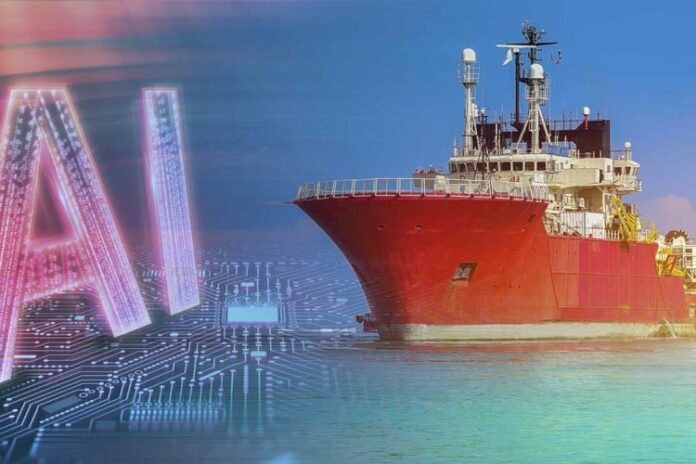
IMarEST launches task force to answer the big questions on marine AI

0

Setting up a task force dedicated to finding answers to the certification conundrum restraining the use of Artificial Intelligence (AI) in the marine domain was the first move of IMarEST’s new president, Kevin Daffey, as he begins his term in office.

AI and machine-learning techniques have immense potential for improving efficiency and safety across the marine sector, from optimising ship hull forms, delivering health monitoring for ship engines, predicting the spread of oil spills, to preventing ship collisions in busy waterways and modelling ocean circulation or rogue waves. However, they also create new challenges, particularly where safety is concerned.

In contrast to the deterministic behaviour of traditional mechanical and electrical systems (or conventional procedural software), which can be predicted with relative ease, AI and machine learning algorithms are inherently non-deterministic systems. What gives AI the ability to ‘learn by experience’ and improve their performance over time also makes it incredibly hard to model and certify for the purposes of assurance.

Daffey explains:

“The marine sector is struggling to provide definitive safety contours for AI-based systems whose operation is determined heuristically and repeatability cannot be guaranteed.

Even when AI is employed in non-safety critical contexts, it’s important we clearly understand its limitations. This is a major roadblock holding back a technology with huge promise for the sector as a whole, so it’s time we put some intellectual horsepower into finding some answers with help from outside our industry.”

Under the guidance of Bernard Twomey from the Assuring Autonomy International Programme at the University of York, the presidential task force’s first work-item will be to produce a whitepaper that will address some of the key barriers to adoption of AI in the marine sector.

The task force will scrutinise progress made in adjacent sectors, particularly in transportation, aero, rail, medicine and robotics that have benefited from significant investment in R&D.

Twomey explains:

“Where there is a high degree of commonality between the challenges faced, the lessons learnt elsewhere will be transferable to marine – there is no need to reinvent the wheel. We have to be realistic about the levels of funding and resource available and be shrewd in our approach.”

The automotive sector, for example, has made significant strides in developing safety and assurance cases from a systems engineering context. The task force will look to carry over core methodologies and assess their suitability for marine applications, as it endeavours to map out processes for identifying and mitigating risks and find a pragmatic route for achieving acceptance by regulatory authorities.
Modified version of RAL’s tug for Rimorchiatori Riuniti

0

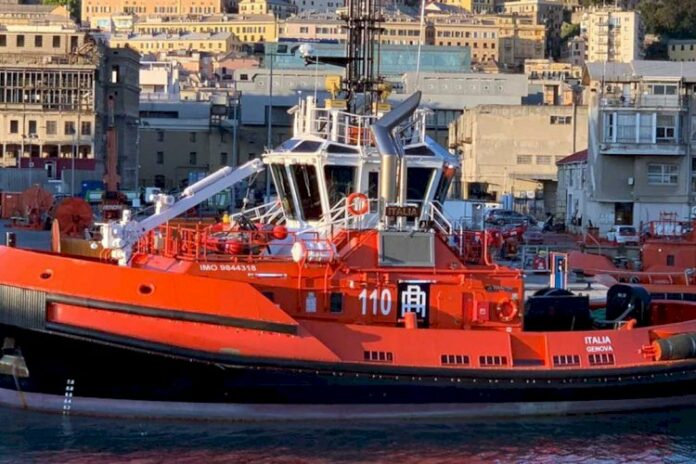
Genoa Italy based Rimorchiatori Riuniti Group took delivery in February of a modified version of Robert Allan Ltd.’s TRAktor 2500-SX standard design from Sanmar Shipyards of Turkey. Both Robert Allan Ltd. and Sanmar were very pleased that their mutual Italian client honored their new vessel with the name Italia.

While Rimorchiatori Riuniti has purchased during recent years several Z-drive tractor tugs and operate a relatively large fleet of this style of tug, they have not ordered any newbuild Z-drive tractors in many years, opting instead to add newbuild ASD and VWT tugs to their fleet. The addition of Italia, a modern Z-drive tractor to their fleet could potentially signal a renewed interest in Z-drive tractor tugs for the Group.

Robert Allan Ltd. and Sanmar Shipyards worked very closely with Rimorchiatori Riuniti to modify the design to suit the requirements of the knowledgeable owner. Such modifications included:

  • Rescue boat and davit on the foredeck
  • Fi-Fi 1 capability through independent pumpset
  • Recovered oil capability
  • Escort rating
  • Other minor modifications to outfitting and arrangement

Despite having a low length to beam ratio for accommodating high bollard pulls, the TRAktor 2500-SX is an efficient, highly controllable, and manoeuvrable tractor tug. This is due to a modern hull form and appendage configuration which Robert Allan Ltd. invested significant effort in model testing and computer-based computational fluid dynamics optimizing.

The hull features a raised fo’c’sle deck for operation in rough weather and for keeping the lower accommodation space above the design waterline per the MLC code. The key hull particulars are as follows:

  • Length, overall: 25.30 m
  • Beam, moulded: 12.00 m
  • Depth, moulded: 4.46 m
  • Harbour draft: 6.45 m
  • GT: 323

Primary tank capacities at 98% full are:

  • Fuel oil: 83.9 m³
  • Potable Water: 12.3 m³
  • Foam: 4.8 m³
  • Recovered Oil: 31.0 m³

Italia has been outfitted to a high standard for a crew of six. The spacious accommodations are MLC compliant and each cabin features a private en suite WC space.

The wheelhouse is designed with a single split control station for both ahead and astern operation with excellent visibility over the aft working deck. The efficiently laid out engine room includes a separate switchboard room and separate engineer’s workshop.

Main propulsion consists of a pair of Caterpillar 3516C diesel engines each rated 2,100 bkW at 1600 rpm driving Rolls Royce US 255 P30 fixed pitch azimuthing drives through straight line carbon fibre shafts.

The electrical plant consists of two Caterpillar C 4.4 diesel gensets, each with a power output of 86 ekW, 50 Hz, 400 V.

Fi-Fi 1 capability is provided by a Fire Fighting Systems package featuring a single diesel driven pumpset and two remote operated monitors model FFS1200/300LB with 1200/300 m3/hour seawater/foam capacity.

Deck machinery features DMT Model TW-E250KN, frequency controlled electric drive, constant tension, towing winch with tension and length indication. Band brake holding load is 190 tons on the first layer. Haul-in, low speed on first layer is 25 tons at 0–9 metres/minute while at high speed, first layer is 8 tons at 0–28 metres/minute.

Ship-handling fenders at the stern consist of an upper row of 800 mm diameter cylindrical fender and a lower course of W-fender. 300 mm D-rubber lines the shear strake and 300 mm thick W-fenders are fitted at the bow.

On trials, Italia achieved the following bollard pull and speed:

  • Bollard Pull, ahead: 70.2 tonnes
  • Free running speed, ahead: 12.4 knots

Columbia Cruise: Statement on RCGS RESOLUTE incident

0

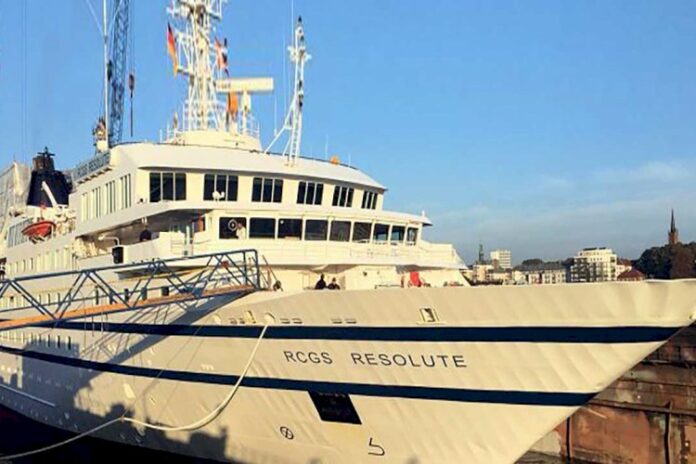
In the early morning hours of the 30th of March 2020 (local time), the cruise vessel RCGS RESOLUTE has been subject to an act of aggression by the Venezuelan Navy in international waters, around 13.3 nautical miles from Isla de Tortuga with 32 crew member and no passengers on board.

When the event occurred, the cruise vessel RCGS RESOLUTE has already been drifting for one day off the coast of the island to conduct some routine engine maintenance on its idle voyage to its destination, Willemstad/ Curaçao. As maintenance was being performed on the starboard main engine, the port main engine was kept on standby to maintain a safe distance from the island at any time.

Shortly after mid-night, the cruise vessel was approached by an armed Venezuelan navy vessel, which via radio questioning the intentions of the RCGS RESOLUTE’s presence and gave the order to follow to Puerto Moreno on Isla De Margarita. As the RCGS RESOLUTE was sailing in international waters at that time, the Master wanted to reconfirm this particular request resulting into a serious deviation from the scheduled vessel’s route with the company DPA.

While the Master was in contact with the head office, gun shots were fired and, shortly thereafter, the navy vessel approached the starboard side at speed with an angle of 135° and purposely collided with the RCGS RESOLUTE. The navy vessel continued to ram the starboard bow in an apparent attempt to turn the ship’s head towards Venezuelan territorial waters.

While the RCGS RESOLUTE sustained minor damages, not affecting vessel’s seaworthiness, it occurs that the navy vessel suffered severe damages while making contact with the ice-strengthened bulbous bow of the ice-class expedition cruise vessel RCGS RESOLUTE and started to take water.

Ready to support anytime, the RCGS RESOLUTE remained for over one hour in vicinity of the scene and reached out to the Maritime Rescue Coordination Centre (MRCC) Curaçao. This is an international body which oversees any maritime emergencies. All attempts to contact those on board the navy ship have been left unanswered.

Only after receiving the order to resume passage full ahead by the MRCC and that further assistance is not required, the RCGS RESOLUTE, currently safely moored in the port of Willemstad, continued sailing towards her destination at Curaçao. A full investigation into the circumstances surrounding the incident will now be carried out.

Bladt Industries signs two contracts with innogy SE

0

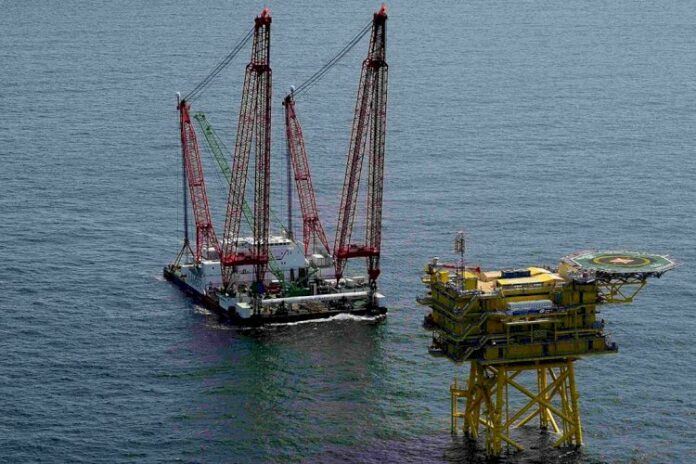
Bladt Industries have sealed two significant contracts with innogy SE and are currently busy planning the upcoming execution of both the foundations and the offshore substation for the Kaskasi Offshore Wind Farm.

innogy SE has chosen Bladt Industries for the delivery of 39 monopiles, 38 transition pieces and one transition piece special designed for the offshore substation. Bladt Industries have been heavily involved in providing guidance and input for the optimisation of the most feasible fabrication design throughout the final construction process to ensure the best outcome for innogy SE.

Klaus Steen Mortensen, CEO Bladt Industries, says:

“It is clearly an advantage for the project, that we have been able to provide guidance and inputs to ensure the most optimised fabrication design. This early involvement has been an productive process for both parties and I am convinced that it will pay off in the end.”

Bladt Industries will start the production of the project in the third quarter of 2020, with the final foundation scheduled to leave the Aalborg site in Denmark by third quarter of 2021.

Bladt Industries are also to deliver the offshore substation (EPCI contract), including the transition piece, for the Kaskasi Offshore Wind Farm. This contract will be executed in close cooperation with our long-term partners Semco Maritime and ISC Engineering. Bladt Industries will have the overall responsibility of the project and perform the construction of the offshore substation which is designed by ISC Engineering and Semco Maritime will design and carry out the electrical installations of the 342 MW OSS for Kaskasi Offshore Wind Farm.

This is the 22st substation that Bladt Industries will fabricate and the fourth they will delivered as a turnkey project to German waters. Bladt Industries has therefore the knowledge needed on how to obtain the relevant approvals from the German authorities.

The Offshore Substation is scheduled to be installed in the first half of 2022.

Nils Overgaard, CSO, Bladt Industries, says:

“I am delighted that we have signed the contracts with our Partner, innogy SE for the delivery of both the foundations and the offshore substation. I am certain that the mutual proven experience from previous projects will be a cornerstone for our teams, when we enter into mobilization and this will pave the way for a significant reduced risk mitigation in the execution phase in order to meet the important milestones.”

The wind farm will be built off Heligoland in the same grid connection cluster as innogy’s 295-MW Nordsee Ost wind farm.

Awake.AI launches Smart Port as a Service

0

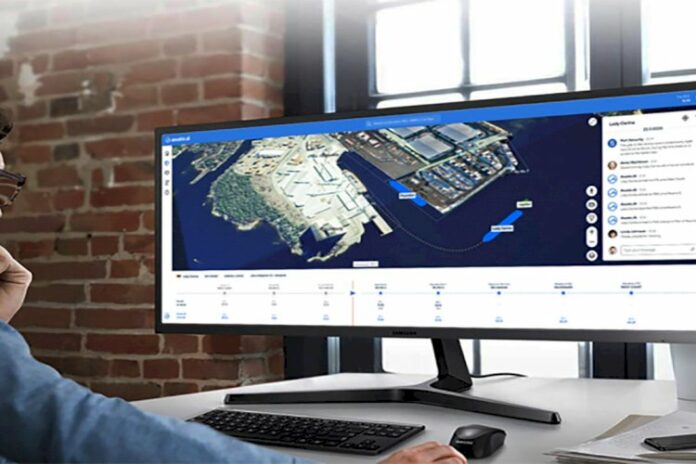
Smart Port as a Service is a web application that allows users to interact and collaborate with other actors in real-time. Smart Port as a Service drives the digital transformation in maritime logistics and spearheads the smart port ecosystem creation.

The service and platform will enable improved efficiency, sustainability, competitiveness, and lower costs for all port actors, including port authorities, terminal operators, cargo owners and many more.

Smart Port as a Service in brief
• Reduction in shipping emissions
• Reducing the cost of transport and the cost of port calls
• Transforming situational awareness into situational understanding
• Industry leading Estimated Time of Arrival (ETA) prediction accuracy
• Near future port call forecasts enabling better planning
• Real-time shared communication channel between actors
• Transparent and fast status sharing of port operations for all actors

The maritime industry is at the beginning of a fundamental transformation. Despite the amplifying digitalization and first autonomous vessels; ships and other maritime actors are still using emails, phones and some even faxes to communicate with each other. These repetitive processes are manual, and daily operational tasks are inefficient. The lack of transparency is the reason for these inefficiencies and operational errors. It is not clear which actor has created the data and there is no footprint or version control. Thus, stakeholders and actors in the port rely on time-consuming speculation to support their decision making, making it prone to errors.

Advances in digitalization and connectivity as well as the need to phase out fossil fuels will impact every aspect of the industry-wide operating model, driving a required change over the next decades. Awake.AI is leading this transition to sustainable and intelligent maritime logistics. To achieve this mission, Awake.AI has developed a software platform which increases operational efficiencies between sea, port and land. The platform enables port actors to reduce turnaround time, emissions and costs. With its novel AI models, the Awake Platform provides port status and service predictions with unprecedented accuracy and reliability.

The Awake Platform brings all maritime logistics actors together to plan operations and achieve sustainability goals by reducing emissions and enabling optimization of different processes within the maritime sector. The platform is an open and collaborative platform, a single place for information trusted by all maritime logistic actors. Awake.AI is now launching not just one, but four revolutions to the market: AI Revolution, Messaging Revolution, Mapping Revolution and Security Revolution.

Jumbo upgrades power generation with Alewijnse switchboards

0

Alewijnse Marine will engineer, supervise, test and commission the cabling and electrical installation activities during the conversion. The switchboards will manage the additional power provided by six containerised temporary generator sets, which Jumbo has installed to increase the vessel’s capacity for an upcoming contract.

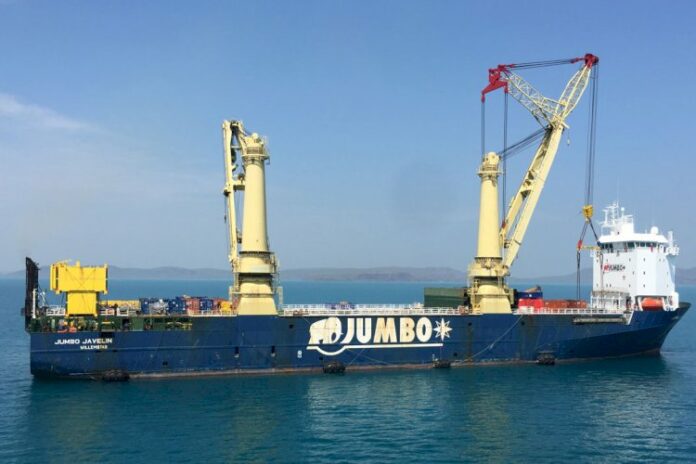
The Jumbo Javelin is a DP2 heavy lift crane vessel operated by heavy lift shipping and offshore installation contractor Jumbo. The 144m-long vessel is typically mobilised for offshore installation contracts, providing dynamically positioned (DP) heavy lift services with its two 900-tonne mast cranes.

Preparing for an upcoming contract that will require increased power requirements, Jumbo has equipped the Jumbo Javelin with six additional containerised generator sets. These will supply power to the vessel’s bow thrusters and offshore equipment during DP operations. The Alewijnse Marine switchboards will manage this increased power supply. Jumbo will remove the six generators at the end of the project.

Pieter Vosselman, Account Manager Alewijnse Marine, says:

“Our switchboards will make it possible for the Jumbo Javelin to have a fully separated power supply for the two bow thrusters. In the existing set-up, there will not be enough power available for the temporary set-up. This upgraded configuration will give Jumbo the extra capacity and reliability to take on this project.”

Alewijnse Marine will ensure the complete integration of the new switchboards into Jumbo Javelin’s existing systems. Furthermore, the company will install the switchboards in such a way to allow the ship’s electrical systems to return to their previous settings after the removal of the temporary generators. This will be achieved through modifications to the PMS and PLC control systems. The switchboards will remain in position, giving Jumbo the option to increase the vessel’s power capacity again in the future.

Pieter Vosselman continues:

“We worked on the Jumbo Javelin when it was being built. It is nice to be back on board with this project – giving this great vessel the flexibility to take on similar jobs in the future.”

DOLFINES and CIMC RAFFLES forge floating alliance

0

DOLFINES, an independent specialist in engineering and services in the renewable energy industry, announces DOLFINES and CIMC RAFFLES have signed a memorandum of understanding to boost floating wind in Europe and Asia

The two companies have agreed to cooperate in the commercial development of their activities in Europe and Asia to boost floating wind in Europe and Asia. The profile of the two companies is very complementary.

CIMC RAFFLES is the leading offshore equipment EPC (Engineering Procurement & Construction) enterprise in China, who has four R&D centers and three shipyards in China that are particularly suited to execute offshore renewable and Oil & Gas (O&G) EPC projects such as the construction of large semi-submersible or jack-up platforms and FPSOs, thanks to huge lifting and dock capacities such as a 20,000 tons gantry crane, 4,215 meters of total quay length and a deep water berth of 18 meters. CIMC RAFFLES is dedicated to supplying high-quality, cost efficient and reliable equipment and services, including offshore logistics services. CIMC RAFFLES is perfectly prepared for the industrialized mass production of floating wind turbines to drive levelized cost of electricity further down.

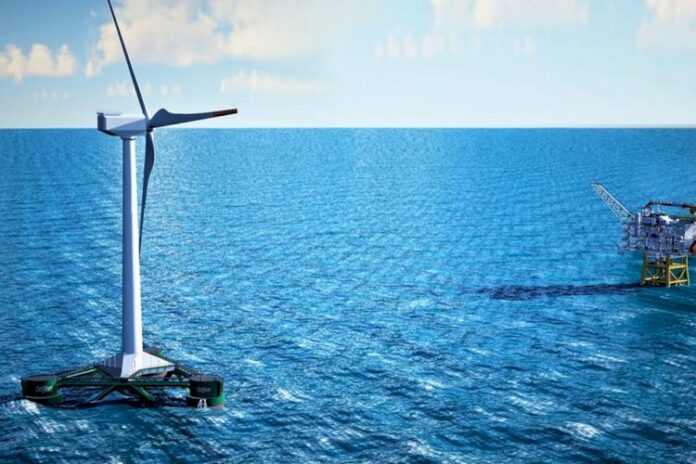
DOLFINES provides innovative solutions to harvest offshore renewable energy sources. Masterpiece of DOLFINES is TrussFloat™, a semi-submersible platform perfectly suited for floating wind applications such as grid electricity production, offshore O&G platform electrification, direct water injection in mature O&G fields, CCUS (Carbon Capture Utilization & Storage), and offshore hydrogen production.

Jean-Claude Bourdon, CEO of DOLFINES, says:

“We are very proud to work together with CIMC RAFFLES who has all the EPC competences and construction facilities that are needed for an industrialized mass production of floating wind turbines. Moreover, the modular construction concept of TrussFloat™ allows also to comply with local content requirements by using existing construction and transportation infrastructure, even far off the coasts. The signing of this memorandum of understanding shows that DOLFINE’s strong dynamics is not stopped by the current sanitary crisis.”

Fu Qiang, Marketing Director of CIMC RAFFLES, emphasizes:

“DOLFINES has developed a light and passive semi-submersible platform for a large spectrum of floating wind applications. Together with Dolfines, we want to accompany O&G majors towards a carbon neutral future, securing profitable offshore production by giving O&G infrastructure a second life.”

Teekay LNG Partners announces new LNG charters

0

Teekay LNG Partners L.P. has announced that it has secured new fixed-rate charters for two of its 52 percent-owned LNG carriers, a 12-month charter on the Arwa Spirit and an eight-month charter on the Methane Spirit, both of which are expected to commence upon completion and in direct continuation of their existing contracts in May and July 2020, respectively.

In addition, Teekay LNG has successfully refinanced its existing $225 million unsecured revolving credit facility, which was scheduled to mature in November 2020, with a new two-year facility of the same amount and pricing consistent with the previous facility of LIBOR + 140 bps.
Mark Kremin, President and CEO of Teekay Gas Group Ltd., commented:

“As we are an integral part of the world’s LNG supply chain, all of our vessels have continued to operate as expected under their existing fixed-rate contracts and I am pleased to report that, with these two new fixed-rate contracts, our LNG fleet is now 98 percent fixed though 2020 and 94 percent fixed for 2021. The Partnership expects to continue to benefit from its long-term contracted cash flow, and continue allocating capital in a manner that focuses on delevering and strengthening its balance sheet, while also returning capital to unitholders, including a 32 percent increase in our cash distribution to an annualized amount of $1.00 per common unit effective for the first quarter of 2020.

We are also grateful for the continued strong support we receive from our bank group, as represented by the refinancing and closing of our $225 million unsecured revolving credit facility with 13 major international banks, which provides the Partnership with a strong consolidated liquidity position of approximately $400 million and increased financial flexibility with which to add value to our long-term unitholders.”

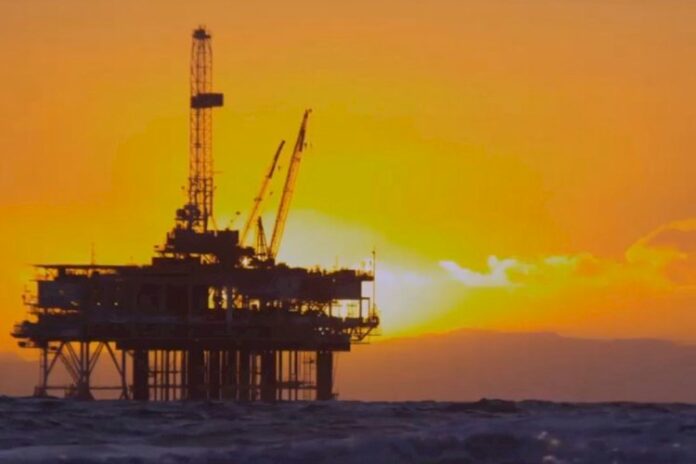
Significant oil discovery offshore Suriname at Sapakara West-1

0

Total and Apache Corporation have made a second significant discovery with the Sapakara West-1 well on Block 58 offshore Suriname. It follows the previous discovery at Maka Central-1.

The well was drilled by a water depth of about 1,000 meters and encountered 79 meters net pay of high-quality light oil and gas condensate, in multiple stacked and good quality reservoirs in Upper Cretaceous Campanian and Santonian formations. Further testing will be carried out to appraise the resources and productivity of the reservoir.

Kevin McLachlan, Senior Vice President Exploration at Total, said:

“We are very pleased to announce this second discovery, following from the discovery of oil at Maka Central-1. The results are once again very encouraging and confirm our exploration strategy in this region.”

The Sapakara West-1 exploration well was drilled by Apache as operator with 50% working interest and with Total as the JV partner with 50% working interest. The next exploration well will be drilled on the Kwaskwasi prospect, with a fourth exploration well to be planned back-to-back on the Keskesi prospect. 

Total will become operator of the Block after the drilling of the 4th well.

Concordia Damen to build sustainable training vessel

0

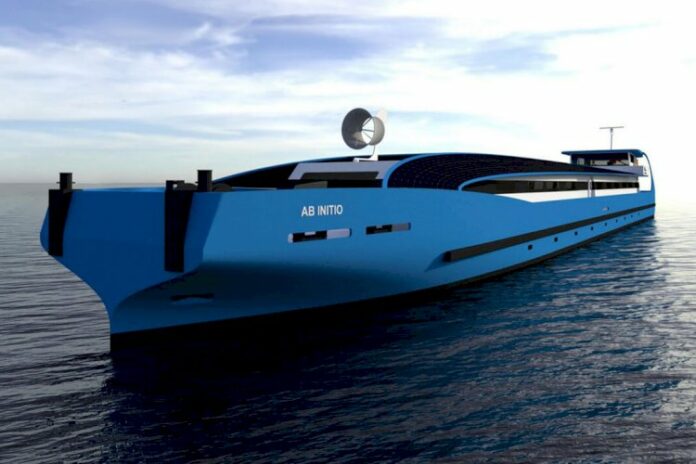
Following a competitive European tender process, Concordia Damen has been nominated to build a new training vessel for the STC Group. The new vessel will be used in the training of students on maritime courses.

The new, environmentally conscious vessel will replace two training vessels – the Princess Christina and the Princess Beatrix – that the Rotterdam-headquartered maritime training institution has used for over 50 years.

In 2018, students and teachers at STC Group, along with supporters from the business community, began to develop the ideas behind the vessel. The decided upon the name Ab Initio – Latin for ‘in the beginning’.

Concordia Damen participated in a tender process featuring numerous technical and environmental requirements. The forward-facing vessel will draw upon Concordia Damen’s expertise in sustainable shipping solutions. It will feature a hybrid diesel-electric propulsion system complete with battery pack. Additionally, Ab Initio will feature solar cells.

As well as being uncompromising in its stance towards sustainability, STC Group required that the vessel be futuristic and distinctive, yet recognisable in appearance.

Tim van Berchum, financial manager at Concordia Damen, said:

“We are very pleased to be asked by STC Group to build their new training vessel. We are proud to be playing a role in the development of the next generation of maritime personnel. Additionally, Ab Initio is notable for its sustainable characteristics. We see this contract, therefore, as a testimony to the work we have done previously in sustainable vessel construction.”

Concordia Damen will carry out the outfitting of the vessel at its yard in Werkendam, the Netherlands. Ab Initio is scheduled for completion in 2022.