5.7 C
New York
Home Blog Page 887

Reduced exploration activity in Norway

0

The corona pandemic combined with the stalemate among the world’s most powerful oil producers has created a serious situation for the petroleum industry, both globally and in Norway. The oil market is flooded with oil, demand is down and oil prices are low.

The Norwegian oil and gas industry has reduced its activities just like the rest of society. Offshore installations have reduced staffing, and non-essential crew have been sent to shore. Projects have been stopped or put on hold, and planned revision shutdowns have been postponed.

Director General Ingrid Sølvberg says:

“At the same time, the industry has announced and initiated a number of measures, and we can already see that this is affecting activity on the Norwegian shelf. Substantial cost cuts have been announced, reducing both exploration activity, investments and operating costs moving forward.”

In January of this year, there were plans for approx. 50 exploration wells. The Director General says:

“What we’re seeing now, is both exploration wells being postponed and delays/cancellations of geophysical mapping. As of today, it appears that around 10 exploration wells will be postponed, meaning that there will be about 40 exploration wells in 2020. However, we can’t rule out further changes in this area in the future.”

The effect of postponing exploration wells will depend on how long the current situation lasts. If it lasts a long time and there are many postponements, this could have an impact on resources.

Postponing exploration wells to next year will not necessarily have resource consequences, unless this includes exploration for so-called time-critical resources. This means wells where potential discoveries are slated to be developed toward existing infrastructure in a late phase of their production cycle. 

If the low oil price situation endures over time, this could reduce the economic life of the fields. This will affect exploration, because it will no longer be considered as profitable to make discoveries near the infrastructure if it is shut down too early in relation to the production time of the potential discovery. Reduced exploration activity over the longer term will therefore also affect future production on the shelf.

Reduced progress in projects linked to extraction of time-critical resources and postponing activities on producing fields and development projects could affect future production and overall resource extraction.

Development of time-critical discoveries could be at risk if they are not developed within a given timeframe. If it takes too long, some discoveries could see pressure in the reservoir decline due to production from nearby reservoirs. Development of time-critical discoveries into existing infrastructure is also dependent on the infrastructure’s lifetime.

This applies in both the North Sea and the Norwegian Sea. All infrastructure is fairly recent in the Barents Sea – so there is no risk of losing time-critical resources for this reason in this area.

Director General Sølvberg says:

“On fields in operation, we’re seeing wells being postponed due to the low oil price and/or because staffing offshore is reduced due to the corona situation. There is a risk of several of these wells not being drilled later, which could mean a risk of losing resources.”

The Norwegian Petroleum Directorate is concerned with whether this could mean that the projects will be less extensive and that, for example, fewer wells will be drilled than was planned in the Plan for Development and Operation (PDO). This could have consequences for future production.

One significant challenge over the short term will be the labour market. All postponement of both exploration activity, development projects and operations and maintenance work will affect jobs and could have dramatic consequences for the supplier industry. Staffing reductions could mean that highly qualified personnel and cutting-edge expertise, which is not easily replaced, will find work in other industries.

Sølvberg emphasises:

“What we’re seeing is a situation in constant flux. This is why it’s difficult at this time to have an overview of the effect of what’s happening in the industry.”
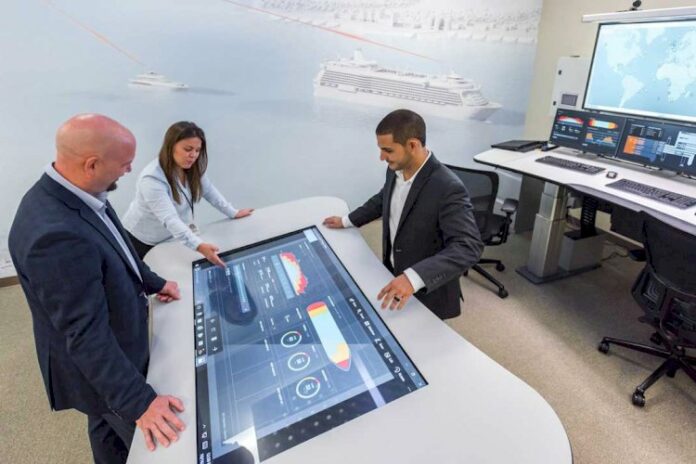
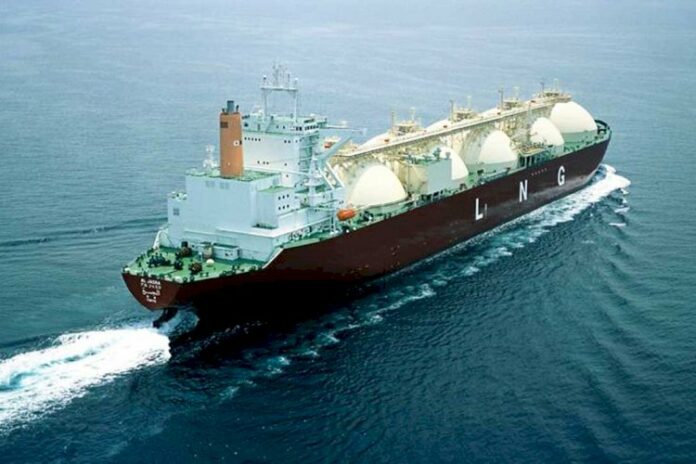
ABB increases remote support for ships during the COVID-19 outbreak

0

At the time when many countries close borders and impose travel restrictions to curb the spread of the COVID-19 pandemic, ABB has increased the remote availability of technical service teams to help crews from shore.

With a network of 800 service engineers in 40 locations worldwide, ABB is, wherever possible, assisting customers on site, from units closest to the vessel’s operation and in line with governmental measures. When on-site support is not feasible due to travel restrictions, ABB’s pool of experienced local service engineers has been made available to help crews remotely, with additional technical guidance from ABB Ability™ Collaborative Operations Centers situated around the globe.

Key to this approach is an integrated global network of centers and services that can take care of the full scope of ABB systems onboard vessels from afar. Today, with over 1,000 ships connected to the ABB Ability™ Collaborative Operations worldwide, digital services are at the core of supporting vessel crews from shore. ABB experts monitor onboard systems, coordinate equipment diagnostics and offer maintenance services 24/7 from eight ABB Ability™ Collaborative Operations Centers around the globe.

Furthermore, responding to customer requests, ABB has also introduced a basic level solution that enables secure access to onboard systems from ashore and enhanced digital support for crews.

Juha Koskela, Managing Director, ABB Marine & Ports, said:

“We are taking all possible steps to help our customers through this challenging period. Providing 24/7 care to ships sailing around the world with onboard and remote services is an integral part of our ‘Electric. Digital. Connected.’ approach. We are committed to assisting vessels globally, while putting the health and wellbeing of our employees, customers and partners first.”

Remote diagnostics of shipboard equipment has become a key feature of shipping over the last decade. Sensor-driven onboard monitoring software that fully integrates with analytics ashore plays a central role in facilitating this approach.

Qatargas utilises boil-off gas to power LNG vessels

0

Qatargas Operating Company Limited (Qatargas) has successfully initiated a programme to utilise LNG boil-off gas to power its chartered conventional LNG vessels during unloading operations at Japanese LNG terminals. The programme is being implemented with the cooperation of Qatargas’ Japanese buyers.

LNG vessel, ‘Al Jasra’ had successfully conducted the first such operation while discharging at the Niigata LNG Terminal in October 2019.

LNG tankers are designed to carry natural gas in liquid form at a temperature of – 163°C, close to the vaporisation temperature. This natural evaporation, known as boil-off, is unavoidable and has to be removed from the tanks in order to maintain the cargo tank pressure.

Using the boil-off natural gas instead of conventional fuel oil significantly reduces greenhouse gas and other harmful emissions over the course of the discharge operation. Qatargas is committed to minimising emissions of greenhouse gas and other pollutants by use of natural gas, the cleanest fossil fuel, in one of its critical operations.

Total charters its first two LNG propelled tankers

0

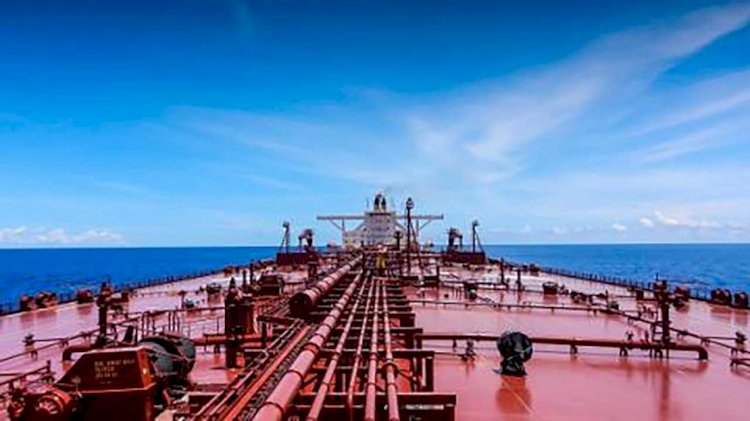
Total signed a pioneering agreement to charter its first two LNG-powered VLCCs (Very Large Crude Carrier).

The two vessels, which are able to carry about 300,000 tons of crude oil each, will be delivered in 2022 and will join the time-chartered fleet of Total. These VLCCs will be chartered to Malaysian shipowner AET.

The vessels have been designed with LNG propulsion to benefit from reduced Greenhouse Gas emissions and with the latest technologies to further lower their consumption.

Luc Gillet, Senior Vice-President Shipping at Total, highlights:

“LNG is the best and immediately available solution to reduce the environmental footprint of shipping. The use of LNG to fuel our chartered vessels is the illustration of our determination to reduce the carbon footprint of our activities. With this decision, we reaffirm today our positive contribution to a sustainable shipping industry and our commitment to extend the use of LNG as a clean marine fuel.”

The supply of LNG for these two LNG-powered VLCCs will be provided by Total Marine Fuels Global Solutions, Total’s dedicated business unit in charge of worldwide bunkering activities.

LNG as a marine fuel, the best and immediately available solution to reduce the environmental footprint of maritime transport

A true technological breakthrough in the service of environmental protection, LNG is now the best available and technologically proven solution to significantly reduce the environmental footprint of maritime transport. Compared to ships currently powered by fuel oil, its use results in a reduction of:

● 99% of sulphur oxide emissions;
● 99% of fine particles emissions;
● Up to 85% of nitrogen oxide emissions;
● About 20% of greenhouse gases emissions.

SAFEEN acquires its largest service vessel to date

0

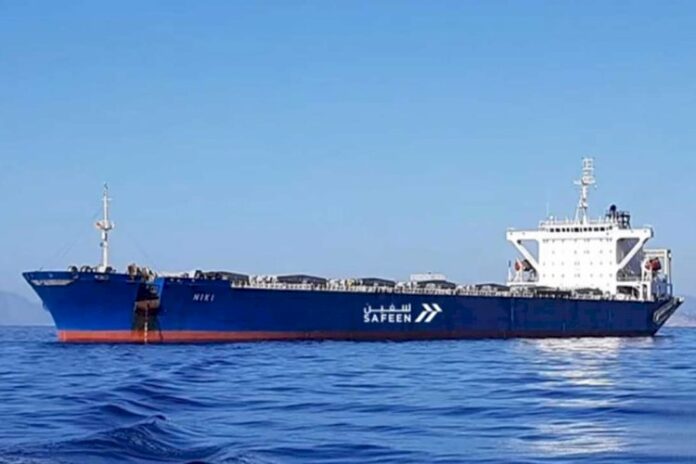
SAFEEN, Abu Dhabi Ports’ maritime service arm, has announced a successful acquisition of a Post Panamax bulk carrier, making it largest vessel ever to join its inventory.

Built in Romania and in service since 2006, the vessel will operate under the name “HAFEET” and will initially undergo an extensive conversion, prior to commencing operations. The refitting will include state-of-the-art cranes and conveyor system, which, when combined with other design parameters, will render the vessel a potent and efficient transhipment platform, enabling SAFEEN to provide solid bulk cargo transhipment services.

Once its conversion is fully complete in the latter part of 2020, M/V HAFEET will be based at Musaffah and will be tasked with supporting Emirates Steel’s transhipment requirements. Commencing its operations in January 2021, the vessel will assist in discharging bulk iron ore bound for Emirates Steel from incoming bulk carriers more efficiently, thereby economizing the turnaround time for the large ocean going vessels.

Captain Adil Banihammad, Head of Maritime Cluster & Chief Executive Officer, SAFEEN – Abu Dhabi Ports, said:

“The acquisition and the eventual commissioning of HAFEET marks a significant step for our SAFEEN team as it greatly enhances our ability to serve our customers and provide them with world-class maritime services. Even more importantly, however, the vessel is part of a larger expansion strategy by Abu Dhabi Ports aimed at broadening our portfolio of services, and taking our experience and service excellence to the wider bulk transshipment market. We firmly believe that by challenging ourselves and looking beyond our horizons, we will benefit not only our current and future customers, but also our broader emirate as well.”

Boasting a summer deadweight of up to 101,648 metric tonnes and diesel engines capable of generating up to 15,200 horsepower, M/V HAFEET includes a total of seven holds for cargo storage, making it a natural fit for the delivery of efficient transhipment services.

Aside from being fitted with four advanced cranes and a conveyor system needed for cargo handling, the vessel will receive new hoppers, grabs, and additional generators to support its increased power requirements.

As the largest vessel in SAFEEN’s inventory, it bears the name of Jabal Hafeet, the sole mountain in the Emirate of Abu Dhabi, which overlooks the UAE’s border with Oman. Standing at a height of 1,240 metres, the mountain is the highest peak in the Emirate. The mountain was officially incorporated into the Sheikh Zayed Network of Protected areas in 2018.

Wintershall Dea makes discovery in Norwegian Sea

0

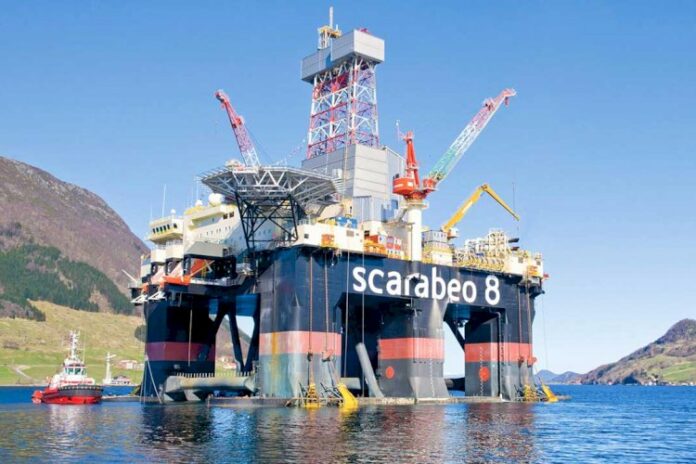
Wintershall Dea, Europe’s leading independent gas and oil company, has made an oil discovery at the own-operated Bergknapp prospect in the Norwegian Sea, close to the Maria field.

The well, drilled by the Scarabeo 8 drilling rig, encountered an oil column of at least 60 meters in the Garn Formation and an oil column of at least 120 meters in the Tilje Formation, with reservoir qualities ranging from poor to good. Initial recoverable resource estimates put the discovery at between 26 and 97 million barrels of oil equivalent. The license partnership will now initiate studies, investigate potential appraisal measures and development options for the discovery.

Hugo Dijkgraaf, Wintershall Dea Chief Technology Officer and responsible Executive Board member for global exploration, said:

“This exciting discovery near existing infrastructure confirms the untapped potential of Norway as a core area for exploration, development and production now and in the future. As a global company, Wintershall Dea is committed to Norway and to developing new fields like the Bergknapp discovery on the Norwegian Continental Shelf.”

With Maria and Dvalin Wintershall Dea already has fields in production and development in the area around Bergknapp. Exploring around existing infrastructure is part of Wintershall Dea’s strategy for Norway. Together with its partners, the company will consider future development options for the Bergknapp discovery taking into account the current market environment.

Alv Solheim, Wintershall Dea Norge Managing Director, said:

“The Norwegian Sea is a key area for Wintershall Dea Norge. Apart from our other Haltenbanken assets, we are also a key operator in the Vøring basin and have licenses in other areas of the Norwegian Sea. With our investment on the shelf, we are exploring and developing new fields, while also supporting our existing fields and infrastructure.”

Wintershall Dea is operator of the discovery in PL 836S with a 40% share. License partners are Spirit Energy Norway AS (30%) and DNO Norge AS (30%). The well will be temporarily suspended, while a future production test is being considered.

Wintershall Dea has been active on the Norwegian Continental Shelf for more than 45 years and is now Norway’s third biggest gas producer. Today the company has more than 100 licences – around a third of them as operator – and a production volume of 146,000 barrels of oil equivalent per day (2019). In the latest APA licence award in early 2020, Wintershall Dea was awarded nine additional new licences (three as operator) underpinning that Norway is one of its areas for growth.

Drewry begins tracking weekly containership cancelled sailings

0

Responding to unprecedented market volatility following the Coronavirus (Covid-19) outbreak, Drewry Supply Chain Advisors, the logistics consultancy arm of Drewry Shipping Consultants, has announced the launch of two new container shipping tracking services reporting cancelled sailings and ship waiting times every week.

By combining Automated Identification System (AIS) data, monitoring containership movements several times a day at some 50 major ports, with Drewry’s own insights into carrier schedules and shipping capacity, both services deliver a high level of actionable, dynamic and detailed intelligence on what is happening in the current week and what will happen this month in the container market – by major trade route, region or major port.

Updated weekly, the Drewry Cancelled Sailings Tracker provides a ‘snap-shop’ of cancelled sailings on a particular day. The data is obtained from carriers and is highly dynamic, particularly in the current, unstable Covid-19-impacted market. By monitoring closely and acting on the weekly Cancelled Sailings Tracker metrics, shippers and forwarders will be able to anticipate delays and longer lead times or rollovers on specific major trade routes and for specific weeks, and select sailings based on the latest data on the incidence of cancellations by alliance and by week. Ports and carriers will be able to forecast or plan for expected changes in overall carrier activity and number of sailings.

Also updated weekly, the Drewry Containership Waiting Time Tracker calculates average waiting times that ships wait outside a port before berthing, at 44 major ports, for the last 2 weeks. By monitoring the end-of-week Ship Waiting Time Tracker for the just-ended week, shippers, forwarders, carriers and other stakeholders will be able to anticipate potential delays at the port of arrival and to monitor the trend away from or back to normal levels and compared with the previous weeks.

Philip Damas, Managing Director and Head of Drewry Supply Chain Advisors, said:

“The Coronovirus (Covid-19) crisis is having a profound and far-reaching impact on international shipping and global commerce. With these new weekly tracking services our intention has been to provide an extra level of operational visibility to industry stakeholders; whether shippers, forwarders, carriers, truckers or terminal operators. Perhaps more so than ever, up to date and relevant intelligence is needed to enable shippers to respond to capacity bottlenecks and ocean freight volume volatility, and quickly develop contingency plans to mitigate possible disruptions to their shipping services.”

In the coming days Drewry will be combining these tracking services with its World Container Index to provide a consolidated assessment of market volatility.

Tallink Grupp’s newest eco-friendly LNG-powered shuttle ferry

0

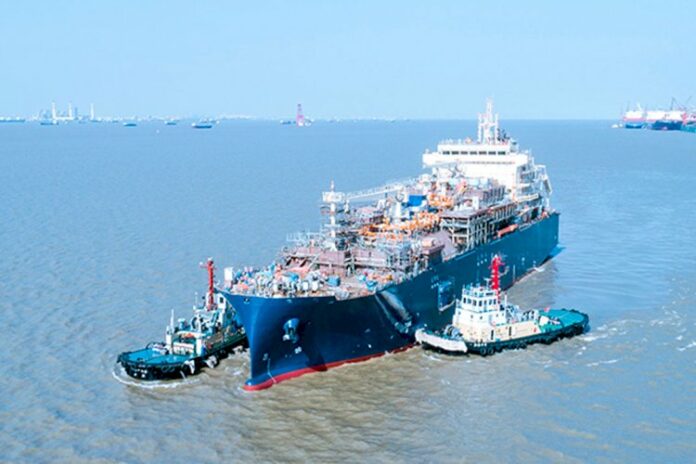
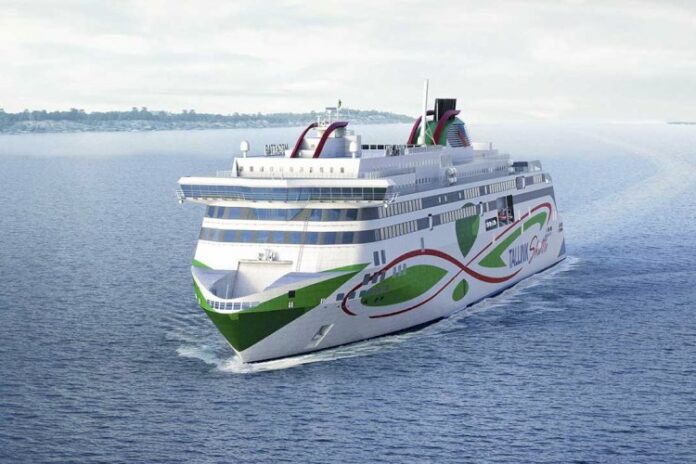
Tallink Grupp has announced that the construction of Tallink Grupp’s newest eco-friendly LNG-powered shuttle ferry, MyStar will begin at the Rauma Marine Constructions (RMC) shipyard in Rauma, Finland.

The construction will begin with a traditional steel cutting event, which – in keeping with the current corona virus situation restrictions and precautionary measures – will be carried out online, starting at 13.00 local Finnish time, with Tallink Grupp representatives participating via the Internet live streaming.  

The CEO of Tallink Grupp Paavo Nõgene said:

“The world around us has recently changed beyond recognition and all around us we only see shut-down, challenges and closure. Our group too is facing challenges, but at the same time we are working hard to get through the current situation and are continuing to focus on the future. And one of the key future projects already underway before the crisis was the construction project of our new shuttle, MyStar – one of the eco-friendliest ship on the Baltic Sea. I am therefore pleased that we are today able to start thisnew project in cooperation with our long-standing partner Rauma shipyard.”.

Paavo Nõgene CEO of Tallink Grupp said:

”During this intense time of challenge, we see, more than ever, how much our economies rely on dependable, sustainable and eco-friendly ships and the importance of vital shipping routes remaining open.  At Tallink, this makes our commitment to building and operating  the most innovative and most sustainable ships on the Baltic sea even stronger.”

Jyrki Heinimaa, President and CEO of Rauma Marine Constructions, said:

“We are proud to start the construction of the new vessel MyStar building on the good  cooperation we have with our significant customer Tallink Grupp. Together, we are shaping the shipping industry between Finland and Estonia to be more and more environmentally friendly.”

MyStar is another important step for Tallink Grupp towards achieving even greater energy efficiency and eco-friendliness for its shipping operations on the Baltic Sea. The LNG-powered new shuttle vessel comes with the latest cutting-edge technology and innovation onboard and will meet all the current and known future emission regulations.

MyStar will be built equipped with shore-to-ship green power connection as well as the Smart Car Deck solution, developed in cooperation with Tallinn Technical University, which will enable even faster and more convenient loading and unloading of the vessel and is compatible with the already existing Smart Port solutions at the Port of Tallinn.

The vessel will cost approximately 250 million euros and the delivery of the vessel is planned in January 2022. The new vessel will operate on the company’s Tallinn-Helsinki route, connecting the twin capitals of Estonia and Finland.

AIOC awards services contract in the Caspian Sea

0

Azerbaijan International Operating Co. (AIOC) has awarded Worley a contract for engineering, procurement and construction services as part of a gas lift project. AIOC is operated by BP.

Under the contract, Worley will provide engineering, procurement and construction services to support production operations on the Chirag platform in the Caspian Sea.

The project scope includes new gas lift flowlines and production manifolds.The services will be jointly executed by Worley’s Aberdeen and Baku locations, bringing together the offshore engineering expertise within the Aberdeen offices and the local operating knowledge and national expertise within the Baku office.

Chris Ashton, Chief Executive Officer of Worley, said:

“We look forward to continuing to support both AIOC and BP with their long-term production strategy in the Caspian Sea.”

Fugro wins NOAA contract for offshore shoreline mapping services

0

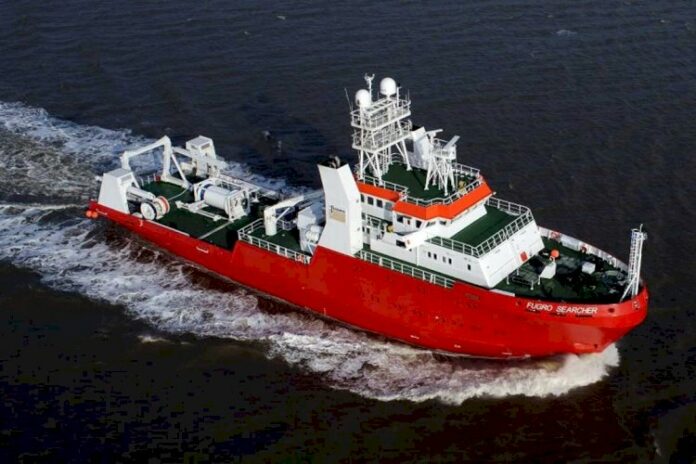
Fugro has signed a 5-year Indefinite Delivery Indefinite Quantity (IDIQ) contract with the US National Oceanic and Atmospheric Administration (NOAA) to provide shoreline mapping services in support of the agency’s Coastal Mapping Program.

Issued through NOAA’s National Geodetic Survey (NGS), this multi-year contract is NGS’s second consecutive award to Fugro for services such as the provision of aerial imagery, topobathymetric lidar, and shoreline feature compilation. NGS uses these data to update NOAA nautical charts, define US territorial limits, support coastal management activities and perform inundation modelling.

Edward Saade, President of Fugro in the US, said:

“Fugro is proud to continue working with NOAA to update and improve the nation’s shoreline mapping needs. This work closely aligns with our NOAA hydrographic surveying services contract, which was awarded to Fugro last December. In both cases we are focused on using innovative technologies to streamline the delivery of high quality Geo-data while improving operational safety and significantly reducing our carbon footprint.”

The new shoreline mapping services IDIQ contract is active now and will run until 20 March 2025. Fugro is one of four contractors who will receive task orders under the programme. The total maximum value of work to be shared among all contractors is USD 40 million.