8.6 C
New York
Home Blog Page 886

Coronavirus could accelerate digitalisation in the shipping industry

0

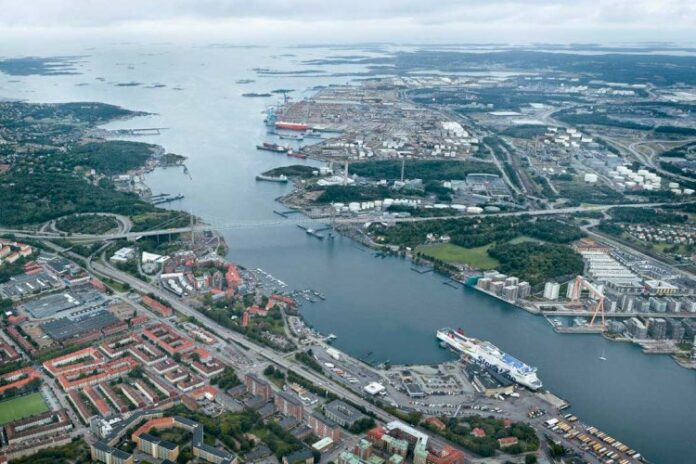
When physical contact between members of the crew on board ship and workers at the quayside needs to be kept to a minimum, new routines are required – and quickly. At the Port of Gothenburg there are clear indications of how the Corona pandemic could accelerate digitalisation in what is an otherwise conservative shipping industry.

As a result of the Corona outbreak, the majority of ports throughout the world have been forced to re-examine their routines. Greater use of digital tools has been part of the solution in an effort to maintain an efficient workflow. At the same time, it takes slightly longer at the quayside when the new routines are being introduced. Even though a great deal of the work takes place remotely during the approach, once the vessel is at the quayside a whole range of physical interactions are normally required between the crew and the dockworkers. This could involve everything from inspecting the quality of the cargo to going through permits, safety checklists, and notices of readiness before loading or discharging.

Dan-Erik Andersson, Chief Operating Officer at the Energy Port in Gothenburg, says:

“Loading and discharge are traditionally based on human contact. It’s quick and the entire system has been refined over the years. Changing the whole structure so quickly may result in a loss of time and momentum. However, by introducing new routines and new systems, and ensuring more tasks are carried out simultaneously rather than consecutively, we can probably become more efficient in the long run.”

Increased automation and digitalisation is a top priority at the Port of Gothenburg. The majority of the initiatives that have already been introduced have proved to be particularly constructive during the Corona pandemic. The digital system Permesso, which was introduced in 2019, has resulted in a significant reduction in administration and face-to-face contact when issuing work permits to contractors. The automatic gates for trucks introduced by APM Terminals at the Container Terminal are another example of a more efficient operating procedure, reducing the need for physical interaction.

Malin Collin, Deputy CEO at the Gothenburg Port Authority, is responsible for the digitalisation process. She states that extensive digital changes at the port will be introduced within the near future and could make a substantial difference.
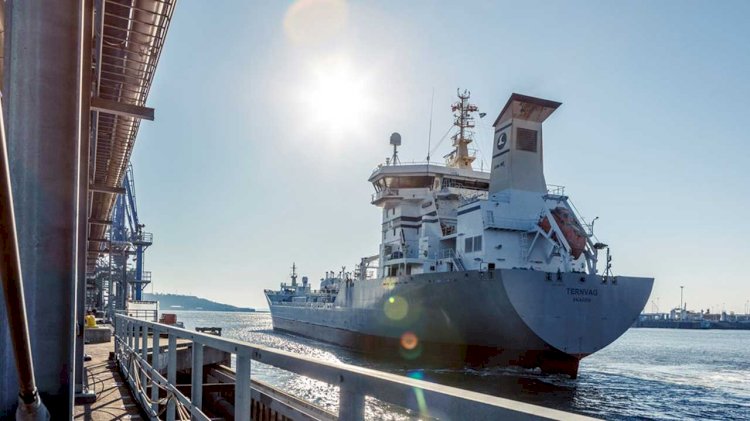
According to Malin Collin, it is largely a question of improving efficiency and visualising freight flows and traffic movements to and from the port. She says:

“This is one of the most critical issues and we have dedicated resources to finding a solution. We are currently examining how artificial intelligence can make use of historical data to predict events and speed up the decision-making process. We can improve planning through data-driven decisions, identifying trends, and predicting events. By doing so we can create a platform for more efficient freight flows and transport movements on land and at sea.”

She states that enhanced digitalisation will benefit everyone. Nevertheless, if it is to produce the desired outcome, more people in the transport chain need to link into common systems and share information with each other.

She says:

“My impression is that the level of acceptance is rising, particularly now we are faced with the Corona crisis. But someone needs to take the initiative, act as a driving force, and offer effective alternatives that more people want to adopt. At the Gothenburg Port Authority, we are only too willing to lead the way and that’s why we are devoting so much time and resources to digital development.”
New digital COVID-19 tool from International Group

0

The online tool, first released by North in February, was formally launched via the IG website this week. It details the extent of COVID-19 and the numerous response measures that have been introduced in a single digital dashboard, including country and port specific advice for shipowners, charterers, operators and others.

The interactive tool draws on information provided by IG club correspondents worldwide, as well as the International Maritime Organization and World Health Organization. Data also comes from Wilhelmsen Ship Management and ship agency company GAC, while the dashboard includes a continuously updated map of the pandemic’s spread from John Hopkins University.

North Chief Executive Paul Jennings said:

“Delivering up-to-date information from well-respected international sources, combined with the insights from the P&I club members of the IG, this new tool will help the maritime community better understand and track the extent of COVID-19 worldwide. This can help protect businesses and most importantly safeguard the lives of the seafarers whom we depend upon daily to keep our local communities supplied with essential goods.”

In freely sharing its proprietary intellectual property and information, North contributed to inter-club cooperation at a critical time and delivered on the IG’s ‘collectively stronger’ approach, said Jennings, who is also International Group Chairman. Live updates on the number of confirmed cases of the virus, countries at risk and what to look out for would put stakeholders in a better position to identify commercial risks and physical threats to shipping, he added.

To date, enquiries made to North related to COVID-19 have focused on the way port precautions and border measures were hindering crew repatriations, and problems in delivering general medical care. Jennings said other early issues to emerge included repair contracts for vessels at shipyards and when force majeure provisions might apply, and bespoke COVID-19 clauses into charter parties. For the moment, the cargo claims situation was “masked”, he said.

ABS is first in industry to accept 3D models for class surveys

0

In an industry first, ABS has completed a successful pilot project that used 3D digital models for class surveys. This project means ABS is able to fully support 3D model integration into engineering and now survey.

The pilot with NASSCO saw surveyors use 3D digital models instead of traditional 2D drawings for the simulation of new construction surveys on several steel blocks. 3D Model-Based Class allows a designer or a shipyard to eliminate 2D drawings, saving up to 25 percent design time. 3D models are easier to navigate and can reduce time required to train shipyard craftsmen.

The 3D models were viewable to surveyors in ABS software and could be seen remotely and in real-time. The surveys were successfully completed without any significant issues, a major milestone in enhancing the class experience.

Christopher J Wiernicki, ABS Chairman, President and CEO, said:

“ABS is leading the way in the development of digital class and this significant step forward is another example of how we are innovating with digital technologies to deliver operational efficiencies for the industry. ABS continues to lead classification into the future by leveraging data and digital technologies as we transform our core services and drive new and innovative solutions.”

Tim Glinatsis, NASSCO Vice President of Engineering & CIO, said:

“Elimination of 2D drawings from the design and construction process is very appealing to NASSCO. We look forward to continuing to work with ABS to identify digital initiatives that can improve shipbuilding and classification.” 

This is the latest work by ABS designed to ensure the organization is ready to support any shipyard or designer that wants to submit a 3D model for class approval.

Scottish fishing trawler will feature fuel efficiency with Wärtsilä engines

0

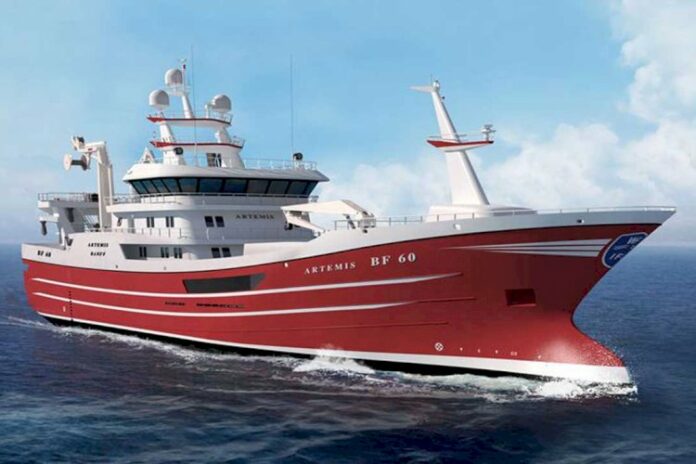
The technology group Wärtsilä will supply a propulsion and power package for a new 75 metres long fishing trawler. 

The ship is being built at the Karstensen shipyard in Denmark for Scottish owners and operators Wiseman Fishing Co and Northbay Fishing Co. Both the yard and Wiseman Fishing are longstanding customers of Wärtsilä. This latest order with Wärtsilä was placed in March.The vessel will feature a Wärtsilä 31 main engine, two Wärtsilä 14 power generating sets, a gearbox and a controllable pitch propeller (CPP), the combination of which represents the latest engine and power generation technology. In designing the trawler, the aim has been to achieve the best power density, the most efficient performance, and the lowest possible emission levels in order to achieve minimal environmental impact.

Henrik Wilhelms, Director Offshore and Special vessels at Wärtsilä, says:

“It is always satisfying to receive repeat orders, since they are the best endorsement of customer satisfaction. We have earlier provided engines and propulsion solutions for both Karstensen and Wiseman Fishing, so it is an honour that they have once again put their trust in us for this new vessel. Fishing is necessary for feeding the world’s growing population, and while fishing operations are very diverse, the one common ambition is to be even more sustainable. It is important for us to know that this project supports the industry’s sustainability.”

Kent Damgaard, Director, Karstensen shipyard, says:

“The Wärtsilä 31 engine has outstanding fuel efficiency and we have installed it in several other of our newbuilds. The Wärtsilä 14 is an exciting newcomer for us, and we are confident that it is the right choice for this and possible future ships that we build.”

The Wärtsilä 31 engine has been recognised by Guinness World Records as being the world’s most efficient 4-stroke diesel engine, while the Wärtsilä 14 high-speed engine is the marine industry’s most compact engine in its power range. Both the Wärtsilä 31 and the Wärtsilä 14 are integral elements within Wärtsilä’s Smart Marine vision for the future of shipping, whereby optimal efficiency, safety, and environmental sustainability will be the key pillars in achieving and maintaining profitable operations for ship owners and operators.

The Wärtsilä equipment is scheduled for delivery to the yard in spring 2021.

OWA published guidance for the geophysical surveying for UXO

0

The Carbon Trust’s Offshore Wind Accelerator announces new guidance for the geophysical surveying for unexploded ordnance and boulders.

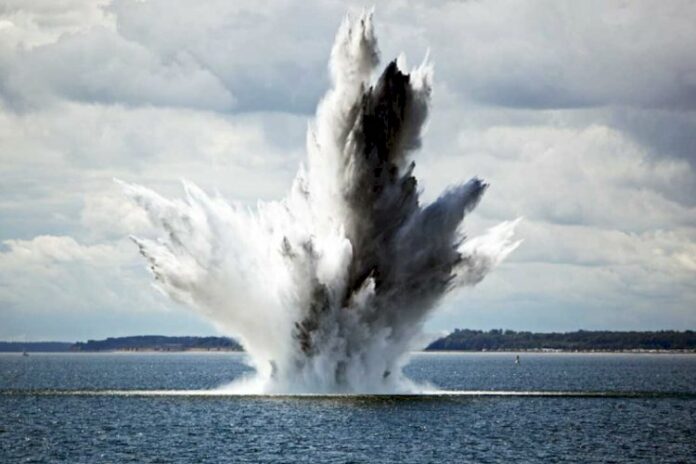
The Carbon Trust’s Offshore Wind Accelerator (OWA) has published guidance for the geophysical surveying for unexploded ordnance (UXO) and boulders, supporting subsea cable installation by improving the efficiency and effectiveness of surveys. 

The new guidance is the most comprehensive of its kind, and the first dedicated to the offshore wind industry. It aims to optimise surveys by equipping offshore wind developers and surveyors with information to facilitate the creation and utilisation of data according to best practise, a consistent structure and improved survey result documentation.

UXO and boulders present risks to subsea cables, as well as the operations and equipment required for their installation, maintenance, and decommissioning. Data generated by geophysical surveys undertaken in the planning stages of offshore wind farms form a key part of the knowledge base for risk evaluation and management of these operations – and can cost millions of pounds.

Faults in survey design can lead to the need to repeat surveys, or unexpected damage to equipment. Mitigating these risks is critical to minimise resulting project delays and increased costs.

The development of this guidance builds on previous OWA guidance for cable installation, the Cable Burial Risk Assessment (CBRA) Methodology, published in 2015, which provides a risk-based assessment to optimise the Depth of Lowering of subsea cables.

The guidance was developed with support from Cathie UK, a geoscience and geotechnical consultancy and Ordtek, unexploded ordnance specialists. 

Jan Matthiesen, director, offshore wind, the Carbon Trust, commented: 

“After an initial review of the technologies available and past issues with surveying it became clear the equipment was not the issue, but the design. By publishing this work we are providing industry with the tools to optimise this critical part of the planning process for offshore wind farms.”

AIDA Cruises cancels trips until 31 May

0

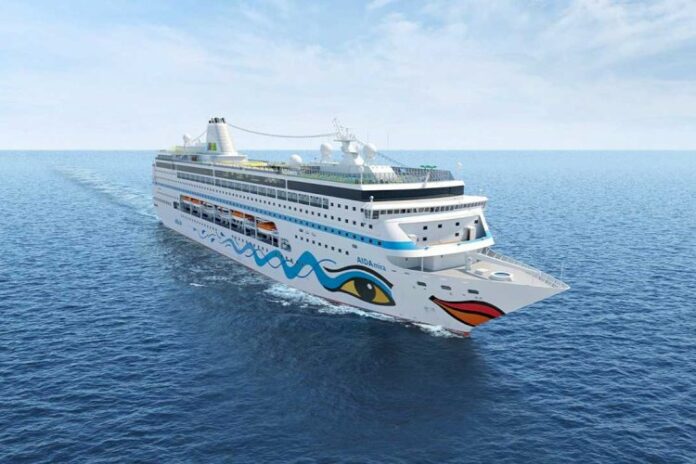
The worldwide spreading of the coronavirus presently confronts economies and companies with unprecedented challenges. The global tourist traffic has ground to a halt. Due to the current entry requirements in AIDA’s destinations, the tourist traffic is not expected to normalize until the end of Mai 2020.

These exceptional and unpredictable circumstances have forced the company to expand the temporary interruption of the AIDA travel season. Thus, all cruises up to and including May 31, 2020, cannot take place as intended. AIDA is informing all guests that have planned a voyage with AIDA within this period. The affected bookings are being processed chronologically by departure day.

AIDA will reimburse all guests whose cruises between March 8 and May 31, 2020, have been cancelled for the travel price already paid in the form of a travel credit. AIDA offers them a bonus of 10% on top of the payment already made. The credit can be used for bookings until December 31, 2021, for the complete range of AIDA trips on offer. Guests are free to choose which services they would like to use their credit for – whether as a settlement with the travel price, for an on-board credit or for MyAIDA services such as excursions, culinary delights and wellness treatments.

In order to support travel agencies in these challenging times, AIDA will pay out a liquidity advance. This is 10% of the credit value and will be transferred to the sales partner as soon as AIDA has issued the travel credit for the joint customer.

Guests who do not wish to use their travel credit including the 10% bonus will be reimbursed by AIDA upon request in the amount of the payment already made.

Maersk launches new intermodal container service in Russia

0

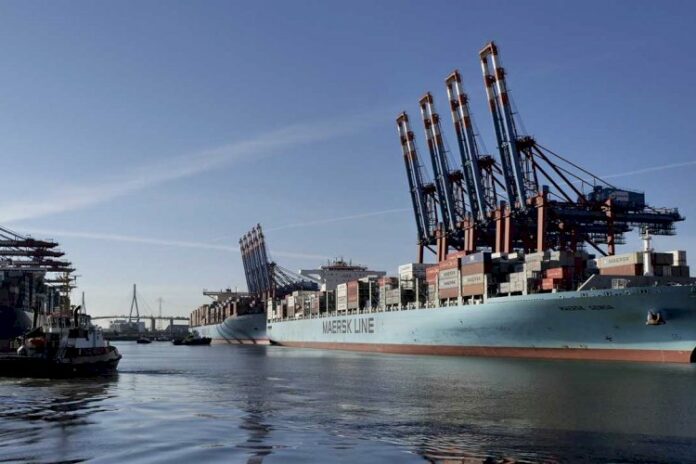
Maersk’s offer of intermodal solutions for the Russian market is expanding, with the new container service launched in April, connecting the port of Novorossiysk on the Black Sea with the dry port Vorsino near Moscow (Kaluga region).

The new service is offered by Maersk jointly with Russian partners Ruscon group and Transcontainer JSC and offers a reliable solution for containers arriving to Novorossiysk on Maersk’s ocean services and destined for customers in Moscow and neighbouring regions. At destination, customers can then choose between an end-to-end solution, where containers are delivered by Maersk directly to their premises, and self-pickup from Vorsino inland container terminal.

Zsolt Katona, Managing Director of Maersk in Eastern Europe, comments:

“With this solution, we want to meet the needs of our customers located in the Russian capital area with a product that brings their cargo closer to their warehouses, production facilities or shops. We offer them the flexibility of picking up their cargo on their own, or using a door-to-door option, based on their preference.”

The service was launched in test mode already in January 2020, and since then has been structured with a weekly frequency, as originally planned. Transit time from Novorossiysk port to destination is 50 hours. The train is dispatched from the Novorossiysk terminal every Thursday at 5 am and reaches Vorsino on Saturdays at 7 am.

Nova module ready for sail away to Neptune Energy’s Gjøa platform

0

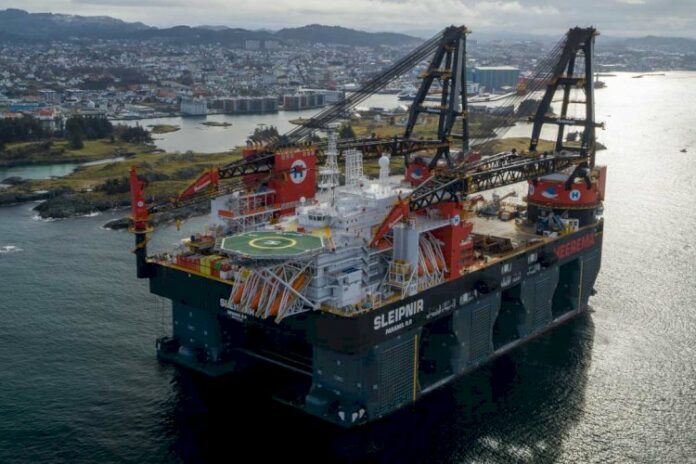
The module was lifted onto a barge at the Rosenberg Worley yard in Stavanger and will be transferred to the world’s largest crane vessel, Heerema’s Sleipnir, then installed on the Neptune-operated Gjøa platform.

Neptune has been leading the project on behalf of the Nova-operator, Wintershall Dea, which will provide additional gas and oil volumes and extend the operating life of Gjøa.

Neptune’s Managing Director for Norway, Odin Estensen said:

“We are proud to have reached this milestone in what is an important brownfield project for Neptune and the Gjøa platform. Throughout the project we’ve seen close cooperation of highly skilled teams working to construct the module safely and delivered according to plan. Especially today, as the international community and our sector is facing challenges related to both the COVID-19 pandemic and lower commodity prices, milestones such as these are very important and motivating for all those involved.”

The module’s load-out completes the fabrication phase by Rosenberg Worley which began in November 2018.

Wintershall Dea’s Nova topside Manager, Øyvind Eie, said:

“Neptune and Rosenberg have worked hard, together with the Wintershall Dea team, to complete the Nova module on time, with high quality and minimum carry-over work despite the challenging situation we are in. I am looking forward to achieving the next major Nova milestone together as we proceed towards module installation and finally production start.”

The module will process the Nova field hydrocarbons and provide water injection facilities via the Gjøa platform. It is scheduled to be installed next month on Gjøa, the first floating production platform to be powered by hydroelectricity delivered via a submarine cable from the mainland, saving 200,000 tonnes of CO2 each year.

First gas is scheduled for 2021.

Gjøa license partners: Neptune Energy (30% and operator), Petoro (30%), Wintershall Dea Norge (28%), OKEA (12%).

Video: kystverketWEB

Hywind Tampen wind farm approved by Norwegian authorities

0

On 11 October 2019, Equinor and the Snorre and Gullfaks partners submitted two updated plans for development and operation to Norwegian authorities.

Arne Sigve Nylund, Equinor’s executive vice president for Development & Production Norway, says:

“Hywind Tampen is a pioneering project and a central contribution to reducing emissions from Gullfaks and Snorre, and I am pleased that both ESA and Norwegian authorities have approved the project. We are experiencing very challenging times, and we are focusing on continuing our transition effort while attending to and developing the value on the Norwegian continental shelf and at the same time reducing the climate footprint from our operations.”

By reducing the use of gas turbines on the fields, the project will help reduce CO2 emissions by more than 200,000 tonnes per year, corresponding to annual emissions from 100,000 private cars.

The Hywind Tampen investment will be close to NOK 5 billion. Norwegian authorities have granted funding of up to NOK 2.3 billion through Enova. The Business Sector’s NOx fund has decided to support the project by up to NOK 566 million.

Anders Opedal, executive vice president for Technology, Projects & Drilling, says:

“On behalf of the partners, Equinor has awarded contracts totalling NOK 3.4 billion, subject to final project approval by Norwegian authorities. It is a plus that the oil and gas industry is competitive in renewables projects as well, and the contracts will lead to considerable spinoff effects in Norway. As the whole industry is currently experiencing much uncertainty, it is vital that we progress projects that spur technology development in the renewables segment and create spinoff effects on the Norwegian supplier industry.”

According to a study made by Multiconsult, the Hywind Tampen project will create spinoff effects during the project’s life of 1 550 to 3 000 man-years for Norwegian trade and industry. Most of the spinoff effects will occur in the project’s development phase.

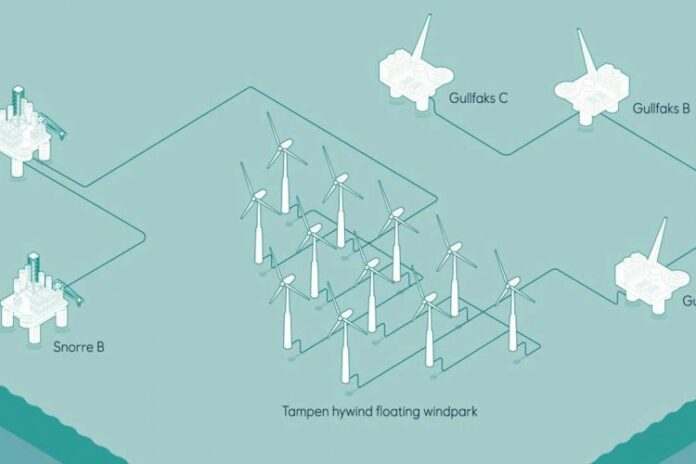
The wind farm will consist of 11 wind turbines based on the Hywind wind farm concept developed by Equinor. The 8 MW turbines will have a total capacity of 88 MW and meet about 35 per cent of the annual power demand of the five platforms Snorre A and B and Gullfaks A, B and C. The wind farm will be located around 140 kilometres from shore, between the Snorre and Gullfaks platforms, at a water depth of 260 to 300 metres.

Operated from Equinor’s offices in Bergen, Hywind Tampen is scheduled for start-up at the end of 2022.

WE Tech launches Economical Operations Solution for Bore’s vessels

0

WE Tech received a new order from Wuhu Shipyard, China to deliver its Solution One Economical Operations, consisting of a WE Drive and a variable speed Shaft Generator to three 7000DWT RoLo vessels.

The new builds are the first LNG-fuelled short-sea vessels to be operated by Finland based ship-owner Bore Ltd, which will operate in the Baltic and North Sea with Finnish/Swedish Ice Class 1A classification. The first vessel is scheduled for delivery in mid-2021.

Mr Martin Andtfolk, Sales Manager of WE Tech Solutions, says:

“Our solution will bring significant savings in terms of operation performance and fuel consumption. With reduced fuel consumption also the environmental footprint will be reduced. We are yet again proud to contribute to a greener future.”

The WE Drive allows the Shaft Generator to be operated at variable speed, this in turn allows the vessels propulsion system to be operated at the most efficient point. In PTO mode, the vessels electrical power distribution will be supplied from the Shaft Generator alone via the WE Drive and the Auxiliary Generators can be stopped, thus saving fuel and reducing harmful emissions. The Bow Thruster motor will be power with a variable frequency drive reducing the ships power consumption even further, which will further reduce the operational costs.

Mr Mårten Storbacka, Managing Director of WE Tech Solutions, says:

“Back to 2015, we have already supplied Bore’s vessels with our Economical Operations Solution. We are glad that the shipowner choses our market-proven solution for their new builds again. This is also our second order from Wuhu Shipyard. Last year we contracted with them for delivering an integrated solution package to Donsötank’s new builds. We take this repeat order as shipowner and shipyard’s acknowledgement and trust of our reliable and highly environmental-sustainable solution.”

Mr Jörgen Mansnerus, the VP, Marine Management of Bore Ltd., says:

“At Bore, we believe the key to success is to embrace the advanced innovation and to closely collaborate with reliable partners. We have worked successfully on several of our vessels in the fleet with WE Tech team, and we have experienced huge benefits, such as decreasing of operation and service costs as well as increasing of vessel’s energy efficiency and competitiveness. This is why we also awarded WE Tech the contract for our new projects.”