9.8 C
New York
Home Blog Page 885

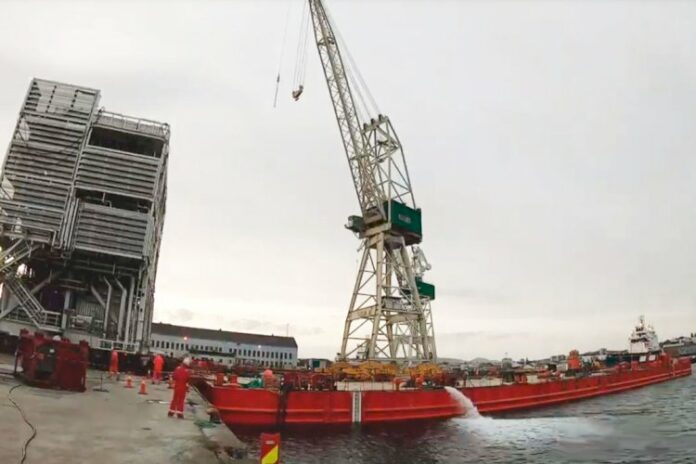
The Nova project: Load out of the 740 tonnes topside module

0

Load out of the 740 tons Nova topside module after one and a half years in the making. 

The oil and gas reservoir was called Skarfjell when it was discovered in 2012. It was later given the name Nova. Besides Maria and Dvalin, the field is a further self-operated discovery in Norway that Wintershall Dea intends to develop and put on stream. The company is yet again demonstrating its expertise for subsea technology in this project: The reservoir is connected to the nearby Gjøa field via a subsea tieback. That saves resources and money. Production is scheduled to commence in 2021.

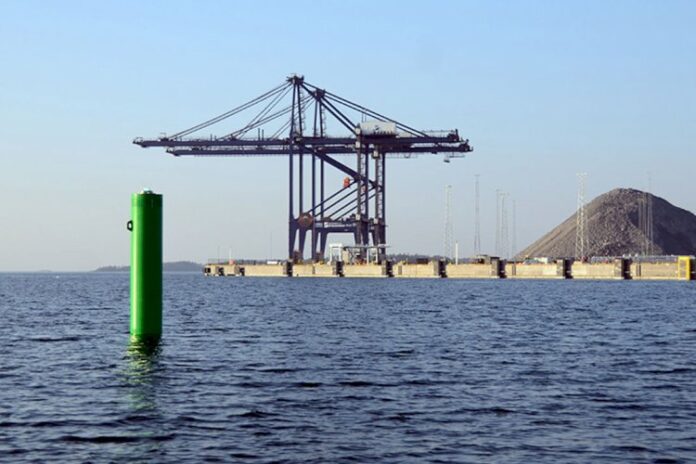
Stockholm Norvik Port has a smart buoy

0

This is an energy efficient navigation beacon with the technology to position-monitor and remotely adjust the buoy’s light intensity. The buoy is part of the EU Intelligent Sea project, which is using digitalisation to improve safety and efficiency in shipping fairways.

The green shipping fairway buoy with remote monitoring was installed outside Stockholm Norvik Port in March. The buoy is a pilot test within the framework of the EU Intelligent Sea project, which Ports of Stockholm is taking part in together with Port of Naantali and the Finnish company Meritaito. At the same time, the buoy is also part of a project to improve the remote control, safety and handling of information from buoys. This is now being tested in the real-life situation and environmental conditions prevalent in the northern part of the Baltic Sea.

Jonas Andersson, Nautical Coordinator at Ports of Stockholm, says:

“Participating in the EU Intelligent Sea project gives us the opportunity to test new marine technologies and innovations. Collaboration within the EU and new innovations are important success factors in achieving results that are better for the environment and improve the digitalisation of our port and shipping operations.”

More and more of the floating navigation aids in shipping fairways today are electronic. The green buoy has remote monitoring, which means that Ports of Stockholm has continuous access to information, resulting in better control and reduced maintenance requirements, as well as providing better maritime safety at Stockholm Norvik Port.

The buoy has a diameter of 80 centimetres and is 10 metres high, 3.5 metres of which can be seen above the surface of the water. It is equipped with LED lights and a battery capacity sufficient for five years of operation. A 25 metre-long cable chain and 14 tonne concrete attachment ensure that the buoy is securely anchored on the sloping sea bed.

The EU Intelligent Sea project will run from 2018 until 2021. The project is funded by an EU grant from the Connecting Europe Facility (CEF) programme.

Inmarsat Government delivers connectivity for Antarctic mission

0

Inmarsat Government, a leading provider of secure, global, mission-critical telecommunications to the U. S. Government, today announced that it has successfully provided mobile communications support to the South Orkney Expedition.

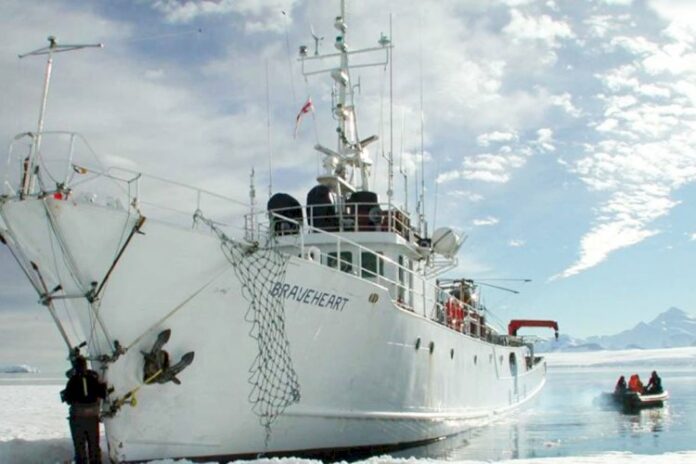
This multidisciplinary expedition, supported by the research vessel RV Braveheart, took place on Signy Island from February 21 to March 6, 2020. The South Orkney Islands are located in the Southern Ocean, about 375 miles north-east of the Antarctic Peninsula.

This expedition was undertaken by the Perseverance DX Group, a nonprofit expedition organization that conducted record-setting, multi-mode high frequency (HF) communications using amateur radio frequencies, ranging from just above the Amplitude Modulated (AM) broadcast band to the edge of the Very high frequency (VHF) band, under widely varying space weather (ionospheric and solar flux) conditions. The team also collected marine sediment samples for scientific research.

Additionally, middle and high school science teachers were provided information for use in their classrooms on a number of Science, Technology, Engineering and Mathematics (STEM) topics. The expedition team also tested satellite communications and new amateur radio technologies in this remote region of the world.

During the expedition, Inmarsat Government provided its award-winning, Broadband Global Area Network (BGAN) satellite communication services that enabled expedition members to partner with schools to supplement STEM classroom education of the Antarctic. Furthermore, the expedition relied on Inmarsat’s highly dependable Global Satellite Phone Service (GSPS) via the Inmarsat-4 constellation to stay connected in this remote region.

Dr David Lloyd, South Orkney Expedition leader, said:

“These internet activities would not have been possible without Inmarsat services. We appreciate Inmarsat Government’s cooperation, technical assistance and the equipment that included BGAN and satellite phone services. Conducting expeditions to remote parts of the world to do research and support student STEM education requires having communications equipment that can reliably provide voice and broadband data communications under extreme conditions.”

Tom Costello, Chief Commercial Officer, Inmarsat Government, said:

“Inmarsat Government is proud to be the communications partner for the Perseverance DX Group in their quest to travel to remote places around the globe such as South Orkney Islands. It has been a privilege to support this expedition through our dependable ‘on-the-move’ communications and do our part in further enhancing scientific exploration and education.”

TOTE Services announces contract to construct new training vessels

0

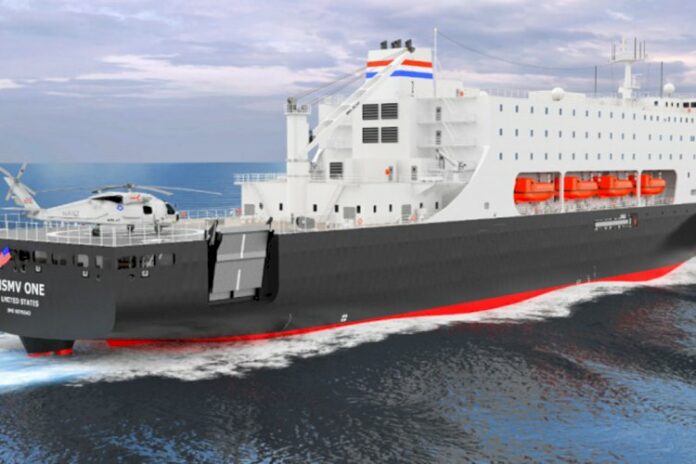
TOTE Services an affiliate of TOTE and an industry leader in ship management, marine operations and vessel services, has awarded Philly Shipyard the sole operating subsidiary of Philly Shipyard ASA, a contract to construct up to five new ships – the National Security Multi-Mission Vessel (NSMV) – to provide world-class maritime training for America’s future mariners and to support humanitarian assistance and disaster relief (HA/DR) in times of need.

This award will execute the Maritime Administration’s (MARAD) vision to recapitalize our nation’s maritime academies’ training fleet, which provide qualified officers to the domestic maritime industry. These training vessels will address a critical shortage of qualified officers needed to crew commercial and government-owned sealift ships during crises and will replace the current training ships at the state maritime academies in New York, Massachusetts, Maine, Texas and California. 

TOTE Services was selected by MARAD in May 2019 to be the Vessel Construction Manager (VCM) for the NSMV program to ensure the utilization of best practices in commercial ship construction. Congress has appropriated funding for three ships and the President’s budget request includes funding for the fourth training ship.  

TOTE Services has commissioned Philly Shipyard to construct the first two NSMV training ships with options for the remaining three. The ships will be owned and operated by MARAD. The new vessels will maximize the capabilities to educate future mariners by providing first-of-its kind training facilities, including dual engine rooms and pilot houses and the latest in maritime technologies with space to train up to 600 cadets at sea. 

In addition to being a state-of-the-art training and educational platform, the NSMV is a highly-functional national asset designed to fulfill numerous roles. Each ship will feature modern hospital facilities, a helicopter pad and the ability to accommodate up to 1,000 people in times of humanitarian need. Adding to the NSMV’s capability, it will provide needed roll-on/roll-off ramp and container storage capacity for use during disaster relief or delivery of preferenced cargoes.

ABB and HDF team up on fuel cell sysems for ships

0

ABB signs Memorandum of Understanding (MOU) with Hydrogène de France to jointly manufacture megawatt-scale fuel cell systems capable of powering ocean-going vessels

The MOU between ABB and hydrogen technologies specialist Hydrogène de France (HDF) envisages close collaboration on the assembly and production of the fuel cell power plant for marine applications.

Building on an existing collaboration announced on June 27, 2018 with Ballard Power Systems, the leading global provider of proton exchange membrane (PEM) fuel cell solutions, ABB and HDF intend to optimize fuel cell manufacturing capabilities to produce a megawatt-scale power plant for marine vessels. The new system will be based on the megawatt-scale fuel cell power plant jointly developed by ABB and Ballard, and will be manufactured at HDF’s new facility in Bordeaux, France.

Fuel cells turn the chemical energy from hydrogen into electricity through an electrochemical reaction. With the use of renewables to produce the hydrogen, the entire energy chain can be clean.

Damien Havard, CEO of HDF, said:

“HDF is very excited to cooperate with ABB to assemble and produce megawatt-scale fuel cell systems for the marine market based on Ballard technology.”

Juha Koskela, Managing Director, ABB Marine & Ports, said:

“With the ever-increasing demand for solutions that enable sustainable, responsible shipping, we are confident that fuel cells will play an important role in helping the marine industry meet CO2 reduction targets. Signing the MOU with HDF brings us a step closer to making this technology available for powering ocean-going vessels.”

With shipping responsible for about 2.5 percent of the world’s total greenhouse gas emissions, there is an increased pressure for the maritime industry to transition to more sustainable power sources. The International Maritime Organization, a United Nations agency responsible for regulating shipping, has set a global target to cut annual emissions by at least 50 percent by 2050 from 2008 levels.

Among alternative emission-free technologies, ABB is already well advanced in collaborative development of fuel cell systems for ships. Fuel cells are widely considered as one of the most promising solutions for reducing harmful pollutants. Already today, this zero-emission technology is capable of powering ships sailing short distances, as well as supporting auxiliary energy requirements of larger vessels.

ABB’s eco-efficiency portfolio, which enables sustainable smart cities, industries and transport systems to mitigate climate change and conserve non-renewable resources, accounted for 57 percent of total revenues in 2019. The company is on track to reach 60 percent of revenues by the end of 2020.

Wärtsilä: Сutting greenhouse gas emissions from LNG engines

0

The International Maritime Organization is aiming to at least halve greenhouse gas (GHG) emissions from shipping by 2050. LNG is an ideal transition fuel to begin that journey. Although it is a fossil fuel, the same supply, storage and combustion technologies can later be used with carbon-neutral bio- and synthetic gas as these become available. As LNG bunkering infrastructure is already widespread, Wärtsilä believes this pathway represents the simplest, fastest and most cost-efficient way for shipping to reach its 2050 vision.

Methane is the main component of LNG and a potent greenhouse gas, with a global warming potential many times that of carbon dioxide. Its escape during the production and use of LNG reduces the positive impact of the fuel on GHG emissions.

Methane slip from Wärtsilä dual-fuel engines has been slashed by 75% over the past 25 years and further advances will drastically reduce methane slip again over the next three years. Engine advances and emission abatement improvements in the fuel production and supply chain mean that all our gas engines will soon offer a decisive emissions advantage over diesel.

Methane emissions must be projected for shipping to select appropriate technologies for reducing GHG emissions. But accounting for methane emissions is not straightforward. For example, there is disagreement over whether methane’s impact should be projected over a 20-year or 100-year timescale. The shorter timescale shows a bigger impact as methane breaks down relatively quickly in the atmosphere. To date, most scientific studies have adopted a 100-year view, as does all relevant legislation.
Measuring methane

Two reports show how similar facts can give rise to different interpretations of the impact of methane emissions.  In April 2019, the consultancy thinkstep analysed the GHG emissions impact of LNG as a marine fuel across its lifecycle[i]. In January this year, the International Council for Clean Transport (ICCT) released a similar report[ii]. But while the authors of the thinkstep study argued that ship engines using LNG emit less GHG than those burning heavy fuel oil, the authors of the ICCT report used broadly similar numbers to argue that gas engines are worse emitters than those burning conventional diesel.

Wärtsilä believes that the ICCT report uses methane emission levels that do not reflect the latest gas engine technology. As only a small proportion of the global fleet uses gas engines today, forecasts on the emissions of the future gas-fuelled fleet should be based on the newer engine technology likely to be installed on vessels from today.

But the study uses an average methane slip for low-pressure, dual-fuel medium-speed gas engines (of 5.5g/kWh) that is higher than that of all but one engine in Wärtsilä’s portfolio. A more appropriate figure can be taken from the Wärtsilä 46DF, a modern engine that is in marine service and more closely reflects the current state of low-pressure, dual-fuel technology in four-stroke engines. Using this engine, methane slip measured under similar conditions as those in the two studies would be 2.8g/kWh.

Using the assumptions from the thinkstep report, this level of methane slip would lead to engine emissions that are 14% lower and total well-to-wake emissions that are marginally lower than marine gas oil over a 100-year timeframe. Modern dual-fuel four-stroke engines are already better for the environment over the most widely used timeframe. And further advances will cut emissions to the point where they exceed the performance of diesel engines even across the more challenging 20-year timeframe.
Future LNG engines

One continuing focus area is the design of engine combustion chambers. Typical combustion in a marine gas engine demands a high oxygen content and a low temperature to maximise efficiency while producing the lowest NOx emissions. Because methane burns more completely at hotter temperatures, some of the gas can pass unburned to the exhaust if it is, for example, close to any of the relatively cooler areas sometimes found in the combustion chamber. Slip can be reduced further by optimising the chamber to both minimise these cool areas and eliminating any crevices where unmixed methane can escape combustion.

Another important parameter is the timing of gas admission and valve overlap duration. The overlap is the time that inlet and exhaust valves are open at the same time. This is often used to allow partial cooling of engine components between the combustion cycles – to reduce NOx formation – but it also improves scavenging as the incoming charge air assists the removal of the remaining exhaust gas in the cylinder. So while this helps with cooling, it also exacerbates methane slip. Working on reducing overlap time, both through the engine control system and the valve train, will minimise decrease methane slip.

Other methane reduction techniques under investigation include adding a proportion of hydrogen to the combustion process. This improves the combustion and decreases methane slip. However, the higher combustion pressures and temperatures achieved lead to an increase in NOx formation that can push the limits of what is regulated for under IMO Tiers II and III.

These advances promise to slash methane slip and cut greenhouse gas emissions from low-pressure, dual-fuel engines. In land-based power generation activities Wärtsilä already has an installed base of around 2GW of engines operating at a methane slip of around 1g/kWh. Based on this experience and the technologies above, Wärtsilä is confident that it will have marine engines operating at this level by 2023, as well as having retrofittable technologies available to enable similar performance in older engines. Compared to diesel engines, a methane slip of 1g/kWh would cut greenhouse gas emissions on a tank-to-wake basis by 23% over a 100-year timeframe and 14% over 20 years.

Other evolving trends will also reduce methane and GHG emissions from gas engines further. The wider uptake of smart marine technology will also optimise engine performance and control, minimising emissions. Hybridisation will play an increasing role in many propulsion configurations. Using energy storage alongside engines will allow engines to be run more consistently at optimal, higher loads with the lowest possible greenhouse gas emissions.

There is also clear evidence that emissions abatement measures in the production and supply of LNG – which currently emit much more methane than engines – will continue to become more stringent. Wärtsilä is therefore convinced that dual-fuel engines will soon outperform MGO on a well-to-wake basis – even on the more onerous 20-year measure of GHG emissions.
Photo: MSC Cruises

Technology choices

The nature of different engine processes and the impact that size has on combustion means that two-stroke and high-pressure gas engines will continue to offer lower methane slip. However, there are several applications in which two-stroke engines are not suitable – smaller vessels or those with large fluctuations in power demand, for example – and many reasons why ship owners would value low-pressure technology.

Cost is the biggest factor. Low-pressure dual-fuel engines do not require the expensive high-pressure fuel gas supply systems that must accompany gas engines deploying the Diesel combustion cycle. They meet IMO’s Tier III NOx emission limits without after-treatment, saving on the installation of selective catalytic reduction units. The lower local pollution of low-pressure engine also means that operators do not have to pay for the regular replenishment of urea that exhaust aftertreatment systems require.

The issue of methane emissions is rightly at the centre of discussions over LNG-fuelled engines. Well-formed regulation will be critical in ensuring that the most effective environmental technologies are adopted. When it comes to climate change, this means that regulations on how to reach IMO’s 2050 ambition – as well as the existing Energy Efficiency Design Index – need to reflect the impact of methane as well as CO2.

Given methane’s high global warming potential, it is important that all stakeholders, including engine makers and regulators, should continue to work to minimise slippage and properly account for methane emissions. But the issue should not detract from the fact LNG can play – indeed already is playing – a significant role in shipping’s decarbonisation.

Source: SGMF

VIDEO: Med Marine delivered a new tug to Tekirdağ

0

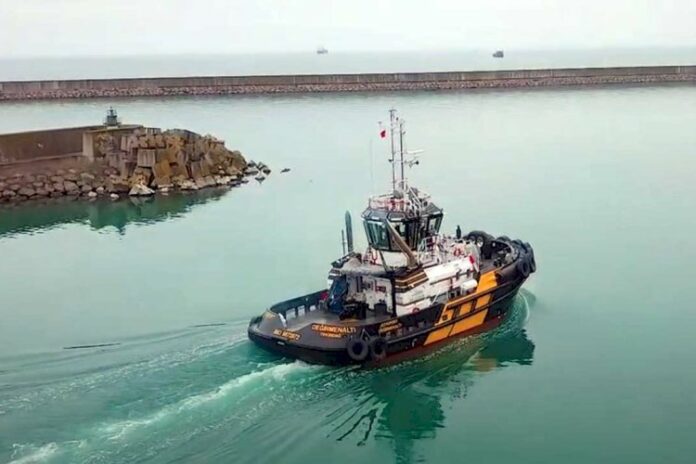
Having signed the contract on December 31st, 2019; Med Marine delivered Asya Port’s new member, “ASYAPORT DEĞİRMENALTI”, to its owner in Tekirdağ where she will be operated.

The vessel is Med Marine’s MED-A2360 series (RAmparts 2300-MM) tugboat exclusively designed for Med Marine by Robert Allan Ltd. MED-A2360 series draw great interest by the tug operators thanks to its compact, versatile and multi-purpose nature, which makes MED-A2360 tugs have better manoeuvrability compared to other designs with similar bollard pull.

The tugboat’s general specifications include:       

  • LENGTH O.A. 23,00 m
  • BEAM  10,90 m
  • DEPTH  4,40 m
  • BOLLARD PULL 60 tons
  • SPEED  12 knots
  • MAIN ENGINE 2 x CAT 3512C 1765 kW @1800rpm
  • PROPELLER RollsRoyce (Kongsberg) US205 FP
  • FORE TOWING WINCH THR MARINE (SEC)  
  • GENERATOR SET  2 x CAT C4.4 86 ekW  @ 1500 rpm, 50hz
  • FIFI E SYSTEM 1 x 1200 m3/hr. Pump, 2 x Foam/water monitor      
  • ACCOMMODATION 6 people

SMD supplies ROV system to Asso.subsea

0

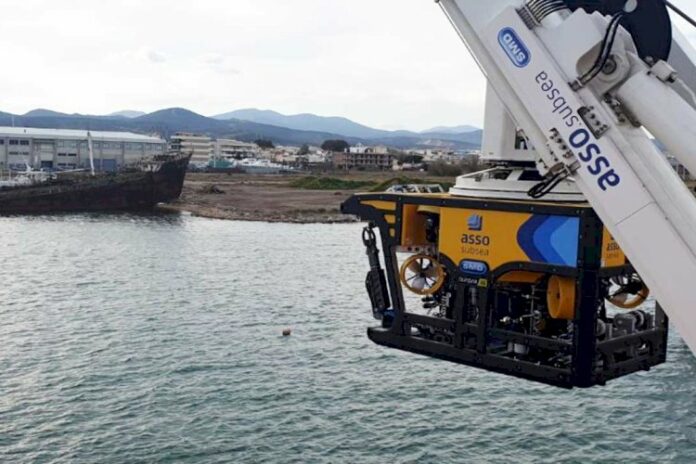
The work class ROV system complements their existing fleet, which includes two 100hp 3000m rated Atom ROV systems, originally delivered in 2012 and 2014 respectively and an SMD pre-lay plough delivered in 2018. The Quasar will be installed onboard Asso.subsea Astrea DP2 Multi-Purpose Service Vessel to support cable laying, protection and repair.

The Quasar is SMD’s medium size work class ROV offering high-current performance and good tooling/instrument carrying capability, along with stability in strong currents. It is equally capable of salvage and construction operations using its isolated hydraulic system which can run high power tools. Access to the vehicle’s quick release Curvetech™ multiplatform components is fast and easy decreasing maintenance time and increasing availability.

Paul Davison, Managing Director of SMD’s Equipment business commented:

“Asso.subsea commitment to purchase a fourth system from SMD is testament to the performance of our products and through life support we give our customers. They have two of our Atom Work Class ROV systems and a pre-lay Plough system already in their fleet. We are delighted they continue to choose SMD equipment to further extend their capabilities.”

Asso.subsea, commented:

“We are delighted to welcome the 3rd ROV system from SMD to Asso.subsea ROV fleet. Asso.subsea steady growth goes hand in hand with a well proven collaboration with SMD. The delivery of the Quasar will raise the profile of ROV services within the suite of services offered to our clients”.

SMD is an advanced global supplier of subsea remotely operated and autonomous power and control solutions. Operating across a number of technology areas, SMD specialise in subsea trenching, work class ROVs, submerged mining and vessel deck equipment, as well as providing a range of subsea components through the highly successful Curvetech™ brand. SMD Services offer the capability, resources and expertise to support clients in multiple operations, throughout the lifespan of their equipment; around the clock and on a global scale.

Asso.subsea Group (formerly known as Assodivers), established in 1976, specialise in the provision of turn-key services for submarine cable installation, protection and repair projects utilizing specially designed equipment and marine means. Acting either as a turn-key solution contractor or as a subcontractor, Asso.subsea has been involved nationally and globally in a variety of projects for some of the leading cable manufacturers of the Telecommunication, Power and Alternative Energy Industries such as Alcatel, Fulgor, Nexans, NKT, NSW, Prysmian and service owners such as OTE, PPC, DEDDIE and Terna.

ACT Blade’s innovative wind turbine blade design

0

Successful trials at ORE Catapult’s test and validation facility in Blyth pave the way for installation of world’s lightest wind farm blade at an operational wind turbine.

ACT Blade, a spin-off company from UK yacht-sail developer SMAR Azure, has announced that it has successfully completed the first of two tests of its novel lightweight blade for wind farms at ORE Catapult’s National Renewable Energy Centre in Blyth. These tests will pave the way for its first operational deployment later this year.

Made up of an internal composite structure and high-tech textiles, as opposed to the prevailing fibreglass, ACT’s blades are 24 per cent lighter. A lower weight means blades can be made 10 per cent longer than the standard 55 metre blade around today: producing nine per cent more energy and reducing the cost of energy by 6.7 per cent.

This first of two static tests took place at the Offshore Renewable Energy Catapult’s Blade Test Facility in Blyth. Over three weeks, a full-length blade (13m) withstood the world’s toughest simulation of offshore wind conditions, aimed at testing its structural integrity and durability to the limit.

The test results showed that the blade could withstand extreme loads and every type of direction and twist, going beyond those predicted for an in-service turbine. Post-test inspections show it to have held its shape with no damage. The test data–including optically measured strain and deflection results from within the blade textile–are now being analysed to gain a fuller understanding of the blade’s behaviour.

ACT Blade was founded in 2015 as an offshoot of the established yacht-sail design company SMAR Azure Ltd. The team’s ingenious blade concept was based upon the realisation that the light, durable structure of yacht sails could be adapted for offshore wind turbine blades.

Dr Sabrina Malpede, CEO at ACT Blade, commented:

“I realised that the offshore wind industry was engaged in the same race as we were in the yacht-racing world: we need to reduce loads and capture more wind power without compromising on durability. Today, I am delighted that after three projects funded by Innovate UK, we have proven our concept. I would like to thank all our partners who have made this breakthrough possible: ORE Catapult, Advanced Materials Research Centre, Advanced Forming Research Centre, the Energy Technology Centre (ETC) and  InnoEnergy.”

Over the next six months, ACT Blade will work with the Energy Technology Centre to prepare for installation of three blades on a working wind turbine at the Myres Hill Wind Farm in Scotland, as a further step towards commercialisation of the blade concept.

Dr Stephen Wyatt, Director of Research & Disruptive Innovation at ORE Catapult said:

“This is great news for the development of novel wind turbine blade designs, ensuring we can continue to improve offshore wind productivity and reduce costs, embedding offshore renewables at the heart of the UK’s  future energy mix. The ACT Blade team has pushed the limits of what is physically possible, putting UK technology in pole position in the innovation race. It’s also an inspirational story, showing how an Eureka moment can be turned into a future export that could generate billions in revenue for the UK. We’ve come a long way since Sabrina first answered one of our Innovation Challenges back in 2015, and I am excited to see the journey ahead.”

BC Ferries adjusts service to Southern Gulf Islands in Canada

0

Canadian company BC Ferries is adjusting service levels on routes to the Southern Gulf Islands for the next 60 days to protect the health and safety of communities and ferry workers, ensure the resiliency of the coastal ferry service, and better match ferry service to current demand.

Effective April 10, service to the Southern Gulf Islands will be amended to a simplified schedule that supports the movement of essential goods to the islands and provides options for inter-island travel.

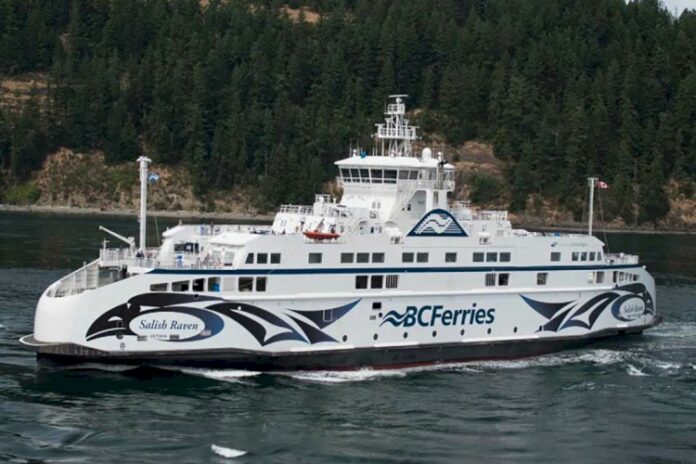
Tsawwassen to Southern Gulf Island services will be combined as a one ship service utilizing the Salish Raven vessel based out of Swartz Bay. The Salish Raven will travel back and forth between Tsawwassen and Swartz Bay, while stopping en route at Pender, Mayne and Galiano.
Customers with reservations on cancelled sailings on the Tsawwassen – Southern Gulf Islands route will be automatically refunded. The revised schedule will be available for booking reservations shortly.

Other service to the Southern Gulf Islands will be delivered by the Queen of Cumberland travelling between Swartz Bay, Saturna, Mayne, Galiano and Pender. Service to Long Harbour on Salt Spring Island will be suspended and Salt Spring Island will be served by its two other routes, Swartz Bay – Fulford Harbour and Crofton – Vesuvius.

BC Ferries is dedicated to providing a safe and healthy travel experience for its passengers and employees. At this time, the company is advising customers to avoid any non-essential travel, including the upcoming Easter long weekend. For those that need to travel, additional measures have been put in place to keep customers and crew healthy and safe.