7.2 C
New York
Home Blog Page 881

ABS Consulting delivers cyber risk services for maritime facilities

0

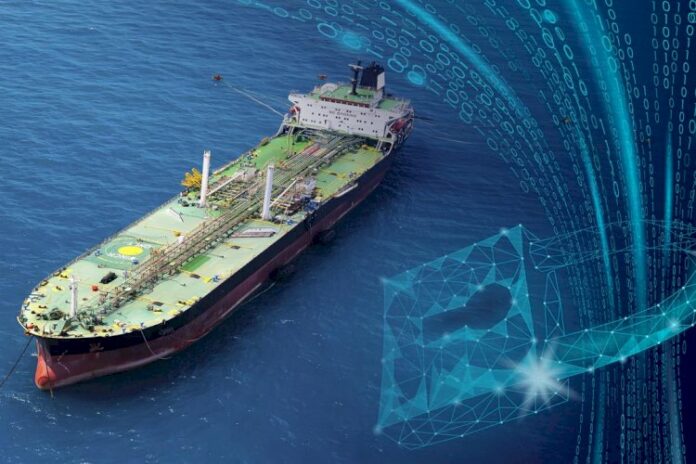
ABSG Consulting Inc. (ABS Consulting), a subsidiary of the American Bureau of Shipping, has launched a range of cyber security services to help waterway facilities throughout the United States implement a cyber risk management program to comply with existing MTSA regulations.

In addition to its nationally recognized training course, the new suite of services and training solutions for MTSA-regulated facilities address the cyber risk management guidelines noted in the U.S. Coast Guard’s recently issued Navigation and Vessel Inspection Circular (NVIC) 01-20. The Coast Guard’s NVIC makes clear that pursuant to existing MTSA regulations, U.S. maritime facilities must address cyber security in their required facility security assessment and facility security plan.

ABS Consulting will work with maritime facilities to conduct remote or in-person assessments and develop a roadmap for integrating cyber security into existing policies and procedures, as required by 33 CFR parts 105 and 106. These services include a Facility Security Officer training course, which outlines the Coast Guard’s guidance and follows the National Institute of Standards and Technology (NIST) Cyber Security Framework as a best practice for establishing a cyber security program within an MTSA-regulated facility.

Ian Bramson, Global Head of Cyber Security at ABS Group said:

“More emphasis is being placed on the protection of critical information infrastructure within facilities and building comprehensive risk controls for cyber resilience to defend maritime assets. Since we began scrutinizing emerging cyber security guidelines, our experienced assessors were among the first to begin implementing cyber security using the NIST framework. Today, we provide a comprehensive range of cyber capabilities to defend the nation’s ports and terminals.”

Low emission Incat Crowther ferries delivered to NYC Ferry

0

Incat Crowther is pleased to announce the successful delivery of the first two low emission EPA Tier 4 compliant 29m passenger ferries, named H401 and Curiosity, for the still expanding NYC Ferry by Hornblower.

The Incat Crowther Digital Ship design package allowed identical vessel to be constructed at independent shipyards; Halimar Shipyard of Morgan City, LA and Breaux Brothers Enterprises of Loreauville, LA.

Although the vessels were commissioned prior to the current tragic circumstances caused by the Covid 19 emergency, it is expected that the high passenger demand NYC Ferry has experienced since commencing operations in 2017 will return. The new vessels complement the seventeen Incat Crowther designed 26m vessels and fourteen 29m vessels already been delivered to NYC Ferry. Four additional 26m vessels are currently under construction at Gulf Craft and Metal Shark, both of Franklin, LA, along with one additional 29m vessel under construction at St John’s Shipbuilding in Palatka, FL. Upon completion of these additional vessels, the NYC Ferry fleet will have grown to an amazing 38 vessels just over three years.

The new vessels include seats for 354 passengers, dedicated bicycle storage, disability access, mobile device charging stations, Wi-Fi connectivity and a well-equipped on-board convenience store by The New Stand.All the vessels are equipped with main engines from Baudouin, but unlike any of the existing vessels in operation, the new vessels are equipped with EPA Tier 4 compliant engines which further reduce emissions.In order to bring the engines into compliance with Tier 4, Incat Crowther integrated a Baudouin-supplied SCR system into the vessel design along with the necessary urea tanks and dosing system components.

The innovative NYC Ferry fleet has been developed in close co-operation with Hornblower, leveraging Incat Crowther’s comprehensive digital design package and expertise in the U.S. ferry industry to satisfy challenging operational and regulatory requirements.

The growing NYC Ferry fleet continues to form the backbone of a modern, comfortable and efficient urban ferry fleet that is offering New York City commuters the ability to access more parts of metropolitan area than ever before.

MINSHIP embarks on bulk carrier biofuel trial

0

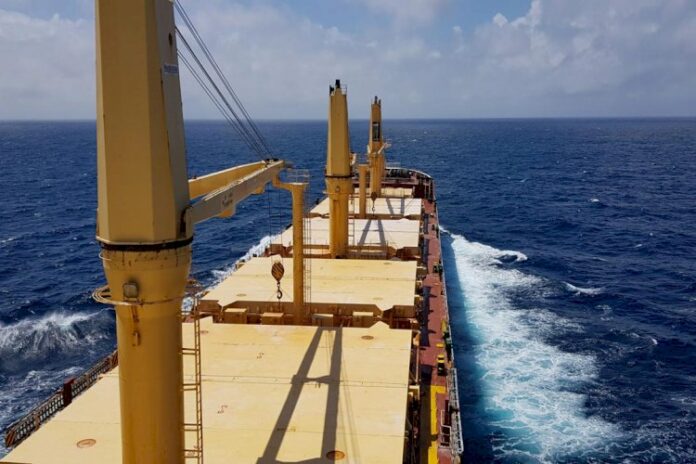
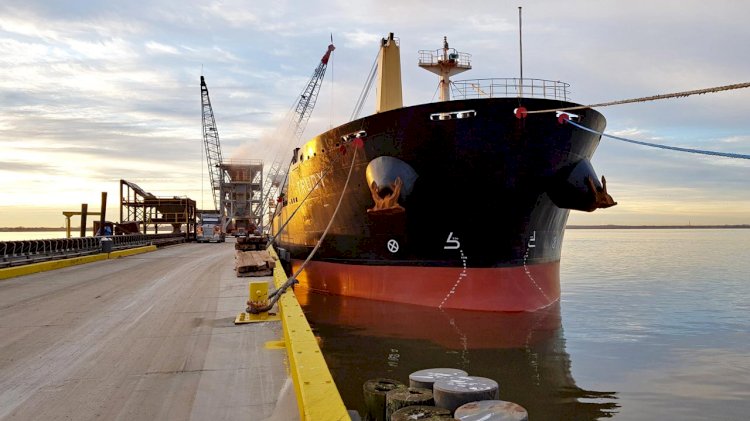
Bavarian ship management company MINSHIP and its subsidiary MINMARINE have announced that a bulk carrier in their fleet of managed vessels, M/V Trudy, has successfully bunkered biofuel at the Port of Rotterdam.

The biofuel bunkered by the 2009-built, 30,790-dwt bulk carrier on April 17 was GoodFuels’ sustainable Bio-fuel Oil MR1-100: which is a second generation sustainable biofuel produced from certified feedstock that is labelled as waste or residue.

Since biofuel will be the only fuel burnt in the main engine of M/V Trudy for the next 8-10 days, the vessel will generate up to 90% less CO2 emissions than if it was burning a conventional shipping fuel.

The adoption of biofuel by MINSHIP is a huge step towards the ship management company and its customers reaching their ambitious CO2 reduction goals. Throughout the inaugural bio-fuel powered trial voyage taken by M/V Trudy from the Port of Rotterdam, relevant performance indicators will be closely monitored to help inform future operations.

Additional trials on further vessels under MINSHIP’s management are planned with a view to making biofuel a real alternative for their managed fleet to reduce carbon footprint.

MINSHIP Shipmanagement Managing Director Markus Hiltl says:

“Following more than a year of preparations between multiple stakeholders, including ship owners, fuel suppliers, flag states, insurance companies and manufacturers, the initiation of this trial, led by subsidiary organization MINMARINE, has only been possible through the vision and support of GoodFuels. This trial is a significant landmark for MINSHIP as it will allow us to demonstrate that the use of available green, alternative fuels can make shipping less dependent on fossil fuels right now.”

Subsea pipelines for new HES Hartel Tank Terminal

0

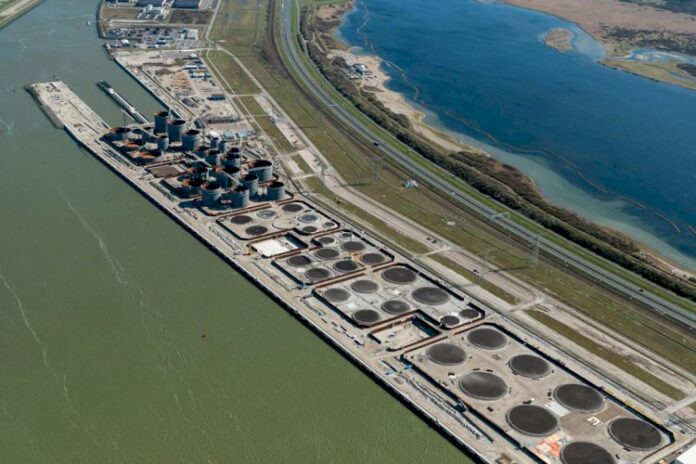
These underground pipelines connect the HES Hartel Tank Terminal with the nearby refinery of energy major BP. The completion of this part of the project represents another step forward in the development of the state of the art 1.3 million cbm liquid bulk storage terminal.

The installation of these high-tech subsea pipelines must be done with absolute precision. The total package of pipelines installed, consist of 1 steel pipeline of 24 inches (600mm), 4 of 16 inches (400mm) and an HDPE pipe of 315 mm all with a length of around 1000 meters.The pipelines were installed by means of Horizontal Directional Drilling (HDD). Visser & Smit Hanab have also installed pipelines in the pipeline corridor and the created manifolds.

Director of Visser & Smit Hanab, Aldo Krijgsman said:

‘Visser & Smit Hanab has been involved in this project from the outline design phase of the project until the final completion. We are proud of the added value which we have delivered to HES Hartel Tank Terminal in the realization of their new tank terminal. The Horizontal Directional Drillings, which have been executed were complex and challenging, nevertheless they have been installed in a safe and controlled manner. The cooperation between Visser & Smit Hanab and HES Hartel Tank Terminal on an engineering, operational and safety basis has been excellent.’

Project Director of HES Hartel Tank Terminal, Charles Smissaert said:

‘Due to the constructive and professional cooperation with the team of Visser & Smit Hanab, the subsea pipelines were handed over to HES within budget and on time. Moreover, the work is executed without any incidents and we attach great value to that. Safety is crucial for the success of this terminal and our future business.’

In addition to transport by pipeline, loading and discharge will predominantly take place by vessels and barges. In recent months significant progress has been made in the development of the 1.3 million cbm tank terminal for the storage and transhipment of petroleum products and biofuels in the Port of Rotterdam. The Port of Rotterdam Authority completed works on the maritime facilities at the end of 2019. Complying with the COVID-19 measures, construction works on tanks and the related civil and piping works are currently continuing unabated.

HES Hartel Tank Terminal will be the first terminal in the Netherlands that will be built according to the latest PGS 29 regulations for tank storage, meaning that the terminal will meet very high safety and environmental standards. After commissioning the terminal will be operational 24/7 and it will provide jobs for approximately 80 people.

Jan De Nul ordered a heavy lift crane vessel from a Chinese shipyard

0

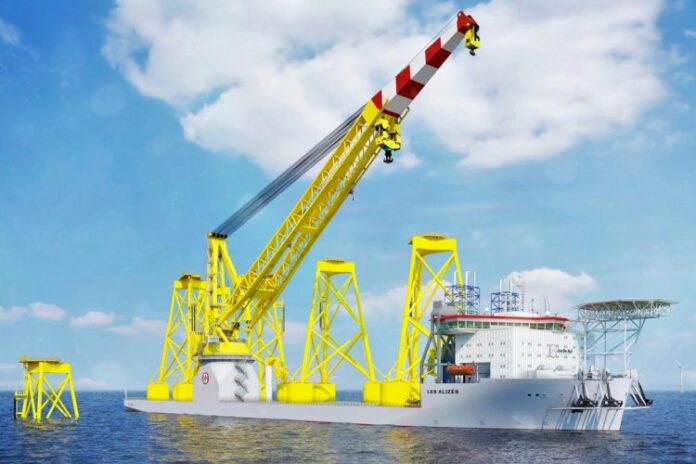
In the wake of investment in the “Voltaire” offshore installation vessel, Jan De Nul has now ordered a heavy lift crane vessel capable of lifting 5,000 tonnes from the CMHI Haimen shipyard in China.

The vessel, to be named “Les Alizés”, will be equipped with a full SCHOTTEL propulsion package. Four rudderpropellers, two retractable rudderpropellers and two transverse thrusters from the German propulsion expert will ensure optimal propulsion efficiency as well as maximum manoeuvrability.

Philippe Hutse, Offshore Director at Jan De Nul Group:

“Thanks to her dimensions and her impressive lifting and loading capacities, ‘Les Alizés’ will be able to load out, transport and install multiple units of the largest and heaviest wind turbine foundations. In addition, as a crane vessel that floats, it will be able to install heavier and larger foundations into deeper waters and in more challenging seabed conditions. To meet these demanding tasks, we are pleased that the reliable propulsion solutions from SCHOTTEL have been selected.”

The main propulsion system of the crane vessel consists of four electrically driven SCHOTTEL Rudderpropellers type SRP 610 FP – each with an input power of 3,000 kW and a propeller diameter of 3.30 m – installed at the stern. With this setup, “Les Alizés” will achieve a maximum speed of 13 knots.

To ensure precise position keeping in DP service, two SCHOTTEL Retractable Rudderpropellers type SRP 610 R (3,250 kW each and a propeller diameter of 3.00 m) and two SCHOTTEL Transverse Thrusters type STT 7 FP (2,600 kW each and a propeller diameter of 2.79 m) are installed in the bow of the vessel. The retractable units are fitted with an 8° downwards-tilted propeller shaft in order to reduce thruster-thruster and thruster-hull interactions and increase propulsion efficiency. The tunnel thrusters are designed so that they can be serviced while the vessel is afloat.

As part of an extended dry-docking program, “Les Alizés” will be able to prolong its dry-docking period from 5 to 7.5 years. To make this possible, the vessel will be equipped with a state-of-the-art condition monitoring system from SCHOTTEL. It offers automatic, 24/7 on-board surveillance of the propulsion units – even in full offline mode. The permanent vibration monitoring of the system and automatic trend observation of the monitored data allows for thruster maintenance based on their current condition. This helps to avoid unnecessary part exchanges and downtimes.

The 236.80-metre-long and 52.00-metre-wide crane vessel will be environmentally compliant thanks to the on-board integration of the same advanced emission control technology found on all other low-emission vessels in the Jan De Nul fleet. It will carry a Cleanship NDO7 label and a Green Passport EU label.

At the same time, the thrusters of “Les Alizés” will be equipped with the patented and DNV-GL type-approved SCHOTTEL LEACON sealing system. This system ensures continuous leakage control of the seals and prevents water from entering the gearbox and, of even greater importance, oil from escaping into the seawater. Considered a non-oil-to-water interface, the system complies with the VGP regulations of the US Environmental Protection Agency (EPA) without the need to use environmentally acceptable lubricants (EALs).

“Les Alizés” will mainly be used for the construction of offshore wind farms, but is also suitable for decommissioning offshore oil and gas platforms. The key features include a main crane of 5,000 tonnes, a loading capacity of 61,000 tonnes and a deck space of 9,300 m². With these characteristics, “Les Alizés” can transport heavier foundations, several in one trip, to the offshore installation site.

As a result, it responds to the global trend within the offshore wind energy sector to design and install increasingly larger wind turbines. This new generation of turbines can be more than 270 m high, have blades up to 120 m long, and sit on foundations weighing up to 2,500 tonnes.

Belgian offshore wind farm completed

0

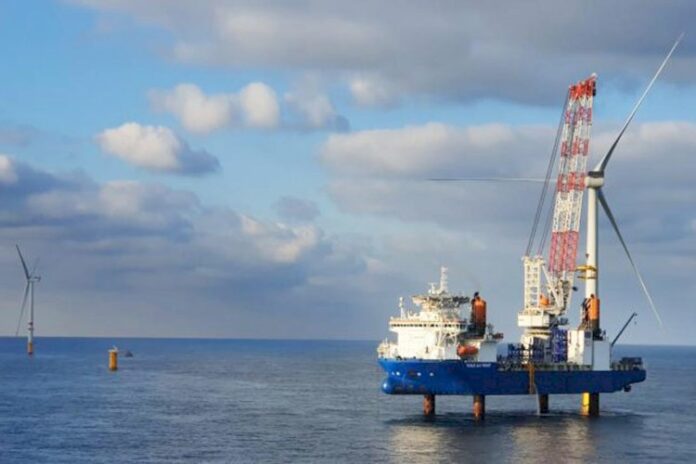
In a joint operation with MHI Vestas and Jan De Nul Group, Parkwind completed the final installation of turbines at the Northwester 2 offshore wind farm.

The 219 MW project is located in the Belgian North Sea, approximately 50km off the shore of Ostend, Belgium, and is the first project to use the world’s highest rated V164-9.5 MW turbines in commercial operation.

The installation works started in December 2019. Following a good start, exceptionally adverse weather in the first months slowed the pace of the installation works down. To accelerate operations, a second installation vessel, the Scylla, was brought in mid-March to operate in parallel with Jan De Nul’s Vole au vent. All parties have closely worked together in a professional manner to overcome challenges and succeeded to maintain operational control until completion of the last WTG installation.

Peter Caluwaerts, Parkwind’s Project Director said:

“Upon securing a second installation vessel to make up for the time lost in the first months of the year, the COVID-19 crisis broke out threatening to undo all our efforts. However, the extraordinary dedication we witnessed from the different teams, in the midst of an unprecedented context and with all additional safety measures, has been humbling. We are grateful towards all our stakeholders who have supported us in reaching this stage. We now confidently look towards the completion of our wind farm.”

Flemming Ougaard, MHI Vestas Chief Operations Officer noted:

“We are pleased to have completed installation at Northwester 2, particularly during this challenging time related to COVID-19. The V164-9.5 MW turbines we have utilised at this project are built on proven technology, and will reliably support this project for decades.”

Stan Logghe, Senior Project Manager Northwester 2 at Jan De Nul Group said:

“A challenging project has now successfully been completed. We are proud of the team achievements, involving the foundation design and procurement as well as the installation works of these foundations, all cables and all WTG’s of the Northwester 2 windfarm.”

MHI Vestas also holds a 15 year service agreement at Northwester 2, to maintain the V164-9.5 MW turbines.  Northwester 2 was installed on an expedited schedule, due to a highly collaborative approach being taken, supply chain readiness, and the industrialisation of offshore wind in Belgium.

Crowley expands reefer cargo capabilities with new USDA inspection dock

0

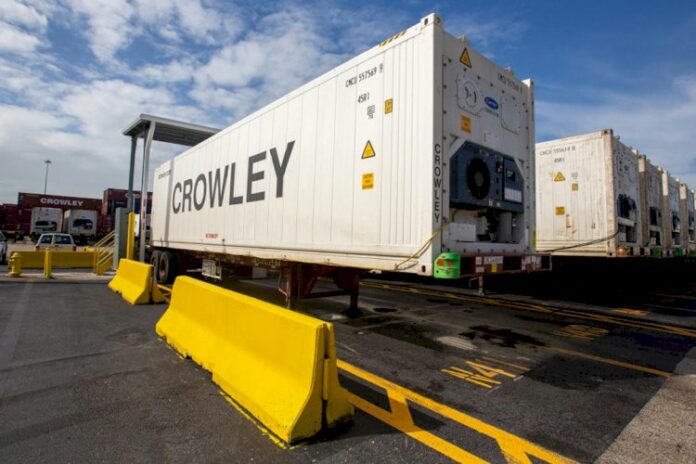
Crowley Logistics recently expanded its on-terminal, perishables handling capabilities by constructing a new USDA inspection dock in Port Everglades, South Florida, USA.

The new $1.6 million dock has capacity for 80 refrigerated (reefer) containers, more than double the previous size, to better serve perishable shippers moving fruits and vegetables into the U.S. The new dock has individual shoreside power plugs for each reefer, allowing for continuous temperature control.

Pat Collins, vice president, Crowley Logistics operations, said:

“This is a one-of-a-kind investment in the perishables market. It allows for less handling time of the reefer container and cuts out the need to move the container to a separate location for separate USDA inspections. It also allows our trucking partners quicker access to assigned loads facilitating a quicker terminal turn time, allowing them to make more trips per day. Overall, it’s another upgrade we’ve made to more efficiently speed goods to market.”

Once a vessel arrives in Port Everglades, Crowley unloads the reefers first, which allows them to be immediately moved to the expanded dock for inspection and quickly released for immediate customer pick-up. If further inspection or fumigation services are required, Crowley offers a local service for that as well.

While reefers are at the inspection dock, they use electric power sources, allowing their diesel-powered generators to be turned off – a more environmentally friendly power option. The additional electric plugs expand the overall plug-in capacity for the terminal to over 260 plugs.

The new dock also has integrated features to promote safety for employees assigned to it. LED lighting facilitates brighter visibility for both our employees and our regulatory partners. Construction includes poured concrete and steel designed to withstand hurricane conditions and the everyday wear and tear of a marine terminal.  And, the newly installed safety interlocked shore power receptacles have an LED indicator light to indicate to the reefer mechanic that the cable is energized.

Wärtsilä launches its global Smart Support Centre service

0

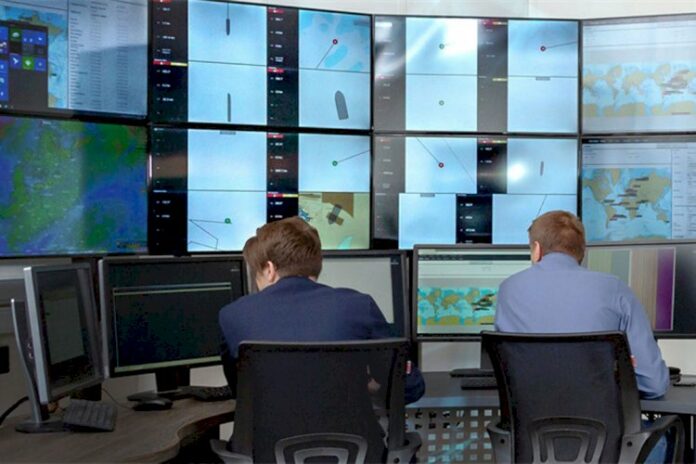
This service is aimed at improving asset uptime via remote access for customers of Wärtsilä’s Voyage business, thereby substantially reducing the need for physical service attendance.

Operational support is delivered via virtual service engineers. Smart Support is designed to maintain all Wärtsilä Voyage equipment, including ship handling solutions, such as ECDIS and charts, simulation & training systems, and ship traffic control solutions.

The service is a notable extension to the company’s already extensive remote monitoring and support capabilities covering other areas of Wärtsilä’s total offering.The Wärtsilä Smart Support Centre remotely manages the health of systems, proactively warns if anything is deteriorating, makes software updates, and assists system users in all operative questions with fast response times.

The service has been extensively tested in a pilot programme together with Danish shipping company J. Lauritzen AS. Hans Elker Hansen, Marine QA, Vetting & Nautical Manager at Lauritzen, commented as follows:

“Firstly, the crew is aware that 95% of all errors can be rectified remotely, and they don’t need to arrange for a service engineer in the next port to solve the issue. This means that we have the equipment up and running at all times. Secondly, the use of e-mails to solve a technical or user-related problem is almost entirely eliminated, which avoids excessive communication.”  

Torsten Büssow, Managing Director, Wärtsilä Voyage, says:

“The Wärtsilä Smart Support Centre connects our equipment and systems, for example ECDIS, simulators and our Vessel Traffic System, allowing significant enhancement to our remote service capabilities. It gives an opportunity to really establish the status of the systems, to carry out remote software updating, and to enable the customer and Wärtsilä to work closely together on the systems.”

The Wärtsilä Smart Support Centre delivers outstanding service levels backed by an experienced team of engineers and subject matter experts who are available 24/7. In addition, it provides access to the company’s knowledge base and responds to the most frequently asked questions.

Qatar Petroleum starts development drilling campaign on NFE

0

Qatar Petroleum has announced the start of the development drilling campaign for the North Field East Project, or NFE (previously known as the North Field Expansion Project).

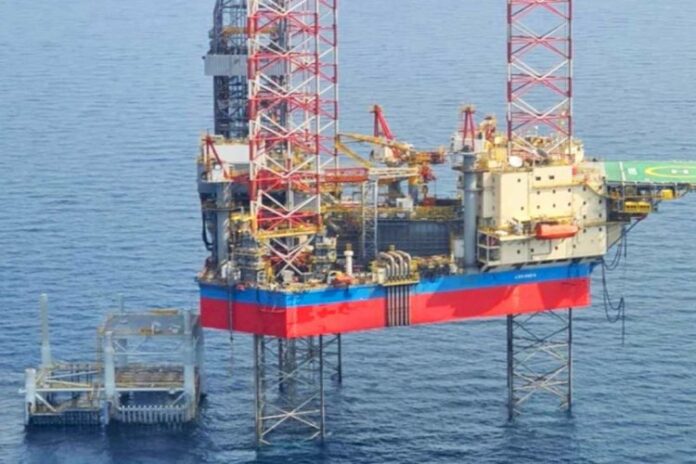
The first of 80 NFE development wells was spudded on 29 March by the jack-up rig “GulfDrill Lovanda”, which is managed and operated by GulfDrill, a joint venture between the Qatar based drilling champion, Gulf Drilling International, and Seadrill Limited.

This phase of the North Field expansion project will increase the State of Qatar’s liquefied natural gas (LNG) production capacity from 77 million tons per annum (Mtpa) to 110 Mtpa.  The second phase of the North Field LNG Expansion Project, called the North Field South Project (NFS), will further increase Qatar’s LNG production capacity from 110 Mtpa to 126 Mtpa.

Commenting on this occasion, His Excellency Mr. Saad Sherida Al-Kaabi, the Minister of State for Energy Affairs, the President and CEO of Qatar Petroleum, said:

“The start of the development drilling campaign for NFE represents an important milestone to deliver on our strategy to grow our LNG production capacity. The continued achievement of milestones, dedication of significant resources and making of substantial investments is proof that the NFE remains on top of our priorities and demonstrates our commitment to executing this mega-project.”

His Excellency Minister Al-Kaabi added:

“I would like to thank Qatar Petroleum and Qatargas management and teams for this important achievement and for making sure that every component of the project is delivered safely.”

Qatar Petroleum had earlier awarded a number of contracts for jack-up drilling rigs to be utilized for the drilling of 80 development wells for the NFE. The installation of the first four Offshore Jackets in Qatari waters is underway and is expected to be completed by the end of this month.

His Excellency Minister Al-Kaabi concluded by saying:

“I would like to take this opportunity to express my gratitude to the widest spectrum of the energy sector in the State of Qatar, who are working with great dedication and commitment during the current circumstances to ensure that Qatar lives up to its reputation as a trustworthy and reliable energy producer at all times and under all circumstances.”

Successful pilot for live remote surveys using augmented reality

0

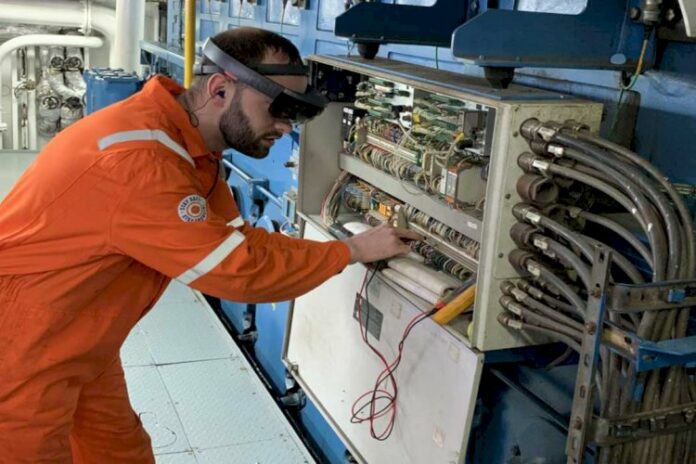
Anthony Veder and Bureau Veritas have successfully completed a pilot for “live remote class surveys” using a wearable device and augmented reality technology.

The success of this pilot opens up the way for fully remote class surveys and Anthony Veder and Bureau Veritas have the ambition to further roll out this service in the following months

This new way of performing a survey, where the surveyor does not have to travel towards a vessel, not only improves the efficiency of surveys, but also provides a good solution in times when it is difficult to travel towards vessels such as during the current COVID-19 crisis.

Bureau Veritas and Anthony Veder concluded that this form of live, remote surveys are able to reach the same quality level as traditional onboard surveys but are much more efficient. In addition, Anthony Veder emphasizes that this technology will also be used for remote assistance, troubleshooting and providing support to vessels in remote areas.

Benne Engelen, CIO at Anthony Veder says:

“The development of remote surveys and remote assistance perfectly fits our innovation roadmap in which we actively strive towards smart ship solutions, closing the distance between our people onboard, in our office and our partners. The successful pilot marks an important milestone in the digitalization of the maritime industry and our ambition to further develop the efficiency, sustainability and safety standards of our company”.

In addition, Wouter Boogaart, Digital Development Manager and leading the project, explains:

“Executing surveys and providing assistance remotely will result in a faster response time and better service when external expertise is needed. Also greatly reducing lead times, as it will bring down the need to travel towards a vessel and eventually also reduce the associated CO2 emitted during these travels.”

During the pilot, a scenario including three conditions of class was executed onboard one of Anthony Veder’s vessels. The pilot took place on the bridge, cargo control room, engine control room and engine room. The pilot was executed using a wearable augmented reality device enabling a live video and audio connection with the Anthony Veder office in Rotterdam and Bureau Veritas office in  Paris.

A remote class surveyor guided the crew onboard through the different class items using the live connection and evidence was gathered by taking pictures and recordings using the wearable device.