7.2 C
New York
Home Blog Page 880

Tallink Grupp announces 550 planned job redundancies in Latvia

0

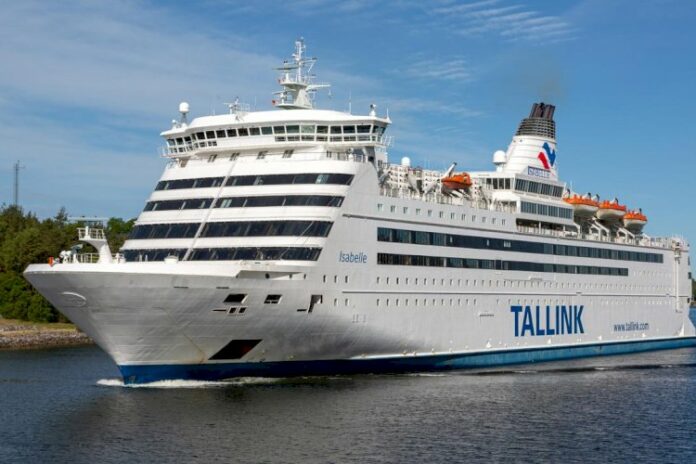
Tallink Latvija AS has notified the Latvian Employment Agency and the group’s Latvian crew members and shore personnel that it is commencing a collective redundancies process involving around 550 Latvian employees.

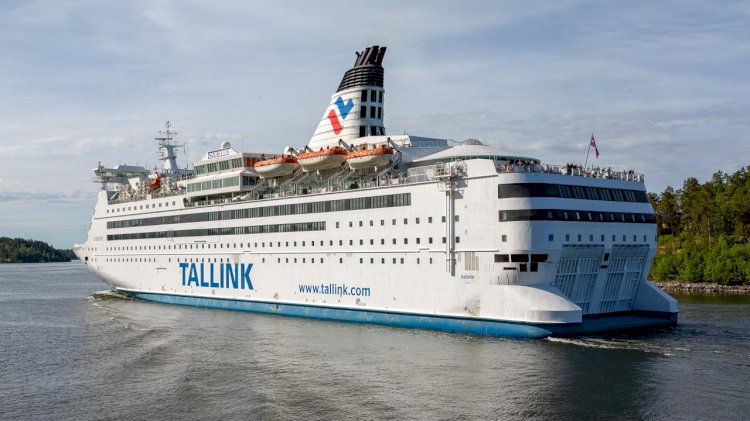
The process involves both crew members of the group’s Latvian flagged vessels Isabelle and Romantika as well as the company’s Latvian shore personnel, but the majority of the positions considered for redundancy are those of the onboard service personnel.  

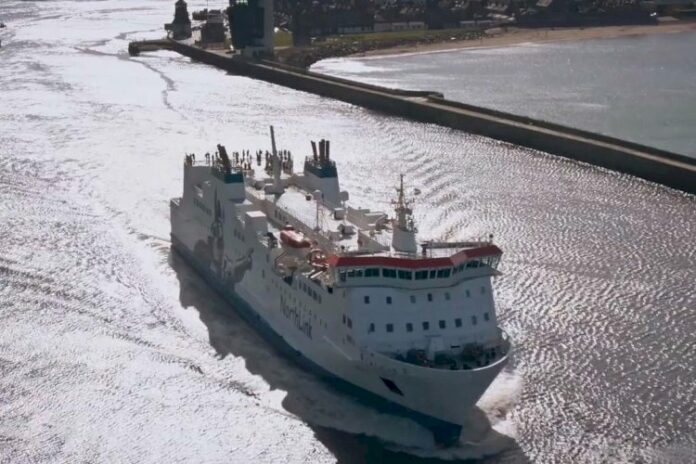
Tallink’s Riga-Stockholm route vessels Isabelle and Romantika have been suspended at the Port of Riga since mid-March due to the ongoing state of emergency and the established travel restrictions and there is currently no information on when the operation of the route is likely to be restored. As per maritime regulations, both vessels currently have the minimum required level of technical crew onboard, but all other onboard employees have been at home for the last month with reduced salaries, paid by the company. 

Paavo Nõgene, CEO of Tallink Grupp, said:

“The decision we are announcing today has been made with a very heavy heart. We are forced to take this step, although we have been searching non-stop for solutions that would enable us to avoid getting to the point where we have no other options, but to lose vital jobs and people.“
Nõgene added:

“The reality is that already for a month our Latvian flagged vessels are standing idle in the port and the employees of these vessels are at home with limited working hours and reduced salaries, and we have no knowledge yet today when this situation will change and we are able to return our vessels at least in some capacity to the Baltic sea. It is clear that the Riga-Stockholm route won’t be restored overnight or even in a matter of a few months. It is likely that the route won’t be restored to its pre-crisis capacity even this year. It is therefore very clear that we will not have the same amount of jobs to offer in Latvia in the near future.“

According to Tallink’s current estimations, it is likely that the Riga-Stockholm route will initially be reopened with only one vessel on the route after the restrictions are lifted, as the initial estimated passenger figures do not justify immediately returning two vessels to the route and it is likely that every trip our vessels make will initially make a further loss for the company. 

Nõgene added:

“Similarly to Estonia, Finland and Sweden, we have also hoped to see the Latvian government considering some support measures for the shipping industry, in order to ensure that the vital maritime transport links between Latvia and Sweden would be restored as quickly as possible after the crisis, even if in a reduced capacity. Tallink has transported 8.6 million passengers on the Latvia-Sweden route throughout history, having the biggest passenger transport capacity between the two countries. To date, however, the Latvian authorities have not offered any specific solutions for our sector. We have sent another request for support to the Latvian government ministers recently and hope that the Latvian government considers it important or necessary to continue the maritime route between Riga and Stockholm and will find some means to support international shipping.“

Vestdavit secures four-ship davit contract with French Navy

0

Leading boat-handling systems supplier Vestdavit has won a tender from Chantiers de l’Atlantique to supply davit systems for four new logistic support ships due delivery to the French Navy under the FLOTLOG (Flotte Logistique) programme.

The modern, double-hulled vessels will ultimately replace the Navy’s current, single-hulled LSSs and will be deployed to support France’s blue-sea combat fleet commitment to OCCAR (Organisation for Joint Armament Co-operation).

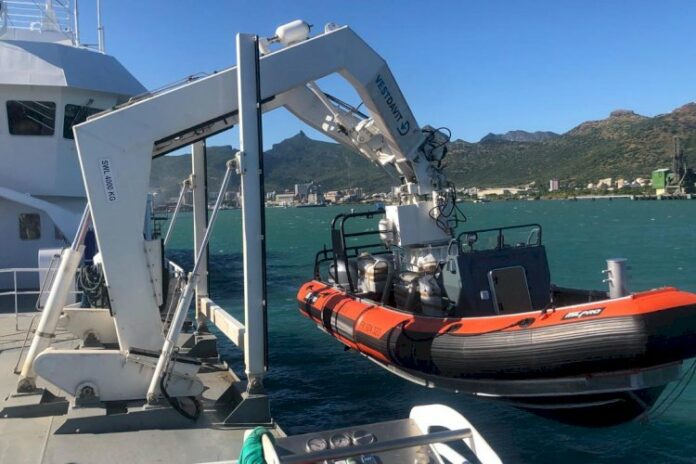
Vestdavit will supply two PLD-6000 A-frame davits for interception craft and a single PL-3600R davit for fast rescue per ship to ensure safety and crew comfort in missions worldwide in unforgiving seas. With the first vessel to be handed over by the end of 2022, deliveries will be completed by 2029.

Redouane Lahsen, Vestdavit project lead and area sales manager, says:

“This is a huge breakthrough for us following months of intense engineering work and ensures an eight-year collaboration with Chantiers de l’Atlantique on this very prestigious project. It strengthens our relationship with one of the worlds’ most important navies.”

Vestdavit also works with other major French-owned yards and aims to reinforce its presence in France.

Vestdavit’s PLD-6000 type davit is designed specifically for the flexibility and speed needed by interception vessels and can handle everything from leisure craft to work boats. It has a load-bearing capacity of up to six tons and remains effective even beyond sea state 5. Thanks to Vestdavit’s modular design, the PLD-6000 can be equipped with a docking head and guiding arms and to handle unmanned surface vessels (USVs) or underwater autonomous vehicles (UAV’s) if required. Meanwhile, the PL-3600R davit is designed for fast rescue craft and has a safe working load of 3.6 tons. Fully equipped with shock absorbers, guiding arms and a self-tension system as standard, the PL-3600R ensures stability in conditions up to and including sea state 5.

With the LSS-types expected to operate for 40 years, Vestdavit project lead Redouane Lahsen says that the shipyard’s selection criteria demanded launch-and-recovery systems that would be built to last and allow easy, low-cost maintenance. He adds:

“As a builder of high-quality vessels for high-profile naval, cruise sector and commercial shipping clients, Chantiers de l’Atlantique undertakes exhaustive evaluations when selecting suppliers. In meeting and exceeding yard requirements, Vestdavit adds one of the most sought-after contracts in European naval shipbuilding in recent years to its reference list.”

Port of Antwerp tests smart bracelet to prevent corona infection on the workfloor

0

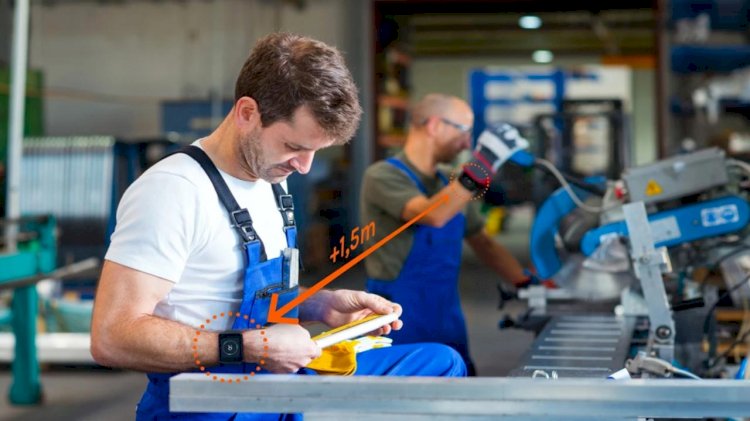
Port of Antwerp is teaming up with the tech company Rombit to prevent corona infection on the workfloor. Rombit has developed the Romware Covid Radius, a digital bracelet that ensures social distancing and permits contact tracing. Port of Antwerp will be the first to use this innovative bracelet.

To produce this armband Rombit has added new functions to its existing safety bracelet, the Romware ONE. This will help employees to observe the strict precautions laid down by the World Health Organisation (WHO) while respecting the privacy of the wearer. The initiative is also a response to the call by the Flemish Government to create digital solutions for helping society through the current corona crisis. Port of Antwerp, which recently introduced a project with the Romware ONE safety bracelet, will be the first to make use of the Covid functions.

The new Covid bracelet is aimed in the first place at social distancing. Whenever employees come too close to one another they first get a warning signal. However privacy is guaranteed: the Covid Wearable never passes on the location or other sensitive information to the employer.

At the same time the bracelet permits contact tracing: if someone happens to be infected then a health advisor or trusted confidant can check which work colleagues the person has come in contact with, in order to prevent further infection.

Port of Antwerp CEO Jacques Vandermeiren:

“Innovation and digital transformation are crucial in times of crisis such as these. It is essential to keep the port operational, and to ensure that our employees can work safely. We therefore see great potential in this solution and will shortly start trials with a team of operatives.”

Rombit CEO John Baekelmans:

“The new ‘1.5 metre economy’ depends on reliable aids. We are therefore making huge efforts to get the modified bracelet onto the mass market in large quantities, so that we can contribute towards getting the economy safely restarted. There is already great international interest.”

Port alderman Annick De Ridder:

“It is fundamental that our economy can get back to full speed as soon as possible and that we focus on ways to ensure that this restart will proceed safely. As the port of Antwerp, we are happy to contribute by taking up our social role and functioning as a testing ground for technological innovation.”

Agreement signed for Hollandse Kust Zuid offshore grid connection

0

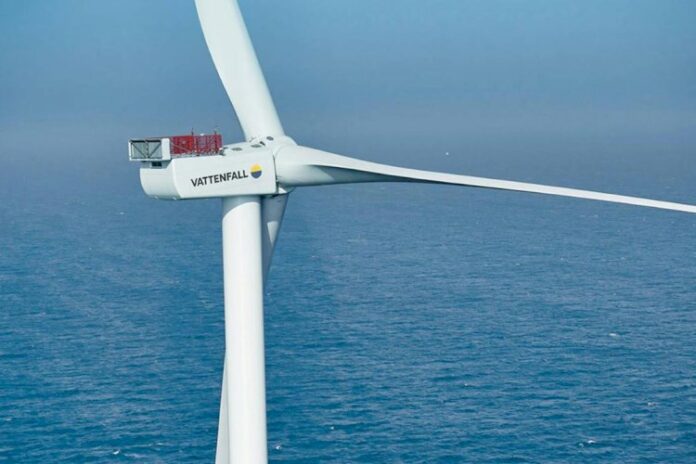
Vattenfall and TenneT have signed an agreement for the offshore grid connection for wind farm Hollandse Kust Zuid 3&4, marking a key milestone for this project. Last year, both parties also signed an agreement for Hollandse Kust Zuid 1 & 2.

TenneT is a transmission system operator (TSO) that manages the high-voltage grid in the Netherlands and large parts of Germany.

Catrin Jung, Head Offshore Wind at Vattenfall, says:

“This is an important milestone, and I’m pleased that the contracts could be signed so quickly – just nine months after winning the bid in July 2019. We’re looking forward to work with TenneT on Hollandse Kust Zuid 3 & 4. The combined wind farms of Hollandse Kust Zuid will be able to cover the total energy demand of between two and three million households, which makes it a major driving factor behind the transition to renewable energies in the Netherlands.”

Marco Kuijpers, Director Offshore at TenneT, states:

“The development of an offshore grid is well on track. Hollandse Kust Zuid is the second wind farm site to which we will be providing access in the form of two standardised AC connections of around 700 MW each. We are looking forward to working with Vattenfall as we develop HKZ 3 & 4.”

The installation of the turbines at Hollandse Kust Zuid will start in 2022 and the wind farm will start producing fossil-free power in 2023. The windfarm will have a combined maximum capacity of 1,500 MW.

The Dutch government has assigned TenneT as its offshore grid operator. The Energy Agreement sets out that TenneT will install 1,400 MW of offshore grid connections for the Hollandse Kust Zuid site, and provide for additional flexible transport capacity. The plan is for operations on the connection for Hollandse Kust Zuid 1 & 2 to commence in 2021. The offshore grid connection for plots 3 & 4 will follow in 2022. All plots will be developed by Vattenfall.

The grid connection for Hollandse Kust Zuid consist of two offshore transformer platforms, each with two 220 kV AC cables per platform. Electricity is transferred to onshore infrastructure via these cables. TenneT is building a new onshore transformer station and is expanding the ‘Maasvlakte 380 kV’ high-voltage station. At this high-voltage station, offshore wind energy is connected to the south ring of the Randstad 380 kV line operated by TenneT. Wind energy is then transferred to power consumers via the national high-voltage network.

Climate warming changes the distribution of marine species in the Arctic

0

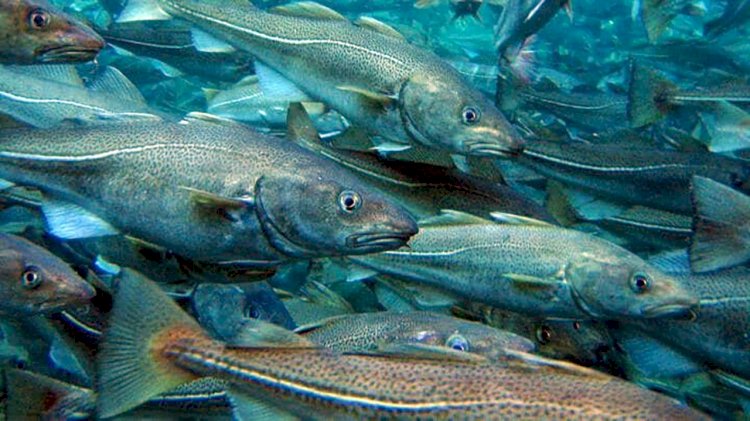
Climate warming is changing the distribution of marine species worldwide. In the Arctic, species from lower latitudes are expanding into areas previously dominated by Arctic species.

Such is the case for Atlantic cod which has become so abundant in the Svalbard fjords that cod fishing is now a popular tourist activity.

Cod populations in the northern North Atlantic have distinct genetics, reproduction, growth and migration patterns. The Norwegian Coastal Cod (NCC) is stationary. It spawns along the coast of Norway and within fjords with local recruitment of juveniles to the adult population. The Northeast Arctic Cod (NEAC) is found mainly in the Barents Sea and displays highly migratory patterns. The NEAC stock has been abundant during the last years, while the abundance of NCC stock has been low despite management policies to reduce annual fishing quotas.

To find out more about cod movements around Svalbard and the fjords of northern Norway, Akvaplan-niva scientists, Dr. Hector Andrade and Dr. Michael Carroll, led the Fram Centre project “Effects of climate on cod life history and ecology along a temperate-arctic gradient”.

The project assembled an international research team from Akvaplan-niva, the Institute of Marine Research, and the University of Bergen in Norway, and the Wageningen University (Netherlands), the University of Arizona (USA), Bates College (USA), Coastal Carolina University (USA), and Imperial College London (Great Britain). Otoliths are earstones found in the head of fishes. Chemical elements incorporated into fish otoliths provide a record of the places a fish has been throughout its lifetime. Using the chemical signatures preserved in fish otoliths, the interdisciplinary team of researchers were able to identify the possible origins of cod and their residency patterns in Svalbard fjords.

The study results, just published in the journal Polar Biology, showed that cod collected at Kongsfjorden, Isfjorden, outside Svalbard, Lofoten, and Porsangerfjord were recruited mainly from the Barents Sea, corresponding to the NEAC cod type. In Porsangerfjord and Isfjorden, however, there was also evidence of the NCC cod type, that is, more localized movement without undertaking large migrations. An unexpected finding was that in Isfjorden, and to a lesser extent Kongsfjorden, some mature cod originating from the Barents Sea have recently established residency in these two Arctic fjords. This indicates that previously migratory cod has become a stationary species in the Svalbard fjords. This greater understanding of the distribution and movements of these two cod species in the fjords of Svalbard is highly relevant for the future protection and sustainable management of the NEAC and NCC fisheries.

Photo: Akvaplan-niva

NC Ports opens new refrigerated container yard

0

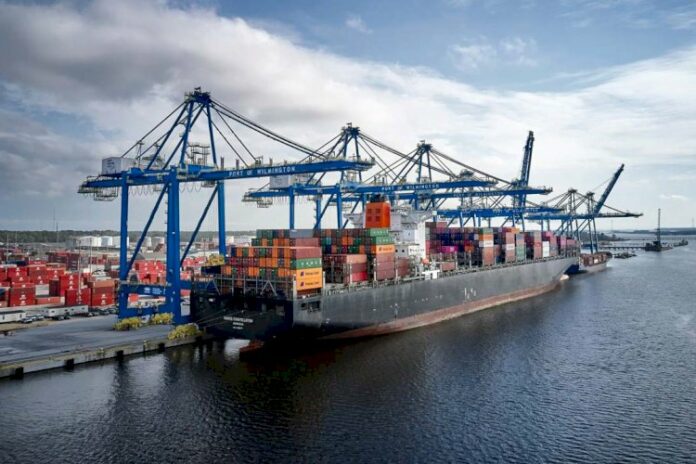
The North Carolina State Ports Authority is now equipped to handle more refrigerated containers than ever following the completion of a new refrigerated container yard at the Port of Wilmington.

The project boosts the port’s on-terminal refrigerated container (reefer) plugs from 235 to 775 with the ability to expand to more than 1,000 plugs through Phase 2 of the project.

Paul J. Cozza, North Carolina Ports Executive Director, said:

“North Carolina Ports has become a critical gateway for the movement of refrigerated cargoes. The completion of the refrigerated container yard allows NC Ports to better support the growing agriculture and grocery sectors across North Carolina and the entire southeastern United States.”

The $14 million construction project includes a new reefer service area as well as 27 reefer racks to support the stacking of refrigerated containers. The new yard is positioned near the Port of Wilmington Cold Storage. The location consolidates all refrigerated cargo into one area which helps enhance the port’s efficiency when moving perishable goods.

Hans C.E. Bean, Chief Commercial Officer, North Carolina Ports, added:

“As North Carolina grows, it is important our business adapts to meet the needs of our existing and future customers. The new refrigerated container yard highlights NC Ports’ commitment to improving infrastructure as we move another step closer to becoming the next great cold cargo port.” 

Robert A. Wicker, Chairman of the North Carolina State Ports Authority Board of Directors, echoed:

“Supporting the refrigerated cargo sector is a strategic goal for NC Ports. Our investment in the refrigerated container yard will help strengthen the Port of Wilmington’s position as a premier hub for perishables.” 

The opening of the reefer yard comes as North Carolina Ports is experiencing unprecedented growth in the cold chain sector. Refrigerated container volume through the Port of Wilmington quadrupled from Fiscal Year 2014 to Fiscal Year 2019. FY20 year-to-date volumes have been trending up 30 percent as both export and import demand continues to grow. While the latest projections are dynamic, NC Ports is more equipped than ever to handle refrigerated cargo.

This project is another key component of NC Ports’ more than $200 million capital improvements plan aimed at modernizing and enhancing efficiency at the Port of Wilmington. Infrastructure improvements include an overhaul of Wilmington’s container terminal and new terminal and gate operating systems. The terminal renovations will double the Port of Wilmington’s annual throughput capacity to 1.2 million TEUs and feature a new container gate complex with increased lanes for inbound and outbound truck traffic.

Babcock announces Type 31 supply chain contract awards

0

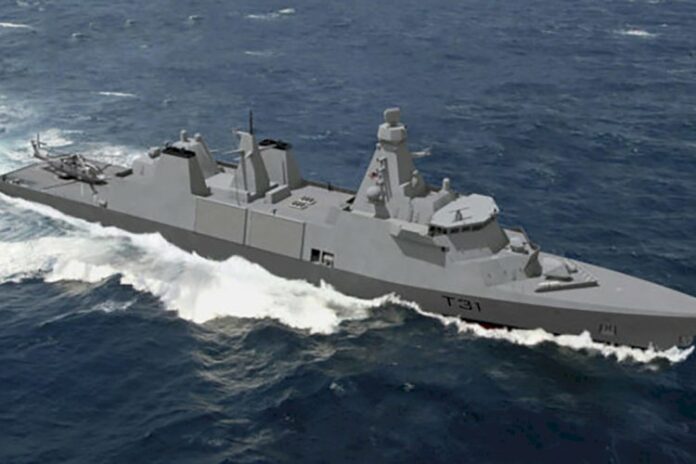
Rolls-Royce is now a major supplier to the programme with its brand MTU, delivering the Main Engines and Diesel Generators for the Frigates, which will be manufactured in Germany. Renk, will provide the main reduction gearboxes, and MAN Energy Solutions will supply the propellers and propeller shaft lines.

In addition, Blunox are contracted to supply the exhaust environmental equipment that significantly reduces emissions from the Main Engines and Diesel Generators. Combined with the subcontract placed with Darchem Engineering Ltd, will supply the intake and exhaust systems for the main engines and generators, rounding out the key propulsion system subcontracts.

Babcock also announces award of the Chilled Water Plant subcontract with Novenco AS, providing critical system capability for the HVAC system.

The Type 31 Programme will deliver prosperity into shipbuilding and the extended supply chain. The scale of this investment, principally in design, engineering, project management, procurement and advanced manufacturing skills, has an enduring positive impact on the UK.

Sean Donaldson, Managing Director for Energy & Marine, said:

“Team 31 have committed to a programme of investments to deliver prosperity in line with the National Shipbuilding Strategy.  We are delighted to welcome these key suppliers to the supply chain for the Type 31 frigate programme, and we continue to engage with additional suppliers to support this exciting programme for Babcock and the Royal Navy.”

Annual dredging at Aberdeen Harbour completed

0

Yearly dredging is required to maintain essential water depth in North Harbour.

More than 54,000 cubic meters (in-situ volume) of material has been dredged from the Harbour since mid-March, allowing vessels to sail in and out of the Harbour safely.  

Three specialised vessels have been used to undertake the work: UKD’s trailing suction dredger UKD Marlin, and bed-levelling vessel UKD Seahorse, and the Harbour’s own hydrographic surveying vessel, the Sea Herald.

Scott Buchan, the Harbour’s Hydrographic Surveyor, said:

“It’s particularly important for us to keep Aberdeen Harbour fully operational at this time. The port is a gateway to lifeline supplies of fuel, foodstuffs and equipment which is being transferred across the region and to those living and working in the Northern Isles and offshore. We are pleased that, despite the current circumstances, we have achieved our full dredging programme. While we dredge at the Harbour throughout the year, the annual dredging programme is one of a port authority’s most important duties, and this is especially true this year.”

Michelle Handforth, Chief Executive of Aberdeen Harbour, added:

“The completion of the dredging programme is one of the many examples of the dedication and professionalism of our Harbour employees, port users and customers, who are going beyond the call to ensure vital supplies can be distributed around the region to all who need them.”

Digital customs clearance with “Eazy Customs”

0

Due to the Corona crisis, the software is being released sooner than planned to streamline and digitalize processes during this time.
 
Eazy Customs is in the beta test phase and has already been used in practice. Thorsten Porath says:

“Due to the pandemic, Porath Customs Agents has decided to make this new software available to its customers earlier than planned, so that our customers can meet the challenges of this crisis as best as possible.”

Due to the ongoing crisis, many teams are separated and currently work from their homes. The new softwarehelps to resolve difficulties in working with customs service providers. The Global Trade Management Study conducted in 2018 found that the majority of companies still rely on e-mail and telefax communication when working with customs offices, and this always entails high frictional losses.

A colleague, for example, who is just filling in, first has to check his co-worker’s various e-mails in order to assess the current status and identify any outstanding issues so that the goods reach their final destination without delay.

The new web application instantly resolves such communication problems. It was developed by Porath Customs Agents, one of Europe’s leading international customs brokers with headquarters in Hamburg. Everything, from orders to communication between client and service provider, as well as any documents and status updates, can now be found in one place. Colleagues are able to work together on all projects and even third parties (such as suppliers) can be invited if necessary. Should a co-worker fall ill, another team member can now easily take over.

Viking officially opens reservations for new Mississippi River cruises

0

Viking has opened reservations to the public for its new Mississippi River cruises, which will launch in 2022.

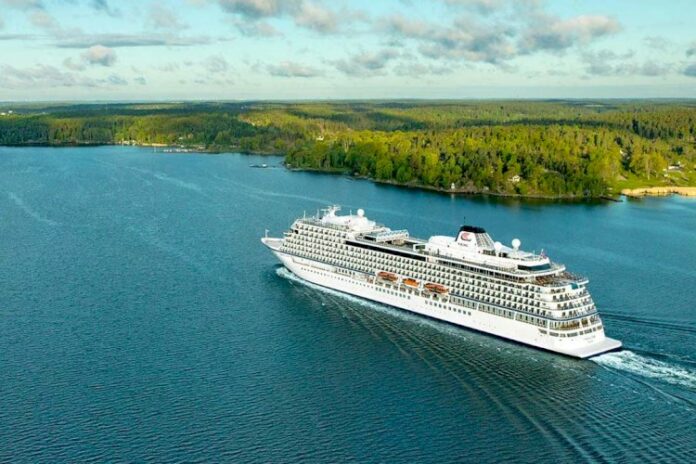
The company’s first custom vessel, Viking Mississippi, will debut in August 2022 and will sail voyages on the Lower and Upper Mississippi River, between New Orleans and St. Paul. 

Viking’s arrival will bring modern river cruising to the Mississippi and will represent a major commitment to tourism and economic development in many communities along the river. 

Currently scheduled ports of call on Viking’s new Mississippi River cruises comprise seven U.S. states: Louisiana (Baton Rouge, Darrow, New Orleans and St. Francisville); Mississippi (Natchez and Vicksburg); Tennessee (Memphis); Missouri (Hannibal, St. Louis); Iowa (Burlington, Dubuque and Davenport); Wisconsin (La Crosse); and Minnesota (Red Wing, St. Paul). 

As part of an exclusive preview promised by Viking Chairman Torstein Hagen, past Viking guests have been able to book the new Mississippi River cruises since March 30, 2020 and some departure dates are already nearly or completely sold out. As of today, all inaugural sailings of Viking Mississippi’s 2022-2023 season are now available to the public for booking.

Hagen said:

“At a time where many of us are at home, looking for inspiration to travel in the future, I am pleased to introduce a new, modern way to explore this great river. We invented the concept of modern river cruising when we got our start 23 years ago—first on the rivers of Russia and then in Europe. Since then, many people have come to appreciate the unique exploration that comes with river cruising—but currently there are very few options to do so on American rivers. Our guests are curious travelers, and they continue to tell us that the Mississippi is the river they most want to sail with us. The Mississippi River is closer to home for many of our guests, and no other waterway has played such an important role in America’s history, commerce and culture.”

The anticipated announcement of Viking’s arrival on the Mississippi is the most recent milestone as the company continues to expand its fleet and destination-focused travel offerings. In January 2020 the company unveiled Viking Expeditions, with the first 378-guest purpose-built expedition ship, Viking Octantis, launching in January 2022 on voyages to Antarctica and then North America’s Great Lakes. A second expedition vessel, Viking Polaris, will debut in August 2022, sailing to Antarctica and the Arctic.