6.8 C
New York
Home Blog Page 875

Trelleborg supports windfarm development with offshore cable protection

0

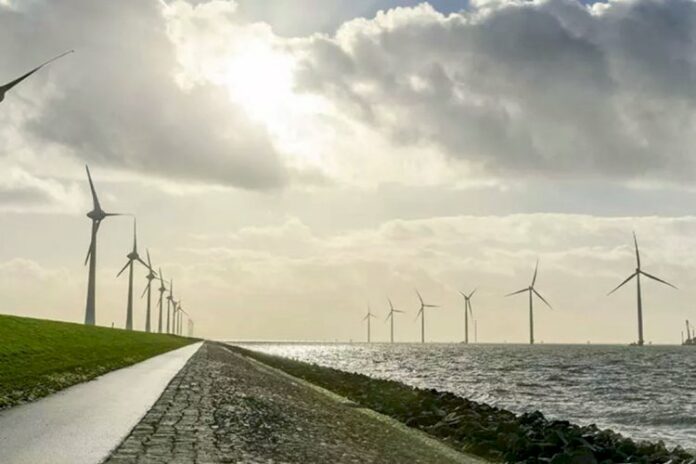
Trelleborg’s applied technologies operation supports windfarm development with NjordGuard, an innovative integrated cable protection system specifically designed and developed to protect offshore windfarm power cables.  

Trelleborg’s NjordGuard system manages the movement of subsea power cables of monopile and J-tube wind turbines and offshore substations (OSS) in the free span between the seabed and an installation’s aperture.  

Andy Smith, Product Group Manager for Trelleborg’s applied technologies operation, states:

“Our NjordGuard cable protection system is specifically designed to protect windfarm power cables from fatigue, over-bending and abrasion due to loads and motions generated by the field wave tidal conditions. It incorporates Trelleborg’s market leading Njord BS (Bend Stiffener) technology, proven to reduce the risk of failure by better managing the dynamic motion and eliminating shock loading on the cable in comparison to a typical ‘vertebra’ style bend restrictor design.

NjordGuard protects the cable both during installation and throughout its life. The innovative product can be easily reconfigured and is suitable for any diameter of cable. It can also be retrofitted to existing solutions where failure looks likely to occur, preventing critical loss of power, costly repairs and downtime.” 

NjordGuard is produced using Trelleborg’s API 17L certified material for both internal and external components and requires only minimal assembly. The primary external stiffener is factory cast directly onto the connector and additional modular components can be added as required.  To maximize safety and reduce installation complexity, NjordGuard can be easily installed, removed and reused without the need for Remotely Operated Vehicle (ROV) or diver intervention, using a patented field proven ball and groove connector technology.  
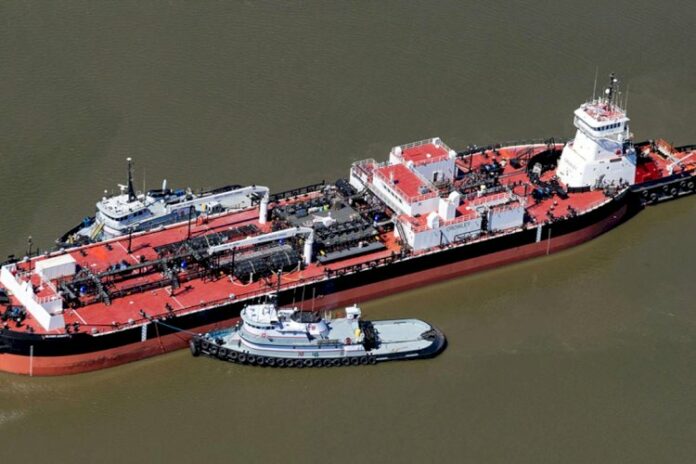
Bollinger delivers articulated tug and barge unit to Crowley Fuels LLC

0

Bollinger Shipyards Lockport, LLC has delivered an articulated tug-barge (ATB) unit capable of transporting multiple clean petroleum products in the Alaska market to Crowley Fuels LLC – the Alaska-based petroleum transportation, distribution and sales unit of Crowley Maritime Corporation.

Crowley Shipping provided vessel Construction Management services in Bollinger’s facility located in Amelia, La (Bollinger Marine Fabricators) from the final design phase through delivery. The company’s Seattle-based naval architecture and marine engineering firm, Jensen Maritime, provided the functional design. Bollinger’s engineering team provided the integration, detail design and construction package.

Bollinger Shipyards President & CEO Ben Bordelon said:

“On behalf of our skilled workforce, along with a strong operational support group, the Bollinger team is proud to have built this ATB for Crowley Fuels. Contracts like this to build Jones Act classed ATB units, create and protect many jobs for U.S. mariners, shipyards and ancillary vendors, and that strengthens our local and regional industrial base.I am extremely proud to be part of a workforce that has, in the wake of this horrific pandemic, continued to safely focus and deliver an extremely unique, complex and very capable vessel.”

Rocky Smith, senior vice president and general manager, Crowley Fuels, said:

“We are pleased to take delivery of this high-performance ATB, Aveogan-Oliver Leavitt, and look forward to getting her up to Alaska to begin serving our partners at Petro Star. We congratulate the men and women at Jensen who designed the vessel and the team at Bollinger Shipyard who built it.”

20 port authorities signed declaration to keep ports open to seaborne trade

0

Recognising that the maritime sector plays a critical role in keeping trade flows open in the global fight against COVID-19, 20 members of the Port Authorities Roundtable (PAR) from Asia, Europe, Middle East and North America came together today to declare their commitment to ensuring their ports remain open amidst the current pandemic.

The declaration, initiated by Singapore, calls for port authorities to collaborate and share best practices in ensuring that port operations can remain undisrupted.

Representing the Maritime and Port Authority of Singapore (MPA), Ms Quah Ley Hoon, Chief Executive, said:

“As the world battles with the COVID-19 pandemic, it has never been more critical to keep our ports open and goods moving. Shipping is chartering into many unknowns and new challenges. Port authorities have to take enhanced precautions for their ports and on ships, as well as manage the stress faced by our seafarers and maritime personnel. We have come together to make a declaration of our commitment, exchange experiences and share best practices. This virtual declaration by members countries across different geographical regions is also a first for the PAR. We came out of the session gaining more valuable knowledge to ensure that necessities and essential medical supplies continue to be transported seamlessly across the world and into our respective countries.”

Through this joint declaration, the signatories are committed to work together and ensure that:

  • Merchant ships can continue to berth at port terminals to carry out cargo operations and keep the global supply chain going;
  • Best practices are adopted, according to national circumstances, including precautionary measures for the shipping community, advisories and assistance for shore personnel and ship crew, and safe handling of cargoes during this period; and
  • Port authorities continue to share experiences in combating COVID-19 while safeguarding unimpeded maritime trade.

PAR has shared the declaration with the International Maritime Organization and the International Association of Ports and Harbours to rally other port authorities to join this declaration.

VIDEO: Sleipnir picking up the 600 tonne module quayside

0

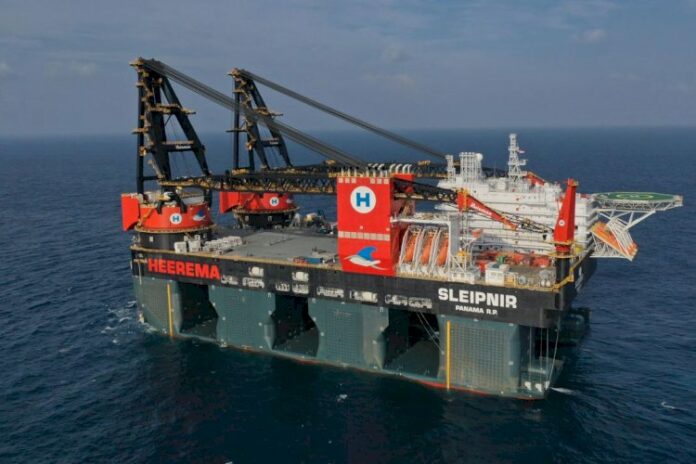
The semi-submersible vessel Sleipnir has two cranes onboard, each capable of lifting 10,000 metric tons. This ability makes it suitable for the largest offshore jobs, such as building wind turbines at sea, dismantling old platforms, or constructing the most significant offshore structures.

Snorre Expansion Project is a huge IOR (increased Oil Recovery) project adding close to 200 million barrels to the Snorre field, extending the life time beyond 2040. The project consists of 24 new wells – 12 producers and 12 injectors – in six new templates, three massive bundles (all in one-pipelines) and a new module on Snorre A linking the new wells to the production facilities. 

Video: Equinor

GAC creates COVID-19 lay-up and crew logistics support package

0

As countries worldwide bring in restrictions to control the spread of COVID-19, a growing number of ship and rig owners and operators are looking to lay-up their vessels until the crisis has passed and trade resumes. In response, the GAC Group has created a tailored support package that will help them weather the coronavirus storm.

By working with strategic suppliers in safe havens worldwide, GAC can arrange for short- and long-term lay-ups or stacking at a time when a lack of employment can make taking assets out of operation the most viable option. With many countries prohibiting crew disembarkation and changes, GAC is using its resources to help identify the best solutions for off-signers and departing personnel.

One of the options for off-signing crew is the port of Gibraltar, which BIMCO has praised for its pragmatism in giving shipping a viable option for off-signing mariners. The newest addition to the GAC network, GAC Gibraltar, is at hand to guide customers through the process.

The support package for lay-up and disembarkation, in response to COVID-19, is a crisis-specific extension of services that GAC already provides through its global network. It draws on the local expertise and contacts of frontline offices and agents, to provide the most up-to-date and reliable information to help ship and rig owners and operators make an informed choice.

Neil Godfrey, GAC’s Group Commercial Director, Shipping, says:

“At a time when many of our customers are facing uncertainty about how deep the impact of the pandemic will be, and how long it will last, they can trust GAC to help them find the best solution if they decide to decommission their vessels, rigs and crew until the worst has passed.”

Two new mobile harbor cranes at Apapa Port

0

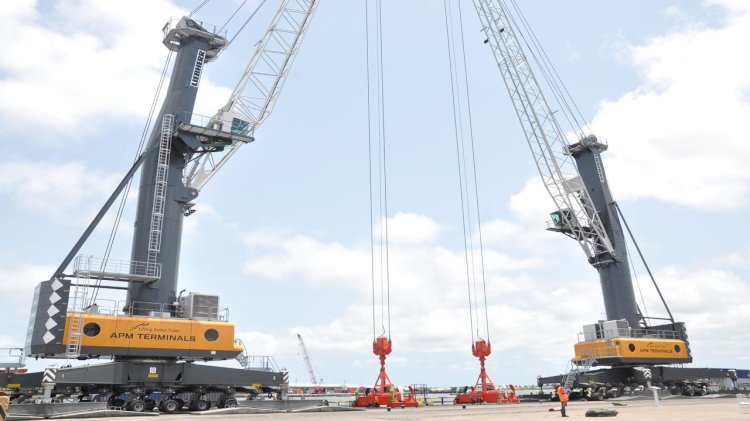
The Managing Director of Nigerian Ports Authority (NPA), Hadiza Bala Usman, commissioned two new multimillion-dollar, state-of-the-art Mobile Harbor Cranes (MHCs) at Apapa Port, Lagos, this week. 

The new cranes were acquired as part of APM Terminals’ additional investment of USD80 million (N33.6billion) for the year 2020-2021, bringing the total investment by the company in Apapa since 2006 to USD438million (about N184billion), which is the highest by any private terminal operator in Nigeria.

APM Terminals Apapa, which is located in the nation’s premiere seaport at the heart of Nigeria’s commercial hub, Lagos, is the biggest container terminal in West Africa and the best-equipped port terminal in Nigeria.

While commending the management of APM Terminals for acquiring the new cranes, Bala Usman said, as the ports become more efficient, efforts must be made to enhance cargo delivery processes and free the ports of longstanding cargo:

“We are engaging with the Nigeria Customs Service to remove overtime containers from the port to free vital space for incoming cargo. We are also working with terminal operators to increase the barging of containers to take pressure off the roads. We have noted a significant growth in barging capacity and operations with more containers moved daily by barges from the port.”

Head of Terminals, Africa and Middle East region of APM Terminals, Mr. David Skov, commented that this latest acquisition was in addition to previous investments of USD358million (N150.36billion) in port infrastructure development, information technology upgrades and modern cargo handling equipment to improve both quayside and landside operations.

He said:

“The additional investment we are making is to handle the increased trade volumes into Nigeria. Trade in Nigeria is growing due to the many favorable efforts and policies of the Federal government of Nigeria including but not limited to the policy on ease of doing business; stabilization of foreign exchange; closure of the land borders which has increased the use of our sea ports; and diversification of the economy.

The additional investments will create capacity to handle the growth in the economy to support the Federal government’s efforts on trade growth and improve service delivery across the logistic chain in Nigeria.”

He said with the acquisition of the new cranes, the terminal now operates with a total of 10 Mobile Harbour Cranes; 23 Rubber-Tyred Gantry Cranes; six Empty Handlers; 48 specialised Truck Terminals, six Reach Stackers and 11 Forklifts.

APM Terminals Apapa took over operation of the Apapa container terminal in 2006 under the Federal Government’s port reform programme. Since then, APM Terminals has invested heavily on infrastructure, container handling equipment, yard expansion, modernisation of the terminals’ IT hardware and software systems, and development of additional capacity.

The huge investment has resulted in significant improvements in productivity, reduction in vessel waiting time and a doubling of container volumes at the port.

Pioneering live seabed-to-shore data harvesting mission using an USV

0

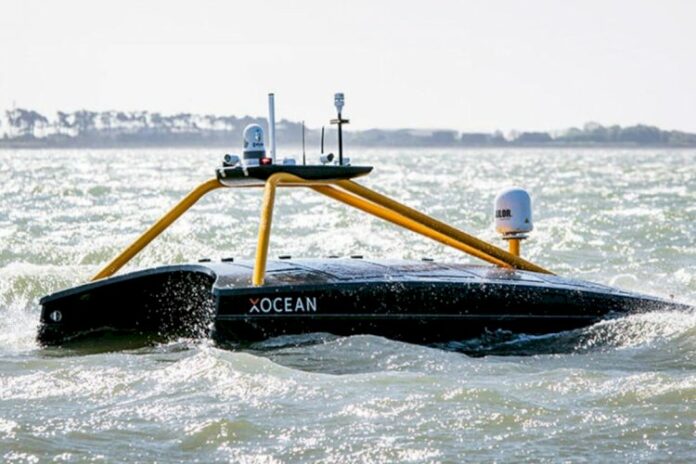
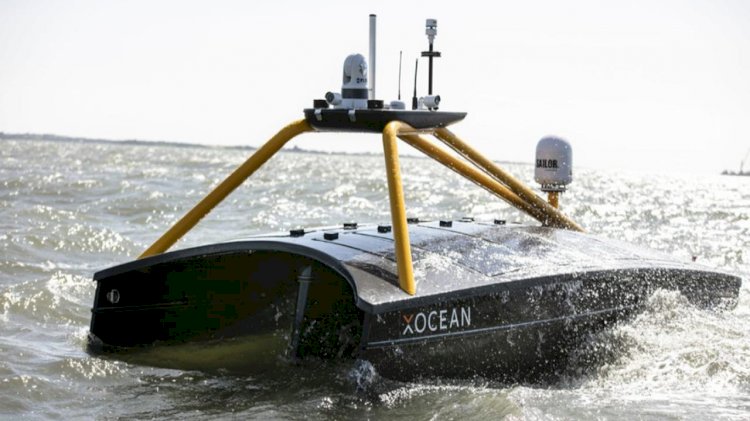
Sonardyne International Ltd. and XOCEAN have successfully completed a pioneering live seabed-to-shore data harvesting mission using an unmanned surface vessel (USV) for A/S Norske Shell, as part of a seabed monitoring campaign at the giant Ormen Lange field offshore Norway.

The projec without a single person having to travel offshore or from their home office, was achieved with significantly less emissions, health and safety risk and cost than could be done with a manned vessel.

By using an XOCEAN XO-450 USV to harvest data from an array Sonardyne’s long-endurance Fetch pressure monitoring transponders, an estimated 5.4 tonnes of CO2 per day was prevented from being emitted into the atmosphere, had a manned vessel had been used. XOCEAN’s USVs have a negligible carbon footprint – around one thousandth of the emissions of a conventional vessel – and all other emissions are offset, resulting in a fully carbon neutral operation.

The project, which saw the USV transit a total of 300 km from Kristiansund out to the Ormen Lange field and back, over just three days, is also thought to be one of the largest data harvesting missions, using a USV, to date.

In addition, it proved the ability to support this type of operation remotely without anyone involved having to travel, safely meeting current Covid-19 movement restrictions. The vessel was ‘posted’ to Norway and then launched by local marine operations service provider, SafePath AS. All other team members, including Sonardyne’s remote operations specialists in the UK, XOCEAN’s USV pilots in Ireland and Shell’s geophysicists in Norway and the US, remained working from their home offices.

The Fetch PMTs were deployed in 800 – 1,100 m water depth at the Ormen Lange field last September to support a long-term seabed monitoring campaign.

The Fetch PMTs accurately collect pressure, temperature and inclination data at the seafloor, at pre-programmed intervals. Using this data, any vertical displacement of the seabed can be calculated. The data will help Norske Shell to proactively inform its reservoir management strategy.

Sonardyne’s long-life Fetch PMTs incorporate a high-speed acoustic modem, which allows stored data to be extracted at any time, wirelessly through the water, on demand. On this mission, the XO-450 was equipped with a compatible Sonardyne acoustic transceiver attached beneath its hull.

Shaun Dunn, Sonardyne’s Global Business Manager for Exploration and Surveillance said:

“We have always been big advocates of collecting data from our subsea instruments remotely using autonomous platforms. This technology is now coming of age and makes complete sense when thinking about the environment, the safety of offshore personnel and minimising cost. What’s more, thanks to the low hull and propulsion noise USVs can achieve, the data gathering is also faster, adding further to the efficiencies of this approach.”

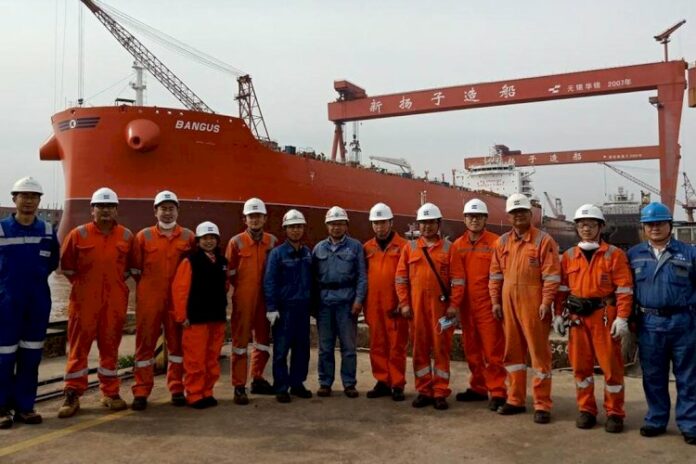
Launching of fifth CLEANBU vessel MV Bangus

0

This vessel, to be named MV Bangus, is currently expected to be delivered to KCC in September 2020. The sister-vessel and the fourth CLEANBU vessel, to be named MV Baleen, is currently expected to be delivered in July 2020.

This new generation of combination carriers is unique both in terms of vessel design, environmental performance, operational and technical efficiency. In the intended trading patterns, the CLEANBUs will have around 40% lower CO2 emissions per ton mile transported cargo compared to standard product tankers and dry bulk vessels and meet IMO’s 2030 target of a 40% reduction in carbon intensity when comparing to standard vessels.

After delivery of MV Bangus and MV Baleen, KCC will operate a fleet of 14 combination carriers.

World’s largest floating rig to drill wells in the Barents Sea

0

The world’s largest floating rig will drill the wells, assisted by the world’s most powerful anchor handling vessel. Both rig and boat are brand spanking new.

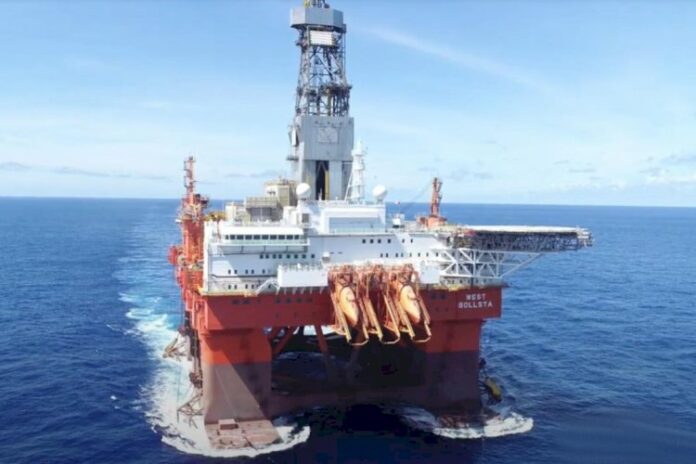
Later this year the West Bollsta drilling rig will set course for the Barents Sea where she will drill exploration wells for Lundin. This is the world’s largest semi-submersible drilling rig, and also one of the most advanced. The rig is winterised to be able to operate in the Barents Sea all year around. She can also drill at ultra-deep water. That means water depths of 1500 metres and deeper.

It’s hard to understand just how big West Bollsta is, just from pictures. But picture this – if we placed her on the roof of the Norwegian King’s Royal Castle in Oslo, she would stick out in all directions. Fully loaded and semi-submerged, her total weight is more than 71,000 tonnes. No comparable rig in the world is larger.

The drilling campaign for Lundin is the rig’s first assignment. Right now, she is at Hanøytangen outside Bergen undergoing final preparations.

Anchor handling vessel Island Victory has already been in the Barents Sea, laying anchors and chains for West Bollsta in preparation for the drilling operation. And if you think the rig is big, well, the boat is not exactly small either.

Norwegian-built Island Victory is the world’s most powerful anchor handling vessel with a bollard pull of 477 tonnes. The capacity of this vessel also makes the operation very efficient. Normally, this operation would have required three trips back and forth between Western Norway and the Barents Sea. 

Never before has such a large volume of anchor chain been transported on the same keel. 25 kilometres, in fact; enough for both exploration wells at the top of the agenda. Considering that one metre of chain weighs 155 kg, the total weight is enormous. The chain cargo weighed all of 388 tonnes, or the equivalent of 300 VW Golf vehicles.

The Island Victory also brought along a so-called CAN-ductor on deck, weighing 120 tonnes. This is a cylindrical anchor which also forms the first part of the actual well and makes the drilling operation more efficient.

Two new deep sea quay cranes for RWG

0

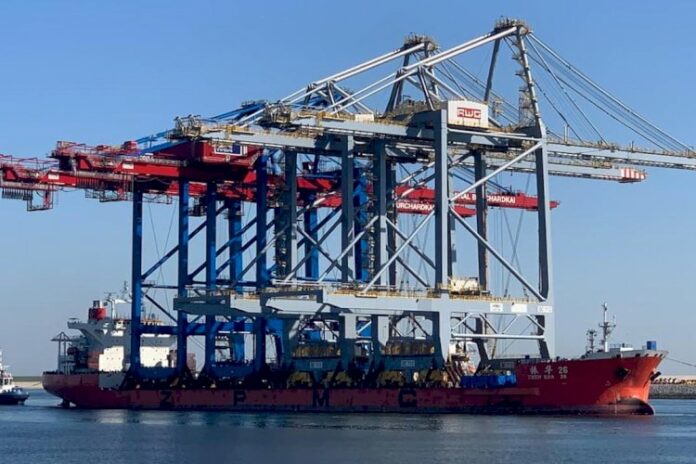
They will be commissioned in the coming months and are expected to be operational in the second half of 2020.

The new cranes, the largest of their kind, were built by ZPMC in China. They have a lifting height of 56 meters and are capable of handling container vessels up to 26 rows wide. Together with the two quay cranes RWG has invested in 25 new Automated Guided Vehicles (AGVs). Offloading the cranes will take around ten days and they will be commissioned on the quay over the next months.

Ronald Lugthart, CEO at RWG:

“The arrival of the cranes and AGVs will allow RWG to further optimize our services and capacity. RWG plays a key role in efficient, sustainable, reliable and safe container handling. Together with our customers, stakeholders and partners, such as DP world, we will continue to develop our services.”