5.9 C
New York
Home Blog Page 874

Fugro wins ROV and survey support contract with GMG

0

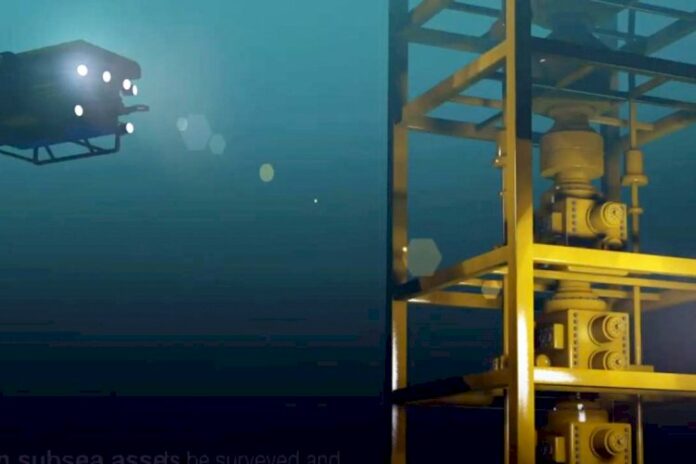
Fugro has secured a long-term contract for two remotely operated vehicles (ROVs) and a full survey positioning package on Global Marine Group’s (GMG’s) newly chartered vessel, the Normand Clipper.

GMG are in the process of upgrading the Normand Clipper in preparation for projects this summer and both the ROV systems and the survey package will be installed ready for future operations from Fugro’s remote operations centre (ROC) in Aberdeen, Scotland.

As part of the contract, Fugro will provide two Fugro core vehicles (FCVs) from their FCV600 model portfolio. The FCV600 is a versatile work-class ROV (WROV) and will allow Fugro to support the Normand Clipper across a range of operations, with primary focus on subsea cable-laying for the offshore utilities and renewables markets. The FCV600 model can be fitted with a custom-built tracked skid, which improves operability by up to 30 % in strong currents compared to free-flying ROVs.

Alastair McKie, Director Positioning and Construction Support Europe at Fugro, announced:

“We are pleased to have been awarded this contract by Global Marine Group and look forward to supporting their remote operations on the Normand Clipper.”

Mike Daniel, Managing Director of Global Offshore, part of the GMG, said:

“These two Fugro ROVs form an important part of our wider upgrade and mobilisation plan for the Normand Clipper, ahead of some exciting projects for us in the coming months.”

Helsinki Shipyard starts the production of the luxury expedition cruise vessels

0

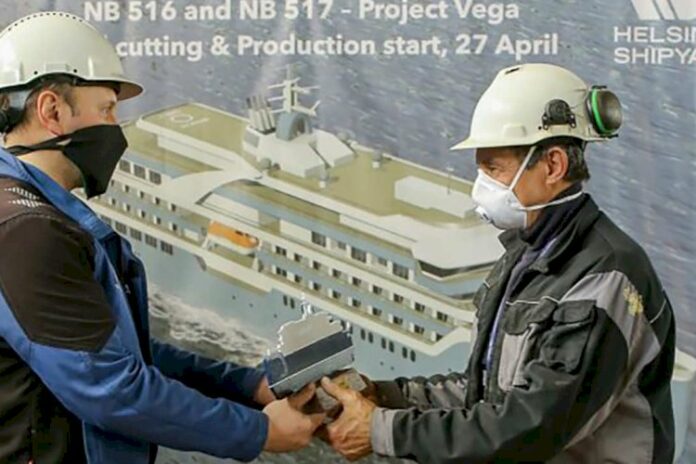
The production of the first vessel of the two luxury expedition cruise vessels ordered from Helsinki Shipyard Oy has started. Steel cutting started in safe conditions and as scheduled despite the global situation clouded by the COVID-19 pandemic.

Carl-Gustaf Rotkirch, CEO, says:

“These two vessels are the first newbuildings of the shipyard that was established in May 2019 and thus they are a very important head start for us. The project progresses according to plan in good cooperation with the Customer.”

These luxury expedition cruise vessels which were ordered from the Helsinki shipyard in the summer 2019 are intended to operate both in the Arctic and Antarctic waters during winter and summer, as well as in the tropical waters during the spring and autumn seasons.

The steel blocks for the vessels are manufactured by the shipyard of Western Baltija Shipbuilding in Klaipeda, Lithuania. A total of 33 outfitted and painted blocks will arrive from Klaipeda. The blocks will be transported to Helsinki by sea.

Project manager Jonas Packalén comments:

”The shipyard of Western Baltija Shipbuilding is an important partner for us. We have cooperated with them already in several projects.”

The production at Helsinki Shipyard will start in August, and the hull construction will begin with keel laying in September 2020.

Packalén added:

“The start of production was preceded by basic and detail design phases, and procurement has also progressed well.”

The luxury expedition cruise vessels will be delivered in 2021 and 2022.

Main Particulars of the vessels:

  • Length – 113 m
  • Breadth – 20,2 m
  • Draught – 5,7 m
  • Cruising speed – 14 knots
  • Ice class – PC5
  • Capacity – 157 passengers
  • Classification – Lloyd’s Register

Environmental compliance at risk from poor monitoring system selection

0

Selecting inappropriate oil-in-water monitoring technologies can jeopardise environmental compliance. Rivertrace’s advice to ship owners confronted with a choice between several different sensor technologies suited to specific applications has now been published in a new white paper.

Oil-in-water monitoring on ships is needed to comply with MARPOL measures for the prevention of oil pollution as well as in several other areas. Stringent measures governing oil pollution require that if monitoring is not effective, discharges cannot be carried out – providing a significant operational incentive for ship owners to select the right technologies.

Mike Coomber, Managing Director says:

“Oil-in-water monitoring is used in a wide array of marine and industrial applications and it is crucial that operators know which technology is the most appropriate for their purposes. Rivertrace’s foundation in research and development across all these solutions means we can offer a balanced view based entirely on customer needs.”

Ship owners have four optical technologies to choose from:

  • Scattered light monitoring measures the amount of light that is scattered by oil particles in water to measure oil content. This is a well-proven, robust and cost-effective sensor technology that is deployed in multiple solutions, including those monitoring oil in bilge water or ballast water discharge.
  • Absorbance sensors measure oil concentration based on the principle that different particles absorb light of different wavelengths. Monitors use multiple wavelengths to identify solids and oil particles. The technology is particularly effective where oil types are not known and works well even with turbid water. It has often been used in offshore production facilities.
  • Fluroescence sensors identify the presence of a specific oil type by measuring the light that particles give off when exposed to light of a particular wavelength. This technology is ideal when very low concentrations need to be detected, such as monitoring scrubber wash water discharge.
  • Microscopy technologies use the size and number of particles to visually identify oil concentration. Images from a high-speed camera are analyzed against a predefined library which can distinguish between oil, gas and solids. This technology is useful when dealing with unknown oil types and does not require calibration. It is well suited to monitoring oily water discharge from ships.

Rivertrace is well positioned to offer guidance, deploying all four technologies across a wide range of monitoring equipment. The company has also played an active role in developing oil pollution monitoring regulation in the marine sector. As a result, we understand how each technology can be best applied to help ship operators achieve environmental compliance.

Rivertrace’s expertise is underpinned by an internal research and development team dedicated to continually developing its existing products. Its engineers can draw on experience gathered from more than 30,000 monitors and systems installed worldwide, as well as working with a client list that includes leading separator manufacturers and many leading shipping, offshore oil and gas and land-based industrial companies. Rivertrace has published a white paper intended to help ship owners understand the optical technologies available and choose the best solution for their application. The white paper provides a simple description of each technology along with the advantages and disadvantages for each and a set of criteria for suitable applications.

Satcom Global launches Aura crew calling initiative to support customers

0

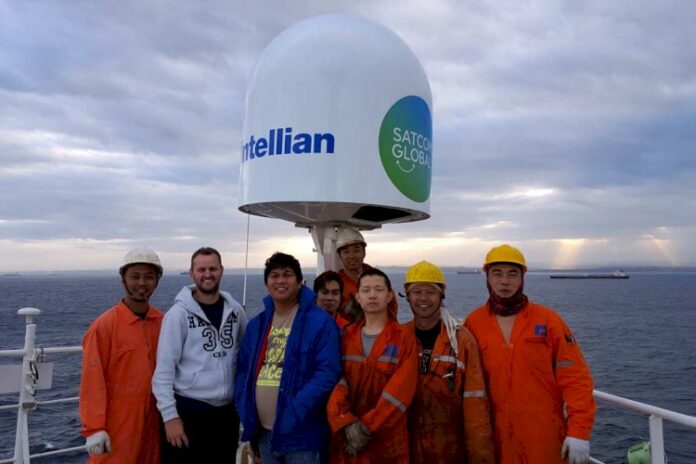
The satellite communications provider and operator of the Aura network is supplying customers with a free-of-charge 30-minute voucher for each crew member stationed on-board a vessel using the Aura service, to help keep lines of communication open between vessel and shore.

Ian Robinson, CEO of Satcom Global commented:

“On speaking to a number of ship owners and managers since the Coronavirus outbreak began, we appreciate there are significant challenges being faced by the maritime industry, not least the direct impact on the mental wellbeing of seafarers as they face longer spells at sea and the inability to travel home. We hope this gesture will help more crew to connect with family and friends and bring some relief during this difficult time.”

Aura crew voice services are supported by IPSignature 4, Satcom Global’s proprietary communications management solution, which enables the generation of easy to use virtual voice pins for crew to use at their leisure. With the implementation of the free voucher initiative underway, Satcom Global hopes to reach upwards of 20,000 seafarers with the scheme.

Delivering cost effective maritime communications services across multiple satellite networks, Satcom Global operates a dedicated in-house development team who have delivered a range value-added crew focused communication systems and satellite optimized tools for over 20 years.

Satcom Global launched their Aura Ku-band VSAT service in 2016, to support the growing needs of the maritime community for bandwidth capable of delivering both improved connectivity for crew, whilst ensuring the wide-ranging data demands for vessel operations were also amply met. With its organically growing network and guaranteed CIR (Committed Information Rate) across all service packages, Aura has fast become a VSAT service of choice for shipping fleets across the globe.

Report: COVID-19 to cut shipping container fleet

0

It will lead to a contraction in the shipping container fleet and keep prices and lease rates under pressure in 2020, although better than in 2019.

Drewry’s latest published Container Equipment Forecaster report shows that in 1Q20 newbuild prices and lease rates for all of the main categories of containers were up on 4Q19 and 2019 as a whole.

Primarily, this was the result of improving levels of optimism regarding the outlook for world trade. The US and China signed Phase One of a new trade agreement and the Brexit withdrawal deal was concluded. From the container manufacturing perspective, it appeared as if efforts by China’s main box builders to secure minimum prices for their equipment was having some success. Lease rates also hardened, rising between 15% and 20% compared with 4Q19 for dry freight (20ft, 40ft and 40ft high-cube) equipment.

But these increases masked intense volatility in the market during the period. At the start of the year, the price of a 20ft standard container stood at about US$1,750. By the end of February, it had increased to as much as US$2,150, before a sharp decline to approximately US$1,900 in late March. The severity of COVID-19 and the lockdown in China and subsequently in large parts of the rest of the world was the cause of the slump.

Total box output (dry freight and reefer) in 1Q20 was one of the lowest in a quarterly period; 33% lower than 4Q19 and 35% below that of the corresponding period of 2019. The dry box sector was the worst affected with a year-on-year decline in production of 40%. This compared with a 4% increase in the output of reefer containers as the shift of cargo from specialised reefer and air freight services to liner services and containers continued.

ClassNK grants world-first AiP to Imabari Shipbuilding

0

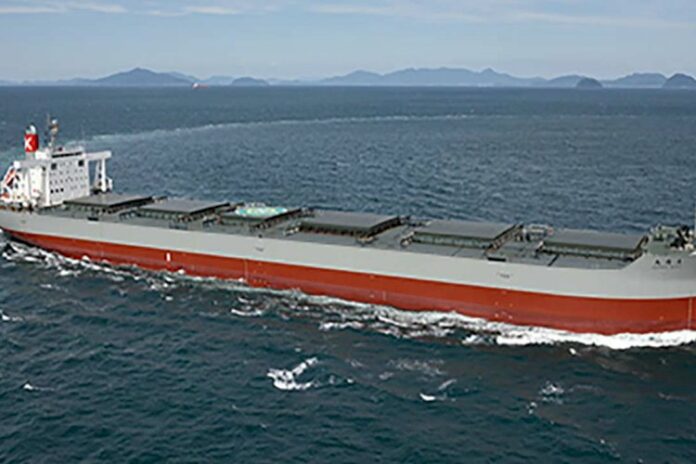
Leading Classification Society ClassNK granted an Approval in Principle (AiP) to Imabari Shipbuilding Co., Ltd. for their concept design of a 180,000 DWT LPG dual fuelled bulk carrier developed in cooperation with Mitsubishi Shipbuilding Co., Ltd. 

The AiP was granted to the concept design based on the Society’s Guidelines for Ships Using Low-Flashpoint Fuels(*1) and its Rule Part GF (regulation for ships using low-flashpoint fuels) incorporating “International Code of Safety for Ships using Gases or other Low-flashpoint Fuels (IGF Code), the current IMO Res. MSC.391(95) and the MSC.458(101) revision planned for release in 2024. This was the first LPG dual fuelled bulk carrier in the world to be granted an AiP.

The main features of the design announced by Imabari Shipbuilding are as follows:

“As one of the merits of this design, it eliminates the necessity for special consideration of boil off gas with this design handling LPG at room temperature and high pressure, which makes the ship’s operation easier. In addition, the ship has been designed with extensive consideration towards cost competitiveness by eliminating to use low-temperature materials such as stainless steel and cryogenic insulation. LPG tank is planned/designed to be installed in the aft area of the bridge and with round-trip distance capacity between Japan and Australia. And, as for supplying LPG to the ship, nowadays, LPG supply bases and infrastructure facilities are globally more developed and improved, which makes the ship’s operation more flexible. This is another motivation to create this design.”

(*1) Alternative fuels besides LNG (Methanol/Ethanol/LPG) have lower flashpoints compared to traditional fuels, therefore particular attention needs to be given to ensuring adequate safety precautions when using low-flashpoint fuels in order to decrease the potential risk of fire and explosions that may arise as a result of fuel leakage onboard the ship. International safety requirements for low-flashpoint fuels have been discussed at IMO and as a result, the International Code of Safety for Ships using Gases or other Low-flashpoint Fuels (IGF Code) has been adopted and enforced. The current code however, does not address specific regulations for alternative fuels other than LNG. Accordingly, in 2019 ClassNK released guidelines that outline safety requirements for other viable alternative fuels besides LNG, based on the latest technology and regulation trends in order to promote the design of alternative fueled ships.

Ørsted and Nestlé sign 15-year offshore wind power purchase agreement

0

The UK subsidiary of the world’s largest food and beverage company, Nestlé, has signed a 15-year indexed fixed price agreement with Ørsted, the world leader in offshore wind, to buy green power from the Race Bank Offshore Wind Farm.

Nestlé UK will buy the output of 31MW of the offshore wind farm’s 573MW total capacity, making it Ørsted’s largest fixed-price corporate power purchase agreement (PPA) in the UK.

From 1 May 2020, Nestlé UK will start purchasing 125GWh of green power per year to cover 50 % of Nestlé UK power consumption. The agreement, along with Nestlé UK’s already existing PPAs, secures that all of Nestlé UK’s consumption is covered by PPAs from renewable energy backed by certificates. For Ørsted, it stabilises revenues for Ørsted’s Race Bank Offshore Wind Farm and reduces merchant power price exposure across the portfolio.

Stefano Agostini, CEO for Nestlé UK and Ireland, said:

“I’m incredibly proud that at Nestlé we are doing the right thing to play our part in reducing climate change. With our partnership with Ørsted we are now able to cover 100 % of our electricity from wind power, another huge milestone in our efforts to become a sustainable business.” 

Rasmus Errboe, Senior Vice President and responsible for corporate PPAs at Ørsted Offshore, said:

“We’re very happy to enter into this long-term agreement with Nestlé and support them to achieve their sustainability ambitions. Large corporations are increasingly taking climate action by sourcing green power, thereby making important contributions to the demand for renewable energy. Today’s announcement with Nestlé UK demonstrates offshore wind’s attractiveness as a reliable, large-scale source of green power and underlines Ørsted’s ambition to continue to be a leader within corporate PPAs for offshore wind.”

In December 2019, Ørsted signed the world’s largest PPA for offshore wind with Covestro for 100MW of the output from the Borkum Riffgrund 3 project in Germany. The corporate PPA with Nestlé UK is Ørsted’s second in the UK, following the 23MW agreement with Northumbrian Water, signed in February 2019.

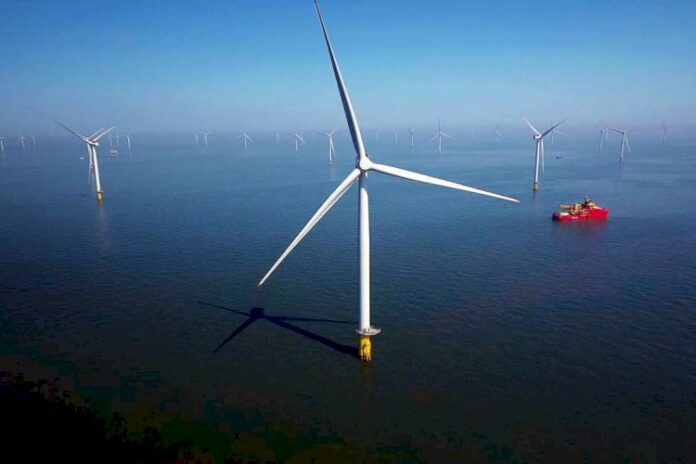
Race Bank Offshore Wind Farm is one of the newest operational wind farms in the UK and was commissioned in 2018. It is capable of generating up to 573MW of green electricity from its 91 Siemens Gamesa 6MW wind turbines.

WHOI joins effort to accelerate marine life protection technology

0

After a record-breaking string of North Atlantic right whale deaths in 2019, the birth of nine calves this winter signaled a little bit of hope for the critically endangered species. But in mid-January, a days-old right whale was severely injured by a ship propeller off the coast of Georgia—and it hasn’t been seen since.

For biologists at Woods Hole Oceanographic Institution (WHOI), losses such as these are not only tragic, they are preventable. From hydrophones attached to buoys or autonomous vehicles, to a passive acoustic monitoring system, WHOI scientists and engineers have developed innovative methods to monitor marine mammals in real time. The idea is simple: if authorities are aware of the presence of migrating whales, they will be able to tell ships to slow down, drastically reducing the likelihood of a fatality. Remote acoustic technologies can also alert scientists to a stranding event, buying critical time to save the animal’s life.

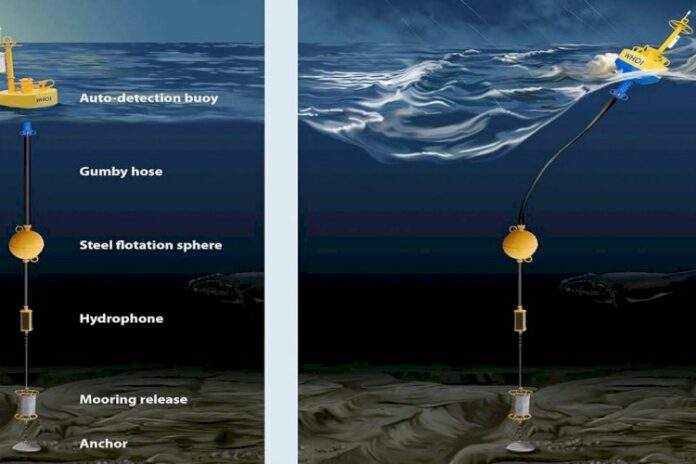
Hydrophones on mooring lines are able to detect whale sounds, but violent seas make it difficult to discern them from the sound of rushing water. To solve the problem, WHOI engineers designed a two-tiered mooring line, separated by a steel flotation sphere. In rough seas (right panel), the tough, stretchy “Gumby hose” on top acts like a bungee cord, absorbing the tension of the surface buoy. The bottom line is decoupled from the movements of the top line; it remains a stable, quiet platform for the hydrophone.
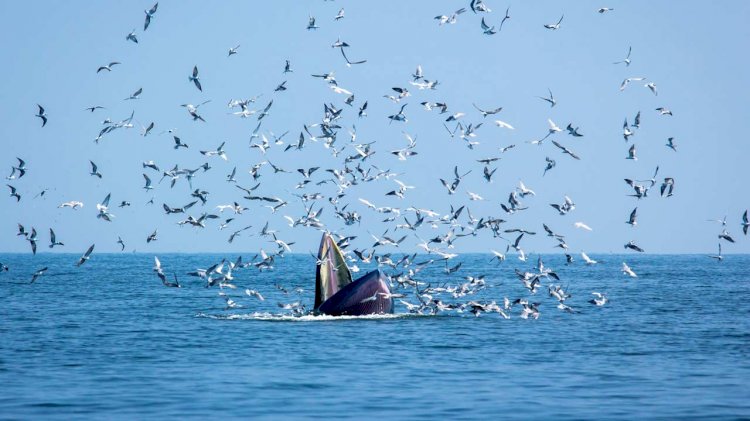
Ships (and fishing gear) are not the only man-made hazards that whales face. Noise in the marine environment also cause distress, impacting the whales’ ability to feed and communicate. That’s why offshore wind operators are required to monitor for the presence of marine mammals during construction and operation. With several large-scale wind farms planned along the U.S. East Coast, the need for accurate, real-time monitoring technologies is enormous. But obstacles—such as maintaining the gear and recovering data from remote offshore locations—remain.

In a bid to overcome these challenges, WHOI has teamed up with Greentown Labs, the largest clean tech incubator in North America, and Vineyard Wind, the developer of a proposed 800-megawatt offshore wind farm off the coast of Martha’s Vineyard, to launch the Offshore Wind Challenge. The program, which is also partnering with New England Aquarium, calls on entrepreneurs to submit proposals to collect, transmit, and analyze marine mammal monitoring data using remote technologies, such as underwater vehicles, drones, and offshore buoys.
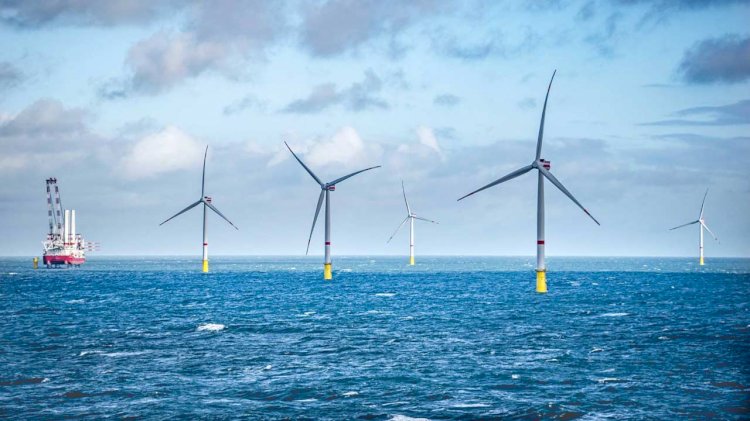
Photo: Vineyard Wind

Emiley Z. Lockhart, WHOI’s senior counsel and director of regional initiatives, says:

“The goal is to assist the responsible development of technologies that are able to enhance real-time detection of North Atlantic right whales and other protected species in the waters off the northeastern United States.”

Startups selected to participate in the program will benefit from networking opportunities, educational workshops, and focused programming through Greentown Launch, a six-month partnership acceleration program provided by Greentown Labs.

Rick Murray, WHOI’s deputy director and vice president for research, says:

“Partnering with Greentown blends the creativity and innovation happening at WHOI, while putting it in a new sphere. And with the offshore wind industry emerging right in our backyard, it’s a natural place for WHOI to responsibly participate through research, technology, and entrepreneurship.”

With at least three wind projects in development off the coast of Woods Hole, Mass., the offshore wind industry has turned to WHOI researchers to help navigate the dynamic and often treacherous marine environment. WHOI’s involvement as an institution kicked off in 2016 and has included initiatives such as the Offshore Wind Energy Research Program, which provides funding for technologies and methodologies that could be transferred to the nascent industry, in partnership with the Massachusetts Clean Energy Center.

Lockhart adds:

“This partnership with Greentown Labs gives WHOI the opportunity to build on its well-earned reputation, and continue to be a highly relevant and active place where the cutting-edge work related to offshore wind development gets done.”

IMDC and Tractebel help to keep the port of Zeebrugge accessible

0

IMDC and Tractebel have been appointed by the Flemish government as part of a consortium to help improve the accessibility of the Zeebrugge inner port. Together the companies will provide communication and project support services and perform environmental studies and social cost-benefit analysis. 

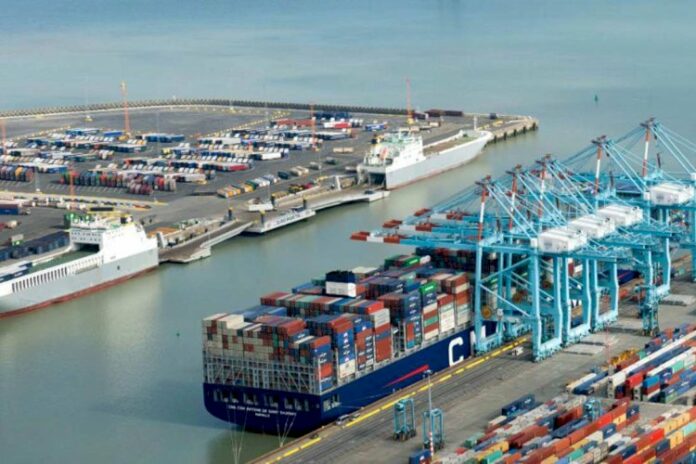
The port of Zeebrugge is the second largest port in Belgium and an important player in Europe. In order to continue to fulfil this role, it is not only necessary that the port grows, but also that it remains easily accessible. The objective of the complex project “Nautical accessibility of the port of Zeebrugge” is therefore to improve and continue to guarantee nautical accessibility to the inner port. This will be achieved by means of a new lock at the current Visart lock, necessary rail infrastructure for tram and train, and a new connecting road with a tunnel for through traffic. 

In addition to economic development, the project involves important improvements in quality of life, environmental and mobility around the port. IMDC and Tractebel have been involved in the wider project of developing the port of Zeebrugge for some time and will continue to bring very specific expertise into this phase.

IMDC’s responsibility includes for the preparation of the groundwater and sediment transport models and the modelling of the salt intrusion, to support the impact assessment in the EIA. Tractebel and IMDC will also strengthen and support the EIA team, in particular in relation to the disciplines of Noise and Vibration and Landscape, Architectural Heritage and Archaeology.

They will also collaborate on the preparation of the project research note, the quality of life study and the mobility study, building on the involvement of their experts in previous phases.

Study: Rising carbon dioxide levels will change marine fish communities

0

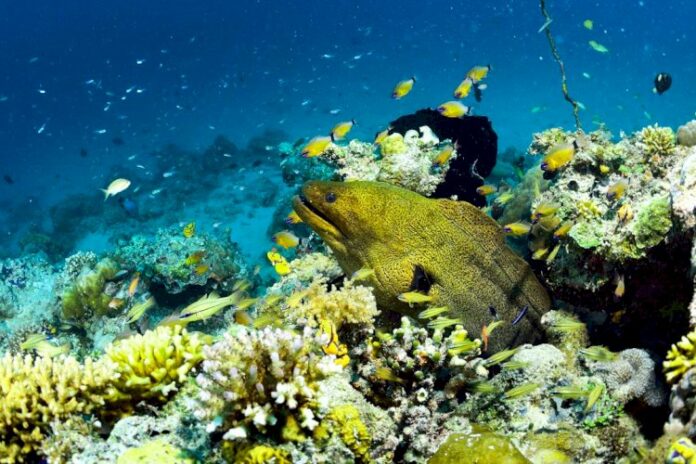
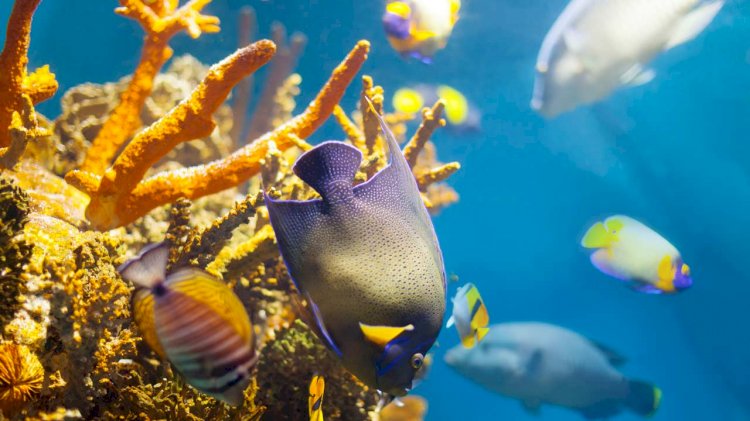
Rising carbon dioxide in the atmosphere and the consequent changes created through ocean acidification will cause severe ecosystem effects, impacting reef-forming habitats and the associated fish, according to new research.

Using submerged natural CO2 seeps off the Japanese Island of Shikine, an international team of marine biologists showed that even slightly higher CO2 concentrations than those existing today may cause profound changes in marine habitats and the fish that rely on them.

Writing in Science of The Total Environment, researchers from the Universities of Palermo (Italy), Tsukuba (Japan) and Plymouth showed that under elevated dissolved CO2 conditions, habitats are dominated by few ephemeral algae.

In such conditions, species such as complex corals and canopy-forming macroalgae mostly disappeared. This shift from complex reefs to habitats dominated by opportunistic low-profile algae led to a 45% decrease of fish diversity, with a loss of coral-associated species and a rearrangement of feeding behaviour.

Lead author Dr Carlo Cattano, from the University of Palermo, said:

“Our findings show that the CO2-induced habitat shifts and food web simplification, which we observed along a volcanic gradient in a climatic transition zone, will impact specialist tropical species favouring temperate generalist fish. Our data also suggests that near-future projected ocean acidification levels will oppose the ongoing poleward expansion of corals (and consequently of reef-associated fish) due to global warming.”

Dr Sylvain Agostini, from Shimoda Marine Research Center, added:

“Submerged volcanic degassing systems may provide realistic insights into future ocean conditions. Studying organism and ecosystem responses off submerged CO2 seeps may help us to understand how the oceans will look in the future if anthropogenic CO2 emissions won’t be reduced.”

In addition to the new findings, the study also reinforces previous research which has demonstrated the ecological effects of habitat changes due to ongoing ocean acidification.

This has shown that decreased seawater pH may impair calcification and accelerate dissolution for many calcifying habitat-formers, while rising CO2 concentrations may favour non-calcifying autotrophs enhancing the primary production and carbon fixation rates.

As a result, there will be losers and winners under increasingly acidified conditions, and fish species that rely on specific resources during their different life stages could disappear. This would lead to the composition of fish communities changing in the near future with potential severe consequences for marine ecosystem functioning and the goods and services they provide to humans.

Jason Hall-Spencer, Professor of Marine Biology at the University of Plymouth, said:

“Our work at underwater volcanic seeps shows that coastal fish are strongly affected by ocean acidification, with far fewer varieties of fish able to cope with the effects of carbon dioxide in the water. This underlines the importance of reducing greenhouse gas emissions to safeguard ocean resources for the future.”