3 C
New York
Home Blog Page 870

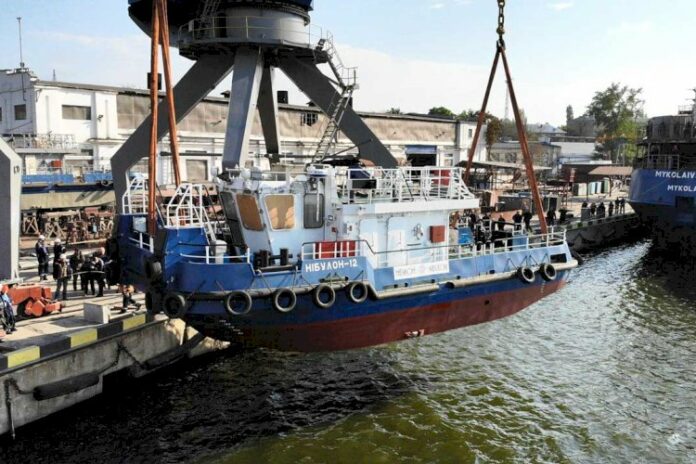
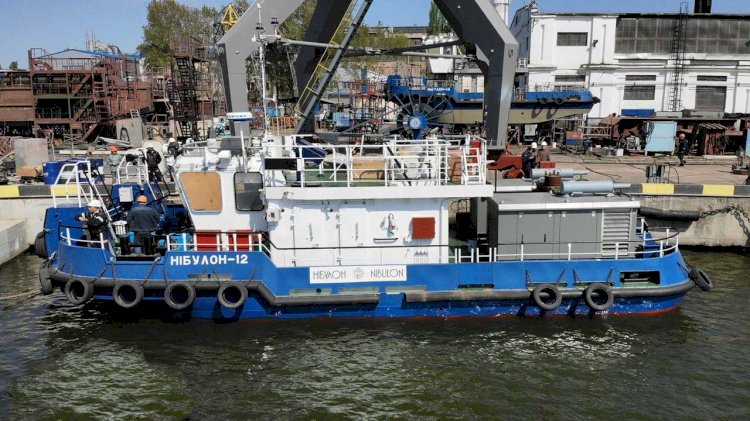
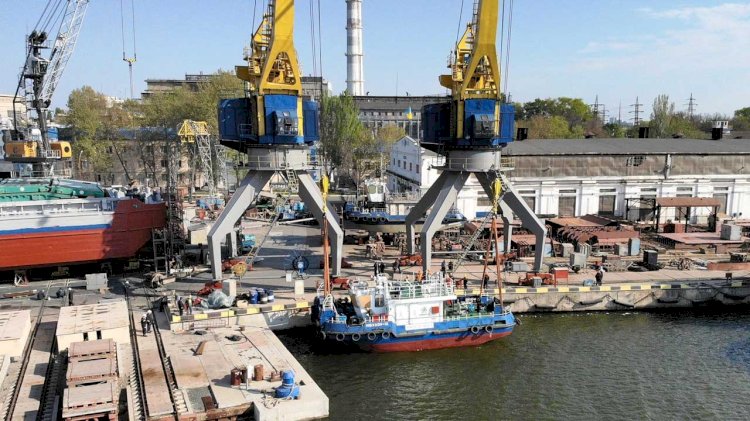
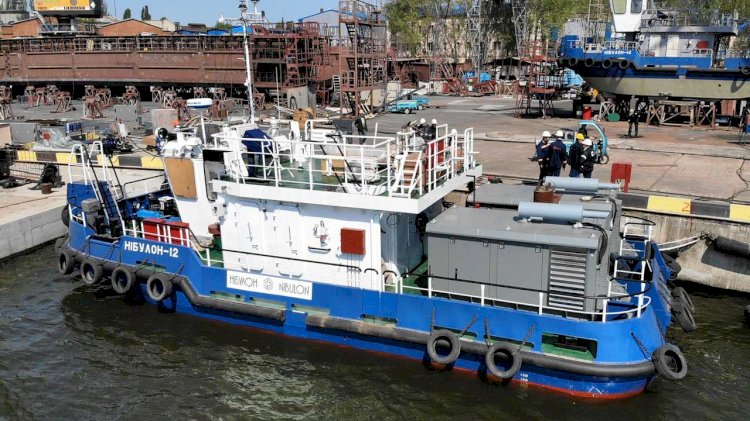
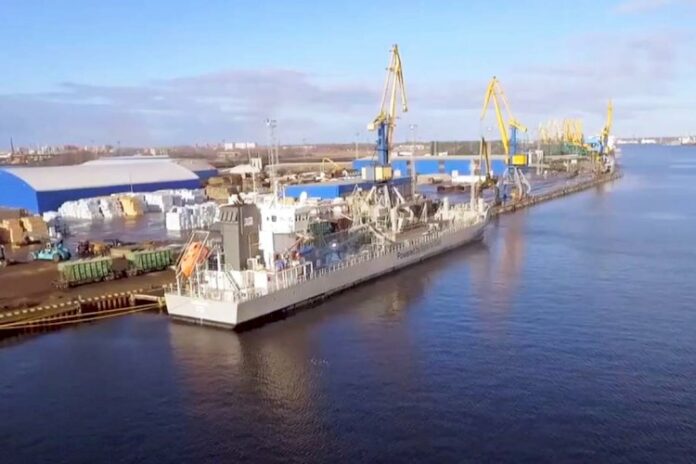
NIBULON launches its first T410 project tug

0

The shipyard is efficiently building its modern Ukrainian fleet and carrying out the planned maintenance of the existing self-propelled and non-self-propelled vessels. The shipbuilders are currently working on thirteen vessels. 

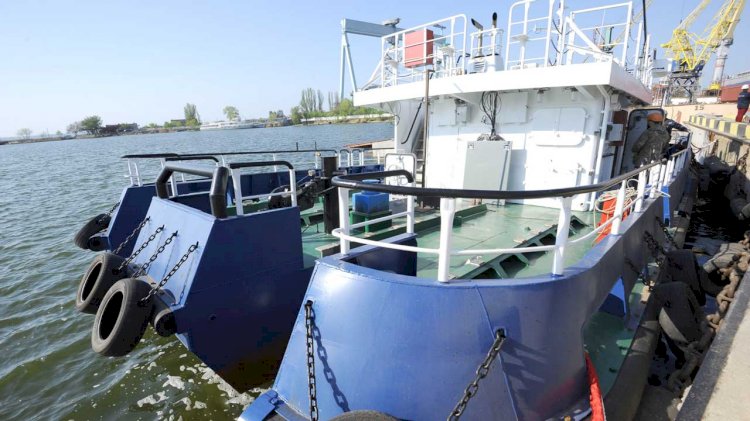
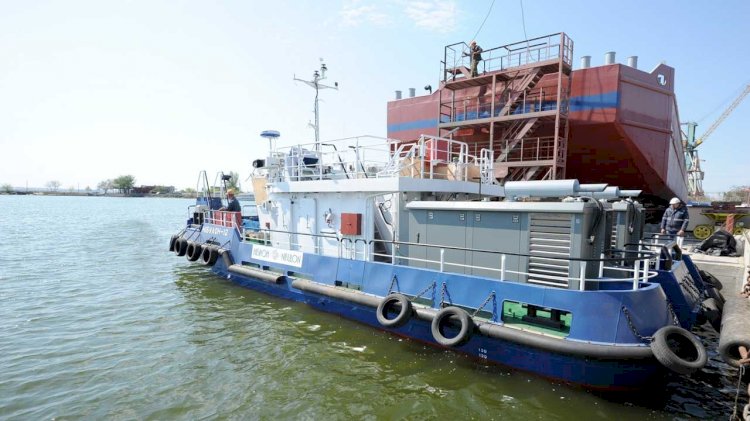
The T410 project vessel is a harbor pusher tug intended for pushing non-self-propelled vessels with the deadweight of up to 3 thousand tons, forming barge convoys, carrying out mooring operations as well as cargo trips in shallow waters, servicing non-self-propelled machinery and other floating equipment. The vessel’s dimensions are as follows: length overall – 15.45 m, breadth – 6.70 m, depth – 1.85 m,  draught – 1.20 m, displacement – 80 t, speed – 5-7 knots. 

The shipbuilders have installed the up-to-date equipment produced by the world leading manufacturers, namely 2 main engines by Scania (Switzerland), 2 rudder propellers by DTG Propulsion BV (the Netherlands), 2 auxiliary diesel-generators by SIA Rigas Dizelis DG (Latvia), and others. The shipbuilders have mounted the deck and mooring equipment comprising fore anchor and mooring winches, a manual capstan, a quick release towing hook, a deck manual boat crane, and hydraulic coupling winches. The shipbuilders have installed the hydraulic coupling winches for the first time. They have the advantage of automatically maintaining continuous load on the ropes on both sides, thereby increasing the service life of coupling winches as well as contributing to the navigation safety.

The T410 project tug as the majority of NIBULON’s vessels has a vertically movable wheelhouse. The aluminum wheelhouse with 360 degree visibility is raised/lowered up to 2.4 m within 180 seconds, thereby increasing the visibility range and visible horizon as well as guaranteeing navigation safety.   

NIBULON’s shipping company is waiting for an order.

According to Dmytro Maystrenko, a leading navigation safety expert at NIBULON, the T410 project tug will optimize the company’s fleet operations:

“The vessel will mainly carry out harbor operations. Due to their small-sized dimensions, these tugs are more maneuverable and more efficient than other ones, thereby enabling the company to save fuel during operations. The tugs will easily maneuver at the wharfs and in the outer roads of river anchorage, will participate in forming and preparing convoys of non-self-propelled vessels to be towed/pushed by high-capacity tugs, will be engaged in piloting NIBULON’s non-self-propelled vessels through the lock. At present the company is considering the involvement of the T410 project tugs to assist other vessels to safely pass under the bridges during unfavourable weather conditions as well as to deliver cargoes to NIBULON’s river facilities along the Southern Buh.”

Having launched the vessel, the shipbuilders started mounting engines and propulsion unit. The specialists are preparing the tug for mooring and sea trials. The first T410 project harbor pusher tug will soon join NIBULON’s fleet and start to perform its first tasks. NIBULON shipbuilding and repair yard will take a step forward to implement the company’s investment program to revive Ukrainian rivers as transport arteries.

Seafloor microplastic hotspots controlled by deep-sea currents

0

Published in the journal Science, this study shows how deep-sea currents act as conveyor belts, transporting tiny plastic fragments and fibres across the seafloor. These currents can concentrate microplastics within huge sediment accumulations, which the authors of the research term ‘microplastic hotspots’. These hotspots appear to be the deep-sea equivalents of the so-called ‘garbage patches’ formed by currents on the ocean surface.

Over 10 million tons of plastic waste enters the oceans each year. Floating plastic waste at sea has piqued the public interest, yet such accumulations account for less than 1% of the plastic that enters the world’s oceans. The missing 99% is instead thought to exist in the deep ocean, but until now it has been unclear where it actually ended up.

Dr Mike Clare of the National Oceanography Centre, who was a co-lead on the research, stated:

“Our study has shown how detailed studies of seafloor currents can help us to connect microplastic transport pathways in the deep-sea and find the ‘missing’ microplastics. The results highlight the need for policy interventions to limit the future flow of plastics into natural environments and minimise impacts on ocean ecosystems”.

The lead author of the study, Dr Ian Kane of the University of Manchester, said:

“Almost everybody has heard of the infamous ocean ‘garbage patches’ of floating plastic, but we were shocked at the high concentrations of microplastics we found in the deep-seafloor”.

Dr Kane added:

“We discovered that microplastics are not uniformly distributed across the study area; instead they are distributed by powerful seafloor currents which concentrate them in certain areas.” 

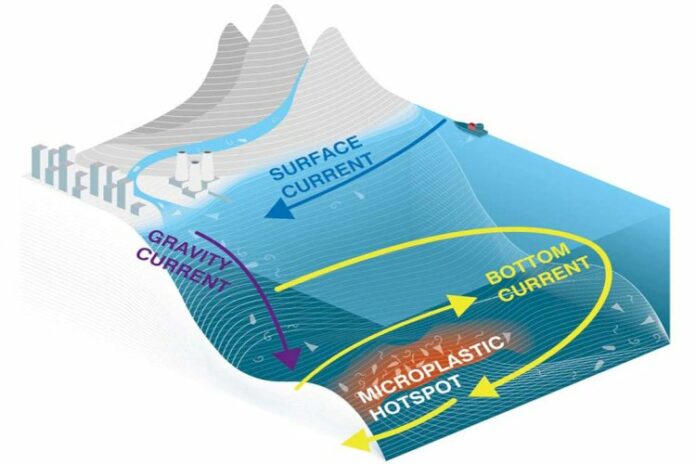
Microplastics on the seafloor dominantly comprise fibres from textiles and clothing. These are not effectively filtered out in domestic wastewater treatment plants, and easily enter rivers and oceans. In the ocean they either settle out slowly, or can be transported rapidly by episodic turbidity currents – powerful underwater avalanches – that travel down submarine canyons to the deep seafloor (see the group’s earlier research in Environmental Science & Technology). Once in the deep sea, microplastics are readily picked up and carried by continuously flowing seafloor currents (‘bottom currents’) that can preferentially concentrate fibres and fragments within large drifts of sediment.

These deep ocean currents also carry oxygenated water and nutrients, meaning that seafloor microplastic hotspots can also house important ecosystems that may consume or absorb the microplastics. This study provides the first direct link between the behaviour of these currents and the concentrations of seafloor microplastics and the findings will help to predict the locations of other deep-sea microplastic hotspots and direct research into the impact of microplastics on marine life.

The team collected samples from the seafloor of the Tyrrhenian Sea (off the west coast of Italy) and combined these with calibrated models of deep ocean currents and detailed mapping of the seafloor. In the laboratory, the plastics were separated from sediment, counted under the microscope, and further analysed using infra-red spectroscopy to determine the plastic types. Using this information the team were able to show how ocean currents controlled the distribution of microplastics on the seafloor.

This research forms part of an international research project at the University of Manchester (UK), the National Oceanography Centre (UK), IFREMER (France) and the Universities of Bremen (Germany) and Durham (UK). 

This project is part of wider research by the Microplastics Research Group at the National Oceanography Centre that aims to understand the extent and implications of microplastic pollution on the health of marine ecosystems.

Microplastics are delivered to the ocean through rivers carrying industrial and domestic wastewater, carried down submarine canyons by powerful avalanches of sediment (turbidity currents) and then transported on the seafloor by ‘bottom currents’ and deposited in sediment drifts. Other microplastics sink from the ocean surface and can also be picked up and carried by bottom currents.

EMP commences feasibility study to install Aquarius MRE on tanker

0

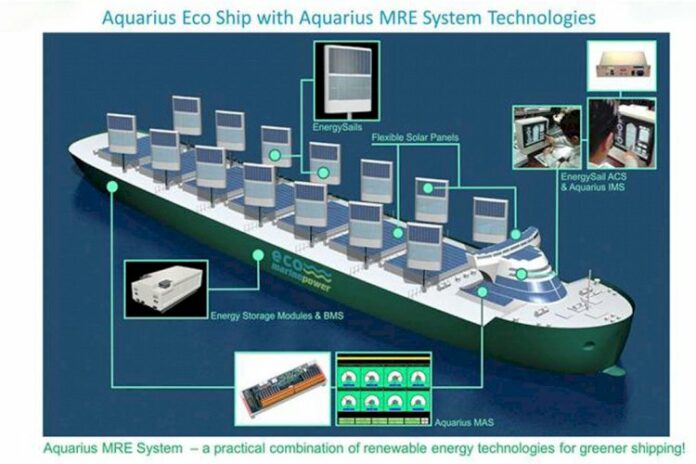
In another major step towards commercializing its Aquarius Marine Renewable Energy (Aquarius MRE®) solution, Eco Marine Power (EMP) has announced that it had commenced a feasibility study regarding the installation of the solution onto a LR2 Tanker. The study is being undertaken in co-operation with the ship owner and will investigate how various technologies can reduce fuel consumption and emissions on-board the vessel.

The scope of the feasibility study includes; investigating installation locations for marine-grade solar panel and frames, an energy-storage system, an automated alarm and monitoring system & the fitting of EnergySail’s onto the ship. Also involved in the study at this stage are Teramoto Iron Works Co. Ltd., The Furukawa Battery Company, KEI System Ltd., and Fuji Trading Co., Ltd.

The LR2 Tanker selected for the study is approximately 240 metres in length and is the largest ship of this type that EMP has investigated the detailed installation of its complete Aquarius MRE solution. Aquarius MRE is a zero emissions power and propulsion system that incorporates an array of automated rigid sails, marine-grade solar panels, energy storage modules, charging equipment and computer systems. Aquarius MRE enables ships to tap into renewable energy by harnessing the power provided by the wind and sun. The array of rigid sails are automatically positioned by a computer system to best suit the prevailing weather conditions and can be lowered and stored when not in use or in bad weather.

The rigid sails are based on EMP’s patented EnergySail® technology and these renewable energy devices can even be used when a ship is at anchor or in harbour. Each EnergySail can be configured with a mix of sensors, photovoltaic panels or other power generating devices.

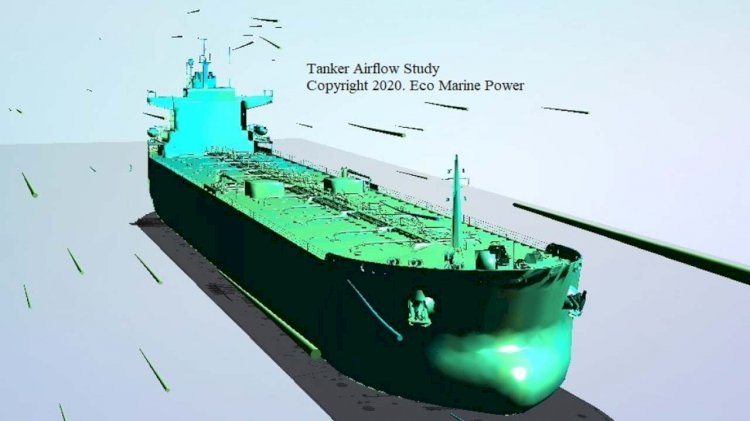
Also included in the feasibility study will be modelling of the expected fuel consumption and emission reductions that could be achieved via the use of Aquarius MRE, plus Computational Fluid Dynamic (CFD) modelling of airflow around the ship. EMP is also investigating which marine-grade solar panels would be the most suitable for the project and also the feasibility of adding further equipment including low power LED lighting and other power saving devices.

Preparation for the feasibility study commenced in 2019 when a vessel survey was conducted and it is expected that the feasibility study phase will be completed in early 2021. Some equipment for an initial system trial may be installed on the ship within 2020.

Multiple MAN engines ordered for new generation of offshore installation vessel

0

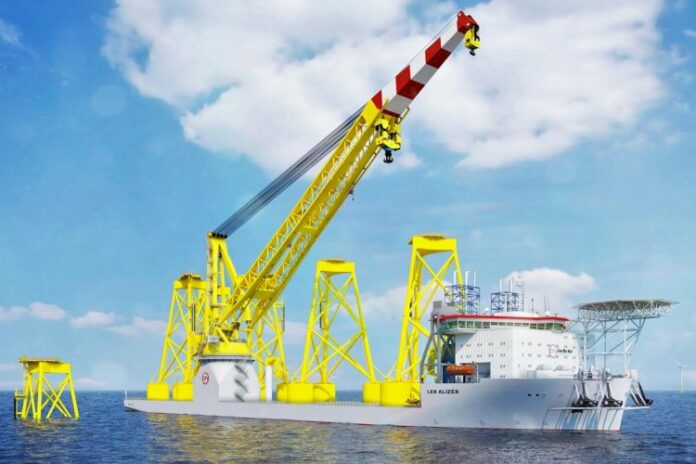
China Merchant Heavy Industry (CMHI) has ordered 6 × MAN 12V32/44CR main engines in connection with the building of a new 5,000-tonne floating installation crane vessel – already christened ‘Les Alizés’ – for Jan De Nul Group, an international maritime construction expert.

Delivering a cumulative output of 43,200 kW, the common-rail engines will each feature an enhanced, MAN-supplied SCR (Selective Catalytic Reduction) system for IMO Tier III-compliance, and will also meet the even-stricter Euro Stage V-compliant NOx-emission limit. The enhanced NOx-reduction rate is essential for the newbuilding to fulfill the exacting ULEV (Ultra Low Emission vessel) standard for better air quality, characterised by very low NOx and particle emissions.

Les Alizés will be built at CMHI’s shipyard in Jiangsu province, eastern China, and is scheduled for delivery in 2022.

Lex Nijsen, Head of Four-Stroke Marine Sales – MAN Energy Solutions, said:

“The MAN 32/44CR’s robust design is proven across many applications and I’m very happy to see it chosen again for such an exciting project. MAN Energy Solutions has previously worked with Jan De Nul Group on many of its vessels and recently provided four 12V32/44CR engines to CMHI for a major semi-submersible project. We look forward to working with our partners again in the commissioning of such a noteworthy vessel that truly begins a new era for the offshore installation sector.”

Jan De Nul Group is a world leader in dredging and offshore technology and operates a modern and versatile fleet of dredging and offshore-installation vessels that currently features over 90 MAN engines.

MAN Energy Solutions states that several of the 32/44CR’s unique features were important in it being choosen for the project.

Accordingly, the engines will be delivered with the company’s innovative ECOMAP feature. The CR-system’s flexibility permits the engine to be programmed to run along different fuel-consumption-versus-power characteristics, with each having its efficiency optimum at a different load point.

Another key 32/44CR characteristic is that high engine-output is available even at high ambient temperatures, as well as at the high exhaust-gas back-pressures resulting from the extensive exhaust-gas treatment equipment, which is mandatory for the ULEv notation.

Les Alizés’ genesis stems from the global trend within the offshore wind-energy segment for increasingly larger wind turbines. These can be more than 270 metres high – with blades up to 120 metres long – and can be mounted on foundations weighing up to 2,500 tonnes: dimensions that current offshore installation vessels have trouble installing.

Les Alizés will be in a super-size class of its own, capable of building the next generation of offshore wind farms but whose crane – with a lifting capacity of 5,000 tonnes and equally impressive lifting heights – also renders her capable of decommissioning offshore oil and gas platforms. 

Paradise Navigation adopts Fleet Xpress and Infinity

0

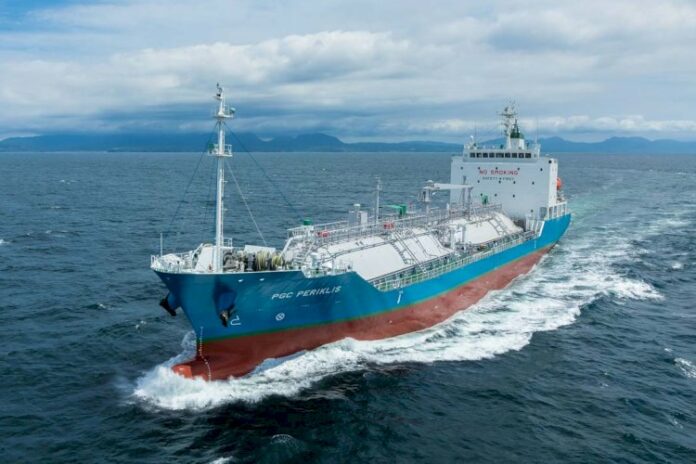
Founded in 1996, Paradise Navigation has grown into a ship management company operating a fleet of 10 vessels, comprising 4 tankers and 6 LPGs.

The company is in the process of a fleet wide rollout of Fleet Xpress, having already upgraded from Fleet Broadband on 2 tankers .To help control the new, higher bandwidth that FX provides, Paradise has combined it with Infinity, Navarino’s leading bandwidth management and optimization system. Paradise has also implemented Infinity’s built in email service, Infinity Mail.

Mr Sakkas, S&Q Manager for Paradise, said:

‘The time has come for our company to upgrade our tankers with FleetXpress for superfast speeds and Infinity for operational intelligence and crew welfare: crew internet and crew welfare, use of predictive maintenance, automation of onboard systems are a priority for our company and our partners. Our tankers have become an extension of our shore office and high speed and stable connectivity are vital for us. We are very happy with our cooperation with Navarino and we plan to continue with the FX upgrades during the upcoming drydocks for the whole fleet.’

Ioannis Brougiannakis, Navarino Account Manager for Paradise, said:

‘Paradise Navigation is a leading ship management company for the global sea transportation of gas and oil cargoes and the company needs to utilize new technologies for maximum efficiency, for safety and of course for crew welfare. We have offered FleetXpress to deliver a robust and flexible service that continues to exceed Paradise’ s expectations, and Infinity for the digitalization options it brings and for its operational and crew welfare capabilities.”

VIDEO: Storm and mammal monitoring with the Slocum G3 glider

0

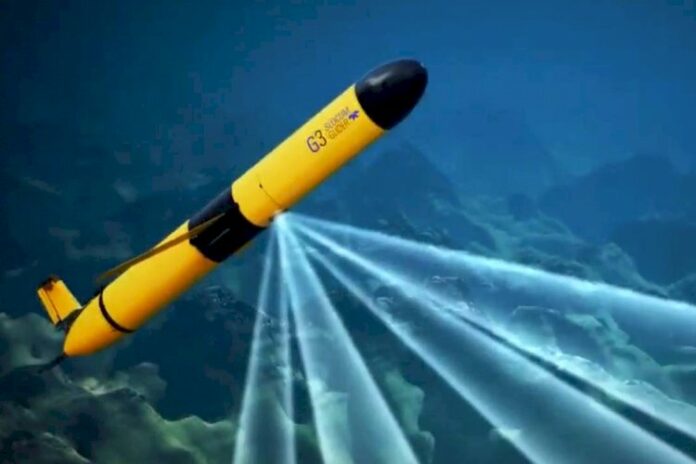
The Slocum glider by Teledyne Marine is buoyancy driven to enable long range and duration remote water column observation for academic, military, and commercial applications. The Slocum Glider can be deployed and recovered from any size vessel with minimal time on station.

Once the Slocum glider is deployed, it can easily be controlled from anywhere in the world through the use of web based piloting tools. This allows fleets of gliders to be operated remotely with minimal personnel and infrastructure. 

The cornerstone of Tallinn’s cruise terminal was laid

0

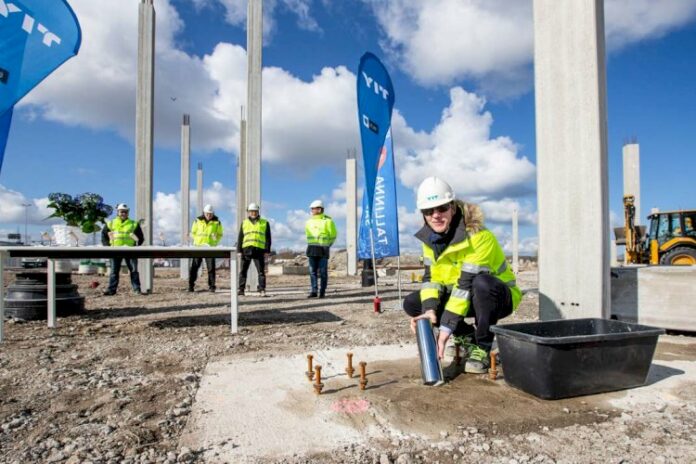
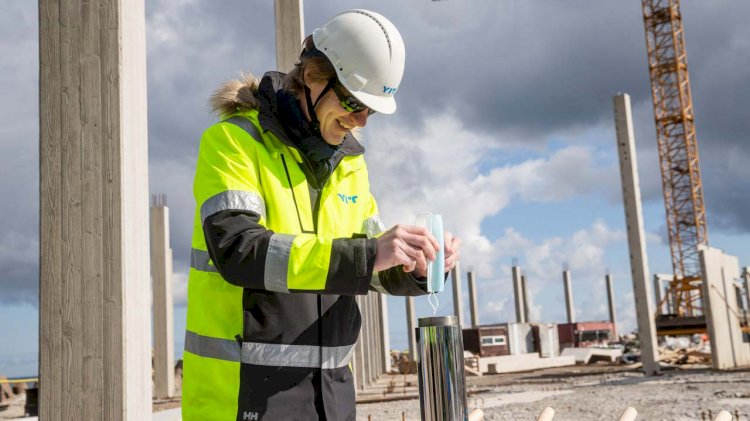
The cornerstone was put in place by Port of Tallinn’s Chief Infrastructure Officer Peeter Nõgu and by YIT Eesti’s Member of the Management Board Margus Põim.

Peeter Nõgu, the Chief Infrastructure Officer of Port of Tallinn, stated that despite the current emergency situation, during which the builder has had to review the construction processes to ensure safety and security of employees, the initial construction schedule still applies and the cornerstone of the building can be laid:

“The cruise season, which was supposed to start in the end of April, has been postponed. This enables the builder to move forward with the work more rapidly and we will soon see the cruise terminal building to rise.”

According to Margus Põim, the Member of the Management Board of YIT Eesti, all the foundations of the terminal building have been cast and the installation of building’s frame posts has begun:

“As for the promenade, the rubble base is being laid and the foundation is being built, as well as the setting up of landforms in compliance with the landscape architectural solution.”

Port of Tallinn signed an agreement with YIT Eesti AS for the construction of new cruise terminal in Tallinn Old City Harbour in January. The value of the contract is EUR 13.7 million. The new cruise terminal is estimated to be completed in July 2021.

The multifunctional and environmentally friendly cruise terminal is being built in Old City Harbour in the vicinity of the two existing cruise quays. Along the seafront and from terminal’s roof level to the end of the pier, an open walking promenade with green areas will be built for citizens.

The future cruise terminal satisfies the needs of both, cruise passengers and citizens of Tallinn. Peeter Nõgu noted:

“Being the biggest sea gate and the creator of the first impression of Tallinn, we aim to offer the best visiting experience. Opening the sea to citizens and visitors is as important. We believe that the new cruise terminal and open promenade will become one of the landmarks of Tallinn and for locals, a beloved place to spend time.“

The technical design of the terminal building is based on a study that explored how to implement energy efficient, ecological and sustainable solutions in the new building that would suit the Nordic climate and would allow the building to be operated also outside the cruise season. The study was supported by the European Union funding for the Green Cruise Port project implemented under the Interreg Baltic Sea Program.

VIDEO: New ASN cable maintenance vessel ILE D’OUESSANT

0

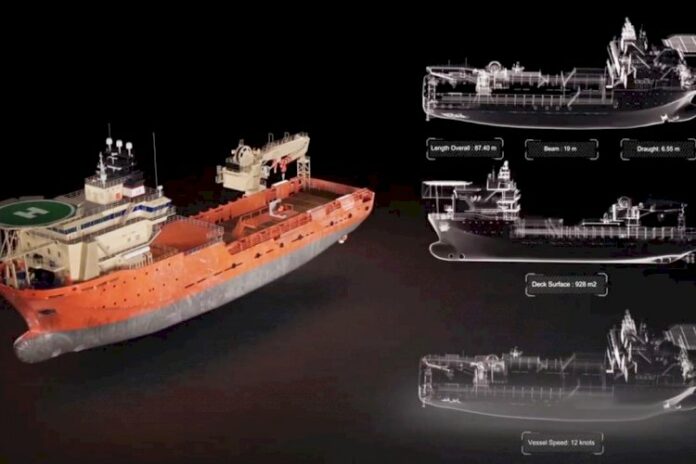
On purchasing the vessel (which was built in 2011) ASN conducted a detailed design and engineering phase which was carried out in parallel to the recommissioning of the vessel and its ancillary equipment.

The vessel was then relocated to a shipyard in Poland for the extensive retrofit program to install the specialized cable handling equipment and dedicated spread reconfiguration. This relatively new DP2 cable maintenance vessel offers a flexible and efficient resource for the submarine cable maintenance operations and is a clear commitment of ASN towards our Private Maintenance Agreement Customers.

Jeremie Maillet, VP Marine Operations, said:

“Whilst ASN had committed to the retrofit of the Ile d’Ouessant, Optic Marine Services agreed the subsequent purchase of the CS Peter Faber from ASN. This transaction was concluded on September 24th, 2019. Since that time, the Peter Faber has been chartered by ASN to continue with her Maintenance duties in the Atlantic region. This charter arrangement will conclude after the successful handover between Ile d’Ouessant and Peter Faber. It is our firm belief that the Ile d’Ouessant offers our customers a modern vessel, fitted with the most up-to-date equipment which is ready to face the unique challenges of the cable maintenance activity in the APMA zone.”

Renamed Ile d’Ouessant as a reference to the great ASN cable layer family and the deep western French island, the vessel is intended to maintain submarine telecom networks in the Atlantic Ocean.

Open access forecasting system tested successfully in the Port of Riga

0

Forecasting is possible due to invisible part of the system – specific software is responsible for non-stop data collection and mathematical modeling of hydrodynamic processes.

The system was created in Latvia, its developers, SIA “Procesu analīzes un izpētes centrs” (PAIC), have been researching waves, currents, sediment transport and silting of shipping lanes in Latvian ports for several years, consulting designers of port facilities, hydro-technical structures and navigable routes.

The Freeport of Riga is the first and so far the only port where the new system is operational, since April it has been available to everyone on the web platform – water.lv/HywasPort/RigasOsta.

The Vessel Traffic Service Center of the Freeport of Riga, which has to take various decisions related to maritime safety and the port operation efficiency on a daily basis, considers the hydrodynamic model to be useful.

Arnis Shmits, the Harbor Master, comments:

“The information provided by the system facilitates timely assessment of wind, wave, current and water levels, as well as helps to forecast their changes in a short time. Thus, in addition to the existing current and wind direction sensors mounted at the port, we have another real-time data collection tool that helps to plan the work of the port, as well as in some situations it might foster the decision-making process.”

The port of Riga is located on both banks of the River Daugava, stretching for 15 kilometers; the water area of the port occupies 4,386 ha. The port of Riga, as a distinct river port, has its own specific features – there are no cyclical and predictable tidal or water level changes. Changes in the water level at the port of Riga are irregular, mainly depending on the wind direction and speed, while the current in the River Daugava depends mainly on the intensity of HPP operation.

CSBC-DEME to work on first Taiwan-built offshore wind installation vessel

0

In an industry milestone, joint venture CSBC-DEME Wind Engineering (CDWE) has initiated the early works contract for the very first floating heavy lift and installation vessel to be built in Taiwan. To be named ‘Green Jade’, the vessel has an exceptionally high transport and load capacity and will be built at CSBC in Taiwan for delivery in 2022 for deployment in the flourishing local offshore wind market.

CDWE, Taiwan’s first offshore wind EPCI contractor, was established in February 2019  by CSBC, the largest shipbuilder in Taiwan, and DEME Offshore.

Both partners have agreed to start up the early works and the ordering of critical packages for their pioneering new asset, ‘Green Jade’. The name symbolises Taiwan’s renowned Yushan, the Jade Mountain. At a dizzying height of 3,952 m above sea level, Jade Mountain is the highest peak in East Asia and gives Taiwan one of the highest elevations of any island in the world. Additionally, the name ‘Green Jade’ reflects this trail-blazing vessel’s contribution to reducing emissions, and its role in bringing clean, green energy to Taiwan’s residents. By choosing such an auspicious name, CDWE wants to highlight our ambitions to develop the offshore wind industry and to successfully ‘scale the summit’ together.

In October last year, CDWE signed Taiwan’s first comprehensive, large-scale Balance of Plant (BOP) Preferred Supplier Agreement with the Hai Long Offshore Wind Project. This marks an important step in realising industry compliance with the ‘Industrial Relevance Plan Goals’ that the Taiwan Government has mandated in the offshore wind industry.

Swiftly following on from this first success, CDWE has signed two contracts with Zhong Neng Wind Power Corporation Preparatory Office for the 300MW Zhong Neng offshore wind farm project. The contracts comprise the transportation and installation of foundations, as well as a Preferred Bidder Agreement for the transportation and installation of the wind turbines.

‘Green Jade’ will be deployed on both projects. CDWE is committed to meeting localisation requirements and assisting with the development of the offshore wind industry, and a successful and sustainable supply chain in Taiwan, optimising local materials and skills.

‘Green Jade’ will feature a high-tech, 4000-tonne capacity crane and DP3 capability. The vessel’s deck space has been maximised, enabling this unique asset to transport a multitude of the heaviest monopiles, jackets, wind turbine components and structures in a single shipment. With this exceptional combination of high load and lifting capacity, ‘Green Jade’ can transport and install the next generation of foundations and giant multi-megawatt wind turbines in the most cost-effective way. At 216.5 metres long, ‘Green Jade’ can comfortably accommodate a crew of up to 160 people.

Environmental considerations are an important element of the vessel design. ‘Green Jade’ has dual fuel engines and will have a Green Passport and Clean Design notation. ‘Green Jade’ will also have other environmental innovations on board, including a waste heat recovery system that converts heat from the exhaust gases and cooling water to electrical energy, in addition to various other fuel-saving measures.

This is a historic moment in Taiwan’s offshore wind development and indeed for the Taiwanese shipbuilding sector, as this dedicated offshore installation vessel is the first of its kind to be built in Taiwan for the local renewables market.

Hai Long EPCI Director, Felipe Montero, enthused: 

“Hai Long and CDWE started this partnership by signing a MOU on March 9th 2018 before the allocation round took place. The BOP conditional contract was signed in October 2019, covering EPCI for the foundations, inter-array cables & export cables and the T&I of the turbines, giving CDWE their biggest scope and contract so far. This also allows them to participate from the beginning of the development until the end of the construction. Hai Long is delighted to see CDWE taking steps to construct the first offshore installation vessel in Taiwan. We are very proud of having contributed to this milestone which demonstrates Hai Long’s commitment to supporting the development of the local supply chain.  Hai Long will continue to collaborate with CDWE on cultivating a sustainable local supply chain, while exploring more opportunities in supporting the localisation policy.”

Frank Rijnja, Procurement Director of the CIP-CSC co-developed Zhong Neng Offshore Wind Project, said:

“Zhong Neng awarded the Foundation T&I scope for the 300MW Zhong Neng Offshore Wind Farm to CDWE in December 2019. One of the reasons was to support the government’s localisation policy and to provide CDWE with confidence, enabling the company to take the decision to invest in a locally built and state-of-the-art installation vessel. We believe Zhong Neng’s firm order to CDWE will create high value jobs for Taiwan’s shipbuilding industry. This cooperation between Zhong Neng and CDWE resulted in the successful submission and IDB approval of Zhong Neng’s Localisation Proposal.”

Robert Tseng, Chairman of CDWE, comments:

“The establishment of CDWE is a perfect combination of DEME’s unrivalled strength in the offshore wind power segment and CSBC’s leading position in shipbuilding, vessel operation and foundation fabrication in Taiwan’s offshore wind farm development. CDWE, the localised Taiwanese offshore engineering company has demonstrated its reliability and capability to the clients by winning various iconic T&I or BOP projects, and by playing a key role in bringing Taiwan’s offshore engineering capabilities to a higher level. This key role and strength of CDWE will be further enhanced by investing in this Locally built/Locally owned/Locally operated Main Installation Vessel, and I do believe ‘Green Jade’ will shape a promising and flourishing future for Taiwan’s offshore wind business.”

Hugo Bouvy, Managing Director DEME Offshore,comments:

“We are very excited to initiate the early works of the first floating offshore installation vessel in Taiwan. With ‘Green Jade’ we will be uniquely positioned to meet the requirements of the Taiwanese offshore wind market, and to be an integral part in the country’s offshore wind development ambitions. Taiwan is a pioneering and dynamic renewables market with plenty of opportunities for CDWE, a leading company in the global offshore wind industry. Our commitment to this market is clear to see from the substantial investment in ‘Green Jade’ and the local presence of our highly-skilled offshore wind professionals. The Hai Long and Zhong Neng Projects have played an integral part in our decision to invest in an installation vessel. They have offered us an extensive scope of works beyond the Government’s Bureau of Energy’s localisation requirements, and are our anchor projects until Round 3 projects commence, giving confidence to our internal stakeholders and lenders that this vessel will have a strong pipeline of work and can be integral to Taiwan’s offshore wind development ambitions.”