-2.2 C
New York
Home Blog Page 865

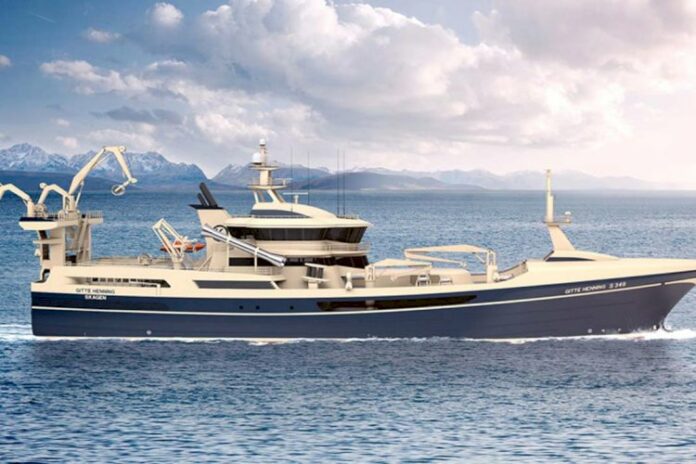
Zamakona Yards begins construction for its newbuild for Gitte Henning AS

0

ZAMAKONA YARDS has begun constructing its newbuild for Gitte Henning AS, holding the start of the steel cutting for NB 799.

NB 799 will have a number of environmentally friendly solutions, many of them new in pelagic fishing (two propellers and a twin-skeg hull design, permanent magnet motors for propulsion and deck machinery, battery pack, etc) . Throughout the design process and in the choice of equipment, the focus has been on improving quality of the fish and reducing emissions through reduced energy consumption and efficient power production.

Pedro Garaygordobil, Chairman of Zamakona Yards, said:

“This new build represents our consolidation as one of the main shipbuilding yards into the pelagic trawler market after delivery of 7 vessels for shipowners in Scotland, and thus it is a very important milestone for us. The project progresses in good cooperation with the customer and with the designer Salt Ship Design.”

The whole steel blocks for the vessel are going to be manufactured at the facilities of the yard in Bilbao, Spain. Specially now, Zamakona Yard continue with its strategy of no outsourcing to low cost third countries, assuring best quality and delivery time for the steel structure of the vessel.

Assembly of the ship sections at the slipway will then begin in July 2020.

Oceaneering completes integrated rig services campaign offshore South America

0

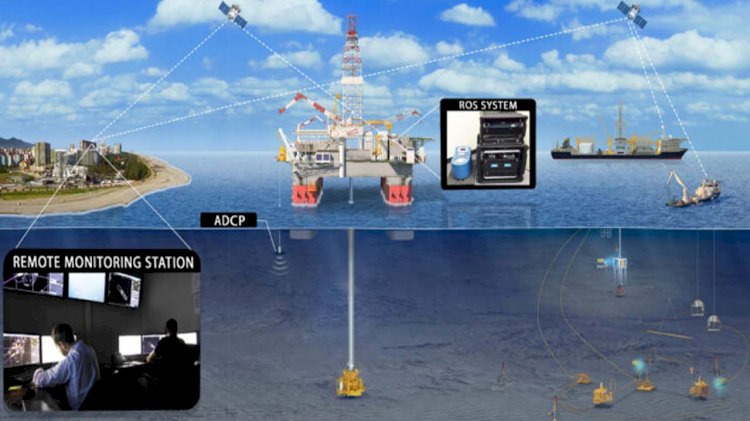
Oceaneering International (Oceaneering) announces that its Remotely Operated Survey (ROS) group has successfully completed an Integrated Rig Services campaign for a major operator offshore South America and recorded a milestone 150,000 hours of ROS operations with 99% uptime with no client operations or vessel downtime.

Oceaneering was contracted by Apache Corp. in June 2019 to provide Integrated Rig Services on the Noble Sam Croft drillship. The work scope included the provision of ROS, Remotely Operated Vehicle (ROV), and Acoustic Doppler Current Profiler (ADCP) for a potential three-well campaign.

The ROS and ADCP systems were mobilized and commissioned on the drillship Noble Sam Croft during the summer of 2019. The drillship then transited to Suriname where it began operations in the early fall.

Chris Echols, Global Business Development Manager, Survey Services, said:

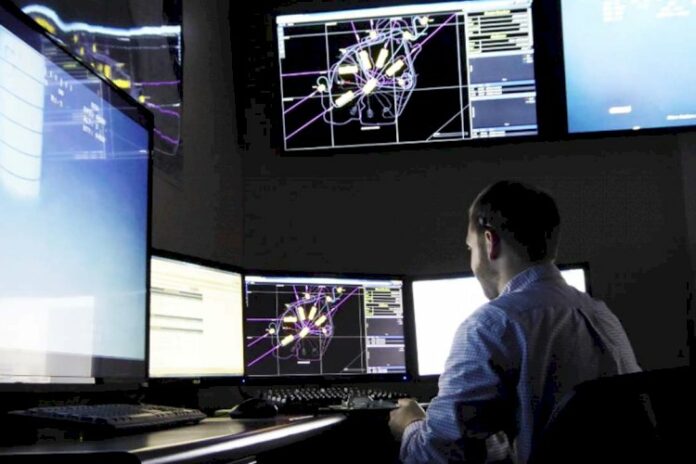
“The ROS system eliminates the need to remobilize survey equipment and personnel for subsequent moves. Oceaneering surveyors in our Remote Control Monitoring Stations (RCMS) communicate and coordinate with the rig personnel and company representative during rig move activities. The ADCP systems on the drillship are maintained, recovered, and deployed by the ROV crew. This minimizes personnel on board, and greatly reduces the logistics and costs associated with mobilizations in remote areas.”

He continued:

“Additionally, during this unprecedented global pandemic, the ROS and ADCP services have added value where personnel movements have been hampered by local restrictions, which vary country to country. By utilizing ROS, Oceaneering’s services remain unaffected by these restrictions.”

Oceaneering has now surpassed 150,000 hours of successful ROS operations. Echols said:

“This milestone ushers in a new era for remote survey and positioning services. Advancements in these areas have enabled operators to rethink the way they conduct work.”

All ROS surveys are supported by Oceaneering’s RCMS in Houston, Texas, and Lafayette, Louisiana. Having multiple separate monitoring stations allows for redundancy in our operational execution plan.

Deep BV upgrades one of its survey vessels

0

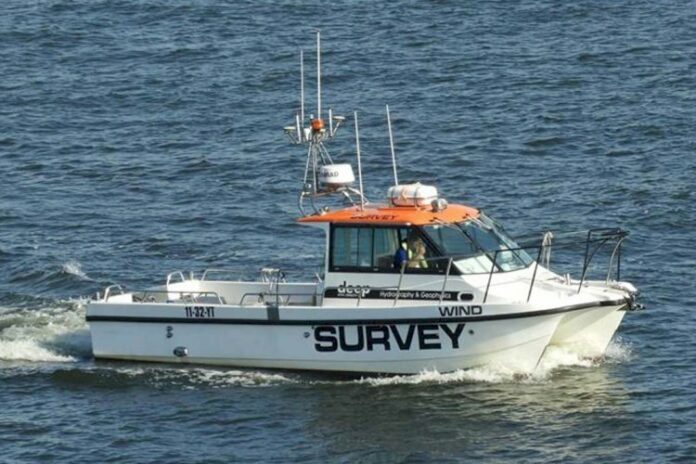
U.S.-based Sea Machines Robotics, a leading developer of autonomous command and advanced perception systems, announced today that Amsterdam-based Deep BV will upgrade one of its survey vessels with a Sea Machines SM300 autonomous control system.

The Sea Machines system enables remote command of the vessel, including navigation and positioning, the control of on-board auxiliaries and sensors, and ship-to-shore data flow. The vessel, operating in multiple areas of the Wadden Sea, will be commanded by personnel in the Amsterdam office. 

The SM300 autonomy system offers a new world of operational productivity and capability, bringing 21st century task optimization to the marine sectors. Sea Machines reduces and eliminates a number of inefficiencies that have too long been accepted as standard. The technology enhances the value of vessel operations by:

  • Shifting full-mission vessel control effort from manual to autonomy system;
  • Enabling personnel to focus less on recurring and repetitive tasks, and more on value advantages;
  • Reshaping the conventional 1:1 relationship between a survey crew and vessel;
  • Dynamically interfacing navigational control with survey software;
  • Improving vessel tracking precision over planned lines; and
  • Enhancing project planning with predicted on-water mission characteristics.

This Sea Machines system can be installed on new or existing vessels, allowing a fleet manager to leverage state-of-the-art technology without requiring the added expense and time consumed by purchasing a new vessel. 

With the SM300, surveyors can remotely monitor and command multiple autonomous vessels from a shipboard or shore-based center located anywhere with network connectivity. This remote capability increases operational health and safety by reducing or removing high-risk activities generally associated with crew working aboard small survey craft in dynamic marine environments. By breaking the 1:1 crew-to-vessel relationship, companies can better utilize their technical experts across multiple concurrent projects. 

Deep will initially deploy the Sea Machines-enabled vessel for a mission to survey the Wadden Sea, a challenging shallow body of water with tidal flats and wetlands located north of The Netherlands. With no surveyors on board the vessel for this project, Deep operators will command and control the autonomous vessel and all on-board payloads (including survey sonars, hydrophones, winches, cranes and davits) from its shoreside Survey Control Room, which has been equipped to facilitate several multi-beam surveys simultaneously. Deep will then transfer all collected data from the vessel to the control room via 4G and satellite connection. The combination of Sea Machines’ technology and the Survey Control Room will enable Deep to transition from minimally manned missions to unmanned missions in the near future.

Sea Machines’ Michael G. Johnson, CEO, said:

“Sea Machines systems are an ideal fit for commercial marine operations that require high levels of predictability, productivity and safety. For these reasons, hydrographic survey is an exemplary use case for our autonomous-command and remote-helm control technologies. With Sea Machines installed on board, Deep will benefit from obtaining higher-quality data, more safely and at a more efficient rate with less data overlap. It’s an honor to serve innovative leader Deep with technology that helps them meet their goals and advance our industry.”

Deep’s Jurgen Beerens, CCO, said:

“The purpose of our Survey Control Room is to offer our clients many possibilities like ad hoc surveys, simultaneous conducted surveys operated by only one survey crew, and multi-purpose use of vessels already available in the field. Besides these unparalleled flexibility advantages, it offers a time-saving option to increase efficiency and control costs towards a more sustainable future. With Sea Machines integrated on our vessel, we will soon begin to transfer tasks from the vessel to the safe working environment of the office. As well as improving safety, we will gain flexibility, continuity and quality, and we will reduce risks and our carbon footprint.”

In September 2019, Deep was the first company to conduct remote surveys without surveyors on board in The Netherlands. These early missions included a captain and crew on board, with surveyors based in the Survey Control Room executing data collections via the SIMON Remote Survey platform for marine survey data control and acquisition. Installation of the SM300 aboard Deep’s vessel represents the next step in Deep’s innovative plans to move towards safer and more efficient remote survey operations.

IMO publishes framework of protocols for safe crew changes

0

The International Maritime Organization (IMO) has sent a recommended framework of protocols for ensuring safe ship crew changes and travel during the COVID-19 pandemic to all IMO member-states, the UN and other stakeholders.

The document describes protocols on how crews can join a ship, starting at their residence, and how a crew member can disembark and reach his home – often in a different country.

The protocols for crew change and repatriation were drawn up by ICS, IAPH, BIMCO, IFSMA, INTERTANKO, P&I Clubs, CLIA, INTERCARGO, InterManager, IPTA, IMCA, INTERFERRY, FONASBA, ITF, and WSC. They also take account of input from the International Air Transport Association (IATA).

The IMO urges governments and national authorities to designate all professional seafarers and marine personnel as “key workers” and grant them with the necessary exemptions from the local rules that restrict movement, to allow them to join or leave the ships, among other things.

The 61-page document is aimed at all the stakeholders in the process, including shipowners, shipping companies, maritime administrations, customs, health authorities, airport authorities and several other organizations.

IMO Secretary-General Lim said he supports these protocols and urges their implementation. The full text is contained in a circular letter issued by IMO. It invites the Organization’s Member States and international organizations to use the protocols and to disseminate them among relevant national authorities.

Lars Robert Pedersen, BIMCO Deputy Secretary General, says:

“It is an important step that we provide these protocols, to demonstrate that transferring crews can be done safely. It is however down to all the nation states to implement the required measures during a crisis that is still escalating in many locations. It will therefore require continued consultation with governments, to avoid a potential breakdown in supply-chains which will harm everyone.”

Tema Port expansion works finalised two months ahead of schedule

0

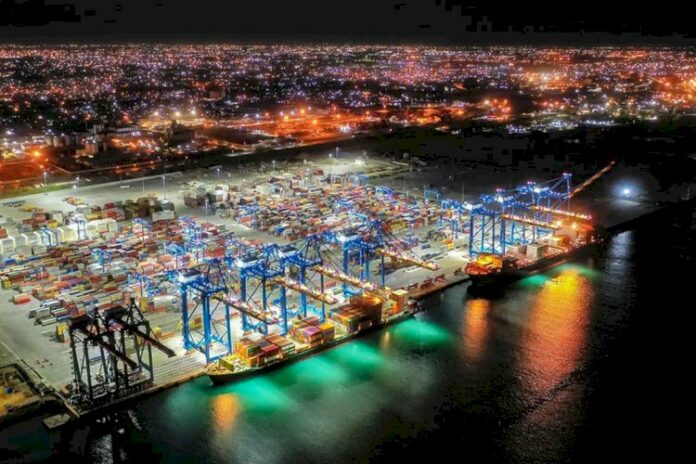
As per the terms of the Concession, MPS Terminal 3 was expected to Go-Live on 28th June 2019 on 2 berths and the entire Phase 1 works were due to be completed on 28th June 2020.

Both due dates were successfully achieved and works were completed ahead of schedule. The combination of a great team work, solid project finance and determined shareholders were among the main contributors to the success in delivering this mega infrastructure ahead of the contractual date in 3.5 years (41 months).

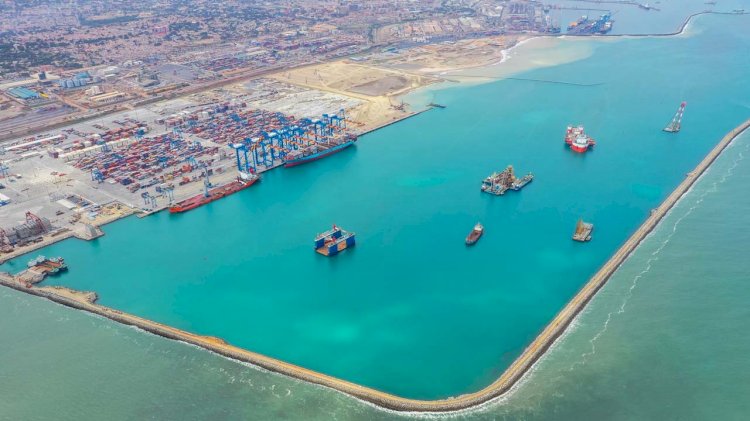
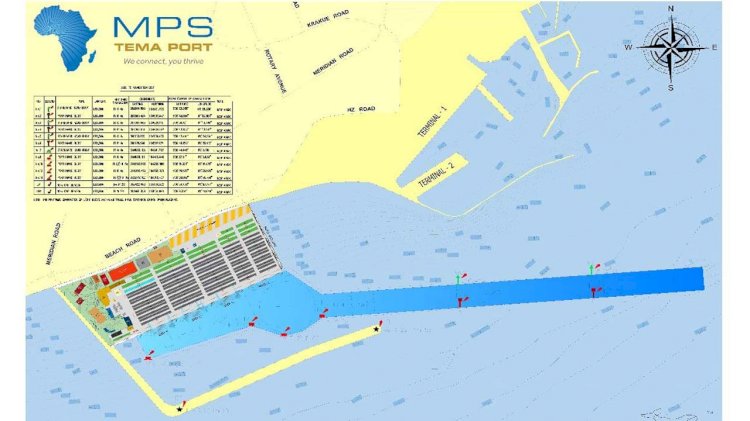
The new harbour basin was created on a 3 Km long beach directly on the Atlantic Ocean and right on the Meridian Timeline. Building into the sea, from the beach, the breakwater root goes 1,550m into the ocean with a 2 Km long arm extending eastwards from the root of the breakwater parallel to the quay wall. The 3,558 m long breakwater is harbouring a vast 450 Hectares (1,110 Acres) of maritime waterfront.

The new harbour basin is accessible through a 3,500 m long by 225 m wide Entrance Channel into a turning basin/circle of 500m diameter. The Access Channel has been dredged to -18.7m, Turning Basin to -17.4m and -16.9m by the quay wall to accommodate 16m draft vessels to dock alongside all berths.

The Phase 1 scope of works included building a 1,000 m long wharf which consists of 3 berths and 98 Hectares (242 Acres) terminal facility on land reclaimed from the sea with all drainage, sewage, water, fire, electrical and IT services, 45 million paving blocks laid down, a 12 MW back-up power station, major facilities including administration buildings for MPS and the Authorities, a maintenance workshop, a 60 bay unstuffing shed for Customs, 6 scanners, several gate facilities, a fire plant,  sewage treatment facilities and 1400 reefer container plugs.

Joint group seeks solution to improve safety of offshore technicians

0

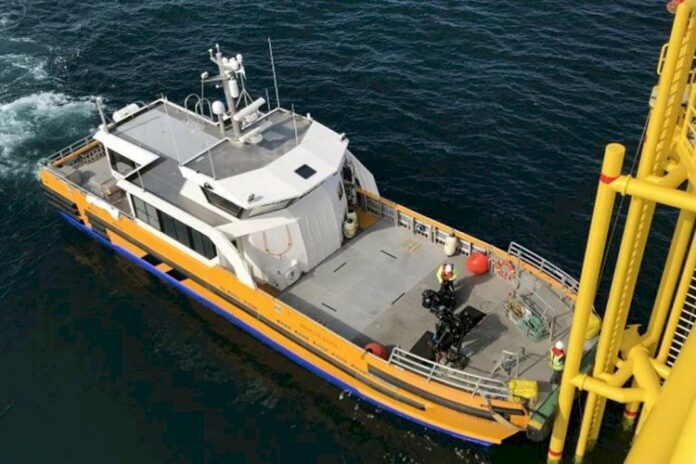
A new innovation call seeking a solution to increase the physical separation of technicians in the  confined spaces of offshore crew transfer vessels (CTVs) during the COVID-19 pandemic has launched (on Thursday 7 May), aimed at improving the safety of personnel required to continue to travel to undertake wind farm inspection, maintenance and repair.

Social distancing measures due to COVID-19 are forcing some operators to limit CTV operations to a maximum of four passengers, a considerable reduction from the usual 12 or 24. This impacts the amount of work that can be undertaken on a wind farm, affecting jobs and ultimately energy production.

In response, ORE Catapult’s O&M Centre of Excellence is working with the Knowledge Transfer Network (KTN), offshore wind health and safety group  G+ and the Workboat Association to set up a cross-sector CTV innovation challenge in search of a rapid solution, such as a partition, that can be deployed onboard the vessels and allow an increase in passenger and crew numbers.

The challenge was identified by members of the Operational Contingency initiative, established by ORE Catapult’s O&M Centre of Excellence in response to the Covid-19 crisis. COVID-19 is creating unprecedented challenges for the global offshore wind industry, and this initiative brings together wind farm owners, OEMs, supply chain, membership bodies, Government and regulators to address the key issues and challenges being faced.

Chris Hill, ORE Catapult’s Operational Performance Director, said:

“Being able to operate and maintain the UK’s offshore wind fleet safely in the face of COVID-19 is essential to keep the lights on and safeguard thousands of jobs. It will also be vital in accelerating UK economic recovery and meeting our decarbonisation targets as we exit this crisis.

Our Operational Contingency initiative has responded quickly to the unprecedented challenges we are faced with and is moving quickly to find and implement solutions in support of business continuity and the safe operation of critical clean energy infrastructure.”

The innovation call presents a significant commercial opportunity to the successful solution provider, with the potential to offer the solution to workboat operators in other industries.

Kate Harvey, General Manager of the G+, said:

“As offshore wind farm generation continues to be required, G+ members across the globe are looking for innovative ways to keep their workers safe. The G+ is hopeful that this project will uncover solutions that can ensure this and are delighted that the Workboat Association is also involved so as to ensure that any solutions are able to work in practice.”

Kerrie Forster, Chief Executive of the Workboat Association, added:

“It is within our interest to ensure that safety levels on board workboats are maintained to the highest standards at all times, whilst also working hard to increase safe pax numbers on board enabling our clients the most efficient and professional service. Together we are looking for innovations and possibilities to help us reach our ambitions.”

JAXPORT joins U.S. nationwide initiative to enhance maritime cybersecurity

0

The Maritime Transportation System Information Sharing and Analysis Center (MTS-ISAC) was formed as a 501(c)(6) nonprofit in February 2020 by a group of U.S.-based maritime critical infrastructure stakeholders to promote cybersecurity information sharing throughout the community.

Industry leaders representing seaports, vessel owners and operators, and terminal operators recognized the need to improve cybersecurity resiliency in their respective organizations. With limited resources available inside each organization, they realized the best approach was to work with trusted MTS peers, including both private and public sector partners, to identify, protect against, and detect cyber threats targeting their networks, systems, and people.

The Department of Homeland Security recognizes the Maritime Transportation System (MTS) as one of the seven critical subsectors within the Transportation Systems Sector. The maritime subsector alone accounts for 26 percent of the U.S. economy, equaling $5.4 trillion in total economic activity. The backbone of the maritime sector is international freight being transported to and from the U.S., with vessels moving 41.9 percent of the value and 70.7 percent of the weight of U.S. international trade in 2018. As a result, the American Association of Port Authorities believes the MTS is worthy of cybersecurity protection.

The MTS-ISAC serves as a centralized point of coordination between the private and public sector to share timely and actionable cyber threat information between trusted stakeholders. Information sharing and analysis efforts focus on threats to both information technology (IT) and operational technology (OT) systems that stakeholders can use to prevent and/or minimize potential cyber incidents.

The MTS-ISAC’s services assist MTS critical infrastructure stakeholders with understanding and addressing cyber risk areas that are outlined in the 2021 IMO requirements and the recently released US Coast Guard Navigation and Vessel Inspection Circular (NVIC) 01-20, “Guidelines for Addressing Cyber Risks at Maritime Transportation Security Act (MTSA) Regulated Facilities”.

Scott Dickerson, the MTS-ISAC’s Executive Director, explains:

“As the maritime sector continues to rapidly increase its reliance upon and integration of new technologies into operational capabilities, we’re seeing the need for stakeholders to pool limited cybersecurity resources to understand and manage the associated risks in effective ways. We’re actively seeing an increase in cyber threat activity, and effective information sharing between our stakeholders has been a force multiplier for their risk management efforts. While IMO 2021 and the USCG NVIC [01-20] help provide guidance to industry, we believe effective maritime public-private partnerships will be a cornerstone for successful maritime cyber risk management efforts moving forward.

The MTS-ISAC structure is helpful for the maritime industry, which owns and operates the critical infrastructure, to engage the public sector on an equal and protected footing in regards to cybersecurity information sharing efforts. The MTS-ISAC is helping to build the maritime cybersecurity community, and we believe stakeholders will find our approach to collaboration and information sharing highly reflective of the maritime community’s current operating environment, while also providing much needed information sharing protection mechanisms.”

Initial board members for the ISAC include the Alabama State Port Authority, Greater Lafourche Port Commission (Port Fourchon), Jacksonville Port Authority (JAXPORT), Port of New Orleans, Port of San Diego, Port Vancouver USA, and six other maritime critical infrastructure stakeholders.

David Cordell, CIO for the Port of New Orleans, offers:

“By correlating cybersecurity information across MTS critical stakeholders, the ISAC provides all of us with the early warning needed to protect our individual organizations from incidents. We see value from our participation in the MTS-ISAC that we could not obtain elsewhere.”

Christy Coffey, MTS-ISAC VP of Operations, said:

“Response to the MTS-ISAC has been phenomenal. Strong leadership from our board and executive team, early adopter sharing of suspicious and malicious activity targeting their organizations, and quality partnerships have led to an extraordinarily successful launch.”

LR increases remote survey capability

0

Lloyd’s Register has offered remote survey capability for many years and in recent months, requests for remote services have increased as access to ships and assets in many parts of the world has become more challenging.

The team, comprising dozens of dedicated subject matter experts, are located in key marine and offshore hubs around the world; including Rotterdam, Hamburg, Bremerhaven, Copenhagen, Piraeus, Cadiz, Southampton, Hull, Houston, Miami, Kobe, Yokohama, Guangzhou, Seoul, Dubai and Singapore. The team is charged with delivering complex remote surveying capability to support client requests which not only address the immediate challenges, but also ensure a systematic and repeatable approach for the future of surveillance activities.

LR’s remote services are technology agnostic, and the company  provides an adaptable process to the specific requirements and preferences of our partners. In addition, LR can also provide the advanced “LR Remote App” for clients who do not have a preferred technology to provide the services. The LR Remote app enables survey requests to be coordinated and channelled to our global surveyor network. The simple to use app allows crew members to livestream and telestrate on video and audio with an LR technical specialist and other relevant parties, such as a flag representative.

James Forsdyke, Marine & Offshore Head of Product Management, said:

“At LR, Remote is about making our people, our expertise and our solutions available remotely as well as physically. Technology is an enabler, but the value continues to be our human expertise and experience. It’s not about relaxing requirements, it’s about adapting and embracing what the digital age empowers us to achieve to provide the equivalence of services remotely. I am so excited to see LR leading the way to keep our clients and the sectors we serve moving.”

LR Marine & Offshore Director Nick Brown said:

“Classification Societies are collectively witnessing accelerated demand for remote surveys, transitioning the way we all provide our services. LR is leading this acceleration through our strengthened remote support, and our dedicated remote survey champions will ensure that our clients work with the people they know and trust as they explore this capability and drive our industry forward.”

Given the increase in demand for remote surveys and the necessity of keeping supply chains operating, LR is actively collaborating with flag states, regulators and other industry partners to drive consistency for remote working practices across the marine and offshore industries to ensure that our services provide a long-term benefit to our clients and the industry.

Laskaridis completes upgrade to Fleet Xpress in partnership with Navarino

0

Laskaridis Shipping Company Ltd. has recently completed the rollout of Inmarsat Fleet Xpress across its fleet of more than 40 bulkers. 

Having previously used Fleet Broadband, the upgrade to the Fleet Xpress 2 MB/s MIR plan is part of a forward-thinking modernization process, in conjunction with Navarino, as the company moves towards a fully digital fleet.

Mr Chris Koustenis, IT Manager at Laskaridis considers Navarino as ‘a trusted partner who can be relied upon to run our remote communications and operations’. In addition Mr Vasilis Tsialtas, responsible for fleet communications at Laskaridis said:

‘We are more than just satisfied with the highly responsive approach we experienced with the Navarino team during this complex and demanding project. At times, Navarino were working on four concurrent vessel installations across our fleet globally and we worked very well together with the valuable assistance of our crews on completing the fleet-wide rollout in half the time we had initially estimated. 

The speed and stability of Fleet Xpress allows us to offer a broad range of business and crew applications that were hardly feasible over FleetBroadband. We are now regularly pushing out a few GBs of data via our file sharing system to all vessels in just a couple of hours, which makes the bulk roll out of updates and installation tasks very straightforward, without having to worry about data overages resulting in shock invoices etc. Remote support is much better, improving our response and resolution times, which is important as time cannot be bought. We are looking forward to rolling out more applications across our modern fleet in the future to fully embrace the new digital options that this level of connectivity allows us.’

From Navarino’s side, Mr Konstantinos Dimitriadis, the Account Manager for Laskaridis said:

‘We are very proud to be working with a highly IT-literate, future facing company like Laskaridis Shipping. We really appreciate that they chose Navarino to assist them with the upgrade of their fleet’s connectivity capabilities in this major project and we will continue to work with them to ensure that their vessels remain at the cutting edge of maritime technology.’

Viewport3 secured four remote 3D data capture contracts

0

Aberdeen-based 3D scanning specialists, Viewport3 have experienced record uptake of a new service offering following its acceleration to market to help with challenges the industry is currently facing.

Having launched their new remote data capture service less than a month ago, the North-east firm has already secured four contracts with a collective value of £100,000. Split between existing and new clients, these contracts have an international spread, and will see the Viewport3 team working remotely on projects based in Norway, the Mediterranean, the UKCS and the US.

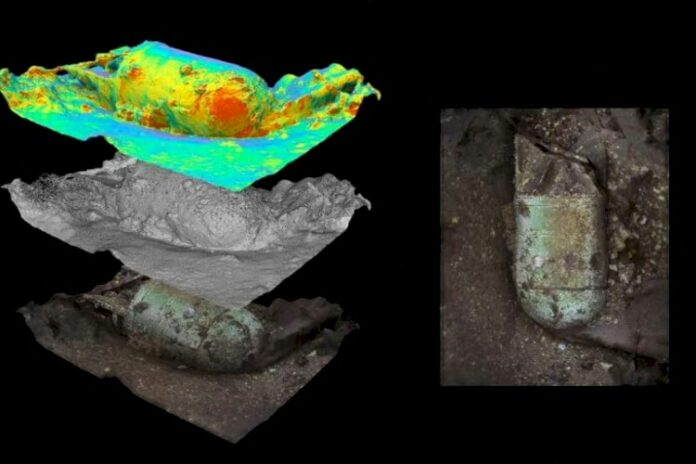
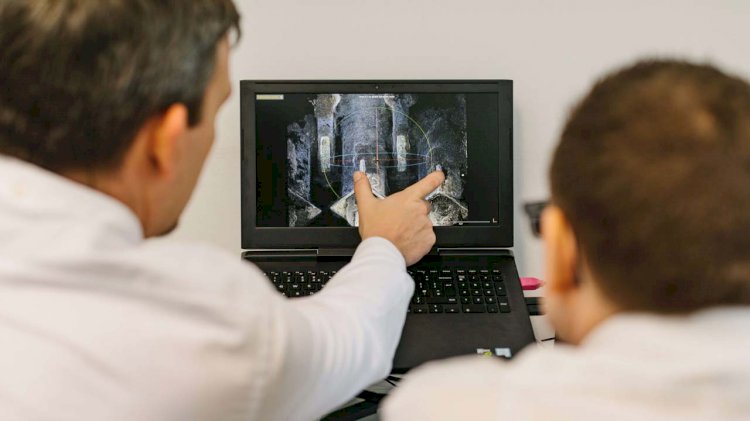
The remote scanning service integrates Viewport3’s data-collection expertise with bespoke software to collect and process 3D data from offshore via remote working arrangements. The technique involves providing divers and ROV personnel with guidance for the task along with remote support, allowing them to collect the data and submit to Viewport3 for processing and analysis. 

Co-director of Viewport3, Richard Drennan, said:

“We’ve been developing and refining this system for a number of years now, but for obvious reasons it is proving an extremely valuable tool for our customers at the moment. Remote capture adds value across the board. We can often use cameras that are currently fitted to the ROV, or which divers have otherwise readily available, meaning we can get to work very quickly, with minimal manpower required. The volume and quality of the information we can retrieve remotely can save our customers multiple offshore campaign days and streamline future inspection tasks. It’s hugely gratifying to see the industry adopt 3D scanning so readily and deploy it intelligently, achieving considerable cost savings.” 

Co-director, Chris Harvey added:

“Our remote scanning process is proving to be a life-line for the industry – enabling our customers to continue with safety and business-critical maintenance operations, despite the travel restrictions imposed as part of the global lockdown. There are many instances where this service can answer questions clearly and promote increased understanding of technical challenges.”  

Viewport3 specialise in providing 3D scanning and reverse engineering services – using digital cameras to obtain technical grade point-cloud data, which the firm then processes into 3D to produce straightforward reports and outputs.