-4.6 C
New York
Home Blog Page 861

New scheduled service between Sweden and North Sea Port

0

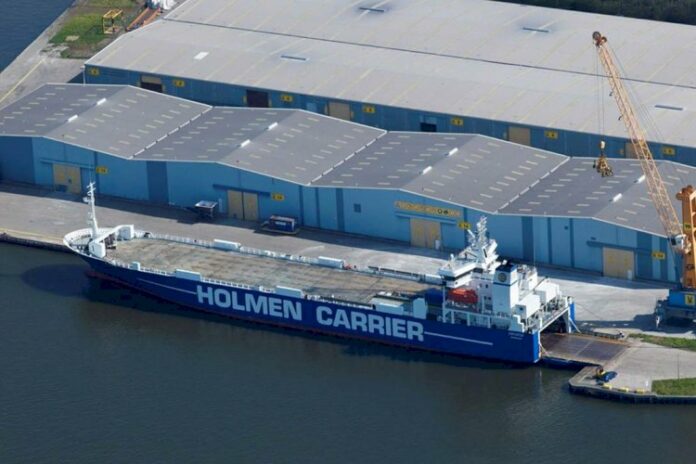
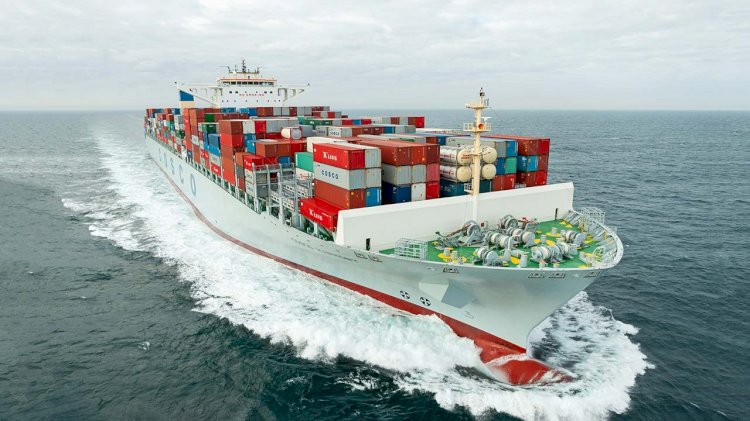
The new weekly service between Sweden and Terneuzen will dock at Verbrugge Terminals in Terneuzen every Saturday. The ro-ro ships transport paper, trailers, containers and project cargo. A boost for North Sea Port in these coronavirus times.

The cargo consists of rolls of paper for magazines, newspapers and other printed matter. These rolls are unloaded at Terneuzen every Saturday and delivered to the various printers, with Verbrugge’s transport company Verbrugge Internationale Wegtransporten playing an important role. The Verbrugge terminal in Terneuzen has been a hub for paper and cardboard for decades. Verbrugge also has the technology to cut rolls of paper to size, label them and repackage them.

The scheduled service will be operated by 2 ro-ro vessels that will alternately call at the Verbrugge terminal in Terneuzen. The return cargo to Sweden (Braviken & Södertalje) will consist of all kinds of goods, such as trailers, containers and project cargo.

The scheduled service further strengthens the link between Terneuzen and Sweden. Wagenborg has been operating weekly sailings carrying ro-ro cargo from Terneuzen to Sodertalje and Pitea for some time.

This new scheduled service reinforces Verbrugge Terminals’ presence at North Sea Port and gives it a springboard to further develop its activities there. It means North Sea Port will see its share of the markets for paper and cardboard, ro-ro, containers and project cargo increase.

LR supports Euronav’s optimised Fleet Condition Monitoring programme

0

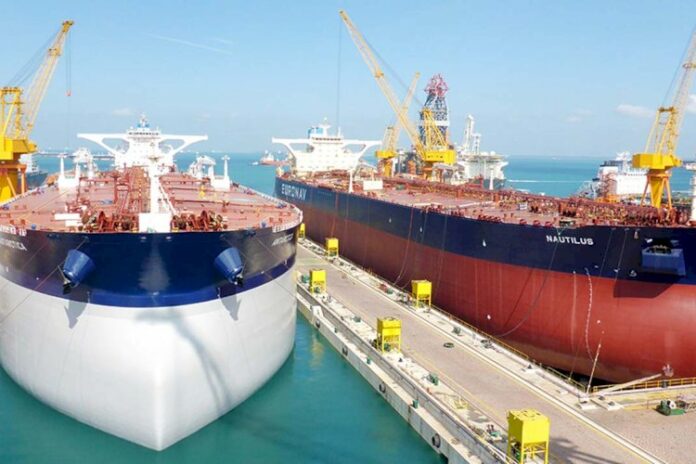
LR has signed an agreement with Euronav to approve its Machinery Planned Maintenance and Condition Monitoring Scheme (MPMS(CM)) for 25 LR-classed vessels. This will be performed in accordance with LR’s recently updated ShipRight procedures for Machinery Planned Maintenance and Condition Monitoring, helping Euronav optimise maintenance schemes and embrace available technology.

To approve Euronav’s MPMS(CM), LR will conduct a remote audit of the planned maintenance scheme, which involves the review and approval of selected machinery on the basis of satisfactory Condition Monitoring data, and an implementation audit performed during the first annual survey.

Theodosis Stamatellos, LR’s South Europe Marine & Offshore Regional Manager, said:

“Using technology to perform remote audits helps both LR and Euronav protect the safety of crew, surveyors and auditors while also reducing the need to open-up machinery, meaning there are fewer, less intrusive attendances onboard.”

In September 2019, LR significantly updated its ShipRight procedures for Machinery Planned Maintenance and Condition Monitoring and the corresponding Rules, which enables operators to apply the most appropriate planned, condition-based, risk-based or predictive maintenance methodologies to each of their machinery items, in order to suit their specific needs.

Euronav’s Fleet Technical Manager Theodore Mavraidis said:

“Over the past five years, we have extensively applied condition-based maintenance techniques throughout our fleet, supplementing the traditional ‘preventive maintenance’ and ‘condition monitoring’ routines. Within our organisation, we have built a strong technical knowledge base and valuable expertise enabling the next step. This next step encompasses as its main objectives: the use of our resources, people and equipment, even more effectively; improved efficiency of equipment/machinery performance, which provides savings in operations and energy consumption; and pro-active condition-based maintenance that will imply more control over resources, as well as reduce business and safety risk.

“In this journey, we feel fortunate having LR by our side, supporting us with their established tools and approval framework of the updated ShipRight procedures.  Just as technology has been developing rapidly in fields like telecoms, data analytics, smart devices and infrastructure, the same can be said of asset condition monitoring and we recognise in LR a reliable partner who can significantly contribute to our organisation’s progress in digital transformation.”

LR’s Theodosis Stamatellos added:

“Providing approval for MPMS(CM) is a key step in supporting Euronav’s move towards optimised maintenance, pathing the way for risk-based maintenance and predictive techniques. LR updated its ShipRight procedures for Machinery Planned Maintenance and Condition Monitoring to reflect technological development and owner operational needs, helping our clients create suitable maintenance schedules which fit their needs and take advantage of available technologies.”

ClassNK grants AiP to NYK Line and MTI for their joint project

0

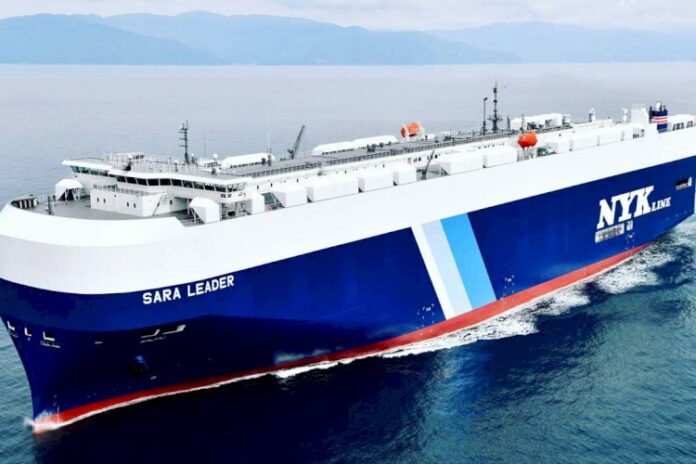
Leading Classification Society ClassNK granted an Approval in Principle (AiP) to Nippon Yusen Kabushiki Kaisha (NYK Line) and MTI Co., Ltd. (MTI) for their joint project on the concept design of an autonomous ship framework (development code “APExS”).

ClassNK is involved in various demonstration projects and continuously works to develop necessary safety standards in order to support the development and implementation of automated/autonomous operation technologies from a safety perspective. In January 2020, the Society released its “Guidelines for Automated/Autonomous Operation of ships” which comprehensively summarize the requirements for each stage of conceptual design, design development, installation, and maintenance during the operation of automated/autonomous operation technologies.

Jointly with NYK Line and MTI, ClassNK verified the safety of system usage conditions, fall back systems, and more toward the development of the autonomous ship framework. The AiP was then granted upon confirming the feasibility of the framework through safety evaluation in line with the above guidelines.

It is said that about 80% of marine accidents are caused by human error, particularly insufficient watch-keeping and errors in ship maneuvering. In the past, NYK Line has worked to reduce these types of incidents through our safety management system (SMS) and BRM. However, progress with computer technology has made it possible to further improve safety by combining the strengths of human experience with the attributes of computers. In this regard, NYK Line has developed a new operational system that achieves a high level of safe operation and assists vessel operators by making use of Maritime Autonomous Surface Ships (MASS) technology, an R&D project conducted with domestic and overseas partners.

APExS is an acronym for “Action Planning and Execution System.” This framework for the realization of Maritime Autonomous Surface Ships (MASS) includes high-speed computer-based information processing technology and risk analyses that support crew members’ situational awareness and the decision-making necessary for maneuvering. In fact, the computer will execute maneuvering operations under the crew’s approval.

Alfa Laval’s solution for eight Seaspan owned large container ships

0

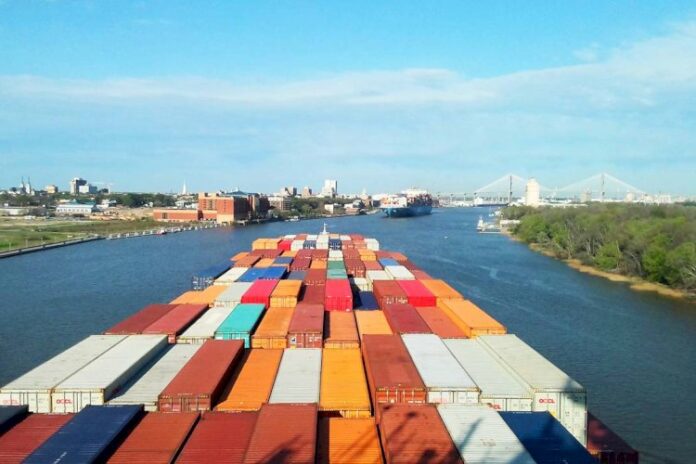
Seaspan Ship Management has selected Alfa Laval to help resolve steam balance and redundancy issues connected to sulphur-compliant fuels. The comprehensive solution – an integrated steam boiler plant comprising oil-fired steam production, waste heat recovery, advanced control and connectivity – will soon be implemented on eight Seaspan owned large container ships.

Prior to the IMO global sulphur cap’s entry into force, Seaspan Ship Management made the decision to work with sulphur-compliant fuels on its container vessels. Like most container vessels, however, the Seaspan owned vessels have only a single oil-fired boiler and a waste heat recovery boiler on board. This provides no redundancy, which is problematic when using sulphur-compliant fuels.

Arvin Dsouza, Fleet Manager at Seaspan Ship Management, says:

“The composition of low-sulphur fuels was uncertain when we first decided for them, but it quickly became clear that high paraffin content would be an issue. To avoid wax formation, the fuel temperature has to stay above the pour point at all times. But the existing boiler solution on the above-mentioned vessels can’t guarantee the required steam capacity as these vessels do not have heating coils in all the designated fuel oil tanks and rely on a shifter system. We chose to work with Alfa Laval, who found the answers we needed.”

To secure a sufficient and reliable supply of steam, including full steam plant redundancy, Alfa Laval proposed rebuilding the existing oil-fired boiler and adding a new Alfa Laval Aalborg oil-fired boiler. This will support fuel heating by means of steam coils in all tanks. Both the fired boilers and the waste heat recovery boiler will be interconnected through the Alfa Laval Touch Control system, creating a single steam solution.

Dsouza says:

“Alfa Laval is unique in having all the boiler, burner and control technologies in-house. They presented a complete heating solution that keeps as much as possible of the existing equipment on board, but which integrates the different components for smooth performance as one system. With their knowledge, they could tie everything together.”

On each container vessel, Alfa Laval experts will strip out and replace the electrical components of original oil-fired boiler, which was supplied by a different manufacturer. However, they will assimilate its pressure section, ring line equipment and burner, using them to create a new boiler capable of being connected to the Alfa Laval Touch Control system. For a seamless solution, the same type of burner will be used on the new Aalborg boiler.

Dsouza says:

“Rather than replacing the competitor burner with their own, Alfa Laval is incorporating the same type, so that we can make use of the knowledge and parts we have on board. Everything, including waste heat recovery, will be smoothly handled through the Alfa Laval Touch Control system, as if it had all come from Alfa Laval in the first place.”

The Alfa Laval Touch Control system, which will replace the older boiler’s relay-based control system, is a PLC-based system that can run the oil-fired boilers in either master/slave or load-sharing modes.

Dsouza, who praises the system’s ease of use, says:

“We’ll have complete operational flexibility. Through the graphical touchscreen, the operators will have a full overview of the steam plant and be able to make adjustments with just a touch or two.”

Beyond the possibilities offered by the control system, the new boiler solution will be equipped for connectivity. Alfa Laval service experts will be able to monitor the system’s condition remotely, creating opportunities for troubleshooting, assistance and optimization. Based on collected data, for example, they will be able to guide the crew in performing necessary maintenance procedures or schedule field services like combustion tuning when required.

Dsouza says:

“Connectivity will give us deeper and more continuous contact with Alfa Laval service expertise. It will mean peace of mind, but also more effective and cost-efficient use of our boiler systems over time.”

Satisfied with the new steam plant solution, Seaspan Ship Management will implement the setup on the first container vessel in early spring of 2020. Installations will then continue on the remaining seven vessels, running throughout 2020 and into 2021. The installations are planned to take place in a shipyard, but they can be performed at sea if unforeseen disruptions in yard schedules make it necessary.

Dsouza says:

“We will be able to move forward with the projects, even if circumstances mean we can’t install at the yard. Alfa Laval has the capability to deliver the parts and install them while the vessel is underway. Whether the installations happen in dry dock or at sea, we’re confident in the solution and we know we count on Alfa Laval’s quality and efficiency.”

Turkey’s tugboat operator acquires three vessels from Med Marine

0

Turkey’s leading tugboat operator Ceyport Tekirdağ Uluslararasi Liman Işletmeciliği A.Ş and shipbuilder Med Marine and Ceyport Tekirdağ Uluslararası Liman İşletmeciliği A.Ş. (Cey Group Company) from Turkey, signed a sales contract for two tugboats and a mooring boat.

Cey Group is a leading Turkish Logistics Group of Companies that operates in the most important inland and foreign trade centers of Turkey located in Marmara, Aegean, Mediterranean and Black Sea regions.

Three vessels provided by Med Marine will be used in the operations in Ceyport Tekirdağ Port located in Tekirdağ – Marmara coast of Turkey.

Ms. Melis Üçüncü, Sales Manager from Med Marine, expressed her thoughts about this new collaboration and said:

“We are very proud that our vessels are in high demand by operators not only all over the world but also in Turkey. This is the beginning of a new cooperation and I hope we may continue to strengthen our partnership with Cey Group in future. The tugboats’ performances are well-proven as they were operated in Med Marine’s fleet for many years and we believe that they will be a good fit for Cey Groups  fleet.”

Mr. Berzan Avcı From Ceyport Tekirdağ (Vice Chairman of the Board) shared some thoughts about this new collaboration between Med Marine and Ceyport Tekirdağ by saying:

“Thanks to our cooperation with Med Marine, the marine fleet and, in this context, tugboat needs of our Ceyport Tekirdağ Port have been resolved. We sincerely thank Med Marine Company for their close cooperation and constructive approach. We hope that our cooperation will continue in the coming years.”

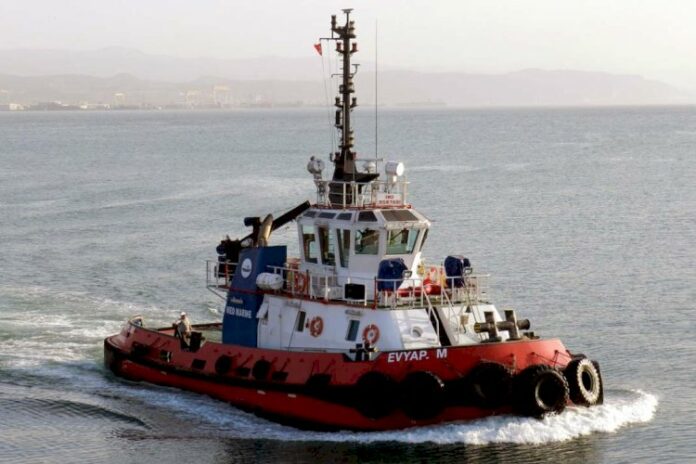
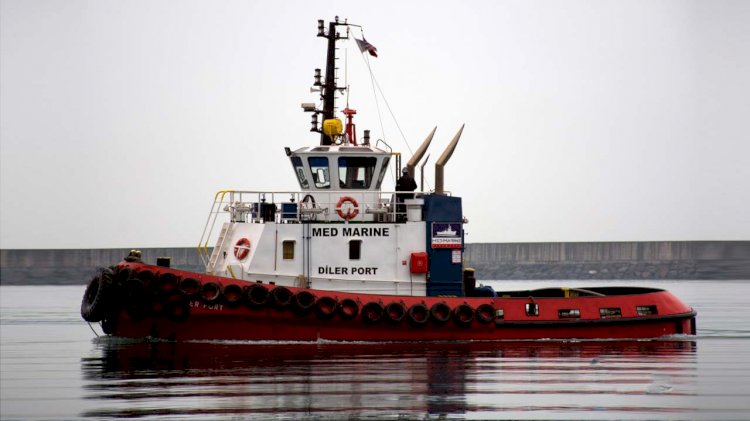
The tugboats are twin screw type vessels designed by Robert Allan Ltd, both of which were previously being operated in Med Marine’s national fleet.

One of the tugboats has been renamed as CEY V (prev. EVYAP M). 22,5-meter-long vessel performs great in harbour & coastal operations.  

Two Caterpillar 2438B gensets provide total 2×75 ekw electrical powers for vessel services, including the deck machinery. The vessel drives two Promarine twin screw propellers of 2.080 mm diameter. There are two Masson-supplied MMW7400 model reverse reduction gearboxes with 5,259:1 reduction ratio.

The second tug delivered to Ceynak’s fleet operating in Samsun Port is an 18m harbour tug also designed by Robert Allan Ltd. It was being operated in Med Marine’s national fleet under the name of Diler Port. She is renamed as CEY VI.

Bombora and ORE Catapult develop co-located floating wave and wind technology

0

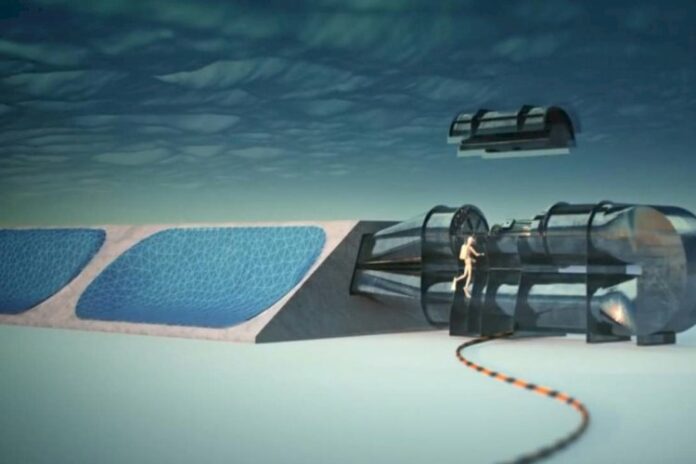
The research will carry out a techno-economic appraisal of extending Bombora’s mWave™ technology into an offshore environment and will investigate the feasibility of co-location with floating wind structures.

Bombora’s patented membrane mWave wave energy converter offers a unique opportunity to rapidly develop a floating wave platform solution. This solution offers major advantages in relation to increased infrastructure utilisation and maximising capacity.

Sam Leighton, MD of Bombora said:

“We believe Bombora’s mWave technology offers an innovative solution that can meet the demands of the rapidly expanding offshore energy industry and reduce the levelised cost of energy. Increasing the cost effectiveness of projects by sharing the expense of joint infrastructure, such as the floating platform, moorings and export grid connection to shore will inevitably drive down costs.  Our research project with ORE Catapult is an important development stage to prove this potentially market disruptive solution.”

Dr Paul Ellsmore, MEECE Programme Manager for ORE Catapult added:

“This collaborative project cuts right to the heart of two important areas for innovation in offshore renewable energy right now – the development of wave energy and floating wind. To unlock the potential of co-locating these two technologies could be potentially game-changing for the sector.

Wales is the ideal location for this type of innovative project, being home to a number of wave and tidal developers and a prime location for floating wind development. We will apply our unique combination of technical expertise and research and testing facilities at MEECE to support innovative projects such as these and companies like Bombora.”

The UK has enough natural resources of offshore wind, wave, and tide to provide all the country’s energy requirements, including transport and heating, with spare for export to Europe.

The National Renewable Energy Laboratory (NREL) suggests global offshore wind generating capacity will be in excess of 500 GW by 2050.

Global investment in offshore wind projects between now and 2030 is likely to exceed £250bn. Offshore renewable energy is on course to provide much of the affordable and secure power needed to grow the UK economy and, when combined with the global export potential, represents the largest clean growth opportunity for the UK economy.

Bombora’s 1.5MW mWave Pembrokeshire Demonstration Project, supported by £10.3M European Regional Development Fund through the Welsh Government, is on schedule. Full marine consent for installation off the coast of Pembrokeshire has been granted as the project moves into the assembly phase. Taking mWave further offshore will increase the capacity of the technology and open new markets and opportunities for large scale utility generation.

Chris Williams, Bombora’s Commercial Manager, said:

“Collaborating with a world-class research and test institution such as ORE Catapult’s MEECE places Bombora at a big advantage to capitalise on the floating offshore market opportunity. We are committed to driving innovation in the renewable energy sector and to making the advancements needed to benefit the environment and consumers.”

ORE Catapult has recently opened its Marine Energy Engineering Centre of Excellence (MEECE) in Pembroke Dock, South West Wales. MEECE aims to accelerate the growth of the UK supply chain in the offshore renewable energy sector, leading to increased jobs, productivity and exports.

MEECE will work with Welsh Universities and with the Marine Energy Test Area, to deliver innovation projects on behalf of Welsh companies, to demonstrate, verify and validate new technologies.

Fifteen seafarers abandoned on tanker in Manila Bay

0

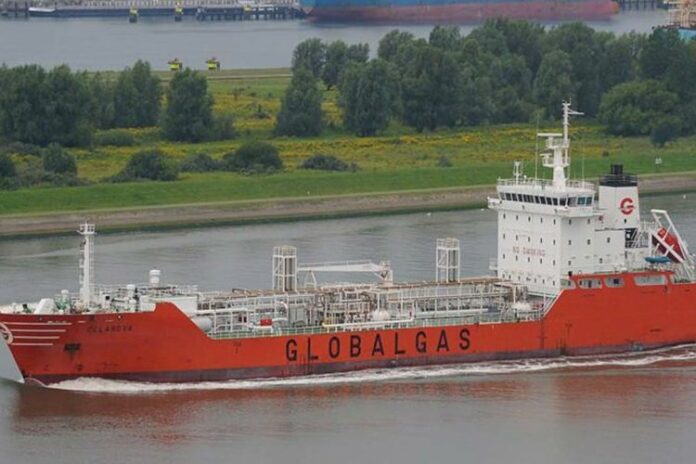
Without a rudder, food, water, electricity, lights, wi-fi, refrigeration, GPS, security or safety lights, 15 seafarers sit at anchor in Manila Bay, Philippines. Abandoned on board the Spanish-flagged MV Celanova (IMO 9268394).

With batteries running low on their mobile phones, the crew who are trapped 13 nautical miles out at sea have been making calls for urgent assistance as the vessel is running dangerously low on fuel and diesel oil and the food, fresh water and medicines that the seafarers need to survive.

Pedro texted the International Transport Workers’ Federation (ITF) on Sunday, 10 May:

“We are strong people, but we are exhausted and now bad weather and no option to do anything if (the) vessel drag(s) the anchor. I hope Monday could be finished this and next week could be able to berth. Under the present condition is very dangerous our situation. We will survive until Monday.”

In an earlier email one crew member wrote to the ITF asking when they could get fresh food on board. She texted:

“We are eating something that three months ago we would have never thought we would have to eat.”

Luz Baz, ITF Coordinator, Spain, said:

“Since February 21, when I was first informed of the case, there have been thousands of WhatsApp messages. I’m in touch with them daily. But now the ship is in total blackout.” 

Crew have been sleeping on deck as there is no air conditioning, but storms on Sunday night forced the seafarers to take shelter in the dark below deck, she said. The 7600 gross tonnage MV Celanova is a Spanish flagged LPG tanker owned by GLOBALGAS SA, Madrid, Spain. The company has left the crew without pay for months and begging for vital provisions.

Alarmingly the LPG tanker was forced to discharge its dangerous cargo of Butadiene gas to another vessel on March 7, as the vessel was running out of the bunker fuel needed to keep the gas refrigerated. On December 7, the tanker broke down and lost its rudder off the Philippines coast. Ten days later it was towed to anchor in Manila Bay.

Philippines Port State Control detained the vessel on 14 February after authorities found it to be in breach of the International Labour Organization (ILO) Maritime Labor Convention (MLC) over unpaid wages following notification by the ITF.

The ITF is urgently requesting Filipino authorities to allow the ship into port to facilitate assistance from the flag state and the vessels insurers, the American Club. Local authorities have agreed but only on condition a tug is provided alongside the tanker and on standby while she is moored.

Baz said:

“I’ve worked over 14 years as an ITF inspector, I have dealt with many abandoned vessels so far and this is the first time someone has asked crew pay tug hire. The ship needs to be in port. The crew can’t start the engine. Something has to be done. The crew are desperate. They need fuel, fresh water, provisions, medication, safety parts.”  

Some of the Spanish and Caribbean crew have been on board since August, others since November. Further exacerbating the seafarers’ plight, Spanish mortgage bank ABANCA is reportedly frustrating attempts to sell the vessel to help finance the owner’s debts.

Baz wrote to Maritime Authorities in Manila warning the ship and its crew were at enormous risk of potential anchor drift, fire on board or accident due to having no capacity to maneuver.

She wrote:

“The situation is seriously compromising the safety and health of a crew. They are exhausted after suffering months of enormous stress.”

Despite the Philippines being a signatory to the MLC requiring governments to facilitate crew repatriation during abandonment, no action has been taken. Their plight is further complicated by the COVID-19 pandemic.  The ILO abandonment report says communications have been maintained with the ship’s owner and instructions have been given to provide food and fuel.  

A flag state surveyor was on board from February 27 to March 2 to check the real situation, the ILO reported. The Spanish Maritime Administration is focused on getting crew members repatriated working together with all stakeholders including the ITF.  

The Spanish government has also contacted the Philippines government requesting the ship be docked in safe port according to ILO reports. 

Ship’s master Rolando Garcia Alarcon warned the ILO the ship has serious technical deficiencies.  He requested authorisation for the ship to berth, based on humanitarian and safety reasons citing the ship being without a rudder, fuel and lights. The master also reported the vessel’s chains and anchors were damaged. Garbage on deck also poses a health risk and the crew and ship especially in the case of fire, he said.

The ITF has written to the International Labour Organization requesting their intervention.

Norwegian Cruise Line opens bookings for 2021-2023 sailings

0

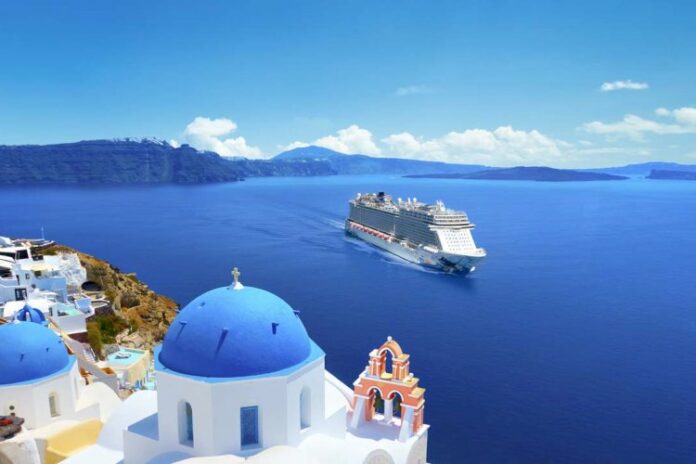
Norwegian Cruise Line has announced that is has opened more than a year of wish-list worthy sailings for 2021 through 2023, with voyages to over 20 new destinations across all seven continents.

Norwegian Star’s first voyage to Antarctica beginning in 2021 when she sails from Buenos Aires, Argentina for a season of 14-day Extraordinary Journeys, visiting five ports of call across Argentina, Chile, Uruguay and the Falkland Islands, including a majestic sailing by Deception Island and Elephant Island/Cape Lookout.

Norwegian Star’s March 2022 South America sailing when she will become the first in the fleet to visit Fortaleza and Salvador de Bahia, Brazil, during a 15-day itinerary departing from Rio de Janeiro.

Norwegian Star’s July 14 and July 25, 2022 Northern European sailings, when she will make the brand’s debut in Greenland with calls to Nuuk, Qaqortoq and Nanortalik during two back-to-back 10-and -11-day sailings from Reykjavik, Iceland.

Norwegian Jade’s 12-day Extraordinary Journey sailings from December 2021 through January 2022, when she will make Norwegian Cruise Line history as the first ship to offer roundtrip cruises from Cape Town, South Africa. The voyages will include visits to Luderitz and Walvis Bay, Namibia; Durban, and will feature overnight calls in Cape Town and Richard’s Bay, South Africa.

Norwegian Sun’s November 2021 sailing, when she will make her Asia debut and will become the first in the fleet to visit the exotic destinations of Nagoya, Beppu and Himeji Japan; Manila and Coron, Philippines; Kota Kinabalu and Melaka, Malaysia; Muara, Brunei and Kampot, Cambodia.

Shell invests in new Nigeria LNG processing unit

0

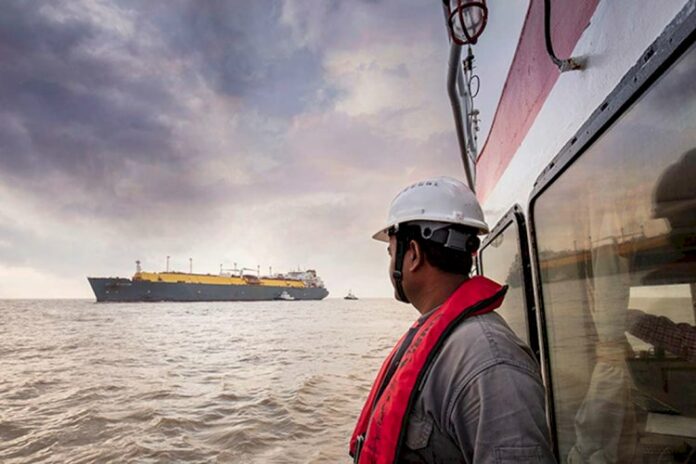
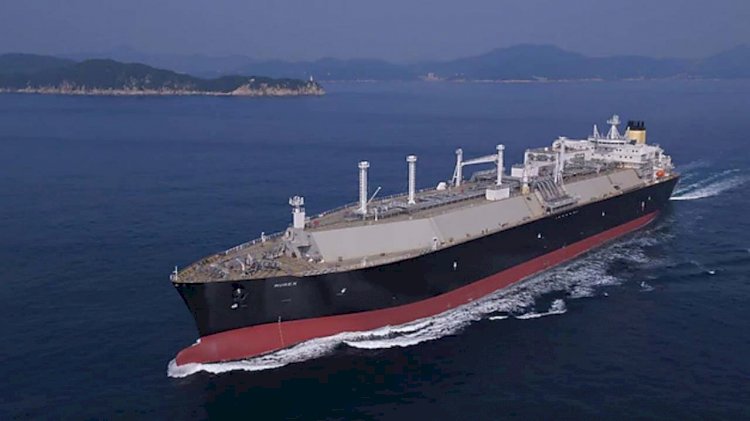
Shell Gas B.V., a subsidiary of Royal Dutch Shell plc, has announced that all conditions for its Final Investment Decision (FID) on a new LNG processing unit at Nigeria LNG (NLNG) have now been met.

These conditions included formal commitment from the organisations providing financing for the project. Subsequent to the FID, NLNG has announced awards of engineering, procurement and construction (EPC) contracts.

Once operational, the new unit, known as Train 7, will add around 8 million tonnes per annum (mtpa) of capacity to the Bonny Island facility, taking the total to around 30 mtpa.

Currently operating six processing units, or trains, the decision to build a seventh will bolster NLNG’s contribution to the development of the country through generating revenues for the Nigerian government and delivering key natural gas products for domestic use.
NLNG is a joint venture owned by the Nigerian National Petroleum Corporation (NNPC – 49%), Shell (25.6%), Total (15%) and ENI (10.4%). All shareholders have supported the EPC awards and construction schedules will be finalised once the situation with COVID-19 has stabilised.

Maarten Wetselaar, Shell’s Integrated Gas and New Energies Director, said:

“While remaining mindful of prevailing macro-economic challenges, Shell continues to see NLNG as a great resource that can deliver value to the people of Nigeria and investors alike. This decision is consistent with our long-term strategy and our disciplined approach to capital investment. Natural gas is a core component of our strategy to provide more and cleaner energy solutions. With global LNG demand expected to double by 2040, the expansion of the NLNG Bonny Island facility is crucial in helping Shell meet the world’s growing energy needs.”

Osagie Okunbor, Country Chair, Shell Companies in Nigeria and Managing Director, The Shell Petroleum Development Company of Nigeria Ltd., said:

‘‘We are happy with the progress NLNG has made over the years and its enormous contributions to the Nigerian economy. The EPC awards for Train 7 is good news for Nigeria with the potential to bring more export revenues, unlock new projects, and attract foreign direct investments, in addition to transforming the economy of the Niger Delta and Nigeria as whole. Shell is positioned to support NLNG’s expansion by working with our government and other partners to develop new gas resources to sustain this growth and enhance both domestic and export gas supplies.”

Fehmarnbelt project: FLC joint venture receives notice to Notice to Proceed

0

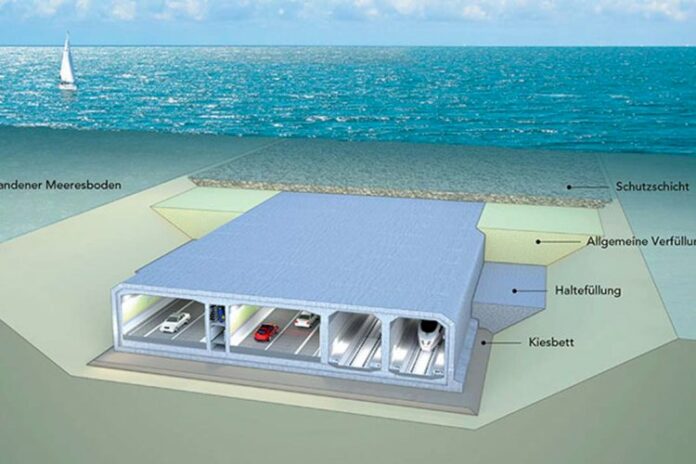
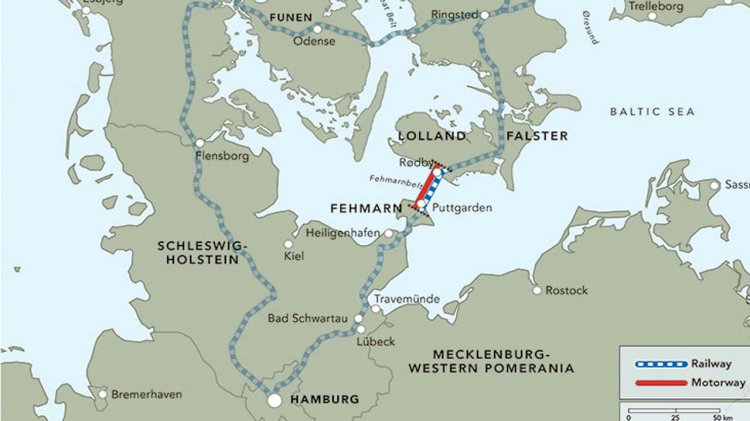
The Danish Government has decided to issue the Notice to Proceed to the Femern Link Contractors joint venture for the execution of the design and build contracts of the world’s longest immersed road and rail tunnel, the Fehmarnbelt link between Denmark and Germany. The construction will start on 1 January 2021.

In 2016, the joint venturewon three contracts. Two contracts cover the construction of the immersed tunnel and the factory that will manufacture the precast tunnel elements and a third contract deals with the building of the portal structures, toll buildings, bridges and ramps. The three contracts have a combined value of €3.4 billion, of which DEME’s share is EUR 700 million.

The Femern Link Contractors joint venture comprises VINCI Construction Grands Projets S.A.S. (lead company for the first two contracts), Per Aarsleff Holding A/S (lead company for the third contract), Solétanche-Bachy International S.A.S., CFE NV,  Wayss & Freytag Ingenieurbau AG, Max Bögl Stiftung & Co KG, BAM Infra BV, BAM International BV and Dredging International NV.

The joint venture has appointed COWI A/S as a consultant for all three contracts.

For DEME’s subsidiary DIMCO, the project is another opportunity to deploy their expertise in immersed tunnels and large-scale infra marine projects.

About the Fehmarnbelt Fixed Link:

  • The 18 km immersed tunnel connecting Denmark’s Lolland Falster region with Germany’s Schleswig Holstein region will be the world’s longest immersed road and rail tunnel. It will shorten the journey between the German and Danish coasts to just 10 minutes by car and 7 minutes by train compared to the current travel time of one hour by ferry or a 160 km detour via the Danish region of Jutland by car.
  • The Fehmarnbelt tunnel project is one of Europe’s largest infrastructure projects to date. It will foster trade and tourism in Northern Europe.