-5.4 C
New York
Home Blog Page 860

First foundation for Kriegers Flak offshore wind farm in place

0

The first foundation for Vattenfall’s Kriegers Flak Offshore Wind Farm, 15-40 kilometres off the coast of Denmark, has been placed in the sea bed of the Baltic Sea.

On the foundations, 72 turbines will be mounted to create Denmark’s largest offshore wind farm with a capacity to cover the annual electricity consumption of approximately 600,000 Danish households.

Catrin Jung, Head of Offshore Wind, Vattenfall, says:

“The foundation represents the first visual offshore part of the wind farm itself. It’s a milestone in the development of this great project and Vattenfall’s journey towards enabling fossil-free living.”

Installation of the foundations is expected to run into the autumn this year with installation of turbines starting in 2021. Despite restrictions following the COVID-19 pandemic, the development of Kriegers Flak is on schedule to be in full operation by the end of 2021, at the latest.

Kriegers Flak is the latest and largest of Vattenfall’s recent offshore projects in Denmark. The others being Horns Rev 3, which was inaugurated last year, and Vesterhav Syd & Nord, which are scheduled to be in full operation by the end of 2023, at latest.

During pile driving, a double curtain of bubbles will be deployed around each foundation to mitigate noise as a safeguard for marine mammals.   

The so-called monopile foundations have been manufactured by EEW-SPC in Rostock. On top of the foundations, transition pieces from Bladt Industries will be mounted to carry the 8.4 MW Siemens Gamesa turbines. The foundations will be transported and installed by Van Oord.

Equinor, Shell and Total invest in the Northern Lights project

0

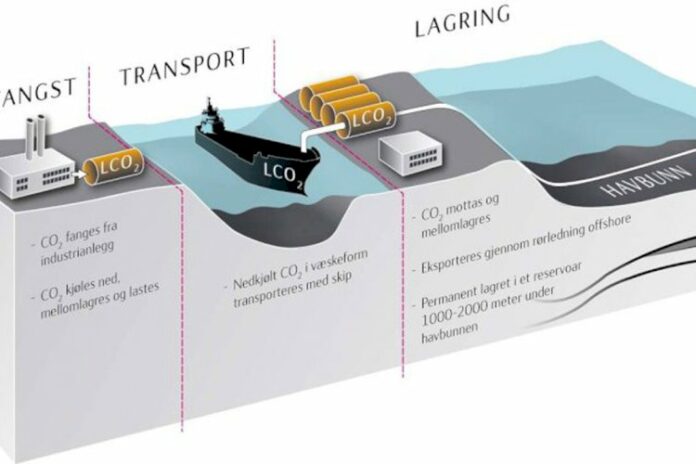
Equinor, Shell and Total have decided to invest in the Northern Lights project in Norway’s first exploitation licence for CO₂ storage on the Norwegian Continental Shelf. Plans for development and operation have been handed over to the Ministry of Petroleum and Energy.

Anders Opedal, executive vice president for Technology, Projects & Drilling at Equinor, says:

“The Northern Lights project could become the first step to develop a value chain for Carbon Capture and Storage (CCS), which is vital to reach the global climate goals of the Paris Agreement. Development of CCS projects will also represent new activities and industrial opportunities for Norwegian and European industries.”

The investment decision is subject to final investment decision by Norwegian authorities and approval from the EFTA Surveillance Authority (ESA).

Opedal says:

“This unique project opens for decarbonisation of industries with limited opportunities for CO2-reductions. It can be the first CO2 storage for Norwegian and European industries, and can support goals to reduce net greenhouse gas emissions to zero by 2050.”

The investment decision concludes the study phase during which the Equinor, Shell and Total worked closely with Norwegian authorities to conduct engineering studies and project planning, drill a confirmation well and develop the necessary agreements. Following the investment decision, the partners intend to establish a joint venture company.

The initial investments will total almost NOK 6.9 billion. The project will generate much needed jobs for Norwegian industry, with an estimated 57 percent of the investment going to Norwegian contractors. 

Syrie Crouch, vice president for CCUS in Shell, says:

“CCS is a crucial technology to help society and economies thrive through the energy transition. Shell is active in all parts of the CCS value chain and Northern Lights further strengthens our global CCS portfolio. We appreciate the leadership shown by the Norwegian Government to accelerate the development of CCS value chains and believe that the Northern Lights CO2 transport and storage solution has the potential to unlock investment in capture projects across Europe.”

Philippe Sauquet, president Gas Renewables & Power at Total, says:

“Total is proud to be part of this first commercial-scale carbon transportation & storage project in Europe. Together with our industrial partners, under the leadership of Norway, we’ve managed to conclude successfully the technical studies and we have achieved an important step towards the realization of the project. Today, more than ever, we are willing to maintain our efforts on the development of the CCS technology which is needed to reach the EU carbon neutrality goals and is fully part of Total’s new Climate Ambition to get to Net Zero by 2050.”

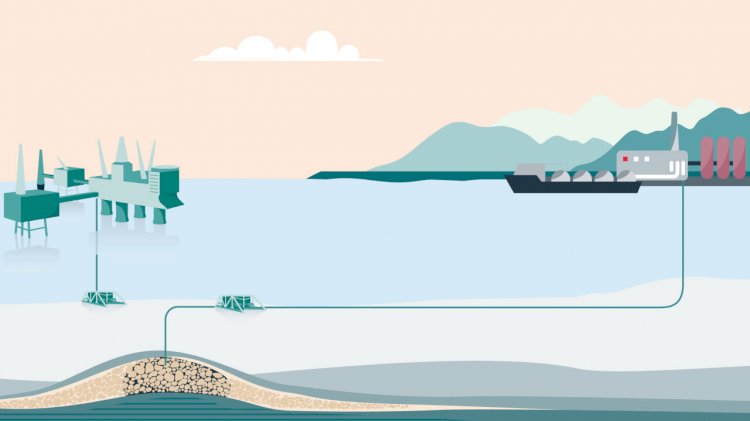
The project will be developed in phases. Phase 1 includes capacity to transport, inject and store up to 1.5 million tonnes of CO2 per year. Once the CO2 is captured onshore by industrial CO2-emitters, Northern lights will be responsible for transport by ships, injection and permanent storage some 2,500 metres below the seabed.

The CO2 receiving terminal will be located at the premises of Naturgassparken industrial area in the municipality of Øygarden in Western Norway. The plant will be remotely operated from Equinor’s facilities at the Sture terminal in Øygarden and the subsea facilities from Oseberg A platform in the North Sea.

The facility will allow for further phases to expand capacity. Investments in subsequent phases will be triggered by market demand from large CO2 emitters across Europe.

Equinor, on behalf of the partners, has already signed non-binding Memoranda of understanding with several European companies for the development of value chains in carbon capture and storage. Binding commercial agreements will depend on positive investment decision from Norwegian authorities and for individual third-party projects. This cross-industry collaboration is a unique solution and enables handling of large CO2 volumes that would otherwise have been emitted. This new value chain and infrastructure for carbon capture and storage projects can only be developed with cooperation between governments and companies.

If the project receives a positive final investment decision from the Norwegian Government in 2020, Phase 1 is expected to be operational in 2024.

LOC developed a remote DP inspection service

0

LOC, the premier international marine and engineering consulting firm, has developed a remote Dynamic Positioning (“DP”) inspection service, allowing clients to comply with DP trials, regardless of the current limits on travel to vessels. This new service is an extension of the existing DP inspection offer.

The remote service enables clients to meet DP systems compliance more efficiently, quickly and cost effectively at this time. The service has the flexibility to cover different technologies, depending on the client’s preference. The test programme can be spread over time to meet the vessel’s needs and to work around commercial and other commitments, such as charters.

The offer is based on the use of integrated technology, allowing continuous, real time remote monitoring, with the trials undertaken by the vessel, in the usual way. The offer can be extended to review the recorded trials data where data communication becomes an issue. This approach ensures clients receive the same level of precision, technical knowhow and expertise as LOC’s traditional ‘in person’ DP offer.

The remote DP inspection service is available to clients from all of LOC’s worldwide offices. Furthermore, LOC is continuing to resource physical surveys, on site attendances, offshore and onshore via its global network of specialist consultants based across 191 locations and 55 countries.

Commenting, Sen Abhayasinghe, Group Technical Authority for DP Services at LOC Group, said:

“This offer gives DP ship owners a solution, that is efficient and cost effective, that meets DP trial compliance, during the current travel restrictions and beyond. The system provides a seamless solution that is secure and transparent, while also being flexible and taking account of the commercial needs of the vessel and its owners. It also marks an exciting step for LOC’s DP team, as we are continuously innovating to provide the best technical offering to our clients, despite the current industry challenges”.

Infranode prepares a billion-kroner green investment in the port of Esbjerg

0

Infranode, a Nordic infrastructure fund, has partnered up with the municipally owned, Danish Port Esbjerg to invest up to one billion Danish kroner into new port infrastructure facilities for the wind turbine industry in the port. The project could create thousands of “green” jobs in Esbjerg and the rest of Denmark.

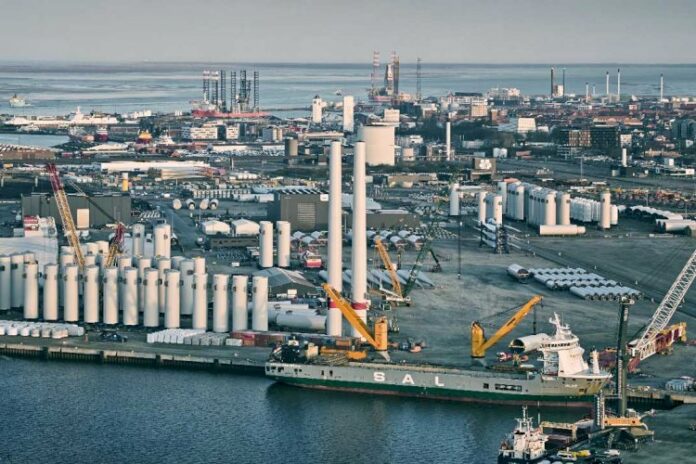
Investments of potentially up to one billion Danish kroner may be underway to Esbjerg (the fifth largest city in Denmark) that will go into port facilities for storage, preassembly and manufacturing of components for the offshore wind industry. Investments will be made available gradually as manufacturers of wind turbine components and offshore wind service providers expand their businesses in the rapidly growing wind turbine industry.

The investments to be made in the port of Esbjerg will be Infranode’s second major investment in Denmark. In December, Infranode completed an investment to build the largest solar park in the Nordics which is now under construction in Vandel (central Jutland). 

Flemming N. Enevoldsen, Port Esbjerg’s Chairman, says:

“We’ve found a strong, long-term partner with substantial insights in energy, port infrastructure and sustainability. With this new partnership, the city of Esbjerg, Port Esbjerg and Denmark will be even better prepared to seize opportunities to create green growth and new jobs in the massive expansion of offshore wind power in the North Sea as we approach 2030.”

The investment is expected to create as many as 2,000 new jobs. The port of Esbjerg already has an employment effect equivalent to 17,000 jobs in and outside of Esbjerg.

The port of Esbjerg is one of the world’s key hubs for the growing offshore wind industry, and the coming years will offer large potential for growth. There are currently prospective projects of up to 100 GW being installed in the North Sea by 2030 – a 5-fold increase compared to today. This will require wind turbines of even larger sizes than the ones in operation today. And in this context, the new facilities in the port of Esbjerg will contribute to the sustainable development by reducing the costs of transportation between production sites and installation sites.

Infranode Senior Advisor Niels Vallø, says:

“Esbjerg is uniquely positioned in a rapidly growing offshore wind market as well as in the North Sea, which plays a key role in Europe’s climate transition. We’re pleased to have this opportunity to play a part in building on that position and to create a setting for future green growth in the region. We want to play a part in propelling the industry to new heights.”

As a long-term investor in key infrastructure in the Nordic region and with a strong sustainability focus, investing in the port of Esbjerg is a strategic fit for Infranode.

Joel Löfroth, who is in charge of Infranode’s activities in Denmark, says:

“This investment is part of our strategy of being a long-term partner to the public sector in the green transition currently unfolding in Denmark and throughout the Nordic region, and we look forward to investing in more Danish infrastructure projects.”

It is important to Port Esbjerg that the agreement with Infranode will provide access to financing for the construction of facilities – particularly in a world challenged by COVID-19 – so a lack of capital does not become a hindrance to green growth in Europe.

Port Esbjerg CEO Dennis Jul Pedersen says:

“We have a really strong platform in Esbjerg and in all of Denmark in terms of the green energy potential. The physical settings are in place at the port of Esbjerg, and this agreement will set the base for the necessary financial capabilities for unlocking the huge potential so we can establish the necessary production capacity.”

Hartmann orders ME-LGIP engines for LPG tankers

0

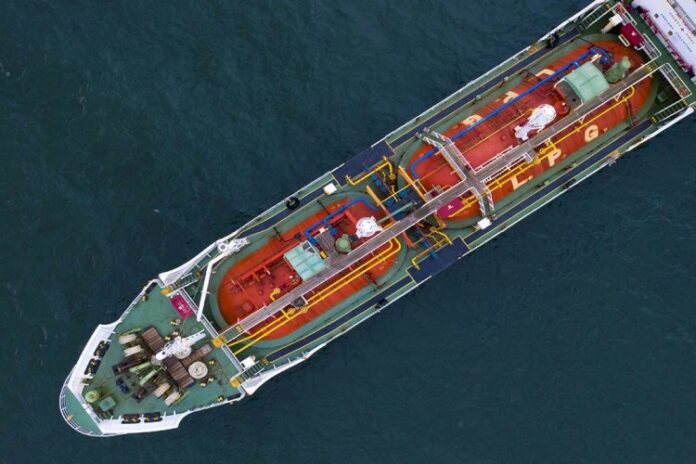
MAN Energy Solutions has won the contract to supply individual MAN B&W ME-LGIP (Liquid Gas Injection Propane) dual-fuel engines to 3 × 5,000-m3 LPG tankers currently under construction by CIMC-SOE (CIMC Sinopacific Offshore & Engineering Co., Ltd.) in Shanghai for Hartmann Gas Carrier, the German shipping company.

Each newbuilding will receive a propulsion package featuring 1 × 5S35ME-LGIP engine with an Alpha controllable pitch propeller, power take-off (PTO) and propulsion control system (PCS). MAN Energy Solutions states that it also expects to introduce its new Triton control platform with the engines.

MAN Energy Solutions’ two-stroke licensee, CMD, will construct the engines in Lingang, China with delivery scheduled during the latter half of 2021. The contract contains an option for two further vessels.

The new order is the latest in a series for the ME-LGIP engine. Among these, Oslo-based BW LPG recently exercised an option for further conversions of HFO-burning engines from its fleet to the dual-fuel type. This happened in the wake of the first ME-LGIP retrofit engine enjoying a successful TAT (Type Approval Test) at the works of MAN Energy Solutions’ two-stroke licensee, STX HI, in Korea.

Bjarne Foldager – Senior Vice President, Head of Two-Stroke Business at MAN Energy Solutions – said:

“After the success of our dual-fuel ME-GI engine running on ethane, orders for our ME-LGIP variant capable of running on LPG are now taking off – a situation we are very pleased with. That the engines in this order form part of an MAN Energy Solutions’ package fits perfectly with our desire to increasingly supply complete propulsion solutions.”

Foldager continued:

“Our low-speed, dual-fuel portfolio has now racked up over 1 million operating hours that owes everything to the strategy we have laid over the past decade and confirms our leadership within this critical marine segment. Our engines’ efficiency is the best in the market, which gives shipowners enormous flexibility, and we note that all fuel modes are employed.”

Lars Zimmermann, Senior Manager and Head of Two-Stroke Direct Sales, MAN Energy Solutions said:

“Despite Hartmann expressing a strong preference for the ME-LGIP, we had to win this order in the face of very strong competition and are, naturally, very happy. The engine is a standard bearer for environmentally friendly, reliable propulsion technology with its seamless switching between fuels and the full rating and performance of the baseline, low-speed diesel engine.”
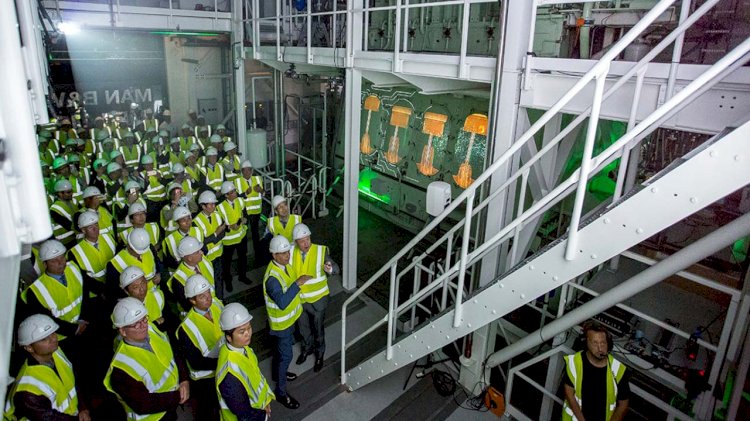
Photo: MAN Energy Solutions

MAN Energy Solutions states that interest in using LPG as a fuel, within and outside of the LPG carrier segment, is growing due to its sulphur-free character, widespread availability and ease of bunkering. In gas mode, the ME-LGIP engine operates on just 3% pilot oil and down to 10% load. Ultimately, the company expects the engine to operate without the need for pilot oil.

The ME-LGIP engine can also burn liquid volatile organic compounds, a deliberate move on the company’s part since the IMO will inevitably turn its focus towards the reduction of volatile organic compounds in the future.

The Diesel principle provides the ME-LGIP engine with high operational stability and efficiency, including during load changes and fuel change-over, while defining properties such as a stable change-over from one fuel type to another with no fuel-penalties are maintained. The negligible gas slip of the ME-LGIP engine makes it the most environmentally friendly, two-stroke technology available.

MAN Energy Solutions also reports that the ME-LGIP engine has experienced an up to 18% reduction in CO2 and circa 90% reduction in particulate matter when running on LPG, compared with HFO.

MAN Energy Solutions notes that its portfolio of two-stroke, dual-fuel engines has accumulated 1 million operating hours.The milestone comes on the back of the 300 engines/6.3 GW sales the company recently announced for the segment – all running on clean fuels such as LNG, LPG, ethane and methanol.

MAN Energy Solutions’ ME-GI (-Gas Injection) and ME-LGI engines form the core of its two-stroke, dual-fuel portfolio and have notched many notable industry-firsts since their market introduction, including the very first oceangoing ships operating respectively on LNG, methanol, ethane and LPG. To this end, the company recently released a Mk II ME-GI model and are currently, owing to market demand, developing an Otto-cycle variant – the ME-GA.

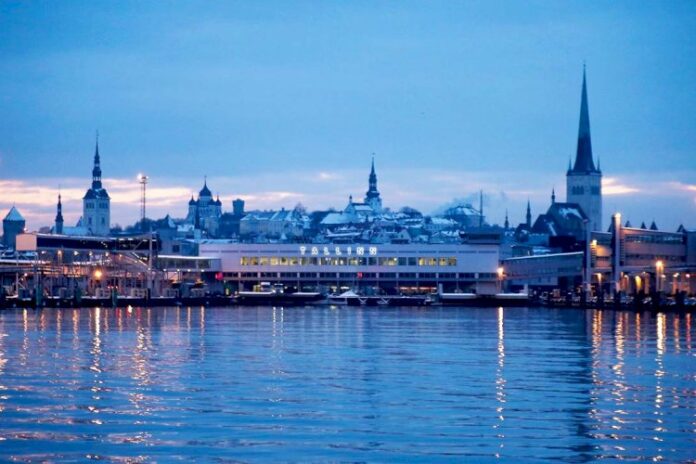
Ferry link Tallinn – Helsinki was partly reopened

0

The Finnish government allows from 14th of May Schengen Zone citizens who have an employment contract enter  into the country, allowing Estonian citizens who work in Finland and have a residence there, to return, or conversely to return home to visit friends and family.

Travels for tourism are still not allowed. Finnish citizens or residents who need to come to Estonia for work or study can likewise travel in the opposite direction without having to quarantine.

Border checks remain in place on both states’ borders to ensure entrants meet these criteria.

Ingrid Berezin, Port of Tallinn business manager, says the passenger terminals are prepared for the safe, gradual restoration of passenger traffic, and in recent weeks have been working closely with the Port of Helsinki, shipping companies and various authorities.

Ingrid Berezin explained:

“We have added a number of signage and notices to disperse passengers throughout terminals and passenger corridors, installed disinfectants in public places and ordered the more frequent disinfection of surfaces. Our people and partners are instructing and monitoring the smooth and safe boarding.”

Tallink will be operating its Megastar and Star vessels, Viking line will be running the Gabriella, and Eckerö Line the Finlandia.

Report: Hydrogen has surged up the priority list of oil and gas organizations

0

A fifth (21%) of senior oil and gas industry professionals say their organization is already actively entering the hydrogen market, according to a new report published by DNV GL. The proportion intending to invest in the hydrogen economy doubled from 20% to 42% in the year leading up to the Coronavirus-induced oil price crash.    

Heading for Hydrogen draws on a survey of more than 1,000 senior oil and gas professionals and in-depth interviews with industry executives. The report suggests that recent shifts in the industry’s investment priorities are unlikely to affect the sector’s long-term efforts to reduce carbon emissions.   

DNV GL found a significant rise in those reporting that their organization is actively adapting to a less carbon-intensive energy mix – up from 44% for 2018 to 60% for 2020. Carbon-free hydrogen production, transmission and distribution is now widely recognized as a central component to the oil and gas industry’s decarbonization efforts.  

Liv A. Hovem, CEO, DNV GL – Oil & Gas, said:

“Hydrogen is in the spotlight as the energy transition moves at pace – and rightly so. But to realize its potential, both governments and industry will need to make bold decisions. The challenge now is not in the ambition, but in changing the timeline: from hydrogen on the horizon, to hydrogen in our homes, businesses, and transport systems.”  

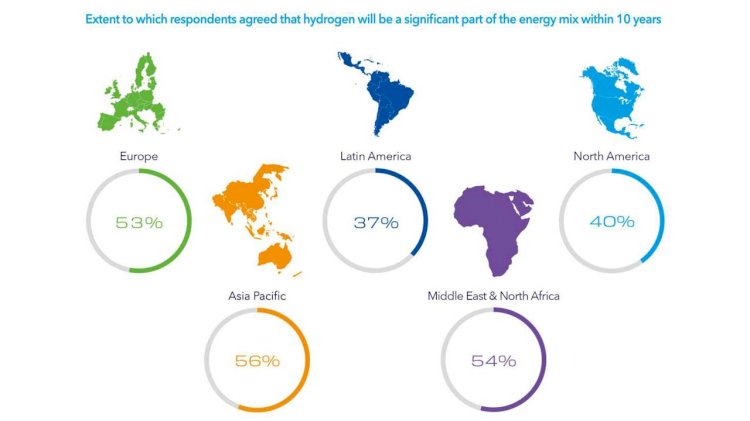
More than half of respondents to DNV GL’s research in Asia-Pacific (56%), the Middle East & North Africa (54%) and Europe (53%) agree that hydrogen will be a significant part of the energy mix within 10 years. North America (40%) and Latin America (37%) are only a little behind.  

The success of a hydrogen energy economy is closely aligned with the future of natural gas, renewable energy, and carbon capture and storage (CCS) technology, according to Heading for Hydrogen.  

Photo: DNV GL

While hydrogen gas produced from renewable energy (green hydrogen) is the industry’s ultimate destination, analysis shows that the sector can only realistically scale up to large volumes and infrastructure with carbon-free hydrogen produced from fossil fuels combined with CCS technology (blue hydrogen).    

DNV GL’s 2019 Energy Transition Outlook, a forecast of world energy demand and supply, predicts that natural gas will become the world’s largest energy source in the mid-2020s, accounting for nearly 30% of the global energy supply in 2050. Natural gas and hydrogen can play similar roles within the global energy system, and the synergies between them – in application and infrastructure – will drive the hydrogen economy.  

However, Heading for Hydrogen points to political, economic, and technical complexity in scaling the hydrogen economy.   

Hovem said:

“To progress to the stage where societies and industry can enjoy the benefits of hydrogen at scale, all stakeholders will need immediate focus on proving safety, enabling infrastructure, scaling carbon capture and storage technology and incentivizing value chains through policy.”   

DNV GL is involved in projects spanning all four of these enabling factors, including:   

  • The Hy4Heat programme in the UK, which aims to establish whether it is technically possible, safe, and convenient to replace methane with hydrogen in residential and commercial areas. Tests on three specially constructed houses are proving the safety case for a switch from natural gas to hydrogen in a domestic setting at DNV GL’s Spadeadam Testing and Research site – the world’s first comprehensive hydrogen testing facility  
  • A project run by Dutch gas and power networks operator Stedin demonstrating that zero-carbon hydrogen could help to decarbonize heating in a residential apartment block near Rotterdam, the Netherlands  
  • A full-scale demonstration project, initiated by Gassnova, in which DNV GL qualified carbon capture technology developed by Aker Solutions, at Norcem’s cement plant in Brevik, Norway. DNV GL qualifies and verifies CCS technology and projects in accordance with DNV GL recommended practices and international standards.   
  • DNV GL supports governments with technical and market analysis to provide a knowledge base for decisions regarding national strategy and policy measures.

ABS expands UWILD to marine vessels

0

Maritime’s most comprehensive suite of remote survey and audit options has just got even broader, with ABS adding Inventory of Hazardous Materials (IHM) Survey as remote choices.

Additionally, next week ABS will expand Underwater Inspections In-Lieu of Drydocking (UWILD) to marine vessels.

Joe Riva, ABS Vice President and Chief Surveyor, said:

“This takes the considerable lead ABS already enjoys in remote survey and widens the gap still further. There is nothing else in the industry that can compare with the depth and breadth of our remote survey offer. We have listened to clients who are grappling with unprecedented operational challenges and I am proud to say we have responded comprehensively, with innovation and flair. Remote survey is the new normal for ABS and our clients are feeling the difference in terms of operational flexibility, while we continue to advance the cause of safety at sea and deliver on the ABS mission.”

ABS is delivering IHM remote survey to support clients ahead of the December 31, 2020, introduction of mandatory IHM for all vessels sailing under an EU member states’ flag or any vessel calling at a European port.

John McDonlad, ABS Senior Vice President, Global Business Development, said:

“In this challenging, time-pressured environment, ABS IHM remote survey is the simplest route to compliance without the inconvenience of arranging for a surveyor to be physically present on board.”

An IHM initial survey for existing vessels verifies the location of the hazardous materials on board that are listed in the inventory. First step is to submit the inventory and required documents to an ABS engineering office for review. ABS-classed and non-ABS-classed vessels are eligible for an IHM initial survey, which supports compliance with both EU Ship Recycling requirements and the IMO Hong Kong Convention.

These new options are the latest step in a significant expansion of ABS remote survey capability. ABS is now able to conduct almost all classification annual surveys remotely on eligible vessels and has made its remote survey and audit services available to equipment and materials manufacturing clients all over the globe.

BAE Systems powers vessels with emission-reducing technology

0

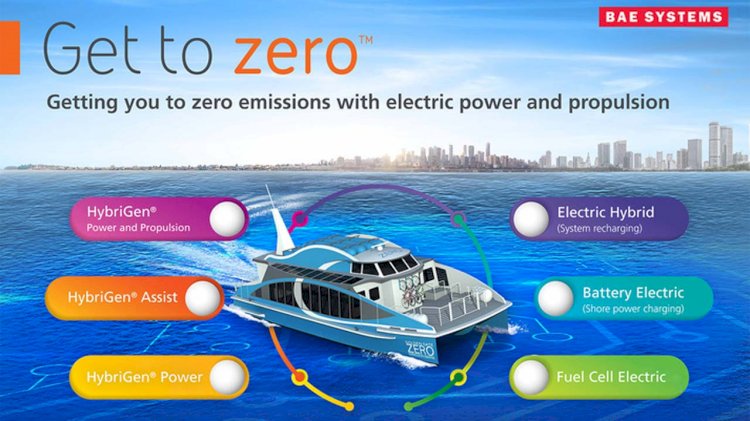
BAE Systems is helping marine operators get to a zero emission future with electric power and propulsion technology.

The technology isn’t new. In fact, it has been powering cars and buses for years. However, with the rise in planet-warming greenhouse gases, it’s now making its way to the open water and creating a new wave of clean transportation. As vessel operators see the environmental benefits, many are making the move to adopt cleaner power sources.

BAE Systems is ready to turn the tide on emissions. It’s a familiar challenge and one that the company has been solving for more than 20 years with electric power and propulsion systems in the transit bus industry. Now it’s taking that expertise to the shipyard, helping operators make the switch from a combustion engine to electric or fuel cell power and propulsion for the vessels they build.

The company is using its HybriGen® power and propulsion system to make it all possible. The system, which comes in multiple configurations, builds on the company’s core technology that today is powering more than 12,000 buses around the world in cities such as Boston, New York, Paris, and San Francisco. It promises not only to cut emissions, but to create a smoother ride for passengers and help operators save on fuel and maintenance costs.

One of the first to make the jump to the HybriGen system was the Red & White Fleet. The sightseeing company in San Francisco Bay is on the path to a greener future with its newest vessel Enhydra, which has been operating on electric-hybrid technology since 2018. Since then, the 128-foot excursion vessel has saved roughly 35 percent of its fuel, only needing to operate its combustion engine part of the time.

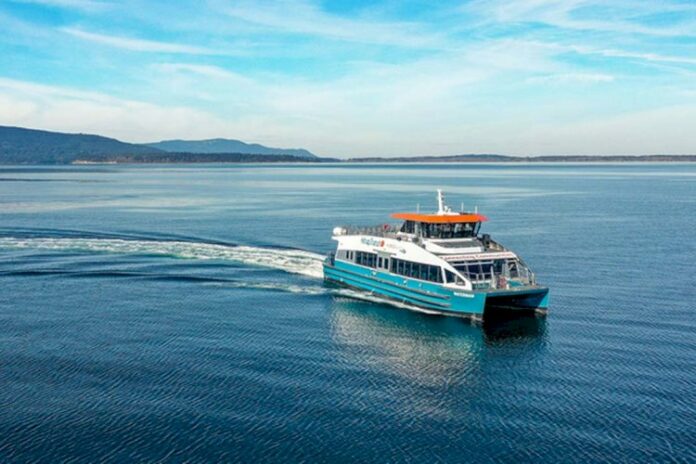
Now others are starting to take notice of the company’s technology. On the West Coast, Kitsap Transit is using an electric-hybrid system for its passenger ferry, Waterman, which operates out of Washington State’s Port Orchard. In San Francisco, Call of the Sea is taking the unique approach of using the technology to power a 132-foot wooden tall ship that teaches young people about maritime history while promoting sea stewardship. Just across the bay, the 70-foot Water-Go-Round passenger catamaran is expected to launch on its maiden voyage later this year with a combination of hydrogen fuel cells and lithium-ion batteries to drive its electric propulsion motors.

BAE Systems technology is also providing three vessels on the East Coast with complete electric power. Harbor Harvest is using the system on their vessel Captain Ben Moore to create a new and sustainable form of short sea shipping. The environmentally friendly boat hauls locally made products and other cargo between Connecticut and New York on the Long Island Sound. Built by New York-based Derecktor Shipyards, the technology is also helping the Spirit of the Sound and CUNY I conduct research along the coastline.

As the pressure to get to zero emissions grows, there will be more vessels in need of clean technology. 

The Northwester 2 wind farm is completed

0

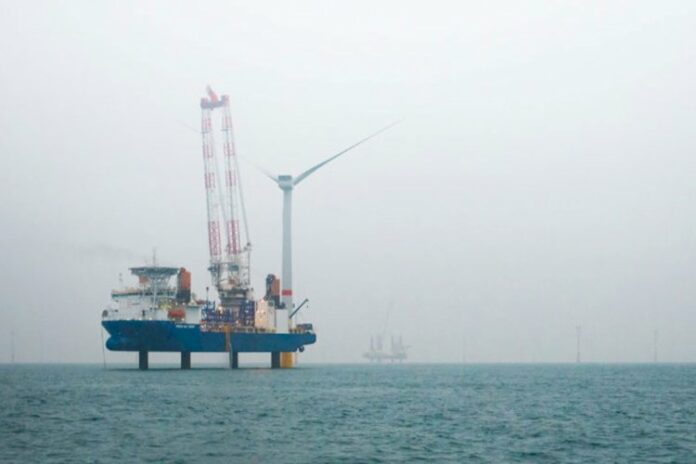
In just under ten months from the start of the offshore works, the 219 MW Northwester 2 wind farm is now supplying the Belgian grid with green energy from all of its 23 fully operational wind turbines producing 9,5 MW each. This wind farm is the first to use the world’s highest rated V164-9.5 MW turbines in commercial operation.

This is the seventh wind farm in the Belgian North Sea, which now brings the total offshore energy capacity to 1,776 MW and moves Belgium closer to reaching the goal of supplying 10% of energy demand with offshore wind by the end of 2020.

Peter Caluwaerts, Parkwind’s Project Director, commented:

“As we started the offshore construction of our fourth wind farm back in July last year, we could not have imagined the circumstances under which we would be completing this project. Following the powerful storms over the winter that caused some temporary disruption, the outbreak of the COVID-19 pandemic forced us to deal with an unprecedented level of uncertainty. We managed to keep the project on track though.

Following an excellent dialogue with the Belgian government and a great collaboration with our contractors, all operating procedures were re-designed to continue the construction works, ensuring the health and safety of all people involved and safeguarding their safe return home during  this COVID-19 pandemic. Today we can proudly say ‘we did it’. We are grateful to every individual that has contributed to the timely and – most importantly – safe realization of the Northwester 2 project. Everyone has demonstrated exceptional problem solving skills, courage, resilience and determination to successfully complete this project.”

Now that Northwester 2 is completed, Parkwind’s focus shifts towards exporting its offshore expertise internationally. Arcadis Ost 1 (Germany) and Oriel (Ireland) are both in development and will bring an additional 577 MW of capacity to its portfolio while other opportunities in Europe, Asia and North America are under review.