-5.4 C
New York
Home Blog Page 859

New LNG carrier for EDF LNG Shipping delivered

0

On May 15, 2020, the liquefied natural gas (LNG) carrier ELISA LARUS, owned by France LNG Shipping (a French ship-owning company jointly owned by NYK and Geogas LNG*) and under a long-term charter contract with EDF LNG Shipping**, has been delivered. The vessel was built at Hyundai Samho Heavy Industries.

For France LNG Shipping, this vessel is the first long-term contract with EDF LNG Shipping and will be engaged in LNG transportation for up to 20 years.

The vessel has a 174,000 cubic meter capacity membrane-type cargo tank fitted with a GTT Mark III Flex cargo containment system*** and a dual-fuel slow-speed engine (WinGD X-DF).
In addition, the vessel, classed by Bureau Veritas, has been awarded the French classification society’s cyber security notation****. This is the first such award of a cyber notation for an LNG carrier.

In accordance with its medium-term management plan “Staying Ahead 2022 with Digitalization and Green”, the NYK Group seeks to secure stable freight rates through long-term contracts and continue to encourage creative solutions in its efforts to contribute to stable energy transport services.

Vessel Particulars:

  • Length overall: 297.23 meters
  • Breadth: 46.40 meters
  • Gross tonnage: 118,286 tons
  • Propulsion: X-DF
  • Cargo tank capacity:174,000 cubic meters
  • Shipbuilder: Hyundai Samho Heavy Industries (Korea)
  • Flag: France

* Geogas LNG SAS is a controlled subsidiary of the Geogas group (founded 40 years ago) along with infrastructure funds ACP and DIF. The Geogas Group owns french flag LPG carriers and trades 6 million tons per annum of LPG throughout the world.

** EDF LNG Shipping SAS is a subsidiary of Electricité de France (EDF) for LNG transportation.

*** GTT Mark III Flex cargo containment system:
The Mark III membrane system is a cryogenic liner directly supported by the ship’s inner hull and designed to store LNG at near atmospheric pressure.

**** SYS-COM notation:
A classification code that certifies that the cybersecurity of ship-to-shore communication equipment has been ensured by BUREAU VERITAS (French Classification Society) through document examination, a risk assessment workshop, and onboard inspection. This vessel is equipped with a SIMS (Ship Information Management System) that collects actual operation data and shares it between ship and shore, and this system is also subject to cybersecurity certification. The Bureau Veritas cyber notations provide procedures and methodologies to address design and operational requirements for cyber security and compliance with IMO 2021 requirements.

Novel tool sheds light on coral reef erosion

0

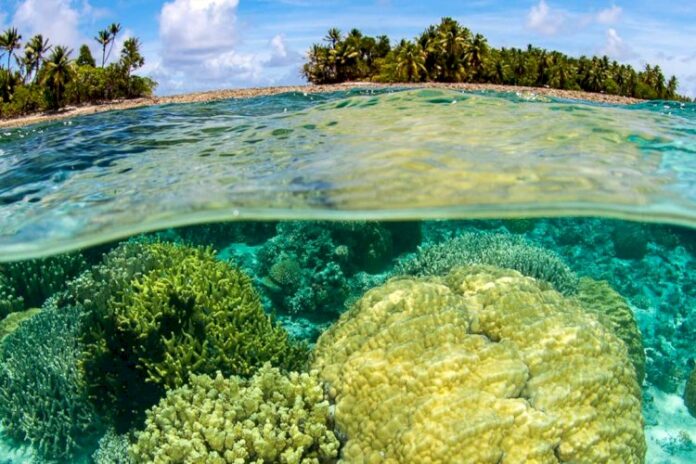
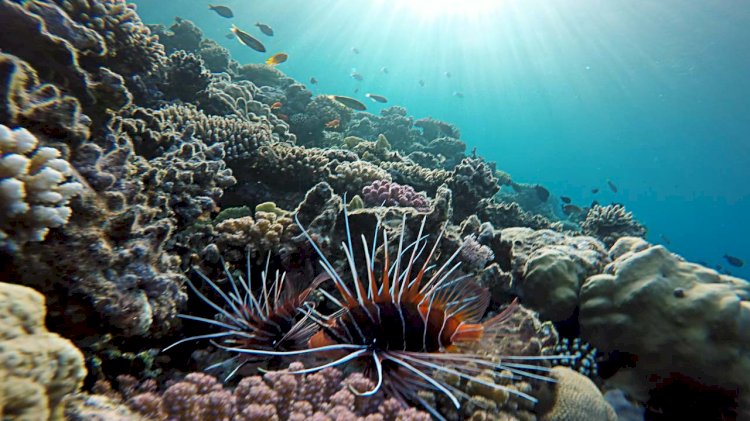
In recent decades, coastal flooding in the Marshall Islands has increased in both frequency and magnitude, due to a combination of large, storm-driven wave events and rising seas. In some cases, low-lying homes and businesses have been swallowed up, forcing some residents to leave the region.

Coral reefs are among the last lines of defense against coastal flooding. In a region where it’s hard to find land more than ten feet above sea level, reefs provide a critical natural barrier. They dissipate much of the destructive energy from large waves before sweeping onto shore.

Unlike other tropical areas where reports of coral disease and bleaching are far too common, many reefs throughout the Marshalls—particularly those in the outer and less-populated atolls—are still vibrant and teeming with life. They have managed to avoid the pressures of overfishing, pollution, and other human impacts that have decimated reefs on other islands across the Pacific.

Reef erosion, however, is a potential threat in the Marshall Islands due to the large waves from increased tropical storms and cyclones. When these storms barrel through, they churn up waves, smashing sediments—containing calcium carbonate fragments of shell-building organisms and large pieces of broken coral—against reefs at velocities high enough to cause erosion.

James Bramante, a recent graduate of the MIT-WHOI Joint Program in Oceanography, says:

“We know waves are a major driver of coastal change, but the underlying dynamics of sediment transport and reef erosion are poorly understood.”
Bramante has been studying the potential impacts of waves on coral reef systems in the Marshall Islands, and says wave-driven abrasion of coral reefs can influence how far waves might travel past reefs and onto shore.

To help bridge the knowledge gap, Bramante has developed a novel system for estimating the rate at which sediments erode reefs—one that could help island communities at risk predict and plan for coastal inundation. He’s built a massive U-shaped wave abrasion simulator—aptly called a UTube—consisting of two 13-foot PVC tubes running up each side. These are connected by a 10-foot see-through acrylic chamber running along the floor, in which roughly ten handfuls of gravel are spread out along the bottom lining of “erodible” urethane foam, which acts as a simulated coral reef substrate.

Bramante says:

“We used this particular foam since the material will erode at roughly similar rates to the framework of a coral reef, which is made up of dead corals and coralline algae tightly welded together. We measure erosion rates simply by weighing the foam before and after our experiments.”

Bramante demonstrates the contraption in a dimly-lit, warehouse-like bay on the MIT campus in Cambridge, Mass. First, he climbs a steel ladder adjacent to the UTube system and runs a hose into one of the vertical PVC tubes until it’s nearly filled up with water. Then, he switches on two thrusters which force the water down the tube, through the chamber, and up into the second tube. Gravity then sends the water back through the system up into the first tube, where the thrusters force it back down again. The cycle repeats itself.

Through the clear acrylic chamber along the bottom, you can see the water flow increasing back and forth as bits of gravel begin to coalesce into little piles. After a handful of cycles, the U-Tube starts churning and the water becomes torrent-like as it moves from tube to tube. The stronger circulation pushes the individual piles of gravel into a single large mound, which agitates the foam substrate in a scouring, back-and-forth fashion.

Bramante says:

“The wave energy we’re able produce here in our lab at MIT is similar to what real reefs are exposed to thousands of miles away in the Marshall Islands.”

In initial testing, Bramante and his team have discovered that the “reef” erodes a lot faster than he expected:

“I thought I’d see erosion rates of meters per century, but it is more like meters per year.”
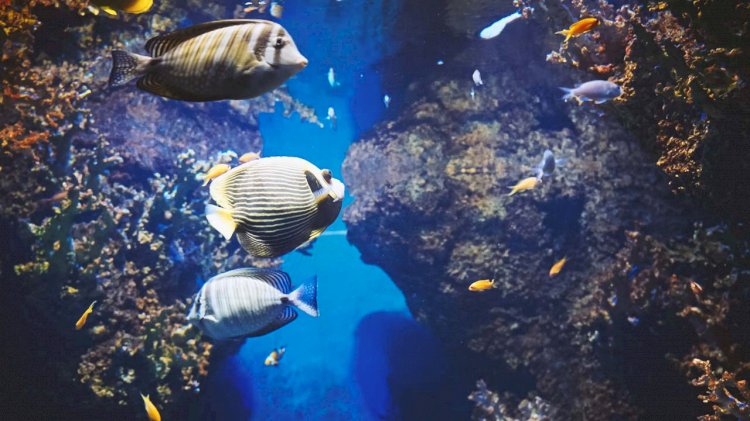
Bramante points out, however, that this doesn’t mean coral reefs in the Marshall Islands are eroding—or will erode—at these rates. In fact, according to a new study that he co-authored with WHOI geologists Jeff Donnelly and Andrew Ashton, the experiment results support the hypothesis that wave-driven abrasion deepens channel-like “grooves” in reef surfaces over time, and that these grooves may keep abrasive sediment away from actively growing coral, thus protecting it.

Bramante says:

“However, if coral health declines further, abrasion may overwhelm the reef’s ability to compensate, which would render reefs less effective at buffering wave events in the future.”

Bramante’s end game is to create equations describing the underlying physics of wave-driven abrasion and feed them into predictive models that coastal planners can use to estimate the potential impacts of future storms. The models could help the Marshallese—as well as those in other low-lying areas such as the Cook Islands and Maldives—protect remaining infrastructure and make decisions about when and where to relocate resources and people.

Bramante says:

“Abrasion is another reef stressor that could be exacerbated by climate change. The more we can learn about the role of sediment dynamics in reef health and maintaining atoll island shorelines, the more we can help protect these vulnerable communities.”

DSHV signs contract with Verolme Special Equipment for ECGS service provision

0

Damen Shiprepair Harbour & Voyage (DSHV) has signed a joint partnership cooperation with Verolme Special Equipment for the provision of services to exhaust gas cleaning systems (EGCS), widely known as Marine Scrubbers.

The agreement arose from a mutual understanding that both parties’ clients were seeking wider availability of services for on board scrubber installations – either in port or underway. The partnership will create a leading global service provider of EGCS, supporting cleaner, emissions-reduced shipping worldwide and available 24/7.

More and more vessels are having scrubbers installed as one of the options to comply with IMO 2020 Sulphur Cap. However, this increase in scrubber installations represents a potential increase in maintenance, service, modifications and repairs, as Jozeph W.D. Quak (Managing Director of Damen Shiprepair Harbour & Voyage) explains:

“With any new technology, there is always a learning curve, and this is also with the EGCS. There are potential problems due to vibrations in the new added steel structures and related. Additionally, the acidic nature of Sulphur can cause corrosion to the discharge piping, overboard pipes and scrubber system itself.”

Photo: Damen

This, he points out, is already being observed in existing systems, resulting in a significant increase in corroded and cracked pipework. Replacement by GRE pipe systems and installation of SMO on crucial locations give the solution. Many systems have been installed without proper material considerations and we see that (early) failure of parts and serious corrosion damage is not rare. The partnership between Damen Shiprepair Harbour & Voyage and Verolme Special Equipment provides a complete service for all problems that might occur. We can assist our clients anytime and anywhere, to keep vessels sailing without or with very short down-time in case mentioned problems occur and repairs are necessary.

Parties work together with OEMs (in close cooperation) of EGGS systems. Along with a vast, own experience in exotic materials as for example SMO, Super Duplex, Titanium, all kinds of SS and GRE piping we are able to provide the optimal solution.

This service will be provided 24/7 all around the globe with a lead time of max 24-hour notice, prior attending of the vessel. Accordingly, team will attend and after a site inspection a suitable recovery plan will be provided making sure downtime is limited to the minimum.

New deep suction dredger for Hoftijzer BV

0

TV Dredging has been nominated by Hoftijzer Verhuur- en aannemingsbedrijf to build a new deep suction dredger and booster pontoon. The new, custom-build vessel, will be used for sand extraction.

The in-house engineered vessel, type TVD DSD 35 DE, has a dredging depth of 37 m. The main vessel measures 20,00 m long and 9,10 m width. Measurements of the booster pontoon are 9,00 m long and 3,50 m width.

The totally installed generator power is 1690 kW for powering of a 355 kW jet pump, a 700 kW submersible motor for the GIW underwater sand pump and 700 kW motor for the booster pump.

‍TV Dredging has contracted MaRoTechniek as subcontractor for the electrical installation, dredge automation and winches. To ensure optimal efficiency,  the vessel is equipped with PM motors, which contributes to lower energy consumption and reduces harmful emissions.

To make sure (de)mobilization will be as efficient as possible, the vessel has a modular construction so it can easily be shipped anywhere by any means of transport; severely cutting transit time.

The vessel is expected to enter service in the second half of 2020.

Nexans completes repair of Malta-Sicily subsea interconnector

0

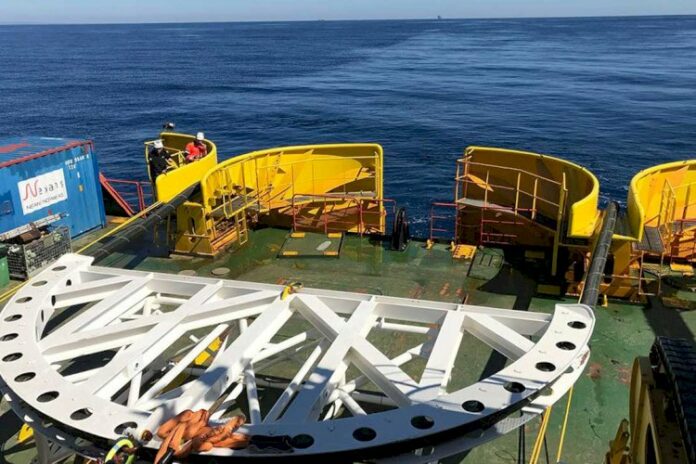
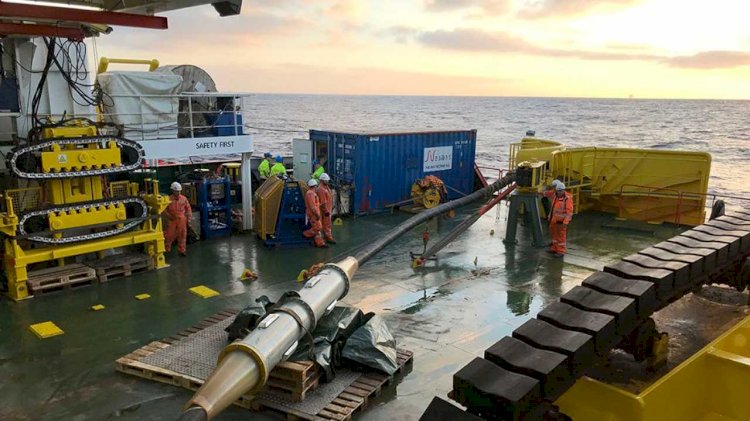
Nexans has completed the repair of a 95km subsea high voltage (HV)  cable linking Malta with Sicily, ensuring the continuity of power supply to the island nation of Malta. The Interconnector cable was damaged at the end of 2019 by a ship anchor, causing a nationwide blackout and a series of power cuts in subsequent weeks.

Nexans quickly mobilized its IMR Team to help Enemalta plc, the owner of the power interconnector, to find the damage location and confirm the nature of the fault.

In the first week of January 2020, Nexans mobilized the Polar King, a 110 meter-long modern multipurpose subsea vessel held on long-term charter, to inspect the cable damage. The vessel’s ROV (remotely operated vehicle) confirmed the anchor damage at approximately 25km offshore from Sicily and found the cable cut in two at a depth of 150m. After identifying the exact damage location with the ROV, the Nexans Capjet water-jetting system was used to expose the cable that had been buried into the seabed. The damaged part of the cable was then cut out and the ends sealed off to prevent further damage. A critical step in the operations was to inspect the spare length of cable and joints, held in store by Enemalta, to ensure their useabilty.

The cable repair vessel was then mobilised to Malta and started loading the spare cable in mid- February. In mid-March a section of the spare cable was spliced in at the damaged area. This enabled the interconnector to be re-energized successfully – only three months after the damage. The Polar King will return shortly to use its Capjet water-jetting system to trench the repaired cable section to a depth of approximately 1.5m.

Enemalta plc CEO Jason Vella said:

“Nexans was extremely responsive and led both the planning and execution of the repair. They understood our critical need to get this interconnector fixed for our electricity supply and they delivered!”.

Dr Michael Farrugia, Malta’s Minister of Energy and Water, commented:

“We are very satisfied with the quality and speed of the repair that enabled the interconnector to be back in service in half the time orginally anticipated.”

After successful completion of the repair, Nexans IMR Sales and Marketing Manager, Abdou Diallo said:

“We supported Enemalta by reacting very quickly. The Polar King was mobilized to determine the extent of damage to the cable. After the inspection of the spare cable and repair joints, we planned and executed the repair, completing it successfully slightly ahead of schedule. We believe this is a perfect example of the range of services Nexans can offer to our key customers”.

The Malta-Sicily Interconnector cable was manufactured and then installed in 2014 by Nexans. The  interconnection with Italy’s power grid has allowed Malta to reduce its reliance on local generation and increase its security of supply. The cable has a capacity of 200MW and is a 3-core 220kV submarine cable with XLPE insulation and includes two fibre optic elements each with 36 fibres; installed at water depths of 150m and buried to around 1-1.5m below the seabed surface.

Master Terminal by Navis now integrates into Navis Smart Ecosystem

0

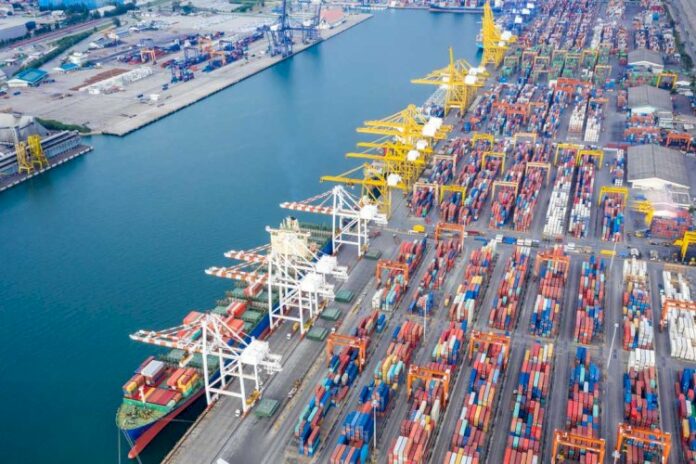
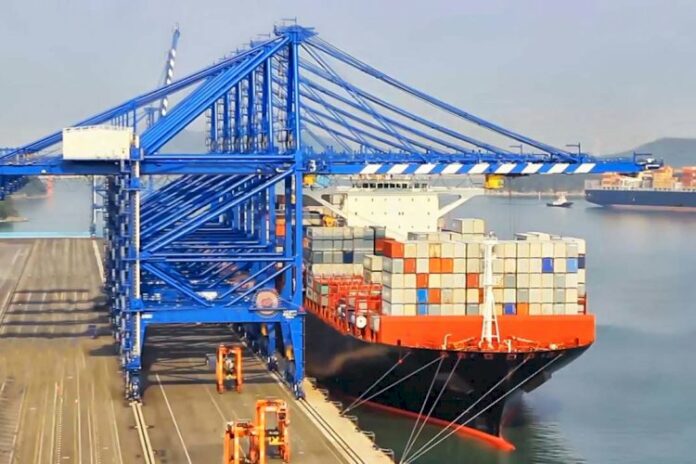
Navis, a part of Cargotec Corporation, and the provider of operational technologies and services that unlock greater performance and efficiency for the world’s leading organizations across the shipping supply chain, has announced that its Master Terminal by Navis TOS for mixed cargo terminals, has been successfully integrated into the innovative Navis Smart architecture.

With this integration, Master Terminal customers will be able to take advantage of the Navis portfolio by accessing applications that can enhance their investment in Master Terminal. The first application to be integrated is OpsView, a business intelligence tool for tracking operational performance.  

Integrating Master Terminal with Navis Smart is part of Navis’ strategy to ensure that customers have a path to get more from their existing terminal operating system while futureproofing their investment. When general cargo terminals and container terminals are being run by the same operator, Navis Smart OpsView can provide a unified view of both types of operations, improving visibility and management of the entire business.

Due to the connected offerings from Navis Smart Suite, terminal operators are now able to access more data and insights, which are being leveraged by advanced technologies for better decision making. The suite can be deployed in the cloud without the need for upgrades making it easier for terminal operators to get additional functionality to their teams more quickly, enabling them to increase efficiencies, lower costs and improve customer service.

Andy Barrons, Chief Strategy Officer at Navis, said:

“Master Terminal is a leading general cargo TOS, and now that it is part of the Navis portfolio, there are more ways to offer additional applications and functionality; and for multi-terminal operators, we can integrate and share data across general cargo and container sites for better operational visibility and productivity. This is another step towards the next generation of TOS which will be an important system supporting the integrated supply chain of the future.”

Year Results: IMCA DP Practitioner Accreditation Scheme

0

The Accreditation Scheme is the output of a cross industry workgroup consisting of DP vessel owners/operators, training providers, DP consultants, major energy companies and relevant organisations.

This workgroup was tasked by IMCA’s Marine Division Management Committee in 2018 to devise a scheme to improve consistency and conduct of DP Trials. Additionally, the scheme set an industry recognised level of knowledge for DP Practitioners responsible for developing, witnessing and reporting of DP Trials in addition to those responsible for the management of the DP assurance processes.

One of the main aims of the scheme is to reduce DP events across all sectors by ensuring DP Practitioners have achieved and demonstrated a high level of skill given their involvement in DP testing and trials at all stages of the vessel design and operation. This scheme ensures that DP Practitioners have a level of competence that ensures any potential hardware or software issues can be accurately identified and addressed before any failures occur, which could adversely affect a vessel’s DP system.

Aims of the scheme

  • Improve the consistency and quality of DP trials
  • Set a recognised level of knowledge for DP Practitioners responsible for developing, witnessing and reporting DP trials, and those responsible for the management of DP assurance processes.

Objectives for the scheme are:

  • Assure that DP Practitioners attending vessels for trials are accredited to a recognised standard;
  • Assure that personnel conducting DP assurance duties in both vessel operator and client offices are accredited to a recognised standard;
  • Meet the requirement of OCIMFs Dynamic Positioning Assurance Framework (2016) which calls for verification that shore based DP personnel and DP Assurance Practitioners are qualified, experienced and competent

Two Categories within the accreditation scheme:

  • DP Trials and Assurance Practitioner – A person actively involved in producing, witnessing and assessing the results of DP FMEA proving trials and DP annual trials programmes;
  • A Company DP Authority – A person who manages, and provides advice on DP assurance processes and is typically employed within a DP vessel operator company or a DP vessel chartering company

Mark Ford, Technical Director, stated:

“We have certainly seen a high level of interest and participation in the DP Practitioner Accreditation Scheme since its launch last May and as the scheme enters its second year, we hope this continues. There has been an 80% pass rate across both categories so far.

Continuous Professional Development and Accreditation schemes such as this enables IMCA to support our Members and the industry by maintaining consistency in standards when it comes to the skills and abilities of those working in our industry.

It is vital that DP Practitioners attending vessels for trials, and those conducting DP assurance duties in both vessel operators and client offices, are accredited to an internationally recognised standard. The scheme ensures that the requirement of the OCIMF white paper on DP assurance is met; and that DP trials practitioners and office-based personnel maintain and increase their knowledge base.“

Scheme requirements

To ensure the scheme continues to enhance industry knowledge, applicants need to be able to meet certain criteria to be able to apply – these include relevant qualifications, certification, experience and knowledge for their chosen category.  The application criteria are clearly set out on IMCA’s website and in IMCA M 249 DP Practitioner Accreditation Scheme Handbook. All applications submitted are reviewed by IMCA’s Marine & DP team. If applicants are not able to meet the criteria they will not be accepted into the scheme.

COVID-19

Unfortunately, the COVID-19 pandemic has caused interruption to the examination programme recently however IMCA is working closely with the examination centres and will inform candidates and Members as soon as examinations can safely resume. In the meantime, applications are still being received by our team in the Secretariat.

First LNG bunkering operation in France was completed

0

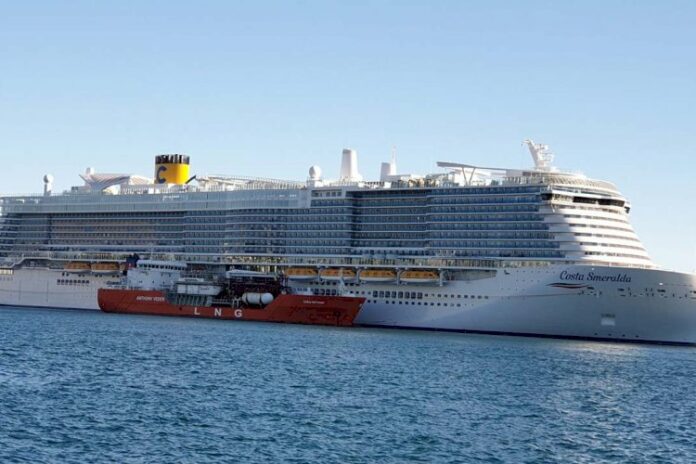
One of the world’s first LNG-powered cruise ships, the COSTA SMERALDA, operated by COSTA of the Carnival Group and berthed in the Port of Marseille Fos, required an LNG delivery. SHELL, under contract with Carnival, is supplying the LNG through one of their bunker vessels. This vessel was used for the first LNG bunkering operation in France, which was completed on Monday, 4 May 2020, at around 5:00 pm. 
 
Ship to ship bunkering: a successful operation In a manoeuvre carried out with great precision and smoothness the CORAL METHANE positioned itself in line with the COSTA SMERALDA’s bunker station. Once the ship was made fast, the transfer of the loading hose by the ship’s crane could begin, followed by the installation of various equipment to allow LNG to be transferred in complete safety. Refuelling continued overnight and the CORAL METHANE departed on 05 May at 04:00.

This operation was carried out in perfect coordination between the ship services of the Port of Marseille Fos (lookout, piloting, towing, mooring), the crew of the COSTA SMERALDA, the SHELL teams and the crew of the CORAL METHANE operated by the Dutch shipowner ANTHONY VEDER, and with the reassuring presence of the nautical resources of the Marseille fire-fighters who are closely monitoring this development in liaison with the teams of the Harbour Master’s Office at the Port of Marseille Fos. 

Amaury de Maupeou, the Marseille Fos Port Authority Commander, said:

“We are all proud to have been able to complete this operation smoothly and safely. It has required studies, instructions and procedures to be agreed with the various players, and in line with European and global standards. This is a first in France and proves to what extent, even during the current health crisis, we are capable of supporting the development of LNG, which is one of the measures deployed by the Port of Marseille Fos to reduce its environmental impact.”

Tahir Faruqui, General Manager, Shell Global Downstream LNG, said:

“We’re pleased that even in these challenging times for the industry, Shell is able to play a small role in helping to ensure continuity of LNG supply to our customers. We’re glad that we have been able to work efficiently with the Port of Marseille and Carnival. Carnival is one of a growing number of organisations adopting LNG – the most affordable alternative to traditional marine fuels available today”.  

Franco Porcellacchia, Sustainable Innovation and Infrastructure Development Vice President Costa Group, said:

“We are happy that our new LNG powered flagship Costa Smeralda was part of this new milestone for the Port of Marseille in partnership with Shell. Carnival and Costa specifically have been the first cruise operator to invest in sustainable innovation with LNG and continue to be committed to ensuring the highest environmental standards for a more sustainable future of cruising.”  

Siemens Gamesa to establish offshore wind nacelle industrial hub in Taiwan

0

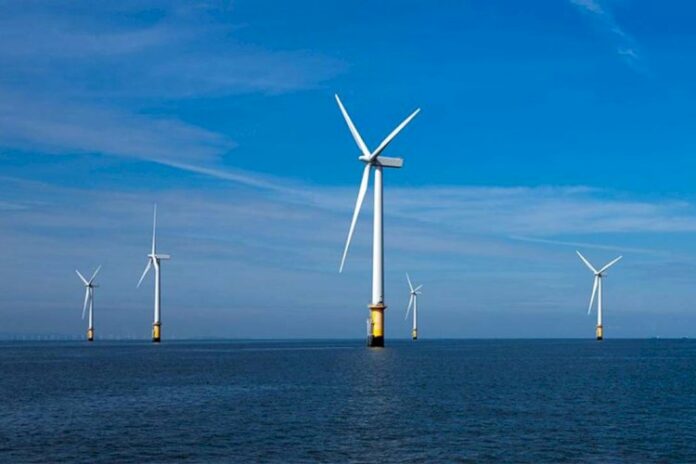
Siemens Gamesa Renewable Energy plans to expand its nacelle assembly facility in Taichung to form a regional offshore wind nacelle industrial hub together with Taiwan-based suppliers. The first project to be supported by the broader manufacturing plant will be the 300 MW Hai Long 2 project.

The expansion is subject to certain conditions including Hai Long 2’s Industrial Relevance Proposal (IRP) being approved by the Taiwanese authorities, and final investment decision by the project partners. Siemens Gamesa was named as preferred supplier for the offshore wind turbines in November 2019.

The facility is currently under construction and will start production in 2021 to deliver nacelles to Orsted’s Greater Changhua 1&2a offshore wind power project. Once the nacelle assembly work is completed in 2022, Taichung factory expansion will start. It will include doubling the plot area to over 60,000 m2, as well as at least doubling the number of Siemens Gamesa employees working in the factory.

Two new production halls and a new warehouse will be constructed, encompassing local hub, and backend production in Taiwan for Siemens Gamesa’s latest offshore wind turbine technology. This will open a compelling opportunity for a vast range of local suppliers to feed components directly to the factory, thanks to high proximity, and short transportation time to Taichung.

Andreas Nauen, CEO of the Siemens Gamesa Offshore Business Unit, states:

“Our actions to localize and expand nacelle manufacturing in Taiwan demonstrate our strong beliefs in both the Taiwanese market and the Asia Pacific region as a whole. Supported by proactive policies, strong wind resources, and a proven contribution to combatting climate change, offshore wind is an essential element in the energy mix around the globe.”

In 2019, Siemens Gamesa and Yeong Guan Group (YGG) sealed an agreement for localized hub and base frame castings for Hai Long 2. YGG will build a new global casting production factory for offshore wind in Taichung, neighboring Siemens Gamesa’s plot.

Additionally, Siemens Gamesa has now signed four conditional contracts for the localization of six different type of nacelle components for Hai Long 2. All of these components will be delivered to Siemens Gamesa’s Taichung factory as part of the localized nacelle production process. Similarly to the deal made with YGG, three of those contracts include the setup of new local production facilities:

  • KK Wind Solutions will invest in a new production plant in Taiwan, as well as in the recruitment and the training of a local workforce to enable knowledge transfer. The factory will manufacture uninterruptible power supplies and power conversion systems.
  • SINBON will extend its existing footprint with a new production line in Taiwan for cable manufacturing.
  • Atech, together with an existing global supplier, will provide nacelle canopies and spinners. A new production line will be set-up in Taiwan accordingly. This collaboration will combine strong offshore wind expertise with local market knowledge and production capabilities.
  • Würth will leverage its existing footprint in Taiwan and strong local supplier network to locally procure fasteners.

Niels Steenberg, Executive General Manager of Siemens Gamesa Offshore for Asia-Pacific, said:

“We are very glad to announce the reinforcement of our local supplier footprint with four very experienced wind component manufacturers, and a local company. We are confident that they can contribute to our vision to create a greater industrial hub in Taiwan, as a foundation for future exports, and we are looking forward to work with them on the Hai Long 2 project.”

David Povall, Executive Vice President for Development at Northland Power said:

“Our selection of Siemens Gamesa as preferred supplier not only makes sense commercially for the project but also strategically for Taiwan. Hai Long’s IRP places specific focus on the export capability of the local supply chain. Our construction and operation timeline allows us to look at new technologies that will be state of the art within APAC. On top of that, local talents will be trained as we go. Hence, through Hai Long as the Anchor Project, Taiwan will truly become the APAC Offshore Wind Export Hub for new technology, service, and talents.”

Bakkafrost orders new hybrid 7000 m3 wellboat

0

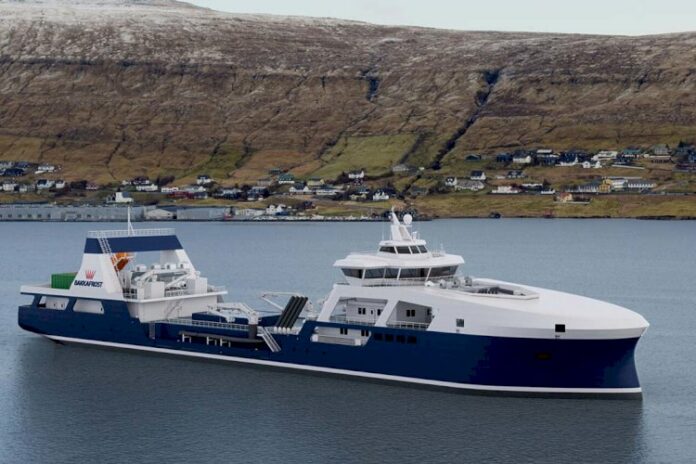
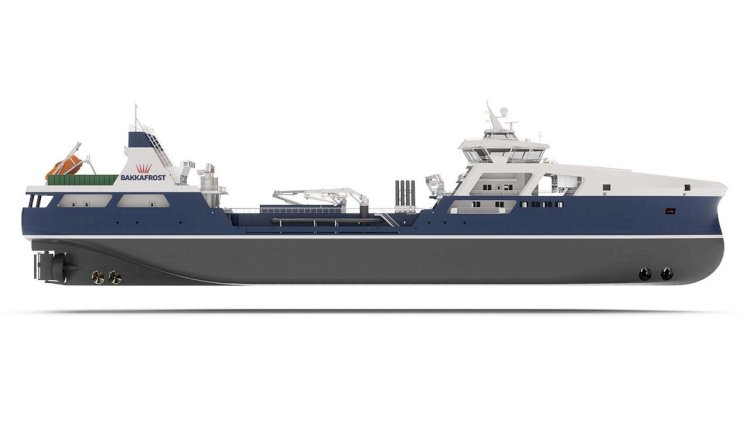
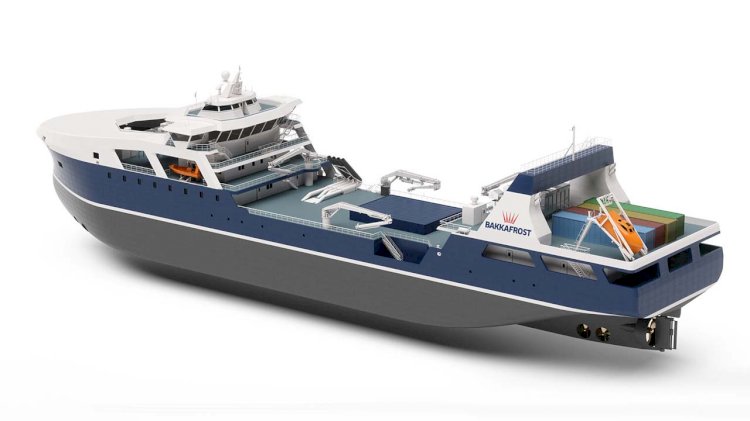
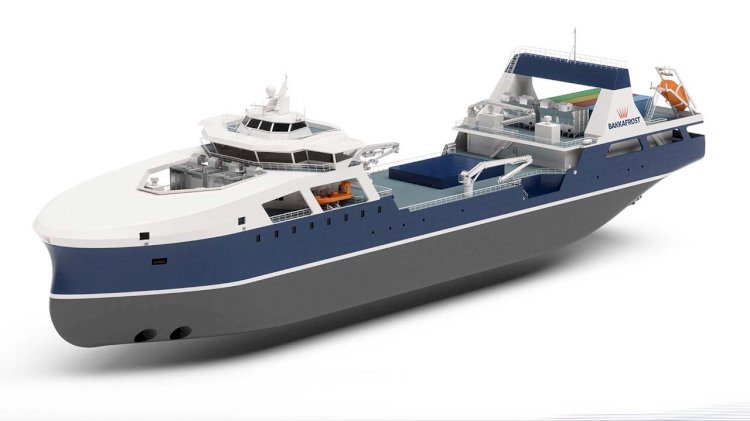
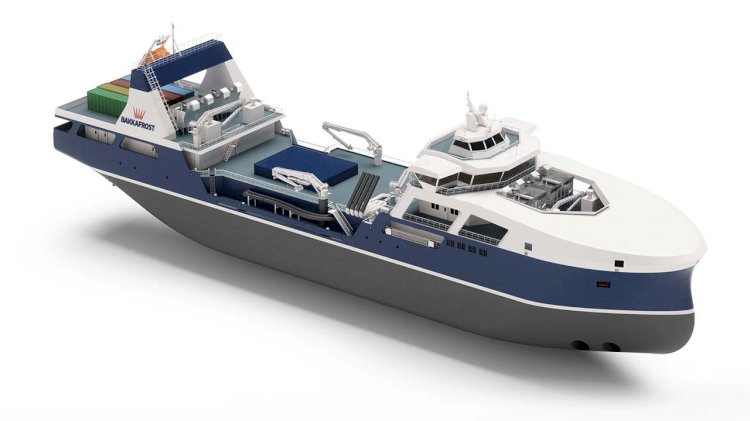
As part of the company’s strategy to produce larger quantities of sustainable farmed salmon, Bakkafrost has ordered a new wellboat. The wellboat is built at the Sefine shipyard in Turkey and is expected to be completed in 2022.

The new wellboat is 109 meters long and 22 meters wide. It has a capacity of 10.000 m3, where the four wells have a total capacity of 7.000 m3 of seawater, and the tanks have a total capacity of 3.000 m3 of freshwater. The vessel has a capacity of 1.000 tons of salmon.

As part of the plan to reduce the company’s carbon footprint, the new wellboat is equipped with battery storage systems. This means that the energy consumption is optimal at all times. The vessel either uses the energy from the accumulators, or it stores energy in the accumulators, when additional energy is produced, as one of the five engines starts. In addition, the vessel will be connected to landbased electrical sources, when it lays at the harbor, which makes it very quiet in operation.

The wellboat is equipped with DP, which means that the vessel has the ability to lay at a certain point at sea without being tied up or anchored while performing a task. Thus, the new wellboat will be well equipped to perform different tasks at open sea.

The wellboat is equipped with technology that can produce freshwater from seawater, which is used for de-licing operations. In total, the production capacity in 24 hours is 6.000 m3 of freshwater. Thus, the vessel can perform salmon treatments without leaving the area to get freshwater.

The new wellboat is a vital step towards reaching the strategic goals of having a total capacity of 100.000 tons of salmon, and to gut 500 tons a day at the factory at Glyvrar.

The need of vessels to perform different tasks is growing significantly in the future. The need of transportation of smolt will increase significantly, as we have started to farm smolt on land for a longer period. In the future, the smolt will weigh between 500 and 700 grams before released to the cages. In addition, the vessels will perform tasks in relation to de-licing and other gill-related challenges as well as transportation of bigger salmon in relation to open sea farming.