-0.6 C
New York
Home Blog Page 854

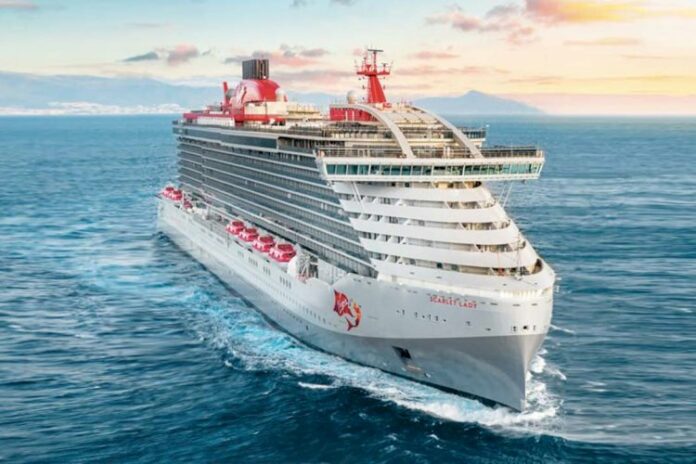
Virgin Voyages won’t begin sailings until October

0

The cruise line has announced that even further sailings are now cancelled through October 15, 2020.

The first sailing is planned to depart on October 16, 2020.

Virgin Voyages CEO Tom McAlpin says:

“We’ve made the difficult decision to cancel our sailings through October 15th, 2020. We’ve been working hard to find a way to set sail by August, but that hasn’t turned out to be possible.

We appreciate how many of you were excited to sail with us, so we understand how disappointing this news is. But we trust you’ll understand our decision given the evolving global health challenge we’re all up against.

As of right now, our first sailing is planned for October 16th, 2020. We’re focused on being ready to get back on the open ocean with some exciting innovations focused on protecting the well-being of both our Sailors and our incredible Crew — which we’ll update you on soon.

For Sailors impacted by this change, we’re offering the most flexible and fair options out there. In the next few weeks, we’ll be auto-crediting double the amount you’ve paid to date toward your voyage fare. And if you book your next sailing before June 30th, we’ll even give you up to $500 to spend on board. But if you’d prefer a refund, you can call or email us anytime between now and December 31st, 2020.

One more piece of news we’d like to share is that we’re launching our new Smooth Sailing program for 2020. We recognize the difficult economic environment that many people are experiencing, so we’re bringing new introductory pricing to Sailors — while offering (even more) flexible booking policies.

For sailings through December 16th, 2020, we’re moving final payment dates to 60 days (from 120 days) before you sail, and you can cancel up to 48 hours before your voyage and receive a 100% voyage credit. We want you to feel confident about making plans, while knowing that if anything changes, we’re always on your side.

We’re excited about getting to sail with you when the time is right. Until then, we wish you and your loved ones health and happiness.”
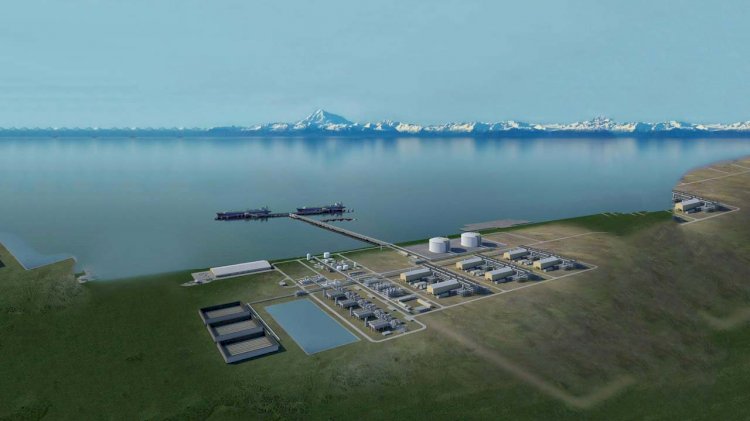
U.S. approves Alaska LNG export project

0

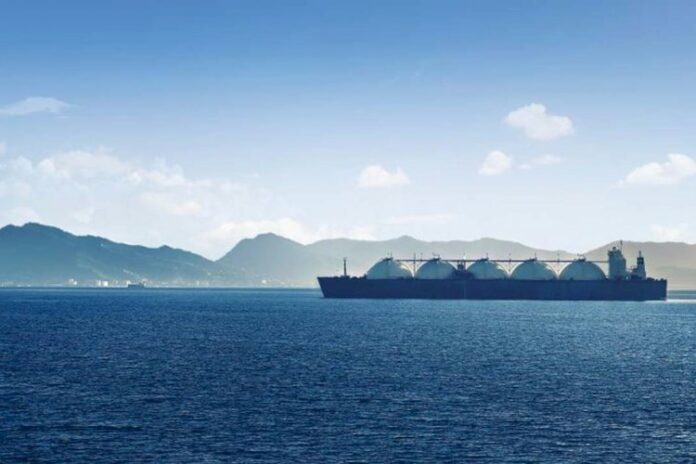
The Commission granted a Section 3 Natural Gas Act authorization, with conditions, to the AGDC – an independent, public corporation of the State of Alaska to site, construct and operate the Alaska LNG Project. The project would consist of liquefaction facilities on the Kenai Peninsula designed to produce up to 20 million metric tons per annum (MMTPA) LNG for export.

It would also include an approximately 807-mile-long, 42-inch-diameter pipeline capable of transporting up to 3.9 billion cubic feet of gas per day to the liquefaction facilities, a gas treatment plant that would be located in the Prudhoe Bay at the North Slope and two additional natural gas pipelines connecting production units to the gas treatment plant.

The U.S. Department of Energy (DOE) has authorized the project to export 20 MMPTA of LNG to nations with which the United States has a Free Trade Agreement (FTA). DOE also granted conditional authorization for the exportation of 20 MMTPA of natural gas to nations that do not have an FTA.

Alaska Governor Mike Dunleavy said:

“The federal authorization is a key step in determining if Alaska LNG is competitive and economically beneficial for Alaska. I commend the AGDC team for their diligence. The ongoing project economic review and discussions with potential partners will determine the next steps for this project.”

AGDC President Frank Richards said:

“FERC’s authorization validates that the Alaska LNG Project can be safely built and operated, delivering numerous potential benefits with manageable environmental impacts. This approval, a major milestone in the development of the project, signifies the completion of a rigorous and comprehensive evaluation that has engaged environmental and energy experts at dozens of federal and state regulatory agencies.

Obtaining FERC approval significantly de-risks the project execution with defined environmental stipulations. Our momentum continues as we complete our assessment of the project’s economics and competitiveness, and engage with potential project partners to determine the best path forward for the Alaska LNG Project.

The Alaska LNG Project presents an opportunity to unlock significant benefits from Alaska’s stranded North Slope natural gas, including a new reliable and affordable clean energy source, the creation of a substantial number of high-paying construction and operations jobs for Alaskans, and long-term U.S. energy security.”

The Alaska LNG Project consists of a Gas Treatment Plant on Alaska’s North Slope, an 800-mile pipeline, and an LNG facility in Nikiski, Alaska. Today’s FERC announcement culminates six years of public input, engineering, science-based environmental research, and cultural resource studies incorporating more than 150,000 pages of environmental, engineering, and cultural data.

Drone delivers package to vessel in the port of Rotterdam for the first time

0

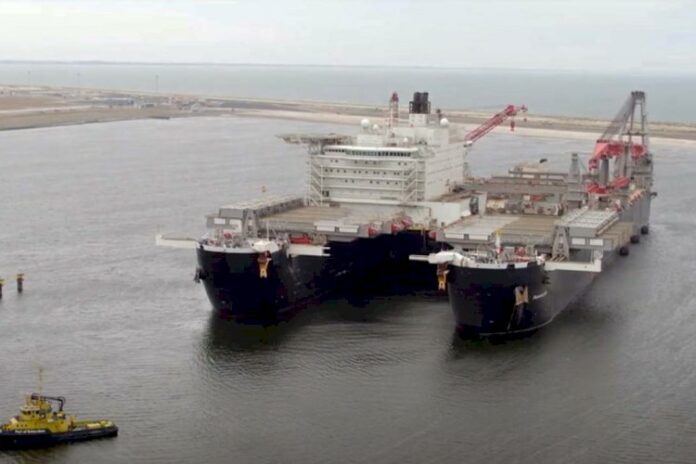
Pioneering Spirit is currently moored at Alexiahaven in preparation of upcoming offshore activities. This is actually the first drone delivery ever made in the Netherlands to a vessel.

This pilot project, which was set up by Dutch Drone Delta, Allseas and the Port of Rotterdam Authority, is intended to determine whether and how drone deliveries could increase transport efficiency in the port of Rotterdam. The airspace over the port area will be safely managed under the slogan ‘Rotterdam, the safest port to fly’, allowing parties to take optimal advantage of new technologies to make the port safer, smarter and more efficient.

The Unmanned Aerial Vehicle (UAV) industry is going through an exciting evolution, and the sector is primed for further growth. Drone development is in full swing and this technology can have a major impact on traffic and transport. New European regulations have cleared the way for new applications. Ultimately, this may even include autonomous unmanned freight and passenger transport. To this end, the next few years will be devoted to the phased preparation of airspace and drone technology. The recent delivery constitutes a major first step in this process, since it involved the delivery of an actual package following a long-distance flight by the UAV. While in this case, the delivery was still directly monitored by human observers, in the near future, it will be handled entirely beyond the pilot’s physical line of sight.

Port Authority adviser Ingrid Römers says:

“Utilising new technologies allows us to make our port smarter, more streamlined, more efficient and safer. The current pilot project is a prime example: it makes a significant contribution to more efficient transport in general; and in due time, it will specifically help to reduce the pressure on our road network. We intend to safely structure our airspace under the slogan ‘Rotterdam, the safest port to fly’. The results of this pilot project can also serve as input for the Ministry of Infrastructure and Water Management when it drafts the required legislation and regulations. This will enable Rotterdam’s port business community to take optimal advantage of these new developments.”

Stephan van Vuren, one of the people behind the Dutch Drone Delta initiative:

“The sky’s the limit when it comes to using drones in the port area. Incident prevention and control, for instance; or water pollution; firefighting; monitoring port operations or damage. Other examples include everything from systems and bridge inspections, construction and maintenance of infrastructure, and deliveries to ships and oil rigs, to the rapid medical transport of blood and human organs. And in the longer term, we may even be seeing heavy freight deliveries and passenger transport! This pilot project in the port of Rotterdam has allowed us to directly demonstrate the added value of drone technology in a complex environment.”

According to Allseas PR manager Jeroen Hagelstein, the offshore industry could also benefit from this new delivery option:

“As a provider of technical services to the offshore industry, we are continuously pushing the existing technical boundaries. Pioneering Spirit is the example. With this pilot, we want to test whether drones could be an effective means to quickly and efficiently deliver materials to our vessels. Helicopter, for example, are not always available on every location. Drone delivery can be of added value when we are in urgent need of parts which we can’t repair ourselves – for example network switches or computer chips.”

Western Bulk joins the Oceanbolt data platform

0

Western Bulk has signed up with a promising Norwegian (Oslo) based tech start up; Oceanbolt. Oceanbolt is an online market intelligence platform for the dry bulk industry.

It provides real-time insights into trade flows, tonnage flow, fleet speed, dry docking and congestion. The insights available in the platform are based on analyzing AIS data in real-time, and utilizing geospatial analytics algorithms in combination with a comprehensive polygon database.
  
The company said:

“Western Bulk sees great potential in the context that such a system provides, and going forward aims to blend this real-time & historical data with our other data sources and proprietary systems to allow for greater market insight and knowledge for our Chartering, Operations, and Analytics teams.

Oceanbolt’s primary focus on minor dry bulk, cloud based systems with open APIs and combined with a shared desire to extract the full value of data in the shipping industry,  made this a natural partner selection for us. We look forward to working closely with them going forward.”

Oceanbolt said:

“We are very excited to announce that Western Bulk, a leading global dry bulk operator, has joined the Oceanbolt Data Platform to leverage our real-time insights into the dry bulk market. Western Bulk joins our platform as a data partner and will provide valuable domain expertise and data which will allow us to train and further improve the accuracy of our historical and predictive algorithms.

With Western Bulk’s focus on business intelligence, cloud infrastructure and open APIs, we are proud to become partners with a front-runner in data-driven shipping operations. Western Bulk will leverage Oceanbolt’s Data API and web-based Analytics Dashboard to further strengthen the analytical efforts of their in-house data scientists and analysts and to aid the commercial and operational understanding of the chartering and operations teams.

The partnership commenced on 01 May 2020 and marks a milestone for Oceanbolt in our quest for participating to create a digital and data-driven shipping industry.”

UK Government confirms £35m support package for ferry operators

0

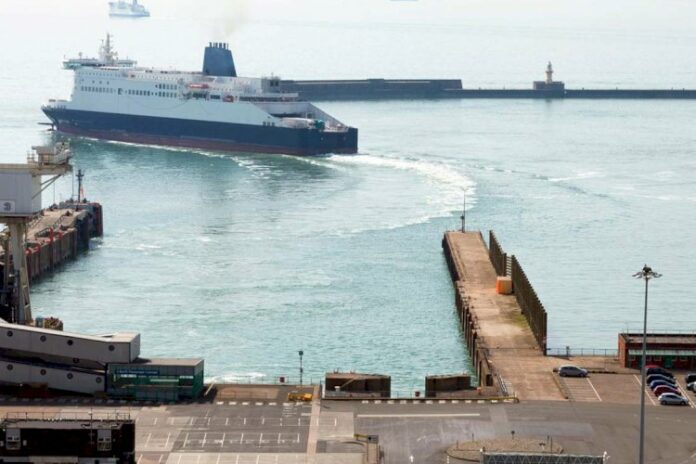
The Department for Transport has announced a financial support package for ferry operators to ensure the vital routes are protected. 

The government has signed agreements with 6 operators to provide up to £35 million to help ensure there is enough freight capacity to prevent disruption to the flow of goods.

The decision has been made to protect 16 of the most important routes covering the Channel, the Short Strait, the North Sea and routes between Great Britain and Northern Ireland which were previously at risk of closure due to a drop in demand as a result of coronavirus (COVID-19). They will now be designated as Public Service Obligation routes for a period of up to 9 weeks.

Transport Secretary Grant Shapps said:

“From the very beginning of the outbreak, we have committed to do whatever it takes to minimise the disruption caused by COVID-19. By taking this action, we have helped protect the movement of goods and services in and out of the UK, safeguarding the flow of supplies across the Union.”

The UK Chamber of Shipping which has been working closely with the government for months on the issue of financial support welcomed the news.

UK Chamber Chief Executive Bob Sanguinetti said:

“Ferry operators have been under immense pressure in the last couple of months and they have continued to keep food, medicines and essential goods flowing into the country. The government was quick to recognise the strategic importance of the shipping industry and we are extremely pleased with the financial support which has been agreed. The tailored package for our most critical freight routes will allow the UK to manage through the lockdown and enable trade to increase as we move into the recovery phase.” 

Tres partners with Danelec to accelerate the use of data in shipping

0

Tres Solutions, a leading global provider of vessel performance software and services, and Danelec Marine, the market leading provider of ship-to-shore data solutions – has announced a collaboration that will accelerate the use of high-resolution data in delivering insights to shipping companies.

The cooperation recognizes Tres as a certified third-party application provider in which the company’s Tres Vessel Analytics (TVA) platform can seamlessly integrate with the DanelecConnect ship-to-shore data gathering and transmission platform.

Danelec collects and pre-processes data from onboard sensors before transferring it to a secure cloud-based database. Tres will use the reliable, real-time data in its TVA decision-support software and services, helping existing and future clients improve fuel efficiency, reduce emissions and improve operations.

Aaron Holton, CEO of Tres Solutions, said:

“This collaboration brings together two leaders in maritime digitalization. The industry has continued to evolve, with customers seeking connected platforms. With Danelec, we are collectively able to remove many of the barriers to widespread adoption of IoT by our customers and pave the way for further efficiency driven solutions for our clients.”

As the industry increasingly uses IoT applications to harness the full potential of data, Tres and Danelec are committed to providing shipping companies with new tools that can improve confidence in decision-making and increase fuel and environmental efficiency.

Casper Jensen, COO of Danelec Marine, said:

“We are pleased to welcome Tres Solutions into our ever-expanding integration ecosystem. The industry is quickly changing, and many more ships will be IoT enabled in the coming years. We believe our collaboration with Tres will help lead the transformation of the industry in a smart and efficient way.”

Vestdavit to deliver motion-compensated davits to the US Navy

0

Leading boat launch and recovery systems supplier Vestdavit will deliver the most advanced motion-compensated davits in the world to the US Navy, following orders placed with Vestdavit Inc. by General Dynamics NASSCO to equip two Expeditionary Sea Base (ESB) ships.

The US shipbuilder’s San Diego yard will deliver ESB 6 and ESB 7, the latest in a series of ships renowned for flexibility which act as mobile sea bases to support mine countermeasure, counter-piracy, disaster-relief, crisis-response and other operations.

Vestdavit will supply one 2TDB-7000-type davit for each vessel. With a safe working load of 14,000 kilograms, the high-performance davit can handle boats of varying size and weight, including seven- and 11-metre rigid-hulled inflatable boats and the Combatant Craft Assault. The first davit system is due for delivery to ESB 6 in early 2021.

Vestdavit Managing Director Rolf Andreas Wigand says:

“ESB ships are built to support the US Navy on critical and potentially hazardous missions, so they need highly flexible and responsive marine davits. The 2TDB-7000 type will allow safe operation in much higher sea states than has been possible for the davits used on any previous ESB vessels.”

Wigand explains that the hydraulically operated overhead telescopic davits can function in both single- and dual-point configuration, with the latter mode enabling synchronised movement of the two davit arms. They also include dual independent self-levelling winches that offer hoisting/lowering speeds of up to 40m/min, an anti-pendulation system and an automatic wire hauler and shock absorbers on each arm – among other features.

Proud of his company’s longstanding relationship with the world’s largest navy, Wigand sees the new agreement as the latest endorsement of Vestdavit’s products and services:

“We have worked with the US Navy for over 20 years now. Over that time, we have proved our worth by providing tailormade davits of the highest quality. Supplying ESB ships is a great honour and outstanding recognition of our boat-handling expertise.”

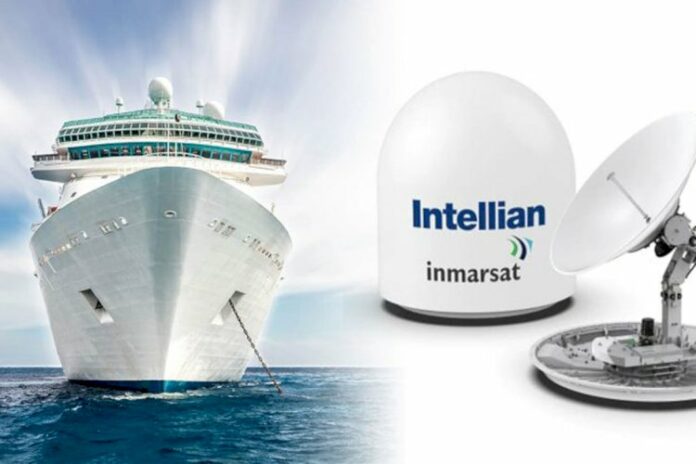
Intellian’s v85NX antenna system gains Telenor Satellite Thor 7 type approval

0

Intellian has announced that its v85NX antenna has earned type approval for Telenor Satellite’s Thor 7 Ka-band service, following successful sea trials.

Significantly the v85NX – which is the first 85cm antenna to be certified on the Thor 7 network – will benefit from the same airtime pricing as 1m antennas. As service provision for smaller antennas is usually more expensive owing to their lower gain, this recognizes the outstanding performance of the v85NX and makes it a competitive choice for customers looking for a compact design with low capital and operational expenditure.

Offering up to 25 simultaneously active spot beams, the Thor 7 service is designed to provide optimal HTS Ka-band VSAT connectivity across Europe, covering busy shipping lanes in the North Sea, Norwegian Sea, Barents Sea, Baltic Sea and Mediterranean Sea. Jan Hetland, Director, Data Service Division at Telenor Satellite, said:

“We’re delighted to welcome Intellian’s v85NX antenna to our leading Thor 7 service. A satellite service providing high-powered performance for maritime applications requires premium hardware, and Intellian’s NX Series systems have a range of attributes which position them at the forefront of antenna technology, reflecting Telenor Satellite’s forward-looking service provision. We look forward to working together in delivering outstanding global communications to our loyal customers.”

The RF design of NX Series antennas outperforms rival products, resulting in unmatched data rates. A major advantage is that dual antennas – often employed to avoid the satellite being obstructed by vessel superstructure – may be easily configured thanks to the mediator built into the ACU. Before, a separate mediator unit was required. The antennas can be easily converted between Ku- and Ka-band by swapping out the center-mounted RF assembly and feed, and there is also a range of BUC options – 5W and 10W for Ka-band and from 8W to 25W for Ku-band – which  are interchangeable with no need to rebalance the system following their installation.

Eric Sung, Intellian CEO, commented:

“This certification from Telenor Satellite, and the competitive price bracket in which Telenor has placed the v85NX, underlines the performance and versatility of our NX Series antennas. New customers can purchase a v85NX antenna pre-configured for Ka-band off the shelf, while users who already own a v85NX antenna on a Ku-band network can easily convert it to Ka-band operation for use with Thor 7. We are delighted to join with Telenor in facilitating flexible, high-speed communications across Europe.”

NX Series antennas are shipped pre-slung to facilitate installation, and the use of modular components common to the entire antenna range has cut the number of spare parts required by up to 40%. This in turn simplifies maintenance, enhances reliability and brings about further cost savings for end users.

Portsmouth Port prepares for passengers with temperature screening technology

0

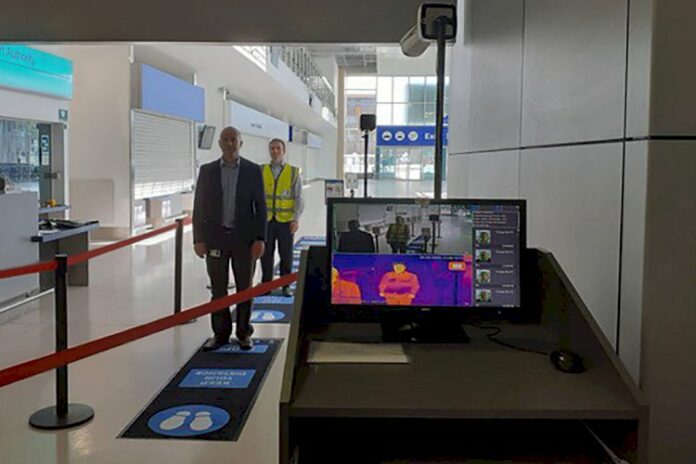
Portsmouth International Port is believed to be the first UK port to install a thermal temperature scanner, which will be available for ferry and cruise operators to screen their passengers.

In the beginning it will be trialled as an option for foot passengers joining ships to help support infection control onboard. If successful the technology could then be used elsewhere in the port.

Mike Sellers Portsmouth International Port’s director said:

“We want to make sure we’re in the best position to welcome back passengers in a managed, safe and sensible way. Being able to help support our ferry and cruise lines by providing solutions for potential health protocols, should operators choose to use it for their customers, means we’re ready to go once travel restrictions are eased. There are ongoing discussions about a common framework for health screenings, which are being explored by all transport operators. Until there is an international standard we want to make sure we can meet a universal expectation to reduce the transmission of the coronavirus.”

The thermal imaging scanner is one a raft of measures being implemented to prioritise health and safety, an overhaul of the how the terminal will function once it reopens for passengers is underway, including appropriate full face PPE for customer facing staff, social distancing measures, clinical level hand sanitation products on door handles and cleaning stations.

Mike Sellers continued:

“Our key workers continued to operate since the lockdown restrictions were implemented providing essential operations for critical freight and lifeline services. It is even more important as a major port we have the right measures in place to manage the flow of people as well as goods safely. We’re working with our partners in Border Force, Condor Ferries, Brittany Ferries, and also listening to our cruise customers about what needs to be in place when travel restrictions are eased.

Even if overseas travel is delayed, UK based cruise itineraries will still be popular as the public look to find a way to have a break locally. As a port suited to small medium sized, boutique sailing ships, we’re in an ideal position to manage a phased return to sailing, especially with the draw of our city’s attractions.  We also support the idea for sea bridges to help encourage safe travel. As a method of transport ships provide outside space, room to move around indoors, and lend themselves to social distancing measures.”

Working with Border Force the port will also support any health measures the government may put in place for passengers coming into the UK.