0.6 C
New York
Home Blog Page 852

Boskalis awarded two dredging contracts in Finland

0

Royal Boskalis Westminster N.V. (Boskalis) has been awarded two contracts in Finland by the Finnish Transport Infrastructure Agency, the Port of Helsinki and the City of Helsinki with a combined contract value of EUR 32 million.

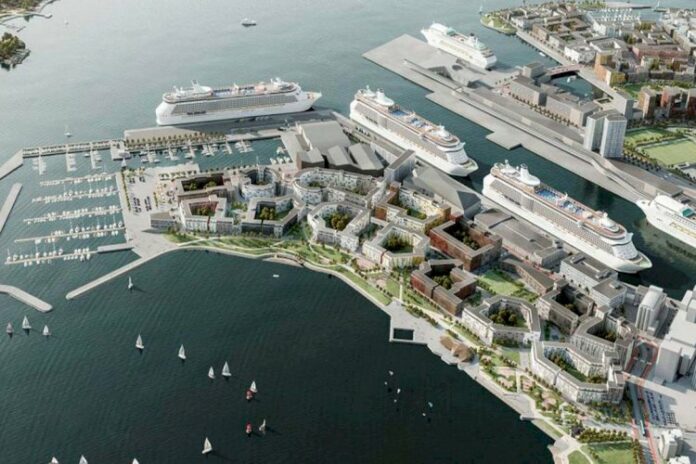
In the Port of Helsinki, Boskalis will deepen de Vuosaari fairway and harbor basin from eleven to thirteen meters and utilize a part of the dredged material for the development of Helsinki’s Hernesaari area, which is close to the center of the city. The activities will commence immediately and are due to be completed by the end of 2021.

‎For the harbor deepening scope a volume of one million cubic meters of clay and moraine material will be dredged and 0.8 million cubic meters of rock will be removed from the seabed by means of drilling and blasting. Part of this material will be transported by vessel to the Hernesaari area and reused for the reclamation of 6 hectares of land on which offices and residential housing for 7,000 people will be developed in the coming years. For these activities Boskalis will deploy a variety of specialized dredging equipment including two large backhoe dredgers, a grab dredger, a drilling barge and various hopper barges.

Boskalis’ strategy is aimed at benefitting from key macro-economic factors which drive worldwide demand in our markets: expansion of the global economy, increase in energy consumption, global population growth and the challenges that go hand in hand with climate change. These projects are largely driven by growth in global trade and the trend towards larger vessels with deeper drafts as well as population growth in major cities. 

MOL and LTW sign a contract to build and charter an LNG terminal ship

0

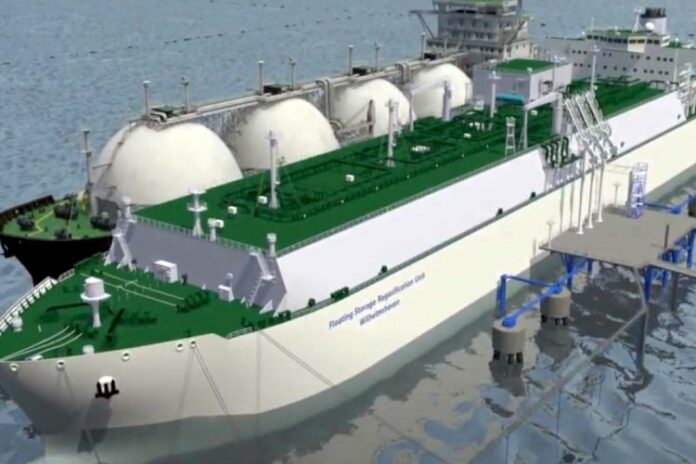
MOL (Mitsui O.S.K. Lines) and LTW (LNG Terminal Wilhelmshaven) have signed a contract to build and charter an LNG terminal ship—known in the industry as a Floating Storage and Regasification Unit (FSRU)—for the planned LNG landing terminal in Wilhelmshaven on the North Sea.

LTW is the project developer and operator behind the future LNG terminal in Wilhelmshaven and a fully owned subsidiary of Uniper S.E. The FSRU will be built in a shipyard belonging to South Korean company DSME (Daewoo Shipbuilding Marine Engineering Co., Ltd., Geoje, Korea), and then chartered by LTW for 20 years. It has been planned and custom designed by the two contracting parties in accordance with the local and environmental requirements for the German market and the Wilhelmshaven site.

The FSRU constitutes the heart of the future terminal and will make it possible to offload, store and regasify LNG for the German market. It will be moored off the coast not far from Wilhelmshaven and will handle incoming LNG tankers there. The regasified gas will then be pumped from the FSRU along a short connecting pipeline under the sea to the port facilities and finally fed into the German gas transmission network. This eliminates the need to construct complex regasification facilities on land. This optimized planning will minimize the environmental impact both on land and on the seabed by a non-disruptive crossing of the natural habitat identified in the environmental studies.

Uniper Member of the Board and Chief Operating Officer David Bryson says:

“The agreement to build and charter this FSRU is an important milestone for both parties on the journey to establishing an LNG terminal in Wilhelmshaven; it underlines the joint desire for collaboration on this ambitious project. This new agreement will build on the successful and trusting collaboration with MOL on previous major projects in the LNG ship market. The LNG terminal in Wilhelmshaven is a long-term project based on the prediction that demand for imported natural gas on the German and European energy markets will increase significantly over the coming years. Based on Uniper’s many years of experience in the European gas business and project management, LTW is pushing ahead with the terminal project in Wilhelmshaven to give companies from all over the world optimal access to customers in Europe — and, vice versa, to open up a new supply channel for customers.”

MOL Executive Officer Hiroyuki Nakano says:

“We are excited to move one step further to materialise Germany’s first Liquefied Natural Gas receiving project. Our Floating Storage and Regasification Unit of some 263,000m3 storage capacity is of a unique tailored design to meet all customer requirements to provide economical regasification service and comply with German Environmental Regulations. Our mission from this special moment is to execute the project and deliver the unit on time. MOL has expanded its global FSRU business over the past few years. We are confident that our operational and technical experience gained will enhance the project in Germany and provide a seamless, safe and efficient service to LTW.”

Wilhelmshaven is Germany’s only deep-sea port and has the optimal infrastructure for offloading LNG tankers of all sizes. LNG ships are often hundreds of meters long, but they can land and turn here without difficulty. This removes the need for time-consuming maneuvering, which offers a significant economic advantage over other ports. Its proximity to the German long-distance gas pipe network and to important gas storage facilities makes integrating the system into the gas infrastructure comparatively simple and cost-effective. It was for reasons such as these that Uniper decided to press ahead with the project for a floating LNG terminal for Germany at this location and to win over partner companies.

It is expected that a competitive tender process will be carried out in the summer of this year to check the binding interest expressed by potential customers. Once the approval process for the project is completed, the final investment decision will be made subject to economic viability.

The market for LNG has developed very dynamically over the last few years. Despite more LNG terminals being built in Europe in recent years, the significant decline of domestic natural gas production in Europe makes further expansion both a sensible and necessary course of action for the gas industry. It is also needed to enable the import of organic LNG and to advance the energy transition in Europe through the safe use of natural gas. LNG capacities have been utilized more and more since 2018, as LNG has become more competitive in price in relation to gas supplied via pipelines.

BC Ferries resumes service on Nanaimo – Vancouver

0

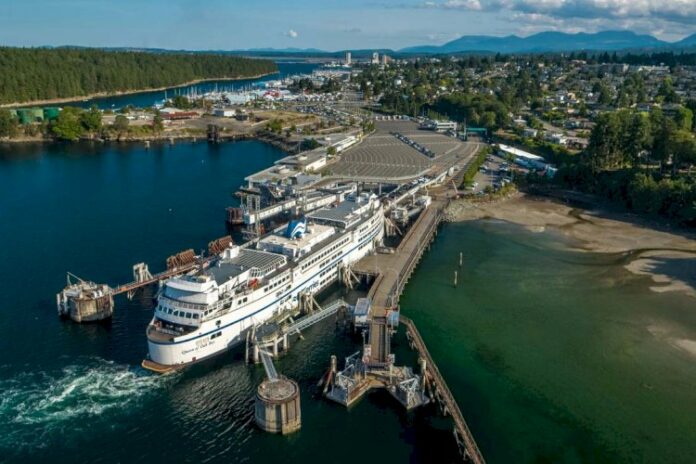
BC Ferries is actively working on plans to resume service throughout the fleet and is starting by resuming service on the Nanaimo (Departure Bay) – Vancouver (Horseshoe Bay) route on June, 3. The route will start with four round trips per day to support the movement of goods and people to coastal communities.

Mark Collins, BC Ferries’ President and CEO, said:

“In order to support coastal B.C. and respond to the need of British Columbians, we are gradually and safely restoring our service. Demand has increased such that resuming service on the Departure Bay – Horseshoe Bay route better serves the needs of customers.”

The daily schedule on the Departure Bay – Horseshoe Bay route will be:

  • From Horseshoe Bay: 8:30 am, 12:30 pm, 2:50 pm, 6:50 pm
  • From Departure Bay: 10:30 am, 12:50 pm, 2:30 pm, 4:50 pm

The company is following the directives and guidance provided by the Province of B.C. and Transport Canada. Safety measures in place include limiting passenger capacity by 50 per cent to support physical distancing, allowing customers to remain in their vehicles during the sailing on all car decks, enhanced cleaning and screening of travellers.

The Departure Bay – Horseshoe Bay sailings will operate at a 50 per cent passenger capacity as per Transport Canada guidelines to help support physical distancing. BC Ferries strongly recommends customers intending to travel on that route consider the following:

  • Due to reduced capacity on the route, make an advanced booking to guarantee your travel.
  • Arrive at the terminal at least an hour before your sailing. Check-in processing is currently longer due to the need to screen customers prior to travel.
  • Foot passengers should arrive well in advance because passenger capacity is limited.
  • Travel on an alternative route if possible, such as the Tsawwassen – Duke Point or Tsawwassen – Swartz Bay routes.

The resumption of service on the Departure Bay – Horseshoe Bay route brings back three routes operating out of Horseshoe Bay. As of June 3, schedules on the Horseshoe Bay – Snug Cove and Horseshoe Bay – Langdale routes will be adjusted to reduce the possibility of berth congestion. Some sailings are earlier or later than the previous schedules. The schedule on the Earls Cove – Saltery Bay route will also be adjusted to ensure connectivity for customers.

GTMaritime offers customisable news service to support crew welfare

0

GTNews4Crew provides shipowners a highly-configurable environment for curating news relevant to their crews and distributing it efficiently to vessels

At a time when access to news from reputable sources is more important than ever, GTMaritime is introducing a fully-customisable news distribution service for vessel owners and operators helping them keep their crews up-to-date on events unfolding in their home countries as well as offering a selection of lighter content to help maintain morale.

Specifically designed for the marine environment, GTNews4Crew can be configured according to the nationalities and interests of a vessel’s crew. News channels can be selected based on language preferences to ensure articles delivered to vessels are both relevant and relatable. News is available in 20 languages, including those of the major seafarer nations, such as Indian, Filipino, and Russian.

Mike McNally, Global Commercial Director at GTMaritime explains:

“A multilingual, locally-sourced solution was essential to avoid ‘foreign hotel TV’ syndrome, where you end up watching domestic broadcasts in the typically futile hope something from home will crop up and, if it does, then trying to piece the story together from any captions, footage, or listening beneath over-dubs. It invariably leaves you none the wiser.”

Another priority was accessibility. Today, most seafarers bring their own devices aboard to keep themselves entertained when off-duty. Once news articles have been downloaded to the onboard GTNews4Crew server, they can be viewed from personal laptops, tablets, smartphones by pointing them to the ship’s internal network. Mike continues:

“This allows crew to catch-up on happenings at home or the progress of their favourite sports team anytime and anywhere, whether as a talking point with their colleagues over a meal, or at the end of the day from the privacy of their cabin.”

Furthermore, because the news content is hosted locally, crew are not faced with the dilemma of whether or not to use their calling cards or allocated internet quota to keep abreast of rapidly developing events in their home countries, such as the Covid-19 outbreak. This means they are less likely to be worried by rumours or misinformation spread over social media.

GTNews4Crew is easy to deploy, with ready-made packages and scripts for all major computer operating systems and versions. Once up and running, content options can be managed on a vessel-by-vessel or fleetwide basis via a simple-to-use dashboard.

For ships with limited connectivity, GTNews4Crew also features granular control over how much and how often fresh news content is distributed in order to keep download sizes manageable. In the case of severe bandwidth constraints, the delivery of any images accompanying articles can be switched off. Mike adds:

“By default GTNews4Crew compresses each package of news before it is sent out and you would be surprised at how much can be squeezed into a few megabytes. But we understand broadband availability still varies significantly from fleet to fleet and from ship to ship.”

A basic version of GTNews4Crew will be provided as standard to all GTMail4Crew subscription customers. GTMaritime are also providing all customers with a trial of the basic version of GTNews4Crew for an initial 2-month period after which they can upgrade to the full version, continue enjoying the basic version by subscribing to GTMail4Crew, or end their trial. 

BIMCO completes the first draft of in-water guidelines geared for IMO approval

0

BIMCO, the world’s largest shipping association, has moved a step closer to finishing a global set of guidelines needed to protect the marine environment from invasive species and reduce CO2 emissions. 

Every time one of the world’s 80,000 large merchant ships calls at a port, it brings foreign aquatic species on the submerged parts of the ship, also known as fouling. In a country like Australia alone, around 30,000 commercial port calls are carried out every year and if their hulls aren’t fairly clean organisms can move from one continent to another, transferring invasive species between marine environments and potentially harm local aquatic ecosystems. The organisms growing on the hull also increase drag and reduce fuel efficiency of the ship by as much as 35%, leading to higher fuel bills and more CO2 emissions.

To ensure that hull cleaning can be carried out in a safe and environmentally sustainable way in the future, a global standard is essential.

Aron Sørensen, BIMCO’s Head of Marine Environment, says:

“The new in-water cleaning standard puts great emphasis on capturing what is removed from the ship, thereby ensuring that the marine environment is not negatively affected. We believe that a global standard will create much needed transparency along with economic and environmental benefits for shipowners, ports, port authorities and in-water cleaning companies.”

He emphasises that it is imperative that the cleaning can be done “in-water”, as there is limited availability of dry docks for very large ships, for example carrying iron ore or crude oil. In addition, the cost to deviate to docks in Asia and unload the ship is extremely high and the added trip to drydock adds to GHG emissions, which can be avoided if cleaning is done in-situ.

For shipowners, the lack of a common set of global rules creates economic and administrative headaches. Countries like Australia and New Zealand, as well as regions such as Hawaii and California, have already implemented regulation on biofouling on ships arriving in their waters, or are in the process of doing so, as some of the first. But without a clear, international standard for cleaning, ports will have difficulty identifying which companies clean the ship hulls sufficiently and collect the debris that is washed off the ship to a satisfactory standard. And the same goes for shipowners.

Sørensen says:

“If you don’t have global standards, the shipowner can’t know if a supplier in one country – the in-water cleaning company – has done a good job. Furthermore, the port authorities lack a common method to evaluate in-water cleaning companies.”

There are additional benefits of a global standard:

  • It will collect materials removed from the ship and thus reduce the pollution from heavy metals and paint flakes released into the ocean during underwater cleaning
  • It will reduce the risk to divers cleaning the hulls
  • It will maintain the performance of the anti-fouling systems (ie hull paint)

BIMCO’s aim is to make a standard that is acknowledged by the International Maritime Organization (IMO), the UN-body that governs global shipping.

Sørensen heads a working group that consists of shipowners, paint manufacturers and hull cleaning companies. The group recently sent the first draft of the cleaning standard to a reference group that includes scientists and government regulators. The next step is practical tests of the standard done with a hull cleaning company and a shipowner, which is scheduled to take place during 2020.

Sørensen says:

“At the stage we are now, we need to engage with industry experts, governments, scientists and port authorities before we finalize the in-water cleaning standard.”

An approval standard will address minimum requirements on approving in-water cleaners based on testing verified by accredited laboratories and certificates issued by internationally recognized classification societies. A certificate based on an approval will show that the equipment and the procedures of in-water cleaners of good quality.

The approval standard is still under development and ultimately, BIMCO would ask IMO for adoption of the standard. Such a process would take two to three years.

Wärtsilä upgrades the SCANTS Simulation Complex for U.S. Coast Guard Academy

0

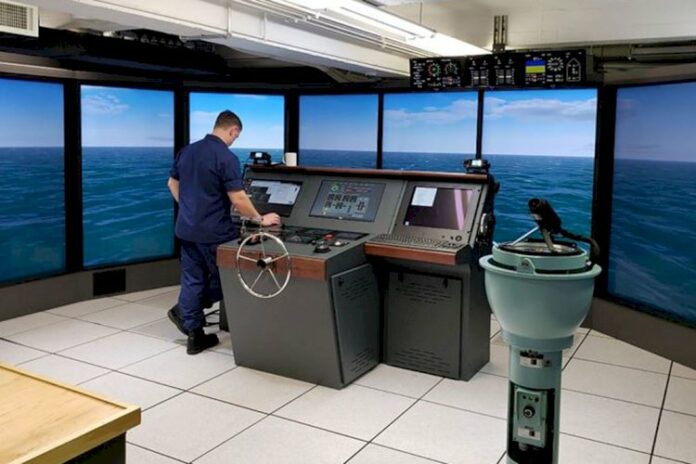
The technology group Wärtsilä has completed replacement of the Ship Analytics simulator solution at the United States Coast Guard Academy’s Ship Control and Navigation Training System (SCANTS) facility.

The original simulator system was installed at the Academy in the 1990s, and the replacement work was carried out primarily by, and in partnership with, NavSim Services, Inc., the prime contractor. The upgrade was accomplished in two stages to accommodate the operational training schedule of the Academy, and to fit within the academic breaks.   The primary purpose of the USCGA SCANTS facility is bridge training for Academy cadets and officers preparing to take command of their own cutters. The training emphasis is on navigation, piloting, and collision avoidance. However, the inclusion of specialty modules within the Wärtsilä simulator solution also enables highly advanced training in naval operations, search and rescue, and other operational activities unique to the mission of the US Coast Guard (USCG).

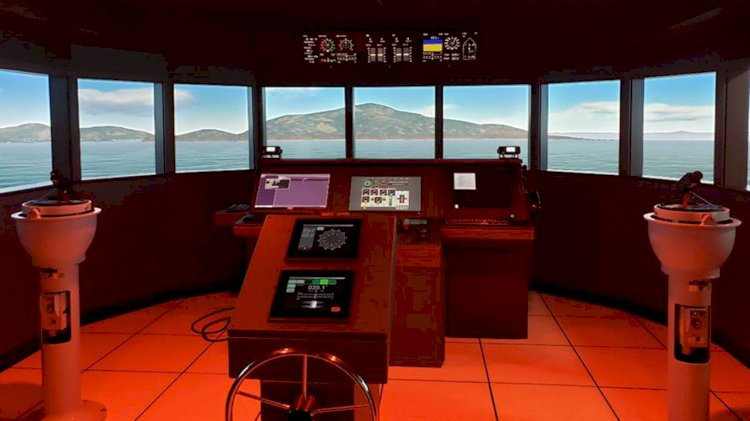
The highly advanced Wärtsilä system consists of two Full Mission navigation and ship-handling bridges, three additional part task bridges and five separate yet interconnected instructor stations, designed to provide the instructors and operators with the maximum flexibility in accomplishing their training missions. Designed to provide trainees with a realistic perception of operating in a real-life shipboard environment, the simulator complex utilizes an advanced physics engine and high fidelity hydrodynamic vessel modelling capabilities to replicate the behavior of vessels  in various sea states, and at all speeds and environmental conditions.

Timothy Park, Sales Director, Wärtsilä Voyage Solutions, says:

“The comprehensive and highly advanced Wärtsilä simulation system allows the US Coast Guard Academy to conduct extremely realistic exercises, pertinent to the various operations required now and for a long time into the future.”
Anthony Kunecki, President of NavSim Services, explains:

“The USCGA carries out more than 15,000 man-hours of training annually on the SCANTS complex. The SCANTS simulators are used for a wide variety of training: from teaching new cadets the basic Rules of the Road, to advanced maneuvering exercises for experienced officers. They needed a reliable, flexible, realistic, state-of-the-art simulator system to handle that amount and breadth of training. Upon completion of the project, we were told that the Academy was extremely pleased with the results.”

After a careful analysis of the missions performed by the USCG, several functionality modules were included within the deliverables. Furthermore, since the potential exists for underway replenishment at sea during operations, Wärtsilä’s high fidelity Naval UNREP training module, an advanced functionality, was included. This module will allow Coast Guard personnel to train for risky operations within the simulation environment. The Wärtsilä Model Wizard and Virtual Shipyard 2 programs were also included, allowing the USCG to not only modify area and vessel databases as needed, but enable the creation of new area and model databases as well when necessary. 

With the inclusion of the Wartsila SAR training module, large scale search and rescue operations can be rehearsed, either on each bridge individually, or with all bridges participating in large scale, complex operations. This module provides the USCG Academy with the tools to train for emergency situations, including man overboard, lifeboat, fires and collisions. 

Wärtsilä Simulation & Training solutions are built from the ground up to train and prepare seafarers of the future. They offer micro-learning, enabling education anytime from anywhere, personalized training and e-learning supported by remote tutoring. They offer gamification of training, drawn from real-life situations and virtually recreated, to make it more engaging for individual learning or for building team skills in multi-player mode. Furthermore, new content distribution technologies allow these solutions to reach seafarers on every platform, with options for virtual, augmented and mixed reality.

Wärtsilä Voyage radically transforms how vessels perform their voyage by leveraging the latest digital technologies, to deliver a step-change in safety, efficiency, reliability and emissions.

VIDEO: SCANTS brings tech and training together at CGA

Saipem nets offshore engineering services deal with Equinor

0

The Frame Agreement encompasses feasibility and conceptual studies, FEED, detailed engineering and related follow-on and support for R&D activities, as well as assistance to Equinor for its upcoming projects, including new energy-related projects in the onshore, offshore and floating wind sectors.

The scope of the Frame Agreement extends, but is not limited, to offshore trunklines including landfalls and flowlines, onshore pipelines, components, subsea structures, field layout and routing design for products such as umbilicals, cables, static flexibles and power cables.

Saipem and Equinor have been collaborating for over a decade backed by frame agreements, namely those regarding transportation and installation (T&I) as well as Subsea Construction works. Furthermore, in October 2019 Saipem signed a subsea service contract with Equinor, which entails the use of Saipem’s Underwater Intervention Drone (UID) Hydrone-R and the all-electric Work Class ROV Hydrone-W in the Njord Field development. Last but not least, recently Saipem and Equinor have signed a cooperation agreement to develop an innovative technological solution for a solar panel floating park for near coastal installations.

Francesco Racheli Coo E&C Offshore Division commented:

“This new agreement with Equinor, a leading player in the energy industry, consolidates a long and successful relationship and co-operation. Our ability in providing research and technology solutions to a company committed to long-term value creation testifies our leadership and reliability in the sector. In particular, our solutions in the renewable energy sector will allow us to accompany Equinor on its energy transition journey, supporting them with our technologies and highly qualified expertise.”

World’s largest container vessel passed through the Suez Canal

0

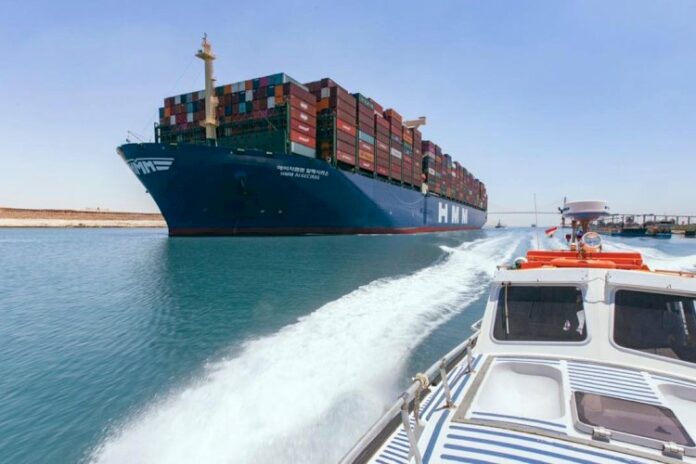
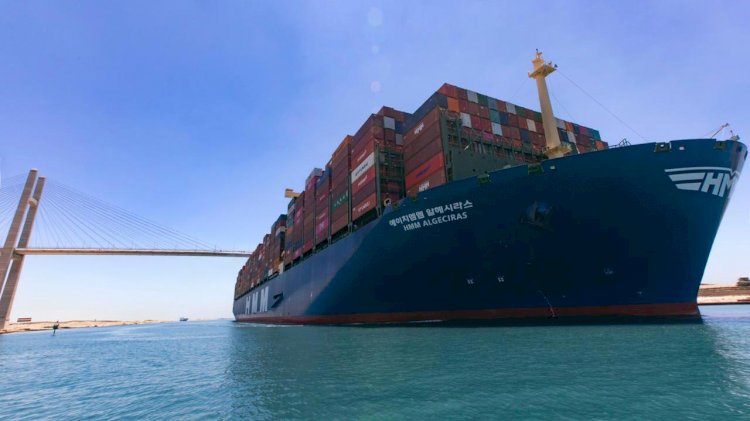
HMM Algeciras is deployed on Far East Europe 4 service, with its port rotation starting at Qingdao, and on to Busan, Ningbo, Shanghai, Yantian, Suez Canal, Rotterdam, Hamburg, Antwerp, London Gateway, then Singapore via Suez Canal, according to the South Korean company’s official website.

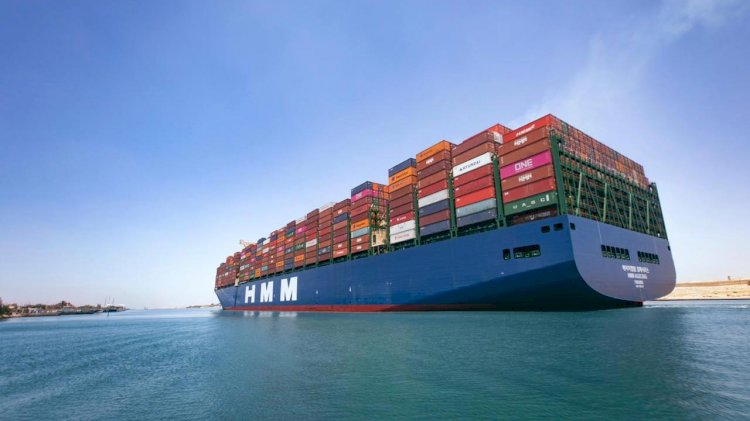
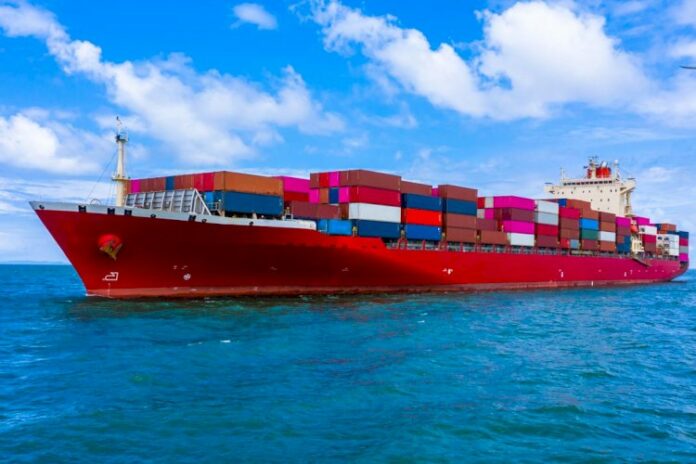
The record-breaking vessel has a capacity of 23,964 TEUs and is among the fleet of HMM, the South Korean shipping line, and is the first of twelve vessels of the same class, design and size contracted to be built by DSME (Daewoo Shipbuilding & Marine Engineering) and SHI (Samsung Heavy Industries).

The ship stands at 400 m. in length. Her width is 61 m. and her draught is 16 m.

She is equipped with operating systems that comply with IMO regulations. The upgraded design of the structure is meant to be more power-efficient, and thus, minimize the carbon emissions, to which the expected result is cutting 15% off operation costs.

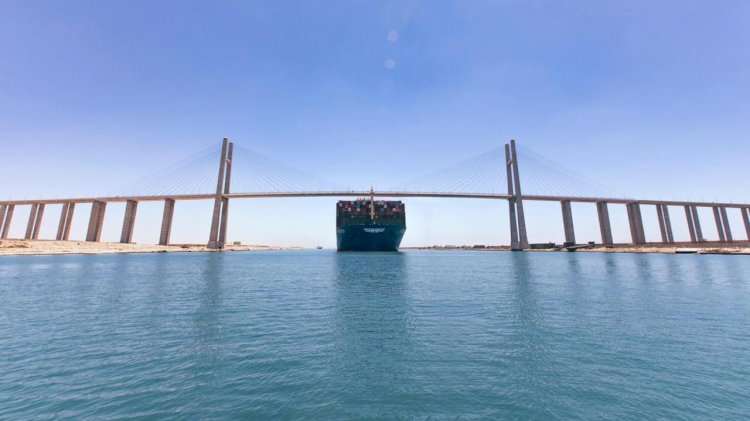
And as per protocol in the Suez Canal Authority on receiving mega vessels transiting for the first time, Admiral Osama Rabie delegated SCA Distinguished Senior Pilot, Capt. Hisham Fawzy, and First Senior Pilot, Capt. Medhat El-Naggar, to board the vessel and welcome its crew as well as present the Shipmaster, Capt. Jon Kiun, with a commemorative gift.

ABS launches guidance aimed at sanitizing marine assets exposed to COVID-19

0

Response Measures to COVID-19 for the Marine and Offshore Industries provides best practice guidelines for sanitizing assets exposed to COVID-19 and helps maritime leadership address the many challenges the virus brings.

The best practices document helps to answer a range of practical, urgent questions including how to prevent an asset from getting contaminated, how to maintain an asset in a sanitized state, how to decontaminate an asset when there is an onboard COVID-19 case and considerations for the choice, use and disposal of cleaning and disinfecting products.

Produced from a maritime public health perspective, the best practices are applicable to commercial and naval vessels, as well as drilling units, production installations and other offshore units.

Christopher J. Wiernicki, ABS Chairman, President and Chief Executive Officer, said:

“Marine and offshore operators face the same challenge globally today. Determining how to protect crews while continuing operations in complex environments with unique requirements, where decontamination is considerably more challenging than for assets on land. For instance, improper application of detergents and disinfectants can degrade structural materials or weaken coatings designed to protect structures. This guidance builds on ABS’ industry safety leadership to give operators confidence they are doing everything possible to protect their crews and assets. It is yet another example of ABS innovating to find new ways to support the industry during these challenging times.”

Rear Admiral Joyce Johnson DO MA U.S. Public Health Service (Ret), a physician with a 35-year career of senior public health leadership in civilian and U.S. military sectors, said:

“ABS has compiled a useful, best practices publication for mitigating the SARS-CoV-19 virus threat aboard marine and offshore platforms. The sanitization guidance provided will potentially save lives for people who must live and work at sea.”

New Siemens Gamesa wind turbines planned for Hai Long 2 offshore wind project

0

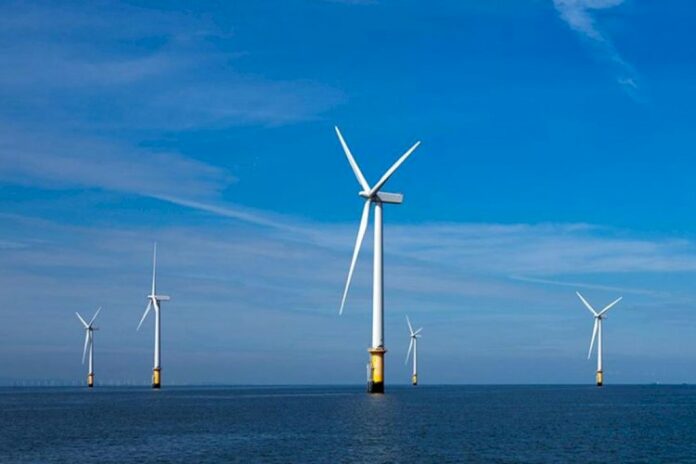
Siemens Gamesa Renewable Energy (SGRE) and Hai Long Offshore Wind (Hai Long) announce that the new SG 14-222 DD offshore wind turbine is intended to be used at the upcoming 300 MW Hai Long 2 project in Taiwan. The deployment of the turbine for the rest of the 1,044 MW Hai Long pipeline is also being considered.

The exact number of units for the first 300 MW of the project remains to be confirmed based on site-specific conditions. The preferred supplier agreement as published in November 2019 remains subject to contract and final investment decision from the consortium partners, Canadian independent power producer Northland Power Inc. and Taiwan-based developer Yushan Energy, jointly owned by Mitsui & Co., Ltd. in Japan and Yushan Energy Pte. Ltd. in Singapore.

The Hai Long offshore wind power plant was awarded through the 2018 grid allocation mechanism in Taiwan. The project site is located approximately 50 kilometres off the coast of Changhua County. The first 300 MW will serve as an anchor for Siemens Gamesa to expand its local footprint and supply base in Taiwan into a regional industrial hub.

As announced separately, nacelle production for the 300 MW Hai Long 2 project will begin in Taichung in 2024, and turbine installation will follow thereafter.

Andreas Nauen, Offshore CEO at Siemens Gamesa, said:

“Taking the next step in advancing the Hai Long 2 project by announcing that it will conditionally use the SG 14-222 DD offshore wind turbine is outstanding news. We are thrilled that the Hai Long partners have chosen our newest machine, and are very excited to work closely in making this project the first installation for the SG 14-222 DD in Asia Pacific.”

Since the opening of its Taipei office in 2017, Siemens Gamesa has been firmly committed to support the ambitious industry plan of the Taiwanese government, and to contribute to the growth of offshore wind in Taiwan. Subject to Hai Long 2’s Industrial Relevance Proposal approval, Siemens Gamesa recently revealed plans to expand its Taichung footprint into a regional industrial hub for offshore wind nacelles, together with Taiwan-based suppliers.

This nacelle production setup in Taiwan will play a central role in the introduction of the latest turbine technologies in Asia Pacific, starting with the giant SG 14-222 DD for the 300 MW Hai Long 2 project. As such it will also reinforce Taiwan’s pioneering position in the region and serve as a foundation to export state-of-the-art technologies to other neighbouring markets.

Niels Steenberg, Executive General Manager of Siemens Gamesa Offshore for Asia-Pacific, added:

“We are very proud to be able and reveal the planned deployment of this giant turbine in Taiwan with the Hai Long partners. It matches our shared vision to establish a competitive and sustainable offshore wind hub here for the rest of the region.”

David Povall, Executive Vice President for Development at Northland Power said:

“The strategy of Hai Long’s Industrial Relevance Proposal (local content) has always been focused on enabling the local supply chain for global opportunities. And bringing the latest turbine technology into the Taiwan market through our project has been part of the initiative. Hence, we proudly see ourselves as the ‘Anchor Project’ that will facilitate Taiwan’s policy goal of becoming the APAC Offshore Wind Export Hub.”