1.3 C
New York
Home Blog Page 847

SGMF publishes guidelines for the safe dry docking of vessels that use gas as fuel

0

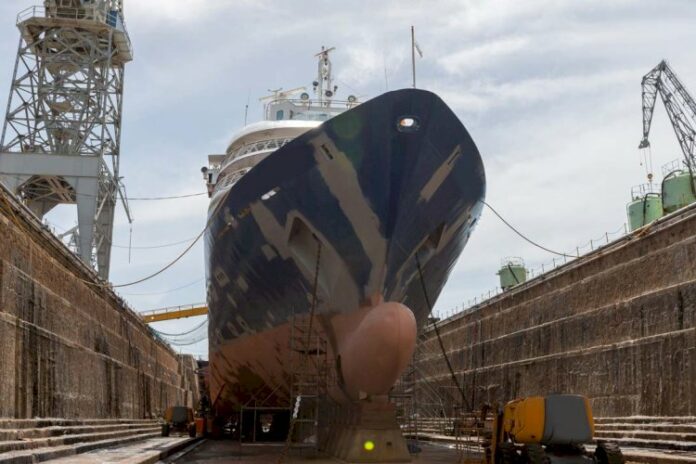
The Society for Marine Gas as a Fuel (SGMF) has published new guidance on work practices for maintenance, repair and dry-dock operations for ships that use gas/LNG as fuel to help ensure the safe maintenance of gas-fuelled ships.

In the future, an increasing number of ships will switch to using gas as a marine fuel, catalysed by increased international regulatory focus on reducing environmental impact and emissions by the IMO.

However, shipping companies who use gas as a marine fuel will need to be prepared for when their gas-fuelled ships undergo routine maintenance in dry dock. While cargo is normally removed from a vessel as part of the drydocking process, sometimes fuel is not.
With 185 gas fuelled ships in active service and with another 212 on order, the release of this publication is timely since it is important that prior to any docking both ship owner, operator or manager and shipyard fully understand the safety requirements of the gas fuel management during the dry docking period.

For ships using gas fuel, such as LNG, a rigorous approach must be undertaken to maintain safety. As such, this new guidance details techniques and precautions that can be applied to minimise the hazards of LNG/gaseous fuels – in many cases, allowing the use of traditional maintenance techniques. Where this is not possible, the guidance discusses alternative methods.

The guidance also offers a risk assessment approach and covers all aspects of LNG fuel management while preparing for the docking and during the docking process. Furthermore, it provides the required details and direction for ship owners to select prequalified shipyards.

Local National and International Regulatory Authorities can also all draw upon, or refer to, the philosophy methodology and content of this publication when it comes to the maintenance of gas fuelled ships. Shipyards can also use the guidance to prepare and be LNG ready. Although this guidance will give the majority of detail required, SGMF advises that ship owners, operators and managers fully understand the implications of having LNG onboard and appoint an LNG specialist within the fleet and the yard.

The “Gas as a Marine Fuel: Work Practices for Maintenance, Repair and Dry-Dock Operations” guidelines were developed using the experience and technical knowledge of SGMF’s extensive member network. The contents of the publication have been drawn from the unique specialist knowledge of many individuals from the SGMF membership including the Principal Safety Advisor to SGMF, David Haynes, who acted as the lead individual compiling the publication. In leading the development of the guidelines, Mr Haynes has, in many instances, drawn upon onshore good practice to help align and standardise the approach for the maritime industry.

Mark Bell, General Manager, SGMF says:

“I am really proud to see that yet another unique and much needed publication has been compiled by SGMF, drawn together by our expert members under the guidance of David Haynes, Principal Safety Advisor to SGMF.

As more and more ships start to use gas fuels, the industry is now equipped with the reference document to ensure the safe maintenance and drydocking of gas-fuelled ships. My thanks to David and all of the individuals and member organisations who have contributed to this milestone publication.”

For SGMF members, this publication is available in the Member Portal (Library / Publications) to download and hard copies available in July.
VIDEO: SpaceX’s reusable Falcon booster returns to port after crew launch

0

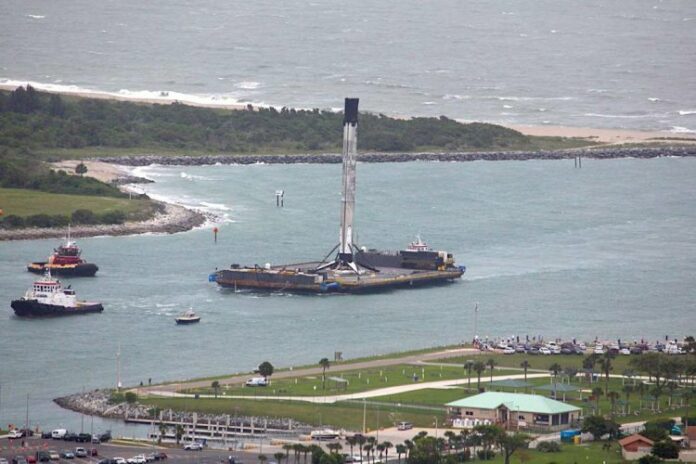
Almost exactly three days after taking off a few miles to the north at the Kennedy Space Center on SpaceX’s historic first crew launch, a 15-story-tall Falcon rocket booster returned to Florida’s Space Coast Tuesday aboard a football field-sized drone ship.

The Falcon 9 rocket booster landed at sea on the droneship Of Course I Still Love You about 10 minutes after launching the Crew Dragon spacecraft.

A tug pulled the drone ship through the inlet leading to Port Canaveral around 2 p.m. EDT (1800 GMT) Tuesday, and mariners carefully maneuvered the drone ship into position for a crane to hoist the Falcon 9 rocket booster off the vessel and into an onshore stand. SpaceX planned to remove or retract the rocket’s landing legs, then rotate the booster horizontal for transport back to Cape Canaveral Air Force Station for further inspections, and likely refurbishment for another launch.

The Falcon 9 rocket lifted off at 3:22 p.m. EDT (1922 GMT) Saturday from pad 39A at the Kennedy Space Center carrying NASA astronauts Doug Hurley and Bob Behnken on a test flight to the International Space Station aboard SpaceX’s Crew Dragon spacecraft.

It was the first time astronauts have launched from U.S. soil into Earth orbit since the last space shuttle launch July 8, 2011.

It’s unclear when or if SpaceX plans to re-fly this particular booster. The booster is special for its historic flight and even has the throwback NASA worm logo on the side.

Source: spaceflightnow.com

Video: www.USLaunchReport.com

Aramco Asia deployes the “smart helmet” technology

0

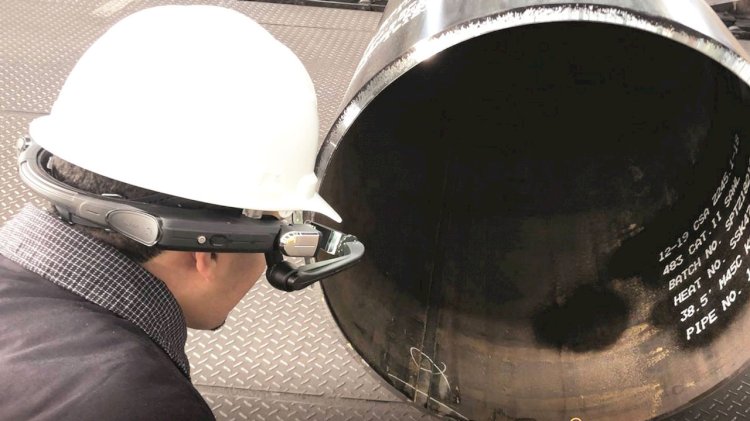
In-line with Saudi Aramco’s Digital Transformation Program – which capitalizes on innovative Fourth Industrial Revolution technologies to deliver energy more sustainably and efficiently – Aramco Asia recently deployed a “smart helmet.”

Operating on artificial intelligence, the helmet remotely monitors equipment and material fabrication activities, helping to mitigate the risk of COVID-19 transmission.

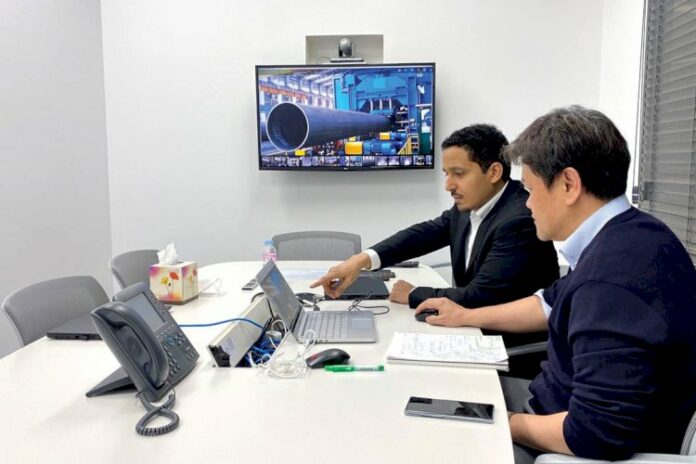
The technology behind the smart helmet, an Android tablet class wearable computer, is a hands-free device attached to a regular industrial helmet. It uses voice recognition software and allows for numerous functions such as easy document and screen sharing, high resolution image capturing, video recording, and real-time augmented reality mark-up for remote guidance. The helmet also enables multiple people to remotely run multiple support sessions at one time.

Anwar A. Al-Hejazi, Aramco Asia president, said:

“Digital transformation is driving change in how we manage our business in Aramco Asia, and it supports our stakeholders through enhanced agility and innovative solutions — especially in times of crises. Aramco Asia will continue to explore and adopt innovative technologies that can add value to our operations.”

Highlighting the value of such technologies, Aramco Asia-Korea representative director Fahad A. Al-Sahali said:

“This technology brings about many benefits that enable us to reliably and safely sustain our operations, by increasing on-the-spot audits to monitor materials fabrication activities and expediting related urgent assessment processes. Identifying suitable technologies that complement our processes at an early stage enhances our business continuity measures.”

To ensure business continuity during the current COVID-19 pandemic, Aramco Asia engineers in South Korea have utilized the smart helmet technology to remotely evaluate a new potential manufacturer located in Ulsan (approximately 350 km from Seoul) that produces straight seam pipes.

A group of technical and inspection assessors from Saudi Aramco Consulting Services in Dhahran and Aramco Asia Engineering and Technical Services in Seoul collaborated and interacted remotely with manufacturer representatives through live streaming. This unique solution — carried out to support an urgent request to assess the manufacturer’s performance and equipment operation conditions — was remarkably efficient.

The technology has also been utilized to supervise inspection activities and mechanical testing for the company’s ongoing critical purchase orders for projects such as the Marjan Increment Program. This solution has helped to maintain human safety requirements, deliver proper inspection services, and support the company’s capital project’s schedules.

The inspection results were satisfactory and supportive of the company strategy to promote digital transformation for business functions. Aramco Asia will continue using the technology to ensure product integrity and business efficiency.

Siemens Gamesa receives firm order for 497 MW Fécamp offshore wind power plant

0

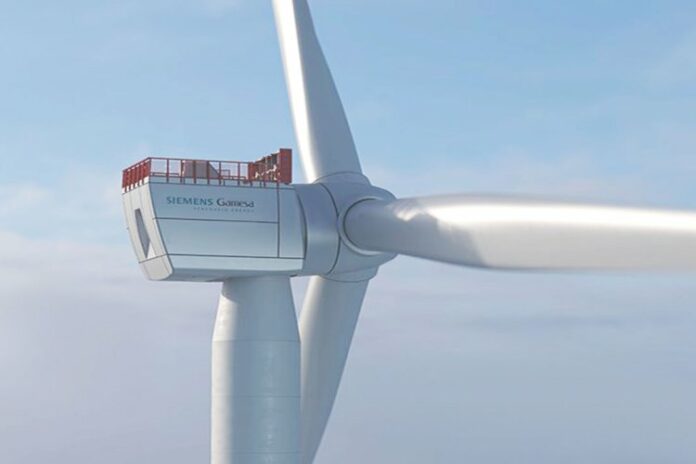
Siemens Gamesa has received the firm order for the supply of wind turbines and a 15-year maintenance contract for the Fécamp offshore wind power plant from customer EDF Renewables, Enbridge and wpd. This 497 MW project located in Normandy will be equipped with 71 SWT-7.0-154 offshore wind turbines, each with capacity of 7 MW. These turbines will be manufactured in the wind turbine plant Siemens Gamesa is to build in Le Havre, France.

The announcement of this firm order comes in addition to the recent firm order from Ailes Marines consortium for the 496 MW Bay of St. Brieuc offshore wind power plant located in Britanny. Here, Siemens Gamesa will supply 62 SG 8.0-167 DD offshore wind turbines and maintain them for 10 years. These machines will also be manufactured in Le Havre.

Andreas Nauen, CEO of the Siemens Gamesa Offshore Business Unit, says:

“These first two firm orders, which is almost 1,000 MW of capacity of the 2,500 MW currently in our French project pipeline, strengthens Siemens Gamesa´s leadership of the French offshore wind industry. This is good news for the renewable energy transition in France, and allows us to fully bring our offshore manufacturing project in Le Havre to life.”

Cédric Le Bousse, Director of Renewable Marine Energies France of EDF Renewables, commented:

“I am delighted to announce today the construction of our offshore wind farm in Fécamp. Thanks to our industrial partner Siemens Gamesa and the mobilization of EDF Renewables’ teams with the local stakeholders for many years, this ambitious project will create value for the territories and the Normandy region.”

The next expected orders for SGRE concern the Courseulles sur mer, Dieppe le Tréport and Yeu Noirmoutier projects for a total of nearly 1500 MW of additional capacity.

Siemens Gamesa selects a consortium led by GTM Normandie-Centre, a subsidiary of VINCI Construction France for the construction of its offshore wind turbine plant in Le Havre

The consortium led by GTM Normandie-Centre, a VINCI Construction France subsidiary, was selected for the construction of the facility to be located on the Quai Joannès Couvert in the Port of Le Havre. The 20-hectare factory will be the first in the world to manufacture all main offshore wind turbine components under one roof as previously announced.

Christophe Quardel, Regional Director of GTM Normandie-Centre, explained:

“More than a third of the consortium is made up of local companies that will draw on the know-how of partners and subcontractors from the local and regional economic fabric. The work will use materials produced in Le Havre. With more than 600 000 hours of work, the project will mobilise a total of almost 350 people, with provisions designed to promote local employment.”

This offshore wind turbine plant is the largest industrial project in the French renewable energy industry to date and will be used to supply Siemens Gamesa offshore wind projects in France and potentially abroad. Start of operation for the plant is scheduled to take place between the end of 2021 and early 2022.

Filippo Cimitan, Managing Director of Siemens Gamesa France, declared:

“It has been a long journey from the award of these projects to the confirmation of the orders received today and is the result of great collaboration with customers and partners, and within our own teams. We can now look ahead to the launch of their construction. We remain fully committed to make this historic industrial plan a symbol of the French Ecological Transition as well as an example of long-term green jobs and new business opportunities for local companies.”

The Siemens Gamesa offshore manufacturing plant in Le Havre is expected to create approximately 750 direct and indirect jobs when fully operational, particularly in the fields of composite materials, mechanical assembly, and logistics. Siemens Gamesa is expected to start recruiting at the end of 2020.

Jean Baptiste Gastinne, Mayor of Le Havre and President of Le Havre Seine Metropolis, declared:

“Wind turbines produced in Le Havre to equip the Fécamp wind farm is excellent news for the Le Havre area and for Normandy. I am delighted to see that this major industrial project is progressing well, all the signals are now green to see the first factory in the world to produce blades and nacelles coming out of the ground on our territory. Our unfailing mobilization is bearing fruit and will lead to the creation of 750 direct and indirect jobs in Le Havre.”

Stena Line reduces CO2 emissions

0

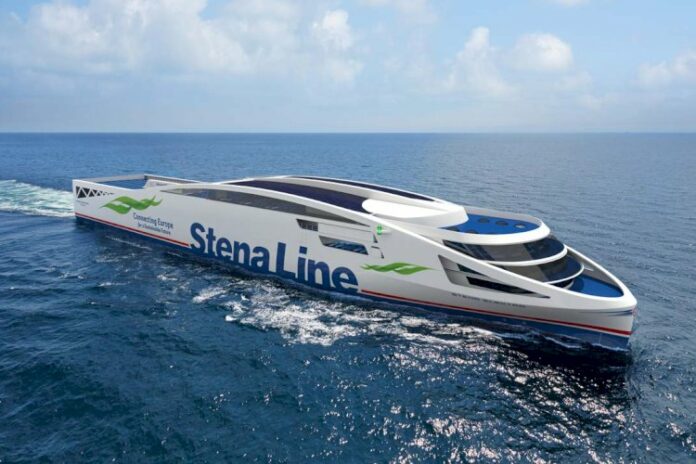
Ferry shipping company Stena Line continues to reduce CO2 emissions and is now ten years ahead of the international shipping targets for reducing emissions. In the newly published sustainability overview “A Sustainable Journey” Stena Line reports a reduction of both total CO2 emissions and per transported ton onboard the ferries. New, larger and more energy efficient vessels, AI assisted captains and an increased punctuality are some important measures.

Despite a tough situation for the ferry industry due to COVID-19 ferry shipping company Stena Line continues its sustainable journey. In the newly published sustainability overview Stena Line presents initiatives, improvements and challenges within the sustainability area as well as give account on the companies ambitious sustainability targets.

During 2019 Stena Line to reduce CO2 emissions and is now ten years ahead of the international shipping targets for reducing emissions. The company reduced the total CO2 emissions with 1,7 %, corresponding to 24 000 tonnes of CO2 in total.

Even more important is that Stena Line continued to improve the efficiency and reduced the emissions per transported ton freight and passenger vehicles onboard the vessels with 3,6% CO2. This means that Stena Line, ten years ahead, already meets the International Maritime Organisation (IMO) targets for 2030 of a 40 % reductions in CO2 emissions efficiency from 2008-2030.  

Erik Lewenhaupt, Head of Sustainability at Stena Line, says:

“We aim to be the leader in sustainable shipping and we have high ambitions. During the last ten years we have improved the efficiency with more than 320 energy efficiency actions onboard and onshore, both technical and operational improvements and investments. The introduction of AI assisted vessels and the delivery of our first new larger and energy efficient vessels that went into operations on the Irish Sea during the spring, are some highlights from last year.”

The largest challenge for the shipping industry as a whole and for Stena Line is to reach zero emissions by 2050, in line with international targets.   

Erik Lewenhaupt, Head of Sustainability at Stena Line, says:

“We are currently working in parallel with reducing fuel consumption, and emissions to sea and air and at the same time exploring and evaluating the fuels for the future. We are currently involved in several projects with alternative fuels and propulsion, including the world’s first methanol powered vessel and a battery project with the aim of launching a fully battery powered vessel before 2030.”

Associations call for accelerating digitalisation of maritime trade and logistics

0

The Covid-19 crisis has painfully demonstrated the heterogeneous landscape that currently exists across ports worldwide. With the world’s attention now focused on exiting from lockdowns and preparing for a ‘new normal’, there is an urgent need to co-operate and accelerate the pace of digitalisation, according to a number of leading maritime associations.

While some port communities seized the opportunities of the fourth industrial revolution and developed into full-fledged ‘smart’ ports, many others have barely grasped the essentials of digitalisation. The latter continue to struggle with larger reliance on personal interaction and paper-based transactions as the norms for shipboard, ship-port interface and port-hinterland based exchanges.

As an illustration, only 49 of the 174 Member States of the International Maritime Organization (IMO) have functioning Port Community Systems to date. These systems are considered the cornerstone of any port in the current digitalised business landscape.

With the world now exiting from lockdowns, there is an urgent need for inter-governmental organisations, governments and industry stakeholders concerned with maritime trade and logistics to come together and accelerate the pace of digitalisation. This will allow port communities across the world to at least offer a basic package of electronic commerce and data exchange, in compliance with all relevant contractual and regulatory obligations.

In addition, digitalisation is a catalyst for safety improvements, environmental improvements (reducing the CO2 footprint) as well as cost savings.

To realise this overall ambition, the International Association of Ports and Harbors (IAPH), BIMCO, the International Cargo Handling Coordination Association (ICHCA), the International Chamber of Shipping (ICS), the International Harbour Masters’ Association (IHMA), the International Maritime Pilots Association (IMPA), the International Port Community Systems Association (IPCSA), the International Ship Suppliers’ Association (ISSA), the Federation of National Associations of Ship Brokers and Agents (FONASBA) and the PROTECT Group are launching a call to action along a number of priorities.

These priorities include assessing the state of implementation and find ways to enforce the already mandatory requirements defined in the IMO’s Facilitation (IMO FAL) Convention to support transmission, receipt, and response of information required for the arrival, stay, and departure of ships, persons, and cargo, including notifications and declarations for customs, immigration, port and security authorities, via electronic data exchange, making the transition to full-fledged single windows.

It also includes ensuring harmonisation of data standards beyond the IMO FAL Convention and to strive for the introduction of Port Community Systems and secure data exchange platforms in the main ports of all Member States represented in the IMO, to mention a few.

The policy document will now be submitted to the IMO Secretariat as a proposal for further dissemination.

Wärtsilä and partners develop emissions-free barge concept

0

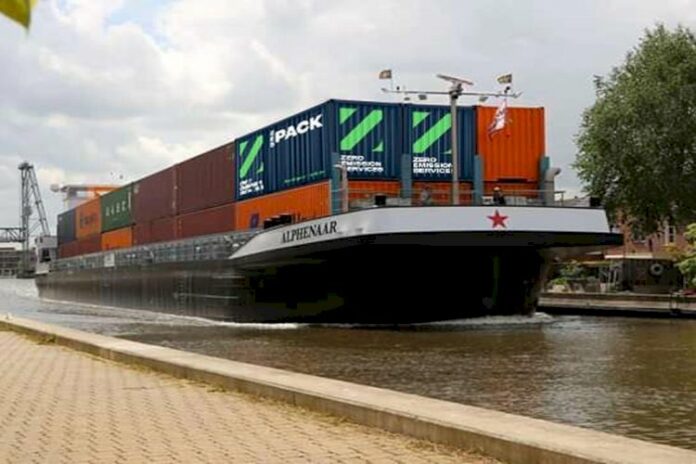
The technology group Wärtsilä has joined a consortium of key partners to form Zero Emission Services B.V. (ZES), an enterprise aimed at making inland waterway shipping more sustainable.

The other founders of ZES are ING Bank, energy and technical service provider Engie, and the Port of Rotterdam Authority. The concept is supported by the Dutch Ministry of Infrastructure and Water Management.

Within the Netherlands transport sector, inland navigation accounts for 5 percent of carbon dioxide (CO2) emissions. By switching from diesel fuelled propulsion to fully electrically powered transport, an important step can be taken towards realising the Paris Climate Agreement goals.

The concept is based on the use of replaceable battery containers, to be known as ‘ZESPacks’. These will be charged using energy from renewable sources. A network of open access charging points will be set up for exchanging depleted battery containers for ready-charged replacements, thereby keeping waiting time to a minimum. The ZESPacks are designed for multiple applications, enabling them to be utilised for temporary onshore use, such as stabilising the local electricity grid or meeting short-term demand for electrical power.

Tamara de Gruyter, President, Marine Systems & Executive VP, Wärtsilä, says:

“This innovative concept aligns completely with Wärtsilä’s commitment to lessening the environmental impact of shipping. Our deep in-house know-how in maritime battery systems, shore power connections and remote connections, plus our extensive experience in serving inland waterway applications, were all key reasons for Wärtsilä to join this project and it is something we are proud to be a part of.”

The system is future-proof since it is independent of the energy provider. Initially batteries will be employed but should, for example, hydrogen become a viable alternative at some point, containers equipped with hydrogen technology could supply power in the same way.

To make it easier for barge operators to sign-on to the concept, a ‘pay-per-use’ financing model has been developed. In this way, ZES charges only for the cost of consumed renewable energy plus a rental fee for the battery container, so the skipper’s operating costs remain competitive. However, vessels must be equipped with an electric propulsion line.

The project will initially be employed along the Zoeterwoude – Alpherium – Moerdijk corridor. Following this, it will be expanded to include the Amsterdam – Rotterdam – Antwerp corridor, making a connection to Nijmegen. The emphasis during the initial stage will be on converted and newly-built container carriers. 

The HEINEKEN beer company has entered into an agreement with ZES to utilise the service for transporting beer from its brewery in Zoeterwoude to Moerdijk, thus becoming the first end customer for the enterprise.

EnBW and aerodyn test model for floating wind turbines for first time in Germany

0

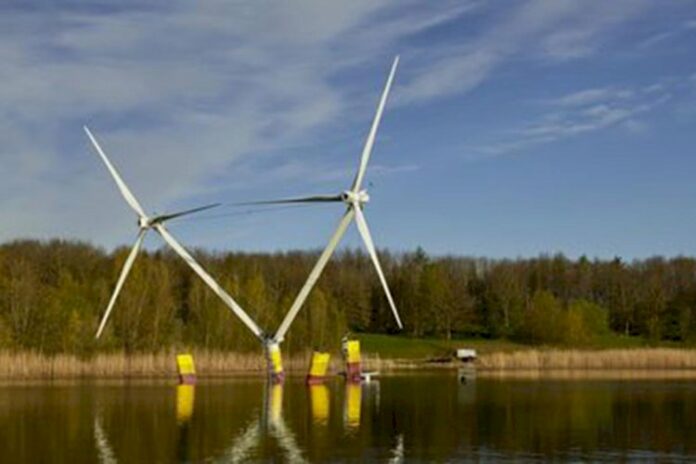
Two wind turbines on a precast concrete floating platform: that, basically, is Nezzy². This 18 metre tall, 1:10-scale prototype is being tested by EnBW and aerodyn engineering, a north German engineering company, in a flooded gravel pit near Bremerhaven.

Next, this summer, Nezzy² is to prove itself in wind and wave conditions in the Baltic Sea. If these trials go well, the model is to be tested at full scale with another partner in China. The aim of the research project is to develop a new offshore technology enabling wind turbines to float on the water surface.

Until now, offshore wind turbines have been anchored to foundations in the seabed at maximum water depths of 50 metres. That limits the choice of suitable marine areas. Floating turbines change this completely.

Dr. Hannah König, head of wind and marine technology at EnBW,  explains:

“The potential is huge. This new technology opens up countries and marine areas with greater water depths and expands the possibilities for renewable energy generation. We are testing Nezzy² in partnership with aerodyn because it brings together a range of technical innovations.” EnBW itself plans to deploy floating wind turbines in future projects: “France especially is an attractive market for us here together with our subsidiary Valeco.”

Aerodyn already successfully tested a 1:10-scale predecessor model with a single turbine in the sea off Japan in 2018. Nezzy², its successor, has two rotors and has so far been tested on a scale of 1:36 in an artificial wave channel in Cork, Ireland.

Aerodyn Managing Director Sönke Siegfriedsen says:

“We are confident that Nezzy²2 will enable the international offshore wind industry to generate wind power at sea even more cost-effectively in future. In EnBW, we have gained a partner for our test with ten years of experience in the construction and operation of offshore wind farms.”

KHI orders the first Corvus Energy high-density lithium-ion capacitor ESS

0

Branded Blue Marlin, the product uses lithium-ion capacitor (LiC) cells that safely sustain very high charge/discharge rates of 550 C peak and 200 C continuous, enabling both energy recapture and fast discharge for high-power load handling. It can deliver beyond a million cycles with minimal capacity loss.

Corvus Energy incorporated the LiC technology into the maritime-specific Blue Marlin product under a product development agreement with KHI, first announced in September 2019.

Takeshi Ohata, Managing Executive Officer of Kawasaki Heavy Industries, says:

“Corvus Energy has been an outstanding development partner. They have demonstrated high standards in energy storage engineering and marine market expertise throughout this project. Their know-how around thermal management inside battery modules is unmatched and critical to ensuring safe and reliable operation.”

Sean Puchalski, EVP Strategy & Business Planning at Corvus Energy, says:

“This project demonstrates that LiC technology is well-suited to maritime and offshore energy recapture applications. It provides the best of both worlds—current-handling performance nearing a supercapacitor with improved energy density. When space is at a premium and high power is required for short amounts of time, the Corvus Energy Blue Marlin product is a fantastic solution.”

Corvus Energy will market the Blue Marlin ESS mainly in the Offshore segment for applications with short power fluctuations at a very high power. With its lightweight, ruggedized and high power-density design, Blue Marlin provides significant benefits in such applications. For example, the potential for efficiency improvement through energy recapture is substantial for many of these operations, including heave compensation, drilling draw works, payload lowering, and similar high-power applications. Further, it can handle peaks in the power demand profile. For drilling rigs and vessels with heave compensation systems, this could mean that one or more diesel generators previously used to handle sudden variations in power can be turned off.

Geir Bjørkeli, CEO of Corvus Energy, says:

“The entire oil and gas industry increasingly commit to invest in green technology to reduce the carbon footprint of their operations. We are pleased that by adding the Blue Marlin, we now offer a complete portfolio to improve energy efficiency in offshore vessel operations as well as rig topside applications.”

As the leading manufacturer of energy storage systems (ESS) for maritime applications, Corvus Energy provides battery power to more hybrid or zero-emission vessels than all other providers of energy storage systems combined. Corvus Energy offers a comprehensive and innovative portfolio of ESS solutions and has unsurpassed experience from 300+ projects, totaling over 250 MWh and 2,5 million operating hours.

Global LNG demand faces first seasonal contraction in 8 years

0

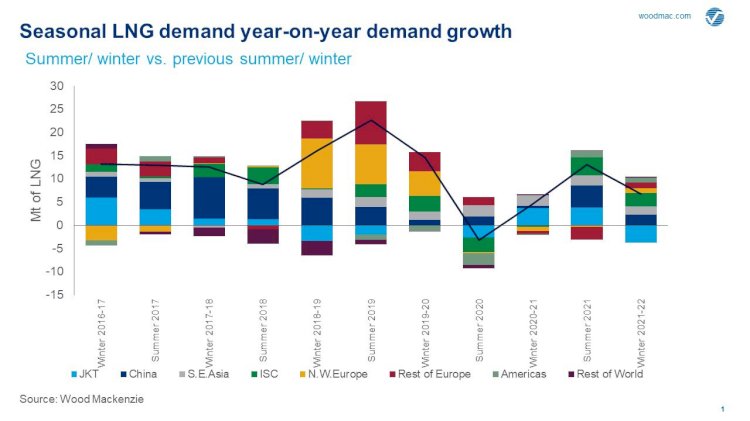
The global liquefied natural gas (LNG) industry is about to face its first seasonal demand contraction since 2012, with demand in summer 2020 expected to fall 2.7% or 3 million tonnes (Mt) year-on-year, says Wood Mackenzie.

Lockdown measures and negative economic outlook stemming from the coronavirus pandemic has taken its toll on Asian LNG importing countries, resulting in the second consecutive year of sluggish LNG demand growth.

Wood Mackenzie research director Robert Sims said:

“COVID-19 will drive a global contraction in LNG deliveries through summer 2020 compared to the previous year. This will be the first seasonal contraction in eight years

The coming winter season (2020-21) could see a modest 5 Mt improvement in global LNG demand compared to the previous winter season.

Pricing dynamics between both seasons are also likely to be similar, with the cross-basin spread set by the economics of US LNG. There could be some downside risk to Asian prices this winter if buyers lift some of the deferred volumes from this summer. In general, a return to stronger growth is not expected until mid-2021.” 

Japan, the world’s largest LNG importer, saw LNG demand decline in the first quarter of this year, and imports continued to fall through April as the coronavirus outbreak continued to spread. Although full-scale lockdowns have not been implemented, school closures, strict social distancing, work-from-home guidance and partial sectoral shutdowns dampened LNG demand in Q1 and will continue to have an impact through Q2.

The slowdown in Q1 LNG demand was further exacerbated by high storage levels. Like 2019, Japan entered 2020 with above-average inventory levels due to a mild winter, though inventories are now within seasonal norms. The country’s Q2 2020 LNG demand is expected to fall 3% to 15.8 Mt compared to Q2 2019.

Fresh out of winter heating season, China is shifting focus to industrial demand recovery. Although none of the force majeure notices were formally confirmed on LNG contracts, China reduced pipeline import growth in Q1 2020 to just 1% year-on-year, with imports from the largest supplier, Turkmenistan, down 12%. Coupled with a low spot price environment, the temporary waiver of US LNG import tariffs and industrial recovery, China managed to increase LNG imports in the first three months of 2020.

Moving into summer, China is now faced with the daunting task of economic recovery. While the ‘Two sessions’ has mentioned ‘Blue Sky Defence’ will continue, it is unclear whether the government will set specific targets for coal-to-gas switching in 2020. Any moderation could reduce gas demand during the heating season. Near-term gas-power demand is risked to the downside as power demand recovery faces macro uncertainty and more coal-fired power plants are being approved. As a result, China’s Q2 2020 LNG consumption is expected to rise 12% to 15 Mt year-on-year.

The other engine of LNG demand growth, India, saw Q1 2020 LNG consumption growing at record levels at 19% year-on-year, driven by low spot prices. Wood Mackenzie expects this to reverse as three months of lockdown materially reduces LNG consumption. The country’s LNG demand is expected to decline 24% to 4 Mt in Q2 2020 compared to the same period last year.

Lockdowns across Europe have been every bit as severe as Asia, but the total impact on gas demand is expected to be proportionally less due to the smaller share of gas used in the industrial sector, as well as the resilience of gas burn in the power sector, and largely unaffected demand from residential use.

Although Europe’s total gas demand is down in comparison to last year, reductions in domestically produced gas and Russian pipeline imports have created more room for LNG to be absorbed. However, the single largest fundamental difference from 2019 is Europe’s vast gas inventories, which currently sit at record seasonal highs and will reduce the continent’s ability to absorb global surplus LNG in Q3 2020.

Sims said:

“Although already anticipated by the market, news that more than 20 US LNG cargoes had been ‘cancelled’ by contract and tolling off-takers for June loadings is significant for the market. This could lead to feedgas going as low as 5 British cubic feet per day. 
We expect under-utilisation of US terminals to continue for several summer months as margins remain negative for many companies. What is new is that our balances and price outlook suggest that some degree of under-utilisation will now also happen through summer 2021.

Perhaps the most surprising change to our balances is the impact that low market prices are having on LNG supply, with downward revisions seen across all basins and regions.

Should this prove to be sticky going into 2021, and we see any kind of robust rebound in LNG demand from Japan, Korea or India, then a price correction could begin earlier than previously anticipated and reduce the risk of further US supply reductions next year.”