1.3 C
New York
Home Blog Page 846

EIZO secures LR type approval for maritime monitors via remote survey

0

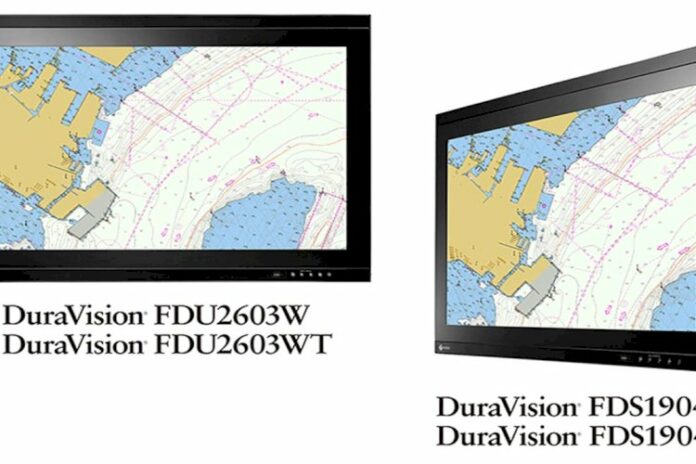
As part of the European Union (EU) Recognised Organisation (RO) Mutual Recognition Type Approval scheme, EIZO Corporation has been awarded type approval from Lloyd’s Register (LR) for its 19 and 25.5 inch maritime monitors for an Electronic Chart Display and Information System (ECDIS) with radar applications, the first European certificate for electrical equipment in Japan.

The EU RO Mutual Recognition Type Approval scheme covers type approval certification on selected components and equipment for which mutually agreed technical requirements have been developed and agreed by all stakeholders in the EU RO Group, ensuring consistency for different types of equipment.

EIZO’s current line of DuraVision ECDIS monitors (FD2603W, FDU2603WT, FDS1904, FDS1904T) were issued the certificate. These monitors are built specifically for harsh maritime conditions and are calibrated at EIZO’s own factory to meet the highly specialised requirements of ECDIS systems. EIZO offers optional optical bonding for each model which is also produced in-house.

Kazuhide Shimura, Executive Operating Officer, EIZO Corporation commented:

“Meeting requirements for major maritime classifications such as LR is extremely important in demonstrating that our products are proven for use in harsh environments. EU RO MR ensures that EIZO continues to provide a high degree of customer assurance to system integrators and end users in the maritime market, regardless of their location.”

Fumio Kure, LR’s general manager in Japan said:

“We are proud that LR was able to issue this certificate at this time as we had to rely on remote surveying capability for the approval as surveyor attendance was hindered by COVID-19 challenges. Congratulations to EIZO for obtaining EU RO MR Type Approval certificate in addition to LR class type approval.”

Subsea 7 awarded renewables contract offshore Scotland

0

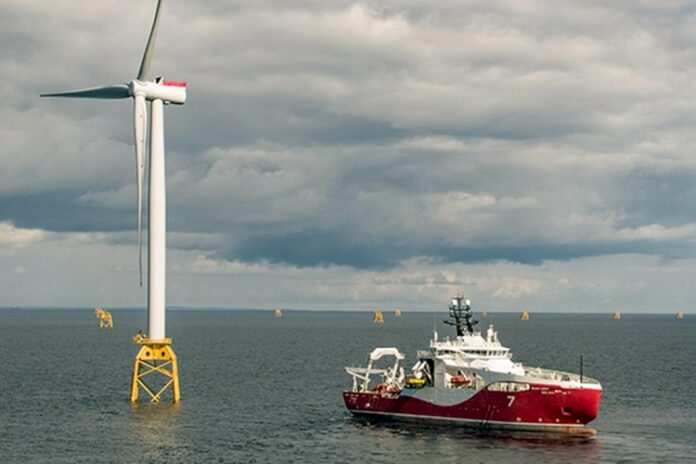
Subsea 7 has announced the award of a major(1) contract by SSE Renewables for the engineering, procurement, construction and installation (EPCI) of the foundations and inter array cables for the Seagreen Offshore Wind Farm project, 27km offshore Scotland.

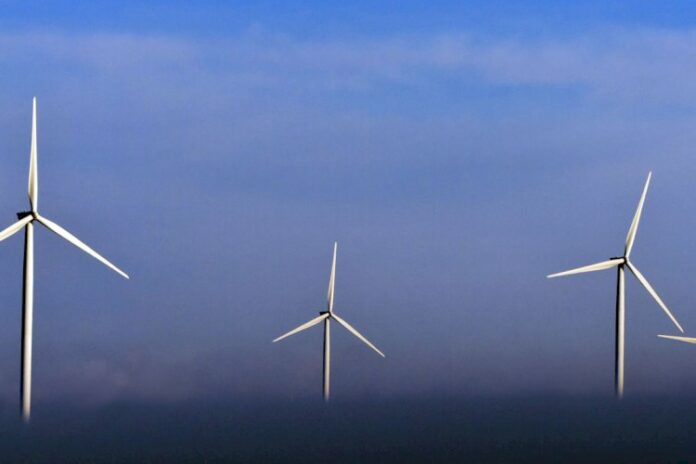
The Seagreen development will be a 1,075MW offshore wind farm, comprising 114 wind turbines located off the east coast of Scotland.

Seaway 7, the Renewables business unit of Subsea 7, will manage the EPCI of the 114 wind turbine generator foundations and approximately 300km of associated inter array cables. The agreement will immediately secure 30 jobs within Seaway 7’s Aberdeen office where the EPCI contract will be managed, with this number expected to reach around 50 jobs at the peak of activity.

John Hill, Seagreen Project Director, said:

“Seaway 7 brings a wealth of offshore wind knowledge and expertise and we are pleased to welcome them and their Aberdeen team to Seagreen.”

Steph McNeill, Executive Vice President – Renewables at Seaway 7, said:

“We are looking forward to continuing our successful collaborative relationship with SSE Renewables as we help construct Seagreen. We have been active in the UK Renewables sector for over a decade and are very pleased to continue to support the ongoing energy transition in the UK.  The Seagreen project will be managed from our Seaway 7 office in Aberdeen, bringing our offshore wind expertise to the largest offshore wind project in Scotland.”

Oosterweel link project: DEME to build the Scheldt tunnel

0

LANTIS, the project developer responsible for the prestigious ‘Oosterweel link’, which will complete the Antwerp Ring Road, has awarded the contract for the construction of the Scheldt tunnel to the Tijdelijke Handelsvennootschap Combinatie Oosterweeltunnel (THV COTU) consortium.

THV COTU is composed of the Belgian construction groups DEME, BESIX, BAM Contractors and Jan De Nul. The contract value is EUR 570 mio, with a DEME share of 25%.

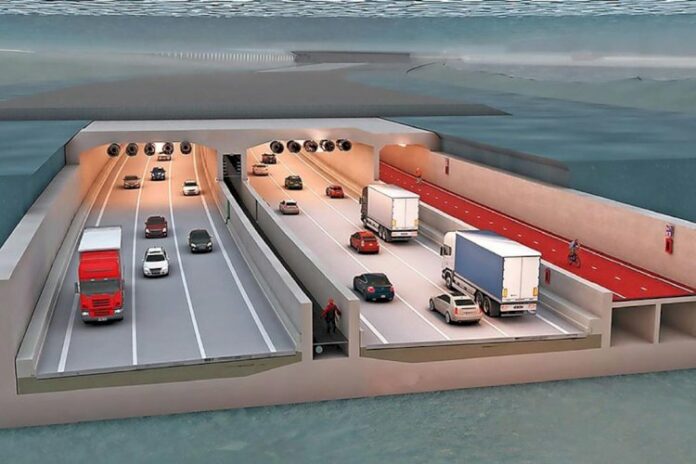
Known as the jewel in the crown of this crucial infrastructure project, the Scheldt tunnel will be the most important connecting element in the Oosterweel link and closes the Antwerp Ring Road on the north side. The tunnel has a total length of 1,800 m and will be built according to the ‘immersed tube’ method.

Eight tunnel elements of approximately 60,000 tonnes each will be built in the inner port of Zeebrugge and then towed to Antwerp via the North Sea and the Western Scheldt, where they will be immersed in a pre-dredged trench in the River Scheldt in Antwerp.

This technique, in which gravity and the upward force of water are constantly competing with each other, is one of the most ingenious building methods in concrete and hydraulic construction.

THV COTU is well aware of the challenges that such a project brings with it in a technically difficult environment such as the Scheldt. But the partners are confident that they have the necessary expertise and decades of experience to successfully achieve the realisation of this vital stage of the Oosterweel link project.

The first preparatory work will start in the autumn of 2020. Construction work for the tunnel itself will begin after the summer of 2021.

DNV GL launches new certification in infection prevention for the maritime industry

0

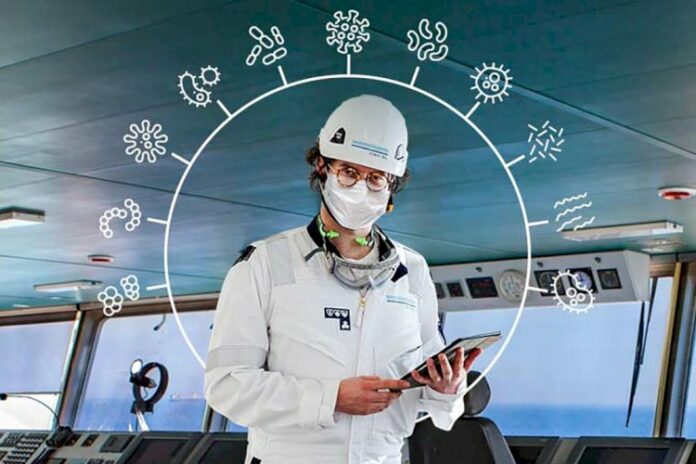
DNV GL, the world’s leading classification society, has launched a new certification in infection prevention for the maritime industry. The release of this custom certification aims to help the maritime industry resume operations better prepared for COVID-19 or other emerging pathogens. Genting Cruise Lines is the first customer working towards the CIP-M certification for their vessel “Explorer Dream” under the Dream Cruises brand.

As the COVID-19 crisis begins to recede, the world is looking to return to business. For the cruise industry, passenger safety has always been the priority and the current pandemic has sharpened this focus. To help vessel owners and operators resume safer operations, DNV GL has developed the CIP-M certification, which enables them to demonstrate they have procedures and systems in place for the proper prevention, control, and mitigation of infection, to protect their customers and crews.

Knut Ørbeck-Nilssen, CEO of DNV GL – Maritime, said:

“The COVID-19 crisis has been unprecedented in its impact on the maritime industry, and on the cruise lines in particular. But I hope that with innovative ideas like CIP-M we can help the industry get moving again in a way that gives passengers and crew confidence that exacting measures are in place to enhance the cruise industry’s already rigorous health and safety standards.”

CIP-M builds on DNV GL Healthcare’s work in infection risk management, which has been ongoing since 2008. With more than 4,000 audits performed in US hospitals, this work, which is inherent to the company’s accreditation program, helps organizations improve their management of infection risk. Experts from DNV GL’s Cruise Center in Miami customized the healthcare CIP for use in a maritime setting in cooperation with DNV GL – Business Assurance. The CIP-M also integrates maritime specific standards, such as the US CDC Vessel Sanitation Program, as well as incorporating national and industry guidelines. The certification surveys and audits are performed by DNV GL surveyor teams comprised of DNV GL – Healthcare infection prevention and control experts together with experienced maritime auditors.

Luca Crisciotti, CEO of DNV GL – Business Assurance, said:

“The ability to demonstrate trusted infection risk prevention and mitigation is a must to win back trust from consumers. Building organizational vigilance against infection risk today requires a level previously common to hospitals only. CIP-M is unique in that it builds on proven hospital standards but is specifically tailored to the context of passenger vessels, while incorporating national requirements to enable a robust immediate and long-term response.”

Mr Kent Zhu, President of Genting Cruise Lines, said:

“At Genting Cruise Lines, the safety and well-being of our guests and crew are of paramount importance to us. From the onset of the pandemic, Genting Cruise Lines has been at the forefront in enhancing its preventive and safety measures with the COVID-19 pandemic in mind. We were the first in the industry to launch and introduce our enhanced measures, which we will adopt as the new safety norm for our fleet and we hope for the industry too. We are proud to continue to pioneer such an important collaboration with DNV GL, which is a first for the cruise and maritime industry. With consumers’ heightened expectations on safety and well-being, the customised CIP-M certification from a highly reputable healthcare expert like DNV GL will indeed further boost consumers’ confidence in cruising as we recommence operations in the very near future.”
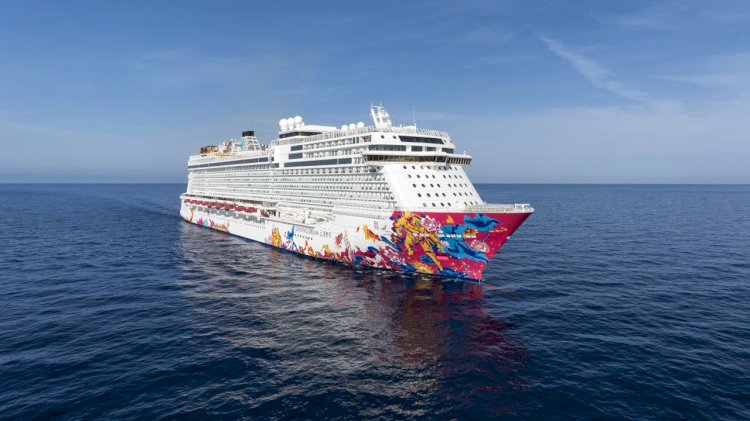
Photo: Genting Cruise Lines

As part of the CIP-M certification, DNV GL assesses vessel operations, including enhanced sanitation procedures, food preparation and handling, physical distancing requirements, use of personal protective equipment (PPE) by crew members, maintenance of public health essential systems, emergency response plans, pre-boarding screening, embarkation and debarkation processes, and itinerary or port planning protocols. Annual surveys onboard and company audits ashore are conducted to verify continued compliance and improvement.

The CIP-M assessment of Genting Cruise Lines has already kicked off with a pre-assessment of the company’s management system, to be followed by a certification survey of the “Explorer Dream”. The company is targeting successful completion of the certification programme by the end of June.

Cristina Saenz de Santa Maria, Regional Manager South East Asia, Pacific & India, DNV GL – Maritime, said:

“We look forward to continuing our long-standing relationship with Genting Cruise Lines as the first cruise line now working towards our new infection prevention certification. Genting Cruise Lines has been very proactive in mitigating the COVID-19 crisis. The experience gained by operating two vessels in Singapore as temporary accommodation for workers, who have recovered from the Coronavirus, could prove useful in their preparations to resume normal operations.”

Havyard designed a new zero-emission sightseeing vessel

0

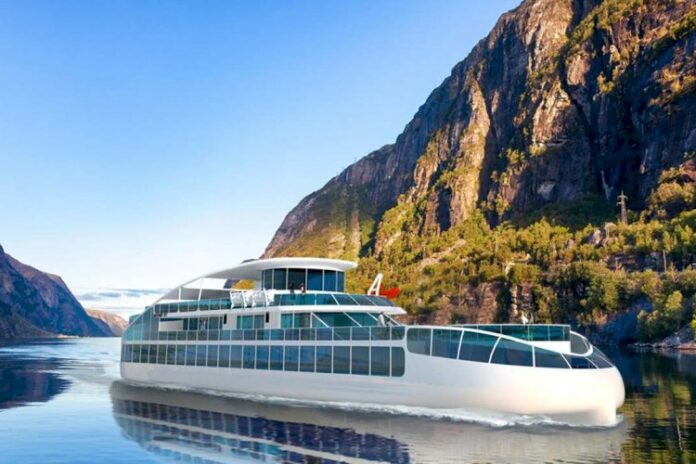
Emissions from the shipping traffic is a big challenge both in bigger cities and in fjords with many cruise ships. Havyard has designed a zero-emission sightseeing vessel, which may solve this problem in future.

Havyard Design & Solutions constitutes an expert environment for smart ship design and energy-efficient ships, and its design department has since 2005 researched and tested new designs and solutions for a wide variety of vessels.

In July 2019, Havyard entered into a collaboration with SINTEF to investigate new solutions for a more environmentally friendly shipping industry. This is an important project that builds on a development process Havyard has been engaged in for the past decade, as well as research conducted in cooperation with SINTEF at the R&D centre SFI Smart Maritime. The company already has tools to measure energy consumption by calculating the realistic operational profile and environmental impact, which allow to choose optimal solutions for hull, equipment and energy sources. This methodical approach, which can be applied to all types of vessels, enables Havyard to calculate and make commitments regarding realistic emission values in tenders for ferries, the Kystruten coastal route and other types of vessels.

Havyard is a pioneer in the design and construction of zero-emission ferries and draws upon this experience in its new city and fjord sightseeing concept. These ships are developed on the basis of Havyard’s knowledge about battery-operation and charging, and can meet big cruise ships outside of the World Heritage areas and the cities and bring the passengers to the innermost parts of the fjords and into the city centres. The ships will be 70 meters long, have a capacity of 600–800 passengers, run at 10–11 knots and offer a quiet, comfortable travel experience that matches the experience of the scenery which is the purpose of the trip.

In addition to the no-emissions aspect, the design focuses on the passenger experience with spacious areas inside and out, big windows that allow the passengers to take in as much as possible, and, finally, a universal design allowing wheelchair users to move freely around the ship. 

Designer Stig Magne Espeseth has designed and developed the new zero-emission sightseeing vessel. He finds it very exciting to base this concept on his experience from designing ferries:

‘Some of the most important criteria when designing vessels are safety, low energy consumption, cost efficiency and functionality, but for us as designers, aesthetics and the design process are also important criteria. In our new concept, there are a few new elements that we need to take into account. One example is that there will be many people in a limited area, which means that there is a need for lots of space. How, then, can we give everyone a “front row view” so that they can see as much as possible of our beautiful fjords and cities and at the same time ensure their safety and comfort both indoors and out? In my opinion, our new design proposes a good solution to this.’ 

The passengers will be transferred on a floating hub installed at the mouth of the fjords and outside of the cities where the cruise ships call. These hubs will also serve as charging stations for the mini cruise vessels. A potential limited capacity of the grid can be overcome by connecting battery packs to the grid. This way, the load on the grid will be constant, and at the same time, the mini cruise vessels will have enough charging voltage. If the mini cruise vessels are charged during the night, they can use power from shore at the hub during their stay at daytime, thereby contributing to further emission reductions.

Espeseth says:

‘With this concept, we want to demonstrate that it is possible to create new solutions to complex challenges. Zero emissions and sustainable transport will be an integrated part of the experience when passengers are going into vulnerable areas.’

Total enters into a giant offshore wind farm project in Scottish North Sea

0

Total has entered into an agreement with SSE Renewables, to acquire a 51% stake in the Seagreen 1 offshore wind farm project for an upfront payment at closing of 70m£ and earn-outs up to 60m£ in aggregate subject to performance conditions. The 1,140 megawatts (MW) project has reached simultaneously a final investment decision and financial close. The purchase agreement also covers a potential extension opportunity of up to 360 MW.

Located 27 kilometers from the coastline in Scottish waters of UK North Sea, Seagreen 1 has secured all necessary major permits and onshore construction began in Q1 2020. Designed to cover the energy needs of around 1 million homes, the project will start producing renewable electricity from end of 2022. Once completed, it will be Scotland’s largest offshore wind farm. The project represents a global investment of around 3.7 B$. Total has secured close to 70% of external financing for its 51% stake.  

Patrick Pouyanné, Chairman & CEO of Total, said:

“Total builds up a strong position in the world’s largest offshore wind market, as it becomes a majority stakeholder in the Seagreen 1 project, one of the largest offshore wind farms in the UK North Sea. This move represents a major change of scale for Total’s offshore wind activity in line with our strategy of profitable growth in renewables and low carbon electricity. As one of the main actors in the UK energy sector, Total will leverage its extensive expertise in offshore operations and maintenance to contribute to the success of the project alongside country’s leading offshore wind developer, SSE Renewables”.

SSE’s Chief Executive, Alistair Phillip-Davies, said:

“We are delighted to be partnering with Total to deliver Scotland’s largest offshore wind farm, Seagreen, which will make a significant contribution to the UK’s green recovery from coronavirus by unlocking £3bn of low carbon investment and generating the low carbon power we need to reach net zero. Today’s announcement is the result of great efforts by both teams to successfully complete this transaction in the current challenging circumstances. Total’s extensive global experience in the offshore environment combined with their clear ambition to contribute to the development of renewable energy worldwide is a strong fit with SSE Renewables’ strategic objective to treble our renewable output by 2030.”

Seagreen 1 benefits from a 15-year CfD (Contract for Difference) awarded by the UK Government for 454 MW, representing 42% of the total project capacity. An additional 30% of the project capacities will also be contracted under a private CfD with the SSE Group. Both contracts contribute to securing project revenues. 

The transaction remains subject to conditions precedent, including public authorities approval and should be finalized by July 2020. 

Total integrates climate change into its strategy, and is staying ahead of new energy market trends by building a portfolio of activities in low-carbon electricity that could account for up to 40% of its sales by 2050. Today, Total’s gross low-carbon power generation capacity worldwide is currently close to 9 gigawatts, including 5 gigawatts from renewable energies.

Total targets 25 GW of a renewable generation capacity in 2025 and will continue to expand its business to become a leading international player in renewable energies.

DCSA establishes IoT standards for container connectivity

0

Digital Container Shipping Association (DCSA), a neutral, non-profit group established to further digitalisation of container shipping technology standards, in conjunction with its nine member carriers, today published IoT connectivity interface standards for shipping containers.

The standards can be implemented by vessel operators and owners as well as ports, terminals, container yards, inland logistics providers and other third parties to ensure interoperability between smart container solutions at the radio interface level. With these standards in place, carriers and supply chain participants will be one step closer to providing customers with an uninterrupted flow of relevant information regarding the whereabouts of containers and the status of their contents at any point along the container journey. This is one of many initiatives to be put forth by DCSA to accelerate digitalisation through a unified industry effort.

The DCSA IoT Standard for Gateway Connectivity Interfaces, which can be freely downloaded from the DCSA website, includes radio standards for gateways on vessel, on land, at event locations and in handheld devices. These DCSA IoT standards provide an initial set of connectivity recommendations that are vendor and platform agnostic to reduce investment risk, increase operational efficiency and enable innovation. Ultimately, DCSA IoT standards will allow carriers and other supply chain participants to focus on providing more valuable services and a better experience to their customers.

The new standards are the first of three planned IoT standards releases addressing the connectivity requirements for reefer and dry containers, as well as the RFID registration of these containers. Future releases will focus on data structure and handling, physical device specifications as well as security and access management.

Maria Rosaria Ceccarelli, Chief of Trade Facilitation Section for UNECE (1), said:

“IoT will usher in a new era of efficiency in global trade. Smart containers that share information with multiple stakeholders will facilitate a digitally enabled supply chain. This will greatly increase efficiency and transparency, improve the quality of shipped goods, reduce waste across the board, and raise safety and security levels. Interoperability of IoT devices is one of the keys to enable massive smart containers deployment, taking the digital age of shipping one step further beyond paperless processes by embracing the Internet of Things (IoT) to support enhanced decision-making by the various sectoral stakeholders. This standards release by DCSA is very important and complementary with the UN/CEFACT interoperability standards, namely the Multi Modal Transport Data Reference Model and the Smart Container Business Requirement Specifications in particular. I believe that these standards will play an important role in aligning the industry in terms of IoT interoperability.”

Thomas Bagge, CEO of DCSA, said:

“We are thrilled to be introducing our first set of IoT standards for the industry. This release is an important step in enabling mass deployment of smart containers and forms the foundation of a group of standards that will address the industry’s most critical container use cases. Once implemented, our IoT standards will enable, for example, reefer container tracking, monitoring and controlling along the entire container journey, with no connectivity ‘blind spots’. This will provide more value to the end customer while increasing the efficiency of container operations. Equally as important, we’re giving the industry a framework for interoperability that will allow stakeholders to create innovative IoT solutions that can be leveraged by any industry stakeholder, market supplier or service provider.”

Sign up for DCSA webinars in June to get an overview of the IoT publication and provide feedback. Registration links can be found on the DCSA event page.

(1) The United Nations Centre for Trade Facilitation and Electronic Business (UN/CEFACT) is a subsidiary, intergovernmental body of the United Nations Economic Commission for Europe (UNECE) which serves as a focal point within the United Nations Economic and Social Council for trade facilitation recommendations and electronic business standards.

KrisEnergy suspends Wassana oil field due to oil price

0

KrisEnergy Ltd. (“KrisEnergy” or the “Company”, and together with its subsidiaries, the “Group”), an independent upstream oil and gas company, refers to an operational update announcement dated 6 May 2020 in respect to a review of the operations at the Wassana field.

In view of the many uncertainties ahead – the duration of the COVID-19 pandemic, speed of global economic regeneration and recovery in petroleum demand, and the magnitude and sustainability of any upturn in oil prices – production at the KrisEnergy-operated Wassana oil field has been suspended until further notice. The Company has informed the relevant authorities in Thailand of the suspension.

Operations at the Group’s remaining producing assets – the B8/32 oil and gas fields in the Gulf of Thailand and the Bangora gas field in Block 9, onshore Bangladesh – continue as usual.

Gross production at Wassana oil field averaged 3,605 barrels of oil per day (“bopd”) in the first quarter of 2020 and the Company’s working interest production was 3,208 bopd. KrisEnergy holds an effective 89.0% working interest in the G10/48 concession and Palang Sophon Offshore holds an effective 11% working interest.

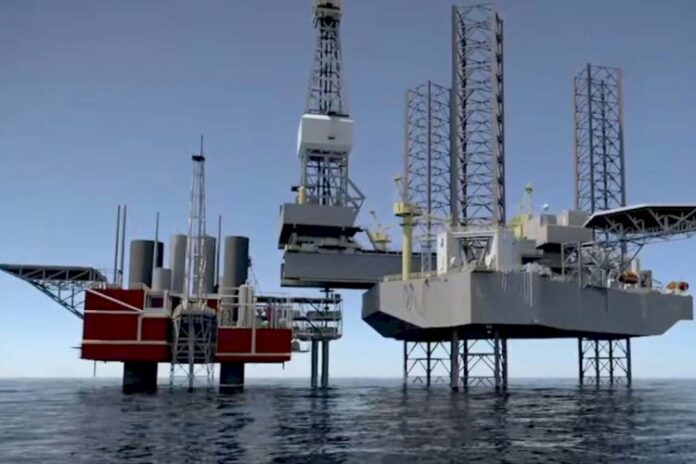
The Wassana field in the G10/48 concession in the Gulf of Thailand came onstream in August 2015 and comprises a mobile offshore production unit (“MOPU”) and a floating storage and offloading (“FSO”) vessel. Agreements with respect to the FSO have been terminated. The Company is in discussions regarding the warm-stacking of the MOPU with a skeleton crew and supported from the Songkhla shorebase.

Due to the suspension of Wassana production, the Company will reduce its workforce in Thailand by approximately 25.0%.

New building order world’s first shallow draft ice-breaking walk to work vessel

0

After a tender procedure, shipyard Royal Niestern Sander and a joint-venture between Mercury Sakhalin and Pola have signed an agreement for the construction of the world’s first shallow draft ice-breaking walk to work vessel. After delivery in December 2021, Mercury Sakhalin will operate this vessel on the East Coast of Sakhalin for the oil and gas industry.

Acting as an intermediary between both parties, Wagenborg Offshore have contributed to the project with her operational experience of sailing in shallow waters with ice breaking vessels in the Caspian as well as the walk to work track record in the Southern North Sea. Together with the in-house design and shipbuilding expertise of Royal Niestern Sander a new innovative type of walk to work vessel was born. Mercury Sakhalin will operate this new vessel on Sakhalin for the oil and gas industry.

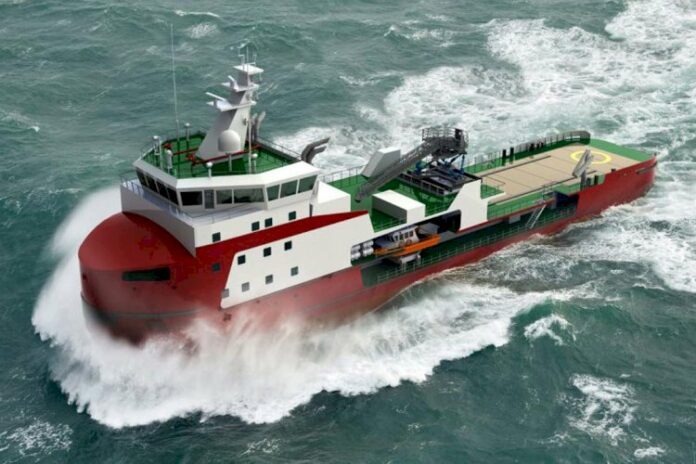
The shallow draft ice-breaking walk to work vessel is specially designed and optimized for year-round operations in the challenging conditions on the east coast of Sakhalin in temperatures ranging from -30 degrees to +35 degrees. By combining a shallow draught of 3,15m, a transit draught of 4,0 m in open waters and a grounded bottom notation, the vessel can be deployed year-round. With proven Wagenborg icebreaking technology of the icebreaking hull and pulling (ice milling) Azimuth thrusters, the vessel can break through ice up to 100cm. The motion compensated gangway on this vessel is optimized for both winter and summer operations, resulting in multiple gangway positions. The vessel will perform year-round crew transfer services for up to 40 persons from the shallow Nabil Port to offshore platforms near the East Coast of Sakhalin. In addition, the vessel can be deployed for oil spill response services.

The vessel is expected to be delivered by the end of December 2021 and strengthens the position of Niestern Sander in the construction of specialist offshore vessels, including icebreakers and walk-to-work vessels. can be considered as one of the largest new build orders for Niestern Sander. In addition, various subcontractors and suppliers from the region are involved in the project for engineering, delivering steel, parts of the engine room, navigation and rescue equipment. This project has a positive economic impact on the maritime cluster in the North of the Netherlands.

Sonardyne positioning systems chosen for Brazilian geoscience research vessels

0

Brazilian geoscience services company OceanPact Geociências has chosen deep water positioning technology from Sonardyne Brasil Ltda. to support its geophysical, geotechnical and environmental research operations across the region.

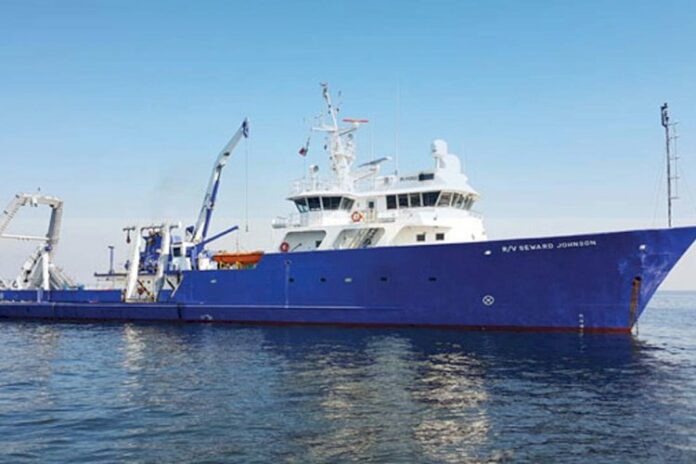
Ranger 2 Ultra-Short Baseline (USBL) systems have been installed on board OceanPact’s research vessel Seward Johnson and RSV Austral Abrolhos to precisely track the location of underwater equipment and sensor packages deployed from the ships, including seabed corers, towed sensors and data loggers. Both vessels are currently on hire to Brazilian oil major Petrobras.  

Ranger 2 USBL is a popular choice for conducting research at sea as operations can start as soon as a vessel arrives on location. This helps maximise valuable ship time. It has the capability to track multiple underwater targets simultaneously to beyond 11km, works in shallow or deep water and is able to remotely configure and communicate with compatible instruments. This operational flexibility was a key factor in OceanPact’s investment decision.

Raphael Melo, Survey Manager from OceanPact Geo, says:

“For geophysical, geotechnical and environmental research and survey operations in Brazil we rely on the highest specification and highest reliability systems. Sonardyne’s equipment has proven to be both during our previous long-term rentals. This is why we have chosen now to permanently acquire this equipment for two of our vessels. Having the reassurance of local technical and operational support from the Sonardyne team here in Brazil is a big advantage for us also.”

Andre Moura, Sales & Applications Manager at Sonardyne Brasil Ltda. says:

“This order from OceanPact further embeds Ranger 2’s reputation in the region. For those wanting accuracy and versatility, it’s proven itself time and again while also meeting the toughest specifications from oil and gas, science and survey companies.”